
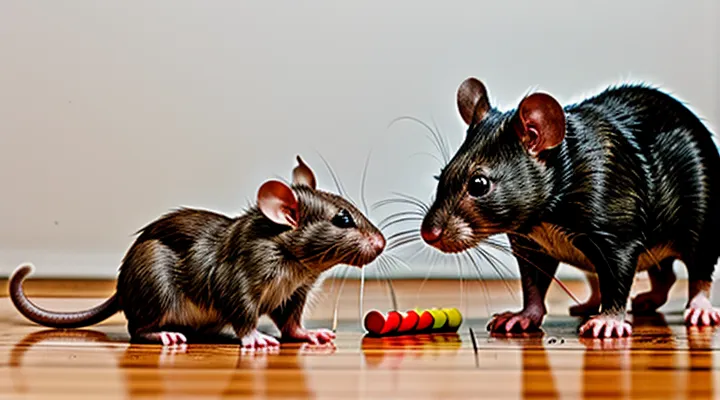
The Basics of Rat Training
Understanding Your Rat's Behavior
Recognizing Positive Reinforcement Cues
When training rats to perform simple tricks, the first step is to identify the cues that indicate the animal has received a positive reinforcement. Recognizing these signals ensures that the trainer can reinforce the correct behavior promptly and consistently.
Observable cues include:
- Approach behavior – the rat moves toward the trainer or the reward source immediately after a cue.
- Ear position – ears swivel forward or become slightly raised, reflecting heightened attention.
- Whisker movement – rapid, forward‑directed whisker sweeps signal anticipation of a reward.
- Body posture – a relaxed torso with a slight forward lean shows confidence and readiness.
- Vocalizations – soft chirps or squeaks often accompany successful trials.
Timing is critical; the cue must be delivered within one to two seconds of the observed behavior. Delay reduces the association strength and may lead to confusion. Consistency in cue delivery, reward type, and environmental conditions reinforces learning pathways.
Effective reinforcement methods involve:
- Food rewards – small, high‑value treats such as sunflower seeds or bits of fruit.
- Tactile rewards – brief, gentle strokes on the back or head, used when food is not appropriate.
- Auditory signals – a consistent click or tone paired with the reward, helping the rat differentiate successful actions.
By monitoring the listed cues and applying immediate, consistent reinforcement, trainers can shape reliable trick performance in rats with minimal confusion.
Identifying Natural Curiosity
Rats demonstrate curiosity through observable behaviors that signal readiness for training. When an animal repeatedly explores new objects, investigates unfamiliar scents, or engages in repetitive pawing at moving items, these actions indicate an intrinsic drive to gather information. The frequency of such interactions, especially in a neutral environment, provides a reliable metric for assessing curiosity levels.
Key indicators of natural curiosity include:
- Approaching and sniffing novel objects within seconds of introduction.
- Persistently attempting to manipulate items that move or emit sounds.
- Shifting attention rapidly between stimuli without signs of stress.
- Repeatedly re‑entering an area after an initial exploration.
By monitoring these signs, trainers can select moments when the rat is most receptive, align simple exercises with the animal’s exploratory instincts, and increase the likelihood of successful trick acquisition.
Essential Training Supplies
Choosing the Right Treats
Choosing appropriate rewards is a decisive factor in effective rat training. The treat must motivate the animal without compromising health or interfering with the learning process.
Key criteria for selecting a reward:
- Nutritional balance – low‑fat, moderate‑protein options prevent obesity while providing energy.
- Portion size – pieces no larger than a pea ensure quick consumption and maintain focus.
- Aroma strength – a distinct scent captures attention, facilitating rapid association with the desired behavior.
- Texture – soft or semi‑soft items are easier for rats to bite and swallow during brief training intervals.
- Safety – ingredients free from additives, preservatives, or toxic substances guarantee no adverse reactions.
Recommended treats include:
- Small cubes of fresh apple or pear, peeled to remove skins that may contain pesticides.
- Unsalted sunflower or pumpkin seeds, broken into bite‑size fragments.
- Commercially formulated rat reward pellets, verified for low sugar and high protein content.
- Tiny pieces of boiled chicken breast, devoid of seasoning.
Practical guidelines:
- Rotate between at least three different treats to prevent habituation.
- Store fresh items in a sealed container in the refrigerator; discard any that show signs of spoilage.
- Limit total daily treat calories to no more than 10 % of the rat’s overall energy intake.
- Pair each reward immediately with the target behavior to reinforce the connection.
Setting Up a Safe Training Space
Creating a secure training environment is the first prerequisite for teaching rats simple tricks. Choose a dedicated area that can be isolated from other pets, loud noises, and sudden movements. Use a sturdy, low‑profile enclosure made of clear acrylic or mesh, allowing visual monitoring while preventing escape. Ensure the floor is covered with a non‑slip material such as a rubber mat or a thick layer of shredded paper, which reduces the risk of injury during jumps or rapid sprints.
Key safety measures include:
- Ventilation: Provide continuous airflow without drafts; a small fan on low speed maintains temperature without disturbing the animal.
- Lighting: Install soft, diffuse lighting to avoid glare that may startle the rat; a 12‑hour light cycle mimics natural conditions.
- Hazard elimination: Remove cords, sharp objects, and toxic substances; secure any loose items that could be chewed or swallowed.
- Cleaning protocol: Use a mild, unscented disinfectant for regular cleaning; rinse thoroughly to prevent residue exposure.
- Emergency access: Keep a clear path to a carrier and a first‑aid kit; position the trainer’s seat within arm’s reach of the enclosure.
Finally, conduct a brief inspection before each session. Verify that the enclosure remains sealed, the floor is intact, and all safety equipment is functional. Document any alterations to the space, ensuring consistency across training days and facilitating reproducible results.
Fundamental Tricks
Target Training
Teaching «Come»
Training a rat to respond to the command “come” establishes a reliable recall behavior that can be incorporated into a broader repertoire of simple tricks. The response relies on the animal’s natural curiosity and willingness to seek a reward when prompted.
To teach “come,” follow these steps:
- Prepare a high‑value treat such as a small piece of fruit or a pellet.
- Position the rat in a neutral area, away from the treat.
- Speak the cue word “come” in a consistent tone and immediately present the treat within a short distance.
- Allow the rat to approach the treat, then reward it the moment it reaches the hand.
- Repeat the sequence, gradually increasing the distance between the rat and the trainer while maintaining the same cue.
- Introduce brief pauses before offering the treat to reinforce the animal’s movement toward the trainer rather than the food itself.
- Conduct short sessions (5–10 minutes) several times a day to prevent fatigue and maintain focus.
After the rat reliably approaches on cue, incorporate variability:
- Change the location of the trainer within the enclosure.
- Use a clicker or a brief hand signal immediately before the verbal cue to create a secondary marker.
- Alternate between treats and praise to prevent dependence on a single reward type.
Common issues and resolutions:
- Hesitation at greater distances: Reduce the gap temporarily, then extend it incrementally.
- Distraction by environmental stimuli: Conduct training in a quiet area before introducing mild background noise.
- Inconsistent response: Ensure the cue word remains identical in tone and timing for each trial.
Consistent application of these procedures yields a dependable “come” response, forming a foundation for more complex tasks such as navigating mazes or performing targeted fetches.
Teaching «Touch»
Teaching rats to respond to the “touch” cue forms a foundational element of trick training. The cue involves presenting a small, distinct object—such as a fingertip or a colored marker—and rewarding the rat when it makes physical contact. Consistent execution of this cue establishes a reliable association between the stimulus and the reward, enabling the animal to perform more complex tasks later.
Implementation steps:
- Choose a low‑stress environment; ensure the rat is calm and motivated by food.
- Present the cue object within the rat’s reach while holding a treat in the opposite hand.
- Wait for the rat to make contact; immediately deliver the treat and a brief verbal marker (e.g., “yes”).
- Repeat the sequence 5–10 times per session, limiting each session to 10 minutes to prevent fatigue.
- Gradually increase the distance between the cue and the rat, maintaining the reward upon successful contact.
- Introduce slight variations in cue shape or color to reinforce flexibility while preserving the core response.
Key considerations:
- Use high‑value treats (e.g., small pieces of fruit or specialized rodent pellets) to strengthen motivation.
- Keep the cue object consistent in size and texture during initial training phases; introduce variations only after the rat reliably performs the touch.
- Monitor the rat’s body language; pause training if signs of stress appear, such as excessive grooming or freezing.
Progress assessment relies on measuring latency from cue presentation to contact. A reduction in latency across sessions indicates successful learning. Once latency stabilizes below five seconds, the touch response can be integrated into compound tricks, such as pressing a lever or guiding the rat through a maze.
Jumping Through Hoops
Introducing the Hoop
The hoop provides a clear, low‑profile target for a rat to learn to jump, crawl, or pass through, establishing a foundation for more complex tricks. Its circular shape creates a consistent visual cue that rats readily recognize, while the open center encourages forward movement without confinement.
- Select a lightweight, smooth‑edged hoop of 6–8 cm diameter; ensure no sharp points.
- Place the hoop on a stable surface at ground level; allow the rat to investigate freely.
- Use a favorite treat to lure the rat onto the hoop’s edge, rewarding each successful contact.
- Gradually raise the hoop by a few centimeters after the rat consistently steps onto it, reinforcing with the same treat.
- Introduce a small obstacle (e.g., a low stick) inside the hoop; reward the rat for navigating through.
- Decrease treat frequency while maintaining verbal praise, solidifying the behavior as a learned skill.
Consistent, brief sessions of 5–10 minutes prevent fatigue and keep motivation high. Once the rat reliably jumps or passes through the hoop, the exercise can be expanded to include timed runs or integration with other props.
Gradually Increasing Height
Increasing the platform height is a core component of progressive rat training. Begin with a low, stable surface that the animal can easily reach. Ensure the material is non‑slippery and securely anchored to prevent wobbling.
When the rat consistently steps onto the initial platform, raise it by 1–2 cm. Observe the animal’s willingness to attempt the new height before proceeding. If hesitation occurs, repeat the previous level until the rat shows confidence, then increase again. This incremental approach builds strength and reduces stress.
Key considerations for safe height progression:
- Use a gradual increment of 1–2 cm per step.
- Maintain a flat surface; avoid steep edges that could cause injury.
- Keep sessions short (5–10 minutes) to prevent fatigue.
- Provide a clear escape route so the rat can retreat if needed.
- Reward successful attempts immediately with a preferred treat.
Monitoring the rat’s behavior throughout the process is essential. Signs of reluctance, excessive grooming, or avoidance indicate that the height increase is too rapid. Reduce the platform height temporarily and reinforce confidence before attempting another increment.
Consistent application of these guidelines results in reliable improvements in vertical navigation, enabling the rat to perform more complex tricks that require elevated positions.
Litter Training
Recognizing Rat Elimination Patterns
Understanding where and when a rat eliminates is essential for effective training. Consistent patterns indicate comfort with the environment and can be leveraged to schedule practice sessions without interruption.
Observe the following indicators:
- Preferred corner or side of the cage where droppings accumulate.
- Time of day when elimination spikes, often linked to feeding or water intake.
- Reaction to new stimuli; a sudden change in location may signal stress.
- Frequency of small versus large deposits, which reveals health status and readiness for longer training periods.
Record observations in a simple log: date, time, location, and any external factors such as temperature changes or recent cage cleaning. Over several days, the log will reveal trends that predict future behavior.
Use identified patterns to position training apparatus away from high‑use elimination zones. Introduce tricks during periods of low activity to reduce distractions. Adjust cage layout by adding a designated litter area in the preferred location, encouraging the rat to confine waste and keep the training space clean.
Monitoring elimination consistently supports both the rat’s welfare and the trainer’s ability to maintain a controlled environment for skill acquisition.
Placement of Litter Boxes
When training rats to perform simple exercises, the location of the litter box influences both hygiene and the animal’s willingness to focus on tasks. Place the box away from the primary training area to prevent accidental messes, yet within a short, unobstructed path so the rat can reach it without hesitation. Position the box on a stable, non‑slippery surface to avoid tipping when the rat enters or exits.
Key considerations for optimal placement:
- Distance: 1–2 feet from the training zone reduces distraction while keeping access convenient.
- Visibility: A clear line of sight from the rat’s cage helps the animal locate the box quickly.
- Ventilation: Ensure the area is well‑ventilated to control odor and maintain a pleasant environment for both rat and handler.
- Material: Use a shallow, easy‑to‑clean container; avoid deep boxes that may discourage use.
Consistent placement reinforces the rat’s routine, supporting reliable performance during trick training sessions.
Advanced Tricks and Problem Solving
Weaving Through Obstacles
Using Food Lures
Food lures provide the most reliable motivation for rodents learning basic tricks. A small, high‑value treat presented at the moment the animal performs the desired action creates a clear association between behavior and reward.
Choose items that rats find irresistible yet are easy to handle. Preferred options include:
- Sunflower seeds, cracked or whole
- Small pieces of dried fruit (e.g., raisins, apricots)
- Tiny cubes of cheese or yogurt drops
- Commercial rodent treats formulated for training
Select a single lure per session to prevent confusion. Keep portions under 0.2 g to avoid satiation and maintain focus on the task.
Present the lure precisely when the rat completes the target behavior. Use a timing cue such as a clicker or a brief verbal marker to signal the moment of reward. Immediate delivery (within 0.5 seconds) strengthens the connection between action and payoff.
Gradually reduce the lure’s size while maintaining the timing cue. This “fading” technique encourages the animal to perform the trick without relying on large food amounts, eventually allowing the cue alone to trigger the behavior. Consistency in timing, lure type, and reduction schedule yields rapid acquisition of simple tricks.
Phasing Out Lures
When teaching rats to perform simple tricks, reliance on food or other incentives must be reduced so the behavior remains without constant prompting. The process, known as phasing out lures, transfers motivation from the external reward to the cue itself, creating a durable response.
Begin each exercise with a clear cue and an attractive lure. After the rat executes the action, immediately remove the lure and repeat the cue several times. Gradually increase the number of repetitions without offering the treat, monitoring that the rat still follows the command. Once the rat consistently responds, replace the lure with a brief verbal or tactile marker, such as a click or a light tap, to signal successful completion.
Practical steps for phasing out lures:
- Introduce cue + lure – present the target behavior with a small piece of food.
- Immediate removal – withdraw the food as soon as the rat performs the action.
- Repetition without reward – repeat the cue 3‑5 times, noting the rat’s compliance.
- Introduce marker – use a consistent sound or touch to denote success.
- Full withdrawal – perform the cue solely with the marker, no food.
Consistent application of these steps ensures that the rat’s performance becomes cue‑driven rather than treat‑driven, enabling reliable execution of tricks in varied settings.
Retrieval
Training to Pick Up Objects
Training a rat to grasp and transport small objects relies on shaping behavior through consistent reinforcement. Begin with a low‑stress environment: a quiet cage or a portable training arena with a non‑slippery surface. Provide a single, lightweight item such as a wooden bead or a piece of cereal.
- Introduce the object – Place the item near the rat’s usual feeding spot. Allow the animal to investigate without pressure.
- Shape the grasp – Reward any contact with the object using a high‑value treat. Gradually require the rat to lift the item a few millimeters before delivering the reward.
- Increase lift height – Extend the required distance in small increments (1–2 cm). Maintain immediate reinforcement for successful lifts.
- Add transport – Position a target platform a short distance away. Reward only when the rat moves the object onto the platform.
- Generalize the skill – Vary object size, shape, and texture while preserving the reinforcement schedule. Introduce different locations to ensure the behavior transfers beyond the initial setup.
Key considerations:
- Use a consistent cue word (e.g., “pick”) paired with a hand signal to signal the desired action.
- Keep training sessions brief (5–10 minutes) to prevent fatigue and maintain motivation.
- Record each session’s performance metrics (lift height, transport distance, latency) to monitor progress objectively.
- Ensure the objects are safe to chew and free of sharp edges to avoid injury.
With systematic shaping and precise reinforcement, rats can reliably pick up and relocate objects, providing a foundation for more complex trick sequences.
Bringing Objects Back
Training rats to retrieve objects builds confidence, sharpens problem‑solving, and reinforces the bond between animal and handler. Begin with a small, lightweight item such as a plastic bottle cap, and pair the object with a high‑value food reward. Present the cap, allow the rat to sniff, then place it on the floor and immediately reward any interaction. Repeating this step creates an association between the object and positive reinforcement.
Once the rat consistently contacts the cap, introduce the “bring back” cue:
- Hold the cap in your hand, present it briefly, then release it a short distance (5–10 cm) away.
- Say a brief command word (e.g., “fetch”) as you release the item.
- When the rat picks up the cap and returns it to your hand, deliver a food reward and a brief petting session.
- Gradually increase the distance in 5‑cm increments, maintaining the same cue and reward schedule.
- After the rat reliably retrieves from 30 cm, add a mild obstacle (a low cardboard tunnel) to encourage navigation skills.
Consistency, short training sessions (5–10 minutes), and immediate reinforcement are essential for successful object‑return behavior. Regular practice prevents extinction and allows the rat to generalize the skill to various objects and environments.
Addressing Common Training Challenges
Dealing with Distractions
When training rodents to perform basic tricks, external stimuli often divert attention and impede progress. Identify the most common sources of distraction—loud noises, sudden movements, unfamiliar scents, and competing animals—and eliminate or control them before each session.
Prepare the training environment by:
- Selecting a quiet room with minimal foot traffic.
- Covering windows or using blackout curtains to reduce visual clutter.
- Turning off electronic devices that emit intermittent sounds.
- Removing unrelated objects that might attract the rat’s curiosity.
Maintain a consistent routine. Begin each practice at the same time of day, using identical cues such as a specific hand signal or a short verbal command. Consistency trains the rat to associate the cue with the upcoming activity, decreasing susceptibility to unexpected interruptions.
If a distraction occurs during a session, pause immediately. Allow the rat to settle, then resume only after the disruptive element has ceased. Record the incident to track patterns and adjust the environment accordingly.
Gradual exposure can increase tolerance. Introduce low‑level background sounds or mild visual movement in short intervals, rewarding the rat for maintaining focus. Incrementally raise the intensity only after the animal demonstrates reliable concentration at the current level.
By systematically removing, managing, and habituating to potential disturbances, trainers ensure that each exercise remains clear, efficient, and repeatable.
Maintaining Consistency
Consistency is the cornerstone of successful rat training. Repeating the same cue, hand signal, and reward schedule each session creates a clear association in the animal’s mind, reducing confusion and accelerating learning.
A stable routine supports memory retention. Schedule short sessions—five to ten minutes—at the same time each day. Begin with the same introductory cue, such as “focus,” before presenting the target behavior. End each session with a brief recap of the performed trick and a final reward. This pattern reinforces the behavior chain and signals to the rat when training starts and stops.
Key practices for preserving consistency:
- Use identical treats for a given command; avoid swapping flavors or textures.
- Keep the training environment unchanged—same cage, lighting, and background noise.
- Deliver the cue at a uniform distance from the rat; do not vary the hand position.
- Record the date, time, and duration of each session to monitor adherence to the schedule.
When deviations occur, revert immediately to the established protocol. Reinstate the original cue and reward pattern before introducing any new element. This approach prevents the formation of conflicting associations and maintains the integrity of the training process.