
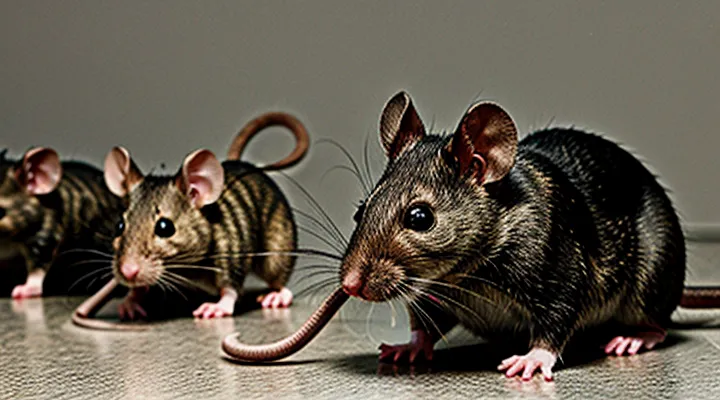
The Auditory World of Rodents
Understanding Rodent Vocalizations
Types of Sounds
Mice and rats generate a diverse array of vocal signals that serve distinct biological functions. These signals differ in frequency range, acoustic structure, and behavioral context.
- Ultrasonic vocalizations (USVs) – frequencies above 20 kHz, emitted by pups when separated from the dam and by adults during courtship or territorial encounters.
- Audible squeaks – 4–8 kHz tones produced during aggressive interactions, pain responses, or when an animal is startled.
- Chirps and trills – brief, frequency-modulated calls used in social play and group cohesion among juveniles.
- Distress calls – low‑intensity, broadband sounds released under threat, prompting conspecifics to approach or flee.
- Maternal calls – soft, repetitive tones emitted by lactating females to maintain pup proximity and coordinate nursing.
Each vocal category correlates with specific neural pathways and hormonal states, enabling precise intra‑species communication and adaptive responses to environmental challenges.
The Purpose of Sounds
Rodent vocalizations serve distinct biological functions that can be categorized by the behavioral context in which they occur.
- Alarm signaling – High‑frequency chirps emitted when a predator is detected trigger immediate evasive actions in conspecifics and can recruit nearby individuals to a defensive posture.
- Maternal‑pup communication – Ultrasonic squeaks produced by pups convey hunger or distress; the mother responds with retrieval or nursing behaviors, reinforcing offspring survival.
- Mating calls – Males generate patterned ultrasonic sequences during courtship; females assess these signals for genetic quality and readiness to mate.
- Territorial advertisement – Low‑frequency squeals broadcast a male’s occupancy of a burrow or foraging area, deterring rivals and reducing physical confrontations.
- Social cohesion – Continuous low‑amplitude vocalizations maintain group awareness during nesting or foraging, facilitating coordinated movement and resource sharing.
- Stress indication – Prolonged, irregular vocal bursts correlate with elevated cortisol levels, providing a measurable indicator of environmental or physiological stress.
Acoustic properties differ across functions. Alarm chirps typically occupy the 40–80 kHz range, enabling rapid transmission through dense substrate while remaining inaudible to many predators. Maternal‑pup calls often fall between 20–30 kHz, matching the auditory sensitivity of juvenile ears. Territorial and mating calls may include harmonic structures that convey individual identity and fitness.
Experimental recordings confirm that altering the frequency or temporal pattern of these sounds disrupts the intended response, underscoring the precision of each signal’s purpose. Consequently, rodent acoustic communication constitutes a finely tuned system that regulates survival, reproduction, and social organization.
Distinguishing Between Mouse and Rat Sounds
Mouse Vocalizations
Squeaks and Chirps
Mice and rats produce a range of high‑frequency vocalizations that fall into two primary categories: squeaks and chirps. Squeaks are brief, broadband pulses typically lasting 5–30 ms and reaching frequencies between 20 and 100 kHz. They are emitted during sudden threats, aggressive encounters, or when an individual is physically restrained. Chirps are longer, more tonal sounds, usually 30–150 ms in duration, with dominant frequencies around 30–70 kHz. They occur during social interactions such as courtship, territorial displays, and mother‑pup communication.
Key acoustic parameters differentiate the two types:
- Duration: Squeaks < 30 ms; chirps > 30 ms
- Frequency range: Squeaks 20–100 kHz; chirps 30–70 kHz
- Modulation: Squeaks exhibit rapid amplitude fluctuations; chirps show smoother, sinusoidal contours
- Context of emission: Squeaks – defensive or painful stimuli; chirps – affiliative or reproductive situations
Laboratory analysis employs ultrasonic microphones and spectrographic software to capture and quantify these signals. Researchers assess peak frequency, bandwidth, and temporal structure to infer the animal’s physiological state, social rank, or emotional condition. Consistent measurement protocols enable cross‑species comparisons and facilitate the development of automated detection algorithms for behavioral monitoring.
Ultrasonic Calls
Mice and rats emit vocalizations that exceed the upper limit of human hearing, typically above 20 kHz. These ultrasonic calls serve as primary channels for intra‑species communication, conveying information that would be inaccessible to predators or conspecifics lacking auditory sensitivity in this range.
- Frequency spectrum: 20 kHz – 100 kHz, with peaks often centered around 40–70 kHz in laboratory strains.
- Duration: brief pulses ranging from 5 ms to 200 ms; some sequences consist of rapid bursts separated by silent intervals.
- Modulation: frequency‑modulated sweeps, constant‑frequency tones, and complex harmonic structures that encode distinct signal types.
The functional repertoire of these high‑frequency emissions includes:
- Territorial signaling – males broadcast distinctive patterns to delineate occupied space.
- Mating calls – females emit specific syllables that attract and synchronize reproductive behavior.
- Alarm calls – abrupt, broadband noises alert conspecifics to predators or environmental threats.
- Maternal–pup interaction – pups produce ultrasonic distress cries; mothers respond with retrieval vocalizations.
Research relies on specialized acoustic equipment to capture and analyze these sounds. Common methodologies are:
- Ultrasonic microphones (e.g., condenser or piezoelectric transducers) with sampling rates ≥250 kHz.
- Real‑time spectrogram visualization to identify temporal and spectral features.
- Automated detection algorithms that classify call types based on frequency, duration, and pattern.
These approaches provide precise quantification of rodent ultrasonic communication, facilitating studies of behavior, neurobiology, and the impact of genetic or environmental variables on vocal output.
Rat Vocalizations
Bruxing and Chattering
Bruxing, the rapid grinding of incisors, and chattering, the rapid tapping of teeth against each other, generate distinct acoustic signatures in laboratory and wild rodents. Both behaviors involve the masticatory muscles, but bruxing produces continuous low‑frequency rumble, whereas chattering yields short, high‑frequency clicks.
The sounds differ in several measurable ways:
- Frequency range: bruxing typically occupies 2–5 kHz; chattering peaks between 8–12 kHz.
- Temporal pattern: bruxing persists for seconds to minutes; chattering consists of bursts lasting 0.1–0.3 s.
- Contextual triggers: bruxing appears during thermoregulatory stress and after analgesic administration; chattering emerges in social encounters, predator avoidance, and during handling.
Researchers use ultrasonic microphones and spectral analysis to separate these signals from other rodent vocalizations. Accurate identification aids in assessing animal welfare, detecting pain states, and monitoring neurological disorders that alter motor control. For example, increased bruxing frequency can indicate hyperthermia, while elevated chattering rates may reflect heightened anxiety or social agitation.
Understanding and quantifying these acoustic phenomena enhance experimental reproducibility and improve humane handling protocols for mice and rats.
Pups' Distress Calls
Pup distress calls are high‑frequency vocalizations emitted by neonatal mice and rats when separated from the nest or exposed to cold. The calls typically range from 40 kHz to 80 kHz in mice and 30 kHz to 70 kHz in rats, with durations of 10–100 ms and a rapid rise‑time envelope. Spectral analysis shows a dominant peak that shifts upward as the pups mature, reflecting growth of the vocal tract and changes in respiratory control.
These signals serve three primary functions:
- Maternal recruitment: Mothers orient toward the source and retrieve the offspring, reducing the risk of hypothermia and predation.
- Thermoregulatory feedback: Call rate increases proportionally with ambient temperature decline, providing a quantifiable indicator of thermal stress.
- Sibling communication: Littermates respond with reciprocal calls, facilitating coordinated huddling behavior.
Experimental recordings employ ultrasonic microphones coupled with high‑speed digitizers, allowing precise measurement of frequency, amplitude, and inter‑call intervals. Comparative studies reveal that rat pups produce longer, lower‑frequency calls than mouse pups, aligning with species‑specific ear sensitivity and maternal hearing thresholds. The acoustic profile of distress calls thus constitutes a reliable metric for assessing developmental status, stress levels, and the efficacy of genetic or pharmacological interventions in rodent models.
Factors Influencing Rodent Sounds
Social Context
Communication Within Colonies
Rodent vocalizations serve as a primary channel for information exchange among members of a colony. Ultrasonic squeaks, emitted at frequencies above 20 kHz, convey the presence of predators, signal distress, and coordinate escape routes. Lower‑frequency chirps, audible to humans, are employed during mating encounters and to reinforce social hierarchy.
Key acoustic signals include:
- Alarm calls: brief, high‑pitch bursts triggered by sudden threats; listeners respond with immediate freezing or flight.
- Contact calls: soft, repetitive tones used to maintain group cohesion during foraging or nesting activities.
- Submission vocalizations: subdued, low‑frequency sounds emitted by subordinate individuals to acknowledge dominant status and reduce aggression.
These sound patterns are integrated with tactile and olfactory cues, creating a multimodal communication system that regulates colony dynamics, resource allocation, and reproductive timing.
Alarm Calls
Mice and rats emit brief, high‑frequency vocalizations when confronted with predators or sudden disturbances. These alarm calls typically range from 20 to 100 kHz, exceed the auditory threshold of conspecifics, and are produced with a rapid onset and short duration (10–30 ms). The acoustic structure differs between species: Mus musculus generates ultrasonic squeaks with a dominant frequency near 50 kHz, whereas Rattus norvegicus produces lower‑frequency calls around 30 kHz that are audible to humans.
The primary function of these signals is to warn nearby individuals of imminent danger, prompting immediate cessation of foraging and the adoption of evasive behaviors such as freezing or retreating to a shelter. Experiments using playback of recorded alarm calls have demonstrated that naïve rodents exhibit the same defensive responses, confirming the calls’ communicative efficacy. Additionally, alarm calls can attract conspecifics capable of mobbing or collective vigilance, thereby increasing group survival probability.
Key factors influencing call emission include:
- Presence of a visual predator cue (e.g., moving silhouette)
- Sudden acoustic startle (e.g., loud noise)
- Chemical cues associated with predator scent
- Social context, such as the density of nearby conspecifics
Physiological studies reveal that alarm calling is mediated by the amygdala and periaqueductal gray, regions that coordinate threat detection and vocal motor output. Pharmacological inhibition of these areas suppresses call production without affecting other ultrasonic communications, indicating a specialized neural pathway for alarm signaling.
Research on captive colonies and field observations consistently shows that alarm calls are conserved across laboratory strains and wild populations, suggesting evolutionary pressure to maintain this rapid threat‑alert system. The reliability of the signal, its high frequency, and its brevity together minimize detection by predators while maximizing intra‑specific awareness.
Environmental Factors
Predators
Rodents emit a wide frequency spectrum, from low‑frequency squeaks to ultrasonic chirps. Predatory species exploit these signals to locate prey, assess threat level, and time attacks.
- Owls: Detect ultrasonic calls with tympanic membranes tuned to 30–60 kHz; use silent flight to approach while monitoring rodent vocalizations.
- Hawks: Respond to mid‑range vocalizations (2–5 kHz); visual tracking complements acoustic cues during daylight hunts.
- Foxes: Possess acute hearing up to 40 kHz; interpret distress squeals to pinpoint injured individuals.
- Domestic cats: Sensitive to frequencies between 1 and 10 kHz; react to rapid, high‑amplitude bursts typical of fleeing mice.
- Snakes: Rely on low‑frequency vibrations transmitted through substrate; correlate these with rodent movement sounds.
- Weasels: Detect subtle rustling and ultrasonic emissions; adjust pursuit speed based on call intensity.
Predators distinguish between routine social chatter and alarm calls. Alarm vocalizations often exhibit increased amplitude and higher pitch, prompting immediate pursuit or ambush. Conversely, regular communication sounds may be ignored or trigger cautious surveillance.
The effectiveness of acoustic detection varies with habitat. Open fields allow predators to triangulate sound sources over long distances, while dense vegetation attenuates high frequencies, favoring predators that integrate tactile and visual information.
Understanding these predator‑prey acoustic dynamics informs pest‑control strategies and wildlife management, as interference with rodent vocalizations can alter predator response patterns.
Food Availability
Food scarcity triggers an increase in high‑frequency ultrasonic calls among laboratory mice, while abundant resources reduce call rate and shift emissions toward lower frequencies. Rats exhibit a similar pattern: limited access to food elevates the number of broadband distress vocalizations and heightens amplitude during foraging bouts.
Physiological mechanisms link nutritional status to vocal output. Elevated corticosterone during deprivation amplifies call intensity, whereas leptin elevation after feeding suppresses emission frequency. Experiments that manipulate diet composition demonstrate that protein‑deficient diets prolong the duration of ultrasonic chirps, whereas high‑carbohydrate meals shorten call bouts.
Key observations:
- Deprivation → ↑ call frequency, ↑ call rate, ↑ amplitude.
- Satiety → ↓ call frequency, ↓ call rate, shift to lower‑frequency components.
- Hormonal shifts (corticosterone, leptin) mediate the acoustic changes.
- Species‑specific differences: mice rely more on ultrasonic signaling; rats incorporate audible distress calls.
These patterns indicate that food availability directly shapes the acoustic communication strategies of both mice and rats, providing reliable cues about the nutritional environment to conspecifics.
Interpreting Rodent Sounds
Identifying Rodent Presence
Common Sound Indicators
Rodent vocalizations provide reliable clues about their physiological and behavioral state. Researchers and pest‑control professionals rely on these acoustic signals to assess stress levels, reproductive status, and environmental interactions.
- Squeaks (high‑frequency, short bursts) – indicate alarm, pain, or sudden threat; intensity rises with proximity of predators or handling.
- Ultrasonic chirps (30–70 kHz) – accompany courtship and mating; frequency modulation correlates with female receptivity.
- Chattering (rapid series of low‑frequency clicks) – observed during social grooming or hierarchical disputes; pattern changes with dominance rank.
- Whines (continuous, low‑pitched tones) – reflect discomfort, hunger, or confinement; amplitude increases in overcrowded conditions.
- Purring‑like vibrations (soft, rhythmic hums) – associated with contentment during nesting or feeding; diminishes when the animal is displaced.
Monitoring these sound types enables precise interpretation of rodent welfare and activity without invasive observation.
When to Be Concerned
Rodent vocalizations and movement noises provide early indicators of health status and occupancy levels. Recognizing which sounds require intervention can prevent disease spread, structural damage, and population growth.
Normal activity produces soft scurrying, occasional squeaks, and brief chirps during feeding or social interaction. Persistent or atypical noises often signal problems.
- Loud, repetitive chattering lasting minutes or longer
- High‑pitched squealing that increases in frequency or volume
- Continuous scratching or gnawing sounds from walls, insulation, or wiring
- Audible thumping that coincides with nocturnal activity spikes
- Vocalizations accompanied by visible aggression, excessive grooming, or lethargy
When any of these patterns appear, immediate assessment is warranted. Conduct a visual inspection of entry points, nesting sites, and waste accumulation. If signs persist after sealing access and removing food sources, engage a licensed pest‑management professional to evaluate infestation level and health risks.
Behavioral Insights
Dominance and Submission
Mice and rats use a repertoire of vocalizations to negotiate hierarchical relationships. Ultrasonic squeaks, low‑frequency chirps, and audible squeals each convey a distinct social status. Dominant individuals emit brief, high‑frequency bursts during confrontations, signaling aggression and control. Subordinate rodents respond with longer, modulated calls that indicate appeasement and reduce the likelihood of escalation.
Research shows that the acoustic structure of these signals correlates with physiological markers of stress. Elevated corticosterone levels accompany submissive vocal patterns, while dominant calls are associated with increased testosterone. Playback experiments demonstrate that exposure to dominant frequencies triggers avoidance behavior in conspecifics, whereas submissive tones elicit approach and grooming.
Key acoustic features include:
- Frequency range: 20–100 kHz for dominance calls; 10–30 kHz for submission.
- Duration: 30–70 ms for aggressive bursts; 100–200 ms for appeasement chirps.
- Harmonic content: sparse in dominant signals, richer in submissive vocalizations.
Understanding these sound‑based hierarchies informs pest‑management strategies and laboratory animal welfare protocols. Monitoring vocal patterns enables early detection of social tension, allowing timely interventions to maintain stable group dynamics.
Mating Rituals
Rodent courtship relies heavily on acoustic signals that convey reproductive status and readiness. Male house mice emit ultrasonic vocalizations (USVs) during the approach to a female, while female mice respond with distinct, lower‑frequency chirps that signal receptivity. In Norway rats, males produce a series of 50‑kHz “trill” calls when investigating estrous females, and females emit brief “whine” notes that indicate willingness to mate.
Key acoustic elements of the mating sequence include:
- Ultrasonic male calls – rapid frequency-modulated sweeps, 30–80 kHz, produced during sniffing and mounting attempts.
- Female response chirps – shorter, broadband pulses, 20–40 kHz, emitted after male contact.
- Trill series in rats – repetitive 50‑kHz bursts, lasting 0.5–2 seconds, associated with heightened arousal.
- Whine notes in females – low-amplitude, 10–20 kHz sounds that precede lordosis behavior.
Temporal patterns differ between species. In mice, male USVs peak within the first minute of female investigation and decline after successful copulation. In rats, trill production intensifies throughout the mounting phase and ceases once intromission occurs. Acoustic intensity correlates with hormone levels; elevated testosterone in males amplifies call amplitude, while estradiol surge in females enhances chirp frequency.
These vocalizations function as immediate feedback mechanisms, synchronizing partner behavior and confirming species‑specific mating compatibility. Acoustic monitoring provides a reliable indicator of reproductive activity in laboratory and field studies of small rodents.