
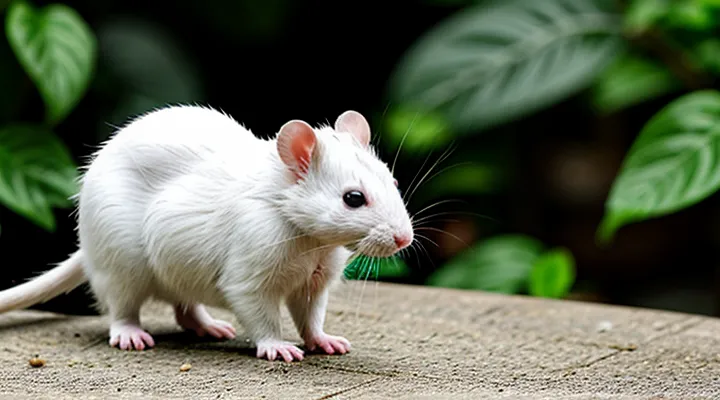
Understanding Small White Rats
Historical Context and Domestication
The small white rat breed emerged from laboratory stock originally derived from the wild Rattus norvegicus population in the early 20th century. Selective breeding for albino coloration and docile temperament began in European research colonies, where the mutation for white fur and pink eyes proved advantageous for visual experiments. By the 1920s, dedicated breeding programs in the United Kingdom and the United States standardized the phenotype, establishing a consistent genetic line used worldwide.
Domestication progressed alongside scientific demand. Breeders isolated individuals exhibiting reduced aggression, then paired them to reinforce calm behavior across generations. This process yielded a population that tolerated handling, reproduced reliably in confined environments, and displayed uniform growth rates. The resulting animal became the primary model for biomedical research, pharmacology, and genetics.
Key milestones in the breed’s development include:
- 1900–1910: Identification of the albino mutation in wild‑caught rats.
- 1915: First intentional cross‑breeding to stabilize the white coat.
- 1925: Formal establishment of a pedigree registry in England.
- 1930s: Expansion of breeding colonies across North America.
- 1950s: Integration of the breed into major research institutions.
The historical trajectory reflects a transition from opportunistic capture to systematic domestication, driven by the need for a predictable, low‑maintenance laboratory organism. Contemporary breeding practices maintain the original objectives, emphasizing genetic uniformity and ease of care while preserving the breed’s distinctive white appearance.
Common Misconceptions
Misconceptions about this white rat variety often affect care decisions and breeding practices.
-
Assumption: The rats are fragile and require constant handling.
Fact: Their skeletal structure matches that of other laboratory strains; they tolerate routine handling when introduced gradually. -
Assumption: Their coat color indicates superior health.
Fact: Pigmentation does not correlate with immune competence; health assessments must rely on clinical examinations, not appearance. -
Assumption: They reproduce more slowly than darker‑coated counterparts.
Fact: Gestation length and litter size align with standard laboratory rat metrics; breeding speed depends on nutrition and environment, not fur color. -
Assumption: White coat eliminates the need for regular grooming.
Fact: Shedding and skin condition require the same maintenance as any other strain; neglect leads to dermatological issues. -
Assumption: Their temperament is uniformly docile.
Fact: Behavioral traits vary individually; temperament assessment should consider genetics, socialization, and handling history.
Correcting these myths improves welfare standards and supports accurate scientific reporting.
Distinctive Physical Attributes
Fur and Coat Characteristics
Color and Pigmentation
The diminutive white rat exhibits a uniform coat that lacks melanin, resulting in a pristine, ivory appearance. Genetic selection favors the recessive allele responsible for albinism, which suppresses pigment production in hair, skin, and eyes. Consequently, the fur remains unpigmented, while the eyes retain a pinkish hue due to visible blood vessels.
Key aspects of the pigmentation profile include:
- Absence of eumelanin and pheomelanin, the pigments that normally generate black, brown, and red tones.
- Presence of a single, nonfunctional tyrosinase enzyme, preventing melanin synthesis.
- Pink ocular tissue caused by lack of iris pigment, leading to light sensitivity and a requirement for low-glare environments.
Texture and Density
The coat of the small white rat displays a fine, silky texture that feels smooth to the touch. Individual hairs are thin and lie flat against the body, reducing friction and contributing to a sleek appearance.
- Fur density averages 2.5 mm in length, with a uniform distribution across the dorsal and ventral surfaces.
- The undercoat is sparse, preventing excessive insulation while maintaining a soft surface.
- Skin beneath the fur is thin, allowing clear visibility of vascular patterns and facilitating thermoregulation.
These characteristics combine to produce a lightweight, low‑profile pelage that supports agility and minimizes heat retention in typical laboratory environments.
Body Structure and Size
Typical Weight Range
The small white rat typically reaches an adult body mass between 150 g and 300 g. Males usually occupy the upper portion of the range, while females tend toward the lower end. Weight fluctuates with age, nutritional intake, and health status.
- Juvenile (4–8 weeks): 50 g – 100 g
- Adult female: 150 g – 250 g
- Adult male: 200 g – 300 g
Consistent weighing provides a reliable indicator of growth progress and overall condition. Adjustments to diet or veterinary care are warranted when an individual falls outside the expected limits.
Length and Proportions
The small white rat exhibits a compact body structure optimized for agility and ease of handling. Adult individuals typically measure 9–12 cm from nose to the base of the tail, while the tail itself adds an additional 6–9 cm, resulting in a total length of 15–21 cm. This proportion—tail length roughly 60‑70 % of the combined head‑body length—contributes to balance during rapid movements.
Head dimensions align with the overall streamlined form. The skull length averages 2.5–3 cm, and the width across the zygomatic arches measures 1.8–2.2 cm, producing a head‑to‑body ratio of approximately 1:4.5. Such ratios maintain a harmonious silhouette and facilitate efficient respiratory and sensory function.
Limbs are short yet muscular, supporting the animal’s ability to navigate confined spaces. Forelimb length ranges from 2.0–2.5 cm, and hind‑limb length from 2.3–2.8 cm, preserving a fore‑to‑hind ratio close to 1:1.1. This balance enhances stability during climbing and burrowing activities.
Key proportional metrics:
- Body length (nose to tail base): 9–12 cm
- Tail length: 6–9 cm (≈ 65 % of total length)
- Skull length: 2.5–3 cm
- Skull width: 1.8–2.2 cm
- Forelimb length: 2.0–2.5 cm
- Hind‑limb length: 2.3–2.8 cm
These measurements define the breed’s distinctive silhouette, ensuring functional efficiency and a consistent appearance across generations.
Eye and Ear Features
Eye Color Variations
Eye color in the small white rat breed displays a limited but distinct range determined by genetic loci. The dominant allele produces pink or red irises, while recessive alleles yield darker pigments. Breeders rely on these patterns to predict offspring appearance and to maintain breed standards.
Typical eye colors include:
- Pink/red (albino phenotype, most common)
- Black (result of the “black eye” gene)
- Dark brown (rare, linked to the “seal” mutation)
- Blue (occasionally observed in carriers of the “blue eye” allele)
Rare variations, such as amber or golden irises, arise from spontaneous mutations or cross‑breeding with related strains. These colors do not affect visual acuity but may indicate the presence of additional coat color genes.
Health considerations remain minimal; eye pigmentation does not correlate with ocular disorders in this breed. However, excessive melanin can increase susceptibility to light sensitivity, prompting owners to provide dim lighting for darker‑eyed individuals.
Breeding strategies emphasize genetic testing to confirm carrier status for recessive eye color genes. Selecting mates with complementary alleles allows controlled introduction of desired eye colors while preserving overall breed health.
Ear Shape and Placement
Ear morphology distinguishes the small white rat from other varieties. The ears are compact, nearly circular with a subtle taper toward the tip. Size is proportional to head width, typically measuring 7–9 mm across the widest point.
Placement is high on the skull, aligned with the midpoint of the eyes. The base of each ear sits flush against the skull, creating a symmetrical appearance. The ear opening faces forward at a slight outward angle of 10–15°, allowing unobstructed sound capture.
Key characteristics of ear shape and placement:
- Rounded contour with a gentle point
- Width 7–9 mm, height matching width
- High, symmetrical position relative to the eyes
- Forward‑facing opening angled 10–15°
- Dense, fine fur covering the outer surface
These traits contribute to acute auditory perception and facilitate self‑grooming. Proper ear health requires regular inspection for debris and signs of infection, as the compact shape can retain moisture if neglected.
Behavioral Traits and Temperament
Social Interactions
Colony Dynamics
The small white rat strain forms colonies that function as tightly regulated social units. Individuals occupy defined positions within a dominance hierarchy, with an alpha pair typically responsible for most reproductive activity. Subordinate members contribute to group stability by performing grooming, nest maintenance, and sentinel duties, reducing predator exposure and disease transmission.
Reproductive dynamics depend on seasonal cues and population density. When the colony reaches a threshold size, the alpha pair’s fertility declines, prompting subordinate females to enter estrus. This mechanism disperses breeding opportunities, preventing overpopulation and maintaining genetic diversity. Litters average three to five pups, with weaning occurring at 21 days; offspring are integrated into the colony hierarchy shortly after independence.
Resource allocation follows a communal model. Food stores are shared, but access is moderated by rank, ensuring that dominant individuals receive priority during scarcity. Waste removal is coordinated by lower‑rank rats, which reduces pathogen load and supports overall health. Aggressive encounters are limited to brief displays that reinforce status without causing injury, preserving group cohesion.
Key aspects of colony dynamics:
- Hierarchical structure with an alpha breeding pair
- Density‑dependent reproductive shift to subordinate females
- Communal resource distribution governed by rank
- Division of labor for grooming, nest upkeep, and waste management
- Minimal aggression focused on status affirmation
These patterns enable the breed to sustain stable populations in laboratory and breeding facilities, optimizing both welfare and experimental reliability.
Human-Pet Bonding
Small white rats possess a calm temperament, compact size, and high curiosity, traits that facilitate close interaction with owners. Their short, soft fur and quiet vocalizations reduce sensory barriers, encouraging frequent handling without causing stress. The breed’s natural sociability means individuals readily accept human presence, forming attachments after consistent, gentle contact.
Effective bonding relies on predictable routines. Daily sessions of brief, hand‑guided exploration reinforce trust; offering fresh vegetables or safe chew items during these periods strengthens positive associations. Gradual exposure to varied environments—such as a supervised walk across a safe enclosure—expands confidence and deepens the relational link.
Key practices for nurturing the human‑rat connection include:
- Consistent handling: 5‑10 minutes each day, using a calm voice and slow movements.
- Positive reinforcement: Reward with a small treat immediately after desired behavior.
- Environmental enrichment: Provide tunnels, climbing structures, and nesting material to stimulate natural activities.
- Health monitoring: Regular checks for dental wear, coat condition, and activity levels ensure the rat remains comfortable and receptive.
When these elements align with the breed’s inherent traits, the partnership evolves into a stable, mutually rewarding relationship, marked by reduced fear responses and increased interactive behaviors.
Activity Levels and Play
Nocturnal vs. Diurnal Habits
The small white rat breed exhibits distinct activity cycles that influence husbandry, health monitoring, and breeding outcomes.
Rats classified as nocturnal become active shortly after lights dim, showing heightened locomotion, exploration, and food intake during the dark phase. Their peak activity aligns with the first four hours of darkness, after which movement gradually declines. This pattern supports efficient use of limited resources, as metabolic rates rise during periods of heightened activity and decrease during daylight rest. Consequently, cage cleaning and environmental enrichment should be scheduled before the onset of darkness to avoid disrupting established routines.
Rats displaying diurnal tendencies display most locomotor and foraging behavior during the light phase, with reduced activity after sunset. Their rest periods occur primarily during the night, and they tend to seek shelter earlier in the evening. Diurnal individuals often adapt more readily to human observation, facilitating health checks and behavioral assessments during standard working hours.
Key implications for caretakers:
- Feeding schedule – Align food availability with peak activity; nocturnal rats benefit from food placement at dusk, diurnal rats from morning provision.
- Lighting management – Maintain consistent light‑dark cycles (12 h / 12 h) to reinforce natural rhythms; abrupt changes can induce stress and alter hormone levels.
- Health monitoring – Conduct examinations during the animal’s active phase to obtain reliable physiological readings; nocturnal rats are best assessed in early night, diurnal rats in early day.
- Breeding timing – Pairings performed during the respective active periods increase mating success, as reproductive hormones surge concurrently with activity peaks.
Understanding these divergent habits enables precise environmental control, improves welfare, and optimizes reproductive efficiency within this breed.
Enrichment Needs
Small white rats require a varied environment that promotes natural behaviors and prevents boredom. Their compact size and high activity level make continuous stimulation a priority for health and well‑being.
- Multi‑level cages with climbing ladders, tunnels, and platforms
- Safe chewable objects such as wooden blocks, untreated wicker, and mineral chews
- Soft nesting material that can be rearranged for burrowing
Cognitive enrichment is achieved through puzzle feeders, treat‑dispensing toys, and hidden food caches. Regular rotation of these items prevents habituation and encourages problem‑solving.
Social interaction remains critical. Housing rats in compatible pairs or small groups provides grooming, play, and hierarchy formation. When solitary housing is unavoidable, daily supervised handling and brief out‑of‑cage time maintain mental engagement.
A structured schedule that includes at least two enrichment sessions per day, each lasting 10–15 minutes, allows observation of activity levels and early detection of stress. Adjustments to the environment should be made promptly based on observed behavior.
Intelligence and Trainability
The small white rat breed exhibits rapid problem‑solving abilities, retaining solutions after a single exposure. Laboratory tests record maze completion times up to 30 % faster than larger rat varieties, indicating efficient spatial cognition. Memory retention persists for weeks, allowing the animal to recall previously learned routes and tasks without reinforcement.
Training responsiveness aligns with the breed’s high curiosity. Positive reinforcement—typically small food rewards—produces consistent cue association within two to three sessions. The rats quickly differentiate auditory, visual, and tactile signals, enabling complex command sequences. Conditioning protocols require brief daily practice; extended sessions lead to diminishing returns.
Typical behaviors that can be taught include:
- Navigating a miniature obstacle course
- Responding to a target click or whistle
- Performing simple fetch motions with lightweight objects
- Executing a “stay” command on a designated platform
- Distinguishing between multiple colors or shapes for selection tasks
Successful training depends on a stable environment, minimal stressors, and consistent reward timing. Adjusting difficulty incrementally sustains engagement and prevents habituation. The breed’s intelligence and trainability make it suitable for behavioral research, enrichment programs, and advanced pet training.
Health and Lifespan Considerations
Common Genetic Conditions
Respiratory Issues
Respiratory problems are a frequent health concern for the white dwarf rat breed. The species’ compact skull structure and dense fur can predispose individuals to airway obstruction and infection.
Typical clinical signs include:
- Nasal discharge, clear or purulent
- Labored breathing or audible wheezing
- Sneezing episodes
- Reduced activity and appetite
- Ocular discharge accompanying nasal symptoms
Primary etiological agents are bacterial pathogens such as Mycoplasma pulmonis and Streptococcus spp., often compounded by viral agents or secondary fungal growth. Environmental factors that increase risk are poor ventilation, high humidity, and accumulation of dust or bedding particles.
Preventive measures focus on habitat management and routine health monitoring:
- Maintain cage airflow with regular cleaning and low‑dust bedding
- Keep ambient temperature between 18‑22 °C and relative humidity below 60 %
- Provide daily visual checks for nasal or ocular secretions
- Isolate new or symptomatic animals for a minimum of two weeks before introduction to the colony
- Schedule quarterly veterinary examinations, including respiratory tract swabs when indicated
When infection is confirmed, therapeutic protocols typically involve:
- Broad‑spectrum antibiotics targeting Mycoplasma (e.g., doxycycline) and common bacterial flora
- Supportive care with humidified air and forced‑air respirators for severe cases
- Fluid therapy to maintain hydration if appetite is diminished
- Follow‑up culture tests after 7–10 days to verify pathogen clearance
Early detection and strict environmental control remain the most effective strategies for minimizing respiratory disease incidence in this breed.
Tumor Predisposition
The small white laboratory rat exhibits a distinct pattern of tumor susceptibility that reflects its genetic background and breeding history. Epidemiological data indicate a higher incidence of spontaneous neoplasms compared to other rodent strains, with a median onset age of 12 months. This predisposition influences experimental design, colony management, and interpretation of toxicological studies.
Key tumor types observed in this breed include:
- Hepatocellular carcinoma
- Pulmonary adenoma
- Mammary fibroadenoma
- Lymphoma
- Testicular Sertoli cell tumor
Incidence rates vary by sex, with females showing a greater frequency of mammary fibroadenomas, while males are more prone to testicular lesions. Environmental factors such as diet composition, housing density, and exposure to carcinogens can modify baseline risk, but the underlying genetic predisposition remains the primary driver.
Genetic analyses have identified mutations in tumor suppressor genes (e.g., p53) and oncogenes (e.g., Ras) that correlate with the observed tumor spectrum. Selective breeding programs have reduced the prevalence of certain neoplasms, yet complete elimination of susceptibility is unattainable due to polygenic inheritance.
Effective monitoring protocols involve quarterly physical examinations, periodic imaging (ultrasound or MRI), and histopathological assessment of suspected lesions. Early detection enables timely intervention, reduces animal loss, and improves the reliability of experimental outcomes.
Dietary Requirements
Nutritional Balance
The white laboratory rat requires a diet that supplies energy, tissue maintenance, and reproductive health without excess calories. Formulated rodent pellets meeting these criteria provide a reliable base; supplemental foods must complement, not replace, the staple.
- Protein: 18‑22 % of diet, high‑quality sources such as soy isolate or casein support growth and immune function.
- Fat: 4‑6 % of diet, primarily from vegetable oils, supplies essential fatty acids and aids vitamin absorption.
- Carbohydrate: 60‑70 % of diet, primarily complex starches, ensures steady glucose availability.
- Fiber: 3‑5 % of diet, from cellulose, promotes gastrointestinal motility and cecal fermentation.
Vitamins and minerals must be present at species‑specific levels. Vitamin A, D3, E, and K prevent ocular, skeletal, and oxidative deficiencies; B‑complex vitamins sustain metabolic pathways. Calcium and phosphorus should maintain a 1.2‑1.5 : 1 ratio, while magnesium, potassium, and sodium support neuromuscular activity. Trace elements—zinc, copper, selenium, and iron—require precise dosing to avoid toxicity.
Feeding frequency influences metabolic stability. Adult rats thrive on continuous access to measured portions, preventing binge‑eating and weight gain. Juveniles benefit from 3‑4 small meals per day to match rapid growth demands. Water must be available at all times; dehydration accelerates renal failure.
Monitoring includes weekly weight checks, coat condition assessment, and fecal consistency observation. Sudden weight loss, hair loss, or diarrhea indicate dietary imbalance or contamination. Adjustments should follow laboratory‑validated guidelines rather than anecdotal recipes.
Overall, a balanced diet for this breed hinges on precise macro‑ and micronutrient ratios, controlled feeding schedules, and vigilant health monitoring.
Feeding Schedule
The small white rat, known for its compact size and high metabolism, requires a precise feeding routine to maintain optimal health. Adult individuals should receive two balanced meals per day, spaced approximately twelve hours apart. Each meal consists of 15–20 grams of high‑quality rodent pellets, supplemented with 5 grams of fresh vegetables such as broccoli, carrot, or leafy greens. Protein additions—cooked egg white or a small piece of lean meat—may be offered twice weekly, not exceeding 2 grams per serving.
Juvenile rats (up to eight weeks old) need three meals daily. Portion sizes should be reduced to 10 grams of pellets per feeding, with additional soft foods like mashed banana or oatmeal to support growth. Water must be available at all times in a clean, leak‑proof bottle; daily replacement prevents bacterial contamination.
Seasonal adjustments are essential. In colder months, increase caloric intake by 5 % to offset higher energy expenditure. During hotter periods, monitor water consumption closely and consider adding a few ice cubes to the bottle to encourage drinking.
A brief checklist ensures consistency:
- Provide pellets twice daily for adults, three times for juveniles.
- Offer fresh vegetables daily; rotate varieties to prevent nutrient gaps.
- Limit protein treats to twice per week, respecting portion limits.
- Refresh water every 24 hours; inspect bottles for leaks.
- Adjust portions by ±5 % based on ambient temperature and observed weight changes.
Regular weight checks (once weekly) confirm that the schedule meets the rat’s nutritional needs. Deviations—rapid weight loss or gain—should prompt immediate modification of portion sizes or food composition.
Lifespan Expectancy and Care
The white laboratory rat typically lives 2 to 3 years when kept under optimal conditions. Average longevity ranges from 24 months for females to 30 months for males; exceptional individuals may reach 36 months with meticulous management.
- Provide a balanced diet of high‑quality rodent pellets, supplemented with fresh vegetables and occasional protein treats.
- Maintain a constant ambient temperature between 18 °C and 24 °C; avoid rapid fluctuations.
- Ensure humidity stays within 40 %–60 % to prevent respiratory problems.
- Offer clean, chew‑safe bedding that is changed weekly to reduce ammonia buildup.
- Conduct routine health checks every 3 months, monitoring weight, coat condition, and signs of illness.
Preventative care extends lifespan. Regular enrichment, such as tunnels, wheels, and nesting material, reduces stress and promotes physical activity. Dental health requires provision of hard objects for gnawing; overgrown incisors can lead to malnutrition. Veterinary examinations should include parasite screening and, when appropriate, vaccinations against common viral agents.
Consistent record‑keeping of feeding schedules, environmental parameters, and health observations enables early detection of deviations, allowing swift corrective action and supporting the rat’s full life expectancy.
Breeding and Genetics
Genetic Lines and Strains
The genetics of the small white rat breed are organized into distinct lines that have been refined through selective breeding. Outbred lines maintain genetic diversity, providing robust health and adaptability for general laboratory use. Inbred lines achieve uniformity by successive sibling matings, enabling reproducible experimental outcomes and precise genotype‑phenotype correlations.
Prominent strains derived from these lines include:
- Wistar: an outbred stock noted for rapid growth, high fertility, and moderate aggression levels.
- Sprague‑Dawley: an outbred strain characterized by large litter sizes, steady weight gain, and a well‑documented behavioral profile.
- Fischer 344: an inbred line prized for its longevity, susceptibility to specific tumor models, and consistent physiological parameters.
- Long‑Evans: a pigmented variant often used for visual studies; its genetic background shares many traits with white‑coat strains while offering distinct neurobehavioral characteristics.
Each strain reflects targeted selection for traits such as coat color, growth rate, reproductive efficiency, and disease susceptibility. Understanding these genetic distinctions guides researchers in choosing the appropriate stock for experimental design, ensuring data reliability and reproducibility.
Ethical Breeding Practices
Ethical breeding of the small white rat breed requires strict adherence to health, genetics, and welfare standards. Breeders must implement comprehensive health evaluations, including regular veterinary examinations and screening for hereditary conditions prevalent in the breed. Documentation of each animal’s medical history ensures early detection and appropriate intervention.
Maintaining genetic diversity prevents inbreeding depression and preserves robust phenotypes. Effective strategies include:
- Selecting mates from unrelated lines with verified pedigrees.
- Rotating breeding pairs to avoid repeated use of the same genetic contributors.
- Incorporating outcrosses when necessary to introduce fresh alleles while retaining breed characteristics.
Housing conditions must meet the species’ physiological and behavioral needs. Adequate space, enrichment items, and stable environmental parameters (temperature, humidity, ventilation) reduce stress and promote natural activity patterns. Nutritional protocols should be based on balanced diets formulated for laboratory‑grade rodents, with regular monitoring of weight and condition scores.
Record‑keeping is essential for traceability and accountability. Detailed logs of lineage, health screenings, breeding outcomes, and caretaker observations enable transparent evaluation of breeding practices and facilitate corrective actions when anomalies arise.
Responsible sales practices protect both the animals and prospective owners. Breeders should verify buyer competence, provide clear care instructions, and refuse transactions that could lead to neglect or unsuitable environments. Continuous education of owners about proper handling, housing, and health monitoring reinforces the ethical framework throughout the animal’s lifespan.