
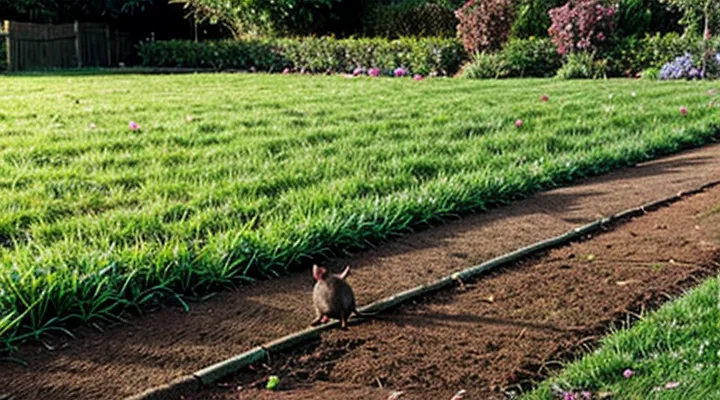
Understanding Field Rats
What are Field Rats?
Distinguishing Field Rats from House Mice
Field rats and house mice often coexist near cultivated beds, yet their biological traits and damage patterns differ markedly. Accurate identification prevents misdirected control measures and limits unnecessary pesticide use.
- Body length: Field rats typically exceed 200 mm, while house mice remain under 100 mm.
- Tail proportion: Field rat tails approach the length of the body and are thick; house mouse tails are slender and shorter than the head‑body length.
- Ear size: Field rats possess relatively small ears hidden by fur; house mice have large, exposed ears.
- Fur coloration: Field rats display coarse, brown‑gray coats with a ragged appearance; house mice exhibit soft, uniform gray‑brown fur.
- Droppings: Field rat feces are larger (8–12 mm), dark, and cylindrical; mouse droppens are 3–6 mm, lighter, and more pointed.
- Burrow architecture: Field rats dig extensive, shallow tunnels with multiple entrances; house mice create compact, deep nests within walls or stored material.
- Activity rhythm: Field rats are primarily nocturnal but may forage during twilight; house mice are strictly nocturnal, rarely seen in daylight.
Understanding these distinctions informs targeted interventions. Field rats often require bait stations placed at tunnel mouths, whereas house mice respond better to snap traps positioned near interior nesting sites. Selecting the appropriate method based on species reduces collateral impact on non‑target wildlife and protects garden productivity.
Common Habitats and Behaviors
Field rats frequently occupy structures that provide shelter and easy access to food sources. Typical sites include compost heaps, dense vegetation, woodpiles, and burrows dug beneath garden borders or under stone walls. These locations offer protection from predators and maintain a stable microclimate, which supports breeding and foraging activities.
Behavioral patterns concentrate on nocturnal foraging and opportunistic feeding. Rats emerge after dark to scavenge seeds, fruits, and garden waste, often traveling along established runways concealed by mulch or low-growing plants. Social interaction occurs through scent marking and vocalizations that coordinate movement between nesting and feeding zones.
Common indicators of rat activity in a garden:
- Fresh gnaw marks on roots, stems, or wooden supports
- Small, dark droppings scattered near feeding sites
- Chewed or shredded plant material and seed pods
- Distinctive burrow entrances with loose soil or sand piles
- Tracks visible on moist soil or soft mulch
- Persistent odors of urine or glandular secretions near nesting areas
Understanding these habitats and behaviors enables early detection and targeted management of field rat presence.
Visual Indicators of Field Rat Presence
Damage to Plants and Produce
Gnaw Marks on Fruits and Vegetables
Gnaw marks on fruits and vegetables provide a reliable indication that field rats are present in a garden. The damage typically appears as clean, crescent‑shaped bites taken from the edges of produce, often leaving a smooth, polished surface where the tooth enamel has removed the outer layer. Marks are usually 2–5 mm deep and may occur in clusters, reflecting the animal’s habit of rapidly sampling multiple items during a single foraging session.
Key characteristics that distinguish rat gnawing from other pests include:
- Straight, parallel incisions rather than irregular holes or ragged edges.
- Presence of fresh saliva stains that dry to a faint amber hue.
- Bite marks concentrated near the ground level, where rats can easily reach low‑lying crops.
- Repeated damage on the same plant, suggesting persistent activity rather than occasional intrusion.
The timing of gnaw marks often coincides with the early morning or late evening, aligning with the nocturnal feeding pattern of field rats. Seasonal peaks occur in late summer and early autumn, when food availability in the surrounding environment declines and rodents turn to cultivated produce.
Recognizing these signs enables prompt intervention. Effective measures include:
- Installing rat‑proof barriers such as metal mesh or hardware cloth around raised beds.
- Removing debris, fallen fruit, and excess vegetation that can serve as shelter.
- Deploying snap traps or electronic deterrents along identified runways.
- Applying non‑toxic bait stations at the perimeter, monitored regularly for activity.
By monitoring gnaw marks closely and responding with targeted control strategies, gardeners can limit crop loss and prevent the escalation of a rat infestation.
Uprooted or Tunnelled Plants
Uprooted or tunnelled plants are direct evidence that field rats are active in a garden. When a rat moves through soil, it pushes aside roots and creates burrows, leaving plants detached from the ground or partially exposed. The damage is often localized, with several stems knocked over in a small area, and the soil around the affected plants appears loosened or hollowed.
Typical manifestations include:
- Stems that have been pulled upward, sometimes still attached to a short root segment.
- Leaves and flowers emerging from a collapsed mound of soil.
- Visible tunnels or channels radiating from the base of the plant.
- Soil that feels airy or crumbles when pressed, indicating recent excavation.
These symptoms differentiate rat activity from other causes such as wind or mechanical disturbance. The presence of multiple uprooted or tunnelled specimens in close proximity strongly suggests a rat population foraging in the garden. Prompt identification enables targeted control measures before further loss occurs.
Seed and Bulb Consumption
Field rats frequently target seeds and bulbs because these structures provide high energy and moisture. Their consumption creates unmistakable evidence of their presence in cultivated areas.
Commonly affected items include:
- Sunflower and pumpkin seeds
- Pea and bean seeds
- Tulip, daffodil, and crocus bulbs
- Onion and garlic cloves
- Carrot and radish seeds
Visible signs of feeding are:
- Partial or complete removal of seeds from sowing rows
- Chewed or gnawed bulb skins exposing inner tissue
- Small piles of seed husks or bulb scales near the surface
- Freshly made tunnels or shallow burrows adjacent to affected plants
These indicators appear shortly after rats locate a food source. Damage reduces germination rates, weakens plant development, and can lead to secondary infections when wounds are exposed. Prompt identification of seed and bulb loss allows gardeners to implement control measures before populations expand.
Burrows and Tunnels
Location of Burrows in the Garden
Field rats establish underground tunnels that become visible through distinct soil disturbances. Recognizing where these tunnels originate helps prevent crop damage and disease spread.
- Along the base of dense shrubs or tall grasses, where cover protects entry points.
- Beneath mulch layers, especially wood chips or straw, which conceal loose soil.
- Adjacent to garden fences or walls, exploiting gaps and cracks for easy access.
- Near water features such as drip lines, troughs, or low-lying puddles, providing hydration.
- Within compost heaps or organic waste piles, attracted by food residues.
- Under stone or brick pathways, where the weight of the surface conceals entrance holes.
Typical indicators of a burrow include small mounds of excavated earth, fresh soil plugs, gnawed plant stems, and droppings near the opening. Examining these signs confirms active tunnels and guides targeted control measures.
Size and Shape of Burrow Openings
Field rats create entrance holes that are distinct from those of other garden rodents. The openings typically measure between 2 cm and 4 cm in diameter, matching the average body width of an adult rat. When the burrow is fresh, the rim appears clean and circular; as the tunnel is used, the edge becomes irregular, often showing slight flattening on one side where the animal pushes soil outward.
Key morphological features include:
- Diameter range: 2 cm‑4 cm, rarely exceeding 5 cm.
- Shape: Primarily round; occasional oval forms indicate prolonged use or multiple occupants.
- Edge condition: Sharp, well‑defined margins suggest recent activity; ragged or collapsed edges point to older, abandoned tunnels.
- Depth of entrance: Visible portion usually protrudes 1 cm‑2 cm above ground, with the tunnel descending at a shallow angle of 15°‑30°.
Observing these dimensions helps differentiate rat burrows from those of moles or voles, whose holes are generally smaller (under 2 cm) and more funnel‑shaped. Consistent detection of openings within the specified size and shape parameters strongly indicates the presence of field rats in the garden environment.
Evidence of Active Tunnels
Active tunnels are a reliable indicator that field rats are present in a garden. Freshly displaced soil forms small mounds or ridges along the garden edges and near vegetable rows. The soil in these areas appears loose, with visible channels that collapse when stepped on. Roots and tender stems that have been chewed near the tunnel entrances reveal ongoing foraging activity. Small pellets or droppings are often found at tunnel openings, confirming recent use.
Typical signs of active burrows include:
- Mounds of freshly turned earth, typically 2–5 cm high, arranged in linear patterns.
- Soil that crumbles easily under light pressure, indicating recent disturbance.
- Visible tunnels that open to the surface, sometimes covered by a thin veil of grass or leaves.
- Chewed plant material, especially at the base of seedlings and low-growing herbs.
- Accumulations of droppings or urine stains near tunnel mouths.
These observations, when combined, provide clear evidence that a population of field rats is actively constructing and using underground passages in the garden.
Droppings and Urine Trails
Characteristics of Field Rat Droppings
Field rat presence in a garden is often confirmed by examining their droppings, which provide reliable evidence of activity.
- Length: 1‑1.5 cm, occasionally up to 2 cm.
- Shape: Cylindrical, slightly tapered at ends, with a blunt tip.
- Color: Dark brown to black when fresh; fades to grayish‑brown as it dries.
- Texture: Firm, moist when newly deposited; becomes crumbly after exposure to air.
- Surface: Smooth, occasionally showing faint ridges from the rat’s tail.
- Odor: Mild, musky scent detectable at close range; intensifies with decomposition.
- Location: Concentrated near burrow entrances, under low vegetation, along fence lines, and close to stored feed.
- Distribution: Found in clusters of 5‑10 droppings, often aligned in a straight line indicating movement pathways.
The droppings’ size, shape, and placement distinguish field rats from other rodents and small mammals, enabling accurate identification of infestation. Regular monitoring of these characteristics helps garden managers assess the severity of the problem and plan appropriate control measures.
Locating Droppings in the Garden
Field rats leave distinctive fecal pellets that serve as reliable evidence of their presence. Identifying these droppings early helps prevent damage to plants and the spread of disease.
Typical locations include:
- Soil or mulch near the base of vegetable or fruit plants, especially where foliage touches the ground.
- Under garden benches, sheds, or any low‑lying structures that provide shelter.
- Inside compost piles, particularly in the upper layers where rats forage for food.
- Along garden pathways, in cracks or crevices between paving stones.
- Near irrigation equipment, where moisture attracts rodents.
Characteristics of rat droppings:
- Length 1–2 cm, width 0.5 cm, dark brown to black.
- Rounded, slightly pointed ends; often found in clusters of 5–10 pellets.
- Moisture content varies; fresh droppings are glossy, older ones become dry and crumbly.
Detection methods:
- Conduct a visual sweep during daylight, using a handheld flashlight to illuminate shadowed areas.
- Employ a thin, disposable glove or tweezers to collect suspect pellets for laboratory confirmation if needed.
- Use a moisture‑sensing probe to locate damp spots where fresh droppings are more likely to accumulate.
- Set motion‑activated cameras near suspected routes to verify rat activity and confirm droppings' origin.
Regular inspection, focused on the listed zones and guided by the described pellet traits, enables swift identification of rodent activity and informs subsequent control measures.
Signs of Urine Stains or Odors
Detecting field rat activity in a garden often begins with observing urine evidence. Urine deposits reveal the presence of rodents before damage becomes visible, allowing timely intervention.
Visible signs include:
- Yellow‑brown stains on soil, mulch, or plant leaves, especially where moisture accumulates.
- Darkened or glossy patches that persist after watering.
- Discolored areas around burrow entrances or along pathways.
- Wet spots that dry to a crusty residue, indicating repeated marking.
Olfactory cues provide additional confirmation. Urine emits a sharp, ammonia‑like scent that intensifies after rain or irrigation. A persistent musky odor near vegetable rows or compost piles suggests frequent marking. The smell may be more pronounced during cooler evenings when volatile compounds concentrate.
Combining visual inspection with scent assessment improves accuracy in identifying rat presence. Early recognition of these urine indicators supports effective control measures and protects garden productivity.
Auditory and Olfactory Clues
Sounds of Field Rats
Rustling Noises in Foliage
Rustling sounds heard among garden plants often indicate the presence of field rats. The noise originates from the animals moving through dense foliage, leaf litter, or low shrubs while foraging or seeking shelter. Unlike wind‑driven flutter, the rustle is irregular, intermittent, and accompanied by occasional squeaks or soft thumps as the rodents shift weight.
Key characteristics that differentiate rodent‑related rustling from other sources:
- Irregular timing, frequently occurring at dusk or during the night.
- Concentration near vegetable beds, seed stores, or compost piles.
- Accompanying signs such as gnawed stems, droppings, or small burrow entrances.
- Absence of wing beats or chirps that would suggest birds or insects.
Observing these patterns helps confirm that the foliage disturbance is a reliable indicator of field rat activity, allowing gardeners to implement targeted control measures such as habitat reduction, trapping, or exclusion barriers.
Scratching or Squeaking Sounds
Scratching or squeaking noises often signal the presence of field rats in a garden. The sounds are typically high‑pitched, repetitive, and originate from hidden burrows or concealed pathways beneath mulch, compost, or dense vegetation. Rats produce these noises while moving through tunnels, gnawing on roots, or communicating with conspecifics.
Key characteristics that differentiate rodent acoustics from other wildlife include:
- Frequency: 4–8 kHz, higher than most bird calls.
- Rhythm: short bursts lasting 0.5–2 seconds, repeated at irregular intervals.
- Location: muffled tones heard close to the ground, especially near garden edges or water sources.
- Timing: increased activity at dusk and during cool, humid nights.
Detecting these sounds early allows gardeners to confirm rodent activity without visual confirmation. Portable audio recorders or smartphone apps with frequency analysis can capture and display the specific range, facilitating accurate identification. Once confirmed, immediate measures—such as sealing entry points, eliminating food sources, and deploying traps—prevent damage to crops and infrastructure.
Distinctive Odors
Musky or Ammonia-like Smell
A musky or ammonia‑like odor often indicates the presence of field rats in a garden. The scent originates from the animals’ urine and glandular secretions, which accumulate in burrows, nesting sites, and feeding areas. The smell becomes noticeable when the population reaches a level that produces enough waste to affect the surrounding air.
Typical characteristics of this odor include:
- Sharp, pungent notes resembling stale urine or ammonia.
- Intensification near ground cover, compost piles, or vegetable beds.
- Persistence after rain, suggesting underground activity.
Detecting the smell can confirm rodent activity before visual signs appear. To verify the source, inspect the following locations:
- Soil mounds or loose earth near plant roots.
- Runoff channels where moisture may carry waste.
- Areas with shredded plant material or gnawed seedlings.
If the odor is present, it signals a need for immediate control measures. Prompt removal of food sources, sealing entry points, and deploying traps or bait stations reduce the risk of infestation spreading throughout the garden. Regular monitoring of scent intensity helps gauge the effectiveness of interventions.
Odor Stronger in Enclosed Spaces
A pronounced musky smell that intensifies in confined garden structures—such as sheds, greenhouses, or beneath decking—signals the presence of field rodents. The odor originates from urine, feces, and scent glands, which deposit volatile compounds that linger where airflow is limited. As ventilation decreases, concentration of these compounds rises, making the scent noticeably stronger than in open areas.
The odor’s characteristics provide actionable clues:
- Sharp, ammonia‑like scent near nesting sites.
- Persistent, earthy odor in corners with low circulation.
- Increased intensity after rainfall or irrigation, when moisture releases trapped volatiles.
- Detectable smell when doors or windows are closed, diminishing quickly when ventilation improves.
Monitoring these olfactory cues helps identify rat activity before visible signs, enabling targeted control measures within the garden environment.
Other Indirect Signs
Pet Behavior Changes
Dogs or Cats Showing Interest in Specific Areas
Pets often reveal hidden rodent activity through focused attention on particular garden zones. When a dog or cat repeatedly inspects, sniffs, or paws at a specific area, the behavior frequently signals the presence of field rats nearby.
Typical indications include:
- Persistent sniffing of a single spot, especially near low vegetation or mulch.
- Repeated digging or pawing that creates shallow depressions.
- Lingering for extended periods without obvious prey such as insects.
- Marking the area with urine or scent glands, often accompanied by a heightened alert posture.
Observing these actions allows owners to identify potential rodent habitats. After noting the behavior, examine the location for signs such as droppings, gnaw marks, or burrow entrances. Implement targeted control measures—traps, bait stations, or habitat modification—to reduce rat activity before it spreads throughout the garden.
Unexplained Digging by Pets
Unexplained digging by domestic animals often signals the presence of field rodents in a garden. Pets may target loose soil, mulch, or vegetable beds, creating shallow tunnels that differ from normal play behavior. The activity typically occurs at night or during quiet periods, when rodents are most active.
Key observations that link pet digging to rodent activity include:
- Repeated disturbance of the same area despite limited access to food sources.
- Presence of fresh, small droppings near the disturbed soil.
- Visibility of gnaw marks on plant stems or garden structures adjacent to the dug spots.
- Sudden increase in pet curiosity or agitation around specific patches of earth.
Veterinarians and pest‑management professionals advise monitoring these patterns. Documenting the location, depth, and frequency of the digs helps differentiate between normal pet behavior and rodent‑induced excavation. If the pattern persists, implement control measures such as sealing entry points, using rodent‑proof fencing, and setting appropriate traps to reduce the underlying infestation.
Tracks and Runways
Identifying Field Rat Paw Prints
Field rats leave distinctive footprints that can confirm their presence in a garden. Recognizing these prints helps differentiate rat activity from that of other small mammals and insects.
- Size: pads measure 4–6 mm long and 2–3 mm wide; total track length is typically 12–15 mm.
- Toe count: four toes on the front foot, five on the hind foot, each ending in a sharp claw mark.
- Shape: front prints appear oval with a slight forward tilt; hind prints are more elongated and point backward.
- Claw marks: deep, V‑shaped impressions intersect the pads, creating a clear “V” within the print.
- Stride: average distance between successive prints is 30–45 mm; alternating left‑right pattern forms a straight line.
- Pressure: prints in soft soil are deeper than those in compacted earth, often leaving a faint smear of fur or droppings nearby.
Comparison with similar species: mouse prints are smaller (2–3 mm pads) and show three front toes; vole tracks lack distinct claw marks and display a more rounded shape. Presence of the four‑toe front print with pronounced claws reliably indicates field rat activity.
Documenting the exact dimensions, toe arrangement, and claw impressions provides concrete evidence of rat intrusion and guides appropriate control measures.
Observing Established Paths or Runways
Field rats leave distinct, repeatable routes through garden soil and vegetation. These routes appear as flattened or cleared strips that connect food sources, shelter, and water. The edges of the paths are often smooth, lacking the typical disturbance caused by wind or foot traffic. When a path is used regularly, the surrounding soil becomes compacted, preventing plant seedlings from emerging and creating a visible corridor of sparse growth.
Key characteristics of established rat runways include:
- Consistent width, typically 5–10 cm, matching the size of an adult rat.
- Parallel or intersecting patterns that lead from compost piles, seed trays, or fruiting plants to burrow entrances.
- Presence of fine droppings or urine stains along the edges, which may darken the soil.
- Absence of insect or small-mammal tracks, indicating a dominant rodent traffic flow.
Monitoring these corridors enables early detection of a rat presence before damage escalates. Regular inspection of garden borders, raised beds, and mulch layers reveals new or expanding pathways. Prompt identification allows targeted control measures, such as habitat modification, removal of food attractants, and strategic placement of traps along the observed routes.
Nesting Materials
Shredded Debris or Plant Matter
Shredded debris and torn plant material serve as reliable indicators of field rat presence in a garden. Rats gnaw on stems, leaves, and stems, leaving irregular cuts and ragged edges that differ from clean pruning or natural decay. The resulting fragments are often scattered near burrow entrances, feed stations, or pathways.
Typical characteristics of rat‑produced plant damage include:
- Uneven, jagged edges on leaves and stems.
- Small, bite‑sized pieces mixed with soil or mulch.
- Fresh, green material intermingled with dry, shredded remnants.
- Concentration of debris around concealed openings or near food sources.
Observation of these patterns, especially when combined with other signs such as droppings or gnaw marks on hard surfaces, confirms active rodent activity and assists in targeting control measures.
Locations of Potential Nests
Field rats establish nests in garden areas that provide shelter, food access, and minimal disturbance. Recognizing these sites helps gardeners intervene before damage escalates.
- Dense ground‑cover such as low‑lying grasses, clover, or moss creates a protective layer for burrows.
- Compost piles and organic waste heaps retain moisture and attract insects, offering both food and a warm microclimate.
- Stone walls, stacked rocks, or garden edging create crevices ideal for nesting chambers.
- Underneath raised beds, especially those with wooden frames, rats can exploit gaps between soil and structure.
- Mulched zones, particularly those using straw, shredded bark, or leaf litter, conceal entrance holes and protect young.
- Areas near irrigation equipment or drip lines provide constant water sources and may harbor hidden tunnels.
- Abandoned or poorly maintained garden sheds, tool sheds, and storage boxes supply dry, enclosed spaces for nesting.
Inspecting these locations regularly, removing debris, and maintaining clean, well‑drained conditions reduce the likelihood of rat colonies establishing permanent nests in the garden.