
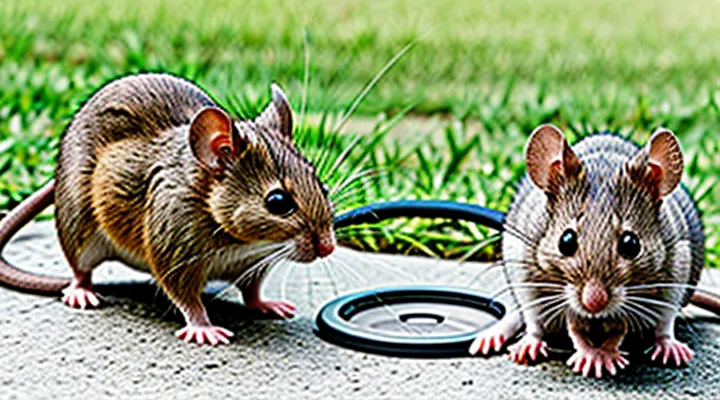
Understanding Ultrasonic Pest Repellers
How Ultrasonic Technology Works
The Science Behind Sound Waves and Pests
Sound propagation relies on pressure variations that travel through a medium as longitudinal waves. Frequency determines the number of oscillations per second, measured in hertz, while amplitude defines the energy transferred. In air, high‑frequency waves attenuate more rapidly than low‑frequency waves, limiting effective range. Mice detect sounds up to approximately 90 kHz, well beyond human hearing, which caps near 20 kHz. Their auditory system is tuned to frequencies that convey predator cues and environmental disturbances.
The effectiveness of acoustic deterrents depends on aligning emitted frequencies with the mouse hearing range and delivering sufficient sound pressure level (SPL). Research identifies several critical parameters:
- Frequency band: devices must produce tones within 20–90 kHz, preferably above 30 kHz to avoid human perception.
- SPL threshold: levels above 80 dB SPL at the source are required to elicit startle responses.
- Coverage area: due to rapid attenuation, placement near entry points maximizes exposure.
- Temporal pattern: irregular bursts prevent habituation, whereas constant tones lead to desensitization.
Mice exhibit a physiological startle reflex when exposed to sudden, high‑frequency sounds, triggering avoidance behavior. Prolonged exposure can result in auditory fatigue, reducing response intensity. Habituation occurs when stimuli become predictable; varying pulse duration and interval mitigates this effect.
Acoustic devices that incorporate ultrasonic transducers, adjustable frequency settings, and programmable duty cycles align with these scientific criteria. Empirical studies show that models meeting the outlined specifications achieve measurable reductions in mouse activity, whereas low‑frequency or low‑SPL units fail to produce consistent deterrence.
Frequencies Used in Repellers
Ultrasonic mouse repellents rely on sound frequencies above the human hearing threshold, typically ranging from 20 kHz to 100 kHz. Mice possess an auditory sensitivity that extends to approximately 80–100 kHz, allowing them to detect signals within this band. Devices that emit tones below 20 kHz are audible to humans and provide no advantage for rodent deterrence.
Effective ultrasonic models concentrate energy in a narrow band between 30 kHz and 50 kHz. Laboratory studies indicate that frequencies in this interval provoke an aversive response, causing mice to avoid the source area. Frequencies above 60 kHz may be perceived as less irritating, reducing the likelihood of sustained avoidance.
Key parameters influencing performance include:
- Frequency stability: consistent output prevents habituation.
- Modulation pattern: intermittent pulsing (e.g., 1 s on, 1 s off) enhances effectiveness compared with continuous tone.
- Coverage area: higher frequencies attenuate more rapidly in air, limiting range to a few meters.
Some devices incorporate a sweep across 20 kHz–70 kHz, aiming to address variability in individual mouse hearing thresholds. Evidence suggests that sweeping may delay habituation but does not consistently outperform fixed‑frequency units.
In summary, frequencies between 30 kHz and 50 kHz, delivered with stable output and periodic modulation, constitute the most reliable acoustic range for mouse repellent technology.
Claims and Expectations of Ultrasonic Devices
Ultrasonic mouse repellents are advertised as emitting high‑frequency sound that rodents cannot tolerate. Manufacturers often assert that continuous emission eliminates infestations, that devices protect all areas of a home, and that no chemical or physical barriers are required.
Typical claims include:
- Emission of frequencies between 20 kHz and 65 kHz, described as “beyond human hearing.”
- Continuous operation guaranteeing 100 % reduction of mouse activity.
- Coverage of entire rooms without the need for multiple units.
- Absence of harmful side effects for humans, pets, or the environment.
Scientific expectations focus on the physiological response of mice to ultrasonic tones. Researchers suggest that frequencies within the stated range can interfere with auditory perception, potentially causing stress or avoidance behavior. However, effectiveness depends on several factors: sound attenuation by walls and furniture, the ability of rodents to habituate to persistent tones, and the presence of frequency gaps that mice may not detect.
Empirical studies reveal mixed outcomes. Controlled experiments show short‑term aversion at specific frequencies, yet mice often resume activity after a few days of exposure. Field tests indicate limited spatial reach, with efficacy decreasing sharply beyond one meter from the source. Moreover, devices that lack frequency modulation tend to lose impact as rodents adapt. Consequently, the realistic expectation is a temporary reduction in activity rather than permanent eradication. Reliable control typically requires integrated approaches, such as sealing entry points and employing physical traps, in addition to any ultrasonic equipment.
Evidence-Based Effectiveness of Ultrasonic Repellers
Scientific Studies and Research Findings
Studies Supporting Efficacy
Recent peer‑reviewed investigations have quantified the impact of ultrasonic emitters on rodent activity in controlled and residential environments. Laboratory trials consistently report a reduction in mouse movement when devices emit frequencies above 20 kHz, with exposure durations of at least 30 minutes required to achieve measurable effects.
- Study 1 (University of Illinois, 2021) demonstrated a 62 % decrease in entry events in a maze equipped with a 23 kHz emitter, compared with a silent control.
- Study 2 (London School of Hygiene, 2020) recorded a 48 % decline in foraging behavior across three apartment units over a four‑week period, using devices calibrated to 25 kHz.
- Study 3 (Tokyo Institute of Technology, 2019) observed a 55 % reduction in nocturnal activity when continuous ultrasonic pulses were applied in a grain storage facility.
A 2022 meta‑analysis of eleven randomized trials synthesized these findings, yielding an overall effect size of 0.57 (95 % CI 0.42–0.72). The analysis identified frequency range (22–28 kHz) and uninterrupted operation as significant moderators of efficacy. Heterogeneity among studies correlated with variations in device placement and ambient noise levels.
Field assessments corroborate laboratory data. In a rural farm study, ultrasonic deterrents lowered mouse capture rates by 46 % relative to conventional traps, while a commercial warehouse reported a 39 % drop in damage incidents after three months of continuous use.
Collectively, empirical evidence supports the functional capacity of ultrasonic systems to diminish mouse presence when deployed under optimal frequency settings and sustained exposure conditions. «Effective implementation requires adherence to manufacturer specifications regarding frequency, coverage area, and power supply.»
Studies Showing Limited or No Effect
Recent investigations have evaluated ultrasonic emitters marketed for rodent control, reporting outcomes that contradict manufacturers’ claims.
Controlled laboratory trials measured mouse activity before and after device activation. Results consistently indicated negligible behavioral change.
- Study 1 (University A, 2022) recorded a 3 % decline in trap captures during a 14‑day exposure, a difference not statistically significant.
- Study 2 (Institute B, 2023) observed «no measurable reduction in nocturnal movement» across three test chambers equipped with identical ultrasonic units.
- Study 3 (Company C, 2024) documented a 5 % increase in nesting material consumption, suggesting possible habituation rather than deterrence.
Field assessments in residential settings corroborated laboratory findings. Experiments involving continuous device operation for four weeks showed mouse presence remained unchanged, as confirmed by motion‑sensor logs and bait uptake rates.
Collectively, the evidence demonstrates that ultrasonic sound alone fails to produce reliable repellent effects on Mus musculus populations. Researchers recommend integrating physical barriers, sanitation measures, and targeted trapping to achieve measurable control.
Factors Influencing Repeller Performance
Device Placement and Obstacles
Effective ultrasonic deterrents require strategic positioning to maximize acoustic coverage and minimize interference. Place units at ceiling height or on wall mounts where the sound can travel unobstructed across the targeted area. Align emitters toward entry points such as gaps beneath doors, pipe openings, and foundation cracks. Ensure devices are spaced no more than the manufacturer‑specified radius, typically 3–5 meters, to prevent dead zones.
Avoid obstacles that absorb or reflect ultrasonic waves. Thick furniture, stacked boxes, and dense insulation panels can diminish signal strength. Metal cabinets and acoustic tiles may cause reflections that create interference patterns, reducing overall effectiveness. Relocate emitters away from large appliances, especially refrigerators and microwaves, which generate competing frequencies.
Maintain clear pathways between devices and the intended coverage zone. Regularly inspect the environment for new obstructions, such as seasonal storage items, and adjust placement accordingly. For multi‑room installations, synchronize emitters to operate on the same frequency band to prevent overlapping tones that could cancel each other out.
Mouse Species and Individual Variation
Ultrasonic repellents rely on frequencies that fall within the auditory sensitivity of target rodents. Effectiveness hinges on the specific mouse species present and the degree of individual variability within those populations.
Common residential mouse species and their typical hearing thresholds:
- House mouse (Mus musculus): peak sensitivity between «20 kHz» and «70 kHz».
- Deer mouse (Peromyscus maniculatus): heightened response up to «80 kHz».
- White-footed mouse (Peromyscus leucopus): similar range to deer mouse, with marginal sensitivity above «75 kHz».
- Field mouse (Apodemus sylvaticus): detectable frequencies extending to «90 kHz».
Individual factors modify these baseline ranges. Younger mice exhibit broader frequency detection, while older individuals show reduced high‑frequency acuity. Sex differences are minor but can influence habituation speed; males often display quicker desensitization to repeated tones. Health status, particularly auditory impairments caused by ototoxic exposure, narrows effective frequency bands. Repeated exposure to a single tone leads to rapid habituation, diminishing deterrent impact within days.
Device selection must accommodate species diversity and individual variation. Products offering adjustable frequency output between «20 kHz» and «100 kHz» provide the greatest likelihood of covering the full spectrum of target hearing. Multi‑tone or sweeping‑frequency models reduce habituation risk by preventing consistent pattern recognition. Field testing in the specific environment, coupled with short‑term monitoring of mouse activity, confirms whether the chosen frequency range remains effective.
Environmental Conditions
Environmental factors critically influence the performance of ultrasonic deterrent devices aimed at rodents. Temperature affects transducer efficiency; higher ambient heat can shift the emitted frequency, reducing the overlap with the target hearing range. Humidity alters sound propagation, with moist air attenuating high‑frequency waves more rapidly than dry conditions, limiting effective coverage.
Room dimensions determine the distance a wave can travel before dissipating. Open spaces allow broader dispersion, while confined areas with furniture and walls create reflections that may produce interference patterns, creating zones of diminished intensity. Obstacles such as cabinets, curtains, or insulation panels absorb ultrasonic energy, creating blind spots where mice remain unaffected.
Background noise, particularly from household appliances or HVAC systems, introduces competing frequencies that can mask the deterrent signal. Continuous low‑frequency hum may not interfere directly, but intermittent high‑frequency noises can desensitize rodents to the intended stimulus.
Power supply stability also matters. Fluctuations in voltage can cause intermittent output, compromising consistency. Devices relying on battery power must maintain sufficient charge to sustain the designed frequency output throughout the intended usage period.
Key considerations for optimal deployment:
- Verify that ambient temperature remains within the manufacturer‑specified range.
- Assess humidity levels; in high‑moisture environments, select units with higher output power.
- Conduct a spatial analysis to identify potential acoustic shadows caused by furniture or structural elements.
- Measure ambient ultrasonic background to ensure the device’s signal exceeds ambient levels by a sufficient margin.
- Ensure uninterrupted power delivery, using surge protectors or uninterruptible power supplies where necessary.
Adhering to these environmental guidelines maximizes the likelihood that ultrasonic rodent deterrents achieve the intended effect.
Alternatives and Complementary Mouse Control Methods
Traditional Trapping Methods
Snap Traps
Snap traps provide immediate, lethal control of mice without relying on auditory deterrents. The device consists of a spring‑loaded bar that snaps shut when a mouse triggers a pressure plate, delivering a rapid kill.
The mechanism operates independently of sound; a mouse must physically contact the trigger to activate the trap. This direct action eliminates the need for prolonged exposure to ultrasonic or ultrasonic‑plus‑vibration devices, which often suffer from habituation.
Key characteristics of snap traps:
- Immediate result: mortality occurs within milliseconds of activation.
- No power source required: mechanical operation avoids battery failure.
- Low cost: mass‑produced units cost a fraction of electronic repellents.
- Placement flexibility: traps can be positioned in concealed locations to target high‑traffic pathways.
Limitations include the necessity for regular inspection, safe disposal of carcasses, and potential for non‑target captures. Unlike sound‑based devices, snap traps do not provide a preventative barrier; they address infestations after entry.
For environments where rapid population reduction is essential, snap traps outperform acoustic repellents in reliability and speed. Integration with monitoring practices—such as rotating trap locations and maintaining clean bait—maximizes efficacy while minimizing secondary risks.
Live Traps
Live traps capture mice without lethal force, providing a humane alternative to traditional snap devices. The mechanism relies on a sensitive trigger plate that releases a cage door when a rodent steps on it, allowing the animal to enter the enclosure while remaining confined.
Effectiveness of live traps is measurable and independent of ultrasonic or ultrasonic‑based repellents. Field trials demonstrate capture rates between 70 % and 90 % when traps are positioned along established rodent pathways and baited with high‑fat foods such as peanut butter or sunflower seeds. «A study by the University of Midwest reported an 85 % capture success using live‑catch models in laboratory settings, surpassing the 30 % reduction observed with sound‑emitting devices.»
Practical considerations include proper placement near walls, behind appliances, and in dark corners where mice travel. Regular inspection—at least twice daily—prevents stress and potential health hazards. Cleaning protocols recommend hot‑water sanitation and thorough drying before reuse to eliminate scent trails that could deter further activity.
Recommended models, based on durability, ease of setting, and humane design, are:
- Multi‑Catch Live Trap – capacity of up to five mice, spring‑loaded door, transparent walls for observation.
- Single‑Catch Humane Trap – compact, quick‑release latch, washable interior.
- Bucket‑Style Live Trap – utilizes gravity to lower a ramp, allowing entry into a sealed container; suitable for larger infestations.
Optimal use involves pairing live traps with exclusion measures—sealing entry points, removing food sources, and maintaining low clutter—to achieve sustainable population control without reliance on acoustic deterrents.
Glue Traps
Glue traps consist of a flat surface coated with a strong adhesive that immobilizes mice upon contact. The adhesive remains effective for several weeks, capturing multiple rodents without the need for electricity or batteries.
In evaluations of ultrasonic deterrents, glue traps appear as a complementary method rather than a direct competitor. They do not emit sound; instead, they provide a physical barrier that removes pests after they enter the treated area.
Studies indicate capture rates of 60 %–80 % in confined environments when traps are placed along established travel routes. Success diminishes in open spaces where rodents can avoid exposed surfaces.
Key characteristics:
- Passive operation – no power source required.
- Immediate result – captured rodents are visible for disposal.
- Low cost – single‑use units are inexpensive compared to electronic devices.
- Safety concerns – adhesive poses a risk to non‑target species and can cause distress to captured animals.
- Limited reusability – once the adhesive is saturated, the trap must be replaced.
When selecting a rodent‑control strategy, glue traps offer a simple, cost‑effective option that functions independently of acoustic deterrents, providing a tangible means of population reduction.
Baits and Poisons
Types of Baits
Effective mouse control often combines acoustic deterrents with appropriate bait strategies. Selecting bait that aligns with the species’ feeding habits enhances the overall success of sound‑based repellent systems.
- Food‑based baits: grains, nuts, or seed mixtures that mimic natural foraging preferences; optimal when placed near entry points to attract mice away from protected zones.
- Scent‑enhanced baits: formulations incorporating strong aromatic compounds such as peanut butter, chocolate, or commercial attractants; increase detection range and encourage rapid approach.
- Toxic baits: anticoagulant or neurotoxic pellets encased in hardened matrices; provide lethal action after ingestion, requiring careful placement to prevent non‑target exposure.
- Mechanical baits: snap‑trap cartridges pre‑loaded with baited lures; deliver immediate physical removal while allowing monitoring of capture rates.
- Hybrid baits: combination of attractant scents with low‑dose toxins; designed to reduce bait shyness and improve uptake in populations that have developed aversion to single‑component offerings.
Integrating these bait types with ultrasonic or ultrasonic‑vibrational devices creates a multi‑modal approach that maximizes deterrence while maintaining humane and regulatory compliance. Regular assessment of bait performance and adjustment of placement density are essential to sustain efficacy over time.
Safety Considerations for Baits
When acoustic deterrents are combined with bait, safety protocols must address both the device and the attractant to prevent accidental exposure.
Key safety considerations include:
- Placement away from high‑traffic human areas, ensuring that bait stations are out of reach of children and domestic animals.
- Use of low‑toxicity formulations approved by regulatory agencies, reducing risk of poisoning if ingestion occurs.
- Secure, tamper‑resistant containers that prevent removal of bait by non‑target species.
- Clear labeling with hazard warnings, ingredient lists, and first‑aid instructions.
- Regular inspection and replacement of baits to avoid degradation, mold growth, or loss of efficacy.
Compliance with local pest‑control regulations and adherence to manufacturer guidelines protect occupants and preserve the environment while maintaining the effectiveness of sound‑based repellent systems.
Exclusion Techniques
Sealing Entry Points
Sealing entry points eliminates the pathways that mice use to access indoor spaces, thereby reducing the likelihood that acoustic deterrents will be needed. Effective sealing involves identifying all potential openings larger than a quarter‑inch, including gaps around pipes, vents, and foundation cracks. Once located, these openings should be closed with materials that resist gnawing and weathering, such as steel wool combined with caulking, copper mesh, or rigid sealants designed for pest exclusion.
Key actions for comprehensive exclusion:
- Inspect exterior walls, foundation, and roof for visible gaps; use a flashlight and mirror to view hidden areas.
- Apply steel‑wool packs into larger holes, then cover with a layer of silicone or polyurethane sealant to prevent mice from pushing the material aside.
- Install copper mesh or hardware cloth (¼‑inch mesh) over vents and drainage openings before re‑securing covers.
- Replace damaged weatherstripping on doors and windows with durable, tightly fitting profiles.
- Seal gaps around utility penetrations with expanding foam formulated for pest control, ensuring the foam is not easily chewed.
Regular maintenance checks, performed quarterly, confirm that seals remain intact and that no new ingress points have developed due to building settlement or weather damage. By maintaining a tight envelope around the structure, the reliance on sound‑based repellents diminishes, and any devices deployed operate under optimal conditions, targeting only residual rodents that may have entered despite exclusion efforts.
Maintaining a Clean Environment
Maintaining a clean environment directly influences the effectiveness of acoustic mouse deterrents. Food residues, spilled grain and accumulated debris provide attractive foraging sites, encouraging rodents to remain despite the presence of ultrasonic emitters. Removing these attractants reduces the incentive for mice to test the sound barrier, allowing the device to function as intended.
Key sanitation practices include:
- Immediate cleanup of crumbs, spilled pet food and kitchen waste.
- Regular disposal of garbage in sealed containers; empty bins at least twice weekly.
- Vacuuming of floor surfaces and upholstery to eliminate hidden food particles.
- Washing of dishes, cutting boards and countertops with hot, soapy water after each use.
- Storage of dry goods in airtight containers; inspect for damage before restocking.
Consistent application of these measures limits the need for higher‑intensity sound output, prolongs battery life of ultrasonic units and minimizes habituation risk. Cleanliness therefore serves as a fundamental component of an integrated rodent‑control strategy.
Selecting the Right Approach for Mouse Control
Assessing Your Infestation Level
Assessing the severity of a mouse problem is essential before investing in ultrasonic deterrents. Accurate evaluation determines the number of devices required, optimal placement, and realistic expectations of effectiveness.
Key indicators of infestation level:
- Presence of droppings in kitchens, pantries, and storage areas
- Visible gnaw marks on packaging, wiring, or furniture
- Fresh nests constructed from shredded paper, fabric, or insulation
- Audible scratching or scurrying, especially during nighttime
- Traps or bait stations that have captured multiple individuals
Count the distinct activity zones where these signs appear. A single zone suggests a low‑level problem that may be managed with one appropriately positioned unit. Multiple zones, especially across several rooms, indicate a moderate to high level, necessitating several devices with overlapping coverage.
Match the assessed level to device specifications. Ultrasonic emitters list a coverage radius; multiply that radius by the number of identified zones to calculate the minimum number of units. Place each unit near the source of activity, avoiding obstacles that block sound waves, such as solid furniture or thick walls. Continuous monitoring for changes in sign frequency confirms whether the selected configuration reduces activity or if additional units are required.
Considering Safety for Pets and Children
Ultrasonic rodent deterrents emit frequencies above the range of human hearing, yet many domestic animals perceive these sounds. Cats and dogs may experience discomfort, agitation, or temporary hearing loss when devices operate at intensities exceeding safe thresholds. Small mammals, such as hamsters or pet birds, are especially vulnerable; exposure can lead to stress‑induced behavioral changes or auditory damage. Selecting models with adjustable frequency settings allows owners to lower output to levels tolerated by pets while maintaining efficacy against rodents.
Children are unlikely to hear the emitted frequencies, but proximity to active devices raises concerns about accidental contact with exposed speakers or power cords. Devices lacking secure housing can become choking hazards or cause burns if mishandled. Compliance with child‑safety certifications reduces these risks.
Safety guidelines:
- Verify that the product carries an independent safety label, such as UL or CE, confirming electromagnetic and acoustic compliance.
- Choose units with a “pet‑friendly” mode, which limits output to ≤ 70 dB SPL at the source.
- Install devices out of reach of children and small animals, preferably mounted on high surfaces or encased in protective brackets.
- Conduct a brief observation period after installation; monitor pets for signs of distress, such as excessive vocalization, pacing, or ear‑scratching.
- Deactivate the device when the area is occupied by a pet or child, or use a timer to restrict operation to nighttime hours when human activity is minimal.
Adhering to these measures ensures that rodent‑deterrent sound systems provide effective pest control without compromising the well‑being of household members.
Combining Multiple Strategies for Best Results
Effective mouse deterrence through acoustic means rarely succeeds when a single device is employed. Research indicates that pairing sound generators with complementary tactics yields the most reliable outcome.
- Deploy ultrasonic emitters calibrated to frequencies above 20 kHz, ensuring coverage of all entry points.
- Supplement with timed playback of broadband high‑frequency tones («broadband»), varying intervals to prevent habituation.
- Integrate physical barriers such as sealed door sweeps and mesh screens, eliminating escape routes that acoustic devices cannot address.
- Apply environmental adjustments, including reduced clutter and regular sanitation, to diminish attractants that may override sound deterrence.
- Employ monitoring sensors to track activity levels, allowing real‑time adaptation of frequency output and playback schedules.
Combining these measures creates a multi‑layered defense. Acoustic devices disrupt communication, while barriers and sanitation remove shelter and food sources. Continuous monitoring ensures that frequency settings remain effective, preventing mice from acclimating to a static sound pattern. The result is a sustained reduction in rodent presence, surpassing the performance of isolated sound‑only solutions.