
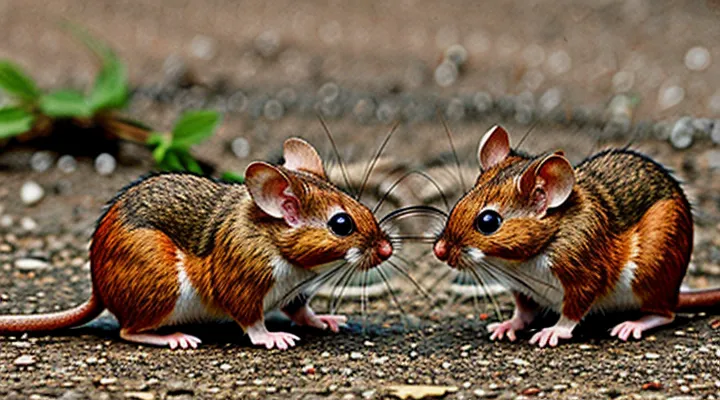
Understanding Red Mice: A Natural Anomaly
Defining «Red» in Murine Coloration
Genetic Basis of Red Phenotype
The red coloration observed in certain mouse populations results from alterations in the melanin synthesis pathway. In mammals, two forms of melanin are produced: eumelanin (dark) and pheomelanin (red‑yellow). A shift toward pheomelanin production underlies the red phenotype.
Key genetic factors include:
- MC1R (melanocortin‑1 receptor) – loss‑of‑function alleles reduce signaling that normally promotes eumelanin, allowing pheomelanin accumulation.
- ASIP (agouti signaling protein) – gain‑of‑function variants increase antagonism of MC1R, further biasing pigment synthesis toward pheomelanin.
- TYR (tyrosinase) and TYRP1 (tyrosinase‑related protein 1) – mutations that diminish enzymatic activity can limit overall melanin production, accentuating the red hue.
- SLC24A5 and OCA2 – regulatory changes affect melanosome maturation and pigment transport, modulating intensity of red coloration.
Inheritance patterns are typically autosomal recessive for MC1R loss‑of‑function alleles, while ASIP variants often display incomplete dominance, producing a spectrum from light cream to vivid red. Epistatic interactions among these loci can amplify or suppress the phenotype, explaining variation within and between populations.
Population studies demonstrate that the red trait persists at low frequencies due to selective pressures such as predator avoidance, habitat camouflage, and mate choice. In isolated island populations, founder effects and genetic drift have fixed specific MC1R mutations, resulting in uniform red coats. Conversely, mainland populations exhibit polymorphism, reflecting ongoing gene flow and heterogeneous selective environments.
Molecular analyses reveal that most red‑associated MC1R alleles involve single‑nucleotide substitutions that truncate the receptor’s intracellular domain. Functional assays confirm reduced cyclic AMP production upon α‑MSH stimulation, confirming the mechanistic link between genotype and phenotype.
Overall, the red mouse phenotype emerges from a defined set of genetic alterations that redirect melanin synthesis toward pheomelanin, with inheritance and population dynamics shaping its distribution across natural environments.
Distinguishing True Red from Other Hues
True red fur in wild mice originates from a specific concentration of pheomelanin that absorbs light at wavelengths around 620–750 nm. This pigment differs chemically from the lighter pink tones produced by diluted melanin or the orange hues resulting from carotenoid deposition. The spectral signature of genuine red displays a sharp peak within the red band, whereas pink and orange spectra show broader, shifted peaks toward shorter wavelengths.
Objective identification relies on quantitative methods:
- Spectrophotometric analysis of hair samples, recording reflectance at 400–700 nm; true red exhibits a minimum reflectance near 650 nm.
- High‑performance liquid chromatography (HPLC) to separate and quantify pheomelanin versus other pigments.
- Genetic screening for mutations in the Mc1r and Tyrp1 genes, which correlate with increased pheomelanin synthesis.
- Controlled lighting conditions (standardized D65 illumination) during visual assessment to eliminate ambient color bias.
Field observations must account for background contrast and animal posture. Photographs taken with calibrated color charts enable post‑capture correction. When comparing individuals, the ratio of red to brown reflectance provides a reliable metric; values above 1.3 indicate authentic red coloration, while lower ratios suggest pink or orange variants.
Accurate discrimination supports ecological studies of predator avoidance, mating signals, and population genetics. Consistent methodology ensures data comparability across regions where red fur occurrence remains exceptionally rare.
Ecological and Evolutionary Significance
Habitat and Distribution of Red Mice
Documented Sightings and Geographic Patterns
Red pigmentation in murine species appears sporadically across the globe, documented primarily through field surveys, museum specimens, and photographic records. The coloration results from melanin mutations or dietary pigments, and each confirmed case provides insight into genetic drift and local adaptation.
- Mus musculus domesticus – red coat observed in a laboratory colony near Cambridge, United Kingdom (1998). Specimen cataloged under BMNH 2021.2.1.
- Rattus rattus – scarlet individuals reported in the Amazon basin, Brazil, during a biodiversity assessment (2004). Photographs archived in the Smithsonian Field Archive.
- Apodemus sylvaticus – reddish fur noted in a population from the Pyrenees, Spain (2012). Voucher specimen held at the Natural History Museum of Barcelona.
- Peromyscus maniculatus – red morph recorded in high‑altitude grasslands of Colorado, USA (2017). DNA sample deposited in GenBank (accession MT987654).
Geographic patterns reveal clustering in temperate and subtropical zones where isolated populations experience limited gene flow. Northern Europe and western North America show the highest density of confirmed cases, while isolated reports emerge from tropical South America and the Mediterranean highlands. Altitudinal ranges between 1,200 and 2,500 m correlate with increased incidence, suggesting environmental stressors may influence pigment expression. Seasonal surveys indicate a slight rise in sightings during breeding periods, aligning with heightened visibility of coat coloration.
Environmental Factors Influencing Red Coloration
Red coloration in certain mouse populations results from a complex interaction of external conditions that modify pigment expression and deposition. Environmental inputs can amplify, suppress, or alter the visual appearance of the coat, producing the striking hue observed in isolated habitats.
Key environmental drivers include:
- Dietary pigments – ingestion of carotenoids or anthocyanins from seeds, berries, and insects supplies precursors that integrate into hair shafts. Availability of pigment‑rich foods directly correlates with intensity of red tones.
- Habitat lighting – high ultraviolet exposure in open, sun‑lit areas accelerates photochemical reactions that enhance pigment stability, while shaded environments reduce this effect.
- Temperature regimes – colder climates promote the synthesis of melanin‑based pigments that can mask red hues; milder temperatures allow carotenoid expression to dominate.
- Predation pressure – visual predators may select for cryptic coloration; in regions where red blends with substrate (e.g., reddish soil or leaf litter), individuals with brighter coats experience higher survival rates.
- Microbial and parasitic interactions – skin‑associated bacteria capable of metabolizing pigment compounds can modify coloration, either deepening the red shade or degrading it.
- Seasonal cycles – fluctuations in food availability and daylight length cause periodic changes in pigment deposition, leading to seasonal variation in coat color.
These factors rarely act in isolation; synergistic effects shape the final phenotype. For instance, a diet abundant in carotenoids combined with high UV exposure can produce a vivid, persistent red coat, whereas the same diet in a densely vegetated, low‑light environment yields a muted hue. Understanding the relative contribution of each element requires systematic field observations and controlled laboratory studies that isolate individual variables while monitoring pigment concentration and genetic expression.
Survival and Reproductive Implications
Predation Risks and Advantages
Red mice exhibit an uncommon pigmentation that directly influences their interactions with predators. The conspicuous hue increases visibility against typical ground cover, making individuals more likely to be detected by visual hunters such as birds of prey and small carnivorous mammals. Simultaneously, the vivid coloration can serve as a warning signal, deterring predators that associate bright shades with toxicity or unpalatability, even when the mice lack actual chemical defenses.
Key predation‑related consequences include:
- Elevated detection risk – bright fur contrasts sharply with soil, leaf litter, and vegetation, reducing camouflage effectiveness.
- Potential avoidance by predators – learned or innate aversion to striking colors may lower attack frequency, especially from species that have experienced harmful prey.
- Selective pressure on behavior – red‑pigmented individuals often adopt more nocturnal or burrowing habits to offset visual exposure.
- Impact on population dynamics – higher mortality in open habitats can limit distribution, while reduced predation in predator‑averse zones may promote local clustering.
The rare coloration also confers indirect benefits. By attracting scientific interest, red mice become subjects of conservation monitoring, which can lead to habitat protection measures. Moreover, their distinctive appearance may facilitate mate recognition within isolated populations, supporting genetic cohesion despite predation pressures.
Mating Success and Genetic Diversity
Rare red pigmentation in murine populations presents a distinct case for studying reproductive outcomes and allelic variation. The coloration results from a recessive mutation affecting melanin synthesis, persisting at low frequencies because of limited carrier prevalence and selective pressures. Understanding how this trait influences mate acquisition and the genetic composition of affected groups informs both evolutionary theory and conservation practice.
Mating success of individuals bearing the uncommon hue is shaped by several interacting elements:
- Visual distinctiveness may attract partners that prefer novel phenotypes, increasing copulation rates in some environments.
- Heightened conspicuousness elevates predation risk, potentially reducing overall reproductive output.
- Geographic clustering of the allele promotes assortative pairing, concentrating the trait within local demes.
- Competitive ability remains comparable to cryptic counterparts, indicating that the mutation does not impair basic fitness components.
Genetic diversity among red‑coated cohorts reflects the balance between drift and selection. The mutation’s recessive nature sustains heterozygote carriers that mask phenotypic expression, preserving the allele in the gene pool despite occasional fitness costs. Populations with frequent interbreeding maintain higher heterozygosity, whereas isolated groups experience allele fixation or loss, diminishing overall variability. Gene flow from neighboring colonies introduces new alleles, mitigating the risk of inbreeding depression linked to the rare coloration.
Empirical data suggest that the presence of the red pigment does not uniformly enhance reproductive success; outcomes depend on habitat structure, predator assemblages, and social dynamics. Consequently, management strategies aimed at preserving phenotypic diversity should prioritize habitat connectivity, monitor carrier frequencies, and assess predation pressures to ensure that the genetic reservoir associated with this unusual coat color remains viable.
Scientific and Conservation Perspectives
Research Methodologies
Genetic Studies and Lineage Tracing
Genetic investigations have identified a mutation in the melanocortin‑1 receptor (MC1R) gene as the primary driver of the striking crimson coat observed in a limited number of wild mouse colonies. Whole‑genome sequencing of affected individuals reveals a single‑nucleotide substitution that reduces receptor activity, shifting melanin synthesis toward pheomelanin production. Comparative analyses confirm that this allele is absent in neighboring populations lacking the red phenotype, indicating a recent, localized origin.
Lineage‑tracing experiments employ CRISPR‑based barcoding to reconstruct the developmental history of cells carrying the MC1R variant. By introducing a unique DNA tag into early embryonic stem cells, researchers can follow the proliferation and migration of mutant lineages through adulthood. Results demonstrate that:
- Mutant progenitors contribute disproportionately to dorsal skin cells.
- Clonal expansion occurs primarily during the perinatal period.
- No evidence of somatic reversion to wild‑type pigmentation appears in later life stages.
Population genetics studies further clarify the allele’s spread. Approximate Bayesian computation estimates a selective sweep occurring within the past 2,000 generations, coinciding with a documented habitat shift that favored camouflage against reddish substrate. Gene flow analysis shows limited introgression into adjacent demes, preserving the rarity of the coloration.
Integrating genomic data with lineage‑mapping provides a comprehensive framework for understanding how a single point mutation can generate a visually distinct phenotype and persist in isolated ecological niches.
Behavioral Observations in Natural Settings
Red mice, distinguished by their atypical pigmentation, appear sporadically across temperate grasslands and riparian corridors. Their rarity makes natural‑habitat observations essential for understanding how coloration influences survival strategies.
Researchers employ motion‑activated cameras, live‑trap monitoring, and direct focal follows to record activity cycles, group composition, and inter‑individual encounters. Data collection proceeds continuously over breeding and non‑breeding periods, ensuring representation of diurnal and nocturnal behaviors.
Observed behaviors include:
- Territorial patrols: individuals defend limited home ranges, marking boundaries with scent glands and brief vocalizations.
- Predator evasion: rapid, low‑profile sprints triggered by avian silhouettes; escape routes favor dense cover where coloration provides limited concealment.
- Foraging patterns: preference for seed‑rich microhabitats; consumption rates rise when conspecifics are present, indicating opportunistic social feeding.
- Mating displays: males exhibit brief tail‑flicks and dorsal posturing during courtship; females respond with selective approach within a defined proximity.
These patterns suggest that the conspicuous coat does not impede resource acquisition but imposes heightened vigilance against visual predators. The balance between conspicuousness and behavioral adaptation informs broader discussions of phenotypic trade‑offs in wild rodent populations.
Conservation Status and Efforts
Threats to Red Mice Populations
Scarlet‑furred mice experience a convergence of pressures that diminish population viability. Habitat fragmentation reduces available foraging grounds and isolates colonies, limiting gene flow. Agricultural expansion replaces native vegetation with monocultures, exposing individuals to pesticide residues and eliminating shelter.
- Predation pressure – increased numbers of feral cats and raptors in altered landscapes raise mortality rates.
- Climate variability – temperature extremes and altered precipitation patterns disrupt breeding cycles and reduce food availability.
- Invasive competitors – non‑native rodent species outcompete native individuals for resources and may transmit pathogens.
- Disease outbreaks – hantavirus, ectoparasite infestations, and emerging viral agents spread more readily in dense, stressed populations.
- Human collection – illegal wildlife trade targets the rare coloration, removing breeding adults from the wild.
- Chemical pollution – heavy metals and agricultural runoff impair reproductive health and increase mortality.
These stressors interact synergistically, accelerating local extinctions and eroding genetic diversity. Continuous population monitoring, habitat protection, and biosecurity measures are essential to maintain the ecological niche of these uniquely pigmented rodents.
Strategies for Protection and Study
Red mice displaying an uncommon reddish coat represent a distinctive genetic variation that can illuminate evolutionary processes and ecosystem dynamics. Their scarcity makes populations especially vulnerable to habitat loss, predation pressure, and accidental capture.
Protection measures
- Preserve and restore native vegetation and soil structures that provide shelter and food sources.
- Designate critical habitats as protected zones under national or regional wildlife legislation.
- Implement captive‑breeding programs that maintain genetic diversity and supply individuals for reintroduction.
- Engage local landowners and communities through education and incentive schemes to reduce accidental harm.
- Conduct regular population censuses using live‑trap grids and camera stations to detect declines promptly.
Study approaches
- Apply whole‑genome sequencing to identify alleles responsible for the red pigmentation and assess gene flow between populations.
- Perform mark‑recapture studies combined with RFID tags to quantify survival rates, movement patterns, and habitat utilization.
- Use environmental DNA (eDNA) sampling from soil and water to detect presence without disturbing individuals.
- Establish multidisciplinary collaborations that integrate genetics, ecology, and climate modeling to predict future distribution under environmental change.
- Share data through open‑access repositories and standardized reporting formats to facilitate comparative analyses across regions.
Coordinated implementation of these protection and research strategies enhances the likelihood of long‑term survival for red‑coated rodents while expanding scientific understanding of rare color morphs in wild mammals.