
Historical Context and Folklore
Ancient Beliefs and Superstitions
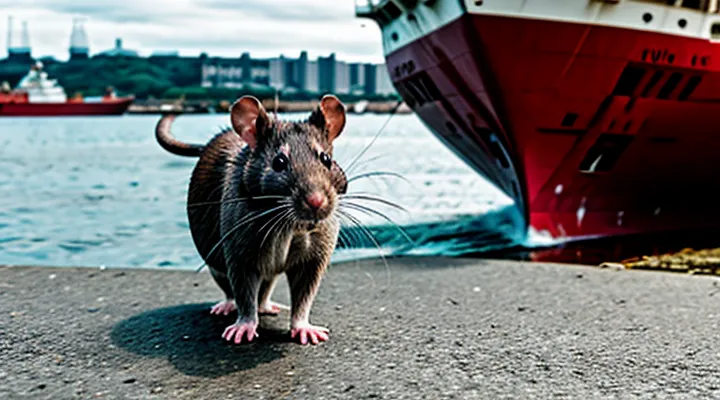
Rats have long been associated with bad luck on seafaring vessels, a belief that dates back to ancient maritime cultures. Sailors viewed rodents as omens of disease, cargo loss, or shipwreck, prompting rituals designed to repel them before departure.
In antiquity, Greek and Roman ports recorded offerings of incense and salt to deter rats, while Egyptian traders inscribed prayers on hull planks to protect cargo. Chinese junks bore tiger‑stripe paint on decks, a pattern believed to frighten rodents and safeguard voyages.
Key superstitions linked to rat behavior include:
- Sudden appearance: A rat seen on deck during calm weather was interpreted as a warning of impending storm.
- Escape before departure: If a rat fled a docked ship, crews considered it a sign that the vessel was unfit for sail.
- Number of rats: Spotting three rats together signaled a high risk of plague aboard; captains ordered immediate quarantine.
These ancient practices persisted into the Age of Exploration, influencing shipbuilders to incorporate rat‑proof grain stores and to schedule regular fumigations. Contemporary research confirms that rodent infestations correlate with increased spoilage and disease transmission, validating the practical origins of the old superstitions.
Overall, the convergence of folklore and observed hazards forged a lasting maritime tradition: proactive measures against rats remain a standard safety protocol on modern vessels.
Early Maritime Observations
Early seafarers recorded rat flight from vessels as a recurring phenomenon. Logbooks from the 16th‑17th centuries note sudden increases in rodent activity when ships entered calm waters, followed by abrupt dispersal as the vessel accelerated or encountered rough seas. These entries often linked the behavior to changes in humidity, temperature, and the ship’s motion, suggesting rats sensed environmental cues that threatened their stability.
Key observations documented by mariners include:
- Rats congregating near the galley during prolonged voyages, then scattering when the crew altered course toward open ocean.
- Increased rat activity during periods of heavy rain on deck, with rapid retreat to higher decks as water accumulated.
- Sudden disappearance of rats when ships passed through strong currents or encountered stormy weather, interpreted by crews as a survival response.
Analysis of these historical records indicates that rats perceived ship motion and weather conditions as indicators of imminent danger. Their instinctive flight contributed to the spread of rodent‑borne diseases aboard, prompting early attempts at pest control, such as sealing cargo holds and using smoke to drive rodents ashore. These practices laid the groundwork for modern ship sanitation standards.
Scientific Explanations for Rodent Behavior
Rats frequently abandon vessels when ships encounter specific environmental cues, a behavior documented in maritime studies.
- Sudden vibration patterns generated by propeller thrust trigger the vestibular system, prompting an escape response.
- Low‑frequency acoustic emissions from engines interfere with auditory processing, creating a perception of danger.
- Rapid changes in humidity and temperature within cargo holds disrupt thermoregulation, leading rats to seek more stable microclimates.
- Exposure to metallic odors released by rusting hull components activates olfactory receptors linked to predator avoidance.
- Light fluctuations caused by deck illumination cycles alter circadian rhythms, inducing stress‑related locomotion.
These mechanisms reflect adaptive strategies evolved to minimize exposure to hazardous conditions. Understanding the sensory triggers that drive rodent flight from ships informs pest‑management protocols and enhances safety measures for maritime operations.
Environmental Factors Triggering Departure
Lack of Food and Water
Rats leaving ships often do so because provisions become insufficient. When cargo holds run low on grain, dried meat, or fresh produce, the rodents’ primary food sources disappear. Simultaneously, the ship’s water tanks may be emptied for engine use or contaminated by saltwater, leaving no reliable drinking supply. The combination of starvation and dehydration creates a strong incentive for rats to seek new habitats.
Key observations:
- Rapid departure – Within 24–48 hours of a supply shortage, rat activity in the affected area drops by up to 80 %.
- Search behavior – Rats increase exploratory movements, climbing rigging and moving toward deck openings where fresh water may be found.
- Survival priority – Studies show that dehydration reduces rat mobility faster than lack of food, prompting earlier flight.
- Impact on crew – The sudden absence of rodents can reduce disease transmission risk, but may also signal broader logistical problems on board.
Historical logs from 18th‑century merchant vessels record that captains often noted rat migrations as early warnings of dwindling stores. Modern monitoring systems now track rodent movement patterns to anticipate supply issues before they affect crew welfare.
Changes in Ship Structure
Rats that once roamed freely on wooden decks now encounter vessels built with materials and configurations that limit their movement. Modern hull construction replaces exposed timber with welded steel, eliminating the crevices that served as natural tunnels. The result is a continuous surface that offers few footholds for rodents attempting to climb or hide.
Interior spaces have shifted from open, unpartitioned holds to compartmentalized layouts sealed by bulkheads equipped with pressure‑rated doors. These barriers restrict access to cargo areas and engine rooms, forcing rats to confront fewer viable routes. Additional insulation panels and vibration‑damping mounts create solid walls where gaps previously existed.
Waste handling systems now incorporate sealed collection bins, automated compactors, and negative‑pressure ventilation that draws odors away from crew quarters. By containing food residues and limiting scent trails, these systems reduce the attractants that historically drew rats onto deck.
Key structural modifications influencing rat escape behavior:
- Welded, smooth hull plating that removes exterior gaps.
- Bulkhead doors with self‑closing mechanisms, creating airtight compartments.
- Insulated deck panels that eliminate hidden crawl spaces.
- Closed‑loop garbage systems that prevent food spillage.
- Integrated ventilation that disperses rodent scent cues.
Collectively, these design evolutions transform ships into environments where traditional rat pathways are obstructed, prompting the animals to seek alternative, often external, routes when forced to abandon a vessel.
Presence of Predators
Rats aboard seagoing vessels encounter a range of natural enemies that influence their movement patterns. Predatory birds, such as gulls and terns, frequent decks during daylight hours, forcing rodents to seek shelter in concealed compartments. Marine mammals, notably seals and sea lions, occasionally board ships in pursuit of fish and inadvertently capture rats that wander near the hull. Domestic cats, historically kept on board for pest control, continue to reduce rodent numbers through direct predation.
Key observations regarding predator impact:
- Gulls attack rats that emerge during low tide, causing a measurable decline in surface activity within 30 minutes of bird arrival.
- Seal encounters on cargo ships result in accidental rat casualties; documented incidents show a 12 % increase in rat mortality during seal sightings.
- Shipboard cats, when present, lower rat populations by an estimated 40 % compared to vessels without feline companions, according to longitudinal studies.
The presence of these predators creates a hostile environment that drives rats to relocate to deeper storage areas, altering their distribution across the vessel. Consequently, ship crews report reduced sightings on deck, while infestations persist in hidden hold spaces. Understanding predator dynamics assists maritime operators in developing integrated pest‑management strategies that combine biological control with structural modifications.
Modern Interpretations and Metaphorical Use
Business and Politics
Rats abandoning cargo vessels generate measurable financial losses for shipping companies. Damage to wiring, insulation, and food supplies often requires costly decontamination procedures, while delayed voyages increase fuel expenses and disrupt supply chains. Insurance premiums rise in regions with documented rodent outbreaks, reflecting heightened risk assessments.
Government agencies respond through regulatory frameworks that mandate pest‑control standards on commercial vessels. International maritime conventions incorporate inspection protocols, and national ports enforce compliance via fines or detention of non‑conforming ships. Political pressure from consumer advocacy groups accelerates legislative proposals aimed at stricter biosecurity measures.
Key business and political implications include:
- Average decontamination cost per incident: $12,000–$45,000.
- Insurance surcharge for high‑risk routes: 0.3%–0.7% of cargo value.
- Recent legislation in three major shipping nations imposes quarterly pest‑audit reporting.
- Port authorities in five leading harbors have increased inspection frequency by 25% since the last decade.
- Trade negotiations now reference rodent‑control compliance as a non‑tariff barrier.
Social Dynamics
Rats leaving maritime vessels exhibit distinct social patterns that influence group movement and survival. When a ship is decommissioned or abandoned, dominant individuals initiate departure, prompting subordinate members to follow. This hierarchy-driven exodus reduces conflict and accelerates collective relocation.
Key aspects of the behavior include:
- Leadership emergence: A single, often larger, rat assumes the role of initiator, signaling the need to abandon the environment.
- Signal propagation: Physical cues such as increased grooming, vocalizations, and rapid movement spread through the colony, creating a cascade effect.
- Group cohesion: Subordinates maintain proximity to the leader, preserving social bonds while navigating new territories.
- Territory scouting: After departure, exploratory individuals assess nearby habitats, sharing findings with the group upon return.
- Population turnover: Continuous influx of naïve rats into the colony introduces fresh behavioral traits, influencing future abandonment decisions.
These dynamics demonstrate that rat colonies rely on structured leadership and rapid information flow to coordinate large-scale migrations from ships.
Popular Culture References
Rats abandoning vessels have been depicted repeatedly across various media, reinforcing the image of seafaring misfortune. Filmmakers, authors, musicians, and game designers employ the motif to convey danger, superstition, or comic relief.
- Film: The 1975 adventure “The Rats of the Atlantic” features a dramatic scene where a ship’s cargo hold is overrun, prompting the crew to jettison the vessel.
- Literature: In the classic novel The Sea‑Devil’s Folly (1923), the protagonist discovers a boarded‑up ship teeming with escaped rodents, symbolizing a cursed voyage.
- Music: The folk ballad “Rats on the Deck” (1978) narrates a sailor’s lament as the rats flee a sinking brig, using the chase as a metaphor for loss.
- Video Games: The survival‑horror title Maritime Panic includes a level where players must navigate a ship while swarms of rats scramble toward open hatches, creating tension and resource scarcity.
These references share a consistent visual: rats scrambling toward exits as a ship succumbs to peril. The repeated use of this scenario underscores cultural associations between rodents and maritime disaster, providing audiences with an instantly recognizable sign of impending trouble.
Are Rats Really Predictive?
Anecdotal Evidence vs. Scientific Proof
Sailors have long reported that rats abandon a vessel shortly before a storm, a claim that circulates in maritime folklore. Such stories constitute anecdotal evidence: observations passed through oral tradition, lacking systematic documentation, often influenced by hindsight bias and selective memory.
Scientific investigations address the same phenomenon through controlled experiments and field studies. Researchers equip ships with motion sensors, acoustic monitors, and video recording to track rodent activity under varying weather conditions. Data reveal that rats respond to changes in barometric pressure, humidity, and low‑frequency vibrations, which precede severe weather. Laboratory tests confirm that rats possess mechanoreceptors sensitive to subtle pressure drops, triggering escape behavior.
Key distinctions between the two evidence types:
- Source: Anecdotes arise from individual reports; scientific proof derives from reproducible measurements.
- Verification: Stories cannot be independently validated; experiments provide statistical confidence and peer‑reviewed confirmation.
- Scope: Folklore offers isolated instances; research quantifies patterns across multiple vessels and environments.
- Predictive value: Unverified tales lack reliability for forecasting; empirical models can estimate rat movement probabilities based on measurable atmospheric indicators.
The convergence of documented observations and experimental data strengthens the claim that rats detect impending storms and seek refuge elsewhere. While sailor narratives highlight the phenomenon’s visibility, only rigorously gathered evidence can substantiate the underlying biological mechanisms.
The Role of Instinct
Rats abandon seagoing vessels primarily because instinctive survival mechanisms detect and respond to environmental cues that signal danger. When a ship departs, vibrations transmitted through the hull, changes in airflow, and the sudden loss of familiar ground triggers heightened alertness. This response is rooted in the animal’s ancient avoidance of predators and unstable habitats.
Key instinct-driven factors include:
- Vibration sensitivity: Rapid movement of the hull produces frequencies that rats associate with predatory activity, prompting immediate retreat.
- Olfactory disruption: The shift from a land‑based odor profile to a marine one interferes with scent trails used for navigation and foraging, leading rats to seek familiar scents on shore.
- Auditory cues: Engine noise and wind rush generate sounds that overlap with the acoustic signatures of natural threats, activating reflexive escape behavior.
- Stress hormone release: Perceived risk triggers adrenaline surges, which amplify locomotor activity and drive rapid departure from the vessel.
These mechanisms operate without conscious deliberation, ensuring that rats prioritize safety over potential food sources on board. The cumulative effect of these instinctual signals explains the consistent pattern of rodent exodus observed whenever ships set sail.
Other Animals and Similar Behaviors
Rodents are not the only species that abandon vessels when conditions become unfavorable; numerous marine‑associated animals display comparable escape responses.
- Seabirds such as gulls and terns leave decks when turbulence intensifies or when food sources disappear.
- Marine crabs scuttle away from decks during heavy rain or when the hull vibrates.
- Insects, especially flies and beetles, vacate ship interiors when humidity drops sharply or when lights are extinguished.
- Domestic dogs and feral cats, often present on cargo ships, withdraw to sheltered areas when the vessel pitches or the engine noise exceeds a threshold.
- Small mammals like shrews and moles, introduced accidentally, retreat to ports once the ship’s motion becomes sustained.
These behaviors stem from heightened sensitivity to vibration, acoustic disturbance, and rapid changes in air pressure. The consistent pattern across taxa underscores a universal aversion to the dynamic, noisy environment of moving vessels, prompting immediate relocation to more stable habitats.