
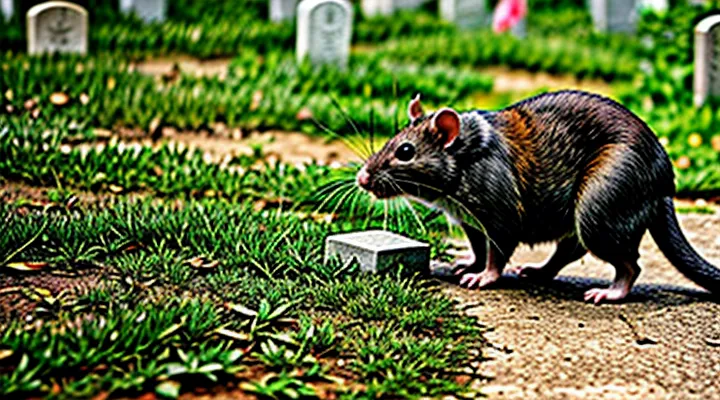
The Allure of Cemeteries for Rodents
Environmental Factors Attracting Rats
Abundant Shelter and Hiding Spots
Rats inhabiting burial grounds exploit the numerous structures that provide protection from predators and environmental extremes. Stone mausoleums, brick crypts, and weathered tombstones create cavities, crevices, and recessed niches ideal for nesting and concealment.
Key shelter features include:
- Wall cracks and mortar gaps – allow entry and ventilation while shielding offspring.
- Underground chambers – retain stable temperature and humidity, supporting colony growth.
- Loose soil and leaf litter – offer temporary cover during foraging excursions.
- Abandoned burial containers – serve as insulated burrows that reduce exposure to wind and rain.
The spatial arrangement of monuments creates a mosaic of overlapping refuges. Over time, rats modify these spaces, enlarging openings and depositing nesting material, which further enhances the suitability of the site for long‑term occupation.
Food Sources: Offerings and Vegetation
Rats frequent burial grounds because they encounter reliable food supplies. Human offerings, such as bread, fruit, and candy placed on graves, provide high‑calorie resources that attract individuals seeking easy nourishment. These items often remain unprotected, allowing rodents to access them throughout the year.
Vegetation growing among tombstones also supports rodent populations. Native grasses, shrubs, and invasive weeds produce seeds, shoots, and root material that supplement the diet of foraging individuals. Seasonal growth patterns create predictable periods of abundance, prompting increased activity near dense plant clusters.
Key food sources observed in cemetery environments include:
- Grains and baked goods left as memorials
- Fresh fruit and confectionery items
- Seeds and husks from ornamental plants
- Roots and tender shoots of weeds such as dandelion and plantain
The combination of anthropogenic offerings and naturally occurring vegetation establishes a dual feeding strategy. Rodents exploit the predictable presence of human‑provided sustenance while supplementing it with plant matter that emerges from the surrounding landscape. This adaptability underlies their persistent presence in burial sites.
Reduced Predation in Urban Green Spaces
Urban green areas often lack the array of natural predators that control rodent numbers in more heterogeneous landscapes. The scarcity of birds of prey, foxes, and free‑roaming cats results from limited cover, frequent human disturbance, and fragmented habitat patches. Consequently, rats encounter fewer lethal encounters while foraging or nesting.
Reduced predation pressure drives measurable changes in rodent behavior. Population counts in park lawns and cemetery grounds show higher densities than in adjacent residential zones. Activity patterns shift toward increased nocturnal foraging, as the risk of daylight exposure diminishes. Social structures become more fluid, with larger colonies forming around reliable food sources such as litter, compost, and seed beds.
The behavioral adjustments have direct consequences for urban ecosystems. Elevated rat numbers raise the probability of pathogen spillover to humans and domestic animals. Competition for limited resources intensifies, potentially displacing smaller mammals and altering seed‑dispersal dynamics. Management strategies must therefore address predator scarcity alongside sanitation measures.
Key outcomes of limited predator presence in green spaces:
- Higher rodent population density
- Extended nocturnal activity windows
- Expanded colony size and territorial range
- Increased risk of disease transmission
- Greater impact on native wildlife and vegetation
Behavioral Patterns and Adaptations
Nocturnal Activities and Foraging Strategies
Scavenging Habits and Dietary Diversity
Rats inhabiting burial grounds exhibit opportunistic foraging patterns that reflect the unique resources available in such environments. Decomposing organic matter from coffins, floral offerings, and animal remains provides a reliable protein source, while discarded human artifacts contribute supplemental nutrients. These rodents adjust their activity cycles to the intermittent availability of fresh material, often increasing nocturnal excursions when cemetery maintenance pauses.
Key components of their diet include:
- Decaying tissue from interred fauna
- Plant material from gravesite flora and seasonal bouquets
- Residual food waste from visitor picnics or ceremonial gatherings
- Inorganic items such as paper, cloth fragments, and small metal objects that facilitate gnawing behavior
The dietary breadth observed among cemetery-dwelling rats surpasses that of urban counterparts, driven by the heterogeneous mix of biological and anthropogenic substrates. This flexibility enhances survival rates in environments where conventional food supplies fluctuate dramatically throughout the year.
Burrowing and Nesting in Grave Sites
Rats frequently select burial grounds for their subterranean activities because the soil beneath gravestones offers moisture, compactness, and limited disturbance. The layered composition of cemetery earth—often a mix of sand, clay, and organic matter—provides optimal conditions for excavation and thermal regulation. Limited human traffic during nighttime further reduces the risk of detection.
Burrowing in these sites follows recognizable patterns. Rats typically construct primary tunnels 10–15 cm below the surface, expanding into secondary chambers that can reach depths of 30–45 cm when soil permits. Tunnel networks often intersect with existing voids created by older graves, allowing rapid extension without extensive digging. Entrance shafts are commonly concealed behind stone markers or dense vegetation, minimizing exposure.
Nesting behavior aligns closely with the burrow architecture. Within secondary chambers, rats assemble nests using shredded plant material, paper remnants from memorials, and soft organic debris. Nest placement favors the most insulated sections of the tunnel, often near the base of a grave where temperature fluctuations are minimal. Seasonal adjustments are evident: during colder months, nests become more compact and incorporate additional insulating layers; in warmer periods, rats increase ventilation by enlarging tunnel openings.
Observed consequences of these activities include:
- Structural weakening of headstones and monuments due to root intrusion and soil displacement.
- Accelerated decomposition of organic offerings caused by increased microbial activity linked to rodent waste.
- Potential transmission of zoonotic pathogens through rat droppings and ectoparasites.
- Disruption of archaeological layers, complicating preservation efforts.
Social Dynamics within Cemetery Rat Colonies
Territoriality and Hierarchical Structures
Rats that occupy burial grounds establish exclusive zones that correspond to the spatial layout of tombstones, mausoleums, and vegetation clusters. Each zone is defended through scent marking, gnawing on stone edges, and aggressive encounters that deter intruders. The boundaries are not static; they shift in response to changes in resource availability, such as the presence of carrion or human activity.
Within these zones, a clear dominance hierarchy regulates access to food and shelter. The hierarchy consists of:
- Alpha male: controls the central, most resource‑rich area; initiates scent marking and suppresses rivals.
- Beta individuals: occupy peripheral sections; submit to alpha cues but may challenge weaker members.
- Subordinate rats: remain near the periphery; avoid direct confrontations; exploit fleeting food sources.
Dominance is reinforced by vocalizations, tail postures, and the frequency of scent deposits. Higher‑ranked individuals receive priority during feeding bouts and retain preferred nesting sites, while lower ranks experience displacement to less protected microhabitats. This structure ensures efficient allocation of limited resources and maintains stability in the densely populated cemetery environment.
Reproductive Success in a Stable Environment
Rats that inhabit burial grounds experience a relatively constant microclimate, limited human interference, and predictable food sources such as carrion and organic debris. These conditions reduce stressors that typically suppress breeding cycles, allowing individuals to allocate more energy to reproduction.
Stable temperature and humidity levels support faster embryonic development, resulting in shorter gestation periods and higher litter survival rates. Access to abundant, year‑round nourishment promotes frequent estrus cycles, enabling females to produce up to three litters annually with average sizes of six to eight pups.
Key determinants of reproductive success in this niche include:
- Consistent shelter that protects nests from predators and weather extremes.
- Reliable food supply minimizing maternal weight loss during lactation.
- Low population turnover, which maintains experienced breeders within the community.
Genetic analysis of cemetery‑dwelling rats reveals limited influx of outside individuals, fostering a closed gene pool. While this can increase inbreeding risk, the stable environment mitigates deleterious effects by allowing individuals to reach optimal body condition before breeding, thereby enhancing offspring viability.
Overall, the combination of environmental constancy, secure nesting sites, and steady nutrition creates conditions under which rat populations in burial sites achieve elevated reproductive output compared with more disturbed urban habitats.
Impact on the Ecosystem and Human Interactions
Role in Decomposition and Seed Dispersal
Rats inhabiting burial grounds accelerate decomposition by consuming carrion, soft tissue, and organic debris left on graves. Their gnawing activity fragments remains, increasing surface area exposed to microbial action and hastening nutrient release into the soil. In addition, excrement deposits introduce nitrogen and phosphorus, enriching the substrate for decomposer communities.
- Consumption of dead tissue creates entry points for bacteria and fungi.
- Mechanical breakdown of skeletal material distributes organic particles throughout the soil profile.
- Urine and feces supply essential nutrients that stimulate microbial growth.
Seed dispersal occurs when rats ingest fruits, grains, or plant parts that contain viable seeds. After passage through the digestive tract, seeds are expelled in feces, often at locations distant from the original source. This process deposits seeds in nutrient‑rich microhabitats created by the rats’ activities, enhancing germination prospects.
- Ingested seeds experience scarification, improving germination rates.
- Defecation sites coincide with disturbed soil, providing favorable conditions for seedling establishment.
- Movement patterns of rats transport seeds across cemetery plots, extending plant distribution beyond natural dispersal ranges.
Potential for Disease Transmission
Rodent populations that inhabit burial sites serve as reservoirs for several zoonotic agents. Their close proximity to decomposing organic matter and human visitors creates pathways for pathogen exchange.
Key vectors include:
- Bacteria: Salmonella spp., Leptospira interrogans, and Yersinia pestis have been isolated from sewer rats and can survive in soil enriched by corpse fluids.
- Viruses: Hantavirus, Lassa‑like arenaviruses, and certain enteric viruses have been detected in fecal samples of cemetery‑dwelling rodents.
- Parasites: Toxoplasma gondii cysts and various helminth eggs are shed in rat feces, contaminating the ground surface.
Transmission routes relevant to cemetery environments:
- Aerosolization of contaminated dust during ground disturbance, allowing inhalation of bacterial or viral particles.
- Direct contact with rat urine, feces, or saliva while handling graveside artifacts or performing maintenance tasks.
- Secondary vectors such as insects or scavenging birds that acquire pathogens from rodent droppings and subsequently interact with humans.
Environmental conditions typical of burial grounds—high humidity, abundant organic debris, and limited predator pressure—support rodent survival and increase microbial load. Surveillance data from urban cemeteries report higher incidence of leptospirosis and hantavirus infections among workers compared with the general population.
Mitigation measures should prioritize rodent control, sanitation of burial sites, and personal protective equipment for personnel engaged in grave excavation or maintenance. Regular testing of soil and water sources for pathogenic markers can identify emerging risks before outbreaks occur.
Management Strategies and Coexistence
Effective management of rodent activity in burial grounds requires a combination of preventive measures, targeted interventions, and ongoing monitoring.
Physical barriers such as sealed drainage, reinforced perimeter fencing, and rodent‑proof waste containers limit access to food and shelter. Regular inspection of graves, mausoleums, and surrounding vegetation identifies structural weaknesses that could harbor nests.
Chemical control should be limited to strategically placed bait stations, positioned away from public pathways and marked for maintenance personnel. Use of anticoagulant baits with tamper‑resistant design reduces risk to non‑target species and minimizes environmental impact.
Biological approaches include encouraging natural predators—owls, hawks, and certain snake species—by installing nesting boxes and maintaining open sightlines. Habitat modification, such as trimming overgrown shrubs and removing debris, reduces cover that attracts rodents.
Community engagement reinforces coexistence. Training cemetery staff on identification of rodent signs, proper waste handling, and safe bait placement improves response time. Public education materials explain why control measures are necessary and outline steps visitors can take to avoid unintentionally providing food sources.
A systematic schedule ensures continuity:
- Monthly perimeter and structural inspection.
- Quarterly habitat clearing and vegetation management.
- Biannual review of bait station locations and efficacy.
- Annual assessment of predator support installations.
Data collected during inspections feed into a centralized log, allowing trend analysis and adjustment of tactics. Consistent documentation supports evidence‑based decision making and demonstrates compliance with health and safety regulations.
By integrating physical, chemical, biological, and educational components, burial sites can maintain operational integrity while minimizing conflict with resident rodent populations.
Unique Observational Opportunities
Studying Rat Intelligence and Problem-Solving
Navigating Complex Terrain
Rats inhabiting burial grounds confront a mosaic of obstacles: irregular stone slabs, shallow graves, dense root systems, and seasonal debris. These features create a three‑dimensional matrix that demands precise locomotion and rapid decision‑making.
Key sensory inputs that enable successful movement include:
- Vibrissae detecting surface irregularities within a few centimeters.
- Olfactory receptors identifying fresh organic material and predator scents.
- Auditory cues locating conspecific activity and potential threats.
Observed behavioral strategies consist of:
- Selecting routes that minimize elevation changes, often following the edges of monuments where soil remains compact.
- Exploiting micro‑shelters formed by fallen leaves or broken tombstones to avoid exposure.
- Coordinating movement through short‑range vocalizations, allowing group members to negotiate narrow passages without collisions.
- Adjusting activity patterns to low‑light periods, reducing visual reliance and leveraging enhanced whisker sensitivity.
Understanding these navigation tactics informs both ecological research and pest‑control protocols, emphasizing the need for terrain‑specific interventions rather than generic approaches.
Adapting to Human Presence
Rats inhabiting burial grounds exhibit a suite of behavioral adjustments that minimize conflict with visitors and maintenance crews. These adjustments stem from heightened sensitivity to human movement, sound, and light, prompting individuals to modify activity cycles, foraging routes, and shelter selection.
Key adaptations include:
- Shifting foraging to nocturnal hours when foot traffic declines.
- Utilizing deep soil burrows and concealed niches beneath monuments to avoid exposure.
- Reducing vocalizations and grooming displays that could attract attention.
- Developing tolerance for intermittent artificial lighting by retreating to insulated microhabitats during illumination periods.
Population studies reveal that colonies which adopt these strategies maintain stable numbers despite regular human disturbance, whereas groups lacking such flexibility experience increased mortality and displacement. The observed patterns underscore the capacity of cemetery‑dwelling rodents to recalibrate their ecological niche in direct response to anthropogenic pressures.
Long-Term Behavioral Studies
Population Dynamics and Fluctuations
Rats inhabiting burial grounds exhibit population patterns shaped by resource availability, seasonal climate, and interspecific competition. Birth rates peak during warm months when soil temperature accelerates embryonic development, while mortality rises in winter due to reduced foraging opportunities and increased exposure to predators such as owls and feral cats.
Fluctuations in colony size often correspond to the cyclical nature of human activity in these sites. Periods of heightened visitation generate additional food waste, temporarily boosting reproductive output. Conversely, restricted access during holidays or maintenance closures reduces supplemental nutrition, leading to a measurable decline in individual survival rates.
Key drivers of demographic change include:
- Food input variability: organic debris from ceremonies, floral offerings, and visitor litter.
- Habitat modification: grave digging, landscaping, and ground cover alteration affecting shelter availability.
- Predator presence: fluctuating populations of nocturnal raptors and domestic animals.
- Disease transmission: outbreaks of pathogens such as hantavirus can cause rapid mortality spikes.
Long‑term monitoring reveals a quasi‑periodic oscillation with a typical cycle of 2–3 years, reflecting the interplay between reproductive bursts and subsequent resource depletion. Statistical models that integrate temperature, food flux, and predator indices accurately predict population peaks and troughs, informing management strategies for both public health and cemetery maintenance.
Seasonal Variations in Activity
Rats inhabiting burial grounds display distinct seasonal activity cycles that correspond to temperature fluctuations, food availability, and reproductive timing. Researchers monitoring these sites record measurable changes in movement patterns, population density, and shelter use throughout the year.
In early spring, rising temperatures trigger a surge in foraging excursions. Young adults emerging from winter torpor increase surface activity to locate carrion and decomposing organic material. Breeding pairs establish new nests within mausoleum foundations, resulting in observable spikes in nest construction and litter size.
Summer represents the peak of rodent presence. Elevated ambient heat drives nocturnal foraging, while daytime sheltering intensifies within crypts and underground chambers. Food scarcity on the surface prompts rats to exploit anthropogenic sources such as grave‑yard maintenance supplies, leading to higher rates of human‑rat encounters.
Autumn brings a gradual decline in surface activity. Individuals begin consolidating resources, stockpiling food in hidden caches and reinforcing nest structures. Seasonal migration toward warmer microhabitats within the cemetery complex reduces overall movement distances, and social hierarchies become more pronounced as competition for dwindling supplies intensifies.
Winter imposes the most restrictive conditions. Metabolic rates drop, and rats limit excursions to essential foraging trips during brief daylight windows. Burrow networks within tombs provide thermal insulation, resulting in concentrated occupancy of a few well‑insulated chambers. Sporadic surface activity occurs only when external temperatures rise above freezing for extended periods.
Key seasonal variations
- Spring: heightened foraging, nest building, reproductive activity.
- Summer: maximal population density, nocturnal shift, reliance on human‑derived food.
- Autumn: resource consolidation, reduced movement, increased social stratification.
- Winter: suppressed locomotion, dependence on insulated chambers, occasional surface forays.
Conservation and Ethical Considerations
Protecting Historical Sites from Rodent Damage
Non-Lethal Deterrents and Exclusion
Non‑lethal methods focus on preventing rats from entering burial grounds and encouraging them to leave without causing injury.
Ultrasonic emitters generate frequencies beyond human hearing. Continuous operation disrupts rodent communication, reducing activity near graves. Devices require periodic battery replacement and strategic placement to cover all open zones.
Scent repellents exploit rodents’ aversion to strong odors. Common agents include peppermint oil, ammonia, and predator urine. Application involves soaking cloth strips or installing slow‑release dispensers along perimeter walls and beneath monuments. Effectiveness declines after several weeks, necessitating reapplication.
Physical barriers block access points. Recommended measures:
- Install stainless‑steel mesh (¼‑inch openings) over drainage pipes and vent stacks.
- Seal cracks in stonework with epoxy or cement mortar.
- Fit self‑closing flaps on service doors.
- Cover ground surfaces with concrete or compacted gravel to eliminate loose soil.
Habitat modification removes attractants. Regularly clear vegetation, eliminate food waste, and maintain dry conditions to discourage nesting. Compost piles and feeding stations must be relocated outside cemetery limits.
Live‑capture traps provide temporary removal. Snap‑free mechanisms are prohibited; instead, use multi‑catch cages with bait. Captured rats are released at least five miles from the site, complying with local wildlife regulations.
Exclusion protocols require systematic inspection. Survey each structure for gaps larger than ½ inch, document findings, and prioritize repairs based on proximity to high‑traffic areas. Follow‑up checks verify integrity after weather events.
Integrating these strategies creates a layered defense that deters colonization, protects cultural heritage, and avoids lethal outcomes. Continuous monitoring and timely maintenance sustain long‑term effectiveness.
Habitat Modification to Discourage Infestation
Rats frequently exploit the unique conditions of burial grounds, where abundant organic material, sheltered niches, and occasional moisture create attractive habitats. Modifying these environmental factors reduces the likelihood of colonization and limits population growth.
Effective habitat alteration focuses on eliminating resources and access points. Key actions include:
- Removing decomposing food waste and animal remains promptly.
- Trimming dense vegetation and roots that provide cover and travel routes.
- Sealing cracks, gaps, and utility openings with cement, steel mesh, or weather‑resistant sealants.
- Controlling standing water by improving drainage and repairing leaks.
- Storing maintenance equipment and supplies in locked, rodent‑proof containers.
Structural adjustments further discourage settlement. Installing smooth, raised flooring in mausoleum aisles prevents burrowing; applying metal flashing around foundation walls blocks upward movement; and using concrete or metal grates over ventilation shafts eliminates entry without compromising airflow.
Regular monitoring reinforces prevention. Conduct periodic inspections for fresh gnaw marks, droppings, or burrows; document findings; and respond immediately with targeted habitat changes. Consistent application of these modifications sustains a less hospitable environment, reducing rat presence in cemetery settings.
Public Perception and Education
Dispelling Myths about Cemetery Rats
Cemetery rats are often portrayed as carriers of disease, nocturnal predators of graves, and symbols of decay. Scientific observation contradicts these assumptions.
-
Myth: Rats spread lethal pathogens from graves to humans.
Fact: Studies of rodent populations in burial sites show low prevalence of zoonotic bacteria. The soil environment and limited contact with living hosts reduce transmission risk. -
Myth: Rats actively dig up coffins or disrupt interments.
Fact: Rats prefer shelter and food sources such as organic debris, not human remains. Excavation behavior is directed toward loose soil and leaf litter, not sealed caskets. -
Myth: Cemetery rats are unusually aggressive toward visitors.
Fact: Behavioral assays indicate typical avoidance of humans. Aggression increases only when individuals are cornered or provoked, mirroring standard rodent responses. -
Myth: The presence of rats signifies neglect or poor cemetery management.
Fact: Rat occupancy correlates with natural habitat features—dense vegetation, moisture, and abundant ground cover—rather than maintenance standards. Proper landscaping can coexist with stable rodent populations. -
Myth: Rat activity accelerates decomposition of buried bodies.
Fact: Decomposition is driven primarily by microbial activity and environmental conditions. Rats rarely access sealed containers, and their limited scavenging does not alter decay rates.
Current research emphasizes ecological roles: rodents aid in seed dispersal, contribute to nutrient cycling, and serve as prey for avian predators. Recognizing these functions dissolves unfounded fears and supports balanced cemetery stewardship.
Promoting Respect for Wildlife in Urban Areas
Observations of rodent activity in burial grounds reveal patterns of adaptability, social interaction, and resource use that challenge common perceptions of urban wildlife. These insights provide a factual basis for encouraging humane attitudes toward all city-dwelling species.
- Identify shared habitats: map locations where rats and other wildlife intersect with human infrastructure, such as green spaces adjacent to cemeteries, to highlight ecological connectivity.
- Communicate scientific findings: distribute concise reports that describe observed foraging routes, nesting preferences, and nocturnal movements, emphasizing the species’ role in waste decomposition and soil aeration.
- Integrate educational signage: place durable panels at entry points of public parks and historic sites, presenting clear visual data on rodent behavior and its contribution to urban ecosystems.
- Promote coexistence policies: adopt municipal guidelines that prioritize non-lethal control methods, support habitat enhancement (e.g., native vegetation buffers), and require regular monitoring of wildlife populations.
- Encourage community participation: organize citizen‑science programs where residents record sightings and behavior, fostering direct engagement and reducing fear through familiarity.
Implementing these measures aligns public perception with empirical evidence, fostering respect for wildlife while maintaining urban health and safety.