
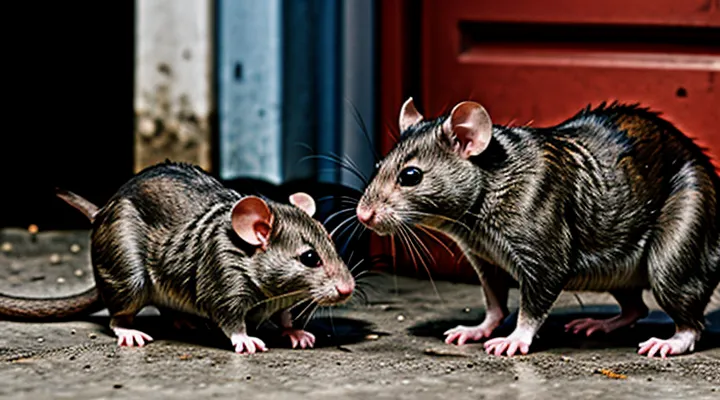
The Instinctive Nature of Rat Fear
Evolutionary Roots of Fear
Rats have long evolved mechanisms that trigger avoidance of large, unfamiliar mammals. Predation pressure from ancestral carnivores selected individuals that rapidly recognized silhouettes, movement patterns, and scents associated with danger. Over generations, neural circuits linking visual and olfactory cues to the amygdala became highly sensitive, producing immediate flight responses when humans enter the environment.
Key evolutionary drivers of this aversion include:
- Size disparity – larger bodies pose a higher risk of crushing or capture.
- Unpredictable locomotion – bipedal gait differs from quadrupedal prey, increasing perceived threat.
- Chemical signatures – human sweat and skin oils contain compounds absent in natural rat habitats, signaling foreign presence.
- Historical encounters – repeated exposure to traps, poisons, and handling reinforced negative associations.
These factors operate together, creating a robust fear response that persists even when direct danger is absent. Understanding the ancestral origins of this behavior informs practical mitigation: minimizing sudden movements, reducing human scent residues, and providing secure shelters can attenuate the innate alarm system and encourage habituation.
Behavioral Manifestations of Fear
Physiological Responses
Rats exhibit a cascade of physiological changes when confronted with humans. The sympathetic nervous system activates, releasing adrenaline that accelerates heart rate and increases respiration. Cortisol levels rise, mobilizing energy reserves and suppressing non‑essential functions such as digestion. Pupil dilation and heightened alertness accompany these hormonal shifts, preparing the animal for rapid escape.
These internal responses manifest as observable behaviors: frantic movement, freezing, and heightened startle reflexes. Elevated body temperature and increased glucose uptake support the surge in activity. Chronic exposure to human presence can sustain stress hormones, leading to immunosuppression and reduced reproductive success.
Mitigation strategies target the physiological pathway to lower stress:
- Gradual desensitization through repeated, low‑intensity human interaction.
- Provision of secure nesting sites that shield rats from direct sight.
- Use of calming scents (e.g., lavender oil) to dampen sympathetic activation.
- Implementation of consistent feeding schedules to establish predictability.
- Environmental enrichment that encourages natural foraging and reduces perceived threat.
Applying these measures reduces adrenaline spikes, stabilizes cortisol, and promotes a calmer physiological state, thereby decreasing rat aversion to people.
Evasive Maneuvers
Rats perceive human presence as a primary threat because sudden movements, loud noises, and unfamiliar scents trigger their innate survival circuits. The heightened alertness leads to immediate activation of escape pathways, causing rats to flee or hide at the first sign of a person nearby.
To mitigate this fear, rats employ several evasive tactics that reduce the likelihood of direct confrontation. These tactics include:
- Rapid retreat along established burrow networks when a person approaches.
- Utilization of vertical escape routes, such as climbing walls or accessing overhead conduits.
- Sudden changes in direction to break the line of sight and confuse the pursuer.
- Deployment of scent masking behaviors, like rolling in soil or waste, to conceal their odor signature.
Implementing environmental modifications can discourage the need for these maneuvers. Providing secure shelter, minimizing sudden disturbances, and controlling lighting levels create conditions where rats feel less compelled to execute escape responses, thereby lowering overall stress levels and reducing the frequency of human‑rat encounters.
Environmental Factors Contributing to Fear
Human Presence and Activity
Noise Pollution
Noise pollution creates an environment that rats perceive as threatening. Sudden, high‑frequency sounds interfere with their auditory communication, mask predator cues, and elevate stress hormones, prompting avoidance of areas where humans generate such disturbances. This aversion intensifies when noise coincides with other stressors, such as bright lighting or frequent human movement, reinforcing the association between humans and hostile conditions.
The physiological impact of chronic acoustic stress includes disrupted circadian rhythms, reduced foraging efficiency, and impaired reproduction. Rats exposed to persistent mechanical or vehicular noise display heightened vigilance, increased grooming, and a tendency to retreat to secluded burrows. These behavioral changes diminish the likelihood of direct encounters with people, reinforcing the fear response.
Practical measures to lessen acoustic intimidation focus on reducing sound intensity and variability in spaces where human‑rat interactions occur:
- Install acoustic dampening panels or curtains around trash collection points and storage rooms.
- Schedule noisy activities (e.g., cleaning equipment, deliveries) during periods of low rat activity, typically daylight hours.
- Employ low‑frequency, steady‑state background sounds (e.g., white noise) to mask abrupt spikes that trigger alarm responses.
- Maintain equipment to prevent rattling or vibration that generates unpredictable noises.
Implementing these strategies lowers the auditory threat level, encouraging rats to habituate to human presence rather than flee, which contributes to more effective coexistence management.
Scent Trails
Rats rely heavily on olfactory cues to navigate environments and assess threats. Human scent, composed of skin secretions, sweat, and clothing residues, creates a chemical signature that rats detect as unfamiliar and potentially dangerous. When a rat encounters a fresh human odor, it interprets the signal as an indication of a predator, prompting avoidance behavior.
The intensity of a scent trail depends on several variables:
- Frequency of human activity in a given area; repeated presence reinforces the chemical imprint.
- Types of personal care products; strong fragrances amplify the trail.
- Moisture levels; damp conditions preserve odor molecules longer.
- Surface material; porous substrates retain scent more effectively than smooth surfaces.
Mitigation strategies focus on reducing the detectability and persistence of human odors in rodent habitats:
- Limit direct contact with potential nesting sites. Use gloves and protective clothing when cleaning or moving debris where rats may reside.
- Choose unscented or low‑odor personal care items while working in infested zones to minimize chemical load.
- Apply neutralizing agents such as enzymatic cleaners that break down organic compounds, thereby weakening the trail.
- Increase ventilation and reduce humidity to accelerate odor dissipation.
- Employ physical barriers, such as sealed containers and airtight waste bins, to prevent scent accumulation.
By controlling the chemical footprint left behind, property managers and pest control professionals can decrease the perceived risk rats associate with human presence, encouraging the animals to avoid areas inhabited by people. This approach complements other deterrent methods, creating a comprehensive plan to lessen rat fear of humans and reduce conflict.
Habitat Disturbance
Loss of Shelter
Loss of shelter pushes rats into open environments where encounters with people become frequent. When familiar burrows or nesting sites disappear, rodents must occupy exposed spaces such as basements, attics, or street sewers. These areas lack the protective cover that normally dampens their natural wariness, leading to heightened alertness and avoidance of human presence.
The psychological impact of shelter deprivation manifests as increased stress hormones, reduced confidence in foraging, and a tendency to flee at the slightest disturbance. Without a secure base, rats cannot establish stable foraging routes, making them more likely to retreat when humans appear, thereby reinforcing the perception of danger.
Effective mitigation focuses on restoring or providing alternative refuges while limiting access to human‑occupied zones. Key actions include:
- Sealing cracks, gaps, and utility openings to prevent entry into buildings.
- Installing insulated, predator‑proof nesting boxes in controlled outdoor locations.
- Maintaining dry, clutter‑free storage areas to discourage makeshift burrows.
- Conducting regular inspections to identify and repair structural damage promptly.
By ensuring continuous, safe shelter options, the stress response diminishes, rats become less prone to immediate flight, and the overall level of fear toward humans decreases.
Food Source Changes
Alterations in the availability, type, and distribution of food directly influence rats’ perception of human presence. When waste management improves or the quantity of accessible refuse declines, rats encounter fewer predictable feeding opportunities near dwellings. This scarcity forces them to travel farther, increasing exposure to open spaces where human activity is more frequent, thereby heightening avoidance behavior. Conversely, sudden spikes in food waste—such as seasonal market excesses or unsealed compost—create temporary hotspots that attract rats, but the associated human traffic around these sources reinforces fear responses.
Mitigation strategies that address food source dynamics reduce rat wariness of people:
- Secure all waste containers with tight‑fitting lids; replace damaged seals promptly.
- Schedule regular removal of organic refuse to prevent accumulation.
- Implement community composting systems that isolate food material from outdoor access.
- Conduct periodic audits of restaurant and market waste practices, enforcing compliance with disposal standards.
- Provide controlled bait stations away from human activity zones to satisfy nutritional needs without encouraging proximity to people.
By stabilizing the quantity and location of edible resources, rats experience fewer unpredictable encounters with humans, leading to a measurable decline in fear‑driven avoidance.
Psychological Aspects of Rat-Human Interaction
Learned Associations
Rats develop fear of people through associative learning, linking human presence with negative outcomes such as capture, handling, or exposure to unfamiliar sounds and scents. When a rat experiences a painful or stressful event in the vicinity of a person, the brain encodes the human as a predictor of danger, prompting avoidance behavior that persists long after the original incident.
Two primary pathways reinforce this response. Classical conditioning pairs neutral human cues—voice, footsteps, visual silhouette—with aversive stimuli, creating a conditioned stimulus that elicits anxiety. Operant conditioning strengthens avoidance when the rat discovers that retreating from a human reduces the likelihood of further harm, reinforcing escape actions.
Experimental observations confirm rapid acquisition of these associations. Laboratory rats exposed to mild electric shocks delivered while a researcher entered the cage displayed heightened startle responses to the researcher’s silhouette alone. Field studies report that urban rats exhibit increased vigilance and reduced foraging activity in areas with frequent human traffic, even when direct threats are absent.
Mitigating fear requires systematic re‑association of human cues with neutral or positive experiences. Effective interventions include:
- Gradual exposure: introduce the person’s presence at low intensity, paired with food rewards, and increase duration over successive sessions.
- Consistent scent management: use a stable, non‑threatening odor (e.g., vanilla or almond) during interactions to create a reliable olfactory context.
- Predictable behavior: maintain consistent movement patterns and avoid sudden gestures that could be interpreted as threatening.
- Positive reinforcement: deliver small, high‑value treats immediately after the rat observes the human, reinforcing a safe association.
Implementing these steps reshapes the rat’s mental map of humans, replacing avoidance with tolerance and, ultimately, reduced fear.
Conditioning and Habituation
Rats develop aversion to humans through associative learning and repeated exposure. Classical conditioning links the presence of a person with a negative stimulus—such as a sudden motion, loud noise, or handling that causes pain. The rat’s nervous system records this pairing, and the human becomes a conditioned cue that predicts danger. Operant conditioning reinforces avoidance when escape or cessation of the threat results in a reward, strengthening the fear response.
Habituation reduces fear when rats experience non‑threatening human contact over many sessions. Repeated, predictable interactions without adverse outcomes diminish the animal’s physiological arousal. The process requires consistent timing, low‑intensity handling, and the absence of startling cues. As the rat learns that the human presence no longer predicts harm, the fear response wanes.
Effective mitigation combines both mechanisms:
- Pair gentle handling with a neutral scent or treat to replace the negative association.
- Conduct daily short sessions (2–3 minutes) in a quiet environment, avoiding abrupt movements.
- Gradually increase proximity and duration while monitoring stress indicators such as freezing or rapid respiration.
- Provide a consistent reward after each exposure to reinforce safe expectations.
Implementing these steps reshapes the rat’s perception of humans, shifting from a conditioned threat to a habituated, neutral stimulus. The result is a measurable decline in avoidance behavior and physiological stress markers, facilitating safer and more reliable human‑rat interactions.
The Role of Experience
Rats develop aversion to people through direct encounters and learned associations. Negative interactions—such as being chased, trapped, or exposed to sudden movements—create lasting neural patterns that trigger heightened vigilance and avoidance when humans are present. Positive experiences, including gentle handling, consistent feeding, and predictable environments, can overwrite fear responses by reinforcing safety cues.
Repeated exposure to calm human behavior reduces stress hormones and diminishes the activation of the amygdala, the brain region responsible for fear. Gradual desensitization, where rats encounter humans at increasing proximity and duration, allows them to form new expectations that humans are not a threat.
Practical measures to modify rat attitudes:
- Offer food from a stationary hand or dispenser, ensuring the source remains constant.
- Approach slowly, avoiding abrupt gestures; maintain a low, steady voice.
- Conduct brief, regular interaction sessions, extending the time only after the rat shows relaxed posture.
- Provide shelter or nesting material near the interaction zone to associate the area with security.
- Limit exposure to predators or aggressive handling that could reinforce fear.
By systematically replacing adverse encounters with neutral or rewarding ones, rats adjust their risk assessment and display reduced avoidance of humans.
Practical Strategies for Reducing Rat Fear
Modifying Human Behavior
Quiet Approaches
Rats display avoidance when humans appear suddenly, make loud sounds, or emit strong odors. These stimuli activate the animal’s natural flight response, limiting effective observation and humane management.
Quiet approaches reduce the triggers that cause this reaction. Effective techniques include:
- Move at a steady, slow pace; abrupt steps provoke escape.
- Speak in a low, calm voice; high‑frequency sounds startle rodents.
- Wear clothing with neutral scent; strong fragrances mask familiar environmental odors.
- Approach from downwind; airflow carries the human’s scent away from the rat’s nose.
- Use dim, steady lighting; bright flashes increase alertness.
- Keep hands steady and visible; concealed movements generate uncertainty.
Implementing these measures lowers stress levels, improves handling safety, and yields more reliable behavioral data.
Predictable Movements
Predictable movements refer to human actions that follow a constant speed, direction, or pattern, allowing rats to anticipate when and where a person will appear. When people walk along the same corridor at the same time each day, or consistently enter a space from the same doorway, rats learn to associate that routine with potential threat. The regularity of these motions reinforces a perception of danger, prompting avoidance behavior and heightened stress responses in the animals.
Rats detect predictable motion through visual cues, vibrational feedback, and scent trails left by repeated passage. Consistent footfall frequency creates a rhythmic vibration in flooring and walls, which rats interpret as a recurring predator signal. Visual recognition of a familiar silhouette moving along a fixed trajectory further strengthens the association between that pattern and risk. Over time, the animal’s nervous system adopts a defensive posture, limiting exploration and increasing the likelihood of escape attempts.
Reducing rat fear involves disrupting the regularity of human activity. Effective measures include:
- Varying entry points: use multiple doors or windows to prevent rats from learning a single approach vector.
- Altering speed and timing: change walking pace and avoid identical schedules for entering a room.
- Introducing random pauses: insert brief, unpredictable stops while moving through rat‑infested areas.
- Using indirect pathways: employ detours or curved routes rather than straight lines that rats can easily map.
- Implementing physical barriers: place low fences or mats that absorb vibrations, breaking the continuity of footfall signals.
By minimizing the predictability of human motion, the perceived threat level for rats declines, leading to reduced avoidance behavior and facilitating more effective pest‑management interventions.
Habitat Management Techniques
Providing Safe Passages
Rats avoid human presence because scent, sudden movement, bright illumination, and audible disturbances trigger defensive behavior. When rats cannot locate secure routes, they resort to traversing open areas, increasing the likelihood of encounters with people and compromising pest‑management efforts.
Safe passages mitigate fear by offering concealed, low‑stress pathways that align with rats’ natural preferences for darkness, stability, and limited exposure to human cues. Effective passages share several core attributes:
- Placement along established rodent travel corridors, identified through observation or tracking data.
- Construction from durable, non‑reflective materials that block light and dampen sound.
- Entrance and exit openings sized to accommodate adult rats while preventing entry of larger predators.
- Integration of scent‑masking elements, such as neutral‑odor substrates, to reduce human odor detection.
- Regular cleaning to prevent buildup of waste, which can attract predators and elevate stress levels.
Implementation follows a systematic process:
- Conduct a field survey to map high‑traffic routes and pinpoint obstacles that force rats into exposed zones.
- Design passage prototypes that meet the attributes listed above, adjusting dimensions to local species variations.
- Install structures during periods of low human activity to minimize initial disturbance.
- Monitor usage through motion‑activated cameras or trace‑dust, recording frequency and direction of movement.
- Refine passage design based on observed behavior, addressing any bottlenecks or avoidance patterns.
When properly deployed, safe passages lower the incidence of rat‑human interactions, reduce stress‑induced aggression in rodent populations, and support more humane, effective control programs. Continuous assessment ensures that passages remain functional and aligned with evolving environmental conditions.
Consistent Food Availability
Consistent access to food shapes rat perception of human presence. When nourishment is reliably provided, rats learn that humans are not a source of scarcity, reducing the instinct to flee.
Regular feeding schedules diminish the need for rats to scout for unpredictable resources. This lowers the perceived threat associated with human activity, allowing rats to become accustomed to nearby movement without immediate escape responses.
Practical steps to maintain stable food supplies and lessen rat apprehension:
- Place feed in fixed locations that are easily reachable for the colony.
- Replenish portions at the same time each day to create a predictable pattern.
- Use containers that protect food from contamination while remaining visible to rodents.
- Limit sudden changes in quantity or type of feed, which can trigger renewed wariness.
- Monitor consumption rates and adjust supply to avoid periods of scarcity.
By adhering to these practices, the relationship between humans and rats shifts from avoidance to tolerance, decreasing fear-driven behavior.
Olfactory Manipulation
Neutralizing Human Scent
Rats perceive human odor as a threat, triggering avoidance behavior that complicates pest‑control efforts. The scent contains sweat, skin cells, and trace chemicals that rats associate with predators, reinforcing their natural wariness.
Neutralizing human odor reduces the perceived danger and encourages rats to approach bait stations or traps. Effective measures include:
- Showering with unscented soap before entering infestation zones; rinse thoroughly to remove trace body oils.
- Wearing disposable, fragrance‑free coveralls and gloves; discard after each use to prevent scent transfer.
- Applying activated charcoal or baking‑soda solutions to clothing and equipment; these substances absorb lingering odors.
- Spraying areas with a diluted solution of white vinegar or diluted citrus oil; both act as mild scent disruptors without attracting rats.
- Maintaining strict hygiene protocols in storage and feeding areas; regular cleaning eliminates residual human scent.
Implementing these steps consistently diminishes the olfactory cues that cause rats to stay away, improving the success rate of control strategies.
Introducing Calming Odors
Calming odors can mitigate the fear response that rodents exhibit toward humans. Certain volatile compounds interact with the rat olfactory system, lowering cortisol levels and decreasing vigilance. This physiological shift creates a more tolerant attitude during direct encounters.
Effective scents include:
- Lavender (Lavandula angustifolia) – produces sedative effects through α‑linalool and linalyl acetate.
- Chamomile (Matricaria chamomilla) – contains apigenin, which attenuates stress‑induced neural activity.
- Valerian (Valeriana officinalis) – rich in valerenic acid, known to reduce anxiety in mammals.
- Clove (Syzygium aromaticum) – eugenol acts as a mild anxiolytic agent.
Application guidelines:
- Dilute essential oil to 0.5 %–1 % in water or a carrier oil to prevent irritation.
- Apply a few drops to a cotton pad placed near feeding stations or nesting areas.
- Reapply every 24 hours in environments with high human traffic.
- Monitor rats for changes in behavior; discontinue use if signs of aversion appear.
Safety considerations:
- Verify that the chosen odor is non‑toxic at the applied concentration.
- Avoid direct spraying onto the animals; indirect diffusion minimizes respiratory stress.
- Store oils in sealed containers away from heat and light to preserve efficacy.
Integrating these olfactory interventions alongside gradual habituation protocols can reduce rodent fear of people, leading to smoother handling and lower stress for both parties.
Long-Term Impact of Fear Reduction
Population Control Implications
Rats develop aversion to humans when exposed to repeated disturbances, traps, or chemical repellents. This behavioral shift reduces their willingness to explore human‑occupied spaces, directly limiting reproductive opportunities in those areas. Consequently, fear‑induced avoidance becomes a practical tool for managing population size without relying solely on lethal methods.
- Elevated stress hormones suppress breeding cycles, shortening gestation periods and decreasing litter viability.
- Reluctance to forage near humans forces rats to seek alternative habitats, often with lower food density, which curtails overall growth rates.
- Persistent avoidance discourages colony expansion into new structures, stabilizing local numbers and preventing infestation spikes.
Effective application of fear‑based strategies requires consistent exposure to deterrents, such as ultrasonic devices, scent barriers, or visual disturbances. Rotation of tactics prevents habituation, maintaining the psychological pressure needed to sustain reduced reproductive output.
Integrating fear‑induced control with targeted baiting enhances efficiency. While bait addresses existing individuals, fear mechanisms limit recruitment, creating a synergistic effect that lowers long‑term population density and reduces the need for extensive chemical interventions.
Ethical Considerations
Rats often exhibit avoidance behavior toward humans, prompting interventions aimed at reducing this fear. Ethical assessment of such measures must address animal welfare, scientific integrity, and societal responsibility.
Key ethical considerations include:
- Minimization of distress – procedures should avoid pain, prolonged stress, or deprivation; humane handling techniques are mandatory.
- Respect for natural behavior – interventions must not eradicate innate avoidance entirely, as this could impair survival instincts and ecological functions.
- Validity of research – experimental designs must ensure that data collection does not compromise the well‑being of the subjects, adhering to established institutional review standards.
- Transparency and accountability – researchers and pest‑management professionals should disclose methods, outcomes, and any adverse effects to stakeholders and regulatory bodies.
- Public health balance – measures must protect human safety while preserving rat dignity, avoiding lethal or inhumane solutions unless justified by imminent risk.
Implementing these principles requires rigorous protocol review, continuous monitoring of animal condition, and alignment with legal frameworks governing animal protection. Ethical practice not only safeguards rat welfare but also enhances the reliability of findings related to fear reduction strategies.
Human-Wildlife Coexistence
Rats exhibit avoidance of people primarily because of direct threats, unpredictable movements, and the presence of chemicals that signal danger. Repeated exposure to traps, poisons, and sudden human activity conditions rats to associate humans with lethal outcomes. Urban environments amplify these signals through dense waste accumulation, which attracts rats while simultaneously increasing the frequency of human‑rat encounters that end in conflict.
Reducing this aversion requires altering the risk landscape for rats and establishing predictable, non‑lethal interactions. Strategies focus on habitat modification, food source management, and behavioral conditioning:
- Secure waste containers with tight‑fitting lids to eliminate easy access to food.
- Install smooth, sealed surfaces around building foundations to block nesting sites.
- Deploy low‑intensity ultrasonic deterrents calibrated to discourage entry without causing lasting harm.
- Implement community education programs that teach residents to avoid sudden movements and to maintain consistent cleaning schedules.
- Introduce benign attractants in designated zones to guide rats away from high‑traffic areas, allowing gradual habituation to human presence.
Long‑term coexistence depends on consistent application of these measures, regular monitoring of rat activity, and adaptive adjustments based on observed behavior. When humans provide stable, low‑risk environments, rats adjust their perception of danger, leading to reduced fear and fewer conflict incidents.