
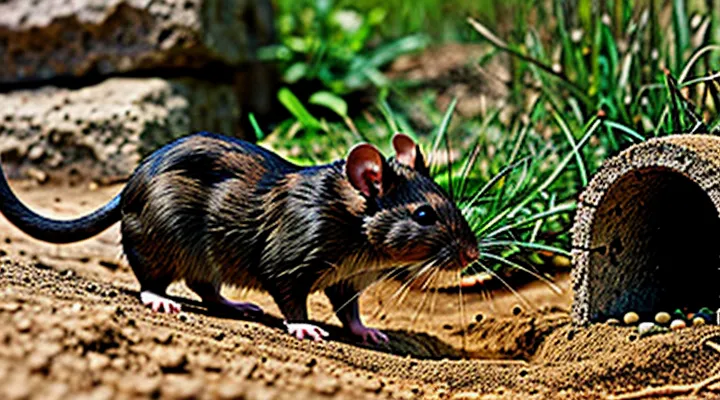
The Art of Rat Burrowing: An Overview
Why Rats Dig: Evolutionary Advantages
Shelter and Protection
Rats construct extensive tunnel systems that serve as both shelter and protection. Primary tunnels are reinforced with compacted soil, creating stable passageways that resist collapse. Branching side tunnels lead to separate chambers used for nesting, food storage, and waste disposal, reducing disease transmission within the colony.
Protective functions of the burrow include:
- Predator avoidance: Entrances are concealed by vegetation or debris, while narrow tunnels limit access for larger predators.
- Thermal regulation: Soil insulation maintains a relatively constant temperature, shielding occupants from extreme surface heat or cold.
- Moisture control: Subterranean humidity remains stable, preventing desiccation and supporting the health of young rats.
- Escape routes: Multiple exits provide alternative paths if a tunnel is blocked or a threat approaches.
The architectural design of rat burrows optimizes safety and comfort, enabling the species to thrive in diverse environments.
Food Storage
Rats construct specialized chambers within their burrows to preserve provisions for periods of scarcity. These storage spaces are isolated from the main nesting area, reducing temperature fluctuations and limiting exposure to parasites. The walls of each chamber are reinforced with compacted soil, creating a stable micro‑environment that slows moisture loss.
Food items are sorted by durability. Commonly cached provisions include:
- Seeds and grains, which retain caloric value for several months;
- Nuts, whose high fat content provides energy during winter;
- Insect larvae, stored briefly due to rapid spoilage;
- Small fruits, positioned near the entrance for quick access.
Seasonal shifts dictate the composition of caches. During autumn, rodents increase intake of high‑energy seeds, while spring sees a rise in fresh vegetation. The selection process is guided by sensory assessment; rats preferentially hoard items with low moisture and high lipid content, thereby extending shelf life.
To protect stored supplies, rats employ several strategies. Chambers are sealed with a thin layer of soil, creating a physical barrier against intruders. Individuals also practice “spoil‑checking,” periodically removing deteriorated items to prevent fungal growth. In densely populated colonies, each rat may maintain a personal cache, reducing competition and theft.
The presence of underground food stores influences surrounding ecosystems. Predators locate burrows by detecting scent trails from caches, while scavengers benefit from abandoned provisions. Moreover, cached seeds contribute to seed dispersal, promoting plant regeneration in the immediate habitat.
Breeding and Rearing Young
Rats construct extensive tunnel systems that serve as both shelter and breeding chambers. Females give birth to litters of three to twelve pups after a gestation period of approximately twenty‑three days. Neonates are born hairless, eyes closed, and incapable of thermoregulation; the mother provides warmth by curling around the litter and maintaining a stable microclimate within the nest.
Within the burrow, the mother supplies milk rich in proteins and lipids, delivering essential nutrients for rapid growth. Pups double their birth weight within the first week, reaching a size that permits limited movement through the tunnel network. By day ten, the young begin to explore peripheral chambers, developing motor skills required for foraging and predator avoidance.
Rearing stages follow a predictable timeline:
- Day 0‑10: Dependence on maternal care; limited mobility.
- Day 11‑21: Introduction to solid food; increased interaction with nest material.
- Day 22‑30: Weaning complete; juveniles acquire proficiency in digging and nest maintenance.
- Day 31 onward: Independence achieved; young rats assume roles in tunnel expansion and colony defense.
Maternal behavior includes frequent grooming, which stimulates physiological development and reinforces social bonds. The burrow’s architecture, featuring separate nesting chambers and escape routes, reduces competition for resources and enhances survival rates of the offspring. Once weaned, juveniles contribute to the colony’s growth by excavating new tunnels, thereby extending the underground habitat for subsequent generations.
The Mechanics of Burrow Construction
Site Selection: What Makes a Good Location?
Soil Type and Stability
Rats construct extensive underground networks, and the physical properties of the substrate determine tunnel feasibility and longevity.
Loose, well‑drained sand enables rapid excavation but offers limited support, causing frequent collapses unless reinforced by compacted layers or root structures. Loam provides a balance of particle size and cohesion, allowing efficient digging while maintaining wall integrity. Clay, when moist, forms a plastic mass that resists deformation, yet excessive moisture reduces shear strength and increases the risk of tunnel flooding. Rocky or heavily compacted soils impede burrow initiation, forcing rats to seek pre‑existing fissures or surface debris for shelter.
Stability hinges on moisture content, density, and organic matter. Moisture near field capacity enhances cohesion in fine‑textured soils, whereas saturation eliminates friction between particles, prompting collapse. Compaction improves load‑bearing capacity but raises the energy required for excavation. Incorporation of plant roots and litter augments tensile strength, creating natural buttresses within the tunnel walls.
Optimal conditions for sustained burrow systems include:
- Loamy or silty loam with moderate moisture (≈15‑20 % by weight)
- Presence of fine roots or fibrous organic layers for reinforcement
- Gradual slope gradients to facilitate drainage and prevent water accumulation
Deviations from these parameters compel rats to modify tunnel geometry, reinforce walls with collected debris, or relocate to more suitable substrates. Understanding soil type and stability therefore clarifies the constraints shaping subterranean habitats constructed by these rodents.
Proximity to Food and Water
Rats construct burrows close to reliable sources of nourishment and hydration. Proximity to food reduces the time spent foraging, limits exposure to predators, and conserves energy for reproductive activities. Access to water influences tunnel depth and chamber placement, as moisture levels affect soil stability and the rats’ physiological needs.
Key considerations for burrow site selection include:
- Availability of seed caches, grain stores, or refuse deposits within a few meters of the entrance.
- Presence of underground water tables or surface runoff that maintains humid microclimates.
- Soil composition that remains cohesive when moist, preventing collapse of chambers near water sources.
When food and water are abundant, rats expand tunnel networks outward, creating multiple foraging routes and escape passages. In environments where these resources are scarce, burrows become more compact, with deeper chambers designed to reach moist layers and conserve heat. The spatial relationship between nourishment, hydration, and tunnel architecture directly shapes the complexity and durability of rat underground homes.
Drainage Considerations
Rats construct extensive tunnel systems that intersect natural water tables and surface runoff pathways. Effective drainage management reduces tunnel collapse, limits soil erosion, and prevents the spread of disease‑carrying moisture.
Key drainage considerations include:
- Soil permeability: Sandy or loamy soils facilitate rapid water movement, while clay‑rich substrates retain moisture and increase tunnel instability. Selecting or amending substrate composition can enhance drainage efficiency.
- Water table proximity: Burrows that approach the groundwater level are prone to flooding. Monitoring groundwater depth and maintaining a minimum vertical distance between tunnels and the water table mitigates inundation risk.
- Surface runoff diversion: Grading the surrounding terrain away from entrance points channels rainwater toward designated drainage channels, preventing direct infiltration into burrow entrances.
- Ventilation shafts: Incorporating sloped shafts allows excess water to flow out while maintaining airflow, reducing humidity buildup within the tunnel network.
- Drainage materials: Installing perforated pipe, gravel beds, or geotextile layers beneath tunnel floors creates pathways for water to escape, preserving structural integrity.
Implementing these measures supports stable underground habitats, limits damage to surrounding ecosystems, and enhances long‑term viability of rat burrow systems.
Tools and Techniques: How Rats Dig
Using Teeth and Claws
Rats construct subterranean chambers by employing two primary anatomical tools: incisors and fore‑limb claws. The incisors, continuously growing, act as cutting instruments that slice through compacted earth, creating initial entry points. Their sharp edges reduce resistance, allowing rapid penetration of soil layers.
Fore‑limb claws function as excavation implements. By alternating strokes, the claws loosen and lift soil particles, transporting them to the surface. The combination of claw‑driven displacement and tooth‑driven incision generates a tunnel network with minimal energy expenditure.
Key actions of teeth and claws include:
- Incisor gnawing to breach dense substrate.
- Claw digging to widen passageways.
- Coordinated movement that clears debris from the tunnel face.
- Repeated cycles that extend burrow length and depth.
The resulting architecture features branching tunnels, nesting chambers, and ventilation shafts, all formed through the efficient use of these specialized body parts.
Soil Removal and Tunneling
Rats construct extensive underground networks by displacing soil through coordinated digging motions. Their incisors cut through compacted earth, while powerful forelimb muscles generate forward thrust, allowing the head to advance into the substrate. The mandible’s continuous gnawing produces fine particles that are pushed backward by the body’s rhythmic contractions.
The displaced material is expelled through a series of side passages called spoil shafts. These shafts maintain a gradient that facilitates gravity‑driven transport of soil away from the main tunnel. Spoil is deposited on the surface as small mounds, often forming characteristic hummocks around the entrance.
Key stages of the excavation process include:
- Incisor incision to loosen compacted layers.
- Forelimb extension to push the head forward.
- Body contraction that drives soil rearward.
- Creation of spoil shafts for efficient removal.
- Surface deposition of expelled material.
The resulting burrow architecture balances structural stability with ventilation. Rounded tunnel walls distribute stress evenly, reducing collapse risk. Strategic placement of vertical shafts enhances airflow, maintaining oxygen levels for the colony.
Creating Chambers and Tunnels
Rats construct elaborate underground systems by excavating soil with their incisors and forepaws. The process begins with a primary shaft, which is extended downward until a stable layer is reached. Soil is displaced laterally, forming a network of tunnels that connect to secondary chambers.
The creation of chambers follows a predictable pattern:
- Nesting chamber: enlarged space lined with shredded vegetation and fur for insulation.
- Food storage chamber: smaller cavity near the entrance, allowing quick access to gathered provisions.
- Waste chamber: isolated compartment positioned away from living areas to maintain hygiene.
Tunnel stability relies on several factors. Compact soil walls provide structural support, while occasional reinforcement with saliva‑coated mucus increases cohesion. Ventilation is achieved through multiple openings that generate airflow, preventing the buildup of carbon dioxide. Rats regularly inspect and repair tunnel walls, removing loose debris and sealing cracks with compacted earth.
Overall, the architecture of rat burrows demonstrates a balance between efficient excavation, structural integrity, and environmental control, enabling the species to thrive in diverse habitats.
Architectural Features of a Rat Burrow
Entry and Exit Points
Rats construct multiple openings in each burrow system to facilitate movement, ventilation, and predator avoidance. Entry and exit points are strategically positioned at varying depths and orientations, allowing swift transition between surface and subterranean chambers.
The primary opening is typically larger, ranging from 3 to 5 cm in diameter, and aligns with the main tunnel that connects nesting chambers to foraging routes. Secondary shafts are narrower, often concealed by vegetation or soil mounds, and serve as emergency exits. All openings are reinforced with compacted earth and, in some cases, lined with plant roots to prevent collapse.
Key functional advantages of these openings include:
- Rapid escape from predators through alternate routes.
- Continuous airflow that regulates temperature and humidity within the burrow.
- Efficient transport of food and waste, reducing contamination of living spaces.
- Opportunity for scent marking, which delineates territorial boundaries.
Construction of each opening begins with the excavation of a shallow pit, followed by the removal of soil using incisors and forelimb claws. The removed material is deposited in a spoil heap, creating a characteristic mound that may disguise the entrance. Over time, the rat compacts the surrounding soil, increasing structural stability and minimizing detection by predators.
Maintenance involves periodic enlargement of the primary opening to accommodate growth and the creation of new secondary shafts when existing routes become obstructed. This dynamic system of entry and exit points ensures the burrow remains functional throughout seasonal changes and population fluctuations.
Nesting Chambers
Rats construct complex underground systems that include dedicated nesting chambers, where individuals rest, rear offspring, and store food. These chambers are positioned at the deepest points of the burrow network to benefit from stable temperature and humidity levels, reducing exposure to surface fluctuations.
The architecture of a nesting chamber typically features a rounded or oval shape, reinforced by compacted soil and occasional use of saliva to bind particles. Walls are lined with soft bedding composed of shredded plant material, fur, and excrement, providing insulation and a comfortable surface for the young.
Key characteristics of nesting chambers:
- Depth: usually 30–50 cm below the surface, ensuring thermal stability.
- Size: varies from 10 cm in diameter for a single rat to over 30 cm for a family group.
- Ventilation: small air shafts connect to the main tunnel, supplying fresh air while limiting drafts.
- Accessibility: a single entrance leads to the broader burrow, allowing quick escape from predators.
Reproductive activity concentrates within these chambers. Females give birth to litters of 6–12 pups, which remain in the nest for the first three weeks. The confined environment supports social bonding, reduces predation risk, and facilitates efficient thermoregulation, essential for rapid pup development.
Food Storage Chambers
Rats construct specialized chambers within their burrows to preserve gathered provisions. These storage rooms are typically situated deeper than nesting areas, exploiting the insulating properties of soil to maintain a stable temperature and humidity level. The deeper placement also reduces the likelihood of detection by predators and competitors.
Construction of food chambers involves compacting earth with forepaws and teeth, creating walls that are denser than surrounding tunnel walls. The compacted structure limits airflow, slowing spoilage and deterring fungal growth. Rats line the interior with shredded plant material, which absorbs excess moisture and provides a barrier against parasites.
Key characteristics of the storage chambers include:
- Depth of 30–50 cm below the surface, ensuring thermal stability.
- Wall thickness of 2–3 cm, formed by tightly packed soil.
- Use of dry vegetation as a lining material to manage humidity.
- Capacity ranging from 50 g to several hundred grams, depending on colony size and food availability.
Escape Tunnels
Rats construct secondary passages that connect the main nesting chambers to the surface, providing rapid egress when predators approach. These escape routes are typically narrow, steeply inclined shafts that intersect the primary tunnel network at strategic points.
The architecture of an escape tunnel reflects the animal’s need for speed and concealment. Builders reinforce the walls with compacted soil, creating a smooth interior that minimizes friction. The entrance is often concealed by a small mound of loose earth, masking the opening from visual detection.
Key functions of escape tunnels include:
- Immediate retreat from aerial or terrestrial threats;
- Access to alternative foraging zones without exposing the primary nest;
- Ventilation enhancement, allowing airflow to circulate through the burrow system.
Soil composition, moisture level, and ambient temperature influence tunnel depth and angle. In loose, sandy substrates, rats dig shallower, more horizontal escape shafts to maintain structural stability. In compact clay, tunnels become steeper, reducing the distance required to reach the surface.
Overall, escape tunnels increase survivability by offering discreet exit pathways, supporting the complex social structure of rat colonies, and contributing to the efficiency of their subterranean habitats.
Factors Influencing Burrow Complexity
Species-Specific Differences
Rats exhibit marked variation in burrow architecture, reflecting adaptations to ecological niches and phylogenetic lineage. The Norway rat (Rattus norvegicus) typically constructs shallow, branching networks beneath human structures, emphasizing ventilation and rapid escape routes. In contrast, the black rat (Rattus rattus) favors deeper, more linear tunnels that provide greater protection from predators and environmental fluctuations.
Key species‑specific traits include:
- Soil preference: R. norvegicus tolerates compacted urban substrates; R. rattus selects looser, organic-rich soils.
- Tunnel dimensions: Norwegian burrows average 5–8 cm in diameter; black rat passages range from 8–12 cm, accommodating larger body size.
- Chamber complexity: Norwegian systems contain multiple chambers for nesting and food storage; black rat burrows often consist of a single nesting chamber with limited side chambers.
Morphological differences reinforce these behaviors. The robust skull of R. norvegicus supports stronger incisors for excavating dense material, while the slender mandible of R. rattus facilitates efficient digging in softer soils. Behavioral studies confirm that each species adjusts digging speed and tunnel reinforcement strategies according to substrate hardness, demonstrating a direct link between anatomy, environment, and burrow design.
Environmental Conditions
Soil Moisture and Texture
Rats construct extensive underground networks, and the physical properties of the substrate dictate the feasibility and durability of these structures.
Soil moisture governs the cohesion of particles and the resistance of tunnel walls to collapse. High water content softens soils, allowing easier excavation but increasing the risk of flooding and structural failure. Low moisture produces brittle matrices, making digging labor‑intensive and raising the probability of tunnel blockage.
Soil texture determines particle size distribution, influencing both the effort required for excavation and the stability of the burrow. Sandy soils permit rapid displacement of material but lack sufficient binding, leading to loose tunnels prone to collapse. Clay‑rich soils offer strong cohesion, yet excessive density hinders rat movement and ventilation. Loamy mixtures, combining sand, silt, and a modest clay fraction, provide a balanced environment for efficient digging and structural integrity.
Optimal conditions for rat burrowing typically fall within the following parameters:
- Moisture: 10–20 % gravimetric water content, sufficient to lubricate particles without saturating the matrix.
- Texture: loam with approximately 40 % sand, 40 % silt, and 20 % clay, delivering both workability and cohesion.
Deviations from these ranges compel rats to modify tunnel depth, orientation, or reinforcement behavior. Understanding the interplay of moisture and texture informs ecological monitoring and pest‑management strategies, enabling targeted habitat modification to discourage burrow establishment.
Temperature Fluctuations
Rats construct extensive underground networks that buffer ambient temperature changes. Soil depth and moisture content create a thermal gradient, allowing deeper chambers to remain near constant temperatures while surface layers experience daily fluctuations.
Burrow design incorporates several elements that moderate thermal variation:
- Primary tunnels extend several decimeters below the surface, reaching zones where temperature shifts are minimal.
- Secondary chambers branch off at varying depths, providing microclimates suited for resting, rearing young, and food storage.
- Ventilation shafts connect to the exterior, permitting airflow that dissipates excess heat generated by activity and metabolic processes.
Seasonal shifts influence construction activity. In colder periods, rats enlarge deeper sections to maintain body temperature within optimal ranges; during warmer months, they expand shallower tunnels to enhance heat dissipation. Soil composition affects conductivity: sandy substrates transmit temperature changes rapidly, prompting more extensive vertical development, whereas clay-rich soils retain heat, reducing the need for deep excavation.
Stable thermal conditions support physiological functions. Consistent temperatures reduce metabolic stress, improve reproductive success, and lower the risk of hypothermia for offspring. Conversely, abrupt temperature spikes can trigger increased foraging activity, exposing rats to predators.
Overall, temperature fluctuations drive adaptive modifications in burrow architecture, ensuring that subterranean habitats remain conducive to survival and reproduction.
Population Density and Social Structures
Rats construct extensive underground networks that accommodate varying numbers of individuals. When colony size increases, burrow systems expand laterally and vertically, creating densely packed tunnel clusters.
Higher population density correlates with more pronounced social hierarchies. Dominant individuals occupy central chambers, while subordinate members reside in peripheral tunnels. Access to food storage chambers follows the established rank order, reducing conflict over resources.
Spatial organization reflects functional roles. Breeding pairs maintain dedicated nesting nests, whereas foragers develop extensive peripheral galleries. Sentinel individuals patrol entrance shafts, providing early warning of predators. These allocations minimize overlap between reproductive, foraging, and defensive activities.
Elevated density intensifies pathogen transmission, prompting collective grooming and waste removal behaviors. Cooperative burrow maintenance, such as tunnel reinforcement, offsets the increased structural stress caused by crowded occupancy.
Overall, population density shapes the architecture of rat burrows and dictates the distribution of social responsibilities, ensuring colony stability despite spatial constraints.
Impact of Rat Burrows on Ecosystems and Human Environments
Ecological Role
Rats construct extensive tunnel networks that modify the physical structure of soils. Their digging displaces compacted layers, introduces oxygen, and promotes water infiltration, which together enhance soil porosity and improve root penetration for plants.
The removal and redistribution of organic material within burrows accelerates decomposition processes. By transporting leaf litter and fecal matter into deeper strata, rats facilitate the breakdown of nutrients and their subsequent availability to surrounding vegetation. This activity contributes to the recycling of carbon, nitrogen, and phosphorus across ecosystem compartments.
Burrow systems serve as refuges for a variety of organisms. Small mammals, reptiles, amphibians, and invertebrates frequently occupy abandoned chambers, gaining protection from predators and extreme weather. The presence of these secondary occupants increases local biodiversity and strengthens trophic linkages.
Predatory species exploit the predictable activity of rats within their tunnels. Owls, snakes, and mustelids locate prey by detecting vibrations and scent cues emanating from the underground passages. This interaction regulates rat populations and supports the energy flow to higher trophic levels.
Key ecological functions of rat burrowing:
- Soil aeration and improved water dynamics
- Acceleration of nutrient cycling through organic matter redistribution
- Creation of microhabitats for diverse fauna
- Support of predator–prey relationships that balance community structure
Collectively, these processes underscore the significance of rat burrowing in sustaining ecosystem productivity and resilience.
Agricultural Implications
Rats construct extensive subterranean networks that intersect cultivated fields, altering the physical environment in ways that directly affect agricultural productivity.
Burrowing activity introduces air into compacted soils, enhancing microbial respiration and water infiltration. Simultaneously, the displacement of soil particles creates zones of weakness, increasing the risk of erosion on sloped terrain and compromising the stability of field boundaries.
Root systems of grain and vegetable crops encounter displaced soil, leading to reduced anchorage, impaired nutrient uptake, and increased susceptibility to lodging. Seedlings emerging near tunnel entrances often experience stem deformation or premature death, resulting in measurable yield loss.
Underground passages intersect irrigation infrastructure, creating unintended channels for water loss and promoting uneven moisture distribution. In drip‑line systems, burrow openings can become entry points for clogging debris, reducing delivery efficiency and raising operational costs.
Rodent populations that inhabit these tunnels serve as vectors for bacterial and viral pathogens, contaminating stored produce and transmitting diseases to livestock. The proximity of burrows to feed stores facilitates direct consumption of grain reserves, further diminishing available food resources.
Effective mitigation relies on a combination of cultural, mechanical, and biological measures:
- Rotate crops with non‑host varieties to disrupt food sources.
- Install buried barriers or mesh around irrigation lines to prevent tunnel intrusion.
- Deploy predator habitats, such as raptor perches, to encourage natural control.
- Conduct regular soil surveys using ground‑penetrating radar to locate active networks and target them with targeted baiting.
Implementing these practices reduces the negative impact of rat tunneling on crop performance, water management, and biosecurity, supporting sustainable agricultural production.
Urban Infrastructure Damage
Rats construct extensive subterranean networks that intersect municipal systems. Their tunnels destabilize soil, increase load on foundations, and create pathways for moisture infiltration.
Burrowing activity compromises infrastructure through several mechanisms. Soil displacement reduces bearing capacity beneath sidewalks and roadways. Direct contact with utility lines erodes insulation, exposing conductors to corrosion. Accumulated waste and urine accelerate concrete deterioration and promote fungal growth.
Key urban assets affected include:
- Water and sewage pipelines, where punctures cause leaks and blockages.
- Electrical conduits, whose insulation damage raises fire risk.
- Structural foundations of residential and commercial buildings, leading to settlement and cracks.
- Road surfaces, where surface deformation results from voids beneath pavement.
Mitigation measures consist of regular inspection of underground utilities, installation of rodent‑proof barriers around critical zones, and deployment of integrated pest‑management programs that combine habitat modification with targeted control. Continuous monitoring reduces repair costs and extends service life of urban infrastructure.