
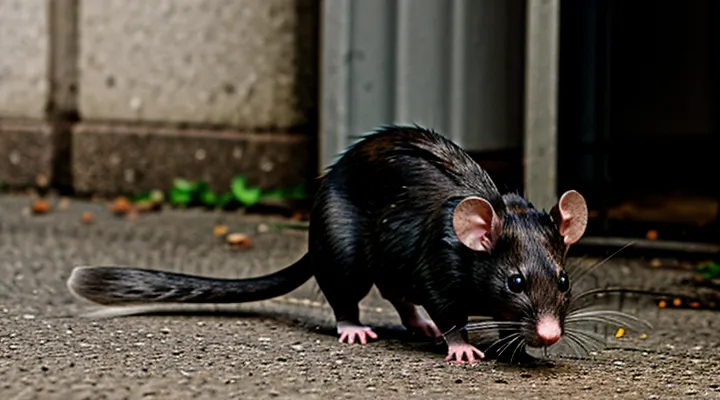
The Complex Social Structure of Rats
Hierarchy and Group Dynamics
Dominance and Submission
Rats organize their groups through a clear hierarchy that balances aggression and deference. Dominant individuals assert control by occupying central burrow sites, monopolizing food resources, and initiating grooming of subordinates. Subordinate rats respond with appeasement signals—such as low‑frequency vocalizations, crouched postures, and tail‑slighting—to reduce the risk of physical confrontation.
The hierarchy is not static; it fluctuates with changes in body condition, age, and environmental pressure. When a dominant rat loses weight or is injured, lower‑ranking members may increase challenge behaviors, leading to a rapid re‑ordering of the social structure. This fluidity ensures that the most capable individuals maintain access to critical resources while preserving group cohesion.
Key aspects of dominance and submission in rat societies include:
- Territorial control: Dominants defend core nesting areas; subordinates avoid these zones.
- Resource allocation: Food and water are preferentially taken by higher‑ranking individuals; subordinates wait for leftovers.
- Grooming dynamics: Dominants receive more grooming; subordinates perform it, reinforcing status differences.
- Vocal communication: High‑pitch squeaks accompany aggressive displays; low‑pitch tones accompany appeasement.
Understanding these mechanisms clarifies how rat colonies achieve efficient cooperation, minimize conflict, and adapt to shifting ecological conditions.
Cooperative Behaviors
Rats demonstrate a range of cooperative behaviors that enhance group survival and reproductive success. Individuals share food resources, coordinate nest building, and jointly defend territories against intruders. These actions rely on communication through ultrasonic vocalizations, scent marking, and tactile contact, which synchronize group activities without centralized control.
Key cooperative strategies include:
- Food sharing: Dominant rats distribute surplus food to subordinates, reducing starvation risk during scarcity.
- Collective nest construction: Pairs and small groups gather materials and shape burrows, improving thermal regulation and predator concealment.
- Alloparental care: Non‑breeding adults assist in grooming, cleaning, and warming pups, increasing offspring survival rates.
- Coordinated predator avoidance: Groups emit alarm calls and execute synchronized escape routes, lowering individual exposure to danger.
Experimental observations reveal that rats adjust cooperative effort based on group composition, resource availability, and previous social interactions. Reciprocal exchanges and reputation effects guide long‑term partnerships, indicating that cooperation is regulated by both immediate benefits and anticipated future returns.
Group Size and Stability
Rats exhibit a flexible social structure that adjusts to the number of individuals within a group. Small colonies, typically comprising three to five members, maintain stable hierarchies with clear dominant and subordinate roles. In such settings, aggression is limited, and grooming and nest sharing occur frequently, reinforcing cohesion.
Larger aggregations, ranging from ten to several dozen rats, experience increased competition for resources and space. Hierarchical layers become more complex, with multiple subordinate ranks beneath a primary dominant individual. Stability in these groups depends on several factors:
- Adequate nesting sites that allow each rat personal space while preserving proximity for social interaction.
- Sufficient food supply to reduce contest over limited resources.
- Regular opportunities for affiliative behaviors, such as allogrooming, which mitigate tension.
When these conditions are met, even extensive groups sustain relatively low levels of conflict and exhibit coordinated activities, such as synchronized foraging and collective defense against predators. Conversely, deficits in any of the listed resources precipitate heightened aggression, frequent rank challenges, and eventual fragmentation of the colony.
Empirical observations indicate that group size directly influences reproductive success. Mid‑sized colonies (approximately eight to twelve individuals) achieve the highest offspring survival rates, balancing the benefits of cooperative care with manageable competition. This optimal range reflects an evolutionary compromise between the advantages of social living and the costs associated with overcrowding.
Communication in Rat Colonies
Olfactory Communication
Pheromones and Scent Marking
Chemical communication underlies much of rat social interaction. Individuals release volatile and non‑volatile compounds that convey reproductive status, hierarchy, and territorial boundaries. Detection occurs through the vomeronasal organ and main olfactory epithelium, enabling rapid behavioral responses.
Key pheromonal signals include:
- Estrus pheromones – emitted by sexually receptive females, trigger mounting and investigation in males.
- Dominance pheromones – produced by high‑ranking males, suppress aggression in subordinates.
- Stress pheromones – released during predator exposure, alert conspecifics and induce freezing or escape.
Scent marking consolidates these signals. Rats deposit urine, feces, and specialized glandular secretions on objects, nest material, and tunnel walls. Marking serves three functions:
- Territory demarcation – defines spatial limits for a colony or individual, reducing direct conflict.
- Individual identification – provides a chemical fingerprint that neighbors can recognize without visual cues.
- Social cohesion – shared scent cues reinforce group membership and facilitate coordinated activities such as foraging and nest building.
Research employing gas chromatography–mass spectrometry and behavioral assays confirms that disruption of pheromone perception leads to increased aggression and impaired group stability. Consequently, pheromones and scent marking constitute essential mechanisms for maintaining structured social systems among rodents.
Individual Recognition
Rats demonstrate the capacity to identify and differentiate conspecifics through a combination of olfactory, auditory, and visual cues. Individual recognition enables the formation of stable social hierarchies, facilitates cooperative foraging, and reduces aggression during group interactions.
Olfactory signals dominate the recognition process. Each rat produces a unique urinary and glandular scent profile that conveys identity, reproductive status, and health condition. Experiments using scent‑masked subjects show a marked increase in agonistic encounters, confirming the reliance on chemical signatures.
Auditory cues contribute when scent information is limited. Vocalizations vary in frequency and temporal pattern between individuals, allowing rapid identification during nocturnal activity. Playback studies reveal that rats respond more aggressively to unfamiliar calls than to familiar ones.
Visual input provides supplementary information, especially in well‑lit environments. Facial features, whisker arrangement, and body size serve as visual identifiers. Discrimination tasks in which rats must choose between familiar and novel conspecifics demonstrate accuracy above chance when visual cues are isolated.
Key findings from controlled studies:
- Scent discrimination: Rats prefer bedding scented by familiar cage‑mates over that from strangers (p < 0.01).
- Vocal recognition: Playback of a known individual’s ultrasonic calls reduces latency to approach compared with unknown calls (mean reduction 2.3 s).
- Multimodal integration: Simultaneous presentation of olfactory and auditory cues yields the highest recognition accuracy (92 % correct responses).
Neural substrates for individual recognition involve the olfactory bulb, the amygdala, and the hippocampus. Lesions in the amygdala impair scent‑based discrimination, while hippocampal damage disrupts memory of specific conspecifics across days.
Overall, recognition of individual rats relies on a layered sensory system that supports complex social organization and adaptive group behavior.
Auditory Communication
Ultrasonic Vocalizations
Ultrasonic vocalizations (USVs) are high‑frequency sounds emitted by rats, typically ranging from 20 to 100 kHz, beyond human auditory perception. Produced by the larynx and modulated through respiratory control, these calls convey information across a variety of social scenarios.
In maternal care, pups emit brief, high‑frequency calls when separated from the dam; the mother responds with retrieval behavior, guided by the acoustic signal. Adult rats use distinct USV patterns during play, establishing hierarchy, and signaling aggression. During mating, males generate longer, frequency‑modulated sequences that attract receptive females and coordinate courtship. These vocalizations also appear in territorial disputes, where low‑frequency, longer‑duration calls function as deterrents.
Research methods for USV analysis include:
- High‑sensitivity microphones paired with band‑pass filters to isolate ultrasonic bands.
- Spectrographic software for time‑frequency visualization and quantitative measurement of call duration, frequency modulation, and amplitude.
- Automated classification algorithms that differentiate call types based on acoustic features.
Physiological studies link USV production to the dopaminergic and oxytocinergic systems, indicating that vocal output reflects emotional state and social motivation. Pharmacological manipulation of these pathways alters call frequency and structure, providing a non‑invasive metric for assessing neurobehavioral effects.
Overall, ultrasonic vocalizations serve as a primary communication channel within rat societies, enabling rapid transmission of affective and contextual cues essential for group cohesion, reproductive success, and conflict resolution.
Distress Calls
Distress calls are ultrasonic vocalizations emitted by rats when they encounter threat, injury, or isolation. These signals peak between 22 and 50 kHz and are produced by rapid laryngeal muscle contractions. The acoustic pattern—short bursts with a steep rise and gradual decay—conveys urgency and elicits immediate attention from conspecifics.
Listeners respond with approach, grooming, or defensive behaviors, reducing the caller’s risk of predation and promoting group cohesion. Neurophysiological studies show that the amygdala and periaqueductal gray coordinate call production, while the auditory cortex processes the incoming distress signal and triggers context‑appropriate reactions.
Typical characteristics of rat distress calls:
- Frequency range: 22–50 kHz (ultrasonic).
- Duration: 30–300 ms per syllable.
- Temporal structure: series of 2–10 syllables with inter‑call intervals of 100–500 ms.
- Contextual triggers: predator exposure, painful stimuli, social isolation.
Tactile Communication
Allogrooming
Allogrooming in rats involves the mutual cleaning of fur and skin using teeth and forepaws. The behavior occurs primarily among familiar individuals and is observed in both laboratory colonies and wild populations.
During an allogrooming bout, the groomer targets body regions that the recipient cannot reach easily, such as the head, neck, and back. Tactile stimulation triggers the release of oxytocin‑like peptides and reduces corticosterone levels, providing a physiological buffer against stress. The recipient benefits from parasite removal and improved coat condition, which enhances thermoregulation.
Allogrooming serves several functions:
- Reinforces affiliative bonds, increasing group cohesion.
- Establishes and maintains dominance hierarchies by allowing higher‑ranking individuals to receive grooming preferentially.
- Facilitates information exchange through the transfer of scent cues that convey reproductive status and health condition.
- Improves overall welfare by lowering anxiety‑related behaviors in experimental settings.
Reciprocity is common; individuals that receive grooming are more likely to return the favor within a short time frame. Frequency of allogrooming rises during periods of social tension, such as after group re‑formation, indicating its role in conflict mitigation.
Experimental studies using video analysis and physiological measurements demonstrate that rats denied access to allogrooming exhibit elevated heart rate variability and increased avoidance of novel conspecifics. Conversely, enrichment protocols that encourage grooming interactions lead to faster recovery from stressors and higher rates of exploratory behavior.
In captive management, providing ample space, nesting material, and stable group composition enhances opportunities for allogrooming, thereby supporting the social health of rat colonies.
Play Fighting
Play fighting among rats serves as a structured interaction that reinforces social hierarchy and sharpens motor skills. During these bouts, participants adopt a predictable sequence of behaviors—chasing, wrestling, and mock biting—that rarely result in injury. The ritualized nature of the encounters allows individuals to test strength, establish dominance, and practice defensive tactics without escalating to lethal aggression.
Key functions of play fighting include:
- Hierarchy calibration – repeated bouts reveal subtle shifts in rank, enabling group cohesion.
- Skill development – young rats refine coordination, timing, and bite precision essential for survival.
- Stress mitigation – the activity provides an outlet for excess energy, reducing the likelihood of disruptive aggression.
Neurochemical analysis shows elevated dopamine and endorphin levels during play, indicating reward pathways that encourage repeated participation. Observational studies report that rats engaged in frequent play fighting exhibit quicker adaptation to novel environments and improved problem‑solving performance.
Environmental factors influence the prevalence of play fighting. Enriched cages with tunnels, nesting material, and ample space increase interaction rates, whereas overcrowding or limited resources suppress the behavior. Researchers recommend providing at least 0.5 m² per rat and rotating objects to sustain interest.
In summary, play fighting operates as a low‑risk, high‑benefit mechanism that underpins the complex social structure of these rodents, fostering both individual competence and group stability.
Parental Care and Social Learning
Maternal Behavior
Nest Building
Rats construct nests to support group cohesion and offspring survival. Nests consist of layered materials such as shredded paper, fabric fibers, and dried vegetation, arranged to provide insulation and structural stability. The architecture reflects collective decision‑making; individuals contribute material and modify the structure based on shared cues.
Typical nest features include:
- A central chamber for pups, lined with soft debris for temperature regulation.
- Peripheral zones where adult rats rest, allowing quick access to exits.
- Multiple entry points that reduce competition for passage and facilitate predator evasion.
Nest building activity intensifies during breeding cycles, with increased material transport and cooperative grooming observed among colony members. The process reinforces social bonds, as rats repeatedly exchange tactile signals while arranging and maintaining the nest.
Pup Rearing
Pup rearing in communal rodents demonstrates coordinated maternal investment and peer interaction. Female rats construct nests of shredded material, regulate temperature, and provide continuous tactile stimulation to newborns. This environment supports rapid physiological stabilization and reduces mortality.
Key components of the rearing process include:
- Nursing cycles – dams alternate between brief feeding bouts and periods of pup grooming, delivering milk rich in immunoglobulins.
- Vocal communication – pups emit ultrasonic calls that trigger maternal retrieval and adjust feeding frequency.
- Sibling cooperation – littermates engage in huddling, sharing warmth and enhancing thermoregulation.
- Weaning transition – around post‑natal day 21, pups increase solid food intake while maternal contact diminishes, preparing them for independent foraging.
Research shows that disruptions in any of these elements—such as nest deprivation or altered vocal feedback—correlate with impaired growth metrics and abnormal social behavior later in life. The integrated nature of pup care underscores the species’ reliance on collective strategies for offspring survival.
Alloparental Care
Shared Responsibility
Rats exhibit complex social structures in which individuals assume complementary duties that maintain colony stability. Cooperative grooming reduces parasite loads, while shared vigilance alerts the group to predators. Food acquisition often involves coordinated foraging, with experienced members leading and others exploiting discovered resources. Nest construction relies on collective effort; each rat contributes materials and adjusts architecture to accommodate growth.
Key aspects of shared responsibility include:
- Division of labor: specific rats specialize in tasks such as waste removal, brood care, or territorial patrol.
- Role flexibility: individuals shift functions in response to environmental pressures or group composition changes.
- Reciprocal assistance: grooming, food sharing, and alarm signaling are exchanged, reinforcing social bonds and enhancing survival prospects.
Research on these behaviors informs laboratory housing standards, emphasizing enrichment that encourages natural cooperative interactions. Pest management strategies that disrupt communal task allocation—such as targeted removal of sentinel individuals—demonstrate increased colony vulnerability. Understanding how rats allocate responsibilities clarifies the adaptive advantages of their social organization and guides both scientific and practical applications.
Social Learning
Observational Learning
Observational learning enables rats to acquire new behaviors by watching conspecifics, providing a mechanism for rapid transmission of adaptive responses within groups. Experiments using a demonstrator rat performing a lever‑press task have shown that naïve observers acquire the same action after a limited number of observations, even when direct reinforcement is absent. Neural recordings reveal increased activity in the posterior parietal cortex and the mirror‑neuron system during observation, indicating that sensory input is transformed into motor representations.
Key experimental outcomes include:
- Faster acquisition of complex sequences when models perform them repeatedly.
- Retention of observed behaviors for weeks without additional practice.
- Transfer of learned tasks across different environmental contexts.
- Modulation of learning speed by social hierarchy, with subordinate rats displaying heightened responsiveness to dominant demonstrators.
Social dynamics shape the efficacy of observational learning. In dense colonies, frequent interactions create abundant opportunities for information exchange, reducing the need for individual trial‑and‑error learning. Comparative studies demonstrate that rats raised in enriched social environments exhibit stronger mirroring responses and higher proficiency in copying novel tasks than isolated counterparts.
The phenomenon has practical implications for laboratory protocols and pest management. Incorporating trained demonstrators can accelerate training of large rat cohorts, while disrupting observational pathways may limit the spread of harmful behaviors in wild populations.
Cultural Transmission
Rats exhibit complex social structures that support the spread of learned behaviors across generations. Observations in laboratory colonies and wild populations reveal that individuals acquire foraging techniques, predator avoidance strategies, and grooming patterns by observing conspecifics, rather than through innate programming alone.
Cultural transmission in these rodents operates through several mechanisms:
- Observational learning: Juveniles watch experienced members manipulate novel food sources, then replicate the successful actions.
- Social facilitation: Presence of a demonstrator increases the likelihood that an observer will attempt a behavior, accelerating acquisition rates.
- Teaching-like interactions: Senior rats occasionally modify their actions to make them more observable, such as slowing movements when handling unfamiliar objects.
- Transmission chains: Behaviors introduced by a single individual can propagate through multiple links, creating stable group-specific traditions.
Empirical studies employing maze navigation, scent-marking, and problem‑solving tasks confirm that these processes generate persistent behavioral variants that differ between colonies, indicating that cultural evolution contributes to the adaptive repertoire of rodent societies.
The Impact of Social Environment on Rat Behavior
Stress and Social Isolation
Behavioral Abnormalities
Rats exhibit a range of behavioral abnormalities that emerge when typical social interactions are disrupted. Social deprivation, isolation, or inconsistent group composition can trigger stereotyped movements, heightened aggression, and abnormal grooming patterns.
- Repetitive circling or pacing appears frequently in isolated individuals, indicating stress‑related motor dysfunction.
- Excessive self‑grooming often replaces normal reciprocal grooming, reflecting anxiety and loss of social regulation.
- Increased mounting or territorial aggression replaces typical affiliative behaviors, suggesting altered dominance hierarchies.
- Social avoidance, measured by reduced approach to conspecifics, signals impaired social cognition.
Neurochemical analyses link these abnormalities to dysregulated dopamine and serotonin pathways, which normally modulate group cohesion and reward processing. In experimental settings, reintroduction to stable groups reduces the prevalence of these behaviors, confirming the restorative effect of consistent social environments.
Physiological Responses
Social rodents exhibit distinct physiological changes when interacting with conspecifics. Exposure to familiar peers triggers rapid activation of the hypothalamic‑pituitary‑adrenal (HPA) axis, reflected by transient elevations in corticosterone. This hormone surge prepares individuals for coordinated activities such as grooming, nest building, and foraging. In contrast, encounters with unfamiliar or aggressive counterparts produce prolonged corticosterone release, accompanied by heightened sympathetic output and increased heart rate variability, signaling stress and vigilance.
Neurochemical modulation accompanies these endocrine responses. Oxytocin concentrations rise in the medial preoptic area during affiliative contact, facilitating bonding and mutual tolerance. Dopamine release in the nucleus accumbens intensifies during reciprocal play, reinforcing cooperative behavior. Serotonergic activity in the dorsal raphe nucleus correlates with dominance hierarchies, adjusting aggression thresholds based on social rank.
Key physiological markers observable in group settings include:
- Corticosterone spikes (short‑term) during positive social exchange
- Sustained corticosterone (long‑term) under social threat
- Heart rate acceleration and reduced vagal tone in aggressive encounters
- Elevated oxytocin during grooming and huddling
- Increased dopamine during joint exploration
- Serotonin fluctuations linked to hierarchical positioning
These responses provide measurable indicators of social dynamics, enabling precise assessment of communal health, stress resilience, and behavioral adaptability in rodent populations.
Social Enrichment
Reduced Stress
Social interaction among these rodents markedly lowers physiological stress markers. Cohabitation and grooming exchanges increase plasma oxytocin, suppress cortisol release, and enhance heart‑rate variability, indicating a calmer autonomic state.
Empirical studies reveal specific outcomes:
- Pair housing reduces corticosterone concentrations by up to 30 % compared with isolated individuals.
- Group living accelerates recovery from acute stressors, shortening the elevation period of adrenal hormones.
- Frequent allogrooming correlates with increased expression of the anti‑inflammatory cytokine IL‑10.
Neurobiological pathways underpin these effects. Sensory cues from conspecifics activate the ventral tegmental area, stimulating dopamine release that reinforces affiliative behavior and mitigates anxiety circuits in the amygdala. Simultaneously, the hypothalamic‑pituitary‑adrenal axis receives inhibitory feedback from elevated oxytocin, curbing stress hormone synthesis.
Behavioral observations support the physiological data. Rats engaged in communal nesting display reduced latency to explore novel environments and exhibit fewer stereotypic movements, both indicators of diminished stress. In contrast, solitary subjects show heightened vigilance and elevated startle responses.
Overall, the social nature of these animals functions as a buffer against stress, integrating hormonal, neural, and behavioral mechanisms to maintain homeostasis.
Enhanced Cognitive Function
The communal habits of rats generate frequent peer interactions that stimulate neural circuits associated with learning and memory. Direct contact with conspecifics provides opportunities for observational learning, enabling individuals to acquire maze strategies, foraging techniques, and escape routes without personal trial‑and‑error. This social transmission reduces latency in task acquisition and increases overall performance accuracy.
Neurochemical analyses reveal that socially engaged rats exhibit elevated levels of brain‑derived neurotrophic factor (BDNF) and heightened dopaminergic activity in the prefrontal cortex and hippocampus. These biomarkers correlate with improved synaptic plasticity, longer‑term potentiation, and faster consolidation of spatial and procedural memories. Comparative studies show that isolated subjects present lower BDNF expression and diminished performance on reversal learning tasks.
Experimental data underscore several functional outcomes:
- Faster adaptation to novel environments when rats observe group members navigating new obstacles.
- Enhanced problem‑solving efficiency in cooperative foraging scenarios, measured by reduced number of errors.
- Increased resilience to stress‑induced cognitive decline, linked to social buffering mechanisms that modulate cortisol release.
The link between social engagement and cognitive enhancement in rats informs translational research on human neurodevelopment. Findings suggest that group‑based enrichment protocols could mitigate age‑related memory loss and improve rehabilitation outcomes for neurological disorders.
Implications for Research and Welfare
Laboratory Rat Welfare
Group Housing Benefits
Group housing provides rats with essential social interaction that supports physiological stability. Direct contact with conspecifics reduces stress‑induced corticosterone spikes, leading to more consistent body weight and immune function.
Benefits observed in communal environments include:
- Enhanced exploratory behavior and reduced stereotypic movements.
- Improved thermoregulation through shared nesting, decreasing energy expenditure for individual heat production.
- Greater reproductive success, reflected in higher litter sizes and increased pup survival rates.
- More reliable performance in cognitive testing, as socially housed subjects exhibit lower anxiety levels that can confound experimental outcomes.
Social proximity also influences neurochemical pathways. Elevated oxytocin and dopamine concentrations correlate with increased affiliative behaviors, reinforcing the bond between individuals and promoting adaptive learning.
Overall, maintaining rats in groups aligns experimental conditions with their natural social structure, yielding data that more accurately reflect species‑typical physiology and behavior.
Environmental Enrichment
Rats thrive in groups; their natural inclination toward interaction makes environmental enrichment essential for maintaining psychological balance and physical health. Enrichment supplies stimuli that mimic the complexity of a wild habitat, reducing stress‑induced behaviors and promoting natural foraging and exploratory patterns.
Effective enrichment combines several elements:
- Structural complexity: tunnels, platforms, and nesting material that create vertical and horizontal pathways.
- Sensory variation: objects with differing textures, colors, and scents to activate tactile and olfactory systems.
- Cognitive challenges: puzzle feeders, foraging wheels, and detachable toys that require problem‑solving.
- Social opportunities: group housing with compatible individuals, shared play objects, and rotating partners to encourage affiliative interactions.
Implementation guidelines:
- Assess cage size and group composition before adding items to avoid overcrowding.
- Introduce new objects gradually; monitor individual responses for signs of aggression or avoidance.
- Rotate enrichment items on a weekly schedule to prevent habituation.
- Clean and sanitize all accessories regularly to maintain hygiene and prevent disease transmission.
When applied consistently, enrichment yields measurable outcomes: decreased stereotypic chewing, increased weight‑maintaining activity, elevated levels of exploratory behavior, and improved performance in behavioral assays. These effects reinforce the validity of experimental data and support the welfare of communal rodents in laboratory and pet settings.
Understanding Wild Rat Populations
Population Control Strategies
Effective management of rodent populations requires approaches that respect their complex social organization. Strategies that target individuals without considering group dynamics often trigger rapid recolonization, because surviving members quickly reestablish hierarchies and breeding pairs. Aligning control measures with the species’ social structure enhances long‑term reduction of numbers.
Commonly employed tactics include:
- Fertility suppression – delivery of contraceptive agents via bait or implanted devices reduces reproductive output while leaving social bonds intact.
- Targeted removal – removal of dominant individuals disrupts breeding hierarchies, but may also cause increased movement of subordinate rats, necessitating repeated interventions.
- Habitat modification – elimination of nesting sites and food sources lowers carrying capacity, indirectly limiting population growth without direct killing.
- Integrated pest management (IPM) – combination of monitoring, exclusion, sanitation, and selective control creates feedback loops that adapt to changes in group behavior.
Monitoring metrics such as colony size, age distribution, and social interaction patterns provide early indicators of strategy effectiveness. Data‑driven adjustments, like shifting from removal to fertility suppression when social disruption leads to dispersal, improve outcomes.
Sustainable reduction hinges on synchronizing interventions with the species’ social cycles. Implementing seasonal timing, for example during low‑reproductive periods, maximizes impact while minimizing unintended social upheaval. Continuous assessment and adaptive planning ensure that population control remains efficient and ethically sound.
Disease Transmission Dynamics
Rats exhibit strong social cohesion, forming stable groups that share nests, food sources, and grooming partners. Such interactions create continuous pathways for pathogens, allowing viruses, bacteria, and parasites to move rapidly within and between colonies.
Key transmission routes include:
- Direct physical contact during grooming or fighting;
- Indirect exposure via contaminated bedding, food, or water;
- Aerosolized particles generated in crowded burrows;
- Parasite vectors (fleas, mites) that travel among closely associated individuals.
Group composition shapes disease dynamics. Dominance hierarchies dictate contact frequency; subordinate members often experience higher exposure. Seasonal dispersal events, when individuals leave natal groups to establish new colonies, introduce pathogens to previously uninfected populations, expanding geographic reach.
Human populations encounter rat‑borne diseases through contaminated food storage, sewage systems, and urban infrastructure. Pathogens such as Leptospira, hantavirus, and Yersinia pestis persist in rat communities, posing recurrent public‑health threats in densely populated areas.
Control strategies that acknowledge rat social structure prove most effective. Measures include:
- Targeted baiting of central individuals within hierarchies to disrupt transmission chains;
- Environmental sanitation that removes shared nesting sites and reduces crowding;
- Biological interventions, such as oral vaccines, delivered via food subsidies to reach multiple group members simultaneously.
Understanding how rat social organization drives pathogen flow enables precise interventions, reducing spillover risk and limiting outbreak severity.