
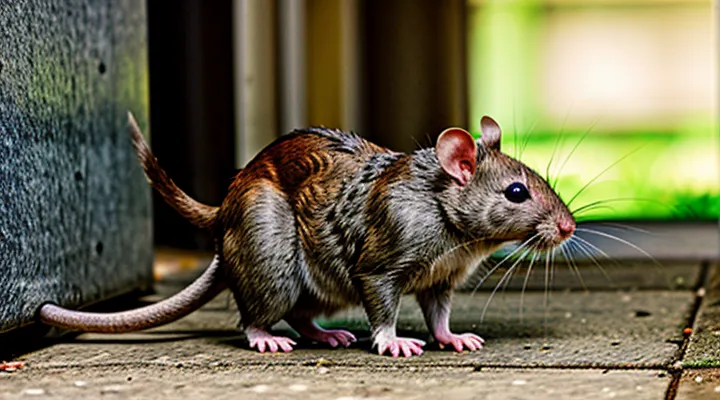
Understanding Rodent Cognition
Historical Perspective of Rat Intelligence
Early Observations and Anecdotes
Early naturalists recorded rats solving puzzles that required the manipulation of simple mechanisms. In the 19th‑century laboratory of Charles Darwin’s contemporary, George Romanes, rats learned to open latch‑type doors to reach food, demonstrating an ability to associate visual cues with functional outcomes.
- In 1905, psychologist Edward L. Thorndike placed a rat in a puzzle box where a lever release opened a door to a treat; the animal reduced its latency over successive trials, providing quantitative evidence of learning.
- A 1930s experiment by Wolfgang Köhler observed rats navigating a maze with multiple dead ends, noting that individuals altered their routes after a single unsuccessful attempt, indicating flexible problem‑solving.
- Anecdotal reports from urban pest control in the early 20th century described rats circumventing traps by pulling loose wires or gnawing through barriers, suggesting adaptive behavior in real‑world settings.
These observations, documented before modern neuroscience, established a baseline for interpreting rat cognition. The recorded behaviors illustrate that rats possessed the capacity to modify actions based on experience, a foundational trait of intelligent organisms.
Scientific Recognition of Rodent Capabilities
Scientific literature provides robust documentation of rodent cognitive abilities. Studies employing maze navigation, operant conditioning, and touchscreen tasks demonstrate that rats acquire and retain complex associations after single exposures, indicating rapid learning and long‑term memory formation. Neuroimaging data reveal activation patterns in prefrontal and hippocampal regions comparable to those observed in primates performing analogous tasks.
Evidence of flexible problem solving appears in experiments where rodents manipulate objects to obtain food rewards. In one series, rats learned to pull levers, push sliders, and stack blocks to trigger mechanisms, adapting strategies when task parameters changed. Social learning is documented through observation experiments: naïve individuals replicate novel foraging techniques after watching experienced conspecifics, suggesting transmission of knowledge within groups.
Key contributions to the field include:
- Demonstrations of episodic‑like memory, where rats remember “what,” “where,” and “when” aspects of an event and use this information to guide future choices.
- Observations of empathy‑related behavior, such as increased grooming of stressed cage‑mates and release of calming vocalizations.
- Findings on tool use, wherein rats employ sticks or improvised implements to retrieve inaccessible food items, challenging previous assumptions about species‑specific limitations.
Recognition of these capabilities influences experimental design in neuroscience, prompting the adoption of rodent models for studying cognition, decision‑making, and neuropsychiatric disorders. It also impacts ethical standards, encouraging refinement of housing and handling practices to accommodate demonstrated mental complexity.
Evidence of Intelligence in Rats
Problem-Solving Abilities
Maze Navigation and Spatial Memory
Rats demonstrate remarkable proficiency in navigating mazes, a capability that directly reflects their spatial memory. Laboratory experiments consistently show that rats can learn the location of a hidden platform in a water maze after a limited number of trials, retaining the information for weeks. This performance relies on the formation of an internal map of the environment, allowing rapid adjustments when obstacles are introduced or pathways are altered.
Key observations supporting advanced spatial cognition include:
- Rapid acquisition of route sequences after a single exposure to a novel labyrinth.
- Persistent recall of maze geometry despite changes in visual cues, indicating reliance on distal landmarks.
- Ability to detour around blocked passages by selecting alternative routes that preserve goal direction.
- Transfer of learned spatial patterns from one maze configuration to another, demonstrating abstraction of spatial rules.
Neurophysiological studies link these behaviors to activity in the hippocampus, where place cells fire in relation to specific locations within the maze. Disruption of hippocampal function impairs maze performance, confirming the region’s role in encoding spatial representations. Moreover, rats exhibit path‑integration abilities, updating their position based on self‑motion cues without external reference points.
Collectively, maze navigation and spatial memory provide robust evidence of sophisticated cognitive processes in rodents, underscoring their capacity for complex problem solving and adaptive behavior.
Tool Use and Innovation
Rats demonstrate the capacity to manipulate objects in ways that meet established criteria for tool use. Experiments with laboratory and wild populations reveal that individuals select, modify, and employ items to achieve goals such as food acquisition, nest construction, and problem solving.
Key observations include:
- Rats retrieve food placed beyond reach by pulling a string attached to a platform, indicating an understanding of causal relationships between the string’s movement and the platform’s displacement.
- In maze tasks, subjects transport small stones to bridge gaps, showing foresight and the ability to repurpose objects for locomotion.
- Urban rats fashion makeshift levers from discarded plastic to open trash‑can lids, illustrating adaptation to anthropogenic environments.
Innovation appears in contexts where standard behaviors fail. When presented with novel obstacles, rats rapidly test alternative strategies, retain successful solutions, and transmit them to conspecifics through social learning. Studies documenting repeated successful improvisation across generations confirm that these behaviors are not isolated anomalies but part of a flexible problem‑solving repertoire.
The documented tool‑use episodes and inventive problem‑solving underscore a sophisticated level of cognition in rats, aligning with broader evidence of advanced learning, memory, and social transmission in rodent species.
Decision-Making Under Uncertainty
Rats demonstrate sophisticated decision‑making when outcomes are unpredictable. Laboratory tasks that present variable reward probabilities reveal that individuals adjust their choices based on recent feedback, indicating an ability to weigh risk and reward dynamically. In a probabilistic two‑armed bandit test, rats increased selection of the option with higher expected payoff after a series of losses on the alternative, a pattern consistent with reinforcement‑learning algorithms.
Key experimental observations include:
- Probabilistic reversal learning: rats switch preferences after a contingency change, showing flexibility under uncertain conditions.
- Delay discounting with stochastic rewards: subjects prefer smaller immediate gains over larger delayed ones when reward delivery is unreliable, reflecting evaluation of temporal and probabilistic factors.
- Foraging simulations with hidden food patches: animals sample multiple locations before committing to a patch, adjusting exploration intensity according to the variance of past successes.
Neurobiological data support these behaviors. Recordings from the prefrontal cortex and basal ganglia reveal activity patterns that encode prediction errors and uncertainty estimates. Pharmacological disruption of dopaminergic signaling impairs the ability to adapt choices, confirming the neurotransmitter’s role in processing ambiguous information.
Collectively, these findings establish that rats possess adaptive mechanisms for navigating uncertain environments, reinforcing the view that rodent cognition includes advanced evaluative and strategic capacities.
Social Intelligence
Empathy and Altruism
Rats demonstrate behaviors that satisfy scientific criteria for empathy and altruism, reinforcing the view that rodent cognition extends beyond problem‑solving. Experimental paradigms reveal that a rat will approach a conspecific in distress, increase grooming, and attempt to alleviate the partner’s discomfort, even when no direct benefit to the observer is evident. In one study, a rat released a trapped companion from a restrainer without receiving food rewards, indicating motivation driven by the partner’s state rather than self‑interest.
Key observations supporting these conclusions include:
- Emotional contagion: Rats exposed to the ultrasonic vocalizations of a frightened peer exhibit heightened stress markers, mirroring the partner’s affective state.
- Rescue behavior: In a forced‑choice task, subjects preferentially open a door to free a restrained cage‑mate, foregoing an available food pellet.
- Food sharing: After locating a food source, rats distribute portions to nearby hungry individuals, reducing their own caloric intake.
Neurobiological analyses link these actions to activation of the anterior cingulate cortex and the oxytocin system, regions implicated in social bonding across mammalian species. Pharmacological blockade of oxytocin receptors diminishes rescue attempts, confirming a causal relationship between neurochemical signaling and prosocial conduct.
Collectively, these data position rats as capable of recognizing and responding to the emotional states of others, fulfilling operational definitions of empathy and altruism. The evidence aligns with broader assessments of rodent intelligence, emphasizing that social cognition constitutes a core component of their adaptive repertoire.
Communication and Cooperation
Rats employ a sophisticated array of signals to convey information within groups. Ultrasonic vocalizations encode alarm, distress, and social status, while pheromonal trails mark territory and indicate resource locations. Visual cues, such as body posture and whisker positioning, supplement auditory and chemical channels, allowing rapid assessment of peer intent.
Social learning underpins cooperative behavior. Naïve individuals acquire foraging techniques by observing experienced conspecifics, reducing trial‑and‑error costs. Experiments demonstrate that rats transmit maze solutions across generations, preserving optimal routes without direct reinforcement.
Cooperation emerges in contexts that enhance collective fitness. Documented patterns include:
- Food sharing: Dominant rats distribute surplus items to subordinates during scarcity, stabilizing group cohesion.
- Coordinated escape: When faced with predators, individuals emit synchronized alarm calls that trigger collective fleeing, decreasing individual predation risk.
- Joint nest construction: Multiple rats contribute to burrow reinforcement, improving structural stability and thermal regulation.
Neurobiological studies reveal that the same cortical and subcortical networks responsible for individual problem solving also process social cues, indicating an integrated architecture for communication and collaborative action.
Social Learning and Cultural Transmission
Rats demonstrate the capacity to acquire behaviors by observing conspecifics, indicating robust social learning mechanisms. Experiments with maze navigation show that naïve individuals locate rewards more quickly after witnessing a trained peer, suggesting that information transfer does not rely solely on trial‑and‑error. This efficiency persists across generations when experienced rats are replaced by offspring, evidencing cultural transmission of learned routes.
Field observations of urban populations reveal that foraging techniques spread through colonies without direct teaching. When a novel food source becomes available, a minority of individuals experiment with extraction methods; subsequent adopters imitate the successful actions, leading to rapid colony‑wide adoption. Such patterns mirror cultural diffusion observed in other vertebrates.
Key experimental findings supporting these conclusions include:
- Demonstrated improvement in problem‑solving speed after social exposure.
- Retention of acquired strategies across multiple breeding cycles.
- Transfer of novel tool‑use behaviors within laboratory groups.
Collectively, these data establish rats as capable of maintaining and propagating learned information, underscoring their sophisticated cognitive architecture.
Learning and Memory
Associative Learning
Associative learning provides direct evidence of the cognitive capacities of rats, reinforcing the view that these rodents possess sophisticated mental processes.
In classical conditioning, rats form connections between neutral stimuli and biologically significant events. Experiments demonstrate that a tone paired with a mild foot shock leads to anticipatory freezing, while an odor associated with food results in rapid approach behavior. These responses emerge after a limited number of pairings, indicating rapid acquisition of stimulus–response links.
Operant conditioning further illustrates the ability to associate actions with outcomes. Rats learn to press a lever, nose‑poke, or navigate a maze to obtain food rewards or avoid aversive stimuli. Performance improves with reinforcement schedules that vary reward probability, delay, or magnitude, revealing sensitivity to complex contingency structures.
Key findings supporting associative competence include:
- Rapid acquisition of conditioned responses after one to three pairings.
- Persistence of learned associations despite changes in context or stimulus modality.
- Ability to extinguish and reacquire responses, showing flexible updating of associations.
- Transfer of learned associations across tasks, indicating generalized learning mechanisms.
Collectively, these observations confirm that rats can link environmental cues to outcomes, modify behavior based on consequences, and adapt to novel reinforcement patterns. Such capabilities underpin the broader assessment of rat intelligence and align with current understanding of rodent cognition.
Long-Term Memory Retention
Rats demonstrate durable memory traces that persist for months after a single exposure. Experiments using spatial navigation in mazes reveal that subjects locate a hidden platform after intervals of up to six months, indicating retention of spatial representations beyond the typical short‑term window. Similar durability appears in odor‑association tasks; rats trained to associate a specific scent with a food reward recall the pairing after prolonged delays, even when intervening experiences introduce competing cues.
Neurophysiological measurements identify the hippocampus and medial prefrontal cortex as core structures supporting long‑term retention. Long‑term potentiation (LTP) recorded in hippocampal synapses remains elevated weeks after training, while activity patterns in the prefrontal cortex exhibit reactivation during sleep, a process linked to consolidation. Gene‑expression analyses show upregulation of plasticity‑related proteins (e.g., CREB, BDNF) during the consolidation phase, correlating with behavioral performance on delayed tests.
Key observations:
- Single‑trial learning can produce memories lasting at least 180 days.
- Memory stability withstands interference from novel tasks introduced during the retention interval.
- Sleep‑dependent replay of task‑related neuronal sequences predicts later recall accuracy.
- Pharmacological blockade of protein synthesis during the post‑training period disrupts long‑term retention, confirming a requirement for de novo protein production.
Collectively, these findings provide robust evidence that rats possess sophisticated mechanisms for preserving information over extended periods, reinforcing their status as a model for studying complex memory processes.
Cognitive Flexibility and Adaptability
Rats display considerable cognitive flexibility, the capacity to modify behavior when rules change, and adaptability, the ability to thrive in novel environments. These traits underpin the broader evidence that rodents possess advanced mental abilities.
Reversal learning experiments illustrate flexibility. When a previously rewarded cue becomes unrewarded and an alternative cue gains reward value, rats quickly suppress the old response and acquire the new one. Set‑shifting tasks, which require alternating between different stimulus dimensions, reveal comparable performance to primates, confirming the presence of executive control mechanisms.
Adaptability emerges in foraging and habitat use. In laboratory mazes, rats adjust routes after obstacles appear, selecting alternative paths without trial‑and‑error repetition. In urban settings, rats exploit sewage systems, subway tunnels, and waste streams, demonstrating rapid incorporation of human‑created structures into their movement patterns.
Key findings:
- Reversal learning: rats achieve criterion after fewer trials than mice, indicating efficient rule updating.
- Set‑shifting: performance remains stable across multiple dimension changes, suggesting robust mental set flexibility.
- Spatial reorientation: after displacement, rats re‑map their position using distal cues, enabling navigation from unfamiliar starting points.
- Social transmission: naïve rats acquire food‑retrieval techniques by observing conspecifics, reflecting adaptive learning through observation.
- Urban colonization: population density rises in cities where rats integrate novel food sources and shelter types, evidencing ecological adaptability.
Collectively, experimental and field data confirm that rats possess the mental machinery to adjust strategies, learn from changing conditions, and occupy diverse niches, reinforcing the view of rodents as cognitively sophisticated mammals.
Advanced Cognitive Functions
Self-Awareness and Metacognition
Research on rats demonstrates capacities that extend beyond basic associative learning, specifically in the domains of self‑awareness and metacognition. Experimental paradigms designed to bypass the traditional mirror test reveal that rats can monitor their own knowledge states and adjust behavior accordingly.
Self‑awareness in rodents is inferred from tasks that require an animal to recognize its own internal cues rather than external reflections. Studies employing odor‑based self‑recognition and escape from ambiguous environments show that rats differentiate between familiar and novel self‑generated signals, indicating a form of introspective processing.
Key findings include:
- Uncertainty monitoring: Rats presented with a difficult discrimination task can opt out of a trial when confidence is low, demonstrating awareness of knowledge limits.
- Information‑seeking behavior: When given the opportunity to obtain additional cues before making a decision, rats preferentially request information in uncertain conditions.
- Error detection: Neural recordings reveal heightened prefrontal activity following incorrect choices, suggesting an internal evaluation of performance.
Neurobiological evidence links these behaviors to the medial prefrontal cortex and hippocampal circuits, regions associated with executive function and memory consolidation. Lesion studies confirm that disruption of these areas impairs both uncertainty monitoring and information‑seeking, underscoring their role in metacognitive processing.
The presence of self‑awareness and metacognition in rats reshapes our understanding of rodent cognition, informing the design of more sophisticated behavioral assays and highlighting the relevance of rats as models for studying higher‑order mental functions.
Numerical Competence
Rats demonstrate the ability to process quantitative information, a capacity traditionally associated with higher mammals. Experiments using operant chambers reveal that individuals can discriminate between different quantities of food pellets, respond faster to larger sets, and adjust choices when reward ratios change.
- In a two‑alternative forced‑choice task, rats selected the option offering three pellets over one pellet in over 80 % of trials after brief training.
- When presented with arrays of 5 versus 8 objects, subjects showed a consistent preference for the larger set, indicating perception of magnitude without counting each item.
- Rats trained to press a lever a specific number of times to obtain a reward adjusted their lever‑press sequences when the required count increased from four to six, demonstrating flexible scaling of actions to meet numerical demands.
Neurophysiological recordings link this competence to activity in the posterior parietal cortex and the dorsal striatum, regions implicated in magnitude processing in humans. Lesions in these areas impair performance on quantity discrimination tasks, confirming their causal role.
The presence of numerical competence in rats supports the view that sophisticated cognitive abilities evolve across diverse taxa. It provides a tractable model for studying the neural mechanisms underlying abstract reasoning, offering insights applicable to both basic neuroscience and the development of artificial systems that emulate animal-like quantitative judgment.
Abstract Reasoning
Rats demonstrate abstract reasoning through tasks that require manipulation of concepts beyond direct sensory cues. In maze experiments, individuals learn to apply a rule such as “choose the opposite side” after a single exposure, indicating the ability to infer a relational pattern rather than memorize a specific route.
In operant conditioning chambers, rats solve problems that involve symbolic representations, such as pressing a lever only when a light flashes in a particular color sequence. Successful performance persists even when the sequence is altered, showing flexibility in applying learned abstract rules to novel configurations.
Neurophysiological recordings reveal that prefrontal cortical neurons fire selectively during rule-switching phases, suggesting that this region supports the integration of abstract information. Parallel activation of hippocampal place cells during spatial transformations indicates that memory representations are reorganized to accommodate new relational frameworks.
Key observations supporting abstract reasoning in rats include:
- Rapid acquisition of relational rules after minimal trials.
- Transfer of learned rules to altered stimulus sets without additional training.
- Persistent performance despite changes in reward contingencies, indicating reliance on internal models rather than immediate reinforcement.
These findings collectively establish that rats possess cognitive mechanisms capable of processing and applying abstract concepts, reinforcing the view that rodent intelligence extends into higher-order reasoning domains.
Factors Influencing Rat Intelligence
Genetics and Heritability
Genetic studies reveal that the capacity for problem‑solving, social learning, and memory in rats is strongly heritable. Quantitative trait loci identified in laboratory strains account for up to 30 % of variance in maze performance, indicating that specific alleles influence spatial navigation and flexibility. Genome‑wide association analyses have linked polymorphisms in the BDNF, GRIN2B, and COMT genes to enhanced associative learning and reduced anxiety, traits that facilitate exploratory behavior and adaptation to novel challenges.
Key genetic evidence supporting rodent cognition:
- Cross‑generational experiments show offspring of high‑performing parents inherit superior learning scores without additional training.
- Selective breeding for maze efficiency produces lines with markedly faster acquisition and retention of tasks within five generations.
- CRISPR‑mediated knock‑in of rat‑specific variants of NRG1 enhances synaptic plasticity, resulting in measurable improvement in reversal learning tests.
- Epigenetic profiling demonstrates that environmental enrichment induces methylation changes in promoter regions of cognition‑related genes, effects that persist in subsequent litters.
These findings establish a measurable genetic foundation for the sophisticated mental abilities observed in rats, confirming that intelligence in these rodents is not solely a product of experience but is also encoded within their genome.
Environmental Enrichment
Environmental enrichment provides rats with complex, manipulable surroundings that stimulate sensory, motor, and cognitive systems. Objects such as tunnels, nesting material, and foraging devices introduce variability that requires problem‑solving and exploration.
Key enrichment components include:
- Structural complexity: multi‑level platforms, ladders, and shelters.
- Cognitive challenges: puzzle feeders, maze fragments, and variable reward schedules.
- Social opportunities: group housing with compatible individuals and space for interaction.
Studies demonstrate that enriched rats exhibit superior performance in maze navigation, object recognition, and reversal learning compared to standard‑caged counterparts. Neurobiological assessments reveal increased hippocampal neurogenesis, elevated brain‑derived neurotrophic factor levels, and enhanced synaptic plasticity in enriched environments.
These findings support the view that rats possess advanced learning capacities, adaptable behavior, and the ability to modify strategies when confronted with novel stimuli. Consequently, incorporating enrichment into laboratory and pet care protocols aligns with both scientific rigor and animal welfare, ensuring that experimental outcomes reflect the full cognitive potential of the species.
Neurobiological Underpinnings
Brain Structure and Function
Rats possess a highly organized neocortex that supports flexible problem‑solving. The dorsal pallium expands laterally, providing a larger surface for synaptic integration compared to other rodents. This expansion correlates with enhanced capacity for abstract reasoning and adaptation to novel environments.
The hippocampus in rats exhibits a pronounced dentate gyrus and CA3 region, facilitating spatial mapping and memory consolidation. Electrophysiological recordings demonstrate theta‑band oscillations that synchronize with exploratory behavior, indicating a direct link between neural rhythm and navigation performance.
The prefrontal cortex, though smaller than in primates, contains densely packed pyramidal neurons that enable executive functions such as impulse control and strategic planning. Lesion studies reveal rapid decline in task acquisition when this area is impaired, confirming its role in decision‑making processes.
Key neurochemical systems underpin these structural features:
- Dopaminergic pathways: modulate reward prediction and reinforcement learning.
- Cholinergic circuits: support attention and working memory.
- Glutamatergic transmission: drives synaptic plasticity essential for learning.
Behavioral experiments illustrate the functional outcome of this architecture. Rats solve maze tasks after a single exposure, adjust strategies when obstacles shift, and demonstrate observational learning by copying conspecifics’ solutions. These capabilities stem directly from the coordinated activity of the cortical, hippocampal, and subcortical networks described above.
Neural Plasticity
Neural plasticity in rats provides concrete evidence that these rodents possess sophisticated cognitive capacities. Structural remodeling of synapses occurs rapidly after exposure to novel mazes, indicating that learning triggers measurable changes in dendritic spine density. Electrophysiological recordings reveal long‑term potentiation in the hippocampus following spatial navigation tasks, demonstrating that memory formation relies on activity‑dependent synaptic strengthening.
Key observations supporting adaptive brain remodeling include:
- Increased expression of brain‑derived neurotrophic factor (BDNF) after problem‑solving challenges, which promotes synaptic growth and survival of new neurons.
- Formation of new granule cells in the dentate gyrus during periods of enriched environment exposure, correlating with improved pattern separation performance.
- Rapid reorganization of cortical maps when rats acquire tactile discrimination skills, showing that sensory representations are not fixed.
Behavioral experiments further link plasticity to intelligence. Rats trained to press levers for varying reward schedules adjust their response patterns within a few sessions, reflecting flexible decision‑making. When obstacles are altered in a previously mastered obstacle course, rats modify their route planning without extensive retraining, implying that neural circuits can rewire to accommodate novel constraints.
Collectively, these findings illustrate that the rat brain exhibits dynamic structural and functional adjustments in response to experience, confirming that rodents are capable of complex information processing and adaptive behavior.
Implications and Applications
Animal Welfare Considerations
Rats demonstrate complex problem‑solving abilities, social learning, and adaptive behaviors that require environments supporting both mental and physical health. Welfare protocols must reflect these capacities to prevent stress, injury, and cognitive decline.
- Provide spacious cages that allow vertical climbing, nesting, and burrowing; minimal restriction reduces stereotypic movements.
- Supply varied, manipulable objects (e.g., tunnels, chewable blocks) that stimulate exploration and problem solving.
- Maintain stable temperature, humidity, and lighting cycles; abrupt changes impair learning and immune function.
- Implement gentle handling techniques, such as tunnel or cup methods, to minimize fear responses and facilitate reliable behavioral testing.
- Schedule regular health assessments, including dental checks and body condition scoring, to detect issues that could compromise cognition.
- Ensure group housing with compatible individuals to preserve natural social structures, while monitoring hierarchy to prevent aggression.
Research designs involving rats must incorporate refinement strategies, such as non‑invasive monitoring and automated data collection, to reduce handling stress. Ethical review boards should evaluate the necessity of procedures against the species’ demonstrated cognitive sophistication, ensuring that any discomfort is justified by clear scientific benefit.
Research Models for Human Cognition
Rats exhibit complex learning, memory, and decision‑making processes that parallel fundamental aspects of human cognition. Their behavioral repertoire provides a practical framework for testing hypotheses about neural mechanisms underlying thought and behavior.
- Spatial navigation and maze performance illustrate hippocampal‑dependent memory.
- Operant conditioning tasks reveal reinforcement learning and habit formation.
- Social interaction paradigms assess empathy‑like responses and hierarchical structuring.
- Problem‑solving experiments demonstrate flexibility and insight.
Genetic tractability, short reproductive cycles, and well‑characterized neuroanatomy enable precise manipulation of specific pathways. Standardized housing and low maintenance costs support large‑scale studies with high statistical power.
Results obtained in rats translate to human conditions. Neurodegenerative disease models replicate amyloid deposition and cognitive decline, informing therapeutic targets. Pharmacological screens in rodents predict efficacy and side‑effect profiles for psychoactive compounds. Behavioral phenotyping of genetically altered rats uncovers mechanisms relevant to schizophrenia, ADHD, and addiction.
Recent advances incorporate optogenetic control of circuit activity, two‑photon calcium imaging of neuronal ensembles, and machine‑learning analysis of behavior. These tools refine the resolution at which rodent cognition can be mapped onto human brain function.
Continued integration of rat research strengthens theoretical models of cognition, accelerates drug discovery, and clarifies the biological basis of complex mental processes.
Ethical Considerations in Rodent Studies
Research involving rats must balance scientific objectives with the moral responsibility to protect sentient beings. The cognitive capacities of these rodents demand rigorous justification for any invasive procedure, because their ability to learn, solve problems, and experience stress elevates the ethical stakes of experimentation.
Key ethical requirements include:
- Justified purpose: Experiments should address questions that cannot be resolved through computational models or non‑animal methods.
- Minimization of harm: Protocols must limit pain, distress, and lasting impairment by employing appropriate anesthesia, analgesia, and humane endpoints.
- Environmental enrichment: Housing conditions should provide opportunities for exploration, nesting, and social interaction, reflecting the species’ natural behaviors.
- Transparent reporting: Detailed disclosure of animal numbers, randomization, blinding, and welfare outcomes enables reproducibility and external scrutiny.
- Regulatory compliance: Adherence to institutional animal care committees, national legislation, and international guidelines ensures accountability.
Ethical review committees evaluate proposals against the three‑Rs principle—Replacement, Reduction, Refinement. Replacement encourages substitution with in‑vitro or digital models whenever feasible. Reduction mandates statistical planning to avoid excess animal use while preserving scientific validity. Refinement focuses on improving procedures, such as using less invasive imaging techniques or providing post‑operative environmental enrichment.
Failure to implement these safeguards undermines public trust and may compromise data quality, as stress and pain can alter neurobehavioral measurements. Consequently, ethical rigor is integral to generating reliable insights into rodent cognition and to maintaining the integrity of the scientific enterprise.