
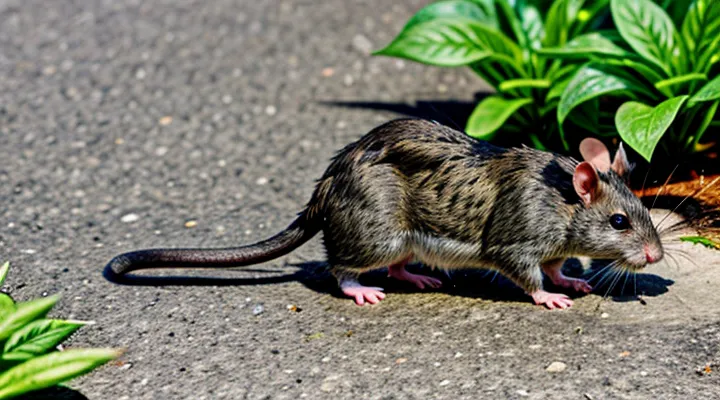
Unraveling the Mystery: Why Some Rats Have Black Stripes
Genetic Factors and Variations
The black dorsal stripe observed in certain laboratory rats results from specific genetic determinants that affect melanin distribution. Primary loci involved include the Agouti (A) gene, which modulates pigment type, and the Kit (W) gene, which influences melanocyte migration. Mutations in the melanocortin‑1 receptor (Mc1r) gene can shift pigment production toward eumelanin, intensifying the stripe’s darkness. Variants of the tyrosinase (Tyr) gene alter enzymatic activity, affecting overall melanin synthesis. Epigenetic modifications, such as DNA methylation of regulatory regions near these loci, can modify expression levels without altering the DNA sequence, leading to phenotypic variability among genetically similar individuals.
Key genetic contributors:
- Agouti (A) allele variants – suppress or permit pigment deposition in specific body regions.
- Kit (W) mutations – influence melanocyte distribution during embryogenesis.
- Mc1r polymorphisms – determine the ratio of eumelanin to pheomelanin.
- Tyrosinase (Tyr) activity alleles – regulate the total melanin output.
- Epigenetic marks – alter gene expression patterns, producing stripe intensity differences.
Inheritance follows Mendelian patterns when single‑gene effects dominate, but polygenic interactions often modify stripe expression. Heterozygous carriers may display reduced stripe prominence, while homozygous recessive combinations typically produce a pronounced, continuous dorsal band. Environmental factors, such as temperature during development, can interact with genetic predispositions, further shaping the final phenotype.
Environmental Influences and Adaptations
The presence of a dark dorsal stripe in this rodent reflects a response to specific habitat pressures. In densely vegetated areas, the contrasting band disrupts the animal’s outline, reducing detection by visual predators such as owls and snakes. In open, rocky terrain, the stripe aligns with shadow patterns cast by irregular surfaces, providing camouflage against aerial threats.
Physiological and behavioral adjustments accompany the visual adaptation:
- Melanin concentration in the stripe increases during periods of heightened UV exposure, offering additional protection for the skin and underlying tissues.
- Seasonal shedding patterns favor a more pronounced stripe in winter months, when snow cover creates a stark background, while the stripe fades in summer when leaf litter dominates the visual field.
- Foraging routes are altered to remain within microhabitats where the stripe’s camouflage is most effective, limiting exposure to open ground.
These modifications illustrate how the striped dorsal marking integrates with broader ecological strategies, enhancing survival across variable environments.
Identifying the Species: What Kind of Rat is It?
Common Rat Species and Their Markings
The brown rat (Rattus norvegicus) dominates urban and agricultural environments. Its coat is uniformly brownish‑gray, occasionally showing a faint dorsal line that may appear darker than surrounding fur. The line is not a true stripe but a concentration of pigmented hairs along the vertebral column.
The black‑backed mouse rat (Rattus rattus) exhibits a glossy black dorsal stripe extending from the neck to the base of the tail. This marking distinguishes it from the more common brown rat and is a reliable field identifier.
The Asian house rat (Rattus tanezumi) presents a light brown dorsal surface with a narrow, well‑defined black stripe that runs centrally along the back. The stripe contrasts sharply with the lighter flank coloration.
The roof rat (Rattus rattus) often displays a darkened ridge of fur on the spine, sometimes merging into a broader black patch on the upper back. Variation in stripe intensity correlates with age and regional genetics.
Key identification points for common rat species:
- Coat color: overall hue (brown, gray, black) and presence of lighter or darker patches.
- Dorsal marking: presence, width, and continuity of a stripe or ridge.
- Tail length: proportion to body length (longer in roof rat, shorter in brown rat).
- Ear size: larger ears in brown rat, smaller in roof rat.
- Habitat preference: sewers and basements (brown rat), attics and trees (roof rat), fields and granaries (Asian house rat).
Understanding these morphological markers enables accurate species determination without reliance on genetic testing.
Distinguishing Features Beyond the Stripe
The rodent identified by a distinct dorsal black stripe exhibits several anatomical and behavioral traits that set it apart from common Rattus species. Its body length ranges from 18 to 22 cm, with a proportionally long tail measuring 20–25 cm, covered in fine, uniformly dark hairs. The stripe runs centrally along the spine, but surrounding fur displays a gradient from gray‑brown on the flanks to a lighter cream on the ventral surface, creating a clear contrast.
Key distinguishing characteristics beyond the stripe include:
- Ear morphology: ears are relatively large, rounded, and sparsely haired, with a pinkish interior that remains uncovered by fur.
- Whisker pattern: long, stiff whiskers extend from both the rostral and lateral regions, providing enhanced tactile perception in low‑light environments.
- Dental structure: incisors exhibit a pronounced orange‑yellow enamel, with a continuous growth rate that necessitates constant gnawing.
- Tail flexibility: the tail is prehensile, capable of grasping thin branches during arboreal foraging.
- Behavioral tendency: primarily nocturnal, the animal displays a high degree of curiosity, investigating novel objects with rapid, exploratory movements.
- Habitat preference: frequently inhabits riparian zones and dense underbrush where leaf litter offers concealment and abundant insect prey.
- Diet composition: omnivorous, with a diet consisting of seeds, fruits, insects, and occasional carrion, reflecting opportunistic feeding habits.
These attributes, combined with the prominent black dorsal marking, enable reliable identification and differentiation from sympatric rodent populations.
Biological Characteristics of Striped Rats
Physical Attributes and Measurements
The specimen exhibits a compact body typical of medium‑sized murids. Total length ranges from 180 to 225 mm, with the head‑body segment accounting for 110–150 mm and the tail extending 70–80 mm. Body mass averages 120–180 g, with occasional individuals reaching 200 g in well‑fed populations.
Fur coloration is primarily brown‑gray dorsally, interrupted by a single, sharply defined black stripe that runs longitudinally along the mid‑back. The stripe measures 35–45 mm in width at the base of the spine and narrows to 20–25 mm near the sacral region. Pigmentation is uniform, lacking any mottling or secondary markings.
Ears are proportionally large, measuring 20–24 mm from tip to base, and are covered with sparse, fine hair. The eyes are medium, with a horizontal pupil diameter of 5–6 mm. Whiskers (vibrissae) extend 30–40 mm, providing tactile coverage across the snout and cheeks.
Limbs are short and robust. Forelimb length is 35–40 mm, hind‑limb length 45–50 mm. Digits are equipped with sharp, curved claws, each claw averaging 2.5 mm in length. The plantar surface bears a dense pad of tactile hairs, aiding in grip on varied substrates.
Key measurements summarized:
- Head‑body length: 110–150 mm
- Tail length: 70–80 mm
- Total length: 180–225 mm
- Body mass: 120–180 g (up to 200 g)
- Dorsal stripe width: 35–45 mm (base) to 20–25 mm (sacral)
- Ear length: 20–24 mm
- Eye diameter: 5–6 mm
- Whisker length: 30–40 mm
- Forelimb length: 35–40 mm
- Hind‑limb length: 45–50 mm
These dimensions provide a precise profile for identification and comparative research.
Behavioral Patterns and Habits
The striped-backed rat demonstrates a distinct set of behavioral patterns that differentiate it from conspecifics lacking the dorsal marking. Observations indicate heightened territoriality, with individuals establishing and defending compact home ranges that correspond to the availability of shelter and food resources. Activity peaks during crepuscular hours, yet the species maintains a flexible schedule that allows opportunistic foraging throughout the night.
Social interactions are structured around a clear dominance hierarchy. Dominant individuals monopolize prime nesting sites and control access to high‑quality food caches, while subordinates display submissive postures and avoid direct confrontations. Communication relies heavily on ultrasonic vocalizations and scent marking; the black stripe serves as a visual cue that reinforces individual recognition during brief daylight encounters.
Key habits include:
- Preference for dense ground cover and burrow systems that provide concealment from predators.
- Selective consumption of seeds, insects, and soft fruits, with a marked increase in protein intake during the breeding season.
- Regular grooming sessions that occur after foraging bouts, reducing ectoparasite load.
- Use of the dorsal stripe as a signal during brief social displays, enhancing group cohesion without altering overall stealth.
Habitat and Geographical Distribution
Preferred Environments and Climates
The striped-backed rat thrives in habitats that combine cover with easy access to food sources. Dense understory in temperate woodlands provides shelter from predators while supporting a steady supply of seeds and insects. Open grasslands with scattered shrubbery offer similar protection and allow for efficient foraging across a broad area.
- Temperate deciduous forests: moderate temperatures (10‑20 °C), high leaf litter, seasonal rainfall 600‑900 mm.
- Mixed conifer‑boreal zones: cooler climate (5‑15 °C), low to moderate humidity, annual precipitation 500‑800 mm.
- Dry scrubland and semi‑arid steppe: warm days (20‑30 °C), low humidity, rainfall below 400 mm, reliance on ground cover for thermal regulation.
- Riparian corridors within arid regions: occasional water sources, vegetation density high enough to conceal movement, temperature swings mitigated by shade.
Preferred altitude ranges from sea level to approximately 2,000 m, where temperature gradients remain within the species’ tolerance. Consistent microclimatic stability—limited extreme heat, moderate seasonal fluctuation, and sufficient ground moisture—correlates with higher population densities. Areas lacking adequate shelter or experiencing prolonged droughts typically support only transient individuals.
Global Presence and Regional Differences
The striped-back rat occurs across several continents, reflecting a broad ecological adaptability. Populations are confirmed in temperate zones of Europe, subtropical regions of Southeast Asia, and arid landscapes of northern Africa. Each geographic cluster exhibits distinct morphological and behavioral traits that align with local environmental pressures.
- Western Europe: Individuals display a narrower dorsal stripe, reduced body mass, and heightened nocturnal activity, correlating with dense woodland cover and cooler temperatures.
- Southeast Asia: Specimens possess a broader, darker stripe, increased fur density, and a propensity for arboreal foraging, adaptations to humid rainforest canopies and abundant fruit resources.
- Northern Africa: Rats show a lighter stripe contrast, elongated hind limbs, and a tendency toward burrowing in sandy soils, traits that facilitate thermoregulation and predator avoidance in desert margins.
Genetic surveys reveal limited gene flow between these regions, indicating long‑term isolation and localized evolutionary pathways. Conservation assessments note that habitat fragmentation threatens European populations, while rapid urban expansion pressures Southeast Asian groups. In contrast, North African colonies remain relatively stable due to the persistence of traditional agricultural practices that provide suitable shelter and food sources.
Dietary Habits and Foraging Behavior
Natural Food Sources
The striped-backed rodent obtains nourishment primarily from items found in its natural habitat. Its diet reflects the availability of resources across seasons and includes a range of plant and animal matter.
- Seeds of grasses and cereals, especially those that fall to the ground during harvest periods.
- Grains such as wheat, barley, and oat kernels uncovered by wind or animal activity.
- Fresh fruits and berries, including wild cherries, blackberries, and mulberries, consumed when ripened.
- Soft‑stemmed vegetation, notably young shoots of lettuce, mustard, and other herbaceous plants.
- Invertebrates like beetles, larvae, and earthworms, captured during nocturnal foraging.
- Occasional small vertebrates, such as juvenile amphibians, taken when larger prey are scarce.
Foraging typically occurs at ground level or in low vegetation, with the animal exhibiting opportunistic behavior that maximizes caloric intake while minimizing exposure to predators. Seasonal shifts dictate the proportion of each food type, with seeds and grains dominating winter menus and fruits and insects becoming more prominent in spring and summer.
Adaptations for Scavenging
The striped-back rat exhibits several physiological and behavioral traits that facilitate scavenging. Its incisors are continuously growing, enabling the animal to gnaw through tough carcass hide and bone fragments. A highly developed olfactory epithelium detects decay odors from distances of up to several hundred meters, guiding the rat to food sources that are otherwise concealed.
The digestive tract features a shortened small intestine and an enlarged cecum, allowing rapid fermentation of protein-rich carrion and efficient extraction of nutrients. Salivary glands produce enzymes that begin protein breakdown before ingestion, reducing digestive load.
Musculoskeletal adaptations support opportunistic feeding:
- Strong forelimb muscles provide leverage for tearing flesh.
- Flexible jaw articulation permits a wide gape, accommodating irregular food items.
- Robust hindlimbs enable quick bursts of speed to reach transient carrion before competitors arrive.
The dorsal black stripe serves as disruptive camouflage in low‑light environments, decreasing detection by both predators and rival scavengers. Social behavior includes opportunistic foraging in small groups, which increases the likelihood of locating scarce resources while sharing the risk of exposure.
Collectively, these adaptations allow the striped-back rat to exploit carrion efficiently, maintain high reproductive output, and occupy a niche where competition is intense but resources are unpredictable.
Reproductive Cycles and Social Structures
Mating Rituals and Gestation
The striped-backed rat exhibits a defined sequence of reproductive behaviors. Males patrol territories, depositing scent from specialized glands along the edges of their range. When a receptive female enters the perimeter, the male approaches with a low-frequency chirp and a series of rapid tail flicks that signal readiness. Females respond by raising the fur along the dorsal stripe and emitting a higher-pitched trill, indicating acceptance. Following mutual vocal exchanges, the pair engages in brief copulatory bouts lasting 5–10 minutes, repeated several times over a 24‑hour period to ensure sperm transfer.
Gestation in this species averages 21 days, with a narrow variance of ±1 day across observed populations. Embryonic development progresses through three distinct phases:
- Early stage (days 1–7): Formation of the neural tube and limb buds; the dorsal stripe pigment begins to differentiate.
- Mid stage (days 8–14): Organogenesis completes; skeletal ossification accelerates.
- Late stage (days 15–21): Rapid fetal growth; hair follicles on the back mature, producing the characteristic black stripe.
Litters typically contain 4–6 neonates, each born altricial and covered in a fine down. Maternal care includes continuous nest building, periodic grooming, and thermoregulation through body contact. Offspring achieve independence around day 18, at which point the mother reduces nursing frequency and encourages exploratory behavior.
Colony Dynamics and Hierarchies
The black dorsal stripe distinguishes a subset of rats within mixed colonies, influencing social organization and resource allocation. Individuals bearing the stripe are often recognized quickly by conspecifics, facilitating rapid assessment of identity and status during encounters.
Colony composition reflects a balance between dominant stripe‑bearing individuals and non‑striped members. Dominance hierarchies are established through repeated aggressive and affiliative interactions; the presence of the stripe correlates with higher frequencies of successful challenges, leading to increased access to food caches, nesting sites, and mating opportunities. Subordinate rats adjust their foraging routes and activity patterns to avoid direct competition, resulting in spatial segregation that reduces conflict.
Key aspects of colony dynamics include:
- Territory partitioning: Stripe‑bearing rats maintain core zones around central resources; peripheral zones are occupied by lower‑ranking individuals.
- Reproductive skew: Dominant striped males sire a disproportionate share of offspring, while females with the stripe exhibit higher litter survival rates due to preferential grooming and protection.
- Communication cues: The stripe serves as a visual signal complementing olfactory markers, enhancing rapid recognition during nocturnal gatherings.
- Stability mechanisms: Periodic rank reassessment, often triggered by the loss or acquisition of the stripe through molting, prevents prolonged monopolization and promotes genetic diversity.
Overall, the distinctive dorsal marking integrates with behavioral and physiological factors to shape the hierarchical structure and functional stability of rat colonies.
Potential Ecological Roles and Impacts
Interactions within Ecosystems
The dorsal stripe distinguishes this rodent from other murids, influencing camouflage, social signaling, and thermoregulation. The pigment pattern creates a visual contrast that blends with shadowed understory vegetation, reducing detection by predators such as owls, snakes, and small carnivores. In conspecific interactions, the stripe serves as an identifier during territorial disputes and mating encounters, facilitating rapid assessment of opponent size and condition.
Within ecosystems, the striped rat participates in multiple trophic and non‑trophic processes:
- Consumes seeds, insects, and detritus, thereby contributing to seed predation, pest control, and nutrient recycling.
- Serves as prey for a range of vertebrate predators, linking primary production to higher trophic levels.
- Transports ectoparasites and pathogens across habitat patches, affecting disease dynamics in wildlife and, occasionally, human populations.
- Competes with sympatric rodents for food and nesting sites, influencing population structure and resource partitioning.
- Alters soil composition through burrowing activity, enhancing aeration and organic matter incorporation.
The stripe’s ecological significance extends to habitat selection. Individuals preferentially occupy areas with heterogeneous light conditions, such as forest edges and shrub thickets, where the pattern provides maximal concealment. This microhabitat preference shapes vegetation composition by concentrating foraging pressure in specific zones, thereby influencing plant community succession.
Overall, the striped dorsal marking integrates morphological adaptation with ecological function, shaping the species’ interactions across multiple layers of the ecosystem.
Role as Pests or Beneficial Animals
The striped back rat exhibits behaviors that influence human environments both negatively and positively.
As a pest, it competes with stored‑product insects, contaminates grain and other food supplies, and spreads pathogens such as Leptospira and hantavirus through urine and feces. Its nocturnal foraging habits increase the risk of structural damage, as gnawing on wiring and insulation can lead to fire hazards.
Conversely, the same species contributes to ecosystem services. It scavenges carrion, reducing the accumulation of waste in urban and rural settings. Its burrowing activity aerates soil, improving water infiltration and nutrient cycling. Predatory birds, snakes, and small mammals rely on it as a food source, supporting higher trophic levels.
Key points:
- Pest impacts: food contamination, disease transmission, structural damage.
- Beneficial impacts: waste removal, soil amendment, prey for predators.
Management strategies must balance these opposing effects, employing sanitation and exclusion measures where pest pressure is high, while preserving habitats that allow the animal’s ecological contributions to persist.
Human Interaction and Management
Coexistence in Urban and Rural Settings
The striped-backed rat exhibits distinct adaptations that enable it to thrive in both city landscapes and countryside farms. Its dorsal pigmentation provides camouflage against varied substrates, from concrete gutters to agricultural debris, reducing predation risk. Physiological resilience allows tolerance of temperature fluctuations common to dense urban heat islands and open rural fields.
Key aspects of its dual‑environment coexistence include:
- Dietary flexibility: Consumes waste‑derived grains, discarded food, and cultivated crops, allowing exploitation of human‑generated resources and natural seed stores.
- Reproductive timing: Breeding cycles align with seasonal abundance in rural zones while remaining opportunistic in urban settings where food supply is continuous.
- Territorial behavior: Establishes compact colonies in building foundations, yet forms larger, dispersed networks across farmland, adjusting social structure to habitat density.
- Disease vector potential: Carries pathogens that can bridge wildlife, livestock, and human populations, necessitating integrated monitoring across municipal and agricultural health programs.
Management strategies must address these traits simultaneously. Urban control measures focus on waste management and structural sealing, whereas rural interventions prioritize habitat modification and livestock protection. Coordinated surveillance ensures that population pressures are identified early, preventing cross‑environment spillover of health risks.
Control Measures and Conservation Efforts
The striped-back rat faces habitat loss, predation by invasive species, and accidental capture in agricultural traps. Effective control and conservation require coordinated actions that address these pressures directly.
- Habitat protection: designate and enforce reserves in regions where the species is documented; restore degraded riparian zones with native vegetation to provide cover and foraging resources.
- Invasive predator management: implement systematic removal of feral cats and mustelids using humane trapping and baiting programs; monitor predator densities through camera traps and track surveys.
- Agricultural trap mitigation: distribute trap‑shielding devices to farmers; provide training on selective baiting that reduces non‑target captures.
- Captive breeding and reintroduction: maintain genetically diverse founder populations in accredited facilities; follow strict health screening before release; select release sites with confirmed habitat suitability and low predator pressure.
- Legal safeguards: classify the species under national wildlife protection statutes; require environmental impact assessments for development projects within its range; impose penalties for illegal killing or trade.
- Community engagement: involve local stakeholders in monitoring efforts; offer incentives for landowners who adopt conservation-friendly practices; disseminate educational materials highlighting the rat’s ecological role as seed disperser and prey for native predators.
Continuous population monitoring, employing mark‑recapture and genetic sampling, supplies data to adjust management strategies. Integration of scientific research, policy enforcement, and community participation forms the foundation for sustaining viable populations of the striped-back rat.