
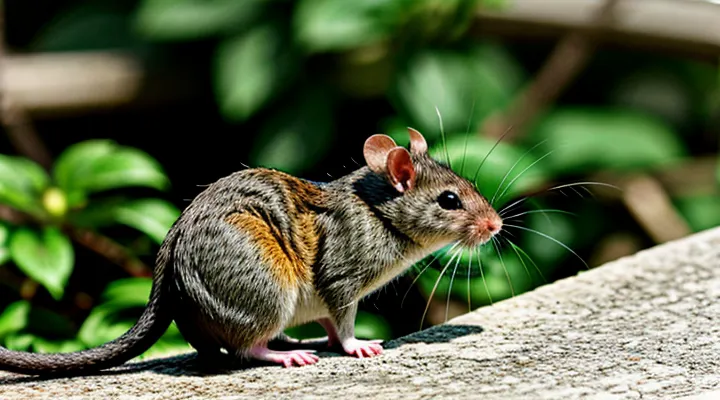
What is a Rat Tail?
Anatomical Overview
External Appearance
The tail of a rat presents a slender, cylindrical extension that typically matches the animal’s body length, ranging from 10 cm in small species to over 30 cm in larger varieties. Its surface is covered by fine, overlapping scales that give a smooth, glossy finish, while the underlying tissue consists of a central vertebral column surrounded by connective tissue and a network of blood vessels. The coloration generally follows a gradient from dark brown or black at the base to a lighter, sometimes pinkish hue toward the tip, reflecting reduced pigment and thinner skin.
Key external attributes include:
- Length proportional to overall body size, providing a reliable metric for species identification.
- Diameter that tapers gradually, allowing flexibility without compromising structural integrity.
- Scale pattern that creates a uniform texture, facilitating locomotion across varied substrates.
- Color transition that may serve as a visual cue for conspecifics and predators.
Variations are observable among different rodent genera: some exhibit a hair‑covered tail with a rougher surface, while others possess a completely naked, hairless tail. The presence or absence of a tuft at the tip, as well as the degree of keratinization, further distinguishes species and can indicate adaptation to specific habitats.
Internal Structure
The rat tail consists of a compact internal framework that supports locomotion, balance, and thermoregulation. Internally, the tail is organized into distinct layers that integrate skeletal, muscular, vascular, nervous, and integumentary elements.
The central column comprises a series of caudal vertebrae, each fused to the next by intervertebral ligaments. These vertebrae are elongated, cylindrical, and lack prominent processes, providing a rigid yet flexible axis. The vertebral marrow houses adipose tissue that serves as an energy reserve.
Surrounding the vertebrae, a sheath of longitudinal and circular smooth muscle fibers enables controlled flexion and extension. Connective tissue layers, including collagen-rich fascia, bind the muscles to the vertebral column and distribute mechanical loads.
Blood supply enters through paired dorsal and ventral arterial branches that run along the length of the tail, delivering oxygenated plasma to the marrow, muscles, and skin. Venous plexuses accompany the arteries, facilitating efficient return flow. Sensory and motor innervation is provided by the caudal nerves, which branch from the spinal cord to innervate musculature and epidermal receptors.
The outermost covering consists of epidermis, dermis, and a keratinized scale layer. The epidermis produces new cells continuously, while the dermis contains collagen and elastin fibers that confer tensile strength. The scale layer, composed of hardened keratin, resists abrasion and reduces water loss.
Key structural components:
- Caudal vertebrae with marrow cavity
- Smooth muscle sheath (longitudinal and circular)
- Collagenous fascia and connective tissue
- Dorsal and ventral arterial/venous networks
- Caudal nerves for sensory and motor control
- Epidermis, dermis, and keratinized scales
The integration of these elements yields a tail that can bend precisely, maintain temperature, store nutrients, and transmit tactile information, thereby enhancing the rodent’s adaptability to diverse environments.
Types of Rat Tails
Scarf Tails
Scarf tails are elongated, slender appendages found on several rodent species, most notably those inhabiting arid and semi‑arid environments. Their surface is covered with fine, hair‑like scales that give a draped, fabric‑like appearance, which inspired the common name.
Morphologically, scarf tails consist of a vertebral column that continues beyond the body’s posterior, tapering to a flexible tip. Unlike the dense, fur‑clad rat tail, the scarf tail exhibits reduced musculature and a higher proportion of connective tissue, allowing greater pliability. The epidermis bears a sparse layer of keratinized scales, providing protection against abrasion while retaining tactile sensitivity.
Functions attributed to scarf tails include:
- Detection of air currents, aiding in predator avoidance.
- Assistance in thermoregulation through surface area exposure.
- Balance enhancement during rapid locomotion on uneven terrain.
- Social signaling via tail posture and movement patterns.
Photographic records demonstrate considerable variation among species: some display uniformly colored tails, while others exhibit longitudinal banding or mottled patterns that improve camouflage. Images captured under controlled lighting reveal the texture contrast between the scaled surface and adjacent fur, highlighting the tail’s structural specialization.
Comparative analysis shows that scarf tails diverge from typical rat tails in both form and purpose. The latter serves primarily as a prehensile or fat‑storage organ, whereas the former emphasizes sensory and environmental interactions. Evolutionary pressures in open habitats appear to have favored the development of the flexible, scaled tail as an adaptive response to predation risk and climatic extremes.
Scaly Tails
Scaly tails occur in several rodent families, contrasting with the naked, elongated tail typical of many rats. The presence of dorsal and ventral keratinized plates distinguishes these appendages from hair‑covered counterparts.
Each scale consists of a hardened keratin layer supported by underlying dermal collagen. Overlapping arrangement provides a flexible yet protective armor. Scale size varies from 1 mm in small ground squirrels to over 5 mm in larger marmots, with coloration matching dorsal fur for camouflage.
Functions of scaly tails include:
- Physical protection against abrasions, bites, and environmental hazards.
- Sensory feedback through mechanoreceptors embedded at scale margins, aiding balance during rapid locomotion.
- Thermoregulatory assistance; scales reduce surface heat loss while permitting limited vasodilation.
- Prehensile capability in arboreal species, enabling grasping of branches and manipulation of objects.
Photographic records show a consistent pattern: a series of uniform, polygonal plates extending from the base to the tip, often with a slight taper. Variation appears in scale count, edge serration, and pigmentation, allowing species identification without dissection.
Evolutionary analysis links scaly tails to habitats requiring enhanced durability and tactile precision. Fossil evidence indicates early rodent ancestors possessed rudimentary scales, suggesting gradual refinement in response to ecological pressures.
Functions of the Rat Tail
Thermoregulation
Heat Dissipation
The tail of a rat serves as an efficient thermal radiator. Its thin, hair‑free skin exposes a dense capillary network directly to the environment, allowing rapid heat exchange. Blood flow through the tail is modulated by sympathetic nerves; vasodilation increases heat loss, while vasoconstriction conserves warmth.
Key physiological mechanisms:
- Peripheral vasomotion – smooth‑muscle relaxation expands vessels, raising surface temperature and enhancing conductive cooling.
- Evaporative cooling – moisture on the tail surface evaporates, removing latent heat without affecting core temperature.
- High surface‑to‑volume ratio – the elongated, cylindrical shape maximizes exposed area relative to mass, accelerating heat dissipation.
Photographic records show tail coloration shifting from pink to darker hues as ambient temperature rises, reflecting increased blood perfusion. Experiments measuring tail skin temperature confirm a direct correlation between ambient heat and tail blood flow, with rapid adjustments occurring within minutes.
Behavioral observations indicate that rats frequently position their tails against cool surfaces or spread them while active in warm environments, exploiting the organ’s thermoregulatory capacity. In laboratory settings, tail temperature monitoring provides a reliable proxy for assessing autonomic responses to thermal stress.
Cold Protection
The rat’s tail contributes to thermoregulation by minimizing heat loss in cold environments. Vascular structures within the tail allow precise control of blood flow, redirecting warm blood toward the body core while limiting circulation to the extremity. This vasoconstriction reduces surface temperature and conserves core heat.
Skin and fur covering the tail provide additional insulation. The dense, short hair traps a layer of still air, decreasing convective heat transfer. When ambient temperature drops, the rodent can adjust fur density through seasonal molting, enhancing the insulating barrier.
Metabolic adjustments support cold protection. Peripheral tissues in the tail exhibit reduced metabolic activity during low temperatures, lowering internal heat production that would otherwise be lost to the environment. Simultaneously, brown adipose tissue located near the tail region can generate heat through non‑shivering thermogenesis, supplementing overall warmth.
Key mechanisms of tail‑mediated cold protection:
- Blood flow regulation: Sympathetic nervous system triggers vasoconstriction, reducing heat dissipation.
- Insulative covering: Short, dense pelage creates a thermal barrier.
- Metabolic modulation: Decreased peripheral metabolism limits heat loss; adjacent brown fat provides localized heat generation.
Collectively, these adaptations enable rodents to maintain stable body temperature despite exposure to low ambient conditions.
Balance and Agility
Counterbalance during Movement
The rat’s tail functions as a dynamic counterweight that stabilizes the animal during locomotion. Its length and mass distribution extend posteriorly, allowing the center of gravity to shift in response to body movements.
When a rat accelerates, brakes, or changes direction, the tail generates torque opposite to the motion of the torso. This torque reduces angular momentum, preventing excessive pitching and maintaining equilibrium on narrow surfaces such as branches or pipe interiors.
Typical scenarios in which the tail provides balance include:
- Rapid lateral turns while navigating cluttered environments.
- Vertical ascent on tree trunks, where the tail presses against the substrate to offset upward thrust.
- Sudden leaps from one perch to another, with the tail extending forward to counteract forward momentum.
- Escape maneuvers that involve abrupt reversals, using the tail to dampen rotational forces.
The effectiveness of this counterbalance derives from several anatomical features. Muscular attachments along the vertebral column permit precise angular adjustments. Flexible intervertebral joints enable the tail to bend laterally or dorsoventrally within milliseconds. Sensory receptors in the tail’s skin and musculature convey real‑time feedback to the central nervous system, allowing rapid modulation of tail position.
Overall, the tail’s role as a movable stabilizer enhances locomotor efficiency, reduces the risk of falls, and expands the range of habitats that rats can exploit.
Aid in Climbing
The tail of many rodents enhances climbing efficiency through several distinct mechanisms. Its elongated, flexible structure provides a counter‑weight that stabilizes the body while the animal ascends vertical surfaces. This balance function reduces the need for constant muscular adjustments, allowing faster and more precise movement.
- Stability: The tail extends behind the center of mass, counteracting forward momentum and preventing overshoot on narrow branches.
- Tactile feedback: Sensory receptors along the tail surface detect contact with substrates, enabling rapid correction of grip errors.
- Anchoring support: In species with semi‑prehensile tips, the tail can wrap around thin twigs or bark, creating an additional point of attachment.
- Weight distribution: The tail’s mass shifts load away from the forelimbs, decreasing fatigue during prolonged climbs.
Photographic documentation shows rodents pressing the tail against vertical obstacles while advancing upward, confirming its active involvement in locomotion. Comparative observations reveal that individuals with proportionally longer tails achieve higher arboreal speed and negotiate steeper inclines than conspecifics with shorter tails. These findings demonstrate that the tail functions as a multifunctional appendage directly contributing to climbing performance.
Communication
Tail Postures and Signals
The rat tail functions as a dynamic visual and tactile signalling organ. Its position, curvature, and movement convey information about the animal’s emotional state, intent, and environmental awareness.
- Elevated, stiff tail – indicates heightened alertness or aggression; the tail remains rigid and may be held vertically above the body.
- Low, relaxed tail – reflects calmness or submission; the tail trails close to the ground with a gentle curve.
- Whipping or rapid flicking – serves as a warning or a defensive maneuver; fast, jerky motions deter predators or rival conspecifics.
- Coiled or wrapped tail – observed during nesting or grooming; the tail forms a loop around the body, providing warmth and stability.
- Tail shaking – accompanies vocalizations during courtship or territorial disputes; synchronized movement enhances signal strength.
These postural cues integrate with auditory and olfactory signals to shape social hierarchies and predator‑avoidance strategies. In laboratory settings, tail posture offers a reliable, non‑invasive metric for assessing stress levels and welfare. Comparative studies show that tail signalling varies among rodent species, with arboreal forms employing more elaborate gestures to navigate three‑dimensional habitats, while burrowing species rely on subtler movements.
Understanding tail postures and associated signals enriches interpretations of rodent behavior, improves experimental design, and supports accurate species‑specific assessments.
Social Interactions
The rat tail functions as a primary visual and tactile cue during social encounters. Its length, coloration, and movement patterns convey information about individual identity, health status, and reproductive condition, allowing conspecifics to assess potential mates, rivals, or allies quickly.
During aggressive disputes, the tail becomes rigid and may be displayed upright, signaling heightened arousal and readiness to fight. Conversely, a relaxed, lowered tail often accompanies submissive behavior, reducing the likelihood of escalation. In group foraging, tail wagging synchronizes with vocalizations, enhancing coordination among members and facilitating resource allocation without direct contact.
Tail-based interactions extend to parental care. Mothers grasp offspring tails to transport pups, while pups use tail movements to solicit attention, prompting feeding or grooming. This tactile exchange reinforces bond strength and accelerates developmental milestones.
Key aspects of tail-mediated social communication:
- Visual signaling: contrast between dorsal and ventral coloration highlights individual differences.
- Postural display: tail elevation or drooping adjusts aggression and submission cues.
- Tactile contact: grasping and brushing transmit affiliative messages during grooming and nest maintenance.
- Synchrony with vocal output: coordinated tail movements amplify group cohesion during collective activities.
Grip and Support
Prehensile Abilities
The rat’s tail exhibits a limited degree of prehensility, allowing it to grasp and manipulate objects during locomotion and foraging. Muscular bundles run longitudinally along the tail, coordinated by a dense network of spinal nerves that provide fine motor control. The skin is highly flexible, and the distal segment contains a higher concentration of mechanoreceptors, enhancing tactile feedback.
Key functional aspects of this capability include:
- Stabilization while climbing – the tail wraps around narrow supports, distributing body weight and reducing slip risk.
- Object handling – juvenile rats use the tip to secure food items, aiding in transport to the mouth.
- Thermoregulation assistance – when wrapped around a perch, the tail can adjust surface exposure, influencing heat loss.
Comparative observations show that the prehensile performance of rat tails is less pronounced than that of arboreal rodents such as squirrels, yet it remains sufficient for the species’ semi‑arboreal habits. Experimental studies employing high‑speed videography and electromyography have quantified the range of motion (approximately 30° of lateral flexion) and activation patterns of the tail musculature during simulated climbing tasks. These data confirm that the tail’s prehensile function contributes directly to the animal’s ability to navigate complex three‑dimensional environments.
Assistance in Movement
The tail of a rodent serves as a versatile extension that directly influences locomotion. Its elongated, flexible structure provides a counterweight that stabilizes the animal during rapid directional changes. Muscular control along the vertebral column enables precise adjustments of tail position, allowing the animal to maintain equilibrium on uneven surfaces.
Key contributions of the tail to movement include:
- Balance enhancement – the tail offsets the body’s center of mass, reducing the risk of tipping while navigating narrow ledges or branches.
- Steering aid – lateral tail movements generate torque that assists in turning, especially during high‑speed sprints.
- Climbing support – when grasping vertical substrates, the tail can act as a brace, distributing weight and preventing slip.
- Aerial maneuverability – during jumps, tail positioning modulates pitch and yaw, improving landing accuracy.
Morphologically, the tail exhibits a high density of mechanoreceptors that detect airflow and surface contact, feeding real‑time data to the nervous system for rapid motor responses. The combination of structural rigidity and muscular flexibility makes the tail an essential component of the rodent’s locomotor toolkit.
Defense Mechanism
Distraction and Escape
The rat’s tail functions as a specialized tool for both distraction and escape, complementing its locomotor capabilities.
The tail creates visual diversion through rapid, conspicuous movements that attract predator attention away from the body. When a predator contacts the tail, the rodent can pivot, directing the attack toward a less vital region. Tail coloration, often lighter or patterned, enhances contrast against the environment, increasing the likelihood that a predator focuses on the appendage rather than the torso.
Key distraction mechanisms include:
- Quick, jerky flicks that generate motion cues.
- Vibrational signals transmitted through substrate, alerting conspecifics and confusing predators.
- Release of scent markers from tail glands that mask the animal’s primary odor trail.
During escape, the tail contributes to stability, maneuverability, and predator evasion. Its length provides a counterbalance that enables rapid turns and sudden direction changes. When seized, the tail can act as a “brake,” allowing the rodent to twist and dislodge the predator’s grip. Additionally, the tail’s flexible spine absorbs impact, reducing injury risk during high‑speed retreats.
Escape functions encompass:
- Balance assistance for abrupt accelerations.
- Torque generation for rotational escape maneuvers.
- Grip disruption when predators attempt to hold the tail.
Together, these distraction and escape functions illustrate the tail’s role as a dynamic defensive organ, essential for survival in predator‑rich habitats.
Signaling Danger
The elongated, hair‑covered appendage at the posterior of rodents functions as a visual alarm system. When a threat approaches, the animal rapidly flicks or waves the tail, creating a high‑contrast motion that alerts nearby conspecifics and may startle predators. The tail’s coloration—often darker than the body—enhances visibility against varied substrates, allowing quick detection of movement.
Key aspects of danger signaling include:
- Rapid oscillation: Frequency of tail beats increases with perceived risk, producing a distinctive pattern recognizable by other rodents.
- Directionality: Tail movement is directed toward the source of danger, providing spatial information to group members.
- Amplitude modulation: Larger, more vigorous swings accompany higher threat levels, conveying urgency.
- Acoustic component: In some species, tail strikes against hard surfaces generate brief sounds that supplement visual cues.
These mechanisms operate alongside other defensive behaviors, reinforcing group vigilance and reducing individual predation risk.
Rat Tail Variations and Abnormalities
Common Tail Injuries
Trauma and Fractures
The tail of a rodent serves as a critical structural element, providing balance, thermoregulation, and a communication surface. When the tail experiences mechanical insult, the most frequent outcomes are soft‑tissue contusions, lacerations, and skeletal fractures. Fractures typically involve the caudal vertebrae, which are composed of small, loosely connected ossified segments surrounded by a dense ligamentous sheath.
Traumatic mechanisms include blunt force from cage collisions, predator attacks, and improper handling. The resulting injuries can be classified as:
- Simple transverse fractures: break across a single vertebra, often accompanied by minimal displacement.
- Comminuted fractures: multiple fragments within one or several vertebrae, indicating high‑energy impact.
- Spiral fractures: helical break patterns caused by torsional forces, common when the tail is twisted sharply.
Clinical signs encompass swelling, hemorrhage, loss of tail flexibility, and altered grooming behavior. Radiographic imaging remains the diagnostic standard; lateral and dorsoventral views reveal fracture lines, displacement, and any associated vertebral malalignment. Computed tomography offers three‑dimensional assessment for complex comminuted injuries.
Management depends on fracture severity. Conservative treatment—immobilization with a lightweight splint and bandage—suffices for simple transverse breaks, allowing natural bone remodeling over two to three weeks. Analgesics and anti‑inflammatory agents reduce pain and edema. Comminuted or spiral fractures often require surgical intervention: intramedullary pins or external fixation devices stabilize the vertebral column, preventing further tissue damage and promoting alignment.
Healing follows the typical phases of bone repair: inflammation, soft callus formation, mineralization, and remodeling. In rodents, the rapid turnover of bone tissue accelerates the consolidation process, with functional recovery observable within four weeks under optimal conditions. Persistent complications may include infection, necrosis of distal tail tissue, or chronic deformity, each demanding prompt veterinary assessment.
Preventive measures focus on environmental enrichment, cage design that eliminates sharp corners, and handling protocols that avoid excessive pulling or twisting of the tail. Regular inspection of tail integrity, especially in breeding colonies or research settings, facilitates early detection of trauma and reduces the incidence of severe fractures.
Infections
The rodent tail, a highly vascularized extension of the vertebral column, is susceptible to a range of infectious agents that can compromise its structural integrity and physiological functions.
Bacterial infections commonly involve Staphylococcus aureus and Pseudomonas aeruginosa. These pathogens infiltrate through abrasions or ulcerations, producing localized erythema, purulent discharge, and necrotic tissue loss. Systemic spread may result in septicemia, especially in immunocompromised individuals.
Fungal colonization, primarily by Candida spp. and dermatophytes such as Trichophyton mentagrophytes, manifests as moist, white plaques and progressive scaling. The high moisture content of the tail’s skin folds creates an environment conducive to fungal proliferation.
Parasitic infestations include Sarcoptes scabiei and Myiasis-causing larvae. Mite burrows generate intense pruritus and secondary bacterial infection, while larval invasion leads to tissue destruction and severe inflammation.
Key clinical indicators of tail infection:
- Redness and swelling extending beyond the wound margin
- Heat and pain on palpation
- Exudate ranging from serous to purulent
- Necrotic or ulcerated areas with loss of keratinized layers
- Behavioral changes such as reduced grooming or tail use
Diagnostic protocol:
- Visual examination and measurement of lesion dimensions.
- Cytological smear or swab for Gram stain and culture.
- Fungal culture on Sabouraud agar for identification.
- Microscopic analysis of skin scrapings for ectoparasites.
- Radiographic imaging if osteomyelitis is suspected.
Therapeutic measures:
- Empirical broad-spectrum antibiotics (e.g., enrofloxacin) pending culture results.
- Topical antifungal agents (e.g., miconazole) applied twice daily.
- Acaricidal treatment for mite infestations (e.g., ivermectin injection).
- Surgical debridement of necrotic tissue when necessary.
- Supportive care including analgesics and fluid therapy.
Preventive strategies:
- Regular inspection of tail skin for cuts or lesions.
- Maintenance of a dry, clean environment to reduce fungal growth.
- Routine ectoparasite control using approved topical or systemic products.
- Prompt treatment of minor injuries to prevent bacterial colonization.
Effective management of tail infections preserves the tail’s role in balance, thermoregulation, and communication, thereby maintaining overall rodent health.
Genetic Variations
Tailless Rats
Tailless rats are rodents that lack a visible caudal appendage either from birth or due to post‑natal injury. Genetic mutations such as the tailless (tl) allele disrupt normal vertebral development, resulting in a truncated or absent tail. Surgical removal, trauma, or disease can also produce an acutely tailless condition.
The absence of a tail influences several physiological and behavioral traits:
- Balance: reduced stability on narrow surfaces, especially during rapid locomotion.
- Thermoregulation: diminished surface area for heat dissipation, leading to altered body temperature control.
- Social signaling: limited use of tail movements for communication within colonies.
Photographic documentation typically shows a smooth posterior contour where the vertebral column terminates abruptly. In laboratory strains, the caudal vertebrae may be fused or completely missing, visible on radiographs as a shortened sacral region. Comparative images of normal and tailless specimens highlight the morphological contrast and aid in identifying the genetic phenotype.
Researchers employ tailless rats to study developmental genetics, spinal cord injury models, and the role of the tail in neuromuscular coordination. Their distinct morphology provides a controlled variable for experiments that require the elimination of tail‑related confounding factors.
Tail Length Differences
Rodent tails exhibit a wide spectrum of lengths, from the diminutive 2 cm tail of the African pygmy mouse to the 30 cm appendage of the Norway rat, reflecting adaptations to diverse ecological niches.
Factors influencing tail length include:
- Species‑specific genetic programming that sets baseline proportions.
- Habitat demands; arboreal rodents possess longer, prehensile tails for grasping, whereas burrowing species retain shorter, sturdy tails.
- Phylogenetic lineage, with members of the Muridae family generally displaying proportionally longer tails than those of the Cricetidae.
- Sex‑related dimorphism, where males of certain species develop marginally longer tails to enhance display or combat performance.
Measured across representative taxa, tail lengths fall within the following intervals:
- Small ground dwellers – 2–5 cm.
- Medium-sized omnivores – 6–15 cm.
- Large, semi‑arboreal species – 16–30 cm.
Length variation directly affects functional roles. Extended tails improve balance during rapid locomotion and facilitate aerial maneuverability, crucial for escape from predators. Shorter tails reduce drag in confined burrow systems and contribute to thermoregulatory efficiency by minimizing surface area. In social contexts, tail length can serve as a visual cue during territorial displays or mating rituals.
Environmental Factors Affecting Tail Health
Housing Conditions
Housing conditions directly influence the development, appearance, and physiological performance of rat tails. Variations in enclosure size, substrate type, ambient temperature, humidity, and environmental enrichment produce measurable changes in tail length, fur density, skin condition, and vascular function.
Key environmental parameters include:
- Cage dimensions that allow unrestricted movement and prevent tail compression.
- Substrate materials that are low‑abrasion and absorb moisture, reducing skin lesions.
- Ambient temperature maintained within the species‑specific thermoneutral zone (approximately 20‑26 °C) to support peripheral blood flow.
- Relative humidity kept between 40 % and 60 % to avoid desiccation of the tail epidermis.
- Enrichment objects that encourage climbing and grooming, promoting muscular tone and circulation.
Elevated temperatures can cause vasodilation, increasing tail blood flow and heat dissipation, while excessive cold leads to vasoconstriction and potential tissue necrosis. Inadequate substrate or overcrowding frequently results in ulcerations, hair loss, and compromised sensory innervation. Consistent humidity levels prevent epidermal cracking, preserving the protective barrier and reducing infection risk.
Optimal housing protocols recommend spacious cages with solid flooring, temperature regulation through calibrated heating pads or climate‑controlled rooms, humidity monitoring devices, and regular provision of chewable and climbable enrichment. Routine inspection of tail skin and vascular status should accompany these conditions to ensure early detection of abnormalities.
Diet and Nutrition
The rat’s tail functions as a thermoregulatory organ, a balance aid, and a fat storage site; its condition reflects the animal’s dietary intake. Protein supplies the keratin matrix that composes the tail’s epidermis, while essential amino acids such as lysine and methionine support continuous renewal of the outer layers. Lipids deposited in the subcutaneous tissue provide insulation and energy reserves, influencing tail length and girth during periods of food scarcity.
Carbohydrate consumption affects glycogen storage in the tail’s connective tissue. High‑glycemic diets can increase glycogen reserves, leading to temporary swelling that may impair balance. Conversely, diets low in simple sugars maintain stable tail morphology and reduce the risk of edema.
Micronutrients contribute to tail health:
- Vitamin A – promotes epithelial differentiation and keratinization.
- Vitamin E – protects lipid stores from oxidative damage.
- Zinc – essential for collagen synthesis in the tail’s dermal matrix.
- Calcium and phosphorus – maintain mineral balance in the underlying bone structure.
Water balance directly impacts tail flexibility. Dehydration reduces tissue turgor, causing the tail to become rigid and less effective for thermoregulation. Adequate fluid intake preserves elasticity and supports nutrient transport to peripheral cells.
Feeding regimes that alternate protein‑rich and carbohydrate‑moderate meals optimize tail growth and maintenance. Excessive fat intake leads to abnormal adipose accumulation, altering tail shape and potentially hindering locomotion. Balanced diets, calibrated to the species’ metabolic rate, ensure the tail remains functional and structurally sound.
Photographic Evidence of Rat Tails
Diversity in Tail Appearance
Examples Across Species
Rodent tails exhibit a wide range of forms, each adapted to the ecological niche of the species. Photographic records demonstrate distinct patterns of length, fur density, and flexibility that correlate with locomotion, thermoregulation, and communication.
Among the most studied examples are:
- Norway rat (Rattus norvegicus): Long, hair‑covered tail; functions include balance during climbing and heat dissipation through a dense vascular network.
- Black rat (Rattus rattus): Slightly longer tail relative to body size; primarily supports arboreal navigation and serves as a tactile organ.
- House mouse (Mus musculus): Short, sparsely furred tail; aids in rapid directional changes during ground movement and assists in evaporative cooling.
- Deer mouse (Peromyscus maniculatus): Moderately long, tufted tail; enhances balance on rocky substrates and provides a visual cue during social interactions.
- Prairie vole (Microtus ochrogaster): Short, hairless tail; contributes to thermoregulation in burrow environments.
- Eastern gray squirrel (Sciurus carolinensis): Bushy, broad tail; stabilizes aerial glides, shields against cold, and signals alarm through vigorous waving.
- North American beaver (Castor canadensis): Broad, flat tail with sparse fur; serves as a rudder in water, a communication surface, and a thermoregulatory plate.
- Chinchilla (Chinchilla lanigera): Long, densely furred tail; assists in balance on steep terrain and provides insulation.
These species illustrate how tail morphology varies from slender, vascular structures optimized for heat exchange to robust, fur‑laden appendages that support locomotor stability and social signaling. Photographic documentation across habitats confirms that tail adaptations are consistent with the functional demands of each rodent’s lifestyle.
Age-Related Changes
The rat tail exhibits measurable alterations as the animal ages, affecting both its physical characteristics and physiological performance. Researchers observe these modifications to assess developmental trajectories and health status in laboratory and wild populations.
- Length stabilizes after sexual maturity; older individuals show modest shortening due to vertebral compression and reduced growth plate activity.
- Scale size and keratin thickness increase, resulting in a firmer, less pliable surface.
- Pigmentation becomes uneven, with darker bands appearing near the distal end, reflecting cumulative melanin deposition.
- Hair density declines, and remaining fur often displays thinning shafts and reduced follicular turnover.
Sensory and vascular functions also decline with age. Mechanoreceptor density diminishes, leading to lower tactile acuity and slower reflex responses. Blood flow through the caudal artery reduces, evidenced by decreased capillary density and slower perfusion rates, which can impair thermoregulation and wound healing. Regenerative capacity after injury is markedly lower; fibroblast proliferation and collagen remodeling are slower, extending recovery time.
These age‑related transformations influence experimental outcomes. Morphometric data must be age‑matched when comparing phenotypes, and functional assays should account for reduced sensory feedback in older specimens. Recognizing the progression of tail characteristics ensures accurate interpretation of rodent models and improves the reliability of longitudinal studies.
Behavioral Observations
Tail Use in Action
The rodent tail serves as a multifunctional appendage during active behaviors. When navigating vertical surfaces, the tail operates as a counterbalance, allowing rapid adjustments in body orientation and preventing loss of grip. In species that climb thin branches, the tail can act as a supportive brace, increasing stability by up to 30 % compared to tail‑less individuals.
During locomotion on uneven terrain, the tail functions as a rudder. Muscular contractions generate lateral thrust, steering the animal around obstacles and aiding in quick directional changes. High‑speed video recordings show tail flicks synchronized with forelimb placement, reducing slip probability.
Thermoregulation occurs through vasodilation and vasoconstriction of the tail’s extensive vascular network. In warm conditions, blood flow to the tail rises, dissipating heat; in cold environments, reduced flow conserves core temperature. Field measurements demonstrate a temperature gradient of 5–7 °C between tail surface and ambient air during midday exposure.
Communication relies on tail posture and movement. Aggressive encounters feature raised, stiffened tails, while submissive displays involve lowered, relaxed tails. Chemical signaling is facilitated by glands along the tail’s ventral surface, depositing scent marks that convey territorial information.
Some rodents employ the tail for food transport. Species with prehensile tails can grasp seeds or insects, freeing forelimbs for manipulation. Experiments with captive specimens reveal a 22 % increase in handling efficiency when the tail participates in object carriage.
Overall, the tail integrates balance, propulsion, temperature control, signaling, and handling functions, enabling rodents to exploit diverse ecological niches.
Close-Up Views of Features
Close‑up imaging of the rodent tail reveals a layered epidermis composed of overlapping keratinized scales. Each scale exhibits a distinct ridge pattern that reduces friction during locomotion and provides a protective barrier against abrasion. Under magnification, the scale edges show micro‑striations that interlock with adjacent scales, creating a flexible yet resilient surface.
Beneath the outer layer, clusters of mechanoreceptive hairs, or vibrissae, emerge from specialized follicles. These hairs terminate in a dense network of nerve endings, visible as fine, branching structures in high‑resolution photographs. The sensory apparatus detects minute air currents and substrate vibrations, enabling precise navigation in confined spaces.
The subdermal region contains a dense capillary plexus that supplies blood to the distal tail. Close‑up views display a branching hierarchy of vessels, from primary arterioles to fine capillaries, delivering oxygen and facilitating heat exchange. Pigmented cells embedded in the dermis produce the characteristic dark banding seen in many species, a pattern that becomes apparent when the tail is illuminated from oblique angles.
Microscopic cross‑sections expose the vertebral column, a series of slender, fused vertebrae that confer structural support while allowing lateral flexion. Each vertebra is surrounded by a sheath of connective tissue, visible as a translucent layer that houses small adipose deposits, which serve as energy reserves during periods of scarcity.
Photographic techniques such as macro lenses, polarized light, and scanning electron microscopy enhance the visibility of these features. By adjusting depth of field and contrast, researchers capture the intricate morphology of scales, sensory hairs, vascular networks, and skeletal elements, providing a comprehensive visual reference for comparative anatomy and functional studies.