
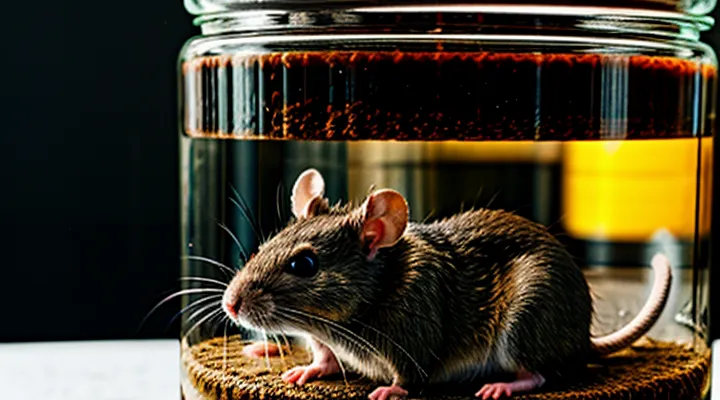
The Concept of «Rat in a Jar»
Origin and Historical Context
The jar confinement paradigm emerged within the behaviorist tradition of the early 1900s, when researchers sought controlled environments to isolate specific motor and motivational responses. Pioneering work on operant conditioning by B. F. Skinner introduced sealed chambers for pigeons, establishing a methodological template that later scientists adapted for rodents. By the 1940s, laboratories at the University of Chicago and Harvard began employing transparent vessels to observe escape attempts, linking confinement stress to repetitive gnawing and climbing behaviors.
Key milestones include:
- 1935 – Initial reports of rats placed in narrow glass containers to assess anxiety‑related locomotion.
- 1952 – Publication of a systematic study describing latency to breach the jar lid, providing quantitative benchmarks for stress reactivity.
- 1967 – Integration of the paradigm into pharmacological screening, where neuroactive compounds were evaluated for their impact on escape frequency.
- 1984 – Introduction of video‑recorded analysis, enabling frame‑by‑frame assessment of micro‑movements and posture changes.
The experiment’s historical significance lies in its contribution to the development of standardized stress assays, influencing later models such as the elevated plus‑maze and forced‑swim test. Its adoption across institutions reflected a broader shift toward reproducible, apparatus‑based investigations of animal behavior, cementing the jar confinement method as a reference point for decades of neurobehavioral research.
Ethical Considerations in Experimentation
The confinement of a rodent within a sealed container for behavioral observation generates distinct ethical obligations. Researchers must demonstrate that the scientific question cannot be answered through less invasive means, and that the anticipated knowledge outweighs potential distress.
- Institutional review boards must approve protocols before any animal contact, verifying compliance with national welfare standards.
- Housing conditions, including temperature, lighting, and enrichment, must meet or exceed baseline requirements throughout the experiment.
- Duration of confinement should be limited to the minimum period necessary to collect valid data; prolonged exposure is prohibited.
- Continuous monitoring of physiological indicators (e.g., heart rate, cortisol levels) is required to detect undue stress, prompting immediate intervention.
- Humane endpoints must be predefined, allowing termination of the procedure if pain, suffering, or irreversible injury becomes evident.
- Post‑experimental care includes rehabilitation or humane euthanasia performed by qualified personnel, following accepted veterinary guidelines.
Transparent reporting of methodology, animal numbers, and adverse events is essential for reproducibility and for external assessment of ethical compliance. Adhering to these principles safeguards animal welfare while preserving the scientific integrity of confinement‑based behavioral studies.
Experimental Setup and Methodology
Materials Required
The Jar: Specifications and Types
The container used in the rat‑in‑a‑jar study must meet precise physical criteria to ensure reliable behavioral data. Dimensions are chosen to accommodate an adult laboratory rat while restricting excessive movement; typical interior diameters range from 10 cm to 15 cm, with heights of 12 cm to 18 cm, yielding volumes of 800 ml to 1.5 l. Wall thickness of 3 mm to 5 mm provides structural integrity and resistance to breakage. Transparent material permits unobstructed video recording; optical clarity must exceed 90 % transmission across the visible spectrum. Closure systems employ screw‑on caps or latch mechanisms that prevent escape yet allow quick removal for cleaning. Ventilation holes, sealed with fine mesh, maintain airflow without compromising containment. All surfaces are chemically inert and compatible with standard disinfectants; smooth interiors facilitate thorough decontamination between trials.
- Borosilicate glass: high thermal stability, excellent transparency, resistant to scratches; fragile under impact, requires careful handling.
- Polycarbonate plastic: durable, impact‑resistant, lighter than glass; lower optical clarity, may yellow over time with repeated sterilization.
- Acrylic (PMMA): good transparency, moderate strength; prone to cracking under high stress, less resistant to solvents.
- Stainless‑steel with clear acrylic windows: robust, suitable for long‑term studies; heavier, more expensive, limited view angles.
Selection of jar type balances durability, visual access, chemical compatibility, and cost. For short‑term experiments demanding high‑resolution imaging, borosilicate glass remains preferred. When repeated handling and transport are anticipated, polycarbonate offers practical advantages. Acrylic provides a middle ground for moderate‑duration studies, while steel‑based assemblies serve niche applications requiring maximum structural security.
The Rat: Species and Characteristics
Rats belong to the order Rodentia, family Muridae, genus Rattus. The most frequently studied species are the Norway rat (Rattus norvegicus) and the black rat (Rattus rattus), both adaptable to laboratory environments and widely distributed worldwide.
Adults range from 20 to 30 cm in body length, with tails of comparable length. Body mass varies between 250 g and 500 g, depending on strain and diet. Fur is dense and coarse, covering a skull equipped with continuously growing incisors that self‑sharpen through gnawing.
Sensory systems are highly developed. Vision is limited to low‑resolution, dichromatic perception, while auditory range extends to ultrasonic frequencies up to 80 kHz. Olfactory sensitivity enables detection of minute chemical cues, and facial vibrissae provide precise tactile feedback for spatial navigation.
Behaviorally, rats are nocturnal foragers, exhibiting strong exploratory drive and rapid habituation to novel environments. Social organization centers on hierarchical groups, with dominant individuals influencing access to resources. Cognitive capacity includes spatial learning, problem solving, and conditioned responses, making rats suitable for behavioral investigations.
Reproductive parameters are notable for rapid population turnover. Gestation lasts approximately 21 days, producing litters of 6–12 pups. Sexual maturity is reached at 5–6 weeks, and females can breed year‑round under favorable conditions.
Key characteristics
- Taxonomy: Rattus spp., Muridae
- Size: 20–30 cm body, 250–500 g weight
- Dentition: ever‑growing incisors
- Sensory range: ultrasonic hearing, acute olfaction, tactile whiskers
- Activity pattern: nocturnal, exploratory
- Social structure: hierarchical groups
- Reproduction: 21‑day gestation, 6–12 offspring, early maturity
These attributes underpin the rat’s role as a model organism in experimental studies of behavior and physiology.
Procedure for Conducting the Experiment
Initial Acclimatization Phase
The initial acclimatization phase serves to transition the subject from its home cage to the confined jar environment, thereby minimizing acute stress responses that could confound subsequent behavioral measurements.
During this phase, the following procedures are implemented:
- Transfer of the rat into the jar immediately after a brief handling session to reduce handling‑induced agitation.
- Maintenance of ambient temperature at 22 ± 1 °C and relative humidity at 55 ± 5 % throughout the period.
- Provision of a single, pre‑weighed food pellet and a measured water source to standardize intake.
- Continuous video recording for the first 10 minutes, followed by intermittent observation at 30‑minute intervals for a total duration of 2 hours.
- Monitoring of physiological parameters (heart rate, respiration) via non‑invasive sensors attached to the jar wall.
Behavioral indicators recorded during acclimatization include:
- Latency to explore the interior walls, measured from entry to first contact.
- Frequency of rearing events, defined as vertical extensions of the forelimbs against the jar surface.
- Grooming bouts, quantified by duration and number per observation interval.
- Vocalizations, captured by a calibrated microphone and categorized by amplitude.
Data collected in this stage establish baseline activity levels and physiological states against which later experimental manipulations are compared. Consistency across subjects is achieved by adhering strictly to the outlined environmental controls and observation schedule.
Observation Parameters
The observation framework defines the measurable variables that capture the rat’s responses while confined in a sealed container. Precise documentation of each parameter enables replication, statistical comparison, and interpretation of behavioral patterns.
- Spatial coordinates of the container within the laboratory environment.
- Ambient temperature recorded in degrees Celsius at one‑minute intervals.
- Light intensity measured in lux, with a log of any changes during the session.
- Duration of each trial, expressed in seconds from introduction to removal.
- Frequency of locomotor events, counted automatically by motion sensors.
- Duration of immobility periods, calculated from continuous video analysis.
- Number of grooming bouts, identified by predefined postural criteria.
- Vocalization occurrences, captured by ultrasonic microphones and quantified in calls per minute.
- Physiological markers such as heart rate and respiration, obtained via non‑invasive telemetry.
- Fluid intake volume, measured by weight difference in the water source before and after each trial.
Data acquisition follows a synchronized timestamp protocol to align all streams. Calibration of sensors occurs before each experimental day, and any deviation beyond ±2 % triggers a repeat measurement. The compiled dataset supports multivariate analysis, revealing correlations between environmental conditions and specific behavioral outputs.
Behavioral Observations and Analysis
Immediate Reactions to Confinement
The experiment places a laboratory rat inside a transparent jar with a narrow opening, allowing observation of the animal’s first moments of confinement. Within seconds, the subject exhibits heightened locomotor activity, repeatedly circling the interior wall. This behavior reflects an acute stress response triggered by the sudden loss of escape routes.
Vocalizations intensify during the initial minute, with ultrasonic calls peaking at frequencies between 22 and 28 kHz. These calls correlate with elevated plasma corticosterone levels measured immediately after removal from the jar, confirming activation of the hypothalamic‑pituitary‑adrenal axis.
Physical signs accompany the auditory response:
- Rapid, shallow breathing; respiratory rate rises 30 % above baseline.
- Pupillary dilation; pupil diameter expands by approximately 2 mm.
- Increased heart rate; telemetry data show a 45 % increase relative to pre‑confinement values.
The rat also engages in self‑directed grooming, focusing on forepaws and facial area. Grooming frequency doubles compared to control conditions, suggesting an attempt to mitigate tactile discomfort caused by the smooth jar surface.
Escape attempts manifest as repeated pushes against the lid and attempts to wedge the body against the opening. When the lid is sealed, the animal exhibits a distinct pattern of forelimb extension and hind‑limb retraction, a stereotyped motor sequence that persists until external release.
These immediate reactions provide a baseline for assessing longer‑term behavioral adaptations, such as habituation or learned helplessness, in subsequent phases of the confinement study.
Adaptational Behaviors
Coping Mechanisms
Rats confined in a clear, narrow container exhibit a range of behavioral strategies aimed at reducing acute stress. The experimental setup limits escape routes, forces prolonged exposure to a novel environment, and allows continuous observation of individual and group responses.
Coping mechanisms in this context refer to observable actions that mitigate perceived threat or discomfort. They can be categorized as active, passive, or self‑directed behaviors, each reflecting distinct neurobiological pathways.
- Repeated attempts to breach the container wall (climbing, gnawing, pushing) – active escape effort.
- Increased locomotion along the interior surface – exploratory coping.
- Rapid, repetitive grooming of fur and paws – self‑soothing behavior.
- Continuous, rhythmic head or body movements (stereotypy) – motor displacement.
- Prolonged immobility with minimal movement – passive resignation.
- High‑frequency ultrasonic vocalizations – communicative distress signaling.
Analysis of these patterns shows a correlation between active escape attempts and elevated corticosterone levels, indicating heightened arousal. Passive immobility aligns with reduced hormonal response, suggesting a shift toward energy conservation. Stereotypic motions and grooming often precede a decline in exploratory activity, marking a transition from adaptive to maladaptive coping. The data support the view that the jar confinement model reliably isolates discrete stress‑response strategies, providing a framework for studying the neural circuitry of coping in mammals.
Stress Indicators
The jar confinement study provides measurable signals of physiological and behavioral stress in rodents. Elevated plasma corticosterone levels appear within minutes of placement, confirming activation of the hypothalamic‑pituitary‑adrenal axis. Heart‑rate monitoring shows a rapid increase followed by a sustained tachycardic period, indicating autonomic arousal.
Observed actions reflect coping strategies and distress intensity.
- Repetitive grooming of the forepaws and face, often directed toward the jar wall.
- Reduced locomotion accompanied by prolonged immobility or freezing episodes.
- Repeated attempts to climb or push against the jar lid, sometimes resulting in vocalizations at frequencies above 20 kHz.
- Altered posture, including lowered head and hunched back, persisting throughout the confinement interval.
Weight measurements taken before and after the trial reveal a short‑term decrease, suggesting metabolic response to acute stress. Urinary catecholamine excretion rises in parallel with the other physiological markers, offering a non‑invasive assessment tool.
Collectively, these indicators enable quantitative evaluation of stress severity, facilitate comparison across experimental conditions, and support the development of refined protocols that minimize animal discomfort.
Long-Term Behavioral Changes
Learned Helplessness
The classic confinement test places a laboratory rat inside a transparent container that limits movement and provides only a narrow opening for escape. Initial trials show vigorous attempts to reach the opening, but repeated blockage of the passage produces a marked decline in effort.
Learned helplessness describes the behavioral shift that occurs when an organism experiences uncontrollable adverse events. After a series of failed escape attempts, the subject adopts a passive stance, even when conditions change to allow successful action.
In the jar experiment, rats that encounter a blocked exit for several sessions eventually cease to explore the opening, despite later removal of the barrier. This pattern illustrates learned helplessness: the animal internalizes the expectation that its actions are ineffective, leading to inactivity.
Key observations include:
- Rapid reduction in escape-directed behavior after 3–5 blocked trials.
- Persistence of passivity when the barrier is removed, indicating a lasting cognitive imprint.
- Elevated corticosterone levels and altered serotonergic signaling in the brain regions governing motivation.
These findings reinforce the link between uncontrollable stressors and the development of depressive‑like states, offering a measurable model for studying resilience, pharmacological interventions, and the ethical implications of experimental design.
Problem-Solving Attempts
The jar experiment placed a single rodent inside a transparent container with a narrow opening that allowed limited access to food and water. Researchers monitored the animal’s behavior over several days, recording actions that indicated attempts to overcome the physical constraints of the environment.
Observed problem‑solving attempts included:
- Manipulating the jar lid by biting and twisting to create a larger gap.
- Using the body weight to press against the glass, generating enough force to shift the lid slightly.
- Repeatedly repositioning the head and forepaws to test different angles of entry.
- Employing the tail as a lever to pry the opening wider.
- Sequentially combining biting with body pressure, producing a stepwise increase in aperture size.
These behaviors demonstrate adaptive learning, as the rat modified its approach after each unsuccessful trial. The progression from simple biting to coordinated leverage indicates an ability to integrate sensory feedback with motor planning. The pattern of escalating effort suggests that the animal evaluated the efficacy of each tactic, discarding ineffective methods while reinforcing successful ones.
Psychological and Sociological Implications
Analogies to Human Behavior
Confinement and Isolation
The experiment placed a laboratory rat inside a transparent, sealed jar to observe behavioral changes caused by spatial restriction and lack of conspecific interaction. Researchers recorded activity through video tracking and physiological measurements throughout the confinement period.
Confinement produced measurable stress responses. Heart rate elevated within minutes, cortisol levels rose sharply, and the animal exhibited repetitive grooming and reduced exploratory locomotion. Motor patterns shifted from wide-area roaming to confined circling along the jar’s interior surface.
Isolation intensified the stress profile. Absence of social cues led to heightened vigilance, increased ultrasonic vocalizations, and prolonged periods of immobility. The rat’s response to novel stimuli presented after confinement showed delayed approach latency and reduced interaction time.
Key observations:
- Elevated heart rate and cortisol during the first hour of confinement.
- Transition from extensive movement to repetitive circling after 15 minutes.
- Increased grooming frequency correlated with isolation duration.
- Delayed exploratory behavior following release from the jar.
These findings demonstrate that spatial restriction combined with social isolation triggers rapid physiological arousal and distinct behavioral adaptations in rodents.
Learned Helplessness in Society
The classic confinement test, in which a rodent repeatedly fails to escape a sealed container despite the presence of an exit, provides a clear laboratory analogue of learned helplessness. When the animal’s attempts are systematically thwarted, its subsequent behavior shifts from active problem‑solving to passive resignation, even when escape becomes possible. This transition mirrors patterns observed among human groups exposed to persistent social, economic, or political barriers.
Key parallels include:
- Repeated exposure to uncontrollable setbacks reduces the likelihood of future initiative.
- Perceived lack of agency amplifies stress responses and impairs decision‑making.
- Collective resignation can propagate through social networks, reinforcing a culture of inaction.
Empirical studies link these mechanisms to phenomena such as chronic unemployment, disenfranchised communities, and institutional distrust. Individuals who experience chronic failure often internalize a belief that effort will not alter outcomes, leading to reduced civic participation, lower educational attainment, and diminished health‑seeking behavior.
Interventions that restore perceived control—targeted skill development, transparent feedback loops, and opportunities for incremental success—demonstrate measurable reductions in helplessness metrics. Programs emphasizing mastery experiences, rather than mere exposure to information, produce the most durable shifts in behavior.
The rat confinement paradigm thus serves as a concise model for understanding how systemic obstacles generate widespread inactivity. By translating its findings into policy design, societies can counteract the self‑reinforcing cycle of helplessness and promote adaptive resilience.
Ethical Debates and Critiques
Animal Welfare Concerns
The study places a rat inside a clear, confined vessel to monitor locomotion, anxiety‑related behaviors, and response to novel stimuli. The design eliminates external cues, forcing the animal to rely on internal cues while its movements are recorded from multiple angles.
Key welfare concerns include:
- Elevated stress levels caused by spatial restriction and sensory deprivation.
- Absence of nesting material, shelter, and opportunities for natural foraging.
- Potential for injury if the animal attempts to escape or becomes agitated.
- Limited social interaction, which can exacerbate anxiety in a species that naturally lives in groups.
- Inadequate provision of analgesia or humane endpoints if distress escalates.
Regulatory bodies require adherence to the 3Rs principle: replace the model where possible, reduce the number of subjects, and refine procedures to minimize suffering. Institutional review committees typically demand:
- Pre‑experimental health screening and acclimation periods.
- Continuous monitoring for signs of severe distress or self‑injury.
- Environmental enrichment compatible with the experimental constraints, such as chewable objects.
- Defined criteria for early termination to prevent prolonged suffering.
Balancing scientific objectives with ethical obligations demands rigorous justification of the confinement method, transparent reporting of welfare measures, and ongoing evaluation of alternative approaches that could achieve comparable data without compromising animal well‑being.
Justification of the Experiment
The experiment involving a rodent confined within a transparent container serves to isolate the effects of spatial limitation on stress‑related behavior. By restricting movement while preserving visual access to the external environment, researchers can quantify changes in locomotor activity, grooming, and exploratory patterns that directly reflect anxiety and coping mechanisms.
Ethical approval rests on three pillars: compliance with institutional animal care standards, reduction of distress through brief exposure periods, and the scientific necessity of the model for advancing knowledge of stress physiology. The procedure minimizes invasive interventions, employs habituation protocols, and provides post‑experiment enrichment, thereby aligning with the principle of refinement.
Methodologically, the setup offers a controlled, replicable arena where a single variable—spatial confinement—is manipulated while external stimuli remain constant. This precision enables statistical comparison across treatment groups and facilitates longitudinal monitoring of behavioral trajectories.
Key justifications:
- Direct measurement of stress markers in a confined yet observable setting.
- Alignment with ethical frameworks that prioritize animal welfare and scientific value.
- High reproducibility due to standardized container dimensions and lighting conditions.
- Ability to correlate behavioral data with physiological indicators such as cortisol levels.
Variations and Modern Interpretations
Modified Experimental Designs
Modified designs for the classic rat‑in‑a‑jar paradigm aim to increase experimental precision while addressing welfare concerns. Adjustments focus on arena geometry, sensory cues, and data acquisition methods, allowing researchers to isolate specific behavioral drivers.
- Replace a static cylindrical container with a modular chamber that can expand or contract during trials, enabling assessment of spatial flexibility.
- Introduce variable lighting cycles synchronized with recording equipment to examine circadian influences on exploration patterns.
- Employ high‑resolution infrared cameras combined with automated tracking software, reducing observer bias and capturing micro‑movements.
- Integrate olfactory dispensers that release controlled scent pulses, testing the impact of novel odors on confinement behavior.
- Implement a removable barrier system that can be activated remotely, providing a reversible escape option to evaluate stress responses without permanent release.
These refinements generate richer datasets, facilitate replication across laboratories, and support ethical review by limiting prolonged confinement. Quantitative outputs, such as latency to approach the barrier, path curvature, and frequency of exploratory bouts, become directly comparable across studies. The resulting insights extend the original findings, revealing how environmental complexity and sensory modulation shape rodent decision‑making within confined spaces.
Digital Simulations and Modeling
Digital simulations recreate the confined‑environment experiment with rodents, allowing precise control over variables that are difficult to manipulate in vivo. By converting physical parameters—jar dimensions, substrate texture, lighting cycles—into computational inputs, researchers generate virtual arenas that mirror the original setup. This approach yields reproducible datasets, eliminates animal welfare concerns, and supports systematic exploration of stimulus–response relationships.
Modeling frameworks employed include:
- Agent‑based representations of individual rats, each governed by probabilistic rules for locomotion, grooming, and stress‑related behaviors.
- Finite‑element analyses of the jar structure, assessing how material stiffness influences acoustic feedback and tactile perception.
- Reinforcement‑learning algorithms that adjust simulated decision policies based on reward signals derived from physiological proxies such as cortisol analogues.
Calibration against empirical observations ensures that simulated trajectories align with recorded movement patterns. Sensitivity analyses identify parameters with disproportionate impact on behavioral outcomes, guiding experimental refinements. Moreover, virtual trials enable rapid testing of hypothetical interventions—altered lighting schedules, modified jar geometry, or pharmacological manipulations—without additional animal testing.
The integration of computational models with the confined‑environment study expands predictive capacity, facilitates hypothesis generation, and streamlines the translation of behavioral findings into broader neuroscientific contexts.
Applications in Psychology and Neuroscience
The rat‑in‑a‑jar paradigm provides a controlled environment for observing spontaneous and conditioned behaviors. Researchers exploit this setup to isolate variables such as confinement stress, reward anticipation, and motor planning, yielding data that translate directly to psychological theory and neural circuitry models.
Applications in psychology include:
- Quantifying anxiety levels through latency to explore the jar interior after exposure to unpredictable stimuli.
- Measuring habit formation by tracking repetitive entry‑exit cycles under fixed reinforcement schedules.
- Assessing decision‑making processes via choice tasks that require the animal to navigate between open and closed jar sections for food rewards.
In neuroscience, the experiment supports:
- Mapping activation patterns in the amygdala and prefrontal cortex during stress‑induced exploration, using electrophysiological recordings.
- Evaluating synaptic plasticity in the hippocampus by correlating maze‑like movements within the jar with long‑term potentiation markers.
- Testing pharmacological interventions; drug effects on locomotion and exploratory drive are observable through changes in jar‑bound trajectories.
The methodology also facilitates cross‑species comparisons, allowing researchers to align rat behavioral signatures with human analogues of claustrophobia, compulsive checking, and reward‑based learning. Consequently, the paradigm serves as a bridge between observable actions and underlying neural mechanisms, informing both theoretical frameworks and therapeutic strategies.