
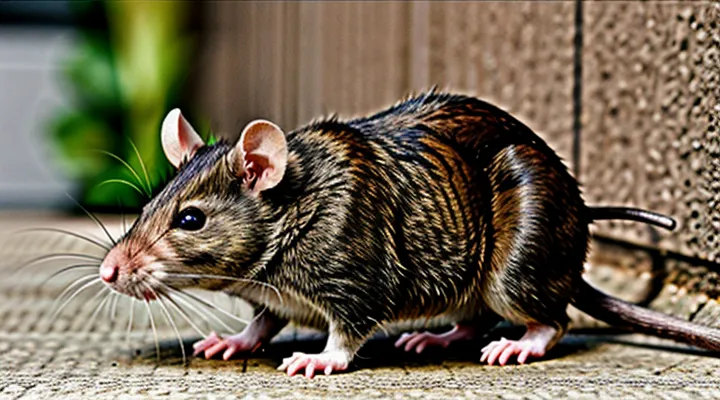
Understanding the Term «Rat»
Etymology and Origin
The English word rat traces back to Old English ræt, derived from Proto‑Germanic *rattaz. This root appears in Old Norse rottr and Old High German rat, indicating a common Germanic ancestry.
Latin adopted the term as rattus, which entered Old French as rat. The French form spread throughout medieval Europe, becoming the standard reference for the rodent in most modern European languages.
Scientific classification formalized the name in the 18th century. Carl Linnaeus assigned the genus Rattus to the group in his 1758 Systema Naturae, establishing the taxonomic foundation still used today.
Key points in the term’s development:
- Proto‑Germanic *rattaz → Old English ræt (c. 9th century)
- Latin rattus → Old French rat (12th century)
- Adoption into Middle English as rat (13th century)
- Linnaean genus Rattus defined (1758)
These stages illustrate the linguistic continuity from early Germanic roots to contemporary scientific nomenclature.
Common Usage and Misconceptions
Rats are frequently referenced in everyday language as symbols of disease, theft, or untrustworthiness. These associations stem from observable behaviors such as scavenging in urban environments, rapid reproduction, and a reputation for evading capture. Consequently, the term often appears in idiomatic expressions, media portrayals, and informal speech to convey negative connotations.
Common misconceptions persist despite extensive biological research:
- Disease transmission: Only a limited number of pathogens are reliably spread by rats; many illnesses attributed to them lack scientific support.
- Intelligence: While rats exhibit problem‑solving abilities, their cognitive capacities differ markedly from those of primates and should not be overstated.
- Urban exclusivity: Rats thrive in diverse habitats, including agricultural fields, forests, and coastal areas, not solely in cities.
- Species uniformity: The label “rat” masks a taxonomic group comprising several species with distinct ecological roles and physiological traits.
Accurate usage of the term requires distinguishing between the animal’s biological characteristics and the metaphorical meanings applied in cultural contexts. Misapplication can distort public perception, influence policy decisions, and affect pest‑management strategies.
Biological Classification and Features
Kingdom and Phylum
Rats belong to the biological classification system that organizes living organisms into hierarchical groups. At the highest level, they are members of the Kingdom Animalia, a collection of multicellular eukaryotes that obtain energy through heterotrophic nutrition, possess specialized sensory and nervous systems, and exhibit motility at some life stage. Animalia organisms develop from a blastula during embryogenesis and lack cell walls, distinguishing them from plants and fungi.
Within Animalia, rats are placed in the Phylum Chordata. Defining features of Chordata include:
- a dorsal nerve cord that develops into the central nervous system,
- a notochord present at some developmental stage,
- pharyngeal slits or pouches,
- a post‑anal tail extending beyond the anus.
These characteristics persist in various forms throughout the life cycle of chordates and provide the structural basis for complex organ systems. Rats, as mammals, retain the notochord only during embryonic development, while the dorsal nerve cord becomes the spinal cord. The combination of Kingdom Animalia and Phylum Chordata situates rats within a well‑defined evolutionary framework, linking them to a broad array of vertebrate species that share these fundamental anatomical traits.
Genus and Species
Common Rat Species
Rats belong to the genus Rattus and several other genera within the family Muridae. The most frequently encountered species are:
- Brown rat (Rattus norvegicus) – large body, robust skull, coarse brown fur; typical length 20–25 cm, tail equal to body length. Adapted to sewers, basements, and agricultural settings; omnivorous diet includes grains, insects, and carrion.
- Black rat (Rattus rattus) – slimmer frame, pointed nose, black or dark brown fur; length 16–20 cm, tail longer than body. Prefers warm, elevated habitats such as attics and trees; diet emphasizes fruits, seeds, and stored food.
- Polynesian rat (Rattus exulans) – smallest of the three, averaging 12–16 cm; grayish fur, short tail. Native to Pacific islands, often found in human dwellings and cultivated fields; feeds on seeds, insects, and human refuse.
- Roof rat (Rattus rattus domestica) – regional variant of the black rat, distinguished by slightly larger size and greater tolerance for cooler climates; occupies roofs, barns, and outdoor structures; diet mirrors that of the black rat with an emphasis on plant material.
All species share key anatomical traits: incisors that grow continuously, a high reproductive rate, and an ability to thrive in diverse environments. Morphological differences—body size, tail proportion, fur coloration—facilitate identification and indicate ecological preferences. Understanding these common species supports accurate assessment of rodent-related risks and informs targeted management strategies.
Lesser Known Species
Rats belong to the family Muridae and exhibit a range of morphological and behavioral traits that distinguish them from other rodents. While the Norway rat and the black‑roofed rat dominate public awareness, several species remain obscure despite possessing distinct adaptations.
- Asian house rat (Rattus tanezumi) – inhabits tropical forests and human settlements across Southeast Asia; characterized by a shorter tail relative to body length and a dorsal coat with a subtle grayish hue.
- Bornean mountain rat (Rattus baluensis) – confined to high‑altitude cloud forests of Borneo; displays dense, woolly fur and enlarged auditory bullae, facilitating sound detection in misty environments.
- Australian swamp rat (Rattus lutreolus) – occupies wetlands of eastern Australia; exhibits webbed hind feet and a water‑repellent pelage that aid in swimming and foraging in marshes.
- Sundaic rat (Rattus montanus) – found in the mountainous regions of Sumatra; distinguished by a robust skull, powerful incisors, and a preference for rocky crevices.
- Pygmy rat (Rattus nitidus) – the smallest member of the genus, endemic to the Philippines; features a diminutive body size, high metabolic rate, and a diet heavily reliant on insects.
These species share core rat characteristics—such as incisors that grow continuously, omnivorous feeding habits, and social structures—but each demonstrates unique physiological or ecological specializations. Recognition of these lesser known members expands the overall understanding of rat diversity and informs conservation strategies tailored to their specific habitats.
Physical Characteristics
Size and Weight
Rats vary considerably in body dimensions and mass, reflecting species differences and environmental adaptation. The most widely studied species, the brown (Norway) rat and the black (roof) rat, illustrate this range.
-
Brown rat (Rattus norvegicus)
• Body length: 20–25 cm (head‑to‑base)
• Tail length: 18–25 cm, typically equal to or slightly shorter than the body
• Weight: 250–500 g for adults, with occasional individuals exceeding 600 g in well‑fed populations -
Black rat (Rattus rattus)
• Body length: 16–20 cm
• Tail length: 20–25 cm, generally longer than the body
• Weight: 150–300 g, rarely above 350 g
Smaller rat species, such as the Polynesian rat (Rattus exulans), reach a maximum body length of 12–14 cm and weigh 50–100 g. In contrast, exceptionally large individuals of the brown rat, especially those in laboratory or urban settings, can approach 800 g, illustrating the species’ capacity for considerable growth under optimal nutrition.
Overall, rat size is defined by a head‑to‑body length of 12–25 cm, tail length that matches or exceeds body length, and a weight spectrum of 50 g to 800 g, with most adult specimens falling between 150 g and 500 g. These metrics provide a baseline for identification, ecological assessment, and comparative research.
Fur and Coloration
Rats possess a dense coat that covers the entire body, providing insulation and protection. The fur consists of two primary hair types: guard hairs, which are longer and coarser, and underfur, which is finer and forms a soft underlayer. Guard hairs repel moisture and debris, while underfur retains heat.
Coloration in rats varies widely and is determined by genetic loci that control pigment production. Common phenotypes include:
- Albino: absence of melanin, resulting in white fur and pink eyes.
- Black: high eumelanin concentration, yielding solid black fur.
- Brown: moderate eumelanin, producing chocolate‑brown coats.
- Agouti: banded hairs with alternating dark and light segments, creating a speckled appearance.
- Himalayan: dark points on ears, nose, tail, and feet with a lighter body, caused by temperature‑sensitive pigment expression.
- Leucistic: reduced pigment, producing pale fur with normal eye color.
Fur coloration serves several functions. Camouflage aligns coat patterns with the rat’s environment, reducing predator detection. Distinct markings facilitate individual recognition within colonies. Moreover, fur condition reflects health status; excessive shedding, alopecia, or discoloration often indicate disease or nutritional deficiencies.
Anatomical Adaptations
Rats exhibit a suite of anatomical features that enable survival in diverse habitats, from sewers to agricultural fields. Their skeletal and muscular structures support rapid movement and burrowing, while specialized sensory organs enhance environmental perception.
- Incisor morphology: Continuously growing, chisel‑shaped front teeth allow gnawing of hard materials; enamel coats only the front surface, creating a self‑sharpening edge.
- Vibrissae: Long, highly innervated whiskers detect airflow and tactile cues, facilitating navigation in low‑light conditions.
- Tail: Thin, vascularized appendage provides thermoregulation and balance during climbing; it also serves as a communication signal when exposed.
- Paw anatomy: Plantar pads contain sweat glands for grip; opposable digits on the forelimbs enable manipulation of objects and food items.
- Auditory system: Large external ears and an elongated cochlear canal improve detection of ultrasonic frequencies used in social communication.
- Digestive tract: A cecum populated by symbiotic bacteria ferments cellulose, allowing extraction of nutrients from plant matter and waste.
- Reproductive organs: Males possess a descended testes with a scrotal sac that maintains optimal temperature for sperm production; females have a bicornuate uterus supporting multiple litters per year.
Collectively, these adaptations confer high ecological flexibility, allowing rats to exploit a wide range of resources and withstand environmental pressures.
Behavioral Traits
Social Structure
Rats are medium-sized rodents characterized by adaptable physiology, high reproductive rates, and strong foraging abilities. Their social organization reflects these traits, forming structured colonies that enhance survival and resource acquisition.
Colonial composition typically includes several hierarchical layers:
- Dominant individuals that secure access to prime nesting sites and food caches.
- Subordinate members that assist in foraging, grooming, and nest maintenance.
- Juvenile cohorts that remain under adult supervision until reaching reproductive maturity.
Communication within the group relies on a combination of vocalizations, ultrasonic calls, and scent marking. These signals coordinate activities such as territory defense, mating, and alarm responses. Scent trails convey individual identity and hierarchical status, reducing overt aggression.
Territorial boundaries are defended by the dominant pair or group. Overlap between neighboring colonies is limited, but occasional neutral zones permit brief interactions for mating or resource exchange. Seasonal fluctuations in food availability can prompt temporary expansion of foraging ranges, leading to increased inter‑colony contact.
Reproductive behavior is synchronized across the colony. Breeding females typically give birth to litters of three to eight pups after a gestation period of 21–23 days. All members contribute to pup care, with adults providing warmth, protection, and occasional food sharing.
The social structure of rats therefore functions as a self‑regulating system that balances competition and cooperation, optimizing resource use and enhancing resilience against environmental pressures.
Diet and Feeding Habits
Rats are opportunistic omnivores that exploit a wide range of food sources. Their diet includes plant material such as grains, seeds, fruits, and vegetables, as well as animal matter including insects, carrion, and small vertebrates. Human-associated waste—cooked food, leftovers, and garbage—provides a significant caloric supplement in urban settings.
Key nutritional components:
- Carbohydrates: cereals, fruits, and tubers supply energy.
- Protein: insects, meat scraps, and legumes support growth and reproduction.
- Fats: oily residues and animal fat enhance energy density.
- Water: readily available from moist foods and standing water sources.
Feeding behavior reflects adaptability. Rats typically forage during low-light periods, reducing exposure to predators. They employ strong incisors to gnaw through tough materials, enabling access to seeds and stored kernels. When food is abundant, individuals may cache excess portions in hidden locations, creating a reserve for periods of scarcity. Social feeding patterns vary; dominant individuals often monopolize high-quality resources, while subordinate rats exploit peripheral or discarded items.
Species-specific variations influence diet composition. The Norway rat (Rattus norvegicus) favors ground-level resources such as grain stores and sewer waste, whereas the roof rat (Rattus rattus) prefers arboreal fruits and cultivated crops. Seasonal shifts affect availability, prompting increased consumption of insects in summer and higher reliance on stored grains during winter.
Overall, rat feeding habits demonstrate flexibility, high reproductive efficiency, and capacity to thrive in diverse ecological niches, from natural habitats to densely populated human environments.
Reproductive Cycle
Rats exhibit a rapid and efficient reproductive system that supports their status as prolific mammals. Females reach sexual maturity between five and six weeks of age, after which they enter a regular estrous cycle lasting approximately four to five days. The cycle comprises four phases: proestrus, estrus, metestrus, and diestrus. Ovulation occurs during estrus, triggered by the surge of luteinizing hormone.
Mating typically occurs during the estrus phase, and fertilization is followed by a gestation period of 21 to 23 days. Litters average eight to twelve pups, though numbers can range from one to twenty. Neonates are born altricial: blind, hairless, and dependent on maternal care. The mother provides nourishment through milk for a lactation period of about three weeks, after which weaning begins.
Key reproductive parameters:
- Age of sexual maturity: 5–6 weeks
- Estrous cycle length: 4–5 days
- Gestation duration: 21–23 days
- Average litter size: 8–12 pups
- Weaning age: ~21 days
Rats can produce multiple litters annually, with a typical inter‑litter interval of 28 to 35 days. This high reproductive output contributes to rapid population growth under favorable conditions.
Habitat and Distribution
Rats occupy a wide range of environments, from densely populated cities to remote agricultural fields. They thrive in sewers, basements, warehouses, and abandoned structures where food and shelter are readily available. Rural settings provide access to grain stores, livestock facilities, and natural vegetation, supporting populations of both Norway and black rats. Their ability to nest in burrows, under debris, or within human-made cavities enables survival across diverse climatic conditions.
- Urban infrastructure: subways, drainage systems, residential buildings
- Agricultural zones: grain silos, barns, crop fields
- Natural habitats: forests, grasslands, riverbanks
- Coastal areas: docks, ships, mangroves
Geographically, rats are present on every continent except Antarctica. Their distribution extends throughout temperate, tropical, and subtropical regions, with established colonies in North America, Europe, Asia, Africa, and Oceania. Human trade and transportation have facilitated rapid expansion, allowing introduced species to colonize new territories within a few generations. Population density correlates with human activity levels, resulting in higher concentrations in major metropolitan areas and ports.
Ecological Role and Impact
Predators and Prey
Rats are medium-sized rodents characterized by sharp incisors, high reproductive rates, and adaptable foraging behavior. Their omnivorous diet includes plant material, waste, and small animals, positioning them as both predators and prey within many ecosystems.
Predatory pressure on rats derives from a range of vertebrate and invertebrate species. Common predators include:
- Barn owls and other raptorial birds
- Foxes, coyotes, and other small carnivores
- Snakes, particularly rat snakes and vipers
- Larger mammals such as feral cats and weasels
- Certain arthropods, including large spiders and centipedes
These predators rely on rats as a reliable food source due to the rodents’ abundance and predictable activity patterns.
Conversely, rats exert predatory influence on smaller organisms. Their diet frequently contains:
- Insects and larvae
- Worms and mollusks
- Bird eggs and nestlings when accessible
- Small amphibians and reptiles
By consuming these organisms, rats help regulate populations of insects and other invertebrates, indirectly affecting plant health and disease vectors.
The dual role of rats as prey and predator contributes to nutrient cycling and energy flow across habitats. Their presence can alter predator distribution, affect competition among small carnivores, and shape community structure through both consumption and being consumed.
Role in Ecosystems
Rats exhibit a range of ecological functions that influence population dynamics, nutrient cycles, and habitat structure. Their physiological and behavioral traits enable interactions across multiple trophic levels.
- Seed dispersal through consumption and excretion of fruits and grains.
- Predation on insects, arthropods, and small vertebrates, reducing pest abundances.
- Provision of prey for raptors, snakes, and carnivorous mammals, supporting higher trophic tiers.
- Soil modification via burrowing activity, enhancing aeration and water infiltration.
- Vectoring of pathogens that regulate host species health and population balance.
These activities collectively shape community composition, affect energy flow, and contribute to ecosystem resilience.
Impact on Human Environments
Disease Transmission
Rats serve as reservoirs for a wide range of pathogens that can be transferred to humans and other animals through direct contact, contaminated food, water, or vectors such as fleas and ticks. Transmission pathways include:
- Bite or scratch injuries – introduce bacterial agents from oral or skin flora into the wound.
- Aerosolized excreta – release hantavirus, leptospira, and other microorganisms that become inhalable particles.
- Fecal contamination – deposit pathogens on surfaces, leading to ingestion when food or water is handled without proper hygiene.
- Ectoparasite vectors – fleas carrying Yersinia pestis or ticks transmitting rickettsial organisms move between rats and hosts.
Key disease agents associated with rats:
- Plague – caused by Yersinia pestis, spread primarily by fleas that feed on infected rodents.
- Leptospirosis – caused by Leptospira spp., transmitted through urine that contaminates water sources.
- Hantavirus Pulmonary Syndrome – results from inhalation of aerosolized rodent urine, droppings, or saliva.
- Salmonellosis – bacteria in rodent feces contaminate food supplies, leading to gastrointestinal infection.
- Rat‑bite fever – caused by Streptobacillus moniliformis or Spirillum minus, entering the body via bite wounds.
Effective control measures focus on reducing rodent populations, securing food storage, maintaining sanitation, and implementing vector management. Surveillance of rodent colonies and rapid response to outbreaks limit the spread of these zoonotic infections.
Agricultural Pests
Agricultural pests encompass a wide range of organisms that cause damage to crops, reduce yields, and increase production costs. Among them, rodents such as rats exhibit characteristics that make them particularly destructive in farming environments.
Rats possess strong incisors capable of gnawing through stems, stored grains, and irrigation equipment. Their nocturnal activity patterns allow them to feed on crops with minimal detection. Rapid breeding cycles result in exponential population growth, especially when food sources are abundant. Adaptability to diverse habitats enables rats to inhabit fields, barns, and storage facilities alike.
Key impacts of rat infestations include:
- Direct consumption of seeds, seedlings, and mature produce.
- Contamination of harvested goods with urine, feces, and pathogens.
- Structural damage to silos, wiring, and irrigation systems.
- Competition with livestock for limited feed resources.
Effective management strategies rely on integrated pest management (IPM) principles. Core components consist of:
- Monitoring: regular trapping and population assessments to identify outbreak thresholds.
- Habitat modification: removal of debris, proper waste disposal, and sealing entry points to limit shelter availability.
- Biological control: encouraging natural predators such as owls, hawks, and feral cats.
- Chemical control: targeted rodenticides applied according to regulatory guidelines, minimizing non‑target exposure.
- Cultural practices: crop rotation, timely harvesting, and proper storage to reduce attractants.
Understanding rat biology—high reproductive rate, omnivorous diet, and strong foraging instincts—allows producers to anticipate infestation patterns and implement preventive measures. Coordinated application of monitoring, habitat management, and control tactics reduces economic losses and safeguards agricultural productivity.
Urban Infestation
Rats are medium‑sized rodents of the genus Rattus that thrive in densely populated environments. Their physiological makeup—compact body, keen sense of smell, and strong incisors—enables them to exploit a wide range of urban niches, from sub‑way tunnels to residential basements.
Key traits that drive urban infestation include:
- High reproductive capacity: a single female can produce several litters annually, each containing up to a dozen offspring.
- Omnivorous diet: ability to consume waste, food residues, and even non‑organic material.
- Behavioral flexibility: nocturnal activity, adept climbing, and burrowing facilitate access to concealed spaces.
- Limited fear of humans: habituation to human presence reduces avoidance behaviors.
Consequences of unchecked rat populations in cities are measurable:
- Transmission of pathogens such as Leptospira spp., hantavirus, and Salmonella through urine, droppings, and bites.
- Structural degradation caused by gnawing on electrical wiring, insulation, and building materials, increasing fire risk.
- Economic burden from reduced property values, increased pest‑control expenditures, and healthcare costs.
Effective control relies on integrated measures:
- Sanitation: eliminate food sources by securing waste containers, promptly cleaning spills, and enforcing proper storage.
- Exclusion: seal entry points, reinforce building envelopes, and install barriers around utility openings.
- Population reduction: apply targeted baiting, trapping, and, where appropriate, professional rodenticide programs under regulatory compliance.
By addressing these factors systematically, municipalities can limit rat proliferation, protect public health, and preserve infrastructure integrity.
Rats in Culture and Society
Symbolism and Mythology
Rats have occupied a distinctive niche in cultural symbolism, often embodying dualities of survival and deceit. Their reputation for adaptability translates into mythic representations of cunning intelligence and resourcefulness, while their association with disease reinforces themes of corruption and danger.
Across ancient societies, rats appear in narratives that illustrate moral lessons:
- In Chinese folklore, the rat is the first sign of the zodiac, symbolizing quick-wittedness and prosperity; its role as a trickster underscores the value of strategic thinking.
- Greek mythology presents the myth of the plague‑bearing rod of Apollo, where rats serve as agents of divine punishment, highlighting the link between pestilence and divine retribution.
- Indigenous North American traditions recount the "Marten and the Rat" tale, where the rat’s stealth illustrates the perils of hidden threats within a community.
Literary traditions frequently employ the animal as a metaphor for societal decay. In medieval allegories, rats represent the spread of moral corruption, while Renaissance satire utilizes their voracious appetite to critique greed and excess.
Contemporary symbolism retains these historic layers. Visual art employs rat imagery to comment on urban resilience, and political cartoons leverage the creature’s reputation for infiltration to critique clandestine power structures.
Overall, the rat’s mythic portfolio reflects a complex interplay of admiration for survival instincts and caution against the perils of unchecked proliferation. This duality persists in cultural narratives, reinforcing the animal’s status as a potent emblem of both ingenuity and menace.
Rats in Literature and Art
Rats have appeared repeatedly in literary and visual culture, reflecting the animal’s biological traits of intelligence, adaptability, and nocturnal activity. Authors and artists employ these attributes to convey themes of survival, marginality, and subversion.
Classic literature features rats as symbolic agents. In George Orwell’s Animal Farm, a rat‑like figure represents covert dissent. Franz Kafka’s The Metamorphosis includes a rat’s image to underscore alienation. Charles Dickens uses rats in Oliver Twist to illustrate urban decay and the plight of the disadvantaged.
Visual art frequently portrays rats to explore urban environments and human‑animal interaction. Francisco Goya’s etching “The Rats” captures the creature’s presence in a dark, crowded space, emphasizing vulnerability. Contemporary street artist Banksy incorporates rats in murals to comment on societal neglect and resilience. Japanese ukiyo‑e prints by Hiroshige depict rats scurrying across rice fields, highlighting their role in agrarian cycles.
Key works illustrating rat representation:
- The Tale of Despereaux by Kate DiCamillo – a heroic mouse‑like rat challenges conventional fear.
- Rats (film, 2016) – visual narrative explores survival instincts in a post‑apocalyptic setting.
- “Rats” series by Damien Hirst – installations use preserved specimens to examine mortality and scientific classification.
These examples demonstrate how the creature’s natural characteristics inform its artistic function, providing a conduit for critique, empathy, and reflection on the human condition.
Scientific Research and Experimentation
Rats serve as fundamental models for scientific inquiry due to their physiological similarity to humans, rapid reproductive cycle, and well‑characterized genome. Researchers exploit these attributes to investigate disease mechanisms, evaluate pharmacological agents, and explore behavioral processes.
Experimental design typically incorporates controlled variables, standardized housing conditions, and ethical oversight. Key methodological categories include:
- Genetic manipulation: CRISPR/Cas9 and transgenic techniques create models that express or suppress specific genes, enabling direct assessment of genetic contributions to pathology.
- Pharmacological testing: Dose‑response studies administer compounds to assess efficacy, toxicity, and metabolic pathways, often employing telemetry for real‑time physiological monitoring.
- Behavioral assays: Maze navigation, conditioned fear, and social interaction tests quantify cognition, anxiety, and social hierarchy, providing translational insight into neuropsychiatric disorders.
- Physiological monitoring: Invasive and non‑invasive recordings capture cardiovascular, respiratory, and neural activity, facilitating correlation of systemic responses with experimental interventions.
Data derived from rat studies inform clinical hypotheses, guide drug development pipelines, and refine theoretical models of human biology. Rigorous statistical analysis, replication across laboratories, and adherence to the 3Rs principle (Replacement, Reduction, Refinement) ensure validity and ethical responsibility throughout the research process.