
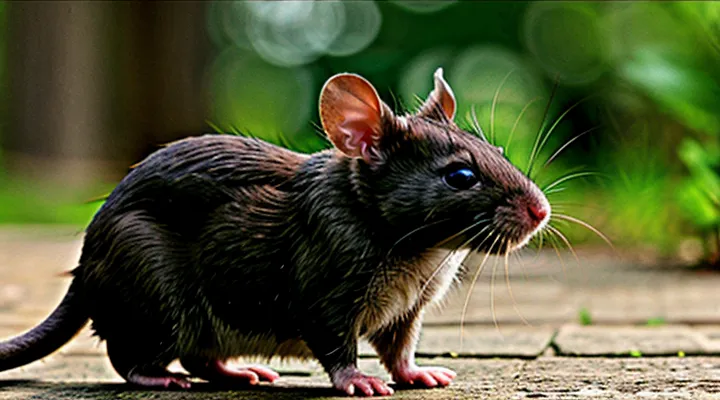
The Allure of Wild Rats in Photography
Why Rats Make Intriguing Subjects
Rats present a unique combination of visual and behavioral traits that make them compelling subjects for nature photography. Their small size, quick movements, and diverse habitats create opportunities for dynamic compositions and close‑up detail that reveal textures rarely seen in larger mammals.
- Expressive facial features – whiskers, bright eyes, and subtle ear movements convey emotion without human interpretation.
- Adaptability to environments – urban alleys, forest floors, and agricultural fields provide contrasting backdrops that highlight ecological versatility.
- Textural richness – fur patterns, skeletal structure, and droplet‑covered paws offer high‑contrast subjects for macro lenses.
- Behavioral variety – foraging, nesting, and social interactions generate sequences that illustrate instinctual strategies.
- Ecological significance – as seed dispersers and prey items, rats occupy pivotal positions in food webs, allowing photographers to document broader ecosystem dynamics.
Effective rat photography requires controlled lighting to accentuate fur sheen and shadow detail, while shallow depth of field isolates subjects from cluttered surroundings. Ethical considerations dictate minimal disturbance; using blinds or remote triggers reduces stress and preserves natural behavior.
Images that capture rats in authentic contexts contribute to scientific records, public awareness, and artistic appreciation. The resulting photographs combine scientific relevance with aesthetic impact, reinforcing the value of rats as subjects in high‑quality nature imagery.
Ethical Considerations in Nature Rat Photography
Respecting Wildlife Boundaries
Photographers who capture rats in their natural habitats must treat the environment as a protected zone. Approaching a rodent colony without permission can alter foraging patterns, increase stress, and expose animals to predators. Maintaining a minimum distance—typically several meters—preserves the integrity of the scene and ensures authentic behavior is recorded.
Effective field practice includes:
- Using telephoto lenses to avoid physical intrusion.
- Observing for signs of disturbance, such as sudden flight or altered activity, and withdrawing immediately.
- Limiting the number of shots taken in a single location to reduce repeated presence.
- Respecting seasonal restrictions when breeding or nesting occurs, as interference can jeopardize offspring survival.
Documentation should prioritize environmental context over sensationalism. Including background elements—vegetation, soil composition, and surrounding fauna—provides a comprehensive view of the ecosystem while keeping the focus on the rat’s role within it. This approach yields images that are both scientifically valuable and aesthetically compelling.
Ethical stewardship extends to post‑capture handling of images. Sharing photographs with accurate location data supports conservation research, whereas concealing or misrepresenting sites can facilitate illicit collection or habitat disruption. Responsible dissemination reinforces the principle that wildlife photography serves the broader goal of preserving natural boundaries.
Minimizing Disturbance
Photographing wild rats demands strategies that keep the animals’ behavior and habitat unchanged. Successful images arise from observing without influencing natural patterns.
- Move slowly, maintain distance greater than the species’ typical flight threshold.
- Use long lenses to avoid approaching the subject.
- Remain concealed behind natural cover or camouflage gear.
- Limit the number of takes; capture the scene within a few frames.
Camera settings should accommodate distance and low light without flash. High ISO combined with fast lenses reduces exposure time, preventing motion blur while eliminating artificial illumination that could startle the animal. Silent shutter modes further diminish audible disturbance.
Ethical practice requires respecting territorial boundaries and avoiding bait or food to attract subjects. Documentation of location and time supports scientific value without repeated visits that could habituate or stress the population.
Capturing the Elusive Rat: Photography Techniques
Equipment Essentials for Wildlife Rat Photography
Lens Choices for Different Scenarios
When photographing rats in natural settings, lens selection determines image clarity, depth of field, and the ability to capture fine details without disturbing the subject.
A macro lens (50‑100 mm focal length, 1:1 reproduction ratio) reproduces fur texture and whisker structure. Wide apertures (f/2.8‑f/4) isolate the animal from background, while stopping down to f/8‑f/11 increases sharpness across the entire subject. A focus‑stacking workflow can extend depth of field when extreme close‑up is required.
For scenes where rats are distant or moving through foliage, a short telephoto lens (150‑300 mm) provides a comfortable working distance. A constant‑aperture design (e.g., f/2.8) maintains exposure control under variable lighting, and image stabilization compensates for handheld shooting.
When the environment includes expansive landscapes with rats as secondary elements, a standard zoom (24‑70 mm) offers flexibility. The wide end captures context, while the longer end frames the animal without excessive cropping.
Recommended lens types
- Macro prime: 60 mm f/2.8, 100 mm f/2.8
- Short telephoto: 150 mm f/2.8, 200 mm f/2.8
- Standard zoom: 24‑70 mm f/2.8, 24‑105 mm f/4
Choosing the appropriate lens aligns technical capabilities with the intended composition, ensuring high‑quality rat photographs in natural habitats.
Tripods and Stabilization
Stability is essential for capturing sharp images of rats in their natural habitats, where sudden movement and uneven terrain can easily introduce blur.
A reliable tripod should meet the following criteria:
- Load capacity exceeding the combined weight of camera, lens, and any accessories.
- Leg sections with secure locking mechanisms to prevent slippage on moss, leaf litter, or loose soil.
- Center column that can be raised or lowered without compromising balance, allowing low-angle shots close to ground level.
- Fluid head offering smooth panning and precise tilt adjustments for tracking rapid rodent motion.
When a tripod is impractical, alternative stabilization methods include:
- Monopod with a wide base for quick repositioning.
- Beanbag or sandbag placed on a stable surface to hold the camera steady.
- Portable gimbal or handheld stabilizer for handheld shooting while maintaining control over shake.
Effective use of stabilization equipment involves additional techniques:
- Attach a remote shutter release or use the camera’s timer to eliminate press‑induced vibration.
- Set a fast shutter speed (1/500 s or higher) to freeze motion, complemented by a moderate ISO to preserve image quality.
- Employ manual focus on the anticipated path of the animal, reducing focus hunting during capture.
Transport considerations dictate lightweight, weather‑resistant materials such as carbon‑fiber legs and corrosion‑proof hardware. Regular cleaning of leg joints and head mechanisms prevents debris buildup that could impair smooth operation in field conditions.
Mastering Light and Composition
Utilizing Natural Light
Natural light provides the most realistic rendering of a rat’s fur texture, eye sparkle, and surrounding habitat. Early morning and late afternoon sunlight is soft, reduces harsh shadows, and enhances color saturation without artificial enhancement. Position the subject so the light falls from the side or slightly behind; this creates subtle rim lighting that separates the animal from the background and reveals three‑dimensional form.
Key considerations for effective use of daylight:
- Choose a weather condition that matches the desired mood; overcast skies act as a large diffuser, eliminating strong contrast, while clear skies during golden hour add warm tones.
- Adjust camera settings to the prevailing illumination: lower ISO (100‑400) preserves detail, a moderate aperture (f/5.8‑f/8) balances depth of field with sharpness, and a shutter speed fast enough to freeze movement (1/500 s or higher for active rats).
- Employ reflectors or white surfaces to bounce light onto shadowed areas, especially when the rat is positioned beneath foliage.
- When backlighting occurs, use spot metering to expose the subject correctly and consider a slight fill flash to retain detail in the silhouette without overpowering the natural ambience.
Consistent exposure compensation compensates for variations caused by leaves, branches, or sudden cloud movement. Bracketing shots—capturing multiple exposures of the same scene—allows later blending to retain highlight detail and shadow depth.
By aligning the time of day, weather, positioning, and camera parameters with the characteristics of natural light, photographers obtain images that showcase rats authentically within their ecosystems, delivering high‑quality nature photographs without reliance on studio lighting.
Framing and Storytelling
Framing determines how a rat appears within its surroundings, directing the viewer’s attention to the subject’s form, texture, and behavior. Tight composition isolates the animal, emphasizing detail; wide composition places the rodent amid habitat elements, revealing ecological relationships. Aligning the subject along natural lines—such as grasses, branches, or shadows—creates visual balance and reinforces depth.
Storytelling emerges when the image conveys a narrative beyond the rat’s silhouette. Capturing moments of foraging, interaction with other species, or movement through seasonal settings adds context. Light quality, time of day, and weather conditions shape mood, turning a simple portrait into a scene that suggests survival, curiosity, or adaptation.
Practical guidelines for effective rat wildlife photography:
- Position the camera at the rat’s eye level to foster intimacy and reduce background distraction.
- Use a shallow depth of field to isolate the animal while keeping key habitat features in soft focus.
- Incorporate leading lines—roots, pathways, water edges—to guide the eye toward the subject.
- Select moments when the rat engages with its environment (e.g., nibbling seeds, navigating tunnels) to illustrate behavior.
- Adjust exposure to preserve texture in fur and surrounding foliage, avoiding over‑exposed highlights.
- Employ a burst mode to capture rapid movements, increasing the chance of a decisive, narrative‑rich frame.
By integrating precise framing with purposeful storytelling, photographers produce compelling images that highlight the rat’s role within natural ecosystems while delivering visual impact.
Patience and Observation: Key to Success
Capturing a rat in its natural habitat demands sustained focus and deliberate waiting. The animal’s skittish nature means that hurried approaches rarely yield clear, detailed images; only a calm, prolonged presence allows the creature to behave without alarm.
Patience creates the conditions for authentic behavior. By remaining motionless for extended periods, the photographer reduces stress signals, enabling the rat to explore, feed, or interact with its surroundings. This unhurried environment produces moments of natural posture and interaction that are otherwise concealed.
Observation translates subtle cues into decisive action. Recognizing the direction of whisker movement, the angle of a tail flick, or the pause before a foraging bout signals the optimal instant for exposure. Aligning camera settings with these cues maximizes sharpness and composition while preserving the scene’s integrity.
Practical steps:
- Select a concealed spot near known rat pathways; remain still for at least 15 minutes before attempting a shot.
- Monitor ambient light and adjust aperture and shutter speed to accommodate low‑light conditions typical of burrow entrances.
- Track the animal’s head and ear orientation; initiate focus when the gaze aligns with the intended frame.
- Use a telephoto lens to maintain distance, preventing disturbance while preserving detail.
- Review each capture briefly to confirm focus on the eyes and fur texture before moving to a new position.
Applying disciplined waiting and precise visual analysis consistently produces high‑quality rat photographs that reflect the true character of the species in its environment.
Habitats and Behaviors: Locating Your Subject
Common Rat Habitats in Nature
Urban Edges and Rural Landscapes
Rats captured at the interface of city structures and open countryside enrich high‑quality nature portfolios, offering a contrast between human‑made boundaries and natural habitats.
Urban edges present sharp lines, reflective surfaces, and artificial illumination. Photographers must balance the gritty texture of concrete with the animal’s fur pattern, using low‑angle lighting to reveal silhouette details while preserving ambient city glow.
Rural landscapes provide soft shadows, varied vegetation, and expansive sky. Positioning the subject against tall grasses or leaf litter highlights its adaptability, and diffused daylight accentuates subtle color shifts in the coat.
Key considerations for effective rat imagery:
- Select locations where the environment frames the rodent without overwhelming it.
- Use shallow depth of field to isolate the subject from cluttered backgrounds.
- Adjust exposure to capture both the animal’s eyes and surrounding ambient light.
- Employ motion‑freeze techniques when the rat is active, ensuring crisp detail.
- Apply minimal post‑processing to retain natural texture and color fidelity.
Consistent application of these practices yields compelling photographs that integrate urban and rural elements into distinguished nature collections.
Waterways and Their Inhabitants
Rivers, streams, and marshes create dynamic environments that attract a broad spectrum of wildlife, offering rich subjects for natural‑history photography that includes rats. Freshwater habitats support organisms adapted to flowing or stagnant conditions, each contributing to the visual complexity of a scene.
Typical inhabitants of waterways include:
- Fish species such as trout, carp, and catfish, whose silhouettes contrast with surface reflections.
- Amphibians like frogs, salamanders, and newts, often perched on submerged vegetation.
- Invertebrates, including dragonfly larvae, freshwater shrimp, and beetles, which add texture to the water column.
- Mammals such as otters, beavers, and water‑adapted rodents, whose activities generate observable tracks and burrows.
- Birds that feed or nest near water, providing opportunities for multi‑species compositions.
Rats frequently exploit riparian zones for food and shelter, navigating bank edges, burrowing into soft soil, and foraging among aquatic debris. Their presence signals a healthy, accessible food web and can be captured alongside other species to illustrate ecological interdependence.
Photographers seeking to document these settings should consider the following practices:
- Use a low angle to emphasize water surface tension and the silhouette of swimming or emerging animals.
- Apply a fast shutter speed to freeze rapid movements of fish and amphibians while maintaining depth of field.
- Employ polarizing filters to reduce glare and enhance color saturation of water and surrounding foliage.
- Position the camera near bank vegetation to capture rats in natural foraging poses without disturbance.
By integrating rats within broader aquatic scenes, images convey the full spectrum of life supported by waterways, reinforcing the ecological narrative without reliance on generic descriptions.
Understanding Rat Behavior for Better Shots
Foraging and Social Interactions
Rats photographed in natural habitats reveal distinct foraging strategies and complex social dynamics. Observations highlight how individuals locate, evaluate, and transport food resources while maintaining group cohesion.
- Opportunistic scavenging on fallen seeds, insects, and carrion.
- Preference for riparian zones where moisture supports higher prey abundance.
- Use of olfactory cues to identify edible items hidden beneath leaf litter.
- Temporary storage of surplus food in burrow chambers for later consumption.
Social interactions accompany these foraging activities. Group members coordinate movements, exchange information, and establish hierarchies that influence resource access.
- Vocalizations and scent markings signal food discoveries to nearby conspecifics.
- Dominant individuals monopolize high‑quality items, while subordinates adopt peripheral foraging zones.
- Grooming and tactile contact reinforce social bonds after shared meals.
- Cooperative burrow maintenance ensures safe storage and rapid retrieval of cached supplies.
These behavioral patterns, captured in high‑resolution nature photography, provide insight into the adaptive mechanisms that enable rats to thrive in diverse ecosystems.
Nocturnal Habits and How to Adapt
Rats are predominantly active after dusk, emerging from burrows to forage, explore, and interact. Their peak activity aligns with low ambient light, making nocturnal periods the most productive for capturing natural behavior.
During night hours rats rely on heightened whisker sensitivity, acute hearing, and limited vision tuned to dim conditions. Movements are swift, often along narrow pathways or near vegetation edges, and social encounters occur on the periphery of illuminated patches such as moonlit clearings or artificial light sources.
Photographers must align equipment and technique with these patterns:
- Use fast lenses (f/1.4‑f/2.8) to gather sufficient light without raising ISO excessively.
- Set shutter speeds of 1/250 s or faster to freeze rapid scurrying.
- Employ a stable tripod or monopod to maintain composition while using longer exposures for ambient background illumination.
- Apply silent or leaf‑shutter modes to avoid startling subjects.
- Position cameras near natural light spill (e.g., moonlight, street lamps) to benefit from the rats’ attraction to low‑intensity illumination.
Adjusting exposure compensation, employing manual focus locked on anticipated movement paths, and using remote triggers reduce disturbance. Monitoring temperature and humidity helps predict activity spikes, as rats increase foraging during cooler, damp evenings.
Combining knowledge of nocturnal habits with precise technical settings yields clear, natural images that reveal rat behavior in its authentic night environment.
Showcasing the Diversity of Rat Species
Documenting Different Rat Varieties
Common Brown and Black Rats
Brown rats (Rattus norvegicus) and black rats (Rattus rattus) dominate urban and rural ecosystems, making them frequent subjects for natural‑world photography. Their widespread distribution ensures ample opportunity to document varied behaviors and environments.
Both species share a robust body, a pointed snout, and a long, hairless tail. Brown rats display a coarse, brown‑gray coat; black rats possess a sleek, darker pelage with a slightly shorter tail. Adult size ranges from 20 to 30 cm in body length, with tails adding another 15 to 25 cm. Distinctive cranial features—larger skull and broader incisors in brown rats, more delicate head shape in black rats—aid identification in close‑up shots.
Typical habitats include sewers, basements, agricultural fields, and forest edges. Brown rats favor ground burrows and open spaces, while black rats climb trees and inhabit attics or roof structures. Activity peaks at night; however, both species emerge during daylight in disturbed areas, providing photographers with flexible timing options. Behavioral patterns—gnawing, nesting, foraging—create dynamic scenes that enrich visual narratives.
Practical considerations for high‑quality rat photography:
- Use a fast lens (f/2.8 or wider) to capture movement in low light.
- Employ a high ISO setting (800–1600) with noise‑reduction to maintain detail.
- Position the camera at ground level to align with the animal’s eye line.
- Apply a shallow depth of field to isolate the subject from cluttered backgrounds.
- Incorporate natural elements (leaves, grain, debris) to contextualize behavior.
Accurate species identification, awareness of habitat preferences, and technical preparation together produce compelling images that reflect the ecological significance of these ubiquitous rodents.
Lesser-Known Wild Species
Rat photography, when focused beyond common subjects, reveals a spectrum of obscure wildlife that enriches natural image collections. Documenting these species demands precise timing, appropriate equipment, and an understanding of each organism’s behavior.
- Long-tailed dwarf hamster (Cricetulus longicaudatus) – inhabits arid steppes of Central Asia; active at dusk, it displays rapid, low‑angle movements that benefit from a fast‑shutter lens and a 200 mm macro extension.
- Asian water rat (Nectomys squamipes) – occupies riparian zones of Southeast Asia; semi‑aquatic habits create reflective water surfaces ideal for polarizing filters and shutter speeds above 1/500 s to freeze splashes.
- Andean mountain rat (Thomasomys cinereus) – found at elevations above 3,000 m in the Andes; dense cloud‑forest understory requires high‑ISO sensors and wide‑aperture lenses to capture low‑light detail without artificial illumination.
- African giant pouched rat (Cricetomys gambianus) – native to savanna and woodland mosaics; nocturnal foraging patterns are best recorded with infrared illumination and a lens offering a 2‑stop aperture advantage.
Effective capture of these lesser‑known species relies on three core practices: (1) scouting habitats during seasonal peaks, (2) employing silent, motion‑triggered camera setups to minimize disturbance, and (3) post‑processing with selective sharpening to preserve fine fur textures while retaining natural tonal balance. Incorporating such subjects expands the visual narrative of rat‑focused nature photography, offering viewers a broader ecological perspective.
The Beauty in Detail: Close-Up Shots
Close‑up photography reveals the intricate structures that define a rat’s appearance. Macro lenses capture the fine texture of fur, the subtle gradation of whisker coloration, and the reflective quality of the eye’s surface. Precise focus on these elements isolates the subject from background distractions, allowing viewers to appreciate anatomical detail that typical framing overlooks.
Effective close‑up shots rely on controlled lighting. Soft, diffused light reduces harsh shadows and highlights the three‑dimensional shape of the animal’s head and body. Side lighting emphasizes contour, while backlighting can outline the silhouette of whiskers, creating a sense of depth. Consistent exposure settings prevent loss of detail in the darkest and brightest areas.
Technical considerations include:
- Aperture selection: small f‑numbers (e.g., f/2.8) produce shallow depth of field, isolating the focal point; moderate apertures (e.g., f/8) retain sharpness across the entire facial region.
- Focus stacking: combining multiple images taken at different focus distances extends depth of field without sacrificing resolution.
- Stabilization: tripod use or image‑stabilized lenses eliminate motion blur caused by the subject’s subtle movements.
When composition centers on the rat’s facial features, the viewer perceives a connection with the animal’s natural behavior. Detailed imagery enhances scientific documentation, educational resources, and artistic expression, reinforcing the value of precise visual representation within wildlife photography.
Post-Processing for Impactful Rat Photography
Basic Edits: Exposure and Cropping
When refining photographs of rats captured in natural environments, exposure and cropping constitute the first decisive adjustments.
-
Set exposure to balance highlights and shadows; use a light meter or histogram to avoid blown‑out areas and underexposed details.
-
Apply exposure compensation sparingly; a +0.3 EV shift often restores depth without introducing noise.
-
Keep ISO as low as possible while maintaining shutter speed; increase only when lighting conditions demand faster exposure.
-
Crop to eliminate distracting background elements and to emphasize the subject’s form.
-
Align the rat’s eye line with the frame’s central vertical axis or apply the rule of thirds for dynamic composition.
-
Preserve a minimum margin around the animal to prevent edge clipping, especially when the subject is in motion.
-
Use a consistent aspect ratio across a series to maintain visual cohesion in galleries or portfolios.
These edits enhance clarity, accentuate the rat’s texture, and ensure the image integrates seamlessly with collections of high‑quality wildlife photography.
Enhancing Detail and Texture
Capturing rats in their natural habitats demands meticulous attention to detail and texture. Precise focus on fur strands, whisker edges, and surrounding foliage separates a generic image from a compelling nature photograph.
- Use a macro lens with a minimum magnification of 1:1 to resolve individual hairs and subtle color variations.
- Apply focus stacking: combine multiple shots taken at incremental focus distances to achieve uniform sharpness across the entire subject.
- Employ diffused natural light during early morning or late afternoon; soft illumination reduces harsh shadows while preserving surface texture.
- Set a low ISO (100‑200) to minimize noise that can obscure fine details.
- Adjust aperture to f/8‑f/11 for a balance between depth of field and diffraction control.
Post‑processing steps reinforce texture fidelity. Increase local contrast selectively on fur and leaf surfaces, avoid global sharpening that introduces artifacts. Employ high‑pass filtering on targeted areas, then blend with a low‑opacity overlay to accentuate grain without compromising realism. Preserve original color balance; excessive saturation distorts the natural palette of the rat’s coat and environment.
When composing the frame, position the rat against a background that offers complementary textures—such as bark, moss, or grass—to create visual depth. Align the subject’s eye level with the camera sensor for a natural perspective that emphasizes three‑dimensional form.
By integrating these techniques, photographers produce rat images that showcase intricate detail and authentic texture, elevating the visual quality of nature photography collections.
Artistic Touches: Color Grading and Mood
Color grading transforms rat wildlife photography from a simple capture into a narrative driven by atmosphere. Adjusting tonal balance, saturation, and contrast directs the viewer’s emotional response and highlights the natural setting.
Effective grading practices include:
- Temperature shifts – Warm tones emphasize dusk or autumnal habitats; cool tones convey early morning or urban environments.
- Contrast control – Elevated contrast isolates the subject against foliage, while softened contrast integrates the rat into a broader ecological context.
- Selective saturation – Desaturating background elements while preserving the animal’s fur color draws focus without sacrificing environmental detail.
- Split‑toning – Applying complementary hues to shadows and highlights creates depth and reinforces the intended mood, such as mystery or serenity.
Consistent application of these adjustments ensures that each image conveys a cohesive visual story, aligning the rat’s behavior with the surrounding landscape and reinforcing the photographer’s artistic intent.
The Story Behind the Image: Sharing Your Work
Crafting Compelling Narratives
Crafting compelling narratives around rat wildlife photography requires a clear focus on visual storytelling, audience expectations, and contextual relevance. A narrative that connects the subject’s behavior, habitat, and visual appeal transforms a simple image into an educational and emotive experience.
Effective narratives begin with observation. Photographers should study rat activity patterns, social interactions, and environmental cues before shooting. This knowledge informs composition choices that highlight characteristic gestures, such as foraging or nesting, and ensures that each frame conveys a distinct story element.
When constructing the accompanying text, follow a logical progression:
- Introduce the setting: describe the ecosystem, time of day, and any notable flora.
- Present the subject’s role: explain the rat’s ecological function without generic qualifiers.
- Highlight a specific behavior captured in the image: detail the action, its purpose, and its impact on the surrounding environment.
- Conclude with broader implications: relate the observed scene to biodiversity, predator‑prey dynamics, or conservation concerns.
Precision in language reinforces authority. Replace vague adjectives with concrete descriptors (e.g., “dense underbrush” instead of “rich vegetation”). Cite observable details—fur texture, whisker movement, lighting contrast—to anchor the narrative in tangible evidence.
Finally, integrate visual and textual elements seamlessly. Align caption length with image complexity; avoid redundant phrasing. Consistent formatting, accurate terminology, and factual depth create narratives that educate viewers, encourage further inquiry, and elevate rat wildlife photography within the broader collection of premier nature images.
Online Platforms for Nature Photography
Online venues dedicated to nature photography provide essential exposure for high‑resolution rat wildlife imagery, enabling photographers to reach audiences that appreciate detailed animal studies.
Effective platforms meet three criteria: support for raw and high‑definition files, active communities that exchange technical feedback, and clear licensing options that protect creator rights.
- Flickr — extensive metadata fields, groups focused on small‑mammal photography, Creative Commons licensing.
- 500px — curated galleries, market‑ready exposure, royalty‑free licensing for commercial use.
- Instagram — visual‑first format, hashtag ecosystem (#ratphotography, #wildlife), direct audience interaction.
- National Geographic Your Shot — editorial review, potential feature in print or online publications, strict usage agreements.
- iNaturalist — citizen‑science integration, geotagging, verification by expert community, open‑data policy.
Advanced tagging practices, such as species name, habitat type, and camera settings, enhance discoverability across these services. Consistent use of EXIF data and descriptive captions ensures accurate indexing by search algorithms.
Choosing a platform that aligns with the photographer’s distribution goals and intellectual‑property preferences maximizes the impact of rat nature photographs within the broader wildlife photography ecosystem.
Contributing to Conservation Through Imagery
Photographs of wild rats captured in their natural habitats serve as powerful tools for conservation initiatives. High‑quality images reveal species’ behavior, distribution, and ecological relationships, providing visual evidence that complements scientific data. Researchers employ these photographs to verify population trends, identify habitat preferences, and detect threats such as habitat fragmentation or invasive species.
Conservation organizations leverage rat imagery in several practical ways:
- Public awareness campaigns – vivid scenes of rats foraging, nesting, or interacting with other wildlife attract audience attention, dispel misconceptions, and foster empathy toward often‑overlooked species.
- Fundraising materials – compelling visuals enhance grant proposals, donor newsletters, and crowdfunding platforms, increasing financial support for habitat protection projects.
- Educational resources – illustrated field guides, classroom presentations, and online modules use authentic photographs to teach biodiversity concepts and promote responsible wildlife stewardship.
- Policy advocacy – documented presence of rats in protected areas strengthens arguments for legal safeguards, land‑use planning, and enforcement of anti‑poaching measures.
- Citizen‑science programs – image‑based identification apps enable volunteers to record sightings, expanding data collection networks and improving monitoring accuracy.
Effective image deployment requires adherence to ethical standards: obtain permission from landowners, avoid disturbance of animals, and credit photographers. Metadata accompanying each photograph—date, location, camera settings, and species identification—enhances scientific utility and facilitates data integration across repositories.
By integrating authentic rat photography into research, outreach, and policy frameworks, conservation practitioners convert visual storytelling into measurable progress for biodiversity preservation.