
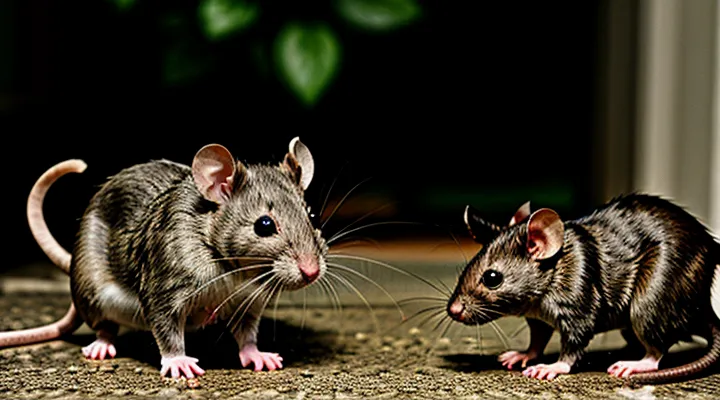
Understanding the Rodent World
Distinguishing Features: Rats vs. Mice
Size and Proportions
Rats and mice differ markedly in overall dimensions, a distinction that becomes evident when examining photographic records of each species. Adult brown rats (Rattus norvegicus) typically measure 20–25 cm in head‑body length, with tails of comparable length (18–24 cm) and body masses ranging from 250 to 500 g. Black rats (Rattus rattus) are slightly smaller, averaging 16–20 cm in body length, tails of 18–22 cm, and weights of 150–250 g. In contrast, common house mice (Mus musculus) exhibit head‑body lengths of 7–10 cm, tails of 5–9 cm, and masses of 15–30 g. Deer mice (Peromyscus maniculatus) are marginally larger, reaching 10–12 cm in body length, tails of 9–12 cm, and weights of 20–35 g.
Key proportional relationships include:
- Tail‑to‑body ratio: Rats approach a 1:1 ratio, while mice display ratios between 0.7 and 1.0, indicating relatively shorter tails.
- Head‑to‑body proportion: Rat skulls occupy roughly 20 % of total length; mouse skulls constitute about 25 %.
- Foot size relative to body length: Rat hind foot length averages 2.5 cm (≈12 % of body length); mouse hind foot length averages 1.0 cm (≈10 % of body length).
These metrics provide a reliable framework for distinguishing species in visual documentation, supporting accurate identification without reliance on coloration or habitat cues.
Tail Characteristics
Rats and mice display distinct tail features that are readily observable in photographic documentation. Tail length varies proportionally with body size; rats typically possess tails equal to or slightly shorter than their head‑body length, while mouse tails often exceed body length by 10–20 %. Fur coverage differs: rat tails are largely hairless, revealing visible skin and occasional scales, whereas mouse tails are densely furred, producing a uniform appearance in close‑up images. Coloration ranges from pinkish‑gray in many rat species to uniformly pigmented or mottled patterns in mice, a contrast that aids species identification in field photographs.
Key morphological distinctions include:
- Diameter: Rat tails are thicker, providing structural support; mouse tails are slender, facilitating balance.
- Vertebral count: Rats average 38–42 caudal vertebrae; mice have 30–38, influencing flexibility.
- Prehensility: Rat tails exhibit limited grasping ability, primarily for balance; mouse tails show greater dexterity, allowing occasional gripping of narrow surfaces.
- Surface texture: Rat skin is smooth with occasional scales; mouse skin is covered by fine fur, reducing friction.
These attributes affect pose, lighting, and focal length choices in visual studies, enabling accurate comparative analysis of rodent tail morphology across species.
Ear Size and Shape
Rats and mice exhibit distinct ear morphology that becomes evident in photographic side‑by‑side studies. Rat ears are generally larger, extending farther from the head and covering a greater surface area. The pinna is often broader, with a more pronounced curvature that creates a rounded silhouette. In contrast, mouse ears are smaller, thinner, and positioned closer to the skull, giving a more triangular appearance.
Key measurements observable in photographs:
- Length: Rat ear length averages 15–20 mm; mouse ear length averages 8–12 mm.
- Width: Rat pinna width ranges 10–14 mm; mouse pinna width ranges 5–8 mm.
- Angle of attachment: Rat ears attach at a shallow angle, creating a nearly horizontal plane; mouse ears attach at a steeper angle, resulting in a more upright posture.
These dimensional differences affect acoustic sensitivity and thermal regulation, but the visual records focus solely on external form. Rat ears display a smoother contour with fewer visible vascular patterns, while mouse ears often reveal a network of fine blood vessels visible through the thin skin.
When evaluating images, note the contrast between the robust, rounded rat pinna and the delicate, pointed mouse pinna. This contrast provides a reliable visual cue for species identification without reliance on other anatomical features.
Snout and Head Morphology
Photographic records of rat and mouse species reveal consistent differences in snout and head morphology that aid reliable identification. The rat’s snout is markedly longer and broader, extending approximately 12–18 mm in adult specimens, whereas the mouse’s snout averages 7–10 mm and displays a more tapered profile. Skull dimensions follow the same pattern: rat crania measure 20–25 mm in length, while mouse crania range from 12–15 mm.
Key morphological contrasts observable in images include:
- Snout length – rat: elongated; mouse: short, pointed.
- Nasal bridge – rat: flatter, less pronounced; mouse: sharply defined.
- Muzzle width – rat: wider, supporting stronger incisors; mouse: narrower.
- Ear placement – rat: positioned slightly lower on the head, covering a larger surface area; mouse: higher and more centrally aligned.
- Eye diameter – rat: comparatively larger, contributing to a broader facial appearance; mouse: smaller, accentuating the compact head shape.
- Vibrissae arrangement – rat: longer, dense whiskers extending laterally; mouse: shorter, concentrated around the rostral region.
These traits persist across diverse photographic collections and provide a practical framework for distinguishing rat and mouse specimens without reliance on behavioral or habitat cues.
Common Rat Species Illustrated
Brown Rat («Rattus norvegicus»)
The brown rat (Rattus norvegicus) is the most frequently photographed urban rodent, providing a clear benchmark for visual comparisons with other murine species. Adult individuals exhibit a robust body length of 20–25 cm, a tail nearly equal in length, and a weight range of 250–500 g. Coat coloration varies from dark brown to almost black on the dorsal surface, contrasting with a lighter, often pinkish ventral side. Distinctive morphological markers include a blunt, rounded snout, relatively short ears that lie flat against the head, and a dense, coarse fur texture.
In photographic documentation, several features aid identification:
- Head profile: Broad skull with a pronounced occipital ridge; eyes set relatively low.
- Tail characteristics: Uniformly scaled, lacking the hair tuft typical of many mouse species.
- Foot structure: Large hind feet with well‑developed pads, facilitating a characteristic scurrying gait.
- Habitat backdrop: Urban settings such as sewers, basements, and garbage areas often appear in images, providing contextual clues.
When juxtaposing brown rat images with those of common house mice (Mus musculus), differences become evident. The rat’s larger size, heavier build, and coarser fur contrast sharply with the mouse’s slender frame, finer pelage, and longer, hair‑tipped tail. Lighting and angle choices that emphasize body proportions further enhance comparative clarity.
Accurate species comparison through photography depends on consistent framing, scale references (e.g., ruler or known objects), and high‑resolution capture that preserves texture details. Applying these standards to brown rat imagery ensures reliable visual differentiation across rodent taxa.
Black Rat («Rattus rattus»)
The black rat (Rattus rattus) is a medium‑sized murid, typically 16–24 cm in body length with a proportionally long, slender tail that exceeds the body length. Its fur ranges from dark brown to almost black, often displaying a glossy sheen that reflects light in photographs, highlighting the animal’s sleek silhouette. The species possesses a pointed snout, relatively small ears, and a sharp, curved incisor pattern visible when the mouth is open.
Habitat preferences include urban structures, warehouses, and coastal regions where the species exploits human‑made environments for shelter and food. Populations thrive in warm climates, with activity peaks during nocturnal hours. These behavioral traits influence photographic capture: low‑light settings and motion‑blur reduction techniques are essential to document active individuals.
Key visual distinctions from the brown rat (Rattus norvegicus) and common house mouse (Mus musculus) are:
- Tail: longer than body, hairless, tapering to a fine point.
- Fur color: uniformly dark, lacking the brown rat’s dorsal‑ventral color gradient.
- Body shape: more gracile, with a narrower torso.
- Ear size: smaller relative to head, reducing ear‑shadow artifacts in images.
Photographic recommendations:
- Use fast lenses (f/1.8–f/2.8) to capture the rat’s rapid movements without sacrificing depth of field.
- Employ infrared or low‑intensity lighting to minimize disturbance while preserving detail in the dark fur.
- Position the camera at ground level to align with the animal’s eye line, enhancing the perception of scale and texture.
Understanding these characteristics enables accurate visual comparison across rodent species, supporting both scientific documentation and educational outreach.
Other Notable Rat Species
The photographic survey of rodent diversity highlights several rat species that merit attention beyond the most familiar laboratory models.
-
Black rat (Rattus rattus) – slender body, tail longer than head‑body length, dark brown to black fur. Native to Southeast Asia, now cosmopolitan, frequently found in urban attics and shipyards. Photographs emphasize its agile posture and distinctive tail length.
-
Norway rat (Rattus norvegicus) – robust build, gray‑brown coat, tail shorter than head‑body length. Originating in the steppes of Central Asia, it dominates temperate cities and agricultural settings worldwide. Images often capture its powerful limbs and dense fur texture.
-
Polynesian rat (Rattus exulans) – smallest of the genus, grayish‑brown fur, relatively short tail. Indigenous to Pacific islands, it serves as an indicator of human migration patterns. Visual documentation focuses on its diminutive size and fine whisker detail.
-
Bush rat (Rattus fuscipes) – reddish‑brown dorsal pelage, white ventral side, moderately long tail. Inhabits Australian forests and grasslands, prefers dense undergrowth. Photographs typically show its keenly alert eyes and coarse fur.
-
Swamp rat (Rattus lutreolus) – dark brown to black coat, semi‑aquatic adaptations, slightly flattened tail. Found in wetland habitats of eastern Australia. Imaging often highlights its water‑resistant fur and muscular hind limbs.
-
Asian house rat (Rattus tanezumi) – similar in size to R. norvegicus, but with a more uniform gray coat and longer tail. Distributed across South and Southeast Asia, frequently associated with human dwellings. Visual records stress its sleek silhouette and sharp facial features.
Each species presents unique morphological traits that enhance comparative visual analysis. High‑resolution photographs reveal fur coloration, tail proportion, and body mass differences, providing concrete data for taxonomic and ecological studies.
Common Mouse Species Illustrated
House Mouse («Mus musculus»)
The house mouse (Mus musculus) is a small rodent native to Eurasia but now distributed worldwide through human activity. It belongs to the family Muridae and is classified as a separate species from the common rat (Rattus spp.) based on genetic, morphological, and ecological criteria.
Adult house mice measure 6–10 cm in body length, with a tail of comparable length. Fur is typically soft, ranging from light brown to gray, and the ventral side appears pale. Ears are proportionally large and hairless, while the whiskers are long and conspicuous. These features create a distinct silhouette that separates the mouse from larger, bulkier rats in photographic composition.
The species favors indoor environments such as homes, warehouses, and laboratories, but also occupies fields, grasslands, and shrubbery when food sources are abundant. Its nocturnal activity and rapid, erratic movements demand specific lighting and timing strategies for clear imaging.
Key considerations for photographing Mus musculus:
- Use high‑speed shutter settings (1/500 s or faster) to freeze quick locomotion.
- Employ soft, diffused lighting to reduce harsh shadows on the small, reflective eyes.
- Position the camera at a low angle to match the mouse’s eye level, enhancing depth and minimizing background clutter.
- Capture close‑up shots of distinguishing traits (ear size, tail length, fur texture) to facilitate species comparison with rats.
- Apply a shallow depth of field (f/2.8–f/4) to isolate the mouse from surrounding debris or vegetation.
Understanding these anatomical and behavioral attributes enables accurate visual documentation and effective differentiation of the house mouse from related rodent species in comparative photographic studies.
Deer Mouse («Peromyscus maniculatus»)
The deer mouse (Peromyscus maniculatus) belongs to the family Cricetidae and occupies a broad range across North America, from southern Canada to northern Mexico. It thrives in diverse habitats, including forests, grasslands, and alpine tundra, often occupying the same ecological niches as several rat and mouse species featured in visual comparative studies of rodents.
Adult deer mice measure 7–10 cm in head‑body length, with tails of equal or slightly greater length. Their dorsal pelage varies from brown to gray, interspersed with darker dorsal stripes, while the ventral side is typically white. Unlike many Rattus species, the deer mouse exhibits a relatively large ear and a distinctly pointed snout.
Key ecological traits:
- Omnivorous diet: seeds, insects, and occasional plant material.
- Nocturnal activity; nests constructed in burrows or concealed vegetation.
- High reproductive rate: up to five litters per year, each containing 3–7 offspring.
Photographic documentation highlights several contrasts with co‑occurring rats and other mice:
- Fur coloration provides a muted palette against rocky substrates, whereas many rats display darker, uniform coats.
- Tail morphology appears slender and scaly, offering a visual cue distinct from the thicker, hair‑covered tails of Rattus spp.
- Ear size and shape generate recognizable silhouette differences in profile shots.
These characteristics enable accurate species identification in comparative imaging projects, supporting taxonomic clarification and ecological monitoring.
Other Notable Mouse Species
The comparative photographic study of rats and mice benefits from including a range of mouse species beyond the domestic house mouse, offering broader visual and biological context.
- Deer mouse (Peromyscus maniculatus) – widespread across North America; fur varies from gray to brown, tail longer than body; commonly captured in forest and grassland settings.
- Australian hopping mouse (Notomys alexis) – native to arid Australian regions; long hind limbs, tufted tail, sandy‑colored coat; photographs often emphasize its distinctive locomotion.
- African pygmy mouse (Mus minutoides) – among the smallest murids, found in sub‑Saharan savannas; gray‑white dorsal pelage, large ears relative to head size; close‑up imaging highlights minute anatomical details.
- Spiny mouse (Acomys cahirinus) – Mediterranean and Middle Eastern distribution; spiny dorsal hairs, robust body, dark facial mask; images frequently capture texture contrast between spines and surrounding fur.
- Rice-field mouse (Rattus argentiventer) – Southeast Asian rice paddies; dark brown to black coloration, relatively long tail; field photography showcases its association with cultivated wetlands.
Each species presents unique morphological traits that enrich visual comparison with rat specimens. Photographers should adjust lighting and macro lenses to capture fine fur patterns, tail length ratios, and ear dimensions, ensuring that distinguishing characteristics are evident. Inclusion of these mouse species broadens the taxonomic scope of the visual analysis and supports more comprehensive assessments of rodent diversity.
Visual Comparison: Key Identifiers
Pictorial Guide to Body Shapes
Rat Body Structure Visuals
Photographic documentation of rat anatomy provides a clear reference for distinguishing this rodent from closely related species. Images capture external morphology, skeletal outlines, and internal organ placement, allowing precise visual comparison.
- Head: elongated snout, prominent incisors, large auditory bullae, dense vibrissae array.
- Body: robust torso, coarse dorsal fur, shorter hind limbs relative to forelimbs.
- Tail: thick, scaly, often longer than body length, lacking the fine hair tuft typical of mice.
- Skeleton: reinforced vertebral column, larger pelvic girdle, expanded rib cage.
- Musculature: pronounced forelimb muscles for gnawing, well‑developed gluteal group for powerful locomotion.
These visual elements highlight structural differences that separate rats from mice, supporting accurate species identification within photographic studies of rodent diversity.
Mouse Body Structure Visuals
Visual documentation of mouse anatomy provides a reference for distinguishing this species from closely related rodents. High‑resolution photographs capture external morphology, skeletal outlines, and organ placement, enabling precise comparative analysis.
External features highlighted in images include:
- Fur coloration and pattern, typically uniform gray‑brown on the dorsal surface.
- Tail length, proportionally longer than body length, with minimal hair coverage.
- Ear size, large relative to head, with a thin cartilage framework visible in side views.
- Whisker arrangement, dense and symmetrically positioned around the rostral region.
Skeletal visuals focus on:
- Skull shape, characterized by a rounded cranium and a relatively short nasal bone.
- Dentition pattern, featuring continuously growing incisors with enamel on the anterior surface.
- Vertebral column, displaying a higher count of lumbar vertebrae compared to larger rodents.
Internal organ photographs, obtained through dissection imaging, illustrate:
- Compact liver and pancreas positioned ventrally beneath the rib cage.
- Heart located centrally within the thoracic cavity, with a four‑chambered structure visible in cross‑section.
- Gastrointestinal tract, notably a shorter colon reflecting a faster digestive transit time.
Photographic techniques recommended for accurate representation:
- Use macro lenses with a minimum 1:1 magnification ratio to capture fine details of fur and whiskers.
- Apply consistent lighting angles to reduce shadow distortion on skeletal elements.
- Employ contrast‑enhancing staining for bone and tissue sections, ensuring clear differentiation of structures.
These visual assets serve as a baseline for researchers conducting photographic species comparisons among rodents, providing quantifiable criteria for identification and morphological assessment.
Photographic Details of Facial Features
Rat Face Close-ups
Rat facial photography provides direct evidence for species-level identification. Close-up images capture structures that remain indistinct in full-body shots, enabling precise morphological assessment.
Key facial landmarks include:
- Whisker array: length, density, and orientation differ between species.
- Nasal capsule: shape of the rostrum and nostril spacing.
- Ear pinna: curvature, size relative to head, and fur coverage.
- Ocular region: eye diameter, pupil shape, and surrounding fur coloration.
- Fur pattern: dorsal stripe presence, cheek spot distribution, and coloration gradients.
Effective macro imaging requires a lens with focal length of 90 mm or greater, aperture set between f/2.8 and f/5.6 to balance depth of field and sharpness, and diffused lighting to minimize glare on wet snouts. A neutral, non-reflective background isolates the subject and enhances contrast for feature analysis.
Comparative observations reveal that the Norway rat (Rattus norvegicus) typically presents a broader rostrum, shorter whiskers, and a more rounded ear, whereas the black rat (Rattus rattus) exhibits a slender snout, longer whisker sets, and a pointed ear tip. These distinctions become readily quantifiable when measured directly on high-resolution facial photographs.
Mouse Face Close-ups
Close-up photographs of mouse faces provide detailed insight into species‑specific morphology, essential for accurate visual comparison with rats. High‑resolution images reveal the shape of the snout, ear size, whisker arrangement, and eye placement, all of which differ markedly between the two genera.
The snout of a typical house mouse (Mus musculus) appears short and triangular, with a smooth nasal bridge. In contrast, many rat species exhibit a longer, more cylindrical rostrum. Ear dimensions further distinguish the animals: mouse ears are proportionally larger relative to head size and display a thin, translucent membrane, whereas rat ears are broader and thicker.
Whisker (vibrissae) patterns serve as reliable markers. Mouse facial whiskers emerge from a dense, symmetrical grid covering the muzzle and cheeks, while rat whiskers are sparser and often longer, extending beyond the cheek region. Eye positioning also varies; mouse eyes sit relatively high on the skull, granting a broader field of view, whereas rat eyes are set lower, aligning with their larger head.
Key visual elements observable in mouse facial close‑ups:
- Nasal structure: short, blunt tip; smooth dorsum
- Ear morphology: large, thin, semi‑transparent; low ear‑cartilage visibility
- Whisker layout: dense, uniform rows; short to medium length
- Eye placement: high on the skull; round pupil, minimal surrounding fur
Photographic technique influences the clarity of these features. Macro lenses with a focal length of 90–105 mm, aperture settings between f/2.8 and f/4, and diffused lighting reduce shadows that could obscure fine details. Consistent scale references, such as a ruler or calibrated grid, enable precise measurements for comparative analysis.
When juxtaposed with rat facial imagery, mouse close‑ups highlight diagnostic traits that facilitate species identification, support taxonomic research, and enhance educational resources. Accurate visual documentation eliminates ambiguity in field studies and contributes to a comprehensive comparative visual database of rodent morphology.
Habitat Clues in Photography
Rat Habitats and Environments
Rats occupy a wide range of habitats, from natural ecosystems to human‑altered environments. In temperate forests, species such as the brown rat (Rattus norvegicus) construct nests in dense ground cover, burrowing beneath leaf litter and using fallen logs for shelter. Grassland populations favor shallow burrows close to vegetation, where they can access seeds and insects while remaining concealed from predators.
Urban settings provide abundant resources for commensal rats. Sewer systems, basements, and abandoned structures serve as permanent shelters, while waste disposal sites offer continuous food supplies. These environments promote higher population densities and increased interaction with humans.
Agricultural landscapes support both wild and synanthropic rats. Crop fields and storage facilities attract rodents that exploit grain stores and irrigation channels. Field margins and hedgerows supply nesting material and refuge from field equipment.
Coastal and riparian zones host rat species adapted to moist conditions. Proximity to water sources enables foraging on aquatic insects and small crustaceans, while vegetation along banks offers nesting sites protected from flooding.
Key habitat characteristics influencing rat distribution include:
- Availability of shelter (burrows, crevices, structural debris)
- Consistent food sources (seeds, waste, crops)
- Proximity to water (ground moisture, streams)
- Predator pressure (presence of birds of prey, carnivorous mammals)
Understanding these environmental preferences clarifies the visual contrasts observed in comparative photographic studies of rat and mouse species, highlighting how habitat diversity shapes morphology, behavior, and population dynamics.
Mouse Habitats and Environments
Mice occupy a broad spectrum of habitats, ranging from undisturbed ecosystems to heavily modified urban settings. Their distribution reflects both ecological flexibility and species‑specific preferences.
Natural environments host the majority of wild mouse populations. Typical settings include:
- Grasslands with dense herbaceous cover that provides shelter and foraging opportunities.
- Forest understories where leaf litter and fallen timber create microhabitats with stable humidity.
- Arid scrublands where burrowing behavior reduces exposure to temperature extremes.
Agricultural landscapes support mice that exploit stored grains and crop residues. These areas offer abundant food sources but also present elevated predation risk from livestock predators and human pest control measures.
Urban and suburban zones accommodate commensal mouse species that thrive in proximity to human activity. Adaptations include:
- Utilization of building cavities, wall voids, and utility conduits for nesting.
- Exploitation of waste streams, pantry supplies, and ornamental plantings for sustenance.
- Rapid reproductive cycles that compensate for higher mortality rates in densely populated environments.
Habitat selection influences morphological and behavioral traits observable in photographic records. Variations in fur coloration, body size, and activity patterns correspond to the specific environmental pressures of each setting. Consequently, visual documentation of rodents must account for habitat context to ensure accurate species comparison.