
Capturing the Moment: Photography Techniques
Camera Settings for Garden Wildlife
Shutter Speed for Movement
Capturing a quick‑moving rodent among garden plants requires a shutter speed fast enough to freeze motion while preserving enough light for a clean image. When the subject darts across leaves, a duration of 1/1000 s or shorter typically eliminates blur, allowing details of fur and whiskers to remain sharp.
Practical speed ranges:
- 1/800 s – 1/2000 s for moderate movement; suitable when ambient light is bright.
- 1/2500 s – 1/4000 s for rapid bursts, especially in open sunlight.
- 1/8000 s or faster for extreme motion or when using a high‑ISO setting to maintain exposure.
When light is limited, increase ISO or open the aperture to keep the shutter within the recommended range. Employ continuous‑shoot mode to capture several frames as the animal moves, improving the chance of a perfectly timed shot.
Additional techniques:
- Use a flash with a short recycle time to add illumination without slowing the shutter.
- Apply slight tracking with the camera to follow the rodent’s path, reducing relative motion.
- Stabilize the camera on a tripod or monopod to avoid camera shake at high speeds.
Aperture for Depth of Field
Aperture controls the size of the lens opening, directly influencing the depth of field (DoF). A larger opening (smaller f‑number) yields a shallow DoF, isolating the subject from the background; a smaller opening (larger f‑number) expands the zone of acceptable focus, keeping both the field rat and surrounding foliage sharp.
When capturing a small rodent amid garden vegetation, the photographer must balance subject isolation with contextual detail. A moderate to high f‑number (e.g., f/8–f/11) typically provides sufficient sharpness across the animal’s body while retaining texture in the leaves and soil. Excessively small apertures (f/16–f/22) increase diffraction, reducing overall image resolution, especially under limited light.
Typical aperture choices and their effects
- f/5.6 – shallow DoF, background blur, suitable for artistic emphasis on the rat.
- f/8 – moderate DoF, clear focus on the animal and immediate surroundings.
- f/11 – extended DoF, most of the garden scene remains in focus.
- f/16 – maximum practical DoF, background details preserved, risk of diffraction.
Additional variables interact with aperture. A longer focal length compresses perspective, allowing a tighter framing of the rat without moving the camera too close, which helps maintain a usable DoF. Reducing subject distance narrows the DoF, requiring a smaller aperture to compensate. Adequate illumination—natural daylight or supplemental flash—permits higher f‑numbers without sacrificing shutter speed, preventing motion blur from the animal’s movements. Adjusting ISO upward can maintain exposure when the aperture is closed, but introduces noise that may obscure fine texture.
ISO for Lighting Conditions
Capturing a small rodent amidst garden foliage demands precise control of sensor sensitivity to preserve detail and minimize grain. ISO determines how much light the camera sensor requires; higher values amplify the signal but also increase noise.
In bright daylight, the scene provides ample illumination. An ISO setting between 100 and 200 delivers clean images while allowing fast shutter speeds to freeze motion. Overcast conditions reduce contrast and overall brightness; raising ISO to 400–800 supplies sufficient exposure without excessive shutter delay. Dusk or low‑light garden environments often lack usable natural light; ISO 1600–3200 becomes necessary, especially when handheld, but expect noticeable noise that can be mitigated in post‑processing or by shooting in RAW format. When using supplemental lighting such as a flash or continuous LED, ISO can be kept lower (100–400) to retain image quality.
- Bright sun: ISO 100–200
- Partial cloud: ISO 400–800
- Heavy cloud or shade: ISO 800–1600
- Twilight or night (no flash): ISO 1600–3200
Higher ISO values should be employed only when shutter speed or aperture limits prevent proper exposure. Combining modest ISO with a tripod or image‑stabilized lens reduces the need for extreme sensitivity. When noise appears, selective noise‑reduction tools preserve texture on the animal’s fur while smoothing background grain.
The optimal workflow starts with the lowest ISO that still achieves the desired exposure, incrementally increasing only to maintain sharpness and depth of field. This approach ensures the field rat is rendered with clarity against the garden backdrop while preserving overall image fidelity.
Compositional Elements
Rule of Thirds with Rodents
The rule of thirds divides a frame into nine equal sections by two equally spaced vertical and horizontal lines. Positioning the primary subject at one of the four intersections creates balance and directs the viewer’s eye toward the focal point. When photographing a small rodent among garden foliage, this principle enhances clarity and visual impact.
Place the animal’s eye level on an intersection to emphasize its alertness. Align the body’s length along a vertical or horizontal third line, allowing surrounding plants to occupy the remaining space. This arrangement separates the subject from background clutter while preserving context.
Key considerations for applying the rule of thirds to rodent subjects:
- Intersection placement – locate the head or eye at a grid intersection for immediate attention.
- Negative space – allocate the opposite third for vegetation, sky, or soil to convey environment without distraction.
- Lead lines – use stems, garden rows, or shadows that follow the third lines to guide the gaze toward the creature.
- Depth layering – position foreground elements in the near third, the rodent in the central third, and background details in the far third to create a sense of depth.
Consistent use of these guidelines produces images where the field rat appears naturally integrated yet distinctly highlighted within the garden setting.
Background and Foreground Considerations
When composing an image that features a field rat amidst garden vegetation, the relationship between background and foreground determines visual clarity and narrative impact.
The background should support the subject without competing for attention. Choose areas where foliage, soil, or garden structures are muted in tone or out of focus, allowing the rat to remain the focal point. Avoid clutter such as bright flowers, garden tools, or distant structures that could distract the eye.
The foreground can add depth and context. Low‑lying plants, leaf litter, or a subtle patch of grass create a sense of space and guide the viewer’s gaze toward the animal. Ensure that foreground elements do not obscure the rat’s body or obscure its eyes.
Key considerations:
- Depth of field: Use a wide aperture to blur distant background while keeping the rat sharply rendered; adjust based on the distance between subject and surrounding elements.
- Lighting direction: Position soft, diffused light to illuminate the rat’s features; side lighting can accentuate texture on fur and surrounding foliage.
- Color palette: Favor earthy greens and browns in both background and foreground; limit saturated colors that may dominate the frame.
- Perspective: Shoot at a low angle to align the rat’s eye level with the viewer, enhancing intimacy and reinforcing the sense of being in the garden.
- Layer separation: Arrange elements so that the foreground, subject, and background occupy distinct visual planes, reinforcing three‑dimensionality.
By controlling these factors, the image conveys a natural setting where the field rat appears integrated yet distinct within the garden environment.
Natural Framing in a Garden
Natural framing occurs when elements within a garden—such as foliage, stems, or garden structures—create a visual boundary that directs the viewer’s attention toward the subject. In a garden scene featuring a small rodent, the surrounding greenery can act as a living aperture, isolating the animal while preserving the environment’s authenticity.
Effective natural frames rely on contrast, depth, and perspective. The photographer positions the rat amid taller leaves or between twisting vines, allowing the surrounding plant matter to outline the creature without obscuring detail. Light filtering through the canopy adds a subtle vignette, reinforcing the frame’s shape and enhancing texture.
Key considerations for constructing natural frames in garden photography:
- Choose foliage that contrasts with the rodent’s fur color, ensuring the subject stands out.
- Align the frame’s edges with the camera’s compositional lines (rule of thirds, leading lines) to maintain balance.
- Use shallow depth of field to blur peripheral foliage, emphasizing the framed area.
- Incorporate garden features (trellises, arches) that naturally encircle the subject.
- Adjust shooting angle to maximize the frame’s curvature, creating a seamless enclosure.
By integrating these techniques, the image captures the field rat within a cohesive garden context, allowing the surrounding vegetation to serve both as a compositional tool and as an element of the habitat.
Understanding Field Rats in Gardens
Identifying Field Rats
Physical Characteristics
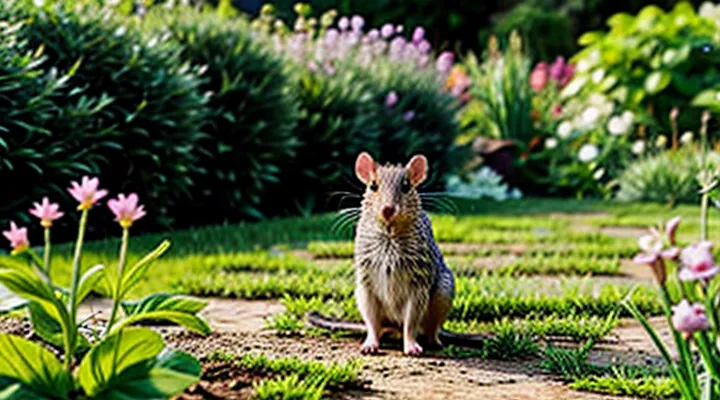
The image captures a field rat positioned among garden plants, revealing a compact body adapted for terrestrial foraging. The animal measures approximately 15–20 cm in head‑body length, with a tail extending an additional 12–18 cm, yielding a total length near 30 cm. Its fur is dense, coarse, and varies from brown‑gray on the dorsal surface to a lighter, almost white hue on the ventral side, providing camouflage against soil and foliage.
- Head: Broad skull, small rounded ears concealed by hair, and prominent whiskers aiding tactile navigation.
- Eyes: Small, dark, positioned laterally for a wide field of view.
- Limbs: Four sturdy legs; forelimbs possess dexterous digits with sharp claws for digging, while hind limbs are longer, facilitating rapid sprinting.
- Tail: Long, sparsely haired, functioning as a balancing organ during agile movement through dense vegetation.
Skeletal structure is lightweight yet robust, supporting swift bursts of speed and burrowing activity. Dental formula consists of incisors with hardened enamel, continuously growing to compensate for gnawing wear. The overall morphology reflects a species well‑suited to the mixed environment of cultivated ground and surrounding greenery.
Differentiating from Other Rodents
The photograph captures a field rat foraging among garden plants, prompting precise identification against similar rodent species.
Key physical traits that separate the field rat from other garden-dwelling rodents include:
- Body length 12‑18 cm, larger than most voles but smaller than typical house rats.
- Tail proportionally long, 80‑100 % of body length, covered with sparse hair.
- Ears relatively small, rounded, without prominent tufts.
- Dorsal fur brown to gray, often with a distinct dorsal stripe absent in most mice.
- Hind feet broad, equipped with well‑developed claws for digging.
Behavioral and ecological cues further aid differentiation:
- Primarily nocturnal, emerging after dusk to feed on seeds, insects, and tender shoots.
- Preference for open, vegetated areas rather than burrows; nests built in shallow depressions beneath dense foliage.
- Aggressive territoriality when food is limited, unlike the more communal habits of house mice.
- Diet includes a higher proportion of invertebrates compared with herb‑focused meadow voles.
By evaluating size, tail length, ear shape, fur pattern, and foraging habits, observers can reliably distinguish the field rat depicted in the garden scene from other common rodents such as house mice, voles, and Norway rats.
Behavior and Habits
Foraging Patterns
The photograph captures a field rat moving among vegetable rows, allowing direct observation of its foraging behavior in a cultivated environment.
The animal’s activity follows a predictable sequence. It first surveys the ground for fresh growth, then selects patches with high moisture content. After locating a suitable target, the rat employs rapid gnawing motions, extracting both seeds and tender leaves. Consumption is often accompanied by brief pauses to assess predator presence, after which the individual resumes feeding or retreats to a concealed burrow.
Key characteristics of the foraging pattern include:
- Preference for seedlings and young shoots that are within reach of the surface.
- Frequent relocation after 5–10 minutes of feeding to reduce depletion of a single patch.
- Use of tactile whiskers to detect subtle changes in plant texture and moisture.
- Integration of olfactory cues to identify nutrient‑rich specimens, especially those emitting strong aromatic compounds.
These behaviors reflect an adaptive strategy that maximizes nutrient intake while minimizing exposure to predators and competition. The visual evidence supports established ecological models describing opportunistic herbivory in garden‑dwelling rodents.
Nesting Sites
The garden environment offers several microhabitats suitable for the construction of nests by field rodents. Ground-level debris, such as fallen leaves, grass clumps, and shredded plant material, provides insulation and concealment. Burrows excavated in loose soil near the garden border allow easy access to foraging zones while reducing exposure to predators. Elevated structures, including compost piles and overturned pots, serve as temporary shelters during wet periods.
Key factors influencing nest selection:
- Proximity to food sources (seed heads, insects, vegetable waste)
- Availability of dry, soft substrate for lining
- Minimal disturbance from human activity or garden tools
- Structural stability to prevent collapse during rain or trampling
Nests constructed in these sites typically consist of a shallow cavity lined with soft vegetation, topped with a compacted layer of earth or debris. Seasonal variations prompt rodents to modify nest depth and composition, deepening burrows in winter and expanding shallow nests during the breeding season. Understanding these preferences assists gardeners in managing rodent activity while preserving the ecological balance of cultivated spaces.
Interaction with Garden Environment
The photograph captures a field rat moving through cultivated soil, illustrating direct contact with the garden’s physical and biological components.
The animal’s paws displace loose earth, creating micro‑pits that improve aeration and facilitate water infiltration. Its foraging behavior removes seeds and insects, influencing plant recruitment and pest populations. The rat’s burrowing generates tunnels that serve as pathways for mycorrhizal fungi, enhancing nutrient exchange between roots and soil microbes.
Key aspects of the interaction include:
- Soil disturbance that promotes mixing of organic material.
- Seed predation that alters plant species composition.
- Ingestion of invertebrates that regulates herbivore pressure.
- Creation of subterranean passages that support microbial colonization.
Overall, the image demonstrates how a single rodent can affect soil structure, plant dynamics, and the broader ecological network within a cultivated space.
Impact on Gardens
Plant Damage
The photograph captures a field rat moving through cultivated soil, providing a clear view of the damage it inflicts on garden vegetation.
Rats affect plants in several distinct ways:
- Root disruption – burrowing severs taproots and fibrous networks, reducing water and nutrient uptake.
- Stem gnawing – incisors chew young shoots, creating entry points for pathogens.
- Leaf consumption – nocturnal feeding removes photosynthetic tissue, weakening growth.
- Seed predation – direct consumption of seeds diminishes future crop yields.
- Disease transmission – saliva and feces introduce bacterial and fungal agents to wounds.
Visible symptoms include wilted foliage, exposed roots, irregular stem cuts, and missing seedlings. Early detection relies on inspecting soil mounds, tracking fresh chew marks, and monitoring for droppings.
Effective control measures consist of:
- Installing physical barriers such as fine mesh or copper tape around plant bases.
- Maintaining clean garden beds to eliminate shelter and food sources.
- Deploying live traps positioned near active burrows.
- Applying rodent‑specific rodenticides in accordance with safety regulations.
Understanding these damage mechanisms enables targeted interventions that preserve plant health and sustain garden productivity.
Potential Health Risks
An image capturing a field rat amidst garden vegetation presents several public‑health concerns. The animal frequently carries pathogens that can be transferred to humans through direct contact, contaminated produce, or aerosolized particles.
- Zoonotic bacteria: Salmonella, Leptospira, and Campylobacter may be shed in urine, feces, or saliva, contaminating soil and edible plants.
- Viral agents: Hantavirus and Lymphocytic choriomeningitis virus are known to persist in rodent droppings; inhalation of dried particles can cause severe respiratory illness.
- Parasitic infestations: Toxoplasma gondii oocysts and various helminth eggs can be deposited in garden beds, posing infection risks when produce is consumed raw.
- Allergic reactions: Rodent dander and urine proteins may trigger asthma or hypersensitivity in susceptible individuals.
- Secondary pest attraction: Field rats often harbor ectoparasites such as fleas and mites, which can bite humans and transmit additional diseases.
Mitigation strategies focus on habitat exclusion and sanitation. Seal entry points, maintain clean compost piles, and store feed in rodent‑proof containers. Employ traps or professional control services to reduce population density. Wear disposable gloves and masks when handling garden soil or harvested crops that may have been exposed to rodent waste. Regular testing of produce for bacterial contamination can verify the effectiveness of control measures.
Coexistence Strategies
A field rat captured amid garden vegetation illustrates the everyday overlap between wildlife and cultivated spaces. The image highlights the need for practical measures that allow both plant production and rodent presence without resorting to lethal control.
- Modify habitat by trimming dense ground cover, reducing shelter opportunities for the rodent while preserving beneficial insects.
- Install physical barriers such as low fences or mesh around vulnerable crops to limit direct access.
- Apply integrated pest management techniques, including regular monitoring, targeted traps, and selective use of repellents that do not harm non‑target species.
- Offer alternative food sources away from valuable plants, directing foraging activity toward designated zones.
- Encourage natural predators by maintaining habitats for owls, snakes, and predatory insects, creating a self‑regulating ecosystem.
Implementing these strategies sustains plant yields, minimizes chemical interventions, and preserves the ecological role of the rat as a seed disperser and soil aerator. The combined approach balances agricultural productivity with biodiversity.