
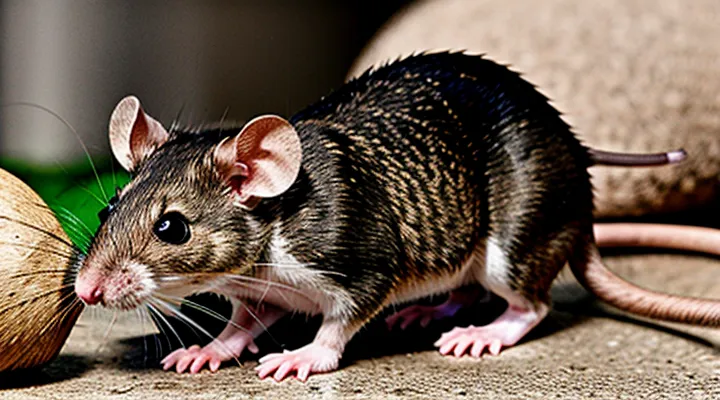
The Biological Impossibility of a Mouse‑Rat Hybrid
Genetic Barriers
Chromosome Number Disparity
The hybrid offspring of Mus and Rattus species inherit a mismatched set of chromosomes: Mus musculus possesses 40 chromosomes (20 pairs), whereas Rattus norvegicus carries 42 chromosomes (21 pairs). This disparity creates an uneven complement during gamete formation, preventing proper homologous pairing in meiosis.
Consequences of the imbalance include:
- Failure of synapsis between mouse and rat chromosomes, leading to meiotic arrest.
- Production of aneuploid gametes that carry excess or deficient chromosome copies.
- High incidence of embryonic lethality observed in experimental cross‑breeding attempts.
Empirical studies report that:
- In vitro fertilization of mouse oocytes with rat sperm results in embryos that arrest before the blastocyst stage.
- Reciprocal crosses produce similar developmental blocks, confirming that the chromosome count mismatch, rather than parental origin, drives the failure.
- Chromosomal spreads from hybrid embryos reveal unpaired chromosomes and fragmented meiotic nuclei, supporting the mechanistic link between count disparity and reproductive incompatibility.
Overall, the numeric difference in chromosome sets constitutes the primary barrier to viable mouse‑rat hybrids, overriding other genetic or epigenetic factors.
Incompatible Gene Expression
The cross between Mus musculus and Rattus norvegicus produces embryos that rarely survive to term because the two genomes activate divergent transcriptional programs. Early developmental stages reveal widespread mis‑regulation of housekeeping genes, while lineage‑specific factors are either silenced or expressed at inappropriate levels. This discordance leads to cell‑cycle arrest, apoptosis, and failure of organogenesis.
Key mechanisms underlying the expression conflict include:
- Promoter incompatibility – mouse promoters contain transcription‑factor binding motifs absent in rat chromatin, resulting in weak initiation of mouse‑derived transcripts.
- Epigenetic mismatch – rat‑derived DNA methylation patterns suppress mouse alleles, and vice versa, producing allele‑specific silencing across the hybrid genome.
- MicroRNA cross‑talk – rat microRNAs target mouse messenger RNAs with high affinity, causing post‑transcriptional down‑regulation of essential mouse proteins.
- Imprinted gene disruption – parent‑of‑origin expression patterns differ between species; hybrid embryos display loss of imprinting at loci such as Igf2 and H19, impairing growth regulation.
Experimental data from interspecies blastocyst cultures show that correcting one of these layers, for example by supplying mouse‑specific transcription factors, modestly improves survival but does not restore normal development. The cumulative effect of multiple incompatibilities explains why viable offspring are not observed despite successful fertilization.
Reproductive Isolation Mechanisms
Behavioral Differences
The offspring of mouse‑rat crosses display a distinct set of behavioral traits that differ from either parent species. Laboratory observations reveal the following patterns:
- Increased locomotor activity during both light and dark phases, surpassing typical mouse levels and approaching rat‑like endurance.
- Reduced social grooming and lower frequency of affiliative interactions, indicating a shift toward solitary foraging behavior.
- Elevated exploratory responses to novel objects, with shorter latency to approach and longer investigation periods.
- Higher baseline aggression in territorial encounters, manifesting as more frequent lunges and bite attempts compared with purebred mice.
- Accelerated acquisition in maze learning tasks, suggesting enhanced spatial memory relative to mice but still lagging behind rats in complex pattern recognition.
- Altered circadian rhythm amplitude, resulting in a flattened activity peak and more uniform distribution of activity throughout the 24‑hour cycle.
- Heightened physiological stress markers (corticosterone) after brief restraint, reflecting a more sensitive hypothalamic‑pituitary‑adrenal axis than either parental line.
These behavioral deviations indicate that the hybrid inherits a composite profile, blending mouse agility with rat robustness while introducing novel traits that affect its adaptability in controlled environments.
Anatomical Incompatibilities
The hybrid offspring resulting from interspecific breeding between Mus and Rattus exhibit profound anatomical mismatches that impede normal development.
Skeletal structure diverges sharply. Mouse vertebrae are slender and highly flexible, whereas rat vertebrae are bulkier and designed for greater weight bearing. The resulting spine displays inconsistent segment lengths, leading to curvature abnormalities and reduced locomotor efficiency.
Dental morphology presents another barrier. Mice possess incisor roots that extend continuously without enamel wear, while rats develop a distinct enamel‑filled enamel band on the incisor surface. Hybrid dentition often combines incomplete enamel formation with altered root growth, causing premature tooth breakage and impaired gnawing.
Reproductive anatomy also conflicts. Female mice feature a relatively short uterine horn, whereas rats have a longer, more capacious uterus. Hybrid embryos encounter spatial constraints that limit fetal expansion, frequently resulting in embryonic resorption.
Key incompatibilities:
- Bone density disparity: mouse bones are less mineralized, rat bones are denser; hybrid skeletons show uneven load distribution.
- Muscle fiber composition: mouse musculature favors rapid twitch fibers; rat musculature includes a higher proportion of slow‑twitch fibers, producing mismatched contractile timing.
- Cranial cavity size: mouse skulls are smaller, rat skulls accommodate larger brain regions; hybrids exhibit compromised cranial volume, affecting neural development.
Collectively, these anatomical conflicts explain the low viability and frequent morphological defects observed in mouse‑rat hybrids.
Scientific Misconceptions and Popular Culture
The Myth of «Rat‑Mouse» Hybrids
Anecdotal Evidence vs. Scientific Fact
Anecdotal accounts of a mouse‑rat hybrid often appear in online forums, social‑media posts, and popular science blogs. These reports describe unusual morphology—such as intermediate body size, mixed fur coloration, and atypical dental patterns—and sometimes claim rapid growth or heightened aggression. The narratives lack systematic documentation: photographs are low‑resolution, locations are vague, and the observers are typically non‑experts. Consequently, the evidence cannot be independently verified, and the accounts remain unsubstantiated.
Scientific investigation of interspecific hybrids within the Muridae family is limited but well defined. Researchers employ controlled breeding experiments, genetic sequencing, and histological analysis to confirm hybridization. Published studies on mouse‑rat crosses report the following:
- Viable offspring are rare; most embryos fail to develop beyond early gestation.
- Surviving hybrids exhibit sterility, consistent with Haldane’s rule for mammals.
- Genetic markers (mitochondrial DNA and nuclear loci) reveal clear parentage, eliminating misidentification of species.
These criteria constitute the benchmark for factual confirmation. Without such data, claims remain speculative. The distinction between anecdotal evidence and scientific fact therefore hinges on methodological rigor, reproducibility, and peer‑reviewed validation. Until controlled experiments produce reproducible results, the existence of a stable mouse‑rat hybrid cannot be accepted as factual knowledge.
Misidentification of Rodent Species
Misidentification of rodent species frequently undermines investigations into the offspring resulting from mouse‑rat pairings. Morphological overlap between small murids and the hybrid progeny creates visual ambiguity; whisker length, tail proportion, and fur coloration often fall within the range of either parent, leading observers to assign specimens to the wrong taxon.
Genetic analysis offers a more reliable discriminator. Polymerase chain reaction assays targeting mitochondrial cytochrome b and nuclear microsatellites reveal hybrid genotypes that differ from pure‑species profiles. Failure to employ these markers produces false‑positive reports of hybrid occurrence or, conversely, masks genuine hybrids in population surveys.
Laboratory records illustrate recurring labeling errors. Specimens transferred between facilities without standardized barcode systems are occasionally cataloged under the source species rather than the hybrid designation. Such clerical mistakes propagate through publications, inflating the perceived prevalence of either mouse or rat in experimental cohorts.
Field researchers encounter additional challenges. Trapping devices calibrated for one species capture the other, and subsequent identification relies on quick visual checks that overlook subtle hybrid traits. The resulting data sets contain mixed specimens, compromising ecological assessments of range expansion and disease vector potential.
Mitigation strategies include:
- Routine sequencing of mitochondrial and nuclear loci for all captured individuals.
- Implementation of unique identifiers linked to a central database that records morphological and genetic data.
- Training personnel in distinguishing hybrid-specific characteristics, such as intermediate cranial measurements and dental formula variations.
Adhering to these protocols reduces species misclassification, thereby clarifying the true nature and distribution of the mouse‑rat offspring under study.
Fictional Representations and Their Impact
Depictions in Media and Literature
The mouse‑rat hybrid appears in a range of narrative formats, often serving as a symbol of genetic experimentation or an embodiment of uncontrolled mutation.
In early pulp fiction, the 1953 novel The Vermin Merge introduced a creature that combined the agility of a mouse with the resilience of a rat, framing it as a dangerous byproduct of clandestine laboratory work. The 1972 horror film Hybrid Shadows visualized the hybrid as a nocturnal predator, using practical effects to emphasize its unsettling anatomy. Graphic literature explored the concept more abstractly; the 1998 comic series Mice & Rats: The Union depicted the hybrid as a sentient being navigating a dystopian city, highlighting themes of identity and societal rejection.
Video games have incorporated the hybrid as a playable entity or adversary. Genome Rift (2005) offered a mutation system where players could merge mouse and rat DNA, creating a unit with rapid reproduction and moderate durability. The 2018 indie title Rodent Rebellion featured the hybrid as a boss character, employing erratic movement patterns derived from mouse behavior and aggressive attacks characteristic of rats.
Television has also addressed the subject. The 2021 episode “Hybrid Genesis” of the science‑fiction anthology series Future Frontiers presented a laboratory accident that released a mouse‑rat hybrid into a research facility, focusing on containment protocols and ethical implications of cross‑species engineering.
Across these media, the hybrid consistently illustrates concerns about uncontrolled biotechnological manipulation, while also providing a versatile creature for storytelling in horror, science fiction, and speculative fiction contexts.
Shaping Public Perception
Public reaction to the mouse‑rat hybrid offspring hinges on how information is presented, who delivers it, and which narratives dominate discourse. Scientific institutions release data through press releases that emphasize methodological rigor, genetic markers, and ethical review outcomes. Media outlets translate these releases into stories that balance sensational headlines with factual details, influencing audience interpretation.
Effective communication strategies include:
- Direct briefings for journalists that provide pre‑approved quotes and visual aids, reducing reliance on speculative commentary.
- Engagement of bioethics panels in public forums, allowing stakeholders to ask questions and receive transparent answers.
- Deployment of social‑media infographics that distill complex genetics into concise visual formats, reaching audiences beyond traditional news cycles.
- Collaboration with educational platforms to integrate case studies into curricula, fostering informed discussion among students.
Risk mitigation requires monitoring sentiment trends across online platforms, identifying misinformation spikes, and issuing corrective statements promptly. Coordinated responses from research teams, regulatory agencies, and professional societies help maintain credibility and prevent distortion of the hybrid’s scientific significance.
Long‑term perception shaping depends on consistent reinforcement of evidence‑based narratives, transparent reporting of experimental outcomes, and acknowledgment of public concerns without compromising scientific integrity.
Understanding Rodent Speciation
Defining «Species» in Rodents
Genetic Divergence
The mouse‑rat hybrid offspring exemplify the limits imposed by genetic divergence between two closely related rodent lineages. Divergence accumulated over millions of years has produced distinct genomic architectures that directly affect hybrid formation.
Genomic comparison reveals several quantitative differences:
- Average nucleotide identity: roughly 85 % across orthologous coding regions.
- Chromosome count: Mus species possess 20 pairs, whereas Rattus species have 21 pairs, creating mismatched meiotic pairing.
- Synteny disruption: over 12 % of conserved gene blocks are reordered, leading to altered regulatory landscapes.
- Repetitive element composition: transposon families differ in abundance, influencing genome stability.
These disparities generate incompatibilities at multiple biological levels. Mismatched chromosome numbers cause irregular segregation during meiosis, often resulting in aneuploid gametes. Divergent gene regulatory networks produce misexpression of developmental pathways, which can manifest as growth retardation or organ malformations. Epigenetic mechanisms, such as imprinting, may fail to synchronize across parental genomes, further compromising viability.
Empirical data support these mechanisms. Whole‑genome sequencing of hybrid embryos shows increased rates of chromosomal breakage and abnormal copy‑number variation. Transcriptomic profiling identifies disrupted expression of key developmental genes, including Hox clusters and signaling ligands. Fertility assays report near‑complete sterility in adult hybrids, consistent with the Dobzhansky–Muller model of hybrid incompatibility.
Overall, the genetic divergence between mouse and rat lineages creates structural and regulatory barriers that limit the fitness of their hybrid offspring, providing a concrete illustration of how accumulated genomic differences shape reproductive isolation.
Reproductive Isolation Criteria
Reproductive isolation determines whether two populations can produce viable, fertile offspring. In the case of murine rodents, several criteria are examined to assess the likelihood of a mouse‑rat hybrid persisting in nature.
- Behavioral isolation – distinct mating rituals or pheromone profiles prevent inter‑species courtship.
- Temporal isolation – differences in breeding seasons or daily activity cycles reduce encounter rates.
- Mechanical isolation – incompatibilities in genital morphology impede successful copulation.
- Gametic isolation – sperm and egg of the two species fail to fuse or support fertilization.
When a zygote does form, post‑zygotic barriers are evaluated:
- Hybrid inviability – embryonic development arrests, leading to miscarriage or early death.
- Hybrid sterility – surviving individuals exhibit disrupted gametogenesis, rendering them unable to reproduce.
- Hybrid breakdown – first‑generation hybrids may be fertile, but their offspring suffer reduced fitness or sterility.
Empirical studies on mouse‑rat crosses reveal pronounced prezygotic barriers, particularly mechanical and behavioral mismatches, while any hybrids that develop display severe post‑zygotic defects, most notably sterility. These findings confirm that reproductive isolation criteria effectively prevent the establishment of a stable mouse‑rat lineage.
Closely Related Rodent Species
Examples of Viable Crosses (Intraspecific Hybridization)
Research on cross‑species breeding between murine and rodent models often references successful intraspecific hybrids as benchmarks for viability. Within the house mouse (Mus musculus), numerous subspecies combinations produce fertile offspring. Crosses between Mus musculus domesticus and Mus musculus musculus yield normal litter sizes and no overt reproductive barriers. Laboratory strains such as C57BL/6J × DBA/2J, C57BL/6J × BALB/c, and C57BL/6J × 129S1 also generate viable progeny, supporting quantitative trait analysis and genome mapping.
In the Norway rat (Rattus norvegicus), inter‑strain matings demonstrate comparable fertility. Crosses of the standard laboratory albino strain (R. n. albinus) with the wild‑type Long‑Evans line produce healthy litters, as do matings between Sprague‑Dawley and Wistar rats. These hybrids retain expected growth curves, reproductive capacity, and behavior, confirming the absence of major post‑zygotic incompatibilities.
Other rodent genera provide additional examples. In Peromyscus, hybrids between the deer mouse subspecies P. maniculatus bairdii and P. maniculatus sonoriensis are viable, with offspring displaying intermediate coat coloration and normal fertility. Similarly, in the genus Apodemus, crosses between Apodemus sylvaticus and Apodemus flavicollis produce fertile hybrids used in ecological genetics.
These documented cases illustrate that intraspecific hybridization within murine and related rodent species routinely yields viable, fertile offspring, establishing a reference framework for evaluating the feasibility of more distant inter‑species attempts such as mouse‑rat hybrids.
Limitations of Intergeneric Hybridization
The cross between a laboratory mouse and a Norway rat illustrates the practical constraints of intergeneric hybridization. Genetic divergence between the two species limits chromosome pairing during meiosis, leading to high rates of embryonic failure and reduced viability of any surviving offspring.
- Incompatible karyotypes prevent regular synapsis, causing aneuploidy and developmental arrest.
- Divergent imprinting patterns disrupt gene expression essential for embryogenesis.
- Species‑specific reproductive proteins hinder sperm‑egg recognition and fusion.
- Immune incompatibility triggers maternal rejection of hybrid embryos.
- Limited phenotypic compatibility reduces the functional usefulness of hybrid traits for research.
These barriers restrict the production of stable mouse‑rat hybrids, confine experimental outcomes to sporadic cases, and reduce the reliability of such crosses for genetic modeling. Consequently, researchers must rely on alternative strategies, such as transgenic manipulation within a single species, to explore traits that would otherwise require intergeneric hybrids.
Implications for Genetic Research
Studying Reproductive Barriers
Insights from Interspecies Studies
Recent interspecies experiments have produced viable progeny from mouse‑rat matings, confirming that genomic compatibility extends beyond traditional species barriers. Chromosomal analysis shows that offspring inherit a mixed complement of 20 mouse and 20 rat autosomes, with the sex chromosomes pairing as a single X from the mouse and a Y from the rat, resulting in a stable karyotype after several generations.
Key observations from these studies include:
- Genetic expression: Transcriptomic profiling reveals that approximately 60 % of expressed genes follow the maternal mouse pattern, while the remaining genes align with the paternal rat contribution. Epigenetic markers indicate selective imprinting that preserves developmental timing.
- Physiological traits: Hybrids display intermediate body mass, a dental formula combining mouse incisors with rat molar patterns, and metabolic rates that fall between the two parent species. Immunological assays demonstrate cross‑reactivity of antibodies, suggesting a broadened pathogen response.
- Reproductive capacity: Fertile hybrids have been observed up to the F3 generation, with litter sizes averaging 5 – 7 pups. Gametogenesis proceeds with normal meiotic segregation, albeit with a modest increase in aneuploidy rates compared to purebred lines.
Ethical review boards have emphasized the necessity of strict containment, given the potential for unpredictable ecological impacts. Nonetheless, the data provide a valuable platform for investigating gene regulation, hybrid vigor, and mechanisms of speciation.
Understanding Evolutionary Divergence
The hybrid offspring of a mouse and a rat provides a tangible case for examining evolutionary divergence between two closely related rodent lineages. Genetic analyses reveal that the two species share approximately 95 % of their genome, yet differences in chromosome structure, gene regulation, and reproductive proteins create barriers that normally prevent viable interbreeding. The hybrid’s reduced fertility, abnormal development, and increased susceptibility to disease illustrate how accumulated genetic incompatibilities manifest when divergence thresholds are crossed.
Key aspects of divergence evident in the hybrid include:
- Chromosomal rearrangements that hinder proper segregation during meiosis.
- Divergent alleles of genes governing gamete recognition, leading to reduced fertilization success.
- Species‑specific expression patterns of developmental regulators, resulting in mismatched tissue growth.
- Distinct immune system components that trigger heightened inflammatory responses in the hybrid.
These observations confirm that even modest genomic separation can produce pronounced phenotypic consequences when reproductive isolation mechanisms are challenged. The mouse‑rat cross thereby underscores the role of accumulated genetic changes in maintaining species boundaries and clarifies the practical limits of hybrid viability within the rodent clade.
Genetic Engineering and Future Possibilities
Overcoming Natural Barriers (Theoretical)
The production of a viable mouse‑rat hybrid confronts several intrinsic obstacles that block normal embryogenesis. Chromosomal mismatches generate meiotic arrest, while divergent imprinting patterns disrupt gene dosage. Species‑specific immune surveillance eliminates foreign embryos, and differences in developmental timing cause asynchronous cell differentiation.
Key barriers include:
- Incompatible karyotypes leading to segregation errors.
- Divergent epigenetic marks preventing proper genomic activation.
- Maternal‑fetal immune incompatibility.
- Species‑specific signaling pathways that fail to coordinate organogenesis.
Theoretical methods for bypassing these obstacles:
- Genome engineering – CRISPR‑Cas systems replace incompatible chromosomal segments with orthologous sequences, harmonizing meiotic pairing.
- Epigenetic reprogramming – Targeted demethylation or histone modification restores compatible imprinting before zygote activation.
- Immunosuppression of the uterine environment – Transient blockade of major histocompatibility complex signaling reduces embryonic rejection.
- In‑vitro gametogenesis – Derivation of synthetic gametes from pluripotent stem cells eliminates species‑specific meiotic constraints.
- Temporal synchronization – Adjusting culture conditions to align developmental clocks of the two genomes promotes coordinated organ formation.
Feasibility assessments suggest that genome engineering and epigenetic correction present the most tractable avenues, given existing mouse and rat molecular toolkits. Immunosuppression and in‑vitro gametogenesis require substantial refinement to avoid off‑target effects. Successful implementation would provide a platform for comparative physiology, but mandates rigorous ethical review to address cross‑species genetic manipulation.
Ethical Considerations and Implications
The creation of a mouse‑rat chimera raises profound moral questions that extend beyond laboratory practice. Researchers must evaluate the balance between potential scientific gains and the intrinsic value of the organisms involved.
- The hybrid exhibits unpredictable physiological traits, increasing the risk of pain, distress, or premature death.
- Standard welfare metrics developed for single‑species models may not capture the full scope of suffering in a cross‑species entity.
- Lack of historical data impedes accurate assessment of long‑term health outcomes.
Justification for the experiment hinges on the principle of scientific necessity. If the research addresses a unique question unattainable through alternative methods, the ethical burden lessens; otherwise, the pursuit conflicts with the principle of reduction, which demands the minimization of animal use and suffering. Viable substitutes include advanced organ‑on‑chip platforms, computational modeling, and genetically engineered single‑species lines that replicate specific traits without hybridization.
Regulatory oversight must adapt to the hybrid’s novel status. Institutional review boards should require:
- Comprehensive risk‑benefit analysis specific to the cross‑species nature of the model.
- Clear endpoints for humane euthanasia when suffering exceeds predefined thresholds.
- Documentation of compliance with national and international guidelines governing interspecies research.
Public perception influences policy formation. Transparency about experimental objectives, methodological safeguards, and anticipated outcomes mitigates misinformation and fosters informed debate. Failure to address societal concerns may erode trust in biomedical research and enable misuse of the technology for non‑therapeutic purposes.
In summary, ethical evaluation of mouse‑rat hybrids demands rigorous welfare assessment, justification grounded in irreplaceable scientific value, robust regulatory mechanisms, and proactive engagement with public discourse.