
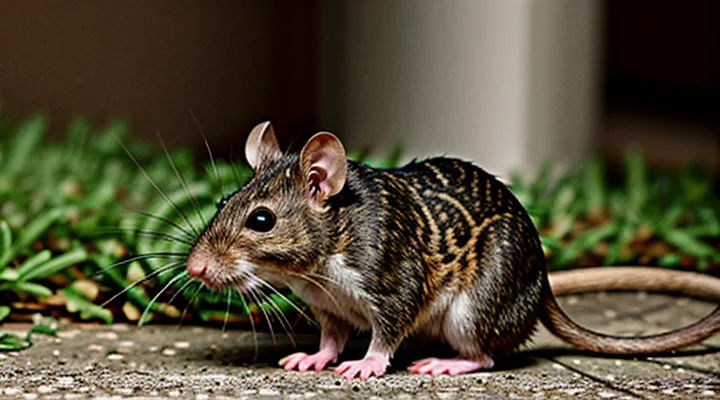
The Subtle Clues of Rodent Activity
Understanding Rustling Noises
Identifying Different Types of Sounds
Identifying the acoustic signatures associated with rodent activity requires a systematic classification of sound types and their distinguishing characteristics. Each sound source exhibits a specific frequency range, amplitude envelope, and temporal pattern that can be measured and compared against baseline environmental noise.
Key sound categories relevant to rodent detection include:
- Rustling of bedding or insulation – broadband noise concentrated between 1 kHz and 4 kHz, often intermittent and low‑amplitude.
- Gnawing on hard surfaces – high‑frequency clicks ranging from 5 kHz to 12 kHz, repetitive with a regular inter‑click interval.
- Squeaking vocalizations – narrow‑band tones centered around 7 kHz to 10 kHz, sustained for brief durations (0.1–0.3 s).
- Footstep impacts on flooring – impulsive bursts below 2 kHz, characterized by sharp rise times and rapid decay.
- Scraping of walls or pipes – mixed‑frequency content with dominant components near 3 kHz, often accompanied by a metallic timbre.
Effective identification relies on spectral analysis techniques such as Fast Fourier Transform (FFT) to isolate frequency peaks, and on time‑frequency representations (e.g., spectrograms) to visualize temporal dynamics. Machine‑learning classifiers trained on labeled recordings can differentiate these acoustic patterns from background sounds with high precision. Threshold‑based detection systems may employ band‑pass filters tuned to the identified frequency ranges, followed by envelope detection to trigger alerts when amplitude exceeds predefined limits.
By cataloguing sound types, quantifying their acoustic parameters, and applying robust signal‑processing pipelines, practitioners can reliably infer rodent presence from ambient noise recordings.
Interpreting Sound Volume and Frequency
Interpreting the acoustic signature of rodent movement requires precise analysis of both amplitude and spectral content. Volume indicates the proximity of the source; higher sound pressure levels correspond to closer or larger animals, while low levels suggest distance or obstruction. Frequency patterns reveal species‑specific traits: small rodents generate higher‑frequency rustles due to rapid limb motion, whereas larger rodents produce dominant low‑frequency components.
Key interpretive guidelines:
-
Amplitude assessment
-
Frequency analysis
- Perform Fast Fourier Transform (FFT) on recorded segments.
- Identify dominant frequency bands; 5–10 kHz peaks often indicate mice, 2–5 kHz peaks suggest rats.
- Evaluate spectral bandwidth; narrow bands imply steady movement, broader bands imply rapid, erratic activity.
-
Combined interpretation
- Correlate high SPL with low‑frequency dominance to detect larger, nearby rodents.
- Pair low SPL with high‑frequency peaks to infer distant, smaller rodents.
- Monitor temporal changes; increasing SPL or shifting frequency bands may signal escalating infestation.
Accurate interpretation of volume and frequency transforms passive noise monitoring into a reliable indicator of rodent presence, enabling targeted remediation before structural damage occurs.
Common Locations for Rodent Sounds
Walls and Ceilings
Acoustic monitoring provides a direct method for identifying rodent activity concealed within structural cavities. Sound‑based detection bypasses visual inspection, allowing continuous surveillance of hidden spaces such as interior walls and overhead ceilings.
Mice generate distinctive rustling noises when moving across insulation, chewing on framing members, or nesting in voids. These sounds typically occupy the 200–800 Hz band, with intermittent high‑frequency spikes produced by gnawing. The acoustic signature differs from ambient household noise by its irregular rhythm, brief duration, and low‑amplitude bursts that repeat at intervals of 5–30 seconds.
Effective sensor deployment follows three principles:
- Position microphones or contact piezoelectric transducers near junctions where wall studs meet ceiling joists, as these points transmit vibrations most efficiently.
- Install devices flush with surface panels to minimize attenuation caused by drywall or plaster.
- Space sensors 1–1.5 m apart along long wall runs and across ceiling grids to ensure overlapping coverage and reduce blind spots.
Signal analysis relies on band‑pass filtering to isolate the target frequency range, followed by envelope detection to highlight transient events. Automated algorithms compare extracted features—such as inter‑event interval, spectral centroid, and amplitude envelope—to a calibrated database of known murine sounds. Thresholds are set to trigger alerts only when statistical confidence exceeds 95 %.
Implementation steps:
- Conduct a structural survey to map cavity geometry and identify access points.
- Mount calibrated acoustic sensors according to the placement guidelines.
- Connect sensors to a central recorder or wireless hub for continuous data capture.
- Apply real‑time processing software that logs events and issues notifications to maintenance personnel.
- Review recorded evidence periodically to confirm infestation severity and guide remediation actions.
Attics and Basements
Attics and basements constitute the most common pathways for rodents to enter residential structures, and they also serve as primary zones where mouse movement generates detectable rustling. The confined spaces amplify the sound of small mammals navigating insulation, stored items, or piping, creating a consistent acoustic signature that can be captured by passive listening devices or smartphone applications. Monitoring these areas yields reliable evidence of infestation without visual confirmation.
Key acoustic characteristics of rodent activity in these locations include:
- Repetitive light scratching on insulation or wooden joists, typically occurring during nighttime hours.
- Intermittent squeaking or high‑pitched chirps when mice are startled or communicating.
- Soft thudding sounds as animals traverse stored boxes, laundry, or debris.
These sounds differ from ambient household noise by their frequency range (approximately 2–8 kHz) and pattern regularity. Professionals calibrate detection equipment to filter out HVAC, plumbing, and external traffic noise, focusing on the narrow band where mouse rustling predominates.
Effective detection protocols recommend placing microphones or contact sensors at strategic points: near roof trusses in the attic, adjacent to foundation walls in the basement, and close to entry points such as vents or utility openings. Continuous recording for a minimum of 24 hours captures activity cycles and helps distinguish between isolated incidents and established colonies. Once acoustic data confirm rodent presence, targeted sealing of entry routes and placement of bait stations can be implemented to eradicate the infestation.
Cabinets and Pantries
Cabinets and pantries provide sheltered pathways and food stores that attract mice, making them prime locations for acoustic monitoring of rodent activity. The faint rustling produced by a mouse moving through stored items or along shelving produces low‑frequency vibrations that differ from ambient household sounds. Detection devices calibrated to capture frequencies between 300 Hz and 1 kHz can isolate these signatures even when background noise is present.
The timing of rustling offers additional clues. Mice are most active during nighttime and early morning; a sudden increase in intermittent scratching noises during these periods strongly suggests occupancy. Placement of sensors near the rear wall of a cabinet or at the back of a pantry maximizes exposure to the source while minimizing interference from external appliances.
Practical steps for occupants:
- Install a passive acoustic sensor at the deepest point of each cabinet or pantry.
- Set the device to record continuously for at least 72 hours to capture activity cycles.
- Analyze recordings for repetitive, short‑duration bursts in the 300–1,000 Hz range.
- Correlate identified bursts with visual inspections of food packaging and structural damage.
- Apply exclusion methods (seal gaps, install door sweeps) and remove accessible food sources once evidence is confirmed.
Consistent monitoring of rustling sounds within storage areas enables early identification of infestations, reducing the risk of contamination and structural damage.
Differentiating Rodent Sounds from Other Household Noises
Sounds from Pests vs. Structural Sounds
Rodent activity generates distinct rustling, scratching, and gnawing noises that differ from sounds produced by a building’s infrastructure. Pest-generated sounds are typically intermittent, high‑frequency, and localized to concealed spaces such as wall cavities, attics, or floor joists. Structural noises, by contrast, exhibit regular patterns, lower frequencies, and originate from mechanical systems, thermal expansion, or material settling.
Key acoustic characteristics that separate rodent noises from building sounds include:
- Temporal pattern: Rodent sounds appear irregularly, often during quiet periods; structural noises follow predictable cycles (e.g., HVAC operation, pipe flow).
- Frequency range: Pest activity emits sharp, squeaky tones between 2–8 kHz; structural creaks and pops cluster below 2 kHz.
- Amplitude variation: Rodent noises fluctuate rapidly in intensity as the animal moves; structural sounds maintain relatively steady amplitude.
- Location specificity: Pest noises are confined to discrete, sealed voids; structural sounds propagate through larger, continuous surfaces.
Accurate identification relies on systematic listening, preferably with a calibrated acoustic detector that isolates frequency bands and records temporal signatures. By mapping the source of high‑frequency, irregular bursts, inspectors can differentiate genuine rodent presence from benign building noises, enabling targeted remediation without unnecessary demolition.
Sounds from Pests vs. Plumbing Noises
Rodent activity generates a distinctive rustling that differs from the acoustic profile of household plumbing. The sound originates from gnawing, climbing, and moving through insulation, walls, or ducts. Its frequency range typically falls between 500 Hz and 4 kHz, with intermittent bursts that correspond to the animal’s movements. Volume varies with the size of the rodent and the material being disturbed, but the pattern remains irregular and often accompanied by scratching or nibbling noises.
Plumbing systems produce continuous or rhythmic sounds linked to water flow, pressure changes, and pipe vibration. Water moving through copper or PVC pipes generates a steady humming or whirring in the 100 Hz to 1 kHz band. When valves open or close, a brief click or clunk may occur, followed by a predictable decay. Drainage pipes emit occasional gurgling or bubbling, synchronized with appliance use or toilet flushing.
Key acoustic differences:
- Frequency: rodents – higher, more variable; plumbing – lower, steadier.
- Rhythm: rodents – irregular bursts; plumbing – periodic, tied to water cycles.
- Texture: rodents – dry, scratching, gnawing; plumbing – wet, bubbling, humming.
- Source location: rodents – confined to cavities, often near insulation; plumbing – along visible pipe runs, near fixtures.
Accurate identification relies on listening for these characteristics, noting repetition patterns, and correlating sounds with household activities. When rustling persists independently of water use, the likelihood of pest presence increases markedly.
Sounds from Pests vs. Other Animals
Rodent activity produces a distinctive rustling that differs from noises generated by other wildlife. The sound originates from the movement of small bodies against nesting material, insulation, or stored food. Its acoustic signature is characterized by:
- Frequency range: 2 kHz – 8 kHz, with peak energy around 4–5 kHz.
- Temporal pattern: rapid, repetitive scrapes lasting 0.5–3 seconds, often repeated at irregular intervals.
- Amplitude: low to moderate, typically 30–55 dB SPL measured at a distance of one meter.
In contrast, sounds from non‑pest animals display separate parameters:
- Birds emit chirps and calls above 4 kHz, often with harmonic structures and clear tonal peaks.
- Squirrels generate louder chattering bursts, exceeding 60 dB SPL, with a broader frequency spread up to 12 kHz.
- Insects produce continuous high‑frequency buzzes above 8 kHz, lacking the discrete, short‑duration bursts of rodent rustling.
Accurate identification relies on matching recorded audio to these frequency, duration, and intensity criteria. By isolating the specific rustle pattern, detection systems can differentiate mouse presence from incidental wildlife noise.
Confirming a Rodent Infestation
Visual Evidence Beyond Sound
Visual confirmation of rodent activity supplements acoustic monitoring by providing concrete evidence that can be documented, quantified, and verified. Photographic or video records capture nest materials, droppings, gnaw marks, and movement patterns that remain invisible to the ear. Such imagery enables precise identification of species, assessment of infestation severity, and validation of noise‑based alerts.
Key visual indicators include:
- Accumulated shredded paper, fabric, or insulation within concealed cavities.
- Fresh fecal pellets arranged in characteristic linear or clustered patterns.
- Chewed edges on wiring, furniture, or structural elements.
- Entry holes sized between 1 cm and 2 cm, often surrounded by gnaw marks.
- Direct observation of rodents in motion, captured by motion‑activated cameras.
Integrating visual data with sound analysis reduces false positives caused by ambient noise, improves response timing, and supports targeted remediation strategies. Documentation of visual evidence also facilitates communication with pest‑control professionals and satisfies regulatory reporting requirements.
Droppings and Gnaw Marks
Droppings and gnaw marks provide concrete confirmation of rodent activity that accompanies audible rustling.
Fresh droppings appear as small, dark pellets, typically 3–6 mm long for house mice. Their distribution follows travel routes and feeding stations, often clustering near food sources, walls, or concealed pathways. The presence of multiple droppings in a confined area indicates repeated passage, reinforcing acoustic evidence of movement.
Gnaw marks reveal the species’ feeding behavior and structural impact. Mice create shallow, parallel grooves on soft materials such as wood, plastic, or insulation. The width of the groove (approximately 2–3 mm) matches the animal’s incisors, while the pattern—continuous or intermittent—mirrors the rhythm of their nocturnal foraging. Regular gnawing on cables or framing members can generate additional vibrations that contribute to the overall rustling signature.
Key diagnostic points:
- Pellet size and color correspond to mouse species; uniform size suggests a single occupant, varied sizes may indicate multiple individuals.
- Concentration of droppings near entry points aligns with the source of sound, helping to locate the breach.
- Gnaw depth and spacing differentiate between active feeding (deep, frequent marks) and occasional chewing (shallow, sporadic marks).
- Combined analysis of droppings, gnaw marks, and rustling patterns enables precise identification of infestation severity and entry routes.
By correlating physical evidence with acoustic observations, inspectors can prioritize interventions, target concealment zones, and verify the effectiveness of control measures.
Odor Indicators
Odor indicators complement acoustic monitoring by providing chemical clues that confirm rodent activity. When rodents inhabit a structure, they release volatile compounds through urine, feces, and glandular secretions. These compounds accumulate in concealed areas and create a distinctive scent profile that can be sampled and analyzed.
Key odor markers include:
- Urine-derived ammonia – high concentrations indicate recent habitation.
- Fecal fatty acids – specific short‑chain acids signal the presence of mouse droppings.
- Glandular secretions – pheromonal compounds such as 2‑acetyl‑1‑pyrroline are unique to rodents.
- Nest material volatiles – shredded paper or insulation emit characteristic cellulose breakdown products.
Detection methods range from handheld electronic noses to laboratory gas chromatography. Handheld devices provide rapid, on‑site assessment by comparing sensor responses to calibrated reference patterns. Laboratory analysis offers higher specificity, allowing identification of multiple compounds in a single sample.
Integrating odor data with sound‑based surveillance enhances reliability. Acoustic sensors pinpoint activity locations, while odor sampling verifies occupancy and differentiates between species. This dual‑approach reduces false positives caused by ambient noises and improves decision‑making for pest‑management interventions.
Effective Rodent Control Strategies
Trapping Methods
Detecting rodents through audible rustling provides a reliable trigger for deploying capture devices. When a noise pattern indicates activity, immediate trap placement maximizes capture probability.
Effective traps meet three criteria: rapid response to movement, minimal non‑target impact, and ease of inspection. Selection should align with the identified noise source, habitat constraints, and required control duration.
- Snap traps: steel bar delivers instantaneous lethal force; suitable for narrow pathways and tight corners.
- Live‑catch cages: hinged door closes upon entry; permits relocation of captured animals and reduces odor buildup.
- Glue boards: adhesive surface immobilizes; best for concealed routes where quick visual confirmation is unnecessary.
- Electronic bait stations: ultrasonic sensor activates high‑voltage shock; ideal for areas with frequent, low‑volume rustling.
Placement follows a systematic pattern: position traps directly downstream of the noise origin, maintain a 12‑inch spacing to cover overlapping activity zones, and secure each device to prevent displacement by the target. Bait selection should reflect the species’ dietary preferences, using high‑protein or grain options as appropriate.
Post‑deployment monitoring includes daily inspection, recording capture counts, and correlating data with ongoing noise measurements. Adjust trap density or type when capture rates decline, ensuring sustained control while minimizing resource expenditure.
Baits and Poisons
Bait selection directly influences the reliability of acoustic monitoring for rodent activity. Effective stations combine attractants that provoke consistent foraging behavior with placement strategies that maximize exposure to detectable rustling.
- Food-based baits – grain, peanut butter, or dried fruit; high palatability induces frequent handling, generating audible movements that sensors capture.
- Synthetic attractants – pheromone lures or flavor enhancers; concentrate activity in limited zones, improving signal-to-noise ratios for detection equipment.
- Pre-baited stations – initial non‑toxic offering allows rodents to familiarize themselves with the device, increasing subsequent interactions that produce measurable sounds.
Poison integration must preserve the acoustic signature of feeding while ensuring lethal efficacy. Recommended practices include:
- Granular anticoagulants – blend with food baits; ingestion triggers immediate chewing, preserving rustle patterns before physiological effects manifest.
- Rodenticide blocks – solid tablets embedded in bait matrix; rodents break the block during consumption, producing distinct crackling sounds detectable by sensitive microphones.
- Timed-release formulations – delayed action reduces early mortality, extending the period during which rodents generate detectable noises.
Placement considerations reinforce both detection and control:
- Position stations along wall lines and under cabinets where rustling is most likely to be amplified.
- Maintain a clearance of 2–3 cm from surfaces to prevent sound dampening.
- Use insulated mounting brackets to isolate the bait station from ambient vibrations that could obscure genuine rodent activity.
Monitoring protocols should record baseline ambient noise, then compare post‑deployment acoustic data against established thresholds for chewing and movement. Consistent spikes in the 200–800 Hz range typically correspond to bait interaction, confirming both presence and bait acceptance. Continuous analysis enables rapid adjustment of bait composition or placement, optimizing both detection accuracy and pest reduction outcomes.
Exclusion Techniques
Detecting rodent activity through subtle rustling noises provides early warning of infestation. Once presence is confirmed, the most reliable response is to prevent further ingress. Exclusion techniques focus on eliminating pathways that rodents exploit.
Physical barriers form the core of exclusion. Seal all openings larger than ¼ inch with durable materials such as steel wool, copper mesh, or cement-based caulk. Reinforce gaps around pipes, vents, and electrical conduits with metal flashing or rigid foam. Install door sweeps and weather stripping on exterior doors to block low-level entry. Replace deteriorated siding, soffit, and foundation cracks with appropriate patching compounds.
Structural modifications reduce attractants. Trim vegetation away from the building envelope to eliminate bridge access. Ensure that garbage containers have tight‑fitting lids and are positioned away from walls. Store firewood off the ground and at least 18 inches from the structure.
Regular maintenance sustains exclusion effectiveness. Conduct quarterly inspections of sealed points, reapply sealants where wear appears, and verify that hardware remains intact. Document findings and corrective actions in a log for accountability.
Key exclusion actions
- Identify and seal openings > ¼ inch.
- Apply metal mesh or steel wool to gaps around utilities.
- Install door sweeps and weather stripping.
- Repair compromised siding, soffit, and foundation.
- Manage landscaping to remove direct contact with the building.
- Maintain secure waste storage and off‑ground firewood.
- Perform scheduled inspections and record remediation.
Implementing these measures transforms auditory detection into a proactive barrier, halting rodent intrusion before damage escalates.
Preventing Future Rodent Issues
Sealing Entry Points
Sealing openings eliminates the pathways that allow mice to generate the rustling noises used to confirm their presence. When an entry point is blocked, rodents cannot access interior spaces, reducing the likelihood of audible activity and the need for ongoing monitoring.
Identify and prioritize gaps based on size, location, and proximity to food sources. Common entry points include:
- Gaps around utility pipes and cables, typically ¼‑inch or larger.
- Cracks in foundation walls, foundation slabs, and crawl‑space floors.
- Openings under doors, windows, and vent covers.
- Holes in siding, roofing material, and attic insulation.
Apply appropriate sealing materials for each type of opening:
- Steel wool combined with expanding polyurethane foam for irregular gaps around wiring.
- Cement‑based mortar or concrete patch for foundation cracks exceeding ½‑inch.
- Heavy‑duty silicone or acrylic caulk for door and window frames.
- Metal flashing or hardware cloth (½‑inch mesh) for larger penetrations, secured with screws and sealant.
Inspect sealed areas regularly, especially after seasonal temperature changes or building renovations, to ensure integrity. Replace damaged material promptly to maintain a continuous barrier against rodent intrusion.
Maintaining Cleanliness and Food Storage
Rodent activity produces characteristic rustling noises that often signal a breach in sanitation or food protection. Maintaining a spotless environment reduces hiding places and eliminates the auditory cues that indicate infestation.
- Sweep floors daily, paying special attention to corners, under appliances, and behind furniture.
- Vacuum carpets and upholstery weekly to remove crumbs and debris that attract rodents.
- Clean countertops and tables after each meal; wipe spills promptly to prevent residue buildup.
- Dispose of garbage in sealed containers; empty bins at least once per day in high‑traffic areas.
- Seal cracks, gaps, and openings in walls, floors, and around utility lines to block entry routes.
Proper food storage further limits the likelihood of audible disturbances caused by foraging rodents. Store all consumables in airtight containers made of metal, glass, or heavy‑wall plastic. Keep pantry shelves organized, placing items away from walls and floor level. Rotate stock regularly to avoid stale products that emit strong odors.
- Use containers with locking lids; label each with purchase dates for easy rotation.
- Position storage units on raised platforms or shelves, maintaining at least a six‑inch clearance from the floor.
- Inspect packaging for tears or holes before placement; discard compromised goods immediately.
- Conduct monthly inventory checks, removing expired or damaged items that could serve as food sources.
- Maintain a dry, well‑ventilated storage area; humidity encourages mold and attracts pests.
Consistent cleanliness and disciplined food management create an environment where rodent‑generated rustling sounds become rare indicators, allowing early detection and swift response when they do occur.
Regular Inspections
Regular inspections provide the most reliable means of confirming rodent activity that manifests as subtle rustling noises. By scheduling systematic checks, property managers can differentiate between incidental sounds and genuine signs of infestation before damage escalates.
Inspections should occur at intervals aligned with the life cycle of common house mice. A weekly sweep during peak breeding months, followed by bi‑weekly reviews in cooler periods, ensures early detection. Consistency prevents the accumulation of unnoticed activity.
Effective inspection procedures include:
- Visual examination of concealed areas such as attics, wall voids, and under floorboards for droppings, gnaw marks, and nesting material.
- Use of portable acoustic sensors to capture low‑frequency rustling; recordings are compared against baseline ambient noise.
- Deployment of motion‑activated microphones near potential entry points to isolate intermittent sounds.
Each visit must be documented with date, location, observed evidence, and audio sample identifiers. Recorded data enable trend analysis and inform targeted remediation actions, such as sealing entry gaps or deploying bait stations. Maintaining a detailed log reduces response time and supports compliance with health‑safety regulations.