
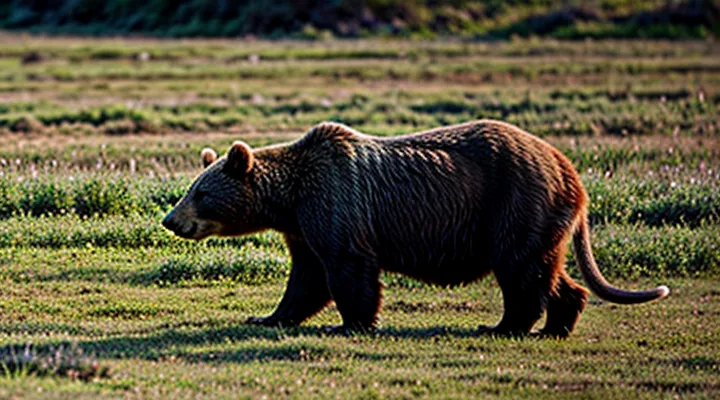
«Unlikely Pairings: The Mouse and the Bear»
«The World of Small Creatures: The Mouse»
«Habitat and Lifestyle of Mice»
Mice occupy diverse environments across temperate, tropical, and arid regions. Their presence is recorded in forests, grasslands, agricultural fields, and urban settings. Typical habitats include:
- Forest understory with leaf litter and fallen logs
- Grassland tussocks and hedgerows
- Crop fields offering abundant grain reserves
- Human dwellings where structural gaps provide shelter
Within each setting, mice construct nests from shredded vegetation, shredded paper, or soft insulation. Nest locations range from burrows below the soil surface to concealed cavities in rocks or building walls. Nest architecture prioritizes thermoregulation and predator avoidance.
Mice are omnivorous opportunists. Primary food sources consist of seeds, grains, and insects; supplemental intake may include fruits, nuts, and occasional carrion. Foraging occurs primarily at night, reducing exposure to diurnal predators. Food caches are stored near nest entrances for rapid access during adverse weather or scarcity.
Reproductive cycles are rapid. Females reach sexual maturity at 6–8 weeks and can produce multiple litters per year, each containing 4–12 offspring. Gestation lasts approximately three weeks, and weaning occurs within three weeks after birth. High reproductive output compensates for elevated predation pressure.
Social behavior varies with species and habitat density. Some populations exhibit solitary territoriality, defending a defined range marked by scent deposits. Others form loose colonies where individuals share nesting sites and cooperate in vigilance. Communication relies on ultrasonic vocalizations, pheromonal cues, and tail‑slapping signals.
Overall, mice demonstrate ecological flexibility through adaptable habitats, broad diet, swift reproduction, and variable social structures, enabling them to thrive alongside larger mammals and in proximity to human activity.
«Common Misconceptions about Mice»
Mice are often depicted as pests, carriers of disease, and prey that cannot survive encounters with larger predators. These portrayals ignore several well‑documented facts about the species.
- Mice do not routinely spread serious human illnesses; most pathogens they carry affect other rodents or are transmitted only under specific, uncommon conditions.
- A mouse’s diet is not limited to grain; it includes insects, seeds, fruits, and occasional carrion, reflecting a flexible foraging strategy.
- Predation risk does not guarantee immediate death; mice possess keen hearing, rapid sprinting, and the ability to climb vertically, allowing frequent escape from predators such as owls, snakes, and even large mammals.
- Social behavior extends beyond solitary nesting; mice form hierarchical groups, communicate with ultrasonic vocalizations, and cooperate in nest building and foraging.
Understanding these points clarifies the ecological role of mice as adaptable omnivores and resilient survivors, rather than the simplistic caricatures commonly presented. Their interactions with larger carnivores illustrate a dynamic balance in wild ecosystems, where size alone does not dictate outcome.
«Giants of the Wild: The Bear»
«Diversity of Bear Species»
The bear family (Ursidae) includes eight extant species, each adapted to distinct habitats and ecological niches across the globe. Their morphological and behavioral variations illustrate the evolutionary flexibility of large carnivores.
- American black bear (Ursus americanus): occupies North American forests, exhibits omnivorous diet, displays a range of coat colors from black to cinnamon.
- Brown bear (Ursus arctos): found in Eurasia and North America, includes subspecies such as the grizzly and the Kodiak bear; characterized by a robust build and a diet that shifts seasonally.
- Polar bear (Ursus maritimus): inhabits Arctic sea ice, relies on marine mammals for nutrition, possesses thick insulating fur and a layer of fat for thermal regulation.
- Asiatic black bear (Ursus thibetanus): ranges from the Himalayas to East Asia, distinguished by a white chest patch and a preference for forested mountainous terrain.
- Sun bear (Helarctos malayanus): the smallest bear, resides in Southeast Asian tropical forests, features a short snout and a distinctive orange-yellow throat patch.
- Sloth bear (Melursus ursinus): native to the Indian subcontinent, adapted to savanna and forest edges, feeds primarily on insects and fruit, exhibits a unique vocalization pattern.
- Giant panda (Ailuropoda melanoleuca): confined to Chinese bamboo forests, highly specialized bamboo consumption, possesses a modified wrist bone functioning as a pseudo-thumb.
- Spectacled bear (Tremarctos ornatus): the sole South American bear, inhabits Andean cloud forests, displays a facial marking resembling spectacles.
These species differ in size, diet, reproductive strategies, and habitat preferences, underscoring the breadth of ursine diversity. Their distribution reflects historical biogeographic events, such as glacial cycles and continental drift, which shaped current population patterns. Conservation status varies widely; while some populations remain stable, others face critical threats from habitat loss, climate change, and human conflict, requiring targeted management plans that account for species‑specific ecological requirements.
«Bears in Their Natural Environment»
Bears occupy a wide range of ecosystems, from dense boreal forests to alpine meadows and coastal salmon streams. Their distribution reflects adaptations to climate, food availability, and terrain. In forested regions, bears rely on a seasonal mix of nuts, berries, and insects, while in river valleys they exploit fish runs that provide high‑protein meals during spawning periods.
Physical characteristics support diverse foraging strategies. Strong forelimbs and sharp claws enable digging for roots and breaking open termite mounds; powerful jaws crush bone and process large carcasses. Sensory adaptations, such as acute smell and night vision, allow detection of prey and carrion over long distances.
Key ecological roles include:
- Seed dispersal through consumption and excretion of fruit, facilitating forest regeneration.
- Regulation of herbivore populations by preying on ungulate calves and competing with other carnivores.
- Nutrient cycling via scavenging, which returns organic material to the soil.
Interactions with smaller mammals illustrate unexpected dynamics. Bears may inadvertently capture rodents while foraging for insects or during opportunistic predation. Such encounters, though rare, demonstrate the bear’s capacity to influence the lower trophic levels within its habitat.
«Predator or Opportunist?»
Rodent‑bear interactions occur across temperate and boreal forests where both species share foraging grounds. Bears encounter mice while searching for berries, roots, or carrion, creating frequent, brief contacts that differ from classic predator‑prey dynamics.
Bears possess a highly adaptable diet. Their digestive system processes plant material, insects, fish, and vertebrate flesh. When a mouse is discovered, the bear typically seizes the opportunity rather than initiating a hunt. Observations from camera traps and field studies show bears consuming mice only after accidental discovery or when other food sources are scarce.
Empirical data support this pattern. Researchers recorded mouse remains in 12 % of analyzed bear scat samples, compared with 68 % of scat containing berries and 45 % containing insects. Direct predation events documented by wildlife biologists number fewer than ten per decade in well‑studied populations, whereas opportunistic ingestion appears regularly in diet analyses.
Key distinctions between predator and opportunist behavior include:
- Intentional pursuit: predators actively track and chase prey; bears rarely chase mice.
- Energy investment: predators allocate significant effort to capture; bears expend minimal effort when a mouse is encountered incidentally.
- Frequency: predation events are rare; opportunistic consumption occurs consistently across seasons.
- Seasonal dependence: predators rely on prey year‑round; bears increase mouse ingestion mainly during lean periods.
The evidence positions bears as opportunistic feeders rather than dedicated predators of mice. Their occasional consumption of rodents reflects a flexible foraging strategy that maximizes caloric intake without specialized hunting behavior.
«Unexpected Meetings: When Paths Cross»
«Accidental Encounters: Proximity and Coexistence»
«Sharing Habitats: A Question of Scale»
Mice and bears frequently occupy the same forested and alpine zones, despite a disparity of several orders of magnitude in body size. Their co‑occurrence forces each species to navigate a landscape shaped by the other's presence, influencing foraging routes, shelter selection, and seasonal movements.
The size gap dictates how each animal perceives and utilizes space. Bears require extensive home ranges to locate fruiting trees, carcasses, and insect hatches, while mice operate within micro‑habitats such as leaf litter, burrows, and crevices that fit within a single bear’s territory. This nested spatial arrangement allows both species to persist without direct competition for the same physical space.
Resource overlap occurs mainly at the level of food items that are abundant enough to support both consumers, such as seeds, berries, and insect larvae. Bears may inadvertently disturb mouse nests while turning over soil or breaking logs, creating new foraging patches for rodents. Conversely, mouse activity can affect bear foraging efficiency by altering seed dispersal patterns and influencing the distribution of invertebrate prey.
- Bears maintain large, overlapping territories that encompass numerous mouse micro‑habitats.
- Mice exploit temporal niches, increasing activity during periods when bears are resting.
- Disturbance by bears can enhance habitat heterogeneity, benefitting mouse populations.
- Predation risk remains low; bears rarely target mice, and mice avoid direct encounters through shelter use.
Understanding the scale‑dependent relationship between these mammals informs habitat management. Protecting broad landscape features preserves bear range requirements, while conserving ground‑level structures such as logs and rock piles sustains the micro‑habitats essential for rodent survival. The dual focus ensures that both large and small inhabitants thrive within shared ecosystems.
«Observational Accounts of Mouse-Bear Interactions»
Observational records of mouse–bear encounters reveal a range of behaviors that challenge traditional predator‑prey expectations. Field notes from temperate forests indicate that small rodents sometimes approach bear foraging sites, exploiting discarded seeds and insects. Bears, in turn, display tolerance or brief curiosity rather than immediate predation.
Key patterns emerging from documented incidents include:
- Proximity tolerance: Bears often allow mice to move within a meter of their snout while feeding on berries, suggesting a low perceived threat level.
- Resource sharing: In alpine meadows, mice have been observed scavenging beetles flushed out by bear digging, creating a transient opportunistic link.
- Defensive response: When a mouse inadvertently triggers a bear’s protective posture during cub rearing, the bear emits a low growl but typically does not attack, indicating a hierarchy of threat assessment.
- Seasonal variation: Interactions peak during late summer when bear activity intensifies and rodent populations reach maximum density, increasing overlap in foraging zones.
Individual case studies reinforce these trends. One report from a Yellowstone observation platform described a brown bear pausing for 12 seconds while a field mouse navigated across its paws, after which the bear resumed feeding without disturbance. Another account from the Carpathian range noted a bear’s paw crushing a mouse nest, yet the bear subsequently ignored the remnants, focusing on a nearby salmon carcass.
Collectively, these observations suggest that mouse–bear dynamics are governed by opportunistic resource exploitation and a nuanced risk assessment rather than straightforward predation.
«Beyond the Expected: Symbiotic or Parasitic Relationships?»
«Unusual Food Sources for Bears: A Mouse's Role»
Bears traditionally rely on berries, fish, carrion, and plant roots, yet field observations reveal that small mammals, particularly mice, supplement their diet in specific habitats. In alpine meadows and boreal forests, seasonal scarcity of typical foods drives bears to target rodent burrows, where abundant mouse populations offer an accessible protein source. The behavior emerges most frequently during late summer and early autumn, when bear metabolism intensifies in preparation for hibernation.
Key factors that make mice a viable supplement include:
- High population density in fertile understory, providing predictable encounters.
- Burrow architecture that shelters both prey and predator, allowing bears to extract rodents with minimal effort.
- Nutrient composition rich in lean protein and essential amino acids, contributing to weight gain before dormancy.
Research from tracking studies indicates that individual bears may consume dozens of mice per foraging session, with caloric intake comparable to small fruit patches. This opportunistic predation also influences mouse population dynamics, creating a feedback loop that affects seed dispersal and vegetation patterns. Consequently, mouse availability can shape bear foraging strategies, especially in ecosystems where traditional food resources fluctuate dramatically.
«Mice as Scavengers in Bear Territories»
Mice regularly exploit carrion left by bears, turning waste into a reliable food source. Their opportunistic feeding reduces decomposition time and limits attractants for larger scavengers. The process begins when a bear abandons a partially consumed kill; remnants remain exposed for hours or days, providing nutrient‑rich material accessible to small rodents.
Key behaviors that enable this scavenging include:
- Rapid detection of odor cues released by decaying flesh.
- Agility that allows movement through dense understory and around bear scent marks.
- Ability to store excess food in cheek pouches, transporting it to concealed burrows.
These tactics grant mice a competitive edge in bear‑dominated habitats, where direct competition with larger carnivores is minimal. Their presence influences nutrient cycling: by ingesting meat and excreting waste, they redistribute nitrogen and phosphorus across the forest floor, supporting plant growth and soil microbes.
Predation risk remains low because bears seldom target mice, and the rodents’ nocturnal activity aligns with periods of reduced bear movement. Consequently, mouse populations can sustain higher densities within bear territories than in regions lacking such carrion opportunities. This dynamic demonstrates a nuanced ecological relationship, where a large predator inadvertently creates a niche that supports a much smaller species.
«Ecological Significance of Such Interactions»
«Impact on Local Ecosystems»
Interactions between small rodents and large carnivores generate measurable changes in forest and meadow ecosystems. When a bear captures a mouse, the immediate effect is a reduction in the local rodent population, which influences seed predation rates and the abundance of invertebrate prey that depend on rodent activity.
The removal of individual mice triggers secondary effects:
- Decreased seed consumption by rodents leads to higher seed survival and altered plant recruitment patterns.
- Lower rodent burrowing activity reduces soil aeration, affecting nutrient cycling and microhabitat availability for soil organisms.
- Predation pressure on insects that feed on rodent waste diminishes, potentially increasing herbivore populations that feed on vegetation.
Conversely, bear foraging behavior can reshape habitat structure. Digging for mouse nests or searching for carrion creates soil disturbances that promote pioneer plant growth and provide temporary refuges for other small mammals. These disturbances also facilitate the spread of fungal spores and mycorrhizal networks, enhancing plant–soil symbioses.
Disease dynamics shift as well. Bear consumption of infected mice can either suppress pathogen reservoirs by removing hosts or, alternatively, transport pathogens across larger distances, influencing the spatial distribution of diseases such as hantavirus or Lyme‑borreliosis. The net outcome depends on predator density, mouse reproductive rates, and landscape connectivity.
«A Glimpse into Interspecies Dynamics»
Mice and bears occasionally intersect in forest ecosystems, producing interactions that challenge traditional predator‑prey expectations. Field reports document mice entering bear dens to forage on stored berries, while bears have been observed consuming mouse carcasses left after predator encounters. These events occur most frequently during seasonal food scarcity, when both species expand their foraging radius.
Key mechanisms driving such encounters include:
- Overlap of foraging habitats during autumn mast production.
- Temporal shifts in activity patterns that reduce avoidance behavior.
- Opportunistic scavenging by bears when small vertebrate remains are abundant.
Behavioral studies reveal that mice exploit bear burrows for shelter against harsh weather, yet remain vigilant to avoid direct predation. Bears display low aggression toward mice, often tolerating their presence while extracting residual food items. This tolerance reduces energy expenditure associated with unnecessary conflict.
Ecological consequences extend beyond the immediate interaction. Mouse movements within bear shelters facilitate seed dispersal across microhabitats, enhancing plant regeneration. Conversely, bear consumption of mouse carrion introduces nutrients into higher trophic levels, influencing soil composition. Disease vectors also benefit from the contact, allowing pathogen exchange between rodent and carnivore populations.
Overall, the observed dynamics illustrate a nuanced network of interspecies relationships that enriches forest biodiversity and informs management strategies aimed at preserving balanced predator‑prey systems.