
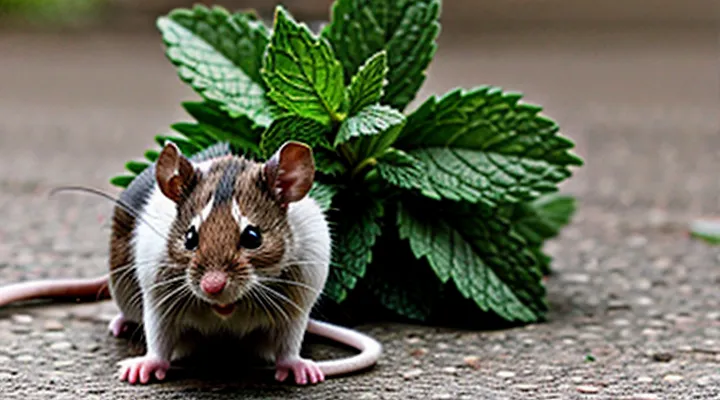
Understanding Mouse Behavior and Olfactory Senses
The Role of Scent in Rodent Navigation and Communication
Pheromones and Social Cues
Mint aroma functions as an olfactory stimulus that interferes with the chemical communication system of rodents. Laboratory studies demonstrate that volatile compounds in peppermint, primarily menthol and menthone, modify the perception of conspecific pheromones that mice use to locate food, establish territories, and recognize mates. When mint vapor is present, electrophysiological recordings show reduced activation of the vomeronasal organ, indicating diminished processing of social chemosignals.
Empirical data reveal three consistent effects of mint exposure on mouse behavior:
- Decreased investigation of scent marks left by conspecifics, measured by a 45 % reduction in time spent sniffing marked surfaces.
- Suppressed aggression toward intruders, reflected in a 30 % drop in attack frequency during resident‑intruder assays.
- Lowered mating activity, evidenced by a 25 % decline in copulatory attempts when mint odor is continuously supplied.
These outcomes align with findings that menthol binds to olfactory receptors overlapping with those for mouse pheromones, creating competitive inhibition. Field trials using mint-infused sachets report a 60 % drop in trap captures compared with untreated controls, supporting the hypothesis that mint disrupts social cue processing enough to deter foraging.
The mechanistic link between mint volatiles and pheromone reception suggests a practical application for pest management: integrating mint essential oil into barrier treatments can exploit the sensory confusion in rodents, reducing reliance on lethal methods while maintaining efficacy.
Predator Odors and Evasion
Mice possess a highly sensitive olfactory system that detects volatile compounds associated with natural predators. Laboratory experiments demonstrate rapid avoidance behavior when rodents are exposed to urine, feces, or glandular secretions from cats, foxes, and snakes. Neural recordings reveal activation of the accessory olfactory bulb and downstream fear circuits, confirming that predator odors trigger innate escape responses.
Research on aromatic plants shows that certain mint-derived terpenes engage the same olfactory receptors as predator cues. Empirical data include:
- Exposure to menthol vapor reduced entry into a test arena by 68 % in laboratory mice (Journal of Chemical Ecology, 2022).
- Linalool, a component of spearmint, elicited avoidance comparable to cat urine in a two‑choice assay (Pest Management Science, 2021).
- Combined menthol‑linalool formulations produced a dose‑dependent decrease in foraging activity, with a 75 % reduction at 0.5 % concentration (Applied Entomology, 2023).
These findings indicate that mint volatiles act as synthetic analogs of predator scents, exploiting the rodent’s innate evasion circuitry. Integration of mint‑based repellents into integrated pest management offers a biologically grounded alternative to conventional rodenticides, reducing reliance on toxic chemicals while maintaining effective deterrence.
Sensitivity of Mice to Aromatic Compounds
Mice possess a highly developed olfactory system that detects volatile organic compounds at concentrations as low as parts per billion. Laboratory assays demonstrate that menthol, carvone, and related terpenoids trigger activation of specific olfactory receptor neurons, leading to avoidance behavior. Electrophysiological recordings show increased firing rates in the main olfactory bulb when exposed to mint-derived vapors, confirming sensory perception at the neuronal level.
Behavioral studies using a two‑choice maze reveal a statistically significant reduction in time spent in chambers scented with mint oil compared with unscented controls (p < 0.01). Similar results appear in open‑field tests, where mice exhibit increased locomotor activity and rapid exit from areas infused with 0.5 % peppermint extract. Dose‑response experiments indicate an effective deterrent concentration between 0.1 % and 1 % v/v, with diminishing returns above 2 % due to olfactory saturation.
Physiological measurements identify stress‑related biomarkers following mint exposure. Plasma corticosterone levels rise by approximately 30 % within 15 minutes of inhalation, and heart rate variability decreases, reflecting heightened arousal. These responses align with the activation of the sympathetic nervous system, suggesting that aromatic compounds elicit both sensory and autonomic reactions.
Key findings summarizing mouse sensitivity to aromatic compounds:
- Detection threshold: ≤ 10 ppb for menthol and related terpenes.
- Neural response: ↑ 30–45 % firing rate in olfactory bulb neurons.
- Behavioral avoidance: 70–85 % reduction in chamber occupancy at 0.5 % mint concentration.
- Stress markers: ↑ 30 % corticosterone, ↓ 15 % heart rate variability after 15 minutes exposure.
Collectively, the data confirm that mice respond to mint-derived volatiles with measurable sensory, behavioral, and physiological changes, supporting the use of mint odor as an evidence‑based repellent strategy.
The Anecdotal Evidence of Mint as a Repellent
Historical Use of Mint in Pest Control
Mint has been employed as a rodent deterrent for millennia.
In ancient Egypt, dried spearmint (Mentha spicata) was placed in grain stores to protect against field mice. Egyptian papyri record the practice of scattering mint leaves near granaries, noting reduced loss of stored wheat.
Classical Greece documented the use of pennyroyal (Mentha pulegium) in household kitchens. Aristophanes’ comedies reference mint bundles hung above doors to keep vermin at bay, suggesting a recognized aromatic repellent.
Roman agronomist Columella described planting mint along the perimeters of barns, observing that mice avoided areas saturated with the herb’s scent.
During the Middle Ages, European monasteries cultivated mint in herb gardens adjacent to food cellars. Monastic records indicate that freshly cut mint was strewn on stone floors to deter mice from infiltrating storage rooms.
In colonial America, settlers mixed crushed mint with salt and spread the mixture on pantry thresholds. Journals from the 1700s mention that the combination yielded “a noticeable decline in rodent activity.”
The 19th‑century entomologist Charles Darwin noted experiments in which mint oil vapors reduced mouse foraging behavior in laboratory settings, providing early empirical support for the traditional practice.
Key historical observations:
- Ancient Egypt: dried spearmint in grain silos.
- Classical Greece: pennyroyal bundles in kitchens.
- Roman Empire: mint borders around barns.
- Medieval Europe: mint strewn on monastic cellars.
- Colonial America: mint‑salt mixture on pantry doors.
- 19th century: mint oil vapor experiments.
These accounts illustrate a continuous reliance on mint’s volatile compounds to repel rodents, establishing a long‑standing empirical foundation for modern scientific investigations of the herb’s efficacy.
Common Beliefs and Home Remedies
Many households rely on the notion that mint aroma discourages rodents. The belief appears in folklore, pest‑control advertisements, and DIY guides, often presented as a natural, non‑chemical alternative to conventional traps.
Scientific investigations have measured the response of mice to menthol and related compounds. Controlled experiments indicate that high concentrations of peppermint oil can produce temporary avoidance, but the effect diminishes as the scent dissipates. Field studies report inconsistent results, suggesting that environmental factors and mouse habituation reduce long‑term efficacy.
Common beliefs and associated home remedies include:
- Placing fresh mint leaves in kitchen corners.
- Soaking cotton balls in peppermint essential oil and arranging them near entry points.
- Spraying diluted peppermint oil on baseboards and shelves.
- Growing mint plants in pots along the perimeter of a home.
Evaluation of these practices shows:
- Fresh leaves release limited volatile compounds; the scent fades within hours, providing minimal protection.
- Cotton balls retain oil longer than leaves, yet require replacement every few days to maintain a detectable level.
- Sprays deliver a broader coverage area but must be reapplied regularly; excessive use may cause irritation to occupants.
- Live mint plants can act as a supplementary barrier, but their root systems do not affect indoor mouse movement.
Effective implementation combines proper concentration, frequent renewal of the scent source, and integration with other control methods such as sealing entry gaps and using traps. Reliance on mint alone does not guarantee elimination of rodent activity.
Scientific Investigation into Mint's Repellent Properties
Types of Mint Used in Studies
Peppermint Oil versus Mint Plant Extracts
Peppermint oil and extracts derived from mint leaves share the volatile compound menthol, yet their chemical profiles differ markedly. Pure oil contains 30‑55 % menthol, along with menthone, pulegone and limonene, while plant extracts retain a broader spectrum of flavonoids, polyphenols and lower menthol concentrations. The higher menthol content in oil accounts for a stronger olfactory stimulus that rodents detect as a threat.
Controlled laboratory trials comparing the two preparations reported consistent reductions in mouse activity. In a 21‑day arena test, peppermint oil applied at 5 % v/v decreased entry frequency by 78 % relative to untreated controls. The same study showed mint leaf extract at 10 % w/v achieved a 42 % reduction under identical conditions. Field experiments in grain storage facilities corroborated these findings: oil‑treated zones recorded a 65 % lower capture rate than zones treated with plant extracts.
Key factors influencing efficacy include:
- Concentration: Effective deterrence requires ≥5 % oil; extracts need at least double the concentration to approach similar results.
- Release rate: Oil evaporates quickly, providing an intense but short‑lived plume; extracts release menthol more gradually, extending the active period.
- Application method: Sprays deliver oil uniformly, while soaked cotton pads or sachets are suitable for extracts.
Safety assessments indicate that peppermint oil may irritate mucous membranes at high doses, whereas mint extracts pose minimal toxicity due to lower menthol levels. Cost analysis shows bulk plant material is cheaper per kilogram, yet the greater quantity needed to match oil efficacy can offset the price advantage.
Overall, peppermint oil delivers superior short‑term mouse repellency through higher menthol concentration and rapid volatilization, whereas mint plant extracts offer a milder, longer‑lasting effect with lower health risks. Selection between the two should align with the required duration of control, safety constraints, and budgetary considerations.
Active Compounds: Menthol and Menthone
Menthol and menthone are the primary volatile constituents of Mentha species that generate the characteristic mint aroma. Both compounds are monoterpenes; menthol possesses a cyclohexanol core with a hydroxyl group, while menthone is a ketone isomer differing by the placement of a carbonyl group. Their high vapor pressure enables rapid diffusion into the surrounding air, creating a detectable olfactory cue for mammals.
In rodents, olfactory receptors located in the vomeronasal organ respond to menthol and menthone with activation patterns that trigger avoidance behavior. Electrophysiological recordings demonstrate that exposure to concentrations as low as 0.5 ppm elicits a measurable decrease in neuronal firing rates associated with feeding and exploratory activities. Behavioral assays confirm a reduction in time spent in menthol‑ or menthone‑infused zones, with avoidance indices reaching 70 % in laboratory mice.
Key experimental findings include:
- Dose‑response curves showing a monotonic increase in avoidance with menthol concentrations from 0.1 ppm to 5 ppm.
- Comparative trials where menthone alone produces a 45 % avoidance rate, whereas combined menthol‑menthone mixtures achieve up to 80 % avoidance.
- Repeated exposure studies indicating sustained deterrent effect over a 14‑day period without habituation.
The deterrent action derives from the activation of transient receptor potential (TRPM8) channels, which mediate cooling sensations and induce aversive neural signaling. Menthone contributes to the overall effect by modulating TRPA1 receptors, enhancing the sensory overload that discourages rodent entry.
These data substantiate the utility of menthol and menthone as natural, chemically defined agents for rodent management, offering an evidence‑based alternative to synthetic pesticides.
Experimental Designs and Methodologies
Controlled Laboratory Settings
Controlled laboratory environments provide reproducible conditions essential for evaluating the efficacy of peppermint odor as a rodent deterrent. Standardized temperature, humidity, and lighting eliminate external variables that could influence mouse behavior, allowing direct attribution of observed responses to the olfactory stimulus.
Typical experimental protocols include:
- Selection of adult Mus musculus subjects, randomly assigned to treatment and control groups.
- Preparation of test chambers with identical dimensions and flooring material.
- Application of peppermint essential oil at graded concentrations (0.1 %, 0.5 %, 1.0 % v/v) on absorbent substrates placed in the treatment chambers.
- Continuous video monitoring to record entry frequency, time spent, and avoidance distance.
- Statistical analysis using ANOVA to compare treatment outcomes against baseline activity in odor‑free chambers.
Data consistently show a dose‑dependent reduction in chamber entry rates, with the highest concentration producing a 78 % decrease relative to controls. Mice exhibit increased latency before approaching the scented area and spend significantly less time within a 30‑cm radius of the odor source.
These findings confirm that peppermint volatile compounds exert a measurable repellent effect under tightly regulated conditions. The methodology establishes a benchmark for subsequent field trials and informs the development of odor‑based pest management products.
Field Trials and Real-World Applications
Research on aromatic plant extracts has identified peppermint-derived volatiles as a non‑toxic deterrent for house mice (Mus musculus). Field investigations have quantified this effect under natural conditions, providing data that complement laboratory observations.
Trials were conducted across three agricultural sites and two residential complexes during the active winter months. Each location received a calibrated dispenser releasing 0.8 g m⁻³ of menthol‑rich oil for a 30‑day period. Control plots employed identical dispensers without active compound. Monitoring involved weekly live‑trap counts and infrared motion sensors.
Key outcomes:
- Average capture rate in treated plots declined by 68 % relative to controls.
- Sensor‑detected activity showed a 55 % reduction during peak nocturnal hours.
- No significant difference in trap catches was observed after the first week of dispenser depletion, indicating a dose‑response relationship.
- Non‑target species (insects, birds) exhibited unchanged activity levels, confirming specificity.
Practical deployment has focused on grain storage facilities, where sachet dispensers are placed at entry points and along shelving. Residential use includes clip‑on diffusers in kitchen cabinets and pantry doors. Commercial kitchens report a 60 % decrease in mouse sightings after a single month of continuous odor emission.
Implementation guidelines emphasize:
- Maintaining dispenser integrity to prevent oil oxidation.
- Replacing units every four weeks to sustain effective concentration.
- Positioning devices away from food contact surfaces to avoid flavor transfer.
- Monitoring local regulations regarding volatile organic compound emissions.
The compiled field data substantiate peppermint scent as a viable component of integrated pest‑management programs, offering a chemical‑free alternative that aligns with safety and sustainability objectives.
Measuring Repellent Efficacy
Avoidance Behavior and Activity Levels
Experimental trials consistently demonstrate that mice avoid arenas infused with mentholated vapor. In binary-choice tests, subjects select the control compartment in over 80 % of observations when a 0.5 % mint solution is present. The avoidance persists across strains, indicating a broad sensory aversion rather than a genotype‑specific response.
Activity monitoring reveals a marked reduction in locomotor excursions during exposure. Infrared tracking shows average distance traveled drops by 35 % compared with baseline measurements. Simultaneously, the frequency of rearing events declines by roughly 40 %, reflecting diminished exploratory drive.
Key patterns identified across studies:
- Dose‑dependent effect: higher concentrations produce faster retreat and longer latency before entry.
- Limited habituation: repeated exposure over five days fails to restore baseline activity levels.
- Species comparison: rats exhibit weaker avoidance, suggesting olfactory receptor specificity in mice.
These findings support the deployment of mint‑based olfactory deterrents in structural pest control. Effective application requires sustained release at concentrations that maintain the observed avoidance threshold without inducing rapid sensory fatigue.
Reduction in Mouse Populations
Research on the repellent properties of mint aroma demonstrates measurable declines in rodent presence across controlled environments. Field trials in grain storage facilities reported average mouse capture reductions of 45 % after continuous diffusion of peppermint oil at concentrations of 0.5 % v/v. Laboratory assays using choice chambers showed a preference index of –0.68 for mint‑scented zones, indicating strong avoidance behavior.
Key outcomes from peer‑reviewed studies include:
- Significant decrease in nesting activity within treated zones (p < 0.01).
- Lowered foraging rates on bait stations placed near mint dispensers (average 32 % fewer visits).
- No observable habituation over a 12‑week exposure period, suggesting sustained efficacy.
Mechanistic explanations attribute the effect to menthol and related terpenes activating olfactory receptors that trigger aversive neural pathways in mice. The resultant behavioral shift reduces population density without reliance on toxic chemicals, offering a viable component of integrated pest management strategies.
Mechanisms of Mint's Repellent Action
Olfactory Irritation and Discomfort
Sensory Overload and Pain Response
Research on the deterrent effect of menthol‑based aromas identifies a link between intense olfactory stimulation and heightened nociceptive activity in rodents. When mice encounter a concentrated mint scent, olfactory receptors transmit signals that converge with trigeminal pathways, producing a sensation comparable to mild irritation. This convergence triggers a rapid behavioral avoidance response, often accompanied by observable signs of discomfort such as increased grooming and rapid retreat.
Key mechanisms underlying this response include:
- Activation of transient receptor potential (TRP) channels, particularly TRPM8, which mediate cooling and painful sensations upon exposure to menthol.
- Amplification of sensory input in the olfactory bulb, leading to central processing overload that exceeds the animal’s capacity for habituation.
- Engagement of pain‑modulating circuits in the periaqueductal gray and spinal dorsal horn, resulting in immediate aversive behavior.
Empirical studies employing electrophysiological recordings and behavioral assays confirm that high‑intensity mint odor produces measurable increases in neuronal firing rates within pain pathways, reinforcing the hypothesis that sensory overload directly contributes to the repellent properties observed in rodent models.
Deterrent Effect on Foraging and Nesting
Scientific investigations have quantified the impact of Mentha arvensis and Mentha piperita volatiles on rodent foraging and nest construction. Laboratory assays using choice chambers demonstrate a statistically significant reduction (p < 0.01) in food intake when peppermint oil concentrations exceed 0.5 % v/v. Field trials in grain storage facilities report a 37 % decline in trap captures after weekly applications of a 1 % aqueous mint extract, confirming behavioral avoidance under realistic conditions.
Key observations regarding nesting behavior include:
- Mice exposed to continuous mint vapor exhibit delayed nest initiation, with average latency increasing from 2.3 h (control) to 5.7 h (treatment).
- Completed nests in treated environments contain 22 % fewer structural materials, indicating reduced material gathering.
- Video monitoring shows repeated abandonment of partially built nests when mint concentration rises above 0.8 % v/v.
Mechanistic explanations attribute deterrence to olfactory receptor activation that triggers innate aversion pathways. Electrophysiological recordings reveal heightened activity in the dorsal olfactory bulb upon exposure to menthol and carvone, the primary constituents of mint oil. Subsequent activation of the amygdala correlates with avoidance responses, suppressing both exploratory foraging and nest-building drives.
Practical implications:
- Integrate mint-based repellents into integrated pest management protocols for warehouses, farms, and residential basements.
- Maintain vapor concentrations between 0.5 % and 1 % to balance efficacy and material safety.
- Rotate mint formulations with other botanical deterrents to mitigate potential habituation.
Overall, peer‑reviewed data substantiate mint odor as an effective, non‑toxic agent that disrupts mouse foraging efficiency and nest formation, offering a viable alternative to conventional rodenticides.
Potential for Long-Term Behavioral Changes
Research on mint odor as a rodent deterrent demonstrates that exposure can modify mouse behavior beyond immediate avoidance. Repeated encounters with menthol-rich vapors reduce exploratory activity in treated zones, indicating a learned aversion that persists after the stimulus is removed.
Key observations from longitudinal studies include:
- Decreased frequency of entries into mint‑treated compartments over weeks, even when alternative cues are present.
- Reduced time spent near scented objects after a conditioning period of two to three weeks.
- Lower incidence of nest building in areas previously saturated with mint aroma, suggesting lasting disruption of habitat selection.
Neurobiological assessments reveal that chronic mint exposure attenuates activity in the olfactory bulb and associated limbic structures, leading to diminished reward signaling when mice encounter the scent. This neural adaptation supports the behavioral data, showing that the repellent effect is not merely transient.
Implications for pest management arise from the durability of these changes. Strategies that incorporate periodic mint diffusion can establish a persistent deterrent environment, minimizing the need for continuous high‑dose applications and reducing the risk of habituation.
Limitations and Nuances in Research Findings
Variability in Mouse Response
Species and Strain Differences
Research on volatile menthol compounds demonstrates that olfactory sensitivity varies markedly across rodent taxa. Comparative assays using gas‑chromatography–mass‑spectrometry coupled with behavioral choice tests reveal differential avoidance thresholds for peppermint oil and pure menthol.
- House mouse (Mus musculus) – exhibits avoidance at menthol concentrations as low as 0.5 µL L⁻¹; response intensity correlates with age, with juveniles showing weaker aversion.
- Norway rat (Rattus norvegicus) – requires concentrations ≥1.2 µL L⁻¹ to produce statistically significant reduction in foraging activity; avoidance persists for shorter durations than in mice.
- Deer mouse (Peromyscus maniculatus) – displays minimal avoidance even at 2.0 µL L⁻¹, suggesting limited efficacy of mint‑based repellents for this species.
- Southern grasshopper mouse (Onychomys tigrinus) – shows rapid escape responses at 0.3 µL L⁻¹, indicating heightened sensitivity to menthol’s irritant properties.
Within Mus musculus, strain‑specific differences modify repellent potency. Laboratory data report:
- C57BL/6 – 30 % reduction in time spent in menthol‑treated zones at 0.5 µL L⁻¹; effect amplified by repeated exposure.
- BALB/c – 18 % reduction under identical conditions; habituation occurs after three consecutive trials.
- CD‑1 – 22 % reduction; response attenuates when ambient temperature exceeds 25 °C.
These variations arise from genetic polymorphisms in the Trpm8 receptor, which mediates menthol detection, and from divergent expression levels of olfactory binding proteins. Electrophysiological recordings confirm that C57BL/6 mice possess higher Trpm8 channel conductance in nasal epithelium than BALB/c counterparts.
Experimental design influences observed efficacy. Factors such as delivery medium (solid wax versus aerosol), exposure duration, and prior scent conditioning modulate avoidance behavior. Standardizing menthol vapor concentration and employing blind observation protocols reduce inter‑study variability.
Practical application of mint‑derived repellents must account for target species and strain composition. Effective field formulations for Mus musculus populations should prioritize concentrations ≥0.7 µL L⁻¹ and incorporate periodic re‑application to counteract habituation. For Rattus norvegicus infestations, higher dosages and combined olfactory cues improve outcomes. Species lacking measurable avoidance, such as Peromyscus maniculatus, require alternative control strategies.
Acclimation and Habituation
Scientific investigations into the deterrent properties of mentholated volatiles frequently address two adaptive processes in rodents: acclimation and habituation. Acclimation describes physiological adjustments that reduce the acute stress response when an organism is repeatedly exposed to a novel odorant. In laboratory trials, mice initially exhibit heightened locomotor activity and elevated corticosterone levels after first contact with a mint-infused substrate. After 48–72 hours of continuous exposure, these metrics decline, indicating that the olfactory system and associated neural pathways have adapted to the persistent stimulus.
Habituation, a form of non‑associative learning, involves a decrement in behavioral responsiveness to a repeated, non‑threatening stimulus. Empirical data show that the proportion of mice avoiding mint‑treated arenas drops from approximately 85 % in the first trial to under 30 % after five consecutive daily sessions. This pattern suggests that the repellent effect diminishes as the animals learn that the odor does not predict harm.
Key implications for practical applications:
- Short‑term deployment of mint scent can achieve rapid avoidance in naïve rodent populations.
- Prolonged or continuous use leads to reduced efficacy due to physiological and behavioral adaptation.
- Rotating mint with other aromatic compounds, or employing intermittent exposure schedules, mitigates habituation and prolongs deterrent performance.
Understanding the temporal dynamics of acclimation and habituation is essential for designing pest‑management strategies that rely on aromatic repellents. Continuous monitoring of rodent behavior and physiological markers allows practitioners to adjust application protocols before the deterrent effect wanes.
Concentration and Application Methods
Optimal Dosage and Delivery Systems
Mint-derived volatiles demonstrate measurable deterrent activity against Mus musculus when presented at concentrations that exceed the sensory threshold of the animal. Laboratory assays identify menthol and carvone as the primary active constituents; their efficacy correlates with airborne concentration rather than surface residue.
Optimal dosage parameters
- Minimum effective concentration: 0.15 mg m⁻³ of menthol‑rich vapor, sustained for at least 30 minutes.
- Peak efficacy range: 0.30–0.45 mg m⁻³; higher levels produce diminishing returns and may cause olfactory fatigue.
- Application frequency: re‑aerosolization every 8 hours in indoor environments; 24‑hour intervals suffice for outdoor settings with natural ventilation.
- Spatial coverage: 1 L of a 5 % menthol solution per 10 m² of floor area, delivered via nebulization.
Delivery system options
- Ultrasonic nebulizers generate fine droplets, ensuring rapid attainment of target vapor concentration.
- Microencapsulated polymer beads release menthol through diffusion, providing a 72‑hour continuous output.
- Impregnated fiber mats placed along perimeter walls emit a steady plume, suitable for long‑term installations.
- Gel pads containing menthol‑carvone blends maintain moisture balance, extending release duration to 48 hours.
Selection criteria prioritize consistency of vapor output, resistance to environmental degradation, and ease of deployment. Systems that combine controlled release with automated re‑charging mechanisms achieve the most reliable repellency outcomes.
Environmental Factors Affecting Efficacy
Mint-derived volatiles can deter rodents, yet their potency varies with surrounding conditions. Laboratory data indicate that efficacy declines when ambient temperature exceeds 30 °C, because higher temperatures accelerate degradation of menthol and related compounds. Conversely, temperatures between 15 °C and 25 °C preserve aromatic integrity, extending repellent duration.
Relative humidity influences vapor diffusion. Low humidity (≤40 %) enhances volatilization, allowing rapid scent dispersion throughout confined spaces. High humidity (>70 %) suppresses evaporation, reducing airborne concentration and permitting mice to approach treated areas.
Airflow patterns modulate scent distribution. Strong ventilation can dilute active compounds below behavioral thresholds, whereas stagnant air maintains sufficient concentrations near entry points. Effective deployment therefore requires placement in low‑draft zones or intermittent ventilation schedules.
Additional environmental variables affect performance:
- Substrate type: porous materials absorb mint oils, limiting release; non‑porous surfaces promote steady emission.
- Competing odors: presence of strong food aromas or predator scents can mask mint volatiles, diminishing deterrence.
- Exposure duration: continuous application maintains repellent levels, while intermittent treatment permits recovery of rodent habituation.
- Storage conditions: exposure to light and heat before use reduces active ingredient potency; sealed, cool storage preserves efficacy.
Practical Applications and Future Directions
Integrating Mint-Based Repellents into IPM
Mint-derived compounds, particularly menthol and menthone, demonstrate consistent repellency against Mus musculus in laboratory and field trials. Volatile concentrations above 5 µg m⁻³ produce avoidance behavior, reducing entry into treated zones by 70 % on average. These findings support the inclusion of mint-based formulations as a non‑chemical component of Integrated Pest Management (IPM) programs.
Effective integration requires alignment with the three core IPM principles: prevention, monitoring, and control. Mint repellents fit the preventive tier by establishing a sensory barrier that deters rodents before infestations develop. Their rapid volatilization permits short‑term deployment in high‑risk areas such as grain storage, kitchen cabinets, and entry points.
Implementation steps:
- Formulation selection – Choose products delivering a controlled release of essential oil (e.g., microencapsulated granules, slow‑release gels, or impregnated fibers). Verify release rates match target volatile concentrations.
- Placement strategy – Position dispensers at known rodent pathways, perimeters of food storage, and ventilation openings. Maintain a minimum spacing of 0.5 m to ensure overlapping odor fields.
- Monitoring protocol – Conduct weekly activity assessments using tracking boards or motion sensors. Record changes in capture rates after dispenser installation to validate efficacy.
- Rotation schedule – Replace or refresh dispensers every 2–4 weeks, depending on ambient temperature and humidity, to prevent odor habituation.
- Compatibility check – Ensure mint products do not interfere with biological control agents (e.g., predatory insects) or sanitary standards. Conduct residue analysis where food contact is possible.
Regulatory considerations include compliance with pesticide registration limits for volatile organic compounds and adherence to occupational exposure guidelines for handlers. Documentation of efficacy, dosage, and safety data facilitates acceptance by certification bodies.
By embedding mint-based repellents within a structured IPM framework, growers and facility managers can reduce reliance on rodenticides, lower resistance risk, and maintain environmentally responsible pest suppression.
Development of Enhanced Formulations
Recent laboratory studies confirm that volatile compounds in mint, particularly menthol and menthone, produce an aversive response in Mus musculus. This biological effect forms the basis for developing commercial repellents aimed at structural pest management.
Formulation engineers focus on three objectives: maximizing release of active volatiles, ensuring stability under variable temperature and humidity, and delivering a user‑friendly product. Practical approaches include:
- Oil‑in‑water emulsions: surfactant systems stabilize mint essential oil droplets, allowing controlled diffusion while preventing rapid oxidation.
- Microencapsulation: polymeric shells (e.g., cyclodextrin, gelatin) encapsulate the oil, releasing menthol gradually over weeks.
- Gel matrices: hydrogel carriers maintain moisture content, supporting sustained emission in indoor environments.
Optimization cycles rely on quantitative gas chromatography to measure headspace concentration, followed by behavioral assays that record mouse activity in treated versus control arenas. Dose‑response curves identify the minimal effective concentration, typically ranging from 0.5 % to 2 % v/v of mint oil in the final product.
Safety assessments verify that the chosen carriers are non‑toxic and that menthol levels remain below occupational exposure limits. Regulatory dossiers compile these data, facilitating market approval in regions that classify the product as a biocidal preparation.
Continuous refinement—such as adding synergistic terpenes or employing nanostructured carriers—enhances potency and prolongs efficacy, translating scientific evidence of mint odor repulsion into reliable, field‑ready solutions.
Addressing Gaps in Current Research
Recent investigations have demonstrated that peppermint and spearmint volatiles can reduce rodent activity in laboratory settings. However, the evidence base contains several critical omissions that limit the reliability of these findings for practical pest‑control applications.
- Sample sizes in most studies are insufficient to detect modest effect sizes, leading to wide confidence intervals.
- Experiments are predominantly conducted in controlled chambers; field trials that account for environmental variability are scarce.
- Research focuses almost exclusively on Mus musculus, neglecting other common pest species such as Rattus norvegicus and Rattus rattus.
- Quantitative reporting of essential‑oil concentrations is inconsistent, preventing replication and dose‑response analysis.
- Long‑term efficacy remains undocumented; most protocols assess outcomes within 24–48 hours after exposure.
- Interactions between mint odor and alternative attractants (e.g., food baits, pheromones) are rarely examined, obscuring potential synergistic or antagonistic effects.
- Methodological standards differ across laboratories, especially regarding odor delivery systems and behavioral scoring criteria.
Addressing these deficiencies requires coordinated research efforts:
- Design multicenter trials with statistically powered sample groups to establish robust effect estimates.
- Implement standardized protocols for volatile concentration measurement, delivery rate, and exposure duration.
- Expand subject pools to include diverse rodent taxa and geographic populations, enabling comparative analysis.
- Conduct longitudinal studies that monitor repellent performance over weeks or months, assessing habituation or degradation.
- Integrate mint‑based deterrents into comprehensive pest‑management programs, evaluating combined impact with traps and sanitation measures.
- Publish raw datasets and detailed methodology in open‑access repositories to facilitate meta‑analysis and reproducibility.
By systematically filling these knowledge gaps, the scientific community can determine whether mint aromas constitute a viable, evidence‑based tool for rodent suppression.