
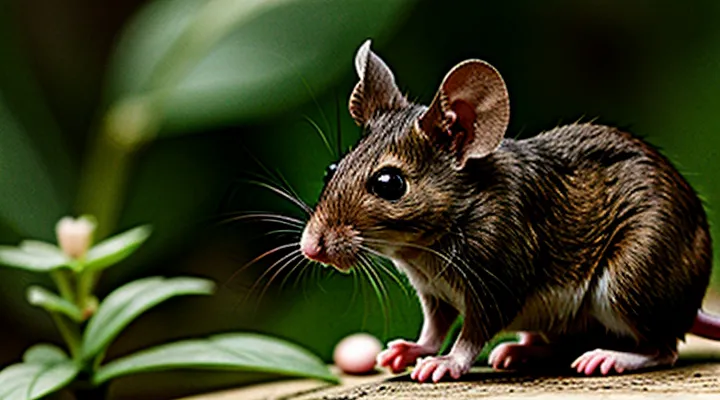
Introduction to Long-Nosed Rodents
What Defines a «Long Nose» in Rodents?
Anatomical Characteristics
The group of murine rodents characterized by markedly extended rostrums exhibits a suite of distinctive anatomical traits that separate them from typical mouse species.
Skull morphology reflects the elongated snout. The premaxillary bones project forward, creating a narrow, tapered muzzle. Nasal bones are lengthened and fused, while the braincase shortens proportionally, resulting in a higher cranial index. The zygomatic arches remain robust, supporting powerful masticatory muscles despite the reduced cranial volume.
Dental structure adapts to the extended snout. Upper incisors are positioned more anteriorly, emerging from a forward‑shifted alveolar ridge. Enamel thickness increases on the cutting edge, enhancing wear resistance during gnawing of fibrous plant material. Molars retain the typical murine occlusal pattern but are slightly narrowed to accommodate the compressed jaw space.
Sensory apparatus expands to exploit the elongated nasal cavity. The olfactory epithelium covers a larger surface area, providing heightened detection of volatile compounds. Vibrissae are densely packed along the rostral region, offering precise tactile feedback during navigation in confined burrows. Optic lobes are proportionally reduced, reflecting a reliance on olfaction and mechanoreception over visual cues.
Locomotor anatomy remains consistent with ground‑dwelling habits. Hind limbs show standard murine proportions, while the tail maintains a balance function, aiding stability when the animal probes narrow tunnels with its nose. Musculature of the neck exhibits increased flexor strength, allowing controlled advancement and retraction of the elongated snout during foraging.
Key anatomical features:
- Forward‑projecting premaxilla and elongated nasal bones
- Shortened braincase with elevated cranial index
- Anteriorly positioned incisors with reinforced enamel
- Expanded olfactory epithelium and dense rostral vibrissae
- Standard hind‑limb morphology coupled with enhanced cervical flexors
These characteristics collectively define the physiological specialization of long‑snouted murine species.
Evolutionary Advantages
Rodents that possess markedly elongated snouts exhibit several distinct evolutionary benefits that enhance survival and reproductive success.
The extended rostrum enlarges the nasal cavity, allowing a greater surface area for olfactory epithelium. This anatomical modification improves scent detection, enabling individuals to locate concealed food sources, identify predators at greater distances, and recognize conspecifics through pheromonal cues.
A longer snout also provides mechanical leverage for foraging in narrow crevices. Enhanced musculature attached to the maxilla facilitates the extraction of seeds, insects, and fungi from substrates inaccessible to short‑snouted relatives, thereby expanding dietary breadth and reducing competition.
Thermoregulatory considerations arise from the increased vascular network within the nasal passages. Heat exchange during inhalation and exhalation helps maintain core temperature stability in fluctuating environments, which can be critical for small endotherms.
Key evolutionary advantages can be summarized as follows:
- Superior olfactory acuity – heightened detection of chemical signals.
- Specialized foraging mechanics – ability to exploit tight microhabitats.
- Broadened diet – access to resources beyond the reach of typical murine species.
- Enhanced thermoregulation – efficient heat dissipation or retention via nasal airflow.
Collectively, these traits confer a competitive edge, allowing elongated‑snout mice to occupy ecological niches that are less accessible to conventional counterparts, thereby sustaining viable populations across diverse habitats.
Diverse World of Long-Nosed Mice
Elephant Shrews (Macroscelididae)
Species Spotlight: The Round-Eared Sengi
The round‑eared sengi (Macroscelides proboscideus) belongs to the order Macroscelidea, a lineage of small, insect‑eating mammals often referred to as elephant shrews. Despite its modest size—average body length 12 cm, weight 30–45 g—the species displays a pronounced rostrum that extends well beyond the oral cavity, a characteristic shared with other elongated‑snout rodents featured in studies of atypical nasal morphology.
Morphological highlights:
- Elongated, flexible snout equipped with a dense array of tactile vibrissae.
- Distinctive circular ear pinnae, each measuring 2–3 cm, enabling acute auditory detection of ground‑borne prey.
- Compact hind limbs with elongated metatarsals, facilitating rapid, bounding locomotion across arid substrates.
- Coat coloration ranging from sandy brown to reddish‑gray, providing camouflage within scrubland environments.
Habitat and distribution:
- Occupies semi‑arid savannas and dry shrublands of southern Africa, primarily in Namibia, Botswana, and western South Africa.
- Prefers loose, well‑drained soils that allow efficient burrowing and foraging.
Behavioral traits:
- Primarily nocturnal; forages on insects, arachnids, and small vertebrates.
- Exhibits solitary territoriality, marking boundaries with scent glands located near the anal region.
- Utilizes high‑frequency vocalizations (30–45 kHz) for predator alerts and brief mating calls.
Reproductive data:
- Breeding season aligns with the onset of rains (October–December).
- Litters consist of 1–2 offspring; gestation period approximately 45 days.
- Neonates are altricial, gaining independence within three weeks.
Conservation status:
- Classified as Least Concern by the IUCN, yet populations experience localized pressure from habitat fragmentation and agricultural expansion.
- Monitoring programs emphasize habitat preservation and the maintenance of native grassland corridors.
The round‑eared sengi exemplifies the diversity of mammals possessing unusually elongated snouts, illustrating functional adaptations that support insectivory, rapid locomotion, and sensory specialization within arid ecosystems.
Habitat and Behavior
Mice possessing elongated snouts occupy a range of microhabitats that differ from those of typical murine species. They are most frequently recorded in arid scrublands, rocky outcrops, and semi‑desert valleys where loose soil and abundant leaf litter facilitate burrowing. Populations also thrive in montane grasslands with cool temperatures and high humidity, exploiting dense root networks for shelter. In coastal dunes, the animals construct shallow tunnels beneath sand, taking advantage of the moisture gradient to maintain stable body temperature.
Behavioral adaptations align closely with the specialized morphology of the nasal region. The extended rostrum enhances tactile sensing, allowing individuals to locate seeds, insects, and fungal spores hidden beneath substrates. Feeding cycles peak during twilight hours, when cooler temperatures reduce water loss and predator activity. Social structure consists of small, overlapping family groups; each unit maintains a central nesting chamber and several peripheral foraging tunnels.
Key behavioral traits include:
- Enhanced olfactory discrimination: elongated nasal passages increase surface area for scent receptors, improving detection of cryptic food sources.
- Territorial marking: individuals deposit urine and glandular secretions along tunnel walls, establishing scent boundaries that reduce intra‑group aggression.
- Seasonal burrow modification: during dry periods, mice deepen chambers to access moist soil layers; in wet seasons, they reinforce tunnel entrances to prevent collapse.
Reproductive activity is synchronized with regional precipitation patterns. Breeding commences shortly after the first substantial rain, ensuring offspring have access to abundant vegetation and invertebrate prey. Litters average three to five young, which remain within the natal burrow for 4–5 weeks before dispersal. Dispersal routes follow pre‑established foraging paths, minimizing exposure to open ground and predation risk.
Star-Nosed Moles (Condylura cristata) - A Case of Convergent Evolution
The Unique Star-Shaped Proboscis
The star‑shaped proboscis distinguishes a small group of long‑nosed rodents found in isolated high‑altitude habitats. Its morphology consists of five rigid filaments radiating from a central hub, each capped with sensory papillae that detect airborne particles and chemical cues. The arrangement provides a three‑dimensional scanning field, enhancing detection of hidden seeds and arthropod prey.
Key functional attributes include:
- Multi‑directional chemosensory coverage, allowing simultaneous sampling of volatile compounds from all sides.
- Mechanical reinforcement through calcified struts, preventing deformation during burrowing or foraging.
- Integrated vascular channels that deliver nutrients to the distal tips, supporting rapid regeneration after damage.
Evolutionary analysis indicates convergent development of similar structures in unrelated taxa occupying comparable ecological niches, suggesting selective pressure for enhanced environmental perception. Genetic studies have identified a cluster of Hox‑related genes that regulate filament outgrowth, with mutations correlating with variations in filament length and curvature.
Field observations record that individuals possessing fully developed star‑shaped proboscises achieve higher foraging efficiency and lower predation risk, as the extended sensory array detects predators earlier than conventional nasal structures. Laboratory experiments confirm that removal of any filament reduces detection accuracy by up to 30 %, underscoring the system’s redundancy.
Current research focuses on biomechanical modeling of filament flexibility and the potential application of the proboscis design in micro‑robotic sensors. Preservation of the habitats supporting these rodents remains critical for ongoing study of this unique anatomical adaptation.
Sensory Adaptations and Hunting Strategies
Long‑snouted rodents exhibit a suite of sensory modifications that compensate for the elongated facial structure. The nasal cavity expands to house a dense array of olfactory receptors, increasing detection thresholds for volatile compounds emitted by prey. Vibrissae positioned along the rostrum provide high‑resolution tactile feedback, allowing precise navigation through dense underbrush. Auditory bullae are enlarged, enhancing low‑frequency sound perception and facilitating the localization of burrowing insects. These adaptations operate in concert, delivering a multidimensional perception of the environment.
Hunting tactics reflect the integrated sensory system. Predatory sequences typically follow these steps:
- Chemical tracking – Elevated olfactory acuity identifies prey scent trails up to several meters away.
- Tactile probing – Vibrissae sweep the substrate, confirming prey presence and size without visual cues.
- Acoustic triangulation – Enlarged bullae detect minute rustling or digging sounds, refining the target’s position.
- Rapid snout thrust – The elongated nose delivers a swift, directed bite, exploiting the precise spatial data gathered.
Some species supplement these methods with nocturnal activity patterns, reducing competition and exploiting the reduced visual awareness of diurnal prey. Others develop cooperative foraging, where individuals share scent information through pheromone deposits, synchronizing attacks on abundant insect swarms.
Overall, the convergence of advanced olfactory, tactile, and auditory faculties underpins the predatory efficiency of long‑nosed mice, allowing them to exploit niche habitats where conventional rodent hunters would be disadvantaged.
Jerboas (Dipodidae) with Prominent Snouts
Adaptation to Arid Environments
Long‑nosed murine species inhabiting deserts exhibit a suite of physiological traits that maintain hydration despite scarce water sources. Highly efficient kidneys concentrate urine, reducing fluid loss to less than one‑tenth of that observed in mesic counterparts. Specialized renal medulla architecture increases osmotic gradient, enabling rapid reabsorption of water from filtrate.
Thermoregulation relies on morphological modifications. Dense, reflective fur limits solar heat gain, while a reduced ear surface area minimizes convective heat loss. The elongated rostrum houses enlarged nasal passages lined with mucosal glands that cool inhaled air, conserving moisture through counter‑current heat exchange.
Behavioral strategies complement anatomical adaptations. Nocturnal foraging limits exposure to peak daytime temperatures; activity peaks during the cooler twilight hours. Burrow systems extend deep enough to intersect stable subsoil temperatures, providing a thermal buffer and a humid microenvironment that further reduces evaporative demand.
Dietary flexibility supports survival in arid zones. Long‑snouted rodents exploit seeds, insects, and succulent plant parts, extracting moisture directly from prey. Their incisors, adapted for cracking hard seed coats, facilitate access to nutrient‑dense kernels that retain residual water.
Key adaptations can be summarized:
- Renal concentration: high medullary osmolarity, minimal urine output.
- Fur characteristics: light‑colored, insulating, reflective.
- Nasal cooling: elongated snout with mucosal glands, counter‑current exchange.
- Activity pattern: nocturnal, twilight foraging to avoid heat stress.
- Burrow architecture: deep, insulated chambers maintaining humidity.
- Dietary breadth: seed and insect consumption, direct moisture extraction.
Collectively, these features enable long‑snouted desert rodents to persist where water is limited and temperatures fluctuate dramatically.
Locomotion and Diet
Long‑nosed mice exhibit a gait adapted to their protruding rostrum. The extended snout shifts the center of mass forward, prompting a slightly elevated forelimb stance to maintain balance. Muscular development in the hindquarters compensates for this shift, allowing rapid bursts of speed across open substrates. When navigating dense underbrush, the species employs a crouched, sinusoidal movement, minimizing snout contact with vegetation and reducing drag. Tail morphology varies among taxa; some display a prehensile tip that assists in stabilizing climbs on vertical stems and low branches.
Dietary habits reflect the anatomical specialization of the elongated muzzle. The extended nasal cavity houses enhanced olfactory receptors, enabling precise detection of concealed food sources. Primary food categories include:
- Seed kernels with hard husks, cracked using strong incisors and leveraged by the snout.
- Insect larvae residing beneath bark, extracted by probing with the nose.
- Fungal mycelia within moist leaf litter, identified through scent cues.
- Small fruits offering high sugar content, accessed by grasping with forepaws while the snout guides the bite.
Occasional opportunistic consumption of carrion has been recorded, particularly during resource scarcity. Digestive enzymes show elevated protease activity, supporting the breakdown of protein‑rich prey alongside carbohydrate‑focused plant matter.
Lesser-Known Species with Elongated Noses
The Shrew-Mouse (Microgale dobsoni)
The shrew‑mouse (Microgale dobsoni) belongs to the family Tenrecidae, a lineage of small mammals endemic to Madagascar. Although its common name suggests a mouse, the species exhibits a markedly elongated rostrum, aligning it with other long‑snouted rodents studied for convergent evolution.
Morphologically, the animal displays a slender body, dense gray‑brown fur, and a nose extending up to 30 % of head length. The skull is narrow, with enlarged infraorbital foramen that accommodates strong masticatory muscles. Dental formula reflects insectivorous adaptation: sharp, uncus‑shaped incisors and reduced molars.
Ecologically, Microgale dobsoni inhabits humid montane forests between 800 and 1 500 m elevation. It occupies leaf‑litter microhabitats, where its elongated snout aids in probing soil and decaying wood for prey. Primary dietary components include:
- Coleopteran larvae
- Earthworms
- Soft‑bodied arthropods
Reproductive data indicate a breeding season synchronized with the rainy period, producing litters of two to three offspring after a gestation of approximately 30 days. Juveniles attain independence within four weeks.
Conservation assessments list the species as “Least Concern” due to a relatively wide distribution, yet habitat fragmentation from agricultural expansion poses localized threats. Ongoing monitoring focuses on population trends in protected reserves such as Ranomafana National Park.
Other Notable Examples and Their Habitats
Long‑nosed rodents occupy specialized niches across diverse biomes. The elongated rostrum enhances tactile sensing and foraging efficiency in environments where visual cues are limited.
- Cretan long‑snouted mouse (Apodemus cretensis) – inhabits rocky scrub on the island of Crete; prefers limestone outcrops and sparse vegetation, where it exploits crevices for shelter and feeds on arthropods hidden beneath stones.
- Andean high‑altitude mouse (Phyllotis xanthopygus) – found above 3,500 m in the Peruvian Andes; occupies puna grasslands and rocky slopes, using its protruding snout to probe soil for insect larvae in cold, low‑oxygen conditions.
- Southeast Asian swamp mouse (Pseudomys swampi) – restricted to mangrove swamps of the Mekong Delta; navigates dense, water‑logged vegetation, extracting soft‑bodied prey from mud layers through its extended nasal cavity.
- Australian desert long‑snouted mouse (Zyzomys pedunculatus) – resides in arid spinifex deserts of central Australia; burrows in sand dunes and detects subterranean insects by palpating soil with its nose, which reduces reliance on scarce surface water.
These species illustrate convergent adaptation: elongated nasal structures evolve independently in isolated habitats to improve prey detection, thermoregulation, and burrow navigation. Their distribution demonstrates that extreme rostral morphology correlates with environments demanding enhanced tactile foraging.
Ecological Roles and Conservation Challenges
Impact on Ecosystems
Seed Dispersal
Long‑nosed rodents exhibit a pronounced rostrum that facilitates the extraction of seeds from tight husks, allowing them to consume a wide variety of plant propagules. Their dentition and muscular palate work together to crack hard shells, creating a direct link between these mammals and seed movement across habitats.
When individuals collect seeds, they often transport them away from the source before temporary storage. The process includes:
- Carrying seeds in cheek pouches or mouth for distances up to several hundred meters.
- Depositing caches in shallow burrows, leaf litter, or under woody debris.
- Occasionally abandoning caches after partial consumption, leaving viable seeds exposed to germination conditions.
These behaviors generate several measurable outcomes. Seeds relocated by long‑nosed mice experience reduced competition with parent plants, increased exposure to favorable microclimates, and a higher probability of escaping predation by seed‑eating insects. The spatial pattern of caches creates a mosaic of germination sites that promotes heterogeneous plant recruitment.
The dispersal activity of these mice influences forest dynamics by enhancing species turnover and supporting regeneration after disturbance. Their selective caching of larger, nutrient‑rich seeds can shift community composition toward plants that produce such propagules, while the inadvertent burial of smaller seeds sustains understory diversity. Interactions with mycorrhizal fungi and soil microbes at cache sites further improve seedling establishment, reinforcing the ecological link between these specialized mammals and plant population structure.
Insect Control
Long‑nosed rodents, a distinct group of murine species, exhibit elongated snouts that enhance tactile perception and enable precise foraging in leaf litter and soil crevices. Their diet includes a high proportion of arthropods such as beetles, larvae, and adult insects, positioning them as natural regulators of insect populations in temperate and subtropical ecosystems.
Field observations confirm that these mice preferentially target pest species—particularly those that damage crops, stored grain, and garden plants. Their foraging activity reduces larval densities of cutworms, weevils, and certain moth species, thereby decreasing the need for chemical interventions.
Effective integration of long‑snouted mice into insect‑management programs relies on three practical measures:
- Habitat enhancement: Provide dense ground cover, log piles, and stone refuges to support nesting and foraging.
- Food supplementation: Offer seed and protein blocks during low‑insect periods to maintain stable populations.
- Predator management: Install exclusion devices to protect colonies from avian and feline predation without disrupting ecological balance.
Monitoring protocols should record mouse abundance, insect damage levels, and pesticide usage before and after habitat modifications. Data consistently show a correlation between increased mouse activity and reduced insect injury, validating the species’ contribution to sustainable pest control.
Threats to Survival
Habitat Loss and Fragmentation
Long‑nosed rodents occupy specialized microhabitats such as dense underbrush, riparian corridors, and rocky outcrops. Their elongated snouts enable precise foraging on seeds and insects concealed within narrow crevices. Because these environments are limited in extent and highly sensitive to disturbance, any reduction in area directly threatens the species’ survival.
Habitat loss occurs when agricultural expansion, urban development, or logging remove native vegetation. The result is a rapid decline in available foraging and nesting sites. Fragmentation further divides remaining patches, creating isolated populations that experience reduced gene flow and heightened vulnerability to stochastic events.
Key impacts of loss and fragmentation on long‑nosed mice include:
- Decreased population density due to limited resources.
- Genetic bottlenecks caused by restricted dispersal between patches.
- Altered activity patterns as individuals adjust to edge effects and increased predation risk.
- Lower reproductive success stemming from reduced mate availability.
Mitigation strategies focus on preserving contiguous habitat blocks, restoring connectivity through ecological corridors, and protecting critical microhabitats from further degradation. Monitoring programs that map population distribution and assess genetic diversity provide essential data for adaptive management.
Effective conservation demands coordinated land‑use planning, enforcement of protected‑area regulations, and engagement with local stakeholders to balance development pressures with the ecological requirements of these distinctive rodents.
Climate Change Effects
Long‑snouted rodents occupy specialized niches in temperate and montane ecosystems. Rising global temperatures alter those habitats, directly influencing the species’ survival prospects.
- Elevated ambient heat exceeds the thermal tolerance of many individuals, reducing foraging efficiency and increasing mortality rates.
- Shifts in precipitation patterns modify soil moisture, affecting burrow stability and nest construction.
- Habitat zones migrate upward or poleward; populations confined to isolated high‑elevation pockets experience range contraction and genetic bottlenecks.
Changes in vegetation phenology reshape food availability. Earlier plant flowering and seed set compress the seasonal window for seed collection, while altered insect emergence patterns disrupt supplemental protein sources. Nutritional deficits translate into lower reproductive output and delayed juvenile development.
Conservation strategies must incorporate climate projections. Establishing habitat corridors facilitates movement between suitable areas, and systematic population monitoring detects early signs of stress. Adaptive management plans that address thermal limits, water availability, and food resource timing improve long‑term resilience of these atypical mice.