
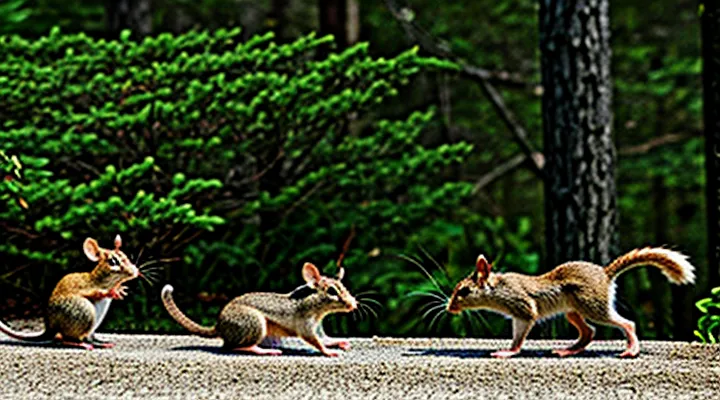
Similarities and Differences in Classification
Taxonomic Overview
Order Rodentia
The order Rodentia encompasses the most diverse group of mammals, with over 2,300 species ranging from tiny field mice to large capybaras. All members share a single pair of continuously growing incisors in each jaw, a dental adaptation that drives gnawing behavior and influences ecological niches.
Rodents occupy virtually every terrestrial habitat, from arid deserts to dense forests, and their physiological flexibility underpins the contrasting ways that mice and squirrels survive in natural environments. Mice, typically ground‑dwelling, exhibit rapid reproductive cycles, high population turnover, and omnivorous diets that include seeds, insects, and detritus. Squirrels, primarily arboreal, display longer gestation periods, lower litter sizes, and a diet heavily weighted toward nuts, fruits, and bark, supplemented by occasional animal protein.
Key traits that differentiate the two genera within Rodentia include:
- Locomotion: mice rely on quadrupedal sprinting and burrowing; squirrels employ agile climbing and leaping between branches.
- Territoriality: mice maintain compact home ranges with overlapping foraging zones; squirrels defend larger, vertically structured territories marked by scent and vocal signals.
- Energy storage: mice accumulate minimal fat reserves, depending on constant food intake; squirrels cache surplus nuts to endure seasonal scarcity.
Both groups contribute to seed dispersal, soil aeration, and predator–prey dynamics, yet their distinct life‑history strategies reflect the broader adaptability of Rodentia. Understanding these differences clarifies how the order supports ecosystem function across varied habitats.
Families: Muridae vs. Sciuridae
The family Muridae, encompassing true mice and rats, consists of small, nocturnal rodents with body lengths typically ranging from 6 to 12 cm. Their diet is omnivorous, emphasizing seeds, insects, and occasional plant material. Reproductive cycles are rapid; females may produce several litters per year, each containing 4–8 offspring. Burrowing provides shelter and protection from predators, while social organization is generally hierarchical, with dominant individuals controlling access to resources.
The family Sciuridae, which includes squirrels, features larger species with body lengths of 15–30 cm and a predominantly diurnal activity pattern. Members rely on a mixed diet of nuts, fruits, fungi, and occasional arthropods, often employing caching behavior to store food for winter. Reproduction is seasonal, typically yielding one or two litters annually, each with 2–5 young. Nesting occurs in tree cavities or constructed dreys, and social structures vary from solitary territoriality to loosely organized colonies.
Key contrasts between the two families:
- Activity: nocturnal (Muridae) vs. diurnal (Sciuridae)
- Size: 6–12 cm vs. 15–30 cm
- Reproductive frequency: multiple litters per year vs. one or two seasonal litters
- Shelter: underground burrows vs. arboreal nests or dreys
- Food storage: minimal caching vs. extensive hoarding of nuts and seeds
These distinctions shape each group's ecological niche, influencing foraging strategies, predator avoidance, and population dynamics in wild environments.
Physical Characteristics and Adaptations
Size and Appearance
Mice: Small and Agile
Mice are diminutive rodents, typically weighing between 10 and 30 grams and measuring 6–10 cm in body length. Their lightweight build supports rapid acceleration and the ability to navigate narrow tunnels and dense underbrush. Muscular hind limbs and flexible spines enable sudden changes in direction, facilitating escape from predators and efficient foraging.
Key physiological and behavioral traits:
- High metabolic rate demands frequent feeding; diet consists of seeds, insects, and plant matter.
- Reproductive cycle completes in 19–21 days; a single female can produce up to ten litters per year, each containing 5–8 offspring.
- Sensory adaptations include whiskers for tactile mapping and acute hearing for detecting low‑frequency sounds.
- Burrowing behavior creates extensive underground networks that provide shelter and temperature regulation.
Compared with arboreal squirrels, mice remain ground‑bound, exhibit shorter lifespans, and rely on stealth and speed rather than climbing ability to secure resources and avoid threats. Their agility and rapid reproduction sustain population stability despite high predation pressure.
Squirrels: Larger and More Robust
Squirrels attain a body length of 20–30 cm and a mass of 250–900 g, whereas most mice measure 6–10 cm and weigh 15–35 g. The size disparity translates into a markedly higher muscle‑to‑body‑mass ratio and a sturdier skeletal framework in squirrels.
- Longer, more powerful forelimbs support rapid, precise climbing on large branches.
- Enlarged hind limbs generate strong leaps, enabling escape from ground predators.
- Robust incisors and jaw muscles allow processing of hard seeds and nuts that mice cannot efficiently crack.
The enhanced body mass permits squirrels to accumulate substantial fat reserves during autumn, sustaining them through winter periods of limited food availability. Larger size also facilitates the construction of extensive, insulated nests (dreys) that provide superior protection from weather and predators. In contrast, mice rely on high reproductive rates and flexible burrow networks to offset their vulnerability.
Overall, the greater dimensions and structural resilience of squirrels shape a lifestyle centered on arboreal foraging, food caching, and territorial defense, distinguishing them sharply from the more diminutive, ground‑dwelling mice.
Dental Structure
Mice possess a dental formula of 1/1 incisors, 0/0 canines, 0/0 premolars, and 3/3 molars. Their incisors are continuously growing, featuring enamel restricted to the anterior surface, which creates a self-sharpening edge as dentin wears away posteriorly. This adaptation supports gnawing on seeds, grains, and soft plant material, enabling rapid food processing in dense underbrush.
Squirrels share the same dental formula, yet their incisors exhibit a broader enamel band extending further onto the labial surface. The enamel‑dentin junction is reinforced by a thicker dentin core, providing greater resistance to the high‑force chewing required for hard nuts and woody shells. Their molars display pronounced cusps and deeper occlusal basins, facilitating efficient grinding of fibrous bark and tough seed coats.
Key distinctions in dental morphology:
- Incisor enamel distribution: mice – limited to front; squirrels – broader coverage.
- Incisor cross‑section: mice – circular; squirrels – slightly flattened, enhancing bite pressure.
- Molar complexity: mice – simpler cusps; squirrels – more elaborate, supporting extensive mastication.
- Growth rate: both species exhibit continuous incisor growth, but squirrels show slower eruption, reflecting lower turnover of soft foods.
These structural variations align with each rodent’s foraging strategy: mice rely on rapid gnawing of abundant, low‑hardness resources, while squirrels depend on robust grinding mechanisms to exploit high‑hardness nuts and bark in open woodland environments.
Specialized Appendages
Mice: Paws for Digging and Climbing
Mice possess specialized forepaws that enable both excavation and arboreal movement. The pads contain dense, keratinized skin that resists abrasion while providing a secure grip on varied substrates. Digit length is short, allowing precise manipulation of soil particles and the ability to wedge into narrow crevices.
The claw structure further supports dual functionality. Each forelimb bears five sharp, curved unguis that can penetrate compact earth during burrow construction and hook onto bark fibers when climbing. Muscle attachment points on the radius and ulna are enlarged, delivering the force required for rapid digging bursts and sustained climbing climbs.
Key anatomical traits include:
- Broad, leathery pads – distribute pressure, reduce slippage on wet or loose surfaces.
- Retractable claws – extend for digging, retract for delicate climbing maneuvers.
- Enhanced flexor tendons – increase grip strength, facilitate quick paw repositioning.
- Sensory vibrissae – detect substrate texture, guide paw placement during tunnel excavation and tree navigation.
These adaptations allow mice to exploit ground-level food sources while retaining the capacity to ascend vegetation when predators threaten or when opportunistic foraging demands vertical access. Compared with squirrels, whose larger, more robust paws favor sustained climbing, mouse paws emphasize versatility, balancing subterranean activity with occasional arboreal excursions.
Squirrels: Claws for Arboreal Lifestyles
Squirrels possess sharp, curved claws that enable precise gripping of bark and branches. Each forelimb bears four digits, each tipped with a keratinous claw that can exert considerable pressure without slipping. The curvature matches the contour of tree surfaces, allowing the animal to ascend vertically and maneuver laterally with minimal effort.
The claws work in concert with a highly mobile ankle joint. When a squirrel pushes upward, the claws embed into the substrate, and the ankle rotates to position the foot for the next grip. This coordination provides stability on thin twigs and supports rapid changes in direction during escape flights.
Key functional attributes of squirrel claws include:
- High tensile strength: keratin composition resists breakage under repeated stress.
- Self‑sharpening edges: constant interaction with rough bark maintains a cutting profile.
- Variable grip pressure: muscular control adjusts force to suit delicate twigs or thick trunks.
Compared with rodents that primarily dwell on the ground, squirrels exhibit a greater degree of claw curvature and enhanced musculature in the forelimbs. These morphological differences reflect an evolutionary shift toward arboreal foraging and nesting. The adaptation permits efficient harvesting of seeds, nuts, and buds located high in the canopy, where ground‑dwelling species cannot compete.
Habitat and Niche
Preferred Environments
Mice: Ground Dwellers and Crevice Seekers
Mice occupy two primary microhabitats: open ground burrows and narrow crevices. Ground‑dwelling individuals excavate extensive tunnel networks, often extending several meters below the surface. These burrows provide stable temperature, humidity control, and a refuge from aerial predators. Food resources such as seeds, insects, and fallen fruit are gathered within a radius of a few meters and stored in underground chambers.
Crevice‑seeking mice exploit fissures in rocks, gaps beneath bark, and the spaces between root systems. This strategy reduces exposure to open predators while allowing rapid access to vertical escape routes. Nests are constructed from gathered fibers, moss, and detritus, packed tightly to conserve heat.
Key distinctions between mouse and squirrel habits include:
- Mice: predominantly terrestrial, rely on concealed burrows or narrow crevices; diet heavily weighted toward seeds and invertebrates found at ground level.
- Squirrels: primarily arboreal, build nests in tree branches; diet emphasizes nuts, fruits, and occasional fungi accessed above ground.
These divergent habitat choices drive differences in foraging range, predator avoidance tactics, and social organization, illustrating how closely related rodents adapt to distinct ecological niches.
Squirrels: Tree Dwellers and Forest Foragers
Squirrels occupy the forest canopy, constructing nests—dreys—high among branches. These structures provide shelter from predators and extreme weather, while the vertical environment grants rapid access to food sources such as buds, fruits, and insects. Strong hind limbs and a prehensile tail enable precise maneuvering across slender twigs and across gaps up to several meters.
Foraging occurs both in trees and on the forest floor. Squirrels exhibit selective caching behavior, burying nuts and seeds for later consumption. Their diet includes:
- Acorns and other hardwood nuts
- Conifer seeds and pine cones
- Wild berries and fruit husks
- Insects and larvae encountered in bark crevices
Cache retrieval relies on spatial memory and olfactory cues, allowing individuals to recover stored provisions throughout seasonal fluctuations.
Compared with ground-dwelling rodents, squirrels demonstrate higher reliance on arboreal locomotion, greater body mass, and specialized dentition for processing hard-shelled foods. These physiological and behavioral traits support a niche that emphasizes vertical space exploitation and strategic food storage, distinguishing their lifestyle from that of smaller, burrowing counterparts.
Shelter and Nesting
Mice: Burrows and Hidden Nests
Mice excavate extensive burrow systems that provide shelter, food storage, and protection from predators. Burrows consist of primary tunnels leading to multiple chambers, each serving a specific function such as nesting, waste disposal, or food caching. Entrances are often concealed by vegetation or soil mounds, reducing visibility to aerial and terrestrial threats.
Hidden nests are constructed within these chambers using soft materials—dry grasses, shredded plant fibers, and animal hair. Nests are compact, insulated, and positioned away from tunnel traffic to maintain stable temperature and humidity. Camouflage is achieved by lining nest walls with fine debris that blends with surrounding soil.
Compared with arboreal relatives, mice rely exclusively on subterranean habitats. The following points illustrate key lifestyle distinctions:
- Location: underground burrows vs. tree cavities or leaf nests.
- Structure: multi‑chambered tunnel networks vs. single‑level platforms.
- Thermoregulation: soil insulation versus exposure to ambient air.
- Predator avoidance: concealed entrances vs. elevated perches.
- Food handling: underground caches vs. scattered surface hoards.
Squirrels: Drey and Tree Cavities
Squirrels construct two primary shelter types: the woven drey and natural tree cavities. Dreys are built from twigs, leaves, and bark, typically positioned in the fork of a branch or on a high horizontal limb. The structure provides insulation, protection from predators, and a dry platform for nesting and rearing young. Tree cavities, formed by decay, woodpecker activity, or broken limbs, offer a pre‑existing enclosure that squirrels can occupy without extensive construction. Cavities retain heat more efficiently than open dreys, reducing the energetic cost of maintaining body temperature during cold periods.
Key functional differences:
- Construction effort – Dreys require several hours of material collection and assembly; cavities demand only cleaning of debris.
- Thermal stability – Cavities maintain a narrower temperature range; dreys experience greater fluctuations.
- Predator exposure – Dreys are visible and accessible to aerial hunters; cavities limit entry points, reducing access for many predators.
- Reusability – Cavities can be reused across seasons and generations; dreys are often abandoned after a breeding cycle and rebuilt.
Squirrels select shelters based on seasonal demands and habitat availability. In spring and summer, when food is abundant and temperatures are moderate, they favor dreys for their ease of access and proximity to foraging sites. As winter approaches, individuals increasingly occupy cavities to exploit the superior insulation and safety. In mixed forests where both options coexist, squirrels demonstrate flexibility, alternating between structures to balance construction labor, thermal efficiency, and predator avoidance.
Diet and Foraging Behavior
Food Sources
Mice: Omnivorous Opportunists
Mice thrive as omnivorous opportunists, exploiting a wide spectrum of food resources with minimal specialization. Their diet includes seeds, nuts, insects, fungi, and human-derived scraps, allowing rapid adaptation to fluctuating environments. This flexibility supports survival in habitats ranging from dense forests to urban alleys, where competition for limited supplies is intense.
Key aspects of mouse foraging behavior:
- Preference for high‑energy items such as grain and nuts, supplemented by protein‑rich insects when available.
- Rapid assessment of food patches, with individuals abandoning depleted sites within minutes.
- Use of tactile and olfactory cues to locate concealed resources, reducing reliance on visual detection.
- Storage of excess food in temporary caches, though most supplies are consumed on site.
Compared to squirrels, which concentrate on arboreal seed collection and caching, mice display broader dietary breadth and more frequent ground foraging. Their opportunistic feeding strategy reduces dependence on seasonal mast production, enabling sustained activity throughout winter months when squirrel caches become scarce. Consequently, mice maintain steady population levels across diverse ecosystems, influencing seed dispersal, insect population control, and nutrient cycling.
Squirrels: Herbivorous Specialists
Squirrels belong to the family Sciuridae and occupy forests, urban parks, and woodland edges. Their daily routine revolves around foraging for plant material, storing excess food, and defending territory.
Key components of the squirrel diet include:
- Seeds from conifers and broad‑leaf trees
- Nuts such as acorns, walnuts, and hazelnuts
- Fresh buds, shoots, and young leaves
- Fruits and berries during seasonal availability
Dental morphology features continuously growing incisors with a sharp, chisel‑like edge, enabling efficient cracking of hard shells. The gastrointestinal tract hosts a specialized microbial community that ferments cellulose and extracts nutrients from fibrous plant matter. Seasonal caching behavior reduces reliance on scarce resources and stabilizes energy intake throughout winter.
In contrast, mice (family Muridae) display omnivorous feeding patterns, incorporating insects, grains, and detritus alongside plant matter. Their smaller body size and higher reproductive rate support a more opportunistic diet, whereas squirrels invest in extensive tooth wear resistance and cache management to sustain a predominantly herbivorous lifestyle.
Hoarding and Storage
Mice: Short-Term Hiding
Mice rely on rapid concealment to evade predators and maintain access to limited resources. When threatened, they retreat to pre‑selected microhabitats such as dense leaf litter, burrow entrances, or crevices beneath rocks. These refuges provide immediate visual obstruction and limit scent dispersion, allowing mice to remain undetected for minutes to a few hours.
Key characteristics of short‑term hiding include:
- Proximity to foraging sites: shelters are situated within 5–10 m of food caches, reducing exposure during movement.
- Minimal structural alteration: mice occupy existing gaps without extensive excavation, conserving energy.
- Temporal flexibility: individuals shift between multiple hideouts throughout a single night, preventing predator learning.
- Rapid entry and exit: muscular forelimbs and flexible spine enable swift navigation into tight spaces.
Compared with squirrels, which favor elevated nests for prolonged safety, mice prioritize low‑lying, easily reachable cover that supports quick foraging cycles and frequent relocation. This strategy maximizes survival in habitats where ground‑level predation pressure is high.
Squirrels: Long-Term Caching
Squirrels store food for months or even years, a behavior known as long‑term caching. The practice involves burying nuts, seeds, and fruits in numerous shallow pits scattered across a home range. Each cache is deliberately placed in a location that balances accessibility with protection from competitors and environmental decay.
Key characteristics of long‑term caching include:
- Diverse cache sites – squirrels use trees, underground chambers, and leaf litter, creating a spatially distributed reserve.
- Spatial memory – individuals recall the approximate coordinates of hundreds of sites, relying on visual landmarks and geomagnetic cues.
- Pilferage mitigation – caches are often concealed, and squirrels revisit sites to re‑cover and re‑bury leftovers, reducing loss to other foragers.
- Seasonal reliance – caches support survival through winter and periods of food scarcity, sustaining metabolism when fresh resources are unavailable.
- Ecological impact – forgotten caches contribute to forest regeneration, as germinating seeds establish new saplings.
Compared with mice, which primarily rely on short‑term hoarding and rapid consumption, squirrels invest considerable energy in creating and maintaining these extensive stores. Their ability to retrieve cached items after extended intervals demonstrates advanced cognitive mapping and contributes to their success in temperate woodland ecosystems.
Social Structure and Reproduction
Group Dynamics
Mice: Solitary to Colonial
Mice exhibit a flexible social organization that ranges from strictly solitary individuals to complex, multi‑female colonies. Solitary mice defend small home ranges, maintain exclusive foraging paths, and exhibit heightened aggression toward conspecific intruders. Their reproductive output is limited to a single dominant female, and offspring remain with the mother only until weaning.
When environmental conditions favor resource abundance and predator pressure, mice transition to a colonial structure. Colonies consist of several breeding females, subordinate males, and a cohort of juveniles. Benefits include shared vigilance, cooperative nest construction, and increased access to food caches. The colony’s spatial layout typically features a central nesting area surrounded by peripheral foraging zones.
Key features of the colonial phase:
- Multiple breeding females coexist, each with a distinct nest chamber.
- Subordinate males assist in territory defense and pup care.
- Juveniles remain in the communal nest for up to three weeks, gaining exposure to group cues.
- Communication relies on pheromonal markers and ultrasonic vocalizations to maintain hierarchy and coordinate activities.
Squirrels: Varying Sociality
Squirrels display a spectrum of social organization that ranges from strictly solitary individuals to loosely structured colonies. Species such as the Eastern gray squirrel (Sciurus carolinensis) typically maintain exclusive home ranges, defending them against conspecifics through vocal alarms and scent marking. In contrast, the Mexican fox squirrel (Sciurus nayaritensis) forms small, overlapping groups that share foraging sites while retaining individual territories for nesting.
Key factors influencing sociality include:
- Resource distribution: abundant, clumped food sources encourage temporary aggregations, whereas dispersed nuts promote solitary foraging.
- Predation pressure: high predator density correlates with increased vigilance behavior and occasional communal sentinel duties.
- Reproductive strategy: species that produce multiple litters per year often exhibit flexible grouping during breeding seasons to maximize mate access.
Communication mechanisms support these varying social structures. Squirrels employ a repertoire of vocalizations—sharp alarm calls, low-frequency chatter, and mating trills—paired with visual signals such as tail flicks and foot stamping. Chemical cues, deposited via cheek glands, convey individual identity and reproductive status, facilitating recognition within overlapping territories.
Seasonal shifts further modulate social behavior. During winter, many squirrel species reduce activity and may temporarily share nest cavities to conserve heat, while summer months see heightened territorial aggression as individuals defend mast-rich trees. This plasticity enables squirrels to adapt to fluctuating environmental conditions while maintaining species-specific baseline social patterns.
Breeding Patterns
Mice: Rapid Reproduction Cycles
Mice achieve population growth through exceptionally brief reproductive intervals. A typical female reaches sexual maturity at 5–6 weeks, mates shortly thereafter, and enters a gestation period of approximately 19–21 days. Each litter contains 4–7 offspring, and females can produce up to five litters per breeding season, resulting in potential exponential increase within a single year.
Key reproductive parameters:
- Sexual maturity: 5–6 weeks
- Gestation length: 19–21 days
- Litter size: 4–7 pups
- Litters per season: up to 5
- Inter‑litter interval: 21–28 days
Environmental conditions modulate these cycles. Abundant food and mild temperatures accelerate maturation and reduce inter‑litter intervals, whereas scarcity or extreme weather prolong development and may suppress breeding altogether. Hormonal regulation, chiefly driven by photoperiod and nutrient availability, synchronizes reproductive activity with optimal survival windows.
In contrast, squirrels exhibit longer gestation (approximately 30–45 days) and produce fewer offspring per event, typically 2–4, with one to two breeding attempts annually. This slower turnover limits rapid population expansion, positioning mice as the more opportunistic colonizers of transient resources.
Squirrels: Seasonal Breeding
Squirrels in temperate regions initiate reproduction during the spring months, when temperature rises and food availability increases. Female squirrels reach sexual maturity at one year and enter estrus shortly after emergence from winter torpor. Mating pairs form quickly; males compete for access to receptive females, and copulation typically occurs within a few days of the female’s first estrus cycle.
The gestation period lasts approximately 40 days, after which litters of 2–8 offspring are born. Birth coincides with late spring or early summer, providing ample time for juveniles to acquire foraging skills before the onset of autumn. Squirrels exhibit a single breeding cycle per year; the energetic cost of lactation and the need to store fat for winter hibernation preclude multiple litters.
Key seasonal breeding characteristics:
- Estrus timing: early to mid‑spring, linked to rising ambient temperatures.
- Litter size: 2–8 pups, average 4–5, varies with species and resource abundance.
- Weaning period: 8–10 weeks, after which juveniles disperse to establish independent territories.
- Reproductive pause: post‑weaning, adults focus on fat accumulation for winter, halting further breeding until the next spring.
Predation and Defense Mechanisms
Common Predators
Mice and squirrels share a suite of natural enemies that influence their survival and behavior in the wild. Predatory pressure originates from both aerial and terrestrial hunters, each exploiting the rodents’ foraging patterns and habitat use.
- Barn owls (Tyto alba) – nocturnal raptors that locate prey by sound; capture mice and ground‑dwelling squirrels during night flights.
- Red-tailed hawks (Buteo jamaicensis) – diurnal hunters that pursue squirrels in open woodland and seize mice perched on vegetation.
- Great horned owls (Bubo virginianus) – versatile predators capable of hunting both species at dusk and dawn, using powerful talons.
- Cooper’s hawks (Accipiter cooperii) – specialize in rapid, agile attacks on squirrels in forest edges and on mice in shrub layers.
- Snapping turtles (Chelydra serpentina) – aquatic ambush predators that seize swimming squirrels and water‑borne mice.
- American mink (Neovison vison) – semi‑aquatic mammals that hunt rodents near streams and wetlands, often dragging prey into water.
- Red foxes (Vulpes vulpes) – opportunistic carnivores that hunt mice in fields and squirrels in forest understory, using keen hearing and scent.
- Bobcats (Lynx rufus) – stealth predators that stalk squirrels in dense cover and capture mice during nighttime excursions.
- Domestic cats (Felis catus) – feral or free‑roaming individuals that hunt both rodents in suburban and rural settings.
Predation shapes activity cycles; mice tend to increase nocturnal foraging to avoid diurnal raptors, while squirrels favor early morning and late afternoon to reduce exposure to hawks and foxes. The overlap in predator species creates competitive pressures, driving both rodents to adopt complementary escape tactics such as burrowing, arboreal refuge, and heightened vigilance.
Evasion Tactics
Mice: Agility and Concealment
Mice demonstrate rapid locomotion that supports escape from predators and efficient foraging. Muscular hind limbs generate bursts of speed, while flexible spine segments permit swift changes in direction. These mechanics enable traversal of complex ground cover and narrow burrow passages.
Concealment relies on multiple physiological and behavioral traits. Fur coloration matches substrate tones, reducing visual detection. Skin pigments can shift seasonally, enhancing camouflage. Mice adopt low-profile postures, crouching close to the ground to minimize silhouette.
Key adaptations include:
- Vibrissae that detect airflow and obstacles, allowing navigation in darkness.
- Acute hearing attuned to high-frequency sounds, signaling approaching threats.
- Burrow architecture with multiple exits, providing rapid refuge routes.
- Nocturnal activity patterns that align with reduced predator visibility.
Collectively, agility and concealment form a synergistic survival strategy, distinguishing mouse behavior from that of arboreal relatives.
Squirrels: Climbing and Warning Calls
Squirrels excel at arboreal locomotion, employing a suite of anatomical adaptations that enable rapid ascent and precise maneuvering among branches. Muscular forelimbs generate powerful strokes, while elongated, curved claws provide secure grip on bark. A highly mobile shoulder joint permits a wide range of motion, allowing the animal to rotate its body mid‑air and land head‑first on narrow perches. The tail functions as a counterbalance, stabilizing the center of gravity during swift vertical runs.
Squirrels communicate danger through a repertoire of vocalizations that alert conspecifics to predators. The calls vary in frequency, duration, and intensity, each pattern conveying specific information about threat type and proximity. Typical warning signals include:
- Short, high‑pitched chirps emitted when a raptor is spotted overhead.
- Rapid, repetitive barks produced in response to ground predators such as snakes.
- Low, throaty growls used when an intruder approaches a nesting site.
These acoustic alerts trigger immediate evasive behavior in nearby squirrels, prompting them to freeze, flee to the canopy, or adopt a vigilant stance. The combination of agile climbing and sophisticated warning calls underpins the species’ survival strategy within forest ecosystems, contrasting sharply with the ground‑bound foraging tactics of many murine relatives.