
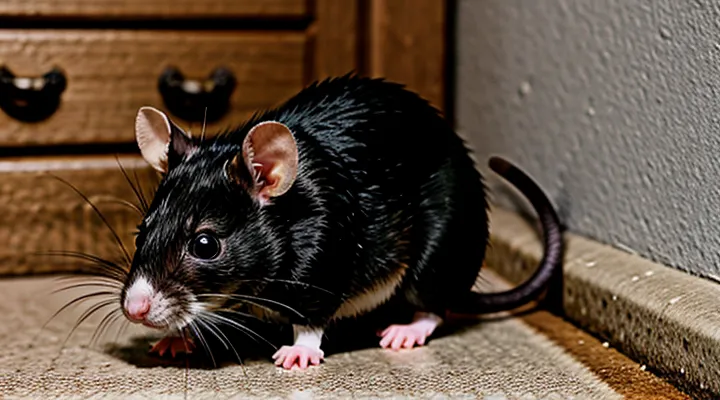
Why Sexing Your Rat is Important
Understanding Rat Behavior
Rats exhibit distinct patterns that can aid in identifying whether a pet is male or female. Recognizing these patterns reduces reliance on visual inspection alone, especially when the animal is young or its genitalia are not easily visible.
Males typically display more pronounced territorial behavior. They frequently mark their environment with urine, leaving visible stains on bedding and cage surfaces. Aggressive posturing, such as upright stance, raised fur, and frequent lunges toward conspecifics, occurs more often in intact males. In mixed‑sex groups, males often assume dominant positions, controlling access to food and nesting material.
Females tend to focus on nesting and social bonding. They construct elaborate nests using shredded paper, cloth, or wood shavings, and they spend considerable time arranging and maintaining these structures. Maternal instincts appear early; even before breeding, females will retrieve and groom objects resembling pups. Their interactions are generally less confrontational, favoring grooming exchanges and communal sleeping arrangements.
Key behavioral indicators for sex assessment:
- Urine marking – frequent, conspicuous stains → likely male
- Aggressive displays – upright posture, lunges, dominance contests → likely male
- Nest building intensity – extensive, organized construction → likely female
- Maternal‑type grooming – handling of objects or littermates with care → likely female
- Social hierarchy – male dominance over peers, female cooperation within the group → reinforces identification
When evaluating a pet rat, observe these behaviors over several days to account for individual variation and environmental influences. Consistent presence of multiple male‑typical signs strongly suggests a male, while a combination of female‑typical activities points to a female. Using behavior as a diagnostic tool complements anatomical examination and improves accuracy in sex determination.
Preventing Unwanted Pregnancies
Accurate identification of a rat’s sex is the first safeguard against accidental litters. Examine the ventral area after the animal is calm; males display a longer anogenital distance and a visible scrotum, while females have a shorter gap and a rounded genital opening. If uncertainty persists, a veterinary examination provides definitive confirmation.
After sex is established, implement segregation protocols. Keep all males isolated from females unless breeding is intentional. If multiple males are housed together, monitor for aggressive behavior that can lead to injuries and unintended mating attempts. For single‑sex groups, provide enriched environments to reduce stress and prevent dominance hierarchies that might trigger reproductive activity.
Consider surgical sterilization for long‑term control. Spaying females eliminates estrus cycles, eliminating the hormonal drive to mate. Castrating males removes the capacity to fertilize and often reduces territorial aggression. Consult a qualified veterinarian for pre‑operative assessment and postoperative care.
Practical checklist:
- Perform visual sex determination within the first week of ownership.
- Separate males and females in distinct cages or compartments.
- Use solid barriers to prevent nose‑to‑nose contact between opposite sexes.
- Schedule neutering or spaying procedures for all breeding‑age animals.
- Record each animal’s sex and sterilization status in a dedicated log.
By applying these measures consistently, owners eliminate the risk of unwanted pregnancies and maintain a healthy, stable rat colony.
Health Considerations for Each Sex
When assessing a pet rat’s well‑being, sex‑specific health risks demand separate attention.
Male rats are prone to reproductive and urinary issues. Common concerns include:
- Testicular tumors, especially in older individuals; regular palpation can detect abnormal enlargement.
- Prostate hyperplasia, leading to difficulty urinating; monitor for reduced stream or frequent attempts.
- Aggressive behavior that may cause self‑inflicted wounds; provide ample enrichment to reduce stress.
Female rats face distinct challenges related to reproduction and hormonal cycles. Key points are:
- Ovarian and uterine tumors, which may cause abdominal swelling; routine health checks should include abdominal palpation.
- Pregnancy complications such as dystocia; observe for prolonged labor or distress during breeding periods.
- Mammary gland hyperplasia, often linked to hormonal fluctuations; inspect nipples for swelling or discharge.
Both sexes share general health priorities: balanced diet, clean housing, and regular veterinary examinations. Early detection of the listed conditions improves outcomes and extends the rat’s lifespan.
When to Determine Your Rat’s Sex
Ideal Age for Accurate Identification
Accurate sex determination in pet rats depends on the animal’s developmental stage. External genitalia are indistinct in newborns and early juveniles; the anogenital distance and presence of a scrotum are not reliably visible until the rat reaches approximately four weeks of age. At this point, males begin to develop a small, non‑descended scrotal sac, while females display a smooth perineal area without a noticeable bulge.
For consistent identification, the recommended age window is eight to ten weeks. By eight weeks, the male’s testes have descended or are clearly palpable, and the female’s vulvar opening is distinct. Observations at this stage reduce misclassification risk to under five percent, according to breeding records and veterinary studies.
Guidelines for owners and breeders:
- Examine rats between eight and ten weeks for definitive sex characteristics.
- Use gentle restraint and a bright light source to assess the anogenital region.
- Confirm male identification by locating the testes or a visible scrotal sac; confirm female identification by the presence of a smooth, rounded vulva.
- If identification is needed earlier, perform a secondary check at ten weeks to verify initial assessment.
Delaying sexing until the optimal age minimizes errors and supports appropriate housing, health monitoring, and breeding decisions.
Challenges with Young Pups
Determining the sex of infant rats presents several practical obstacles. The animals are diminutive, often measuring less than two centimeters, which makes visual inspection difficult without magnification. Genital structures are not fully formed until the third week of life; the anogenital distance is minimal, and the testes remain intra‑abdominal, leaving external cues ambiguous. Consequently, misidentification rates rise sharply when assessment occurs before the recommended age of 21 days.
Handling young pups introduces additional risk. Their fragile skeletons can fracture under excessive pressure, and the delicate skin may tear if grasped improperly. A gentle grip between the thumb and forefinger, supporting the body without compressing the abdomen, reduces injury. Adequate illumination, preferably from a magnifying lamp, enhances contrast between the ventral opening and surrounding tissue, allowing more reliable observation.
Environmental factors influence assessment accuracy. Warm ambient temperatures keep the pups active, preventing the natural curl that can obscure the genital area. Conversely, excessive heat may cause stress, altering behavior and hindering examination. Maintaining a stable temperature around 28 °C provides optimal conditions for both welfare and visibility.
Professional guidance mitigates error. Experienced breeders or veterinarians can confirm sex through palpation of the abdominal cavity, detecting undescended testes in males. When such expertise is unavailable, photographic documentation under consistent lighting permits later review by a qualified source.
Key considerations for successful sex determination in juvenile rats:
- Wait until at least three weeks of age before initial evaluation.
- Use a high‑magnification light source to enlarge the genital region.
- Apply minimal, evenly distributed pressure when handling.
- Keep the environment warm but not stressful.
- Seek confirmation from an experienced individual if uncertainty persists.
Key Differences: Male vs. Female Rats
Anatomical Indicators
Anogenital Distance
Anogenital distance (AGD) is the linear measurement between the anus and the genital papilla. In rodents, this metric correlates strongly with sex because male embryos develop a longer distance under the influence of prenatal androgens.
To assess a pet rat’s sex using AGD, follow these steps:
- Gently restrain the animal on a flat surface, ensuring the tail is lifted to expose the ventral region.
- Use a fine‑point caliper or a ruler with millimetric precision.
- Align the instrument’s zero point at the center of the anus, then extend to the base of the genital papilla (males) or the vulva (females).
- Record the distance to the nearest 0.1 mm.
Typical values for young rats (approximately 4 weeks old) are:
- Males: 6 mm – 9 mm
- Females: 3 mm – 5 mm
These ranges persist, with minor growth, into adulthood. Measurements taken before the third week of life may be unreliable because the genital structures are not fully differentiated.
Key considerations for accurate AGD assessment:
- Perform the measurement in a calm environment to reduce stress‑induced movement.
- Use consistent anatomical landmarks; the base of the genital papilla in males and the opening of the vulva in females must be identified precisely.
- Repeat the measurement three times and calculate the average to mitigate observer error.
- Document the age of the rat, as AGD narrows with age and can be influenced by nutritional status.
While AGD provides a rapid, non‑invasive indicator of sex, it should be corroborated with additional signs—such as the presence of a scrotum in males or the shape of the perineal region in females—especially in juvenile specimens where anatomical differences are subtle.
Testicles in Males
Testicles are the primary external indicator of a male rat. In mature individuals they appear as two oval, light‑colored sacs situated behind the abdomen, each roughly 2–3 mm in diameter. The scrotal skin is thin, translucent, and may contain visible blood vessels. When the rat is young (under three weeks), the testes are not yet descended; they remain within the abdominal cavity and are not observable externally.
To confirm male sex in a juvenile or adult rat, follow these steps:
- Gently restrain the animal on a soft surface, supporting the hindquarters with one hand.
- Use the other hand to palpate the area just posterior to the ventral midline, feeling for the firm, rounded masses of the testes.
- If the testes are visible, note their size and symmetry; asymmetry may indicate injury or infection.
- In the absence of palpable or visible testes, the rat is likely female; however, consider the possibility of an undescended (cryptorchid) male, which requires veterinary examination.
Cryptorchidism occurs in a small percentage of rats and presents as an absent or underdeveloped scrotum despite the animal being male. Veterinary assessment, including ultrasound, can verify internal testes and guide appropriate care.
Nipples in Females
Nipple morphology provides a reliable indicator when distinguishing female rats from males. Female rats develop a pair of small, raised nipples on the ventral abdomen; males either lack nipples entirely or possess only faint, non‑functional vestiges.
In juvenile rats, nipples become visible around three to four weeks of age. By eight weeks, the nipples are clearly defined, positioned symmetrically midway between the sternum and the genital opening. In adult females, the nipples remain prominent, covered by sparse fur, and may exhibit slight darkening during estrus. Males retain a smooth, unblemished abdomen without any protuberances.
To assess sex using nipples, follow these steps:
- Secure the rat gently on a flat surface, ensuring minimal stress.
- Part the fur on the lower abdomen with a soft brush or fingertip.
- Observe the presence, size, and symmetry of any raised structures.
- Confirm that the identified nipples are located approximately halfway between the sternum and the anal opening.
- Record findings; the presence of distinct, paired nipples confirms a female.
When nipples are absent or only rudimentary scars are visible, the rat is male. This method complements other sex‑determination techniques such as anogenital distance measurement and observation of genital morphology.
Behavioral Clues
Scent Marking
Rats use scent marking to communicate territorial boundaries, reproductive status, and social hierarchy. The pattern and intensity of marking differ noticeably between sexes and can help identify a pet’s gender when visual cues are ambiguous.
Male rats typically produce stronger, more frequent marks. They release urine rich in pheromones from the preputial gland, creating dark, wet spots on bedding, cage corners, and the undersides of objects. Marks are often deposited in a linear series along walls or on the edges of tunnels, and the scent may be detectable by a sharp, musky odor. In addition to urine, males secrete a milky fluid from the Harderian gland, which adds a glossy sheen to their markings.
Female rats also scent mark, but the output is subtler. Urine deposits are lighter in color and less extensive, usually confined to nesting areas or feeding zones. The odor is faint, lacking the pungent notes characteristic of males. Females may supplement urine with secretions from the anogenital region, producing small, translucent droplets that are less likely to spread across the cage.
Key observations for sex determination through scent marking:
- Frequency: males mark several times per day; females mark sporadically, often after estrus.
- Location: males favor perimeter and elevated surfaces; females concentrate marks near nest material.
- Appearance: male urine appears dark and wet; female urine is pale and may dry quickly.
- Odor: male scent is strong and musky; female scent is mild and less perceptible.
While scent marking provides valuable clues, it should be corroborated with physical examination—such as the presence of a scrotum in males or nipples and genital configuration in females—to confirm sex accurately.
Social Dynamics
Rats display distinct social patterns that reveal their sex, allowing owners to confirm gender without invasive methods. Males typically dominate interactions, asserting control over feeding stations, nesting sites, and movement routes. Their behavior includes frequent mounting attempts, scent marking with urine, and pronounced territorial patrols. Females, by contrast, form tighter grooming circles, share nesting material, and exhibit cooperative nesting, often coordinating offspring care.
Observing these dynamics provides reliable indicators:
- Aggressive posturing directed toward conspecifics, especially when a rat repeatedly challenges others for resources, suggests a male.
- Persistent scent‑marking on cage bars, bedding, or objects correlates with male urinary output.
- Regular participation in communal grooming sessions, with a focus on nurturing offspring or maintaining group cohesion, aligns with female behavior.
- Presence of nesting chambers constructed by multiple individuals, where one rat consistently arranges and maintains the structure, points to a female.
Social hierarchy also clarifies gender. In mixed‑sex groups, a single male usually occupies the top rank, while females share subordinate positions or form co‑dominant pairs. When a rat consistently initiates dominance displays and receives deference from others, the likelihood of it being male increases. Conversely, rats that frequently receive grooming from peers and avoid confrontational displays tend to be female.
Physical cues complement behavioral observations. Testes become palpable in adult males, while females lack such structures and may show mammary development during estrus. Combining anatomical checks with the outlined social markers yields an accurate determination of a pet rat’s sex.
Activity Levels
Pet rats reveal sex‑related activity patterns that can aid identification. Male rats usually display higher locomotor activity, especially during the early dark phase, when they explore cages, climb structures, and engage in brief bouts of rapid movement. Female rats often exhibit steadier, less erratic activity, concentrating on grooming and nesting tasks.
Observations should focus on:
- Frequency of spontaneous runs across the cage floor
- Duration of climbing episodes on tubes or ladders
- Intensity of play‑directed chases with cage mates
- Preference for solitary versus social exploration
Males typically initiate more frequent, short‑duration sprints and dominate vertical space, while females allocate more time to stationary grooming and remain near the nest area. These trends persist across different strains but vary with age; juveniles show less pronounced differences, and seniors may reduce overall activity regardless of sex.
Activity alone does not provide definitive proof of sex. Physical examination—inspection of the anogenital region for testes or nipples—remains the reliable method. Use activity observations as supplementary evidence, not as a sole diagnostic criterion.
Size and Build Differences
Average Adult Size
Rats reach adulthood at roughly three to six months. An average adult of the common laboratory or pet species measures 20–25 cm (8–10 in) from nose to the base of the tail, with the tail adding another 15–20 cm (6–8 in). Body weight typically falls between 250 and 350 g (0.55–0.77 lb).
Sexual dimorphism influences size modestly:
- Males are usually 5–10 % heavier than females, often reaching the upper end of the weight range.
- Females tend to be slightly shorter in body length, though tail length shows little variation between sexes.
- Both sexes share the same overall body proportions; size differences become more apparent when measuring weight rather than linear dimensions.
When assessing a rat’s sex, compare the individual’s weight to the expected adult range for its age and strain; a heavier specimen within the normal size spectrum is more likely to be male, while a lighter one is more likely female.
Body Shape and Musculature
Body shape provides a reliable indicator when distinguishing the sex of a pet rat. Adult males typically exhibit a more robust torso, with a broader, deeper chest and a pronounced muscular build. The abdomen often appears flatter, while the hindquarters are fuller due to larger testes that may be visible through the skin. In contrast, females display a slimmer profile, a narrower chest, and a more tapered abdomen. Their hindquarters are less pronounced, and the absence of testicular bulges results in a smoother lower belly.
Key visual cues include:
- Head dimensions – Males possess a broader, more angular skull; females have a finer, rounder head.
- Neck and shoulder musculature – Male rats develop thicker neck muscles and stronger shoulders, evident when the animal is upright.
- Overall body mass – Males generally weigh more than females of the same age, reflecting greater muscle development.
Juvenile rats present subtler differences. At this stage, the primary determinant remains the presence or absence of visible testicular tissue; body shape alone is insufficient for accurate identification. Regular observation of posture, musculature development, and abdominal contour, combined with direct examination of the genital area, yields the most reliable sex determination.
How to Safely Examine Your Rat
Handling Techniques for Stress-Free Examination
When assessing a rat’s gender, gentle handling is essential to prevent stress and obtain accurate visual cues. Begin by creating a calm environment: dim lighting, quiet room, and a stable surface. Allow the animal to settle for a few minutes before any contact.
Approach the rat from the side, supporting its hindquarters with one hand while the other hand steadies the forelimbs. Use a thin, flexible glove or a soft cloth to distribute pressure evenly, avoiding direct finger pressure on the abdomen. Rotate the rat gently onto its back, keeping its spine aligned to reduce tension.
Examine the genital area with a magnifying lens or a small flashlight. In males, the presence of a visible scrotal sac and a longer, pointed anogenital distance indicate sex. In females, a shorter distance and the appearance of a small, rounded genital papilla are typical. Record observations promptly to minimize handling time.
Key techniques for a stress‑free examination:
- Pre‑handling acclimation: let the rat explore the handling area for 2–3 minutes.
- Supportive grip: cradle the body, never restrain by the tail.
- Minimal exposure: expose only the necessary region, then return the rat to a secure cage.
- Consistent routine: repeat the same sequence each session to build familiarity.
After the assessment, place the rat back in its enclosure, offer fresh water or a treat, and monitor for signs of agitation. Promptly returning the animal to a safe environment reinforces trust and reduces the likelihood of future stress during sex determination procedures.
Proper Lighting and Environment
Accurate sex determination in a pet rat requires clear visual access to genital structures. Insufficient illumination obscures the anogenital region, leading to misidentification.
- Use a daylight‑balanced (5000–6500 K) LED lamp.
- Provide at least 500 lux on the cage floor.
- Position the light source at a 45° angle to reduce shadows.
- Employ a magnifying glass or low‑magnification dissecting scope under the lamp for detailed inspection.
The surrounding environment must support steady observation conditions. A stable temperature of 20–24 °C prevents the animal from shivering or panting, which can conceal anatomical details. Relative humidity should remain between 40 % and 60 % to avoid skin irritation that might alter appearance. Keep the cage free of clutter; remove bedding from the immediate viewing area and place a smooth, non‑reflective surface beneath the rat during examination. Regular cleaning eliminates debris that could interfere with lighting quality.
Consistent lighting and a controlled setting together create the visual clarity necessary to distinguish male and female rats reliably.
What to Look For: A Step-by-Step Guide
Identifying a rat’s gender relies on a systematic visual examination of the ventral region. The animal should be gently restrained, preferably by wrapping in a soft towel to minimize stress and expose the lower abdomen.
- Locate the anogenital opening; in males, the opening sits beneath a visible, rounded scrotal sac containing two small testes. The testes may appear as firm, oval structures positioned laterally to the opening.
- In females, the anogenital opening is positioned closer to the base of the tail, and a small, recessed opening leads to the vulva. No scrotal sac is present, and the area appears smoother.
- Assess the distance between the genital papilla and the anal opening. Males typically exhibit a greater separation, often several millimeters, while females show a shorter gap.
- Observe the presence of nipples along the ribcage; both sexes possess them, but the pattern does not affect sex determination and can be ignored for this purpose.
- Confirm findings by gently palpating the area; testes are palpable in mature males, whereas females lack any comparable mass.
When uncertainty persists, especially in juvenile rats where secondary characteristics are undeveloped, repeat the examination after a few weeks or consult a veterinarian for definitive identification.
Common Mistakes and Misconceptions
Confusion with Young Rats
Distinguishing the sex of juvenile rats often proves difficult because external sexual characteristics are not fully developed. At two to three weeks of age the anogenital distance—the space between the anus and the genital opening—is minimal and may be misleading. Observation of the genital region requires gentle handling and adequate lighting to avoid injury and to see subtle differences.
Key points for accurate identification:
- Age consideration – Wait until the rat is at least four weeks old; the anogenital distance widens noticeably in males.
- Anogenital distance measurement – In males the distance is roughly twice that of females. Use a fine ruler or calibrated calipers for precision.
- Presence of testes – In males, small, firm testes become palpable just above the pelvic bone around five weeks. Gently press the lower abdomen; a smooth, round mass indicates male.
- Urogenital opening shape – Females display a vertical slit, while males show a circular opening. The shape becomes clearer after the fourth week.
- Behavioral cues – Males may exhibit mounting or territorial behavior earlier than females, though this is not definitive without physical confirmation.
If uncertainty remains, consult a veterinarian or experienced breeder. Re‑examining the rat after a few days can reveal further development, reducing the risk of misidentification.
Distinguishing from Other Rodents
Rats differ from most other pet rodents in size, body proportions, and tail characteristics, which simplifies sex identification. Adult rats typically weigh 300–500 g, whereas hamsters range from 30–150 g and gerbils stay under 120 g. A rat’s tail is long, naked, and proportionally equal to its body length; mice possess shorter, fur-covered tails, and guinea pigs have stubby, hair‑covered tails.
Skull shape provides another reliable cue. Rats have a broad, blunt snout and a robust cranial cavity; gerbils exhibit a narrow, pointed muzzle, while hamsters display a short, rounded skull. These cranial differences affect the visibility of the genital area, making the rat’s anogenital distance more apparent.
When examining the ventral region, the rat’s genital opening lies directly beneath the anus, separated by a measurable distance. In mice the opening is much closer to the anus, and in guinea pigs the genital slit is positioned further forward on the abdomen. Recognizing these positional cues prevents misidentification across species.
Key distinguishing features:
- Weight: 300–500 g (rat) vs. <150 g (other common rodents).
- Tail: long, hairless, equal to body length (rat) vs. short, furred (mouse) or short, stubby (guinea pig).
- Snout: broad, blunt (rat) vs. pointed (gerbil) or rounded (hamster).
- Anogenital distance: pronounced in rats, reduced in mice, shifted forward in guinea pigs.
Accurate species identification eliminates errors when assessing a pet’s gender, ensuring that the subsequent examination of the rat’s reproductive anatomy is performed on the correct animal.
The Importance of Multiple Indicators
Determining the sex of a pet rat requires more than a single visual cue. Relying on one characteristic can lead to misidentification, especially in young or immature animals whose external features are not fully developed. Using several independent indicators increases accuracy and reduces the risk of errors that may affect breeding decisions, health monitoring, or behavioral assessments.
Key indicators to examine together include:
- Anogenital distance – Males typically have a longer space between the anus and the genital opening than females.
- Presence of testes – In mature males, testes are palpable or visible as swollen sacs near the lower abdomen; females lack this structure.
- Nipple development – Females often display more pronounced nipples, particularly when pregnant or nursing; males usually have faint or absent nipples.
- Behavioral cues – Males may exhibit mounting or territorial behavior, while females often display nesting or maternal actions, though these patterns can overlap.
- Genital morphology – The shape of the genital papilla differs: males possess a rounded, protruding organ, whereas females have a flatter, slit‑like opening.
Cross‑checking these signs provides a reliable assessment. If any indicator is ambiguous, waiting until the rat reaches full maturity or consulting a veterinarian ensures a definitive determination.
What to Do After Sexing Your Rat
Housing Considerations
Proper housing directly influences a rat’s health, behavior, and the accuracy of sex identification. A secure environment reduces stress, which can mask physical cues needed for reliable assessment.
- Minimum floor space: 2 sq ft per adult, larger if multiple individuals share a cage.
- Bedding: absorbent, dust‑free material such as paper or aspen; replace weekly to maintain hygiene.
- Enrichment: climbing structures, tunnels, and chew toys; provide at least one climbing element per rat.
- Ventilation: mesh sides ensure airflow while preventing escape.
- Cleaning schedule: spot‑clean daily, full change every 2 weeks; use mild, unscented disinfectant.
- Identification: attach a non‑removable label with sex designation to the cage exterior.
Male rats typically exhibit territorial behavior; solitary housing or small, stable male groups prevent aggression. Provide extra vertical space and separate feeding stations to reduce competition. Female rats can be housed in larger groups, but mixed‑sex cages risk unintended breeding. If females are kept together, incorporate a secure barrier or regularly monitor for signs of pregnancy.
Maintain consistent lighting (12 h light/12 h dark) and stable temperature (18‑24 °C). Record observations of behavior and physical characteristics in a log attached to the cage. Accurate documentation supports definitive sex determination and informs any necessary adjustments to the housing setup.
Grouping Recommendations
When determining a rat’s gender, the way individuals are housed directly influences health, behavior, and breeding outcomes. Proper grouping eliminates aggression, reduces the spread of disease, and supports responsible breeding programs.
- Keep males together only if each is castrated; intact males frequently fight over dominance.
- House females in all‑female groups to prevent unwanted litters and to maintain social stability.
- Avoid mixed‑sex cages unless a controlled breeding plan is in place and both animals are monitored for signs of stress or aggression.
- Separate newly acquired rats from established groups for a minimum of two weeks; conduct health examinations and confirm sex before integration.
Implementing these practices ensures that each cage environment aligns with the animal’s physiological needs and minimizes the risk of injuries or unplanned reproduction.
Veterinary Care Tailored to Sex
Veterinary care for rats varies significantly between males and females, requiring distinct preventive and therapeutic strategies.
Male rats are prone to testicular issues, including tumors and abscesses, which demand regular palpation of the scrotum during health checks. Early detection of swelling or pain enables prompt surgical intervention or medical treatment. Hormonal fluctuations can affect aggression levels; behavioral monitoring helps identify stress‑related conditions that may require environmental enrichment or medication.
Female rats face reproductive challenges such as uterine infections, ovarian cysts, and mammary tumors. Routine examination of the abdomen for masses, and inspection of the vulva for discharge, support early diagnosis. Pregnancy introduces additional nutritional requirements; a diet enriched with calcium and protein reduces the risk of dystocia and supports fetal development. Post‑partum care includes monitoring for mastitis and ensuring adequate nesting material to minimize stress.
Both sexes share general health needs—vaccinations, parasite control, and dental wear assessment—but dosage calculations for medications often depend on body weight, which can differ between genders due to size variations.
Key sex‑specific care points:
-
Reproductive health:
• Males – scrotal inspection, testicular tumor screening.
• Females – uterine and ovarian evaluation, mammary gland checks. -
Hormonal behavior:
• Males – aggression monitoring, possible hormone‑modulating treatment.
• Females – estrous cycle observation, stress reduction during heat periods. -
Nutritional adjustments:
• Pregnant or lactating females – increased calcium and protein.
• Males – balanced diet to prevent obesity, which can exacerbate reproductive disorders. -
Surgical considerations:
• Neutering in males eliminates testicular disease risk and reduces territorial aggression.
• Ovariectomy in females prevents uterine and mammary pathology, simplifies long‑term health management.
Implementing these gender‑targeted protocols enhances disease prevention, improves quality of life, and supports responsible pet ownership. Regular veterinary visits, combined with diligent at‑home observation, create a comprehensive care framework tailored to each rat’s sex.