
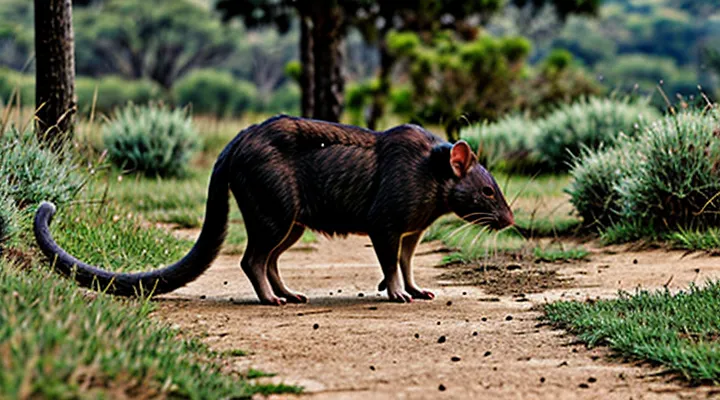
What Defines «Large» in Wild Rats?
Common Misconceptions About Rat Size
Rats often attract exaggerated claims about their dimensions, especially when photographs of unusually large specimens circulate online. These images fuel several persistent myths that distort public understanding.
- Myth: All wild rats exceed a foot in length. Reality: Typical adult brown rats (Rattus norvegicus) measure 9–11 inches from nose to tail base; only a minority reach or surpass 12 inches, and extreme sizes are rare outliers.
- Myth: Body mass scales directly with length. Reality: Weight varies with age, sex, diet, and health. A 10‑inch rat may weigh 200 g, while a similarly long individual in a resource‑rich environment can approach 300 g, but size alone does not predict mass reliably.
- Myth: Larger rats dominate every habitat. Reality: Habitat suitability determines size distribution. Urban environments often support smaller, more agile individuals, whereas agricultural fields may produce larger specimens due to abundant food.
- Myth: Photographs always depict live, healthy rats. Reality: Many striking images are staged, use captive specimens, or feature swollen stomachs after feeding, artificially inflating perceived size.
- Myth: Size correlates with aggressiveness. Reality: Behavioral traits depend on social structure and stress levels, not on physical dimensions.
Understanding these misconceptions clarifies that while exceptional large rats exist, they represent a small fraction of the overall population. Accurate assessment requires measuring live specimens in context, not relying on sensational images alone.
Factors Influencing Rat Size
The size of feral rodents varies according to a combination of genetic, environmental, and ecological variables. Genetic inheritance determines the baseline growth potential for each species, while selective pressures in specific habitats can amplify or diminish that potential over generations.
Environmental conditions shape growth outcomes directly. Abundant food resources, high protein availability, and stable water supplies support larger body mass. Conversely, limited nutrition, extreme temperatures, and seasonal scarcity constrain growth. Habitat structure also matters; dense vegetation and complex burrow systems provide shelter and foraging opportunities that favor larger individuals.
Ecological interactions further influence size. Intraspecific competition for mates and territory often selects for greater body size, enhancing dominance and reproductive success. Predation pressure can produce opposite effects, where smaller, more agile individuals have higher survival rates. Parasitic load and disease prevalence can reduce growth rates and final size.
Key factors influencing rat size:
- Genetic lineage and selective breeding
- Food quantity and quality
- Water accessibility
- Ambient temperature and climate stability
- Habitat complexity and shelter availability
- Competition for resources and mates
- Predation intensity
- Parasite and pathogen burden
Visual Identification: Photos and Characteristics
Distinguishing Features of Large Wild Rat Species
Large wild rats exhibit a range of morphological and behavioral traits that enable reliable identification in the field. Size, fur coloration, tail length, ear shape, and dental structure form the primary diagnostic criteria.
- Size and weight: Species such as the giant black rat (Rattus rattus) reach body lengths of 30–35 cm and weigh up to 800 g, whereas the brown river rat (Rattus norvegicus) commonly measures 25–30 cm with a mass of 300–500 g. Extreme size, exceeding 40 cm and 1 kg, characterizes the New Guinea giant rat (Papagomys armandvillei).
- Fur coloration: The giant black rat presents uniformly dark brown to black dorsal pelage with a lighter ventral side. The brown river rat shows coarse, reddish‑brown fur, often with a grayish hue on the back. The New Guinea giant rat displays a dense, dark brown coat with occasional mottled patches.
- Tail proportion: In Rattus rattus, the tail is longer than the head‑body length, slender, and lightly haired. Rattus norvegicus possesses a shorter, thick tail covered with coarse hairs, roughly equal to body length. Papagomys armandvillei’s tail is relatively short, thick, and sparsely furred, reflecting its terrestrial habits.
- Ear morphology: The giant black rat has relatively large, rounded ears with a thin membrane. The brown river rat’s ears are medium‑sized, rounded, and densely furred. The New Guinea giant rat features small, rounded ears set low on the skull, adapted for burrowing.
- Dental pattern: All large wild rats share the characteristic rodent incisor arrangement—continuously growing, enamel‑covered front teeth with a sharp orange‑brown coloration. Species differ in molar crown height: Rattus rattus exhibits high, sharp cusps for gnawing hard seeds; Rattus norvegicus shows flatter molars suited for omnivorous diets; Papagomys armandvillei presents robust molars adapted for root consumption.
Behavioral observations further aid distinction. The giant black rat prefers arboreal habitats, often found in dense foliage, while the brown river rat favors riparian zones and human‑adjacent structures. The New Guinea giant rat is strictly ground‑dwelling, inhabiting forest floor litter and burrows.
Combining these measurable attributes—size, pelage, tail, ears, dentition, and habitat preference—provides a comprehensive framework for differentiating large wild rat species in photographic and field studies.
Norway Rats («Rattus norvegicus»)
Norway rats (Rattus norvegicus) are among the most widespread large wild rodents. Adults typically measure 20–25 cm in body length, with tails of comparable size, and weigh 250–500 g. Their coarse, brown‑gray fur provides camouflage in urban alleys, sewers, and agricultural fields.
Habitat flexibility allows them to thrive in subterranean burrows, riverbanks, and human‑made structures. Colonies establish dense networks of tunnels, each containing multiple nesting chambers lined with shredded material. Their nocturnal activity pattern focuses on foraging after dark, reducing exposure to predators.
Key biological traits include:
- Omnivorous diet: grains, fruits, insects, carrion, and human waste.
- Rapid reproduction: gestation of 21–23 days, litters of 6–12 pups, with females capable of three litters per year.
- High adaptability: tolerance of diverse climates, resistance to many poisons, and ability to learn avoidance of traps.
- Social hierarchy: dominant males defend territories, while subordinate individuals assist in food acquisition and burrow maintenance.
Ecological impact is significant. In agricultural settings, they cause crop loss and contaminate stored produce. In urban environments, they spread pathogens such as Leptospira and hantavirus, posing public‑health concerns. Control measures rely on integrated pest‑management strategies, combining habitat modification, baiting, and exclusion techniques.
Photographic documentation of Norway rats emphasizes their robust build, distinctive whisker arrangement, and characteristic tail length. Images captured in various habitats illustrate the species’ adaptability and provide visual reference for identification and research.
Roof Rats («Rattus rattus»)
Roof rats (Rattus rattus) belong to the genus Rattus and are among the larger rodent species encountered in urban and rural environments. Adults typically measure 16–25 cm in body length, with tails extending 18–30 cm, and weigh 150–300 g, placing them above many native murine counterparts.
Key physical traits include a sleek, dark brown to black dorsal coat, lighter ventral fur, a proportionally long, hairless tail, and relatively large ears. The head is narrow, with a pointed snout and prominent whiskers. These characteristics distinguish roof rats from other large wild rats such as Norway rats, which display a bulkier build and a scaly tail.
Roof rats originated in Southeast Asia but now inhabit tropical and subtropical regions worldwide. They favor elevated habitats—attics, roof spaces, trees, and high shelves—where they can exploit shelter and food sources while avoiding ground predators. Their distribution includes coastal cities, agricultural complexes, and island ecosystems.
Nocturnal activity defines their daily pattern; they emerge after dusk to forage on grains, fruits, insects, and human waste. Exceptional climbing ability allows navigation of vertical surfaces, wires, and pipes. Breeding occurs year‑round in warm climates, with litters of 5–10 pups produced every 30 days, leading to rapid population growth when resources are abundant.
Human interaction presents several concerns. Structural damage arises from gnawing on insulation, wiring, and building materials. Food contamination results from droppings and urine, creating health hazards. Roof rats can transmit pathogens such as leptospirosis, hantavirus, and murine typhus, emphasizing the need for vigilant control measures.
Photographic documentation benefits from the following guidelines:
- Use a macro lens or close‑up setting to capture fine details of fur texture and whisker placement.
- Position lighting from an angle to accentuate the contrast between dorsal and ventral coloration.
- Include the tail in the frame to verify length and hairlessness, a primary identifier.
- Photograph the head at eye level to reveal ear size and snout shape.
- Capture multiple angles (side, dorsal, ventral) for comprehensive visual records.
Accurate images combined with precise morphological notes support effective identification and management of roof rat populations within the broader study of large wild rat species.
Other Notable Large Species
In addition to the sizeable wild rats previously examined, several other large species demonstrate distinctive morphology and ecological adaptations.
- Capybara (Hydrochoerus hydrochaeris) – the world’s largest rodent, reaching up to 65 kg; semi‑aquatic, herbivorous, lives in South American wetlands; social groups of 10–20 individuals; dense, water‑repellent fur.
- North American beaver (Castor canadensis) – body mass 15–30 kg; aquatic engineer, constructs dams and lodges; incisors grow continuously, enabling tree felling; thick, oily coat provides insulation.
- Patagonian mara (Dolichotis patagonum) – size comparable to a small rabbit, weight 7–9 kg; inhabits Argentine steppes; monogamous pairs defend territories; elongated limbs support fast running.
- African giant pouched rat (Cricetomys gambianus) – weight up to 1.5 kg; utilizes large cheek pouches for food storage; trained for detection of explosives and disease; nocturnal omnivore.
- Giant bamboo rat (Rhizomys sumatrensis) – reaches 2.5 kg; lives in Southeast Asian forests; predominantly bamboo diet; robust skull accommodates strong jaw muscles.
These species expand the understanding of size variation and niche specialization among large rodents, offering comparative data for morphological and behavioral studies.
Comparing with Domesticated Rats
Large feral rats found in urban and rural environments differ markedly from the domesticated rats kept as laboratory or pet animals. The contrast is evident in physical dimensions, ecological adaptations, social organization, and health considerations.
- Size: Wild individuals regularly exceed 300 g and display body lengths of 25–30 cm, whereas domesticated counterparts average 200–250 g and 20–25 cm.
- Coat condition: Outdoor rats possess coarse, weather‑resistant fur with frequent parasites; captive rats exhibit smoother, cleaner pelage due to controlled hygiene.
- Dietary range: Ferals exploit diverse waste sources, including carrion and contaminated food, resulting in a broader nutrient intake; domesticated rats receive balanced, formulated feeds.
- Habitat use: Wild rats occupy sewers, abandoned structures, and open fields, adapting to fluctuating temperatures and predators; domestic rats reside in stable, climate‑controlled enclosures.
- Reproductive output: Both groups breed year‑round, but wild rats experience higher juvenile mortality, prompting larger litter sizes (8–12 pups) compared to the typical 6–8 pups of captive strains.
- Behavioral traits: Ferals exhibit heightened wariness, aggressive territoriality, and nocturnal activity patterns; domesticated rats are habituated to human contact, display reduced aggression, and are active throughout the light cycle.
- Health profile: Exposure to pathogens, heavy metals, and parasites is common among wild rats, whereas captive rats benefit from veterinary oversight, vaccination, and pathogen‑free environments.
Understanding these distinctions clarifies why photographic documentation of large feral rats emphasizes rugged appearance and adaptive features, while images of domesticated rats highlight cleanliness and docility.
Habitat and Behavior
Preferred Environments of Large Wild Rats
Large wild rats occupy a range of habitats that provide reliable food sources, shelter from predators, and access to water. Their distribution reflects the ability to exploit both natural and anthropogenic environments.
- Temperate forests – dense understory and fallen logs offer protection and abundant invertebrate prey.
- Riparian zones – proximity to streams supplies moisture and supports seed and insect populations.
- Agricultural fields – cultivated crops and post‑harvest residues provide high‑calorie nutrition.
- Urban sewer systems – underground networks deliver constant waste streams and limited human disturbance.
- Coastal marshes – saline vegetation and shallow water support specialized foraging behavior.
Habitat selection depends on three primary criteria: food availability, structural complexity for nesting, and minimal exposure to predators. In regions where natural cover is scarce, rats adapt by colonizing man‑made structures such as abandoned buildings, drainage culverts, and compost piles. Seasonal fluctuations influence movement; populations shift toward higher‑moisture areas during dry periods and retreat to insulated burrows when temperatures drop.
Geographic variation modifies preferences. In subtropical zones, dense bamboo thickets replace temperate understory, while in arid landscapes, rats concentrate around irrigation canals and livestock pens. Despite these differences, the core requirement remains consistent: environments that sustain continuous energy intake and provide secure shelter.
Social Structures and Interactions
Large feral rats that reach considerable size form organized groups rather than random aggregations. Within a colony, individuals occupy distinct positions that influence access to resources, mating opportunities, and shelter. Dominant males typically patrol the periphery of the burrow system, defend entry points, and control the flow of food brought by foragers. Subordinate males remain near central chambers, awaiting chances to ascend the hierarchy when dominant individuals are displaced or die.
Female rats establish matrilineal clusters that persist across breeding seasons. These clusters share nesting sites, coordinate pup care, and exchange grooming sessions that reinforce social bonds. Grooming reduces ectoparasite loads and conveys chemical cues about health status, thereby influencing partner selection and group cohesion.
Communication relies on a combination of olfactory, auditory, and tactile signals:
- Scent marking with urine and glandular secretions delineates territory boundaries and conveys individual identity.
- High‑frequency vocalizations signal alarm, coordinate foraging, and maintain group spacing.
- Whisker contact during close‑quarter interactions transmits tactile information about posture and intent.
Aggressive encounters are brief and usually resolved through threat displays—raised fur, tail flicking, and tooth baring—rather than prolonged fighting. This minimizes injury risk while preserving the colony’s overall stability.
Resource sharing follows a reciprocal pattern. Individuals that discover abundant food sources deposit scent trails that guide others, while recipients reciprocate by participating in nest maintenance and predator vigilance. The collective vigilance system involves rotating sentinel duties, where each rat periodically assumes a lookout position to detect predators and emit alarm calls.
Reproductive interactions are regulated by the social hierarchy. Dominant males gain priority access to estrous females, yet subordinate males may achieve mating success through sneaking behavior, exploiting moments when dominant individuals are occupied elsewhere. This dual strategy sustains genetic diversity within the population.
Overall, the social architecture of large wild rats balances competition and cooperation, enabling efficient resource exploitation, predator avoidance, and reproductive success across diverse environments.
Dietary Habits and Foraging Behavior
Large wild rats exhibit highly adaptable feeding strategies. Their diet combines plant material, animal protein, and anthropogenic waste, reflecting opportunistic foraging across diverse habitats. Primary plant sources include seeds, grains, tubers, and fruit skins; animal components consist of insects, carrion, and small vertebrates. Human‑derived refuse—bread, processed foods, and discarded meat—supplements natural intake in urban and peri‑urban settings.
Foraging occurs chiefly at night, when reduced illumination lowers predator exposure. Rats employ tactile whiskers and acute olfaction to locate concealed items, and they navigate complex burrow networks to access underground stores. Seasonal shifts modify consumption patterns: spring and summer emphasize fresh vegetation and insects, while autumn sees increased seed and grain intake to build fat reserves. In winter, reliance on stored caches and human waste intensifies.
Social dynamics influence resource acquisition. Dominant individuals monopolize high‑value food patches, whereas subordinates engage in opportunistic raids on peripheral sources. Cooperative behavior appears in litter groups that share foraging routes, enhancing efficiency and reducing individual risk.
Typical dietary items can be summarized:
- Grains (wheat, corn, barley)
- Seeds (sunflower, millet)
- Tubers (potatoes, carrots)
- Fruit remnants (apple cores, berries)
- Insects (beetles, larvae)
- Small vertebrates (juvenile amphibians)
- Carrion
- Human refuse (bread, processed snacks)
Potential Dangers and Management
Health Risks Associated with Large Wild Rats
Large wild rats commonly inhabit urban and agricultural environments, frequently contacting human food supplies, waste, and water sources. Their size and mobility increase the probability of contact with people and domestic animals, creating a direct pathway for disease transmission.
- Leptospirosis – bacterial infection spread through urine-contaminated water or soil; symptoms range from mild fever to severe kidney failure.
- Hantavirus Pulmonary Syndrome – viral disease contracted by inhaling aerosolized particles from rodent droppings; can cause rapid respiratory distress and death.
- Salmonellosis – bacterial infection acquired from handling or consuming food contaminated with rat feces; leads to gastrointestinal inflammation and dehydration.
- Rat‑borne Typhus – caused by Rickettsia typhi transmitted by fleas that feed on rats; results in fever, rash, and headache.
- Plague – Yersinia pestis carried by fleas that infest rats; manifests as bubonic, septicemic, or pneumonic forms, each with high mortality if untreated.
Transmission occurs through several mechanisms: direct contact with contaminated fur, saliva, or bite wounds; ingestion of food or water tainted with feces or urine; inhalation of dust containing dried excreta; and vector‑mediated spread via fleas or ticks that feed on rats and subsequently bite humans or pets.
Control measures focus on habitat reduction, waste management, and personal protection. Secure garbage containers, eliminate standing water, and seal building entry points to deter colonization. Regular inspection and treatment of rodent populations with approved rodenticides limit numbers while minimizing ecological impact. Protective equipment, such as gloves and masks, should be worn when cleaning areas with known rodent activity. Vaccination against leptospirosis is recommended for high‑risk occupational groups. Prompt medical evaluation of any febrile illness following exposure to rat‑infested environments improves outcomes.
Damage to Property and Infrastructure
Large wild rats, often exceeding 30 cm in body length, cause extensive damage to both private property and public infrastructure. Their powerful incisors and persistent foraging habits enable them to breach a wide range of materials, from soft insulation to reinforced concrete.
Typical damage includes:
- Chewed electrical wiring, leading to short circuits, fire hazards, and costly replacements.
- Compromised plumbing through gnawed seals and pipe insulation, resulting in leaks and water‑damage.
- Deteriorated structural components such as wooden beams, drywall, and plaster, weakening building integrity.
- Contaminated food storage areas and surfaces, prompting sanitation failures and product loss.
- Obstructed drainage systems and clogged sewer lines, causing overflow and environmental hazards.
The severity of these impacts correlates with the rodents’ reproductive capacity; a single female can produce several litters per year, rapidly expanding populations and intensifying the frequency of attacks. Control measures that target nesting sites, block access points, and reduce food availability prove most effective in limiting property loss. Continuous monitoring and prompt remediation are essential to prevent escalation and preserve the functionality of residential, commercial, and municipal structures.
Effective Management and Prevention Strategies
Effective management of oversized feral rodents requires a systematic approach that integrates habitat modification, exclusion techniques, population reduction, and ongoing surveillance.
Habitat modification reduces shelter and food availability. Removing debris, sealing entry points, and maintaining vegetation at low height eliminate nesting sites. Regular waste collection and secure storage of refuse deny rodents access to sustenance.
Exclusion relies on physical barriers. Installing metal mesh with apertures no larger than 1 cm on building foundations, vents, and utility openings prevents ingress. Weather‑striped doors and self‑closing lids on bins add further protection.
Population reduction combines trapping and baiting. Snap traps positioned along established runways provide immediate capture; live traps enable relocation when humane considerations apply. Rodenticides, applied in tamper‑proof stations and calibrated to local regulations, target individuals while minimizing non‑target exposure.
Biological control supplements mechanical methods. Predatory birds, such as owls and hawks, can be encouraged through nesting box installation. Certain parasitic nematodes, approved for rodent use, reduce reproductive capacity when integrated into bait matrices.
Monitoring tracks effectiveness. Motion‑activated cameras document activity levels and identify high‑traffic corridors. Quarterly surveys of droppings, gnaw marks, and burrow density generate quantitative metrics for adaptive management.
Public education reinforces technical measures. Informing residents about proper waste handling, reporting sightings, and avoiding feeding wildlife curtails inadvertent support of rodent populations.
Implementing these strategies in concert creates a resilient framework that limits the presence of large wild rats, safeguards infrastructure, and protects public health.