
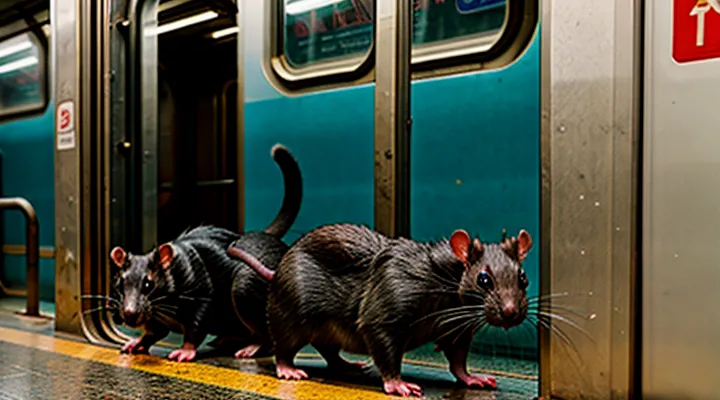
The Urban Ecosystem: A Haven for Rodents
The Subway Environment: An Ideal Habitat
Food Abundance and Accessibility
Rats inhabiting metropolitan rail networks rely on a constant supply of edible material deposited by commuters, maintenance crews, and commercial vendors. The confined environment concentrates waste, creating a reliable nutrient reservoir that supports large colonies.
Key sources of sustenance include:
- Discarded packaging containing residual food particles.
- Spilled beverages and sugary syrups on platform surfaces.
- Organic refuse collected in trash receptacles that are frequently overfilled.
- Droppings from street vendors and kiosk operators, often left unattended.
Accessibility is facilitated by the architectural layout of underground stations. Open conduit passages and ventilation shafts provide direct routes between platform levels and service tunnels, allowing rodents to reach hidden caches without exposure to predators. Scheduled cleaning cycles generate predictable periods of waste accumulation, which rats exploit by timing foraging activities to coincide with reduced human presence. Additionally, the lack of stringent pest‑control barriers in maintenance areas permits unimpeded movement across the network, ensuring that food remains within reach for the entire population.
Shelter and Seclusion
Rats occupying underground transit systems exploit structural voids that offer consistent temperature, humidity, and protection from surface disturbances. Typical shelters include:
- Service tunnels and maintenance shafts, where concrete walls retain heat and moisture.
- Drainage chambers, providing low‑light environments and access to water runoff.
- Abandoned platform sections, offering spacious niches shielded from routine cleaning.
Seclusion is achieved through spatial selection and behavioral timing. Rodents favor dead‑end corridors and recessed utility rooms, avoiding high‑traffic zones. Activity peaks during off‑peak hours, when passenger flow diminishes, allowing safe foraging and nest construction. Limited exposure to human presence reduces stress and mortality risk.
The combination of stable microclimate and isolated nesting sites supports growth to sizes larger than typical urban rats. Continuous shelter availability enables year‑round breeding, while seclusion minimizes encounters with predators such as station cats and extermination crews. «The subway environment functions as a resilient habitat, sustaining rodent populations despite surface control measures».
Constant Temperature and Humidity
The underground rail system maintains a narrow range of temperature, typically between 10 °C and 20 °C, and relative humidity around 70 %. These stable conditions persist regardless of seasonal weather fluctuations, creating an environment that rarely challenges thermoregulatory mechanisms.
Rats exploit this constancy by reducing metabolic expenditure required for heat production or loss. Consistent humidity prevents excessive dehydration, allowing efficient kidney function and minimizing the need for frequent water sources. The combination of moderate heat and moisture supports rapid digestion and high reproductive rates.
- Lower energy demand for thermoregulation
- Sustained skin and respiratory hydration
- Accelerated growth cycles
- Enhanced survival of offspring in early development
Control strategies must consider that temperature and humidity alone do not limit population growth. Measures targeting food availability, shelter disruption, and waste management prove more effective than attempts to alter the climate of the tunnels.
Survival Mechanisms of Subway Rats
Adaptations to Urban Life
Physical Traits for Survival
Rats that occupy underground transit networks exhibit a suite of physical adaptations that directly support life in confined, low‑light, and high‑traffic environments.
- Robust musculature in the forelimbs, providing powerful grip on slick surfaces and the ability to climb vertical pipes.
- Dense, water‑repellent fur, reducing heat loss and protecting against exposure to moisture and chemicals.
- Elongated whiskers (vibrissae) that detect subtle air currents, facilitating navigation through dark tunnels.
- Continuously growing incisors with self‑sharpening enamel, allowing efficient gnawing of hard materials such as plastic, metal, and concrete.
- Strong, curved claws designed for traction on smooth rails and grated grates.
- Compact skeletal frame with flexible spine, enabling rapid maneuvering through narrow gaps and over obstacles.
- Elevated basal metabolic rate, supporting sustained activity despite limited food availability.
The muscular forelimbs generate sufficient force to overcome the friction of polished metal surfaces, while the specialized claw curvature prevents slippage on wet tracks. Dense fur insulates against temperature fluctuations common in subterranean shafts and resists absorption of toxic runoff. Vibrissae transmit tactile information to the brain’s somatosensory cortex, compensating for the absence of reliable visual cues. Continuously renewing incisors maintain a sharp edge without the need for external tools, ensuring constant access to food sources hidden within infrastructure. A flexible spine permits the animal to compress its body, passing through openings as small as a few centimeters, thereby exploiting niches inaccessible to larger predators. An elevated metabolic rate converts scarce organic waste into energy rapidly, sustaining high‑intensity foraging and escape behaviors.
Behavioral Strategies for Foraging
Large rats inhabiting underground transit systems rely on a suite of foraging behaviors that enable survival in a highly variable environment.
- Nocturnal activity aligns feeding periods with reduced human traffic, minimizing disturbance and competition.
- Opportunistic scavenging exploits discarded food waste, spilled liquids, and organic residues left on platform surfaces.
- Spatial memory of stable food sources, such as vending machine trays or maintenance storage rooms, allows efficient route planning and reduces energy expenditure.
- Social information transfer, through scent markings and vocal cues, directs individuals toward newly discovered resources without extensive exploration.
- Dietary flexibility incorporates plant material, insects, and carrion, ensuring nutrition when preferred items are scarce.
- Risk assessment balances the proximity of predators (e.g., cleaning staff, extermination devices) against potential caloric gain, prompting rapid retreat or concealment when threats intensify.
These strategies collectively support the persistence of sizable rat populations within subway networks despite the challenges posed by human activity and infrastructure constraints.
Reproduction and Population Dynamics
High Reproductive Rate
The capacity of sizable subterranean rodents to multiply quickly underpins their persistence in underground transit networks. Rapid population growth compensates for high mortality caused by predators, sanitation measures, and human disturbance.
- Females reach sexual maturity within three months of birth.
- Gestation lasts approximately twenty‑three days.
- Each litter contains up to twelve offspring.
- Breeding cycles repeat every four to six weeks when food is abundant.
These parameters enable a single pair to generate several hundred descendants within a year. The resulting turnover creates a constant influx of juveniles, which occupy vacant niches in stations, tunnels, and maintenance shafts. Dense food sources—discarded waste, organic debris, and opportunistic foraging on sewer lines—support this expansion without requiring external immigration.
Population spikes coincide with seasonal variations in waste volume and temperature, amplifying reproductive output during warmer months. The swift generational turnover also accelerates the spread of genetic traits that enhance tolerance to toxins and resistance to rodenticides.
Effective management must address the reproductive engine directly. Strategies include reducing accessible food, implementing continuous baiting programs, and disrupting nesting sites to lower the success rate of each breeding cycle. Targeted actions that diminish litter size or delay sexual maturity can curtail the exponential growth characteristic of these urban rodents.
Rapid Maturation
Rapid maturation characterizes the life cycle of subterranean rodent populations that inhabit urban transit tunnels. Juvenile individuals reach sexual maturity within four to six weeks, a period substantially shorter than that of surface-dwelling conspecifics. This accelerated development results from several physiological and environmental pressures.
High ambient temperatures, consistent food availability from discarded waste, and reduced predation risk create conditions that favor early reproductive readiness. Hormonal regulation adapts accordingly: elevated levels of gonadotropin‑releasing hormone stimulate earlier gonadal development, while accelerated somatic growth is supported by increased insulin‑like growth factor activity.
Rapid maturation also influences population dynamics. Early breeding cycles generate overlapping generations, leading to exponential growth during favorable seasons. Consequently, colony density can double within a single month, intensifying competition for limited shelter space and prompting behavioral adaptations such as hierarchical nesting and territorial partitioning.
Management strategies must account for this life‑history trait. Control measures that target only mature individuals prove ineffective, as a substantial proportion of the population consists of sexually active juveniles. Integrated approaches that disrupt breeding cycles—through environmental sanitation, habitat modification, and temporal baiting—reduce the reproductive output of the entire cohort.
Overall, the swift transition from birth to reproductive capability enables underground rat colonies to sustain high numbers despite periodic disturbances, ensuring their persistence within the complex ecosystem of urban transit systems.
Challenges and Threats Faced by Subway Rats
Predation and Control Measures
Natural Predators in the Urban Landscape
The sizable rodent populations that occupy underground transit tunnels encounter a limited set of natural enemies. Predatory species capable of navigating confined, artificial environments constitute the primary biological control agents.
• Peregrine and other urban‑adapted hawks exploit ventilation shafts and open station platforms to capture rodents in flight or on the ground.
• Barn owls, attracted by nocturnal activity, hunt within station corridors and maintenance tunnels where low light favors their acoustic hunting.
• Feral and stray cats, often present in station perimeters, extend their range into open stairwells and maintenance rooms, preying on exposed individuals.
• Raccoons, opportunistic scavengers, infiltrate service tunnels and feed on both rats and discarded waste, reducing rat numbers indirectly through competition.
• Urban snakes, such as the common garter snake, occasionally appear in underground drainage systems, preying on smaller rodent cohorts.
These predators rely on visual, auditory, and olfactory cues to locate prey, compensating for the reduced vegetation and natural cover typical of subway infrastructure. Their presence is amplified by human‑created microhabitats—trash accumulation, water leaks, and structural gaps—that support prey availability and predator foraging efficiency.
Effective urban pest management acknowledges the role of these native hunters. Conservation of access points, minimal disturbance of predator habitats, and avoidance of excessive chemical control sustain the ecological balance that naturally curtails rodent populations within transit networks.
Human-Initiated Pest Control
Human‑initiated pest control in underground transit systems focuses on eliminating large rodent populations that exploit the network’s infrastructure. Strategies combine physical barriers, chemical agents, and habitat alteration to reduce breeding sites and limit food sources.
Typical interventions include:
- Installation of sealed conduit covers to block entry points.
- Deployment of snap traps and live‑capture devices in high‑traffic stations.
- Application of rodenticides in bait stations, following regulatory safety protocols.
- Regular removal of waste and organic debris that attract foraging rodents.
- Scheduling of routine inspections to identify signs of activity and assess trap efficacy.
«Routine inspections reduce colony size by up to 30 %», reports a municipal health agency. Continuous monitoring enables rapid adjustment of control measures when rodents develop bait aversion or relocate to untreated sections of the line.
Integrated pest management (IPM) combines these tactics with data‑driven decision‑making. IPM aims to minimize chemical use, prevent resistance, and protect non‑target species. Success depends on coordination between transit authorities, pest‑control contractors, and public‑health officials, ensuring that interventions remain effective despite the rodents’ high reproductive rate and adaptability.
Disease and Competition
Intraspecific and Interspecific Competition
Intraspecific competition among subway-dwelling rats centers on limited access to food caches, nesting sites, and safe pathways. Individuals of the same species contest these resources through aggressive encounters, territorial marking, and displacement. High population density intensifies these interactions, leading to reduced body condition for subordinate rats and increased mortality rates.
Interspecific competition involves rats and other urban fauna such as pigeons, cockroaches, and feral cats. Overlap in dietary preferences creates indirect pressure on food availability, while predation risk from cats adds an external mortality factor. The coexistence of multiple species forces rats to adapt foraging schedules, favoring nocturnal activity to avoid peak pigeon feeding times and cat patrols.
Key mechanisms influencing competitive outcomes include:
- Resource partitioning: rats exploit crevices and drainage systems inaccessible to larger competitors.
- Temporal segregation: feeding peaks during off‑peak subway hours reduce encounter rates with other species.
- Behavioral plasticity: increased boldness and rapid learning enable rats to navigate novel obstacles created by human maintenance activities.
Empirical observations from metropolitan pest‑control surveys indicate that areas with dense waste accumulation experience heightened intraspecific aggression, while zones with active bird feeding programs show elevated interspecific pressure on rat populations. Management strategies that limit food spillage and restrict access to drainage networks diminish both forms of competition, thereby stabilizing rat numbers and reducing infrastructure damage.
Disease Transmission Among Populations
Subway‑dwelling rodents thrive in underground transit systems where dense human traffic creates continuous food sources and shelter. Their proximity to commuters facilitates the exchange of pathogenic agents, influencing disease dynamics across multiple host groups.
Key mechanisms of pathogen spread include:
- Direct contact with contaminated surfaces such as railings, ticket machines, and platform benches.
- Indirect transmission through droppings that contaminate food waste, water sources, and ventilation ducts.
- Vector‑mediated spread when insects feed on rat excreta and subsequently bite humans.
- Aerosolization of bacterial spores or viral particles during cleaning activities that disturb accumulated waste.
Pathogens commonly associated with these carriers encompass bacteria («Salmonella», «Leptospira»), viruses (hantavirus, rat‑borne encephalitis viruses), and parasites («Giardia», «Toxoplasma»). Each agent exhibits distinct survival strategies; for instance, leptospires persist in moist environments, while hantaviruses remain viable in dried droppings for weeks.
Population‑level impacts arise from the convergence of high‑density human movement and the rats’ adaptive foraging behavior. Outbreaks often manifest in neighborhoods adjacent to transit hubs, where surveillance data reveal elevated incidence rates of leptospirosis and gastroenteritis. Control measures that target environmental sanitation, waste management, and rodent population reduction directly diminish the reservoir of infectious agents, thereby lowering transmission risk.
Effective mitigation requires coordinated actions among municipal health agencies, transit authorities, and public health researchers. Continuous monitoring of rodent populations, combined with molecular testing of environmental samples, provides timely identification of emerging threats and supports evidence‑based interventions.
The Ecological Impact of Subway Rats
Role in the Urban Food Web
Scavengers and Decomposers
Rats that inhabit underground transit systems rely on a continuous influx of organic material discarded by commuters and maintenance operations. Scavengers and decomposers transform this material into accessible nutrients, sustaining the rodent population despite the absence of conventional food sources.
Scavengers include opportunistic insects and small vertebrates that locate discarded waste, carrion, and dead conspecifics. Their activity breaks down large fragments, exposing softer tissues for rat consumption. Typical scavenger groups are:
- Cockroaches and beetles that feed on food residues.
- House mice that compete for and share available scraps.
- Urban feral cats that remove larger carcasses, leaving remnants.
Decomposers consist of microorganisms that chemically decompose organic matter. Bacterial colonies and filamentous fungi proliferate on moist surfaces of subway tunnels, converting proteins, lipids, and carbohydrates into simpler compounds. These compounds dissolve into runoff water and soil, becoming readily ingestible for rats during foraging.
The interaction of scavenger and decomposer communities creates a feedback loop: physical breakdown by scavengers accelerates microbial colonization, while microbial activity reduces waste volume, limiting disease risk and maintaining a stable food supply for the rodents. «The efficiency of microbial decomposition in subterranean environments directly influences rodent foraging success,» reports a recent microbiological survey of metropolitan transit systems.
Prey for Urban Wildlife
The massive subterranean rodents that inhabit metropolitan transit systems become a primary food source for a range of urban predators. Their size and abundance support populations of feral cats, raptors, and opportunistic snakes that have adapted to the built environment.
Rats sustain predator numbers by providing consistent, high‑calorie meals. Predators exploit the predictable flow of commuters, timing attacks during low‑traffic periods when rats are most active in tunnels and station shafts. The presence of prey influences predator territory size, breeding cycles, and foraging behavior.
Key predators include:
- Feral and stray cats that patrol platform edges and maintenance corridors.
- Urban raptors such as peregrine falcons, which nest on high structures and dive into stations during daylight.
- Small snakes, notably blind snakes, that navigate drainage systems to capture juvenile rodents.
- Larger mammals like raccoons that enter service tunnels in search of carcasses and live prey.
The predator‑prey dynamic contributes to ecological balance within the city’s underground ecosystem. By regulating rat numbers, these wildlife species reduce the risk of disease transmission and limit damage to infrastructure caused by unchecked rodent activity. The interaction illustrates how urban environments create novel food webs that sustain both invasive and native species.
Public Health and Perception
Disease Vectors and Public Health Concerns
Large rats that inhabit underground transit networks serve as carriers of pathogenic microorganisms, creating direct challenges for urban health systems. Their proximity to passengers, food waste, and infrastructure surfaces facilitates the movement of microbes from rodent populations to humans.
Common pathogens identified in these rodents include:
- Leptospira spp., the agents of leptospirosis;
- Salmonella enterica, responsible for gastrointestinal infections;
- Hantavirus, linked to hemorrhagic fever with renal syndrome;
- Methicillin‑resistant Staphylococcus aureus (MRSA), contributing to antibiotic‑resistant infections.
Transmission pathways operate through contaminated droppings, urine, and gnawed materials that enter ventilation shafts, ticketing machines, and platform surfaces. Direct contact with these residues, inhalation of aerosolized particles, and indirect exposure via food handling represent the primary routes of infection.
Public health concerns arise from the potential for outbreak amplification in densely populated transit hubs. Surveillance data indicate higher incidence rates of leptospirosis and salmonellosis among commuters during periods of increased rodent activity. The presence of antibiotic‑resistant strains escalates treatment complexity and resource allocation for healthcare providers.
Mitigation strategies focus on integrated pest management, environmental sanitation, and continuous monitoring. Effective measures encompass:
- Routine baiting and trapping programs targeting high‑density rodent zones;
- Installation of sealed waste containers to reduce food availability;
- Regular disinfection of platforms and equipment using agents proven against the listed pathogens;
- Deployment of sensor technology to detect rodent movement and trigger rapid response.
Implementation of these actions reduces the likelihood of «disease vector»–mediated transmission, thereby safeguarding commuter health and maintaining operational integrity of urban transit systems.
Societal Attitudes Towards Urban Rodents
Public perception of city‑dwelling rodents centers on fear of disease, property damage, and visual discomfort. Media reports emphasize infestations, reinforcing negative stereotypes and prompting swift municipal responses. Health agencies classify large subway rats as vectors for pathogens, prompting regular sanitation campaigns and targeted extermination programs.
Economic considerations drive policy. Municipal budgets allocate funds for pest‑control operations, waste‑management upgrades, and infrastructure repairs to mitigate damage caused by gnawing. Cost‑benefit analyses often prioritize immediate removal over long‑term habitat modification, reflecting a preference for visible results.
Cultural narratives shape attitudes. In many urban societies, rodents symbolize filth and neglect, appearing in literature and graffiti as cautionary figures. Conversely, some subcultures adopt the animal as a symbol of resilience, citing its ability to thrive in harsh underground environments.
Key factors influencing societal stance include:
- Public health warnings issued by health departments.
- Media coverage highlighting incidents of rodent sightings.
- Municipal expenditure reports detailing pest‑control spending.
- Community outreach programs that educate residents on waste‑reduction practices.
Legislative frameworks respond to public pressure. Ordinances mandate regular inspections of subway tunnels, enforce strict waste‑disposal regulations, and empower city officials to authorize emergency extermination when infestations reach predefined thresholds. Enforcement actions are documented in city council minutes and public safety bulletins.
Overall, societal attitudes combine apprehension, economic pragmatism, and cultural symbolism, directing urban management strategies toward immediate control measures while occasionally acknowledging the adaptive capabilities of large subway rodents.