
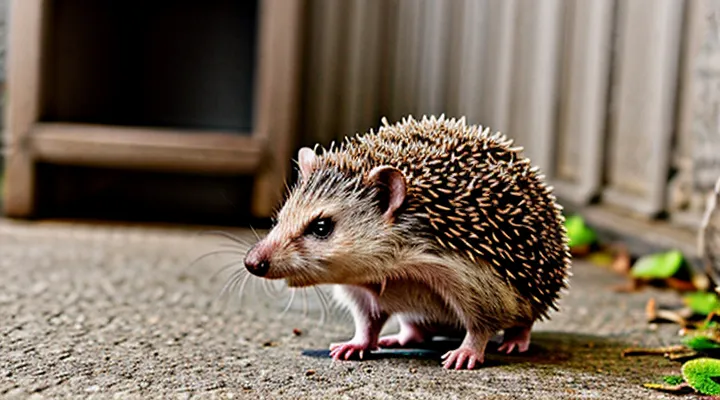
The Kingdom Animalia: A Broad Overview
Mammals: Our Shared Class
Mammals constitute a single class of vertebrates characterized by hair, three‑middle‑ear bones, and the production of milk by mammary glands. All members share a common evolutionary origin, yet the class contains a wide array of orders that diverge significantly in form and function.
Hedgehogs belong to the order Eulipotyphla, family Erinaceidae. Rats belong to the order Rodentia, family Muridae. Their taxonomic placement can be summarized:
- Class: Mammalia
- Order: Eulipotyphla
- Family: Erinaceidae (hedgehogs)
- Order: Rodentia
- Family: Muridae (rats)
The two orders split early in mammalian evolution. Molecular analyses place Eulipotyphla and Rodentia in separate branches of the placental mammal phylogenetic tree. The most recent common ancestor of hedgehogs and rats lived over 80 million years ago, predating the diversification of most modern mammalian orders.
Consequently, hedgehogs are not closely related to rats. Their connection is limited to the shared classification as mammals, while their evolutionary paths diverge at the order level.
Taxonomic Classification of Hedgehogs
Order: Eulipotyphla
Hedgehogs belong to the order Eulipotyphla, a clade of small insectivorous mammals that also includes moles, shrews, and solenodons. This order is situated within the superorder Laurasiatheria, distinct from the order Rodentia, which contains rats and other rodents. Molecular and morphological analyses place Eulipotyphla and Rodentia in separate evolutionary lineages that diverged early in placental mammal history, roughly 80–100 million years ago.
Key characteristics of Eulipotyphla:
- Dentition adapted for insect consumption, with sharp, pointed teeth.
- Reduced or absent external ears in many members (e.g., moles).
- Presence of a well‑developed olfactory system.
- Primarily solitary lifestyles and low metabolic rates.
Family composition within Eulipotyphla:
- Erinaceidae – hedgehogs and gymnures.
- Talpidae – moles and desmans.
- Soricidae – shrews.
- Solenodontidae – solenodons.
Rodents, by contrast, exhibit continuously growing incisors, a dental formula suited for gnawing, and belong to a separate order characterized by diverse ecological niches and social structures. The phylogenetic distance between hedgehogs (Erinaceidae) and rats (Muridae) is comparable to that between hedgehogs and shrews, not to that between any two rodent families.
Consequently, hedgehogs are not closely related to rats; they share only a distant common ancestor among placental mammals, while their immediate relatives reside within Eulipotyphla.
Family: Erinaceidae
The family Erinaceidae comprises hedgehogs and gymnures, mammals placed in the order Eulipotyphla. This order is distinct from Rodentia, which includes rats, mice, and related species. Consequently, hedgehogs are not members of the rodent lineage.
Key characteristics of Erinaceidae:
- Body covered with keratinous spines (hedgehogs) or dense fur (gymnures).
- Dental formula lacking continuously growing incisors; molars are bunodont.
- Solitary, primarily nocturnal habits.
- Broad diet ranging from insects to plant material.
Molecular phylogenetics consistently groups Erinaceidae with shrews (family Soricidae) and moles (family Talpidae). DNA analyses of mitochondrial and nuclear genes place the divergence between Eulipotyphla and Rodentia at approximately 70–80 million years ago, well before the radiation of modern rodents.
Fossil records indicate that early erinaceids appeared in the Paleogene, evolving separate skeletal and cranial features from those of rodents. Their evolutionary trajectory follows a pattern of adaptation to ground-dwelling insectivory, not the gnawing specialization typical of rodents.
In summary, hedgehogs belong to Erinaceidae within Eulipotyphla, a lineage that is phylogenetically distant from the rodent clade that contains rats. The two groups share only the broad classification of Mammalia, not a close taxonomic relationship.
Key Genera and Species
Hedgehogs belong to the order Eulipotyphla, family Erinaceidae. The most widely recognized genera are:
- Erinaceus – European hedgehog (Erinaceus europaeus) and Southern white‑breasted hedgehog (Erinaceus concolor).
- Atelerix – African pygmy hedgehog (Atelerix albiventris).
- Paraechinus – Desert hedgehog (Paraechinus aethiopicus) and Indian hedgehog (Paraechinus micropus).
- Mesechinus – Chinese hedgehog (Mesechinus hughi).
Rats are classified in the order Rodentia, family Muridae, subfamily Murinae. Principal genera include:
- Rattus – Black rat (Rattus rattus), Brown rat (Rattus norvegicus), Polynesian rat (Rattus exulans).
- Bandicota – Lesser bandicoot rat (Bandicota indica).
- Niviventer – Chinese white‑toothed rat (Niviventer confucianus).
- Millardia – Sand rat (Millardia meltada).
Both groups are placental mammals, yet they diverge at the ordinal level: hedgehogs are eulipotyphlans, rodents are murids. Genetic analyses place them in separate clades, confirming that hedgehogs are not closely related to rats despite superficial size similarities.
Taxonomic Classification of Rats
Order: Rodentia
Hedgehogs belong to the order Eulipotyphla, not to Rodentia. Rodents form a distinct mammalian order characterized by a single pair of continuously growing incisors in each jaw, which are self‑sharpening through gnawing.
Rats are members of the family Muridae within Rodentia. Their dental formula includes incisors, premolars, and molars, and they lack the specialized spines that define hedgehogs.
Key differences between the two groups:
- Dental structure: Rodents have a single pair of large incisors; hedgehogs possess a full set of teeth without ever‑growing incisors.
- Body covering: Rodents are covered with fur; hedgehogs are covered with keratinized spines.
- Taxonomic hierarchy: Rodents → Order Rodentia → Families (e.g., Muridae). Hedgehogs → Order Eulipotyphla → Family Erinaceidae.
- Evolutionary lineage: Rodents diverged from other placental mammals in the Paleocene; hedgehogs share a more recent common ancestor with shrews and moles.
Therefore, hedgehogs are not members of Rodentia and are not closely related to rats. Their classification places them in a separate order with distinct morphological and evolutionary traits.
Family: Muridae
Hedgehogs are not members of the Muridae family. They belong to the order Eulipotyphla and the family Erinaceidae, whereas Muridae comprises the true rodents commonly called mice and rats.
Muridae is the largest rodent family. It contains more than 700 species distributed worldwide. Characteristic features include:
- continuously growing incisors that occlude against each‑back teeth;
- a diastema separating incisors from cheek teeth;
- well‑developed cheek pouches in many genera;
- primarily herbivorous or omnivorous diets;
- reproduction cycles with relatively short gestation periods.
Taxonomically, Muridae resides within the order Rodentia. Hedgehogs, by contrast, are placed in a separate order, indicating no direct evolutionary link between the two groups. The only shared classification level is the class Mammalia. Consequently, any perceived similarity between hedgehogs and rats reflects convergent ecological adaptations rather than common ancestry within Muridae.
Key Genera and Species
Hedgehogs and rats belong to distinct mammalian orders. Hedgehogs are members of the order Eulipotyphla, while rats are classified within the order Rodentia. Consequently, their evolutionary lineages diverged millions of years ago, and they share only distant common ancestry among placental mammals.
-
Hedgehog genera and representative species
- Erinaceus: European hedgehog (Erinaceus europaeus), Northern white-breasted hedgehog (Erinaceus roumanicus) African species:
- Atelerix: Four-toed hedgehog (Atelerix albiventris)
- Paraechinus: Desert hedgehog (Paraechinus aethiopicus)
- Mesechinus: Chinese hedgehog (Mesechinus hughi)
-
Rat genera and representative species
The separation of hedgehogs into Eulipotyphla and rats into Rodentia underscores that, despite superficial similarities such as body size in some species, they are not closely related at the genus or species level.
Evolutionary Paths: Divergent Lines
Ancient Ancestors
Hedgehogs and rats belong to distinct mammalian orders—Erinaceidae within Eulipotyphla and Muridae within Rodentia. Their connection lies in a shared ancestry among early placental mammals that existed in the Cretaceous period.
The common lineage can be traced through several ancient taxa:
- Early eutherians (≈125 Ma) – represented by fossils such as Eomaia and Juramaia, these species mark the origin of placental mammals.
- Stem Glires (≈100 Ma) – a hypothetical group that gave rise to rodents, lagomorphs, and related lineages.
- Stem Eulipotyphla (≈100 Ma) – early insectivorous mammals that later diversified into hedgehogs, shrews, and moles.
After these divergences, the hedgehog line evolved toward a spiny, insect‑eating niche, while the rodent line developed continuously growing incisors and a gnawing adaptation. Genetic analyses confirm that the two orders separated over 80 million years ago, indicating a distant but real common ancestry among early placental mammals.
Specialized Adaptations
Hedgehogs and rats belong to distinct orders; their specialized adaptations illustrate separate evolutionary trajectories.
- Hedgehogs exhibit keratinous spines that provide defense against predators.
- Muscular foot pads enable efficient burrowing in soil and leaf litter.
- Large, forward‑facing eyes support nocturnal vision.
- Highly developed olfactory epithelium detects insects and other prey.
- Low basal metabolic rate allows prolonged fasting during seasonal food scarcity.
Rats possess adaptations suited to omnivorous, opportunistic lifestyles.
- Continuously growing incisors, reinforced with enamel, allow gnawing of hard materials.
- Prominent vibrissae supply tactile feedback for navigation in confined spaces.
- Dexterous forepaws facilitate manipulation of objects and food items.
- Rapid reproductive cycle ensures population resilience.
- Strong olfactory and gustatory systems detect a wide range of food sources.
The contrast between spiny armor and gnawing dentition, between burrowing locomotion and agile climbing, confirms that hedgehogs and rats have evolved traits tailored to disparate ecological niches rather than sharing a recent common ancestor.
Physical Characteristics: A Comparative Look
Quills vs. Fur
Hedgehogs and rats belong to distinct mammalian orders; hedgehogs are erinaceids, while rats are murids. Their evolutionary paths diverged over 70 million years ago, reflected in markedly different body coverings.
Quills are modified hairs that have undergone keratinization, forming stiff, protective spines. They grow from follicles, are anchored deeply, and can detach when threatened. Fur consists of soft, flexible hairs that provide insulation, sensory input, and camouflage. Unlike quills, fur lacks the reinforced cortex and medulla that give spines their rigidity.
Key distinctions:
- Structure: Quills possess a hardened, hollow shaft; fur hairs are solid and thin.
- Function: Quills deter predators; fur regulates temperature and signals.
- Growth: Quills develop from specialized follicular cells; fur emerges from standard pilosebaceous units.
- Replacement: Quills are shed seasonally or after injury; fur is continuously renewed throughout the year.
These differences underscore why hedgehogs are not closely related to rats despite superficial similarities in size and nocturnal habits. The presence of quills, absent in rodents, marks a fundamental divergence in integumentary adaptation.
Dentition and Diet
Hedgehogs possess a set of simple, conical teeth adapted for crushing insect exoskeletons. Their incisors are reduced, molars are low‑crowned, and the dental formula reflects a primarily insectivorous diet rather than the hypsodont, continuously growing teeth typical of many rodents.
Dietary composition aligns with dental morphology. Hedgehogs consume:
- Beetles, caterpillars, and other soft‑bodied insects
- Earthworms and mollusks
- Occasionally small vertebrates such as amphibians
- Limited plant material, mainly seeds or fruit when insects are scarce
In contrast, rats exhibit pronounced incisors that grow throughout life, a high‑crowned molar pattern for grinding grains, and a diet dominated by seeds, cereals, and omnivorous opportunism. The divergent dentition and feeding strategies demonstrate that hedgehogs are not closely related to rats despite superficial similarities in size and terrestrial habits.
Body Shape and Locomotion
Hedgehogs and rats belong to distinct mammalian orders, which is reflected in their body architecture and movement patterns. A hedgehog’s body is compact, covered with a dense array of keratinized spines that limit flexibility but provide protection. The spine‑laden dorsal surface creates a rigid profile, while the ventral side remains soft, allowing the animal to curl into a defensive ball. Limb length is short relative to torso size, and the forefeet possess strong claws for digging. Locomotion relies on a waddling gait; spines restrict rapid strides, so hedgehogs move slowly, typically 0.5–1 km/h, and can sustain short bursts when threatened.
Rats exhibit an elongated, streamlined form optimized for agility. Their naked fur, flexible spine, and proportionally long tail contribute to balance during rapid maneuvers. Limbs are longer and more muscular, especially the hind legs, enabling sprint speeds up to 13 km/h. The skeletal structure supports climbing, jumping, and swimming, with dexterous forepaws capable of fine manipulation.
Key contrasts in body shape and locomotion:
- Spine coverage: hedgehogs – dense spines; rats – none.
- Body rigidity: hedgehogs – stiff dorsal shield; rats – flexible torso.
- Limb proportion: hedgehogs – short, digging‑adapted; rats – long, speed‑oriented.
- Movement speed: hedgehogs – slow, defensive; rats – fast, opportunistic.
These anatomical and functional differences underscore the lack of close evolutionary affinity between the two species.
Behavioral Patterns: A Study in Contrasts
Nocturnal Habits
Hedgehogs belong to the family Erinaceidae, while rats are members of the family Muridae; the two families diverged early in mammalian evolution, making a close taxonomic relationship unlikely.
Both groups exhibit predominantly nocturnal activity. Hedgehogs emerge after dusk to search for insects, earthworms, and small vertebrates. Their eyes possess a high rod-to-cone ratio, and their whiskers detect tactile cues in low‑light environments. Rats, in contrast, forage throughout the night for grains, seeds, and scraps. They rely on acute olfactory receptors and whisker sensitivity similar to hedgehogs, but also exploit auditory cues for navigation.
Key similarities in nocturnal habits:
- Activity peaks after sunset
- Dependence on whisker‑mediated tactile perception
- Enhanced sensory structures for low‑light conditions
Key differences in nocturnal behavior:
- Hedgehogs are solitary foragers; rats often operate in social colonies.
- Hedgehogs primarily consume animal prey; rats are omnivorous and frequently exploit human‑derived food sources.
- Hedgehogs display a strict night‑only schedule; rats may also be active during twilight periods.
The overlap in night‑time foraging strategies reflects convergent adaptation to similar ecological niches rather than evidence of close evolutionary kinship. Consequently, while hedgehogs and rats share nocturnal habits, these traits do not imply a direct phylogenetic connection.
Social Structures
Hedgehogs and rats belong to different mammalian orders; hedgehogs are erinaceids, while rats are murids. Their evolutionary divergence exceeds 70 million years, which explains contrasting social organization.
Hedgehogs exhibit solitary behavior. Adults maintain exclusive home ranges, interact primarily during the breeding season, and display brief courtship. Parental care is limited to a short lactation period, after which juveniles disperse. Group living, cooperative breeding, or hierarchical structures are absent.
Rats form complex colonies. Colonies consist of multiple adult males, females, and offspring. Social hierarchy determines access to resources and mating opportunities. Cooperative activities include nest construction, food sharing, and collective predator avoidance. Communication relies on vocalizations, olfactory cues, and tactile signals.
Key differences in social structures:
- Group composition: solitary vs. colony.
- Hierarchy: none vs. defined dominance order.
- Cooperative behaviors: absent vs. extensive.
- Communication: limited scent marking vs. multimodal signaling.
The disparity in social organization reflects distinct ecological niches and evolutionary pressures rather than a close taxonomic relationship.
Defensive Mechanisms
Hedgehogs and rats belong to distinct mammalian orders, yet both have evolved effective defenses against predators. Hedgehogs rely primarily on a physical barrier: sharp keratin spines covering the dorsal surface. When threatened, the animal contracts muscles to roll into a tight ball, exposing only the spines. This structure creates a deterrent that can inflict puncture wounds and prevent bites. Additional defenses include a strong odor released from specialized scent glands, which can irritate the nasal passages of potential attackers.
Rats employ a different suite of strategies. Their first line of defense is agility; rapid sprinting and erratic, unpredictable movements make capture difficult. Muscular hind limbs enable powerful jumps, while a flexible spine allows swift changes in direction. Rats also possess acute sensory systems—large whiskers and a keen sense of smell—that detect threats early, prompting immediate flight. When escape is impossible, they may bite with sharp incisors, delivering a painful wound and, in some species, injecting saliva that contains anticoagulant compounds.
Key defensive mechanisms can be summarized:
- Hedgehog
- Spiny coat forming a protective armor
- Ability to curl into a compact sphere
- Release of defensive odor from scent glands
- Rat
- High-speed locomotion and rapid directional changes
- Sensitive tactile and olfactory detection of danger
- Strong bite force with sharp incisors
Both species demonstrate that effective defense does not require close taxonomic relationship; instead, each has evolved solutions suited to its ecological niche. The contrast between the hedgehog’s passive, armor‑based approach and the rat’s active, escape‑oriented tactics illustrates the diversity of mammalian anti‑predator adaptations.
Habitat and Geographical Distribution
European Hedgehogs
European hedgehogs (Erinaceus europaeus) are small, nocturnal mammals native to much of Europe. They belong to the order Eulipotyphla, family Erinaceidae, and are characterized by a coat of spines, a keen sense of smell, and a diet that includes insects, worms, and small vertebrates.
Both hedgehogs and rats are mammals, but they occupy separate evolutionary branches. Their taxonomic positions are:
-
European hedgehog
- Kingdom: Animalia
- Phylum: Chordata
- Class: Mammalia
- Order: Eulipotyphla
- Family: Erinaceidae
- Genus: Erinaceus
- Species: E. europaeus
-
Common rat (e.g., Norway rat)
- Kingdom: Animalia
- Phylum: Chordata
- Class: Mammalia
- Order: Rodentia
- Family: Muridae
- Genus: Rattus
- Species: R. norvegicus
The orders Eulipotyphla and Rodentia diverged early in mammalian evolution, estimated at over 70 million years ago. Consequently, hedgehogs and rats share only the most basal mammalian traits, such as hair and live birth, while their anatomical, physiological, and behavioral adaptations differ markedly.
Hedgehogs possess a protective spine covering, a low metabolic rate suited for hibernation, and a foraging strategy focused on invertebrates. Rats exhibit a flexible dentition for gnawing, rapid reproduction, and an omnivorous diet that includes human-associated food sources. These distinctions underscore the limited phylogenetic connection between the two groups.
In summary, European hedgehogs are not closely related to rats. Their shared classification as mammals does not imply a direct evolutionary relationship; instead, they represent distinct lineages that separated tens of millions of years ago.
Common Rat Species
Rats belong to the family Muridae, subfamily Murinae, and are distant from hedgehogs, which are members of the order Eulipotyphla. Understanding the diversity of common rat species clarifies the evolutionary gap between the two groups.
- Brown rat (Rattus norvegicus) – widespread in urban and agricultural settings; omnivorous; average body length 20 cm; high reproductive rate.
- Black rat (Rattus rattus) – preferred warm climates; arboreal habits; body length 16 cm; vector for several pathogens.
- Polynesian rat (Rattus exulans) – smallest of the genus; introduced to many Pacific islands; body length 12 cm; limited ecological impact compared with larger species.
- Rice field rat (Rattus argentiventer) – native to Southeast Asia; associated with flooded fields; body length 18 cm; primarily grain consumer.
- Southeast Asian house rat (Rattus tanezumi) – closely resembles R. rattus; inhabits human dwellings; body length 17 cm; known for disease transmission.
All listed species share characteristic murid traits: incisors that grow continuously, a high‑capacity reproductive cycle, and a reliance on scent marking for territory. Genetic studies place Murinae within the superorder Glires, while hedgehogs fall under Afrotheria, confirming that even the most common rat species are only remote relatives of hedgehogs.
Common Misconceptions and Folklore
Historical Associations
Throughout the 18th‑century taxonomic literature hedgehogs were occasionally grouped with rodents because early naturalists relied on superficial traits such as gnawing incisors and nocturnal habits. Carl Linnaeus placed the hedgehog in the order Insectivora, yet his contemporaries often listed it alongside rats in compendia of “small mammals”.
Medieval European bestiaries illustrate a different kind of connection. Hedgehogs appear in allegorical illustrations beside rats, both symbolizing pestilence or moral corruption. These paired depictions reinforced a cultural perception of the two animals as related nuisances.
Historical references can be summarized as follows:
- Scientific texts (1700‑1900): Early classification systems listed hedgehogs and rats in proximity; later revisions separated them based on dental and skeletal differences.
- Folklore and mythology: Tales from England and Germany portray hedgehogs and rats as rivals competing for grain stores, reinforcing a narrative of antagonism rather than kinship.
- Literary works: Authors such as Aesop and Chaucer referenced hedgehogs and rats together to illustrate contrasting virtues—defensiveness versus disease‑bearing.
By the mid‑20th century, advances in comparative anatomy and genetics clarified that hedgehogs belong to the order Erinaceomorpha (family Erinaceidae), while rats reside in the order Rodentia (family Muridae). The historical associations therefore reflect outdated classification schemes and symbolic pairings rather than genuine phylogenetic affinity.
Modern Understanding
Hedgehogs belong to the order Eulipotyphla, while rats are members of the order Rodentia. Both orders are placed within the class Mammalia, but they diverged early in mammalian evolution.
Molecular phylogenetics, based on mitochondrial and nuclear DNA sequences, consistently separate Eulipotyphla from Rodentia. Genome-wide analyses estimate the split between the two lineages at approximately 80–90 million years ago, predating the diversification of most modern rodent families.
Key distinctions include:
- Dental morphology: hedgehogs possess insectivorous teeth with sharp cusps; rats have continuously growing incisors adapted for gnawing.
- Skeletal structure: hedgehogs exhibit a compact spine with spines; rats have a more elongated vertebral column suited for agile locomotion.
- Reproductive traits: hedgehogs typically produce smaller litters with longer gestation periods; rats produce larger litters with shorter gestation.
Current scientific consensus classifies hedgehogs and rats as distant relatives within Mammalia, sharing only the most basal mammalian ancestors. No recent evidence suggests a closer evolutionary connection than the common class-level affiliation.
Unrelated but Both Fascinating Creatures
Hedgehogs belong to the order Eulipotyphla, a group that includes moles and shrews. Rats are classified within the order Rodentia, which also contains squirrels, beavers and many other gnawing mammals. The two orders diverged over 70 million years ago, establishing separate evolutionary pathways and distinct anatomical features.
The genetic makeup of hedgehogs reflects their insect‑eating ancestry, with a compact skull, reduced teeth and a protective coat of keratin spines. Rats exhibit a dental formula adapted for continuous incisor growth, a highly developed sense of smell and a social structure that supports large colonies. Neither lineage shares a recent common ancestor beyond the basal mammalian radiation.
Both animals attract scientific and public interest because of remarkable adaptations:
- Hedgehog spines: modified hairs that deter predators and can be erected for defense.
- Rat incisors: self‑sharpening teeth that allow gnawing of hard materials.
- Hedgehog nocturnal behavior: reliance on olfaction and hearing to locate prey.
- Rat learning ability: capacity for maze navigation and problem solving.
These characteristics illustrate why hedgehogs and rats, despite lacking a close taxonomic relationship, remain subjects of extensive study and admiration.