
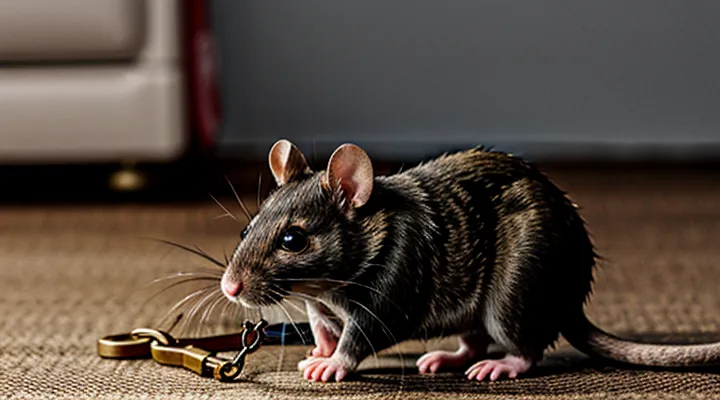
Understanding Rat Leashes
Why Consider a Rat Leash?
Benefits for Your Rat
A hand‑stitched leash provides a secure attachment that prevents accidental escapes, especially when the animal explores unfamiliar environments. The custom fit eliminates the risk of choking or slipping that generic collars may cause, ensuring the rat remains safely tethered.
A purpose‑made leash encourages physical activity. By allowing controlled outdoor walks, the rodent receives additional exercise, which supports cardiovascular health and muscular development. Regular movement also helps maintain a healthy weight and reduces the likelihood of obesity‑related issues.
Mental stimulation increases when the rat experiences new sights, sounds, and textures during supervised outings. The novelty of a leash‑guided walk reduces boredom, lowers stress levels, and promotes natural foraging behaviors, contributing to overall psychological well‑being.
Bonding between owner and pet improves through shared outdoor time. Consistent, gentle handling while the leash is in use reinforces trust, making routine care such as handling, grooming, and health checks smoother and less stressful for both parties.
Key advantages for the rat:
- Secure, custom fit prevents escape and choking.
- Enhanced exercise promotes cardiovascular and muscular health.
- Exposure to varied environments stimulates cognition and reduces stress.
- Weight management through increased activity.
- Strengthened owner‑rat relationship through regular interaction.
Benefits for You
Creating a leash for a rat on your own delivers measurable advantages. The process eliminates retail markup, allowing you to allocate resources elsewhere. Direct control over materials ensures the final product meets safety standards and matches the animal’s size, reducing the risk of injury.
- Reduced expense: purchasing fabric, buckles, and thread costs less than a ready‑made leash.
- Custom fit: measurements taken from your pet produce a snug, comfortable restraint.
- Material selection: hypoallergenic or washable fabrics can be chosen to prevent skin irritation.
- Skill acquisition: sewing techniques improve, expanding your capability for future pet projects.
- Personal satisfaction: completing a functional item reinforces confidence in DIY tasks.
- Enhanced bonding: the time spent measuring and assembling strengthens the owner‑rat relationship.
The cumulative effect of these factors translates into a more economical, safer, and personally rewarding experience for the maker.
Safety Considerations
Potential Risks
When crafting a leash for a pet rat, several hazards can compromise the animal’s safety and well‑being.
- Tight knots or overly short length may cause strangulation or restrict movement.
- Frayed or weak stitching can break under sudden pulls, allowing the rat to escape.
- Rough fabrics (e.g., heavy denim) may irritate delicate skin, leading to sores or infection.
- Small detachable components (buckles, clips) pose choking risks if swallowed.
- Toxic dyes or chemical finishes can be absorbed through the skin, resulting in poisoning.
- Excessive weight adds strain to the rat’s spine and hind limbs, increasing the likelihood of musculoskeletal injury.
Each risk originates from material choice, construction technique, or design dimensions. Reducing these dangers requires selecting soft, breathable fabrics, using reinforced seams, securing all hardware, and measuring the leash to allow free but controlled movement.
When a Leash is Not Recommended
A leash can hinder a rat’s natural movement patterns, especially in environments that lack secure, escape‑proof barriers. When the enclosure contains sharp objects, narrow gaps, or uneven surfaces, the tether may catch, causing injury to the animal’s delicate skin or limbs.
Rats are highly social and exploratory; a restraint that limits tactile interaction with their surroundings can trigger acute stress responses. Elevated cortisol levels may appear within minutes, leading to reduced appetite, weakened immune function, and a higher susceptibility to respiratory infections.
If the rat has not been habituated to handling or shows signs of aggression, a leash increases the risk of sudden lunges that can result in the animal being pulled into the owner’s clothing or furniture, potentially causing bruising or spinal strain.
A leash is unsuitable when the rat is undergoing medical treatment that requires unrestricted movement, such as post‑surgical recovery or wound healing, because any tension on the line can disrupt sutures or exacerbate swelling.
In situations where the rat is free‑roaming in a densely populated household, the presence of other pets (especially predatory species) creates a hazard; a tether may become a lever for an unintended tug, endangering both animals.
Scenarios where restraint is inadvisable:
- Enclosures with exposed wires, glass, or metal edges.
- Environments lacking a dedicated, hazard‑free play area.
- Rats displaying heightened anxiety or aggression during handling.
- Post‑operative or wound‑care periods requiring mobility without tension.
- Multi‑pet homes where the leash could be used as a tool for unintended aggression.
In these contexts, alternative enrichment methods—such as supervised exploration in a secure, obstacle‑free space—provide safer stimulation without the risks associated with tethered movement.
Gathering Your Materials
Fabric Selection
Ideal Fabric Types
When crafting a leash for a pet rat, the fabric choice determines durability, comfort, and safety. Select materials that resist fraying, tolerate frequent cleaning, and remain gentle against delicate skin.
- Cotton twill – tight weave, easy to sew, washable, provides moderate strength without excessive stiffness.
- Canvas (heavy‑weight cotton) – superior abrasion resistance, holds knots securely, ideal for longer leashes.
- Denim – robust, retains shape, tolerates heavy use; choose pre‑shrunken denim to avoid later shrinkage.
- Fleece (polyester blend) – soft, reduces chafing, suitable for short leashes where flexibility is prized.
- Nylon ripstop – lightweight, water‑resistant, high tensile strength; avoid overly glossy finishes that may slip.
Key characteristics to evaluate:
- Thread count or weave density – higher density reduces the risk of thread pull‑out.
- Fiber composition – natural fibers (cotton, linen) offer breathability; synthetic blends (polyester, nylon) add moisture resistance.
- Weight (gsm) – 150–300 gsm balances durability with flexibility; heavier fabrics become cumbersome, lighter ones may fray.
- Ease of stitching – fabrics that glide through a standard sewing machine reduce tension problems; test a sample before cutting the final piece.
Avoid fabrics with loose fibers, excessive sheen, or loose finishes, as they can create entanglement hazards. After cutting, reinforce each end with a double‑stitched lockstitch and a small fabric‑covered knot to prevent unraveling. Regular washing at 30 °C maintains hygiene without degrading the material.
Fabric Characteristics to Avoid
When selecting material for a rat leash, avoid fabrics that compromise safety, durability, or comfort.
- Loose‑weave textiles – threads open enough for a rat’s teeth to snag or for the animal to slip through, increasing risk of escape.
- Highly slippery surfaces – satin, silk, or polished polyester lack grip, making the leash difficult to control during movement.
- Heavy, stiff fabrics – canvas or denim with excessive weight adds strain on the rat’s neck and limits natural motion.
- Toxic fibers – fabrics treated with flame retardants, formaldehyde‑based finishes, or dyed with heavy metal pigments can cause skin irritation or systemic toxicity.
- Highly elastic materials – stretchy knits or spandex stretch under tension, reducing precise handling and potentially snapping under sudden pulls.
- Fluffy or fuzzy textures – fleece or plush piles trap debris and moisture, fostering bacterial growth and causing discomfort.
Choosing tightly woven, low‑friction, lightweight, non‑toxic, and non‑elastic fabrics ensures the leash remains secure, manageable, and comfortable for the small pet.
Hardware and Notions
Type of Clasps
When constructing a DIY rat leash, selecting the appropriate clasp determines both safety and ease of use. The clasp must be lightweight, secure, and resistant to the animal’s teeth.
- Spring‑loaded snap button – Quick‑release mechanism, reliable under tension, fits most thin nylon or cotton cords. Ensure the metal is rust‑free.
- Adjustable metal buckle – Allows length modification without re‑tying. Choose a buckle with a low profile to prevent snagging on fur.
- Plastic push‑button – Ultra‑lightweight, ideal for very small rats. Verify the material can withstand occasional biting.
- Silicone loop clasp – Flexible, soft on the rat’s skin, provides a gentle grip. Suitable for leashes made from elastic thread.
- Carabiner with a safety latch – Offers robust attachment for heavier-duty cords. Opt for a small‑scale model to avoid excess weight.
Each option should be tested for a firm lock when pulled and for smooth opening when released. Pair the clasp with a short, sturdy leash length—typically 12–18 cm—to maintain control while allowing natural movement. Regularly inspect the clasp for wear, cracks, or rust, and replace it immediately if any damage appears.
D-rings and O-rings
D‑rings and O‑rings are the primary hardware components that secure a rat’s leash to the harness and to the handle.
Choosing the correct ring determines the leash’s strength, flexibility, and ease of attachment.
- Material: stainless steel resists corrosion and maintains structural integrity; brass offers a lighter weight but may tarnish; aluminum provides the lowest mass but can deform under heavy load.
- Diameter: select a size that matches the cord thickness; a ¼‑inch ring accommodates 2‑mm twine, while a ½‑inch ring fits 4‑mm webbing.
- Shape: D‑rings provide a flat surface for knot tying, reducing stress on the cord; O‑rings allow smooth rotation, minimizing friction during movement.
Installation steps:
- Thread the leash material through the chosen ring, leaving a 1‑inch tail on each side.
- Secure the tails with a double knot, then reinforce with a few evenly spaced backstitches, using a needle that matches the cord thickness.
- For added durability, apply a small dab of fabric glue or heat‑set the stitches with a low‑heat iron.
Safety considerations:
- Verify that the ring’s opening is no larger than twice the cord diameter to prevent the rat from slipping out.
- Inspect the ring for sharp edges; file or sand any burrs before attachment.
- Test the assembled connection by applying a gradual pull of at least 10 N; the knot and stitches must hold without slippage.
Proper selection and installation of D‑rings and O‑rings create a reliable attachment point, ensuring the leash functions safely during everyday use.
Thread and Needles
Select a strong, lightweight thread that will endure frequent pulling without fraying. Polyester or nylon embroidery floss provides high tensile strength and resists moisture, making it suitable for a small animal harness. Use a color that contrasts with the leash material for easy inspection of stitch integrity.
Choose a needle designed for the leash fabric. For woven or canvas straps, a sharp, medium‑length (3‑4 mm) universal needle works well. When stitching leather or thick synthetic webbing, opt for a heavy‑duty leather needle with a triangular point to penetrate without tearing. Needle size should correspond to thread thickness; a size 6–8 needle matches most embroidery floss, while size 10–12 accommodates bulkier polyester thread.
Maintain consistent tension and stitch length to secure the leash. A backstitch or a small, even running stitch offers reliable strength. After completing the seam, reinforce the ends with a few locking stitches and trim excess thread close to the fabric. Inspect the finished connection for gaps before attaching the rat’s collar.
Essential Tools
Measuring Tools
Accurate measurement determines the safety and comfort of a homemade rat leash. Select tools that provide millimeter precision and repeatable results.
A flexible tape measure, preferably a cloth or nylon strip marked in metric units, captures the length of the leash from the knot to the collar attachment point. Extend the tape along the intended path, noting the distance required for the rat’s movement range, typically 30–45 cm.
A ruler or steel measuring stick offers rigid reference for cutting fabric or webbing. Position the material against the ruler, align the zero mark with the edge, and mark the required length using a fine point pen. Ensure the mark aligns with a whole millimeter to avoid uneven edges.
A seam gauge assists in locating seam allowances and placement of reinforcement stitches. Slide the gauge to the desired distance from the edge—commonly 5 mm—and hold it in place while stitching to maintain uniformity.
A digital caliper provides the most precise measurement for hardware such as D‑rings, buckles, and swivel clips. Close the jaws around the component, read the measurement to the nearest 0.01 mm, and verify compatibility with the fabric width.
A cutting mat with a clear grid pattern aids in aligning cuts and prevents material shift. Place the fabric on the mat, use the grid lines as visual guides for straight cuts, and protect the work surface.
Recommended measuring tools
- Flexible cloth tape (metric)
- Steel ruler or straightedge
- Seam gauge (5 mm)
- Digital caliper (0.01 mm resolution)
- Grid cutting mat
Each instrument contributes to a leash that fits the rat’s size, allows controlled movement, and endures regular use. Proper measurement eliminates excess material, reduces stitching errors, and enhances overall durability.
Cutting Tools
When constructing a leash for a small pet rodent, precise cutting of fabric and hardware components is essential. Selecting the appropriate cutting instruments determines the accuracy of seams, the integrity of the strap, and the safety of the animal.
A sharp, high‑quality pair of fabric scissors should be dedicated solely to textile work. Blades made of stainless steel with a fine edge retain sharpness longer, reducing fraying at cut edges. For trimming leather or synthetic webbing, a rotary cutter equipped with a replaceable blade offers straight, clean cuts and minimizes material waste. When adjusting metal rings or trimming excess cord, a pair of flush‑cutting side scissors provides close clearance without damaging adjacent surfaces.
Key considerations for cutting tools include:
- Blade material: stainless steel or high‑carbon steel for durability.
- Blade length: 6–8 inches for fabric scissors, 8–10 inches for rotary cutters.
- Handle design: ergonomic grips reduce hand fatigue during repeated cuts.
- Maintenance: regular cleaning, blade oiling, and sharpening preserve performance.
Safety precautions are non‑negotiable. Always cut away from the body, keep fingers clear of the blade path, and store tools with blade protection covers. After each use, wipe blades to remove fibers or debris that could dull the edge.
Proper tool selection and upkeep streamline the leash‑making process, ensuring consistent dimensions and a finished product that withstands regular use.
Sewing Machine or Hand Sewing Supplies
A reliable tool set determines the quality and durability of a homemade rat leash. Selecting either a sewing machine or a hand‑sewing kit influences stitch strength, speed, and control, especially when working with lightweight webbing or nylon.
A sewing machine suitable for this task should include the following features:
- Adjustable stitch length and width for fine or reinforced seams.
- A built‑in presser foot that accommodates thin fabrics without slipping.
- Variable speed control to manage delicate material without stretching.
- Capability to use small, sharp needles (e.g., size 70/10) that penetrate tightly woven webbing.
Hand‑sewing supplies must cover the same functional needs:
- A set of fine needles (sizes 70/10 to 80/12) for precise penetration.
- Strong polyester or waxed cotton thread, preferably 40‑weight, to resist fraying.
- A sturdy thimble and ergonomic needle threader to reduce hand fatigue.
- Small, sharp scissors or snips for clean cuts.
- A stitching awl for reinforced eyelet holes if metal rings are used.
When using a machine, test the tension on a scrap piece of the same material before sewing the final leash. Secure the fabric with pins or clips to prevent shifting during the run. For hand stitching, employ a backstitch or double‑backstitch along the entire length to ensure the leash will not unravel under tension. In both methods, finish the ends with a knot or a small loop of thread, then trim excess material to avoid snagging.
Choosing the appropriate equipment and following these precise steps yields a sturdy, comfortable leash that meets the specific demands of small‑animal handling.
Step-by-Step Sewing Guide
Measuring Your Rat
Neck Circumference
Accurate measurement of a rat’s neck circumference is the first critical step when crafting a safe, functional leash. Use a flexible measuring tape or a piece of string, wrap it snugly around the base of the neck where the collar would sit, and record the length without compressing the fur.
The recorded value determines the leash’s inner diameter. Subtract 0.5 cm to allow a comfortable clearance; the final opening should permit the leash to slide on easily while preventing the rat from slipping out.
When selecting fabric or webbing, consider material stretch. Low‑stretch fibers (cotton canvas, nylon webbing) maintain a stable opening, whereas elastic blends expand under tension and may alter the effective size. Choose a material whose relaxed width matches the adjusted measurement.
Adjustability can be built into the design by adding a small buckle or a sliding knot. Ensure any fastening mechanism does not add bulk that could increase the effective circumference beyond the calculated clearance.
Typical neck circumference ranges:
- Small adult rats: 4 – 5 cm → final opening 3.5 – 4.5 cm
- Medium adult rats: 5 – 6 cm → final opening 4.5 – 5.5 cm
- Large adult rats: 6 – 7 cm → final opening 5.5 – 6.5 cm
Always re‑measure after the leash is assembled to confirm that the opening remains within the intended tolerance. A properly sized neck opening prevents choking, reduces stress, and ensures the leash functions reliably during handling.
Chest Circumference
When constructing a custom leash for a pet rat, the rat’s chest circumference determines the loop size that will fit comfortably without restricting breathing or movement.
Measure the chest by wrapping a flexible tape around the rat’s ribcage, just behind the forelimbs. The tape should be snug but not tight; the measurement reflects the maximum width of the leash’s loop.
Typical chest sizes for adult rats range from 4 cm to 7 cm (1.6 in to 2.8 in). Smaller juveniles may measure below 4 cm, while unusually large individuals can exceed 7 cm. Select a loop diameter that exceeds the measured circumference by approximately 0.5 cm (0.2 in) to allow a small margin of slack.
Key considerations:
- Use a soft, non‑abrasive fabric to prevent skin irritation.
- Ensure the loop’s seam is reinforced with a double stitch to withstand pulling.
- Attach the loop to the leash’s main cord with a secure knot or a small metal clasp that will not pinch the rat’s skin.
Accurate chest measurement prevents the leash from becoming a choking hazard and contributes to a secure, humane restraint suitable for training or outdoor walks.
Back Length
When measuring a leash for a pet rat, the back length determines the distance between the animal’s body and the handler’s hand. This dimension affects the rat’s ability to move freely while remaining under control.
A practical back length for a rat leash falls between 12 cm (4.7 in) and 18 cm (7.1 in). Shorter lengths restrict movement, increase the risk of tangling, and may cause stress. Longer lengths allow more exploration but reduce immediate control and can lead to accidental escapes if the leash is not securely attached.
Key considerations for selecting the appropriate back length:
- Rat size: Larger rats require a slightly longer measurement to accommodate broader shoulders and longer spines.
- Activity level: Highly active rats benefit from the upper end of the range, providing extra room for climbing and running.
- Handler comfort: The leash should allow the handler’s hand to rest naturally without excessive stretching of the material.
To obtain an accurate back length, follow these steps:
- Place the rat on a flat surface and gently hold the base of its tail.
- Measure from the point where the leash will attach (typically the middle of the back, just behind the shoulders) to the desired hand position.
- Record the measurement and add 2–3 cm (0.8–1.2 in) to account for knot slack and material stretch.
Using the recorded back length as a guide ensures the finished leash provides a balance of freedom and safety, allowing the rat to explore while remaining securely tethered.
Cutting the Fabric
Pattern Pieces
The pattern pieces form the foundation of a functional rat leash. Begin with a simple harness layout: a collar segment, a belly strap, and a connecting loop. Each piece must be measured precisely to accommodate the animal’s size while allowing free movement.
- Collar: 2 inches long, 0.5 inch wide, rounded ends to prevent chafing.
- Belly strap: 3 inches long, 0.75 inch wide, tapered at the attachment point.
- Loop: 1.5 inches diameter, 0.5 inch wide, reinforced with a double stitch.
Draft the shapes on sturdy paper before transferring to fabric. Align grain lines of the material with the long edges of the collar and belly strap to ensure durability. Place the loop pattern on the fabric’s bias to provide flexibility at the junction.
Cut each piece with sharp scissors, leaving a 0.25‑inch seam allowance around every edge. For layered designs, cut two identical sets: one for the exterior, one for the lining. The lining should use a soft, breathable fabric to protect the rat’s skin.
After cutting, label the pieces to avoid confusion during assembly. Properly prepared pattern components reduce waste and streamline the sewing process, resulting in a secure, comfortable leash.
Seam Allowances
A seam allowance is the strip of fabric left between the edge of the material and the stitching line. It provides space for the thread to hold the pieces together and accommodates shrinkage or movement during wear.
For a homemade rat leash, a narrow allowance—typically ¼ inch (6 mm)—prevents excess bulk that could irritate the animal’s skin. Larger allowances, such as ½ inch (12 mm), are suitable for sections that will bear the most tension, like the loop that attaches to the collar.
- ¼ inch (6 mm): side seams of the strap, decorative edges
- ⅓ inch (8 mm): optional reinforcement zones
- ½ inch (12 mm): main load‑bearing loop
Mark the allowance on the fabric before cutting. Use a ruler or a seam‑allowance gauge to draw a parallel line at the chosen distance from the edge. This visual guide ensures consistent stitching and eliminates the need for guesswork.
After stitching, trim the excess fabric within the allowance, leaving a small margin (approximately ⅛ inch) to prevent fraying. Press the seam open or to one side with an iron; a flat seam reduces bulk and improves the leash’s comfort against the rat’s fur.
Finish the raw edges with a suitable method—overlock stitching, a serger, or a narrow zigzag stitch. This seals the seam, reinforces the stitching line, and extends the leash’s durability under repeated use.
Assembling the Harness
Sewing the Straps
Select a durable, lightweight fabric such as ripstop nylon or cotton twill. Cut two strips 3 mm wide and 12 inches long for the leash, plus an additional 2‑inch loop for the collar attachment. Use a rotary cutter or sharp scissors to ensure clean edges. Prepare a matching thread, preferably polyester, and a 3‑mm needle capable of handling the chosen material.
- Align the two strap pieces with right sides together.
- Stitch a ¼‑inch seam along the long edges, leaving a ½‑inch opening at one end for turning.
- Trim excess fabric from the seam allowance, then press the seam flat.
- Turn the strap through the opening, using a point turner or a blunt instrument to push the seam completely inside.
- Close the opening with a hand‑stitched slip knot or a small invisible stitch.
- Reinforce both ends of the strap with a double‑stitched bar tack, securing the loop for the collar and the handle.
Inspect the completed straps for uniform tension and smooth edges. Apply a fabric sealant if the material is prone to fraying. Attach the loop to a metal swivel and test the leash under gentle pull to confirm strength before use.
Attaching the D-ring
Attaching the D‑ring secures the leash to the rat’s harness and provides a reliable point for the leash to slide. The connection must be strong enough to withstand sudden pulls while remaining lightweight.
Materials required:
- Stainless‑steel D‑ring (appropriate size for a small animal)
- Heavy‑weight nylon or polyester thread
- Sharp scissors
- Needle with a large eye (size 3/0 or larger)
- Lighter or knot‑sealer
- Optional: fabric glue for extra reinforcement
Procedure:
- Thread the needle, knot the end of the thread with a triple knot to prevent slipping.
- Position the D‑ring on the interior side of the harness fabric, aligning it with the edge where the leash will attach.
- Insert the needle through the fabric, pulling the thread through the D‑ring’s loop; repeat this step three times, creating a lockstitch that encircles the ring.
- Tie a surgeon’s knot (two throws followed by a final throw) to lock the stitches around the D‑ring.
- Pull the knot tight, trim excess thread, and melt the cut ends with a lighter or apply a knot‑sealer to prevent fraying.
- If desired, apply a thin line of fabric glue along the seam for additional durability; allow it to cure according to the manufacturer’s instructions.
Final check:
- Verify that the D‑ring moves freely within the fabric but does not pull through.
- Apply gentle tension to the leash to confirm the attachment holds under load.
- Inspect for any loose threads or sharp edges that could irritate the animal.
Reinforcing Stress Points
When constructing a rat leash, the points where the leash meets the harness and the handle experience the greatest tension. Reinforcement at these locations prevents fraying, tearing, and loss of control.
Use a heavy‑weight, low‑stretch fabric such as canvas or denim for the sections that will bear load. Reinforce the fabric by folding it over twice and stitching through all layers. Apply a lockstitch followed by a backstitch to create a secure seam. Double‑stitch the attachment loops, then add a small piece of woven webbing or leather over the seam and secure it with a few tight stitches. This layered approach distributes force across a broader area, reducing stress on any single thread.
- Choose a polyester or nylon thread rated for high tensile strength.
- Perform a minimum of three rows of stitching on each side of the loop.
- Incorporate a small strip of fusible interfacing beneath the loop before stitching.
- Finish each reinforced area with a knot tied in the thread and a drop of fabric glue for added security.
These measures concentrate durability where it matters most, ensuring the leash remains functional and safe for the rat’s movements.
Attaching the Leash
Leash Length
When crafting a rat leash, length determines both safety and maneuverability. Too short a strap restricts the animal’s natural movement, potentially causing stress; too long a strap allows the rat to wander beyond the owner’s control, increasing the risk of escape or injury.
- Recommended length for indoor use: 12–18 inches (30–45 cm). This range permits the rat to explore a room while keeping the handler within arm’s reach.
- Recommended length for supervised outdoor sessions: 24–30 inches (60–75 cm). Extends the rat’s range without compromising immediate supervision.
- Adjustable options: Incorporate a sliding knot or a detachable clamp to modify length as the rat grows or as the environment changes.
Factors influencing the chosen length:
- Rat size and age – younger or smaller rats require shorter leashes.
- Owner’s reach – a longer arm or use of a harness handle may allow a slightly longer leash.
- Terrain – cluttered spaces favor shorter lengths; open, obstacle‑free areas permit longer ones.
- Material stretch – low‑stretch cords maintain consistent length; elastic cords effectively shorten the functional reach.
Measure the intended length from the harness attachment point to the handler’s hand before cutting the cord. Add a small excess (approximately 2 inches) to accommodate knotting and adjustments. Ensure the final leash length balances the rat’s freedom with the owner’s ability to respond instantly.
Securing the Clasp
Securing the clasp is the final step that determines the leash’s reliability and the animal’s safety. Choose a clasp designed for small‑pet use, such as a stainless‑steel lobster‑claw or a quick‑release snap rated for at least 50 g of pull force. Verify that the metal surface is smooth to prevent injury to the rat’s skin.
- Thread the clasp’s shank through the finished leather or fabric loop, ensuring the opening faces outward.
- Position the shank so the clasp’s hinge aligns with the seam’s edge; this reduces stress on the stitching.
- Use a double‑needle whip stitch or a lockstitch of 4‑6 mm spacing to bind the shank to the loop. Pull the thread taut but avoid overtightening, which can warp the metal.
- Apply a small dab of clear fabric glue to the stitched area for added reinforcement; let it cure for 10 minutes before handling.
- Test the attachment by pulling the leash with a force of 30 g; the clasp should remain closed without loosening the stitches.
Inspect the joint for any gaps, uneven thread tension, or metal burrs before use. Replace the clasp immediately if any signs of wear appear, as a compromised fastener can lead to escape or injury.
First Time Use and Training
Introducing the Leash
Gradual Introduction
When a pet rat receives a handmade tether, the animal must learn to tolerate the device before any outdoor excursions. The process unfolds in three phases that build confidence and reduce stress.
-
Phase 1 – Acclimation to the material
Attach the leash loosely to the rat’s collar for several short sessions lasting 2–3 minutes. Allow the rat to explore the rope while it remains stationary. Reward calm behavior with a treat. Repeat until the rat shows no signs of agitation when the leash is present. -
Phase 2 – Controlled movement
Extend the leash to a length of 6–8 inches while keeping the rat inside its enclosure. Gently guide the rat forward, pausing frequently to let it sniff and adjust. Maintain a steady hand; sudden pulls cause panic. Continue sessions for 5–7 minutes, increasing duration as the rat moves without resistance. -
Phase 3 – Outdoor exposure
Secure the leash to a fixed point outside the cage, such as a low fence or a sturdy ring. Keep the tether length under 12 inches. Supervise the rat for 5‑minute intervals, gradually extending time as the animal remains composed. End each outing with a treat and a return to the cage.
Consistency across all phases ensures the rat associates the leash with safety rather than threat. Monitoring body language—quiet grooming, relaxed posture, and steady breathing—provides immediate feedback on progress. Adjust session length or leash length if signs of distress appear, then resume once the rat regains composure. Following this structured introduction yields a reliable, self‑made tether suitable for supervised outdoor exploration.
Positive Reinforcement
Positive reinforcement trains a rat to tolerate a homemade leash by pairing the desired behavior with a rewarding stimulus. When the animal willingly approaches the leash, accepts the clip, or walks calmly while attached, immediately deliver a preferred treat or gentle praise to strengthen the association.
Effective reinforcement requires consistency and immediacy. Use small, high‑value food items that the rat readily consumes; present the reward within one second of the target action. Gradually decrease the frequency of treats while maintaining occasional rewards to prevent extinction.
Implementation steps:
- Present the leash without attachment; reward the rat for sniffing or touching it.
- Attach the clip briefly; if the rat remains calm, give a treat and release.
- Increase the duration of attachment in short increments, rewarding each successful interval.
- After several successful sessions, attach the leash for a brief walk; reward after each step forward.
- Phase out treats slowly, substituting occasional verbal praise to preserve the learned behavior.
By following this protocol, the rat learns to view the leash as a neutral or positive object, reducing stress during subsequent outdoor outings.
First Outings
Safe Environments
When constructing a DIY rat leash, the workspace must be free of loose threads, sharp objects, and toxic substances. Use a flat surface covered with a clean, non‑slip mat to prevent fabric from shifting during stitching. Keep the area well‑ventilated if adhesives or sealants are employed.
Select materials that pose no health risk to the animal. Opt for natural‑fiber fabrics such as cotton or linen, avoiding synthetic fibers that can cause skin irritation. Ensure all fasteners—snap hooks, buckles, or knots—are stainless steel or food‑grade plastic, free of lead or zinc plating.
During the sewing process, maintain control of the needle and scissors to avoid accidental punctures. Store tools out of the rat’s reach when not in use, and inspect each component for sharp edges before assembly. A brief pre‑use inspection of the finished leash should confirm that stitching is secure and no loose ends remain.
When the leash is ready for testing, conduct the trial in a confined, predator‑free enclosure. Verify that the rat can move freely without entanglement and that the leash does not restrict breathing or circulation. Monitor the animal closely for signs of stress or discomfort, and be prepared to remove the leash immediately if any adverse reaction occurs.
Short Sessions
Working on a rat leash in brief, focused intervals reduces fatigue and maintains precision. Each session should target a single task, allowing the maker to assess progress before moving on.
- Session 1 (10‑15 minutes): Measure and cut the webbing or fabric to the desired length, accounting for a comfortable grip and enough slack for the animal.
- Session 2 (10 minutes): Mark attachment points for the clasp and the loop that will secure the rat’s harness.
- Session 3 (15 minutes): Sew reinforced stitching at each marked point using a strong, waxed thread; double‑stitch for durability.
- Session 4 (5‑10 minutes): Attach the metal clasp or snap, ensuring the knot is tight and the hardware sits flush against the material.
- Session 5 (10 minutes): Test the leash by gently pulling each end, checking for slippage or fraying; reinforce any weak seams immediately.
Limiting each work period to 10‑15 minutes keeps the maker attentive, prevents mistakes, and fits easily into a busy schedule. After completing a session, pause, inspect the work, and plan the next step before resuming. This disciplined rhythm yields a reliable, hand‑crafted leash without the strain of extended uninterrupted effort.
Maintenance and Care
Cleaning Your Rat Leash
Washing Instructions
When cleaning a self‑made rat leash, follow a consistent routine to preserve the material and stitching.
- Remove any loose debris with a soft brush before washing.
- Hand‑wash in lukewarm water (30–35 °C) using a mild, fragrance‑free detergent; avoid bleach or fabric softeners.
- Gently agitate the leash for no more than two minutes; do not wring or twist, as this can stress seams.
- Rinse thoroughly in cool water until no suds remain.
- If the fabric is machine‑safe, place the leash in a mesh laundry bag and run a gentle cycle (cold water, low spin).
After washing, reshape the leash to its original dimensions and lay it flat on a clean towel. Allow it to air‑dry away from direct heat or sunlight; do not tumble‑dry, as high temperatures may cause shrinkage or weaken the thread.
Inspect the stitching once dry; re‑secure any loose knots and replace frayed sections before the leash is used again. This protocol extends the leash’s lifespan while maintaining hygiene for your pet.
Drying Methods
After stitching a rat leash, the material must be dried correctly to preserve strength and prevent shrinkage. Immediate removal of excess moisture reduces the risk of mold and weak seams.
- Lay the leash on a clean, absorbent towel. Press gently to blot water without rubbing, which could distort fibers.
- Hang the leash in a well‑ventilated area, ensuring it is stretched straight. Air circulation removes moisture evenly; a drying rack or a clothesline works well.
- For synthetic fabrics, use a low‑heat setting on a tumble dryer. Set temperature below 40 °C (104 °F) and add a dryer ball to keep the leash from tangling.
- If the leash is made of cotton or linen, place it in indirect sunlight for 15–30 minutes. Direct sun can cause fading and brittleness.
- In humid environments, employ a dehumidifier or a fan positioned a few inches away. Continuous airflow accelerates evaporation without heat.
Complete drying typically takes 2–4 hours, depending on thickness and ambient conditions. Confirm that the leash feels dry to the touch along its entire length before testing durability or attaching hardware.
Inspecting for Wear and Tear
When to Repair
A homemade rat leash should be inspected before each use. Replace or mend it when any of the following conditions appear:
- Stitching unravels or gaps widen.
- Fabric or webbing shows thinning, cuts, or chew marks.
- Metal rings, buckles, or clips are bent, cracked, or loose.
- Leash length shortens or sags noticeably under the rat’s weight.
- The leash slips from the harness or the harness itself shows signs of damage.
If one or more signs are present, stop using the leash immediately. Test the leash by applying gentle tension; it must hold without deformation. Repair involves re‑stitching weakened sections with a strong, double‑threaded seam, reinforcing attachment points with additional stitching or a small piece of fabric, and securing hardware with a new screw or rivet. When repairs are completed, re‑test for durability before allowing the rat to wear the leash again. Regular inspection and timely repair prevent sudden failure and keep the animal safe.
When to Replace
When a homemade rat leash begins to show signs of structural compromise, replacement is essential to maintain safety. Visible fraying of the stitching, thinning of the fabric, or any broken knots indicate that the material can no longer bear the animal’s weight or sudden pulls. If the leash has been repeatedly exposed to moisture and does not dry completely, the fibers may lose tensile strength and should be discarded.
Additional indicators for renewal include:
- Persistent odor that does not dissipate after thorough washing.
- Chewed or gnawed sections, even if the damage appears minor.
- Loss of elasticity in any elastic components, such as spring‑loaded loops.
- Evidence of rust or corrosion on metal hardware, which can cause sharp edges.
Replace the leash promptly under any of these conditions to prevent accidental release or injury during use. New leashes should be constructed with durable, washable material and reinforced stitching to extend service life.