
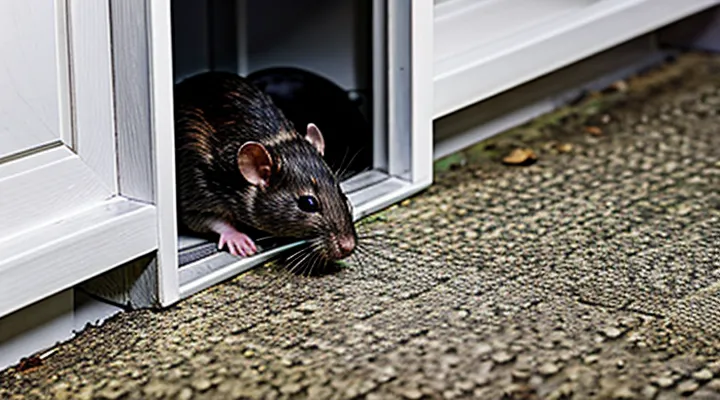
Understanding Rat Behavior and Entry Points
Common Rat Entry Points
Foundation Cracks
Foundation cracks provide a direct pathway for rodents to enter a building and to leave after nesting inside. Cracks appear from settlement, moisture movement, or structural stress, and often widen over time, creating openings large enough for rats to squeeze through. Identifying these fissures early prevents infestation and reduces the need for extensive repairs.
Inspection should focus on visible cracks in basement walls, footings, and slab edges, as well as hidden gaps around utility penetrations. Use a flashlight and a mirror to locate hairline splits, and feel for cool drafts that indicate voids. Document each opening with measurements; cracks wider than ¼ inch typically require immediate sealing.
Effective sealing employs materials that resist rodent chewing and accommodate minor movement. Recommended products include:
- Polyurethane spray foam – expands to fill irregular shapes, bonds to concrete, and hardens into a rodent‑resistant barrier.
- Hydraulic cement – sets quickly, adheres to damp surfaces, and fills larger gaps with a hard, durable plug.
- Metal flashing or steel mesh – placed over larger cracks before applying sealant to prevent rats from gnawing through.
- Rodent‑grade epoxy – creates a seamless, chew‑proof coat for cracks up to ½ inch wide.
The sealing process follows these steps:
- Clean the crack of dust, loose debris, and moisture using a wire brush and a wet‑vac.
- Apply a bonding agent if recommended by the sealant manufacturer.
- Insert hydraulic cement or steel mesh into the deepest part of the crack, pressing firmly to eliminate voids.
- Spray polyurethane foam into any remaining voids, allowing it to expand fully.
- Once the foam cures, trim excess material flush with the wall surface.
- Coat the repaired area with rodent‑grade epoxy to create a smooth, chew‑proof finish.
- Inspect the repair after 24 hours; reapply sealant to any gaps that develop.
Regular maintenance includes visual checks each season, especially after heavy rain or ground movement. Re‑seal any new fissures promptly, and keep the surrounding soil graded away from the foundation to reduce moisture intrusion, which accelerates crack formation. By systematically addressing foundation cracks, homeowners eliminate a primary escape route for rats and strengthen the structural integrity of the building.
Gaps Around Pipes and Wires
Rats exploit openings around plumbing, electrical wiring, and other service penetrations to move between exterior and interior spaces. These gaps often measure a few millimeters but provide sufficient clearance for rodents. Effective closure requires systematic inspection, proper material selection, and thorough application.
- Locate all pipe and cable entries by tracing visible routes and using a flashlight to examine concealed areas behind appliances, in basements, and under crawl spaces.
- Measure each opening with a ruler or caliper; record dimensions to match sealant size.
- Choose a sealant compatible with the surrounding material: silicone-based caulk for flexible joints, polyurethane foam for larger voids, and steel wool combined with caulk for gaps larger than ¼ inch.
- Clean the area to remove dust, debris, and moisture; a wire brush and a dry cloth ensure adhesion.
- Insert steel wool or copper mesh into the gap, compressing it to fill the space without leaving voids.
- Apply sealant over the filler, smoothing with a putty knife to create a continuous barrier.
- Allow the sealant to cure according to the manufacturer’s specifications, typically 24 hours for silicone and 48 hours for polyurethane.
- Inspect the sealed area after curing; repeat the process if any cracks or gaps remain.
Regularly revisit sealed locations during seasonal inspections to verify integrity and reapply material if wear or movement occurs. Maintaining a tight seal around pipes and wires eliminates primary pathways for rodent escape and entry.
Vents and Drains
Rats commonly exploit vent openings and drain pipes to leave a building. These pathways are often larger than visible gaps, allowing quick access to the exterior. Effective blockage requires materials that resist gnawing, withstand moisture, and fit securely within irregular shapes.
- Inspect all ventilation grilles, roof vents, and floor drains for cracks, missing screens, or loose fittings.
- Install steel or heavy‑gauge copper mesh (minimum ½‑inch openings) behind each vent cover; secure with stainless‑steel screws.
- Apply a two‑part, rodent‑resistant sealant around the perimeter of the mesh and the vent housing.
- For floor drains, fit a solid‑core PVC or stainless‑steel drain cover that locks in place; seal the joint with silicone caulk rated for plumbing.
- Add a layer of expandable foam sealant behind the cover to fill any residual voids, then trim excess material flush with the surface.
Regular maintenance includes checking for signs of chewing, corrosion, or loosening of fasteners. Replace damaged components promptly to maintain an uninterrupted barrier against rodent movement.
Roof and Attic Access Points
Rats exploit any opening that leads from the roof or attic to the exterior. Identifying and securing these passages eliminates a primary route for escape and re‑entry.
Inspect the roof surface for gaps around:
- vent pipes, chimneys, and flues
- skylights, roof hatches, and service doors
- ridge vents and soffit openings
Examine attic access points, including:
- existing hatch or pull‑down ladder
- insulation gaps near joists and trusses
- utility penetrations for wiring, plumbing, or HVAC ducts
For each opening, follow a three‑step protocol:
- Clean debris and nesting material to expose the exact dimensions of the gap.
- Fit a durable barrier—steel mesh (¼‑inch or smaller), hardware cloth, or metal flashing—ensuring the material overlaps the surrounding structure by at least one inch.
- Seal edges with a high‑quality, rod‑resistant caulk or epoxy, then reinforce with screws or nails where appropriate.
When sealing vent pipes, install a stainless‑steel vent cover that snaps onto the pipe and wraps with mesh extending beyond the pipe’s outer diameter. For skylights, replace compromised flashing with a custom‑cut metal strip, then apply a weather‑proof sealant. Attic hatches should be fitted with a latch that closes tightly; if the hatch frame is damaged, replace it with a solid wood or metal panel secured by hinges and a lockable latch.
Regularly monitor repaired sites for signs of new gnawing or displacement. Promptly address any fresh damage to maintain a continuous barrier against rod movement.
Deteriorated Building Materials
Rats exploit gaps created when building components decay. Crumbling plaster, rotted wood, and cracked concrete form passageways that allow rodents to move between interior and exterior spaces. Recognizing these weak points is the first step in preventing escape routes.
Inspect all interior and exterior surfaces for signs of material failure: flaking finish, soft spots, moisture stains, or visible fractures. Pay special attention to areas around utility penetrations, window frames, and roof eaves, where deterioration is common.
When compromised material is found, follow a systematic repair process:
- Remove loose or damaged sections completely; do not patch over unstable substrate.
- Substitute with durable, pest‑resistant alternatives such as cement‑based mortar, pressure‑treated lumber, or metal flashing.
- Apply a sealant specifically rated for rodent exclusion; silicone‑based or polyurethane products provide long‑term elasticity.
- Reinforce the repaired area with metal mesh or steel wool before sealing, creating a physical barrier that rats cannot gnaw through.
- Verify the integrity of the repair by conducting a tactile test and, if possible, a low‑light inspection to confirm no residual openings remain.
Regular maintenance prevents material degradation from re‑creating gaps. Schedule quarterly checks, address water intrusion promptly, and apply protective coatings to vulnerable surfaces. By eliminating the structural conditions that generate holes, the environment becomes inhospitable to rat movement and escape.
Signs of Rat Infestation
Rats leave unmistakable evidence that a property is compromised. Recognizing these indicators is essential before attempting to block the openings they exploit.
Typical signs include:
- Dark, pellet‑shaped droppings near food sources, along walls, or in hidden corners.
- Gnaw marks on wood, plastic, wiring, or insulation, often appearing as clean, crescent‑shaped cuts.
- Fresh burrows or tunnels in insulation, under appliances, or within crawl spaces.
- Accumulations of shredded paper, fabric, or insulation forming nests in concealed areas.
- Grease or oil smears along walls and baseboards, left by rats’ fur.
- Audible scratching, scurrying, or squeaking, especially at night.
- Visible tracks in dusty or powdery surfaces, sometimes accompanied by urine stains.
These clues confirm active infestation and guide the selection of entry points that require sealing. Prompt identification prevents further damage and facilitates effective closure of escape routes.
Risks Associated with Rats
Rats pose significant health, structural, and economic hazards. Their saliva, urine, and feces carry pathogens such as Leptospira, hantavirus, and salmonella, which can contaminate food, water, and surfaces, leading to disease outbreaks among humans and domestic animals. Direct contact or inhalation of aerosolized particles from rodent waste increases infection risk.
Structural damage results from gnawing behavior. Rats chew through insulation, wiring, and plastic conduits to access shelter or food sources. Damaged electrical insulation creates fire hazards, while compromised insulation reduces energy efficiency and raises heating costs. Burrowing activity undermines foundations, walls, and flooring, creating gaps that allow further ingress.
Economic impact extends beyond repair expenses. Contaminated inventory, lost product quality, and downtime for pest‑control interventions impose financial losses on residential and commercial properties alike. Insurance premiums may rise in areas with documented rodent activity.
Key risks associated with rats:
- Transmission of zoonotic diseases
- Fire and electrical hazards from chewed wiring
- Energy loss due to damaged insulation
- Structural weakening of building components
- Financial losses from property damage and business disruption
Preparing for Sealing
Inspection and Identification of Holes
Inspecting a property for rat escape routes begins with a systematic visual sweep of the exterior and interior. Focus on areas where structural components meet, such as where walls join foundations, around utility penetrations, and at the base of doors and windows. Use a flashlight to illuminate dark corners and a mirror to view hidden crevices. Record each opening, noting dimensions, material, and proximity to food or water sources.
Identify potential entry points by examining the following locations:
- Gaps around pipe sleeves, vent stacks, and sewer lines (typically ¼‑inch to 2‑inch openings).
- Cracks in foundation walls, especially near landscaping or soil contact.
- Openings beneath crawl‑space vents, HVAC ducts, and electrical conduit.
- Spaces around garage doors, especially where weather stripping is worn.
- Holes in siding, soffits, or eaves where roof insulation has settled.
- Gaps around window frames, particularly older casement or sliding units.
Measure each hole with a ruler or caliper. Rat‑sized passages range from ½‑inch to 2‑inches; any aperture within this span warrants sealing. For larger openings, assess whether structural reinforcement is required before applying a sealant.
Confirm the presence of active use by looking for signs such as gnaw marks, droppings, urine stains, or fresh nesting material near the opening. Use a piece of non‑sticky tape placed over a suspected hole; if it is disturbed after 24‑48 hours, the passage is in use.
Document findings in a simple table or spreadsheet, including location, size, observed activity, and recommended sealing method. This organized record streamlines the subsequent repair phase and ensures no escape route remains unaddressed.
Tools and Materials Required
Sealing Materials
Effective rodent exclusion depends on choosing sealing agents that resist gnawing, weather, and structural movement. Durable, non‑porous compounds create barriers that rodents cannot breach, preserving building integrity and health safety.
- Steel wool (grade #4 or finer) – flexible, compressible, and difficult for rodents to chew; best when combined with a sealing caulk to prevent rust exposure.
- Expanding polyurethane foam – fills irregular gaps, hardens into a solid barrier; select low‑expansion formulas to avoid pressure on surrounding materials.
- Cement‑based mortar – ideal for large openings in masonry; provides a rigid, long‑lasting seal when applied with proper mixing ratios.
- Silicone or hybrid polymer sealants – maintain elasticity, adhere to wood, metal, and concrete; resist degradation from UV and moisture.
- Metal flashing or sheet metal – offers permanent coverage for gaps around vents, pipes, and foundations; requires screws or rivets for secure attachment.
Selection criteria focus on material resilience, compatibility with the substrate, and exposure conditions. For outdoor applications, prioritize UV‑stable and water‑resistant products. In interior settings, emphasize low‑odor, fire‑rated sealants to meet safety codes.
Preparation steps include cleaning the opening of debris, removing loose material, and drying the surface. Apply a primary layer of steel wool or foam to occupy the void, then overlay with a weather‑proof sealant or mortar. Allow curing according to manufacturer specifications before reinstating fixtures or coverings. Regular inspection of sealed points ensures early detection of degradation and maintains an effective rodent barrier.
Safety Gear
When sealing openings that rodents exploit, personal protection is essential to prevent injuries and exposure to contaminants. Choose equipment that resists punctures, limits inhalation of dust, and shields against sharp edges.
- Heavy‑duty gloves made of cut‑resistant material protect hands while cutting or prying away debris.
- Respirators equipped with particulate filters guard against dust, droppings, and potential pathogens.
- Safety goggles or face shields prevent eye contact with splinters, dust, and rodent‑related fluids.
- Steel‑toe boots with puncture‑resistant soles reduce the risk of stepping on hidden objects or sharp remnants.
- High‑visibility vests improve awareness in low‑light areas such as basements or crawl spaces.
Inspect each item before use; replace damaged components immediately. Ensure a proper fit to maintain mobility and effectiveness throughout the sealing process.
Measurement Tools
Accurately determining the dimensions of rodent entry points is essential before applying any sealing material. Precise measurements prevent over‑ or under‑filling, which can compromise the barrier’s integrity.
- Tape measure: Provides quick linear readings for larger openings such as gaps around pipes or vents. Extend the tape across the widest point to capture the maximum width and height.
- Digital calipers: Offer millimeter‑level precision for small breaches in walls, floors, or insulation. Clamp the jaws on opposite sides of the hole to record exact width and depth.
- Laser distance meter: Enables rapid measurement of irregular or hard‑to‑reach gaps, especially in ceilings or high walls. Aim the beam at the far edge of the opening and note the displayed distance.
- Flexible ruler or bent‑wire gauge: Useful for curved or angled passages where straight tools cannot conform. Bend the gauge to follow the contour, then straighten to read the length.
After obtaining measurements, compare them with the specifications of the chosen sealant (e.g., steel wool, expanding foam, cementitious paste). Ensure the sealant’s coverage exceeds the measured dimensions by at least 10 % on all sides to accommodate material shrinkage and provide a secure margin. Record each measurement in a log to verify that all identified openings receive appropriate treatment.
Safety Precautions
When sealing rodent entry points, protecting personal health and preventing property damage are paramount. Use appropriate personal protective equipment, such as gloves, safety goggles, and a dust‑mask, to avoid contact with urine, droppings, or dust that may contain pathogens. Ensure the work area is well‑ventilated; open windows or employ a fan to disperse airborne particles. Identify all hazardous materials before beginning—avoid sealing over electrical wiring, gas lines, or structural supports that could be compromised by the sealant.
- Wear disposable coveralls or dedicated work clothes that can be laundered or discarded after the task.
- Decontaminate hands and tools with a disinfectant solution before leaving the site.
- Use low‑toxicity, non‑flammable sealants; read manufacturer safety data sheets for exposure limits.
- Keep fire extinguishers or fire blankets nearby when using heat‑based sealing methods.
- Secure ladders and scaffolding on stable surfaces; inspect for defects prior to ascent.
Before applying any material, test a small area to confirm compatibility with the substrate and to ensure no adverse chemical reaction. Document the locations sealed and the safety measures employed for future reference and compliance audits.
Sealing Techniques and Materials
Choosing the Right Sealing Materials
Steel Wool
Steel wool provides a reliable barrier against rodent intrusion because its dense, fibrous structure resists chewing. The material expands when exposed to moisture, sealing gaps that might otherwise allow passage. Its flexibility enables insertion into irregularly shaped openings without the need for precise measurements.
Application steps:
- Clean the opening of debris, dust, and loose material.
- Insert a generous amount of steel wool into the hole, pushing it firmly so the fibers fill the entire void.
- Overlap the wool at the surface to create a continuous layer.
- Secure the wool with a coat of caulk, expanding foam, or metal mesh to prevent displacement.
Advantages of steel wool include:
- Immediate blockage without curing time.
- Compatibility with wood, brick, concrete, and metal substrates.
- Low cost and wide availability.
Considerations:
- Moist environments can cause rust; choose galvanized or stainless‑steel variants for longevity.
- Heavy traffic or vibration may dislodge the fibers; reinforce with a sealant or hardware cloth.
Regular inspection of sealed points ensures the barrier remains intact, especially after seasonal temperature changes or building repairs. Deploying steel wool alongside complementary sealing methods creates a multi‑layer defense that effectively eliminates rodent escape routes.
Hardware Cloth
Hardware cloth is a welded wire mesh made from galvanized steel, stainless steel, or aluminum. Its rigid structure resists chewing, making it ideal for blocking openings that rodents exploit. Choose a mesh size of no larger than ¼ inch (6 mm); smaller openings prevent rats from squeezing through even when they attempt to gnaw the material.
Installation begins with a thorough inspection of the building envelope. Identify all gaps, vents, pipe penetrations, and cracks that provide potential egress. Measure each opening and cut the hardware cloth to size, leaving a 1‑inch (2.5 cm) overlap on all sides. Secure the cut piece with heavy‑duty staples, self‑tapping screws, or masonry anchors, depending on the substrate. Apply a rust‑inhibiting sealant around the fasteners to eliminate secondary gaps.
When sealing larger voids, reinforce the mesh with a backing material such as plywood or rigid foam. Position the backing against the opening, then overlay the hardware cloth, fastening both layers together. For external applications, use a corrosion‑resistant coating to extend service life in harsh weather.
Key considerations:
- Gauge: 19‑22 gauge provides sufficient strength without excessive weight.
- Material: Galvanized steel offers cost‑effective protection; stainless steel is preferable in coastal or chemically aggressive environments.
- Mesh size: ≤¼ inch prevents rat entry while allowing airflow for ventilation.
- Fastening method: Choose anchors compatible with the surrounding structure to avoid loosening under vibration or temperature changes.
- Sealant: Silicone‑based or polyurethane sealants maintain elasticity and adhesion over time.
Regular maintenance includes visual checks for rust, torn seams, or loosened fasteners. Prompt repair of any damage restores the barrier’s integrity and prevents rodents from re‑establishing escape routes.
Expanding Foam
Expanding foam offers a rapid, durable solution for blocking the small openings that rodents exploit to leave a building. The material expands to fill gaps of irregular shape, creating a tightly bonded barrier that resists chewing and weathering.
Key properties that make expanding foam suitable for rodent control include:
- High adhesion to wood, concrete, metal, and drywall.
- Ability to expand up to 30 times its original volume, sealing cracks as narrow as 1 mm.
- Resistance to moisture, reducing the risk of mold growth behind the seal.
- Low toxicity after curing, safe for indoor applications when proper ventilation is maintained.
Application procedure:
- Identify all potential exit points: gaps around pipes, vent covers, foundation cracks, and utility penetrations.
- Clean each opening to remove dust, debris, and loose material; a dry surface ensures optimal foam adhesion.
- Attach the foam dispenser nozzle, insert it into the gap, and release the foam in short bursts, allowing it to expand and fill the space completely.
- Wait the manufacturer‑specified curing time (typically 5–10 minutes) before trimming excess foam with a utility knife to achieve a flush surface.
- Inspect the sealed area for any remaining openings; repeat the process if necessary.
Safety considerations:
- Wear gloves and eye protection to avoid contact with uncured foam.
- Ensure adequate ventilation; some products emit isocyanate vapors during application.
- Store cans in a cool, dry place to prevent premature pressure loss.
Maintenance advice:
- Periodically check sealed areas for signs of foam degradation, especially in high‑traffic or moisture‑prone locations.
- Reapply foam or supplement with a rigid material (e.g., steel wool plus caulk) if damage is observed.
When used correctly, expanding foam provides a cost‑effective, long‑lasting barrier that eliminates the pathways rodents use to escape, supporting comprehensive pest‑prevention efforts.
Caulk and Sealants
Caulk and sealants are the primary materials for closing gaps that rodents exploit. Choose a product that matches the substrate and exposure conditions. Silicone‑based sealants resist weathering and remain flexible, making them ideal for exterior cracks in brick, concrete, or siding. Polyurethane sealants provide strong adhesion to wood and metal and tolerate slight movement without cracking. Acrylic latex caulk is suitable for interior applications where paintability is required, but it lacks the durability needed for outdoor use.
Before application, clean the opening thoroughly. Remove debris, loose material, and any existing insulation. For larger openings, insert a backer rod—foam or polyethylene—so the sealant does not fill the entire depth, preserving flexibility. Cut the nozzle at a 45‑degree angle to control bead size, then apply a continuous bead that contacts both sides of the gap. Smooth the bead with a damp finger or a caulking tool to eliminate air pockets and ensure full contact.
Curing time varies by formulation. Silicone sealants typically cure within 24 hours, while polyurethane may require 48 hours to achieve full strength. During this period, keep the area dry and avoid disturbing the sealant. After curing, inspect for gaps or shrinkage; reapply sealant if necessary. Periodic inspection, especially after severe weather, helps maintain an airtight barrier and prevents rodents from re‑establishing escape routes.
Concrete and Mortar
Concrete and mortar provide durable, load‑bearing barriers that rats cannot gnaw through. Both materials harden into a dense matrix that resists moisture, temperature fluctuations, and mechanical stress, making them ideal for sealing gaps in foundations, walls, and pipe penetrations.
When preparing a seal, clean the opening of debris, loose plaster, and any residual moisture. Apply a bonding agent if the substrate is smooth concrete or brick, then pack mortar or pour concrete mix to fill the void completely. Compact the material with a trowel or tamping tool to eliminate air pockets, and shape the surface flush with surrounding structure.
Key considerations for a successful repair:
- Use a mix with a compressive strength of at least 3000 psi for exterior applications.
- Add a water‑reducing admixture to improve workability without excess water.
- Allow initial set time of 30–45 minutes before handling; full cure requires 7 days in moderate conditions.
- Protect the cured area from freeze‑thaw cycles and heavy traffic during the curing period.
Properly executed concrete or mortar seals eliminate rat escape routes and maintain structural integrity for the long term.
Step-by-Step Sealing Process
Cleaning the Area
Before sealing any openings, eliminate all traces of rodent activity. Residual urine, droppings, and nesting material attract pests and compromise sealant adhesion.
- Remove debris with a stiff brush or vacuum equipped with a HEPA filter.
- Disinfect surfaces using a solution of 1 part bleach to 10 parts water; allow a 10‑minute dwell time.
- Rinse with clean water and dry thoroughly to prevent moisture buildup.
- Inspect the cleaned area for hidden gnaw marks or additional gaps; mark locations for repair.
A clean, dry substrate ensures that sealants bond securely, reducing the likelihood of future breaches. Failure to perform these steps often results in sealant failure and renewed rodent entry.
Applying the Sealant
When sealing rodent entry points, the effectiveness of the sealant determines long‑term success. Choose a product compatible with the material surrounding the opening—silicone‑based caulk for flexible joints, polyurethane foam for larger gaps, and cementitious mortar for masonry. Verify that the sealant is rated for pest control; many manufacturers label products as “rodent‑proof” or “pest‑resistant.”
Preparation precedes application. Clean the area of debris, dust, and any loose material. Use a wire brush or vacuum to remove remnants that could prevent adhesion. If the surface is damp, dry it with a cloth or allow it to air‑dry for at least 15 minutes. For metal or painted surfaces, apply a light primer to improve bonding, especially when using cement‑based sealants.
Apply the sealant according to the following sequence:
- Load the cartridge or tube into a caulking gun, ensuring smooth extrusion.
- Cut the nozzle at an angle matching the gap width; a smaller opening yields a tighter bead.
- Press the trigger steadily while moving the gun along the perimeter of the hole, filling the space completely without over‑extruding.
- Smooth the bead with a putty knife or gloved finger to press the material into any crevices and create a uniform surface.
- Allow the sealant to cure as specified—typically 24 hours for silicone, 48 hours for polyurethane, and up to 72 hours for mortar. During curing, keep the area free from moisture and physical disturbance.
Safety measures are mandatory. Wear gloves and eye protection to avoid contact with chemicals. Work in a well‑ventilated area; some sealants emit volatile organic compounds (VOCs). If using expanding foam, wear a mask to prevent inhalation of aerosol particles.
After curing, inspect the seal for gaps or cracks. Reinforce weak spots with a secondary layer of sealant or install a metal mesh behind the application for added durability. Regularly monitor the sealed area, especially after extreme weather, and reapply sealant as needed to maintain an uninterrupted barrier.
Reinforcing Weak Spots
Rats exploit structural weaknesses such as gaps around pipes, vent openings, and foundation cracks. Strengthening these points prevents re‑entry after initial sealing.
- Identify all openings larger than ¼ in. Inspect exterior walls, crawl spaces, and roof eaves. Use a flashlight and a thin probe to locate hidden passages.
- Clean each gap. Remove debris, insulation, and loose material with a wire brush or vacuum. Moisture must be eliminated to ensure adhesion.
- Apply a durable barrier. For masonry, use high‑strength hydraulic cement; for wood frames, employ epoxy‑based filler. Press the material deep into the void, then smooth the surface.
- Reinforce with a secondary layer. Install metal flashing or heavy‑gauge hardware cloth (½ in. mesh) over the repaired area. Secure with stainless‑steel screws spaced no more than 4 in. apart.
- Seal edges. Coat the perimeter with a polyurethane sealant that remains flexible under temperature fluctuations. Ensure a continuous bead around the reinforcement.
- Conduct a final inspection. Verify that no gaps remain and that the reinforcement is firmly attached. Test by applying gentle pressure to the repaired spot; any movement indicates incomplete bonding.
By systematically locating, cleaning, filling, reinforcing, and sealing weak points, the structure becomes resistant to rodent infiltration, eliminating the need for repeated repairs.
Special Considerations for Different Areas
Interior Sealing
Effective interior sealing prevents rodents from re‑entering a building through gaps left after initial extermination. Begin by locating all openings larger than a quarter‑inch; common sites include utility penetrations, vent louvers, baseboard cracks, and gaps around pipes. Use a flashlight and a mirror to inspect concealed areas such as behind appliances, beneath cabinets, and within crawl spaces.
Select a sealant appropriate for the substrate and expected movement. For concrete or brick, apply hydraulic cement, which expands as it cures and blocks small passages. For wood framing and drywall, use a high‑quality acrylic polyurethane caulk that adheres well and remains flexible. Steel wool or copper mesh can be placed in larger voids before applying sealant to provide a physical barrier that rodents cannot gnaw through.
Implementation steps:
- Clean each opening of dust, debris, and loose material.
- Insert a short piece of steel wool or copper mesh, compressing it to fill the gap fully.
- Apply the chosen sealant over the filler, smoothing it with a putty knife to ensure complete coverage.
- Allow the sealant to cure according to the manufacturer’s instructions before exposing the area to traffic or moisture.
After sealing, conduct a final walkthrough to verify that no gaps remain. Repeat the inspection periodically, especially after renovations or seasonal temperature changes, to maintain a rodent‑free interior.
Exterior Sealing
Effective exterior sealing prevents rodents from re‑entering a property through gaps in the building envelope. Identify all potential egress points by walking the perimeter, inspecting siding, foundation, utility penetrations, and roof eaves. Use a flashlight and a mirror to locate openings as small as a quarter‑inch, because rats can squeeze through minimal spaces.
Select sealing materials based on location and exposure. For cracks in concrete or masonry, apply a high‑quality polyurethane or silicone caulk that remains flexible after curing. Gaps around pipes, vents, and cables are best filled with expanding spray foam, trimmed flush after expansion, then covered with metal mesh or metal flashing to resist gnawing. Metal flashing, stainless steel mesh, and hardware cloth (¼‑inch wire) provide durable barriers where rodents tend to chew. For larger openings such as vent covers or damaged siding, replace with properly fitted metal or rigid PVC components, securing them with corrosion‑resistant screws.
Implement the sealing process in the following order:
- Clean each opening to remove debris, dust, and loose material.
- Apply a primer compatible with the chosen sealant when required by the manufacturer.
- Fill the gap with the selected material, ensuring complete coverage and no air pockets.
- Shape the sealant to match the surrounding surface, then allow the recommended cure time.
- Install a protective layer (metal flashing, mesh, or hardware cloth) over the sealant for high‑risk areas.
- Inspect the sealed area after curing for gaps or cracks, and reapply sealant if needed.
Regular maintenance reinforces the barrier. Schedule quarterly inspections, focusing on weather‑induced movement, foundation settling, and vegetation that may create new pathways. Promptly repair any deterioration to maintain a continuous, rodent‑proof exterior envelope.
Attics and Basements
Rats regularly travel between attics and basements, using gaps in sheathing, vent openings, and utility penetrations to move in and out of a building. Unsealed openings provide a direct route for rodents to enter living spaces, spread disease, and cause structural damage. Effective closure of these passages eliminates the primary means of egress and reduces infestation risk.
Inspect the attic and basement thoroughly. Look for:
- Gaps around roof vents, chimney flues, and pipe stacks
- Cracks in foundation walls, sill plates, and floor joists
- Openings around electrical conduit, HVAC ducts, and wiring holes
- Damage to soffit, fascia, and roof decking
Seal each identified opening using appropriate materials. Recommended options include:
- Steel wool packed tightly into small gaps, then covered with expanding polyurethane foam for added strength
- Heavy‑duty metal flashing or sheet metal patched over larger holes, fastened with corrosion‑resistant screws
- Cement‑based mortar or hydraulic cement for cracks in concrete or masonry, applied after cleaning the surface
- Mesh‑reinforced sealant for vent openings, ensuring the mesh prevents future chewing
After sealing, verify integrity by conducting a visual sweep and, if possible, a low‑pressure air test to detect residual leaks. Apply a second layer of sealant where seams overlap to create a continuous barrier.
Maintain the sealed areas by:
- Periodically checking for new damage after severe weather or building renovations
- Keeping vegetation trimmed away from the foundation to reduce moisture buildup that can weaken sealants
- Reapplying sealant or metal patches as needed, especially around high‑traffic utility penetrations
Consistent inspection and prompt repair of openings in attics and basements provide a reliable defense against rodent escape routes.
Post-Sealing Measures
Ongoing Monitoring
Ongoing monitoring verifies the effectiveness of sealed escape routes and detects any new openings before a rat population re‑establishes. Continuous observation prevents costly re‑work and protects structural integrity.
After sealing, inspectors should:
- Conduct visual checks of all previously identified gaps weekly for the first month, then bi‑weekly for the next two months.
- Examine trap locations daily for activity signs, noting any fresh gnaw marks that indicate fresh breaches.
- Deploy motion‑activated cameras at vulnerable zones to capture nocturnal movement that may escape manual detection.
- Use infrared thermography to reveal hidden entry points where temperature differences suggest rodent traffic.
Document each inspection with date, location, findings, and corrective actions. Store records in a centralized log to identify patterns and schedule preventive maintenance. Regular analysis of the log highlights recurring problem areas and informs adjustments to sealing techniques.
Maintain the monitoring cycle for at least six months after initial repairs. This period covers the typical breeding cycle of common rats and ensures that any re‑emergence is addressed promptly, securing a long‑term solution.
Eliminating Food and Water Sources
Rats will continue to exploit any opening unless they are denied the basic necessities that drive their movement. Removing accessible food and water cuts their motivation to search for new exits and forces them to stay within sealed areas.
Secure all potential food sources. Store dry goods in metal or thick‑plastic containers with tight lids. Keep pantry shelves free of crumbs and discard packaging promptly. Place pet feed in sealed containers and remove leftovers after each meal. Clean countertops, floors, and kitchen appliances immediately after use; any residue can attract rodents.
Control water availability. Repair leaking faucets, pipes, and roof gutters to stop drips that create moisture pools. Empty pet water dishes nightly and store them in sealed cabinets when not in use. Eliminate standing water in basements, crawl spaces, and outdoor containers by draining or covering them.
Implement a systematic inspection routine. Walk through each room, garage, and storage area, checking for:
- Food spillage on surfaces
- Open containers or unsealed bags
- Leaking appliances or fixtures
- Accumulated condensation on pipes or walls
Address each issue promptly. When food and water are unavailable, rats lose the incentive to breach sealed openings, making any physical barriers you install far more effective.
Professional Pest Control Consultation
Professional pest‑control consultation begins with a thorough on‑site inspection. Technicians locate every aperture through which rodents can exit or re‑enter, record dimensions, and assess surrounding materials for durability and compatibility with sealing solutions.
The inspection report includes a prioritized list of openings, recommended sealing products, and specific application methods. Commonly recommended materials are:
- Heavy‑duty steel mesh (minimum 1 mm gauge) for gaps larger than ¼ in.
- Cement‑based mortar for cracks in masonry.
- Silicone‑filled expanding foam for irregular voids up to 2 in.
- Welded metal flashing for gaps around pipes and vents.
Consultants advise on preparation steps such as cleaning debris, removing loose material, and applying a corrosion‑resistant primer when metal is involved. They also provide guidance on proper caulking techniques to ensure a continuous barrier without gaps.
After sealing, the professional conducts a verification walk‑through, checking for missed openings and confirming material adhesion. Ongoing monitoring schedules are established, typically involving quarterly inspections to detect new damage or settlement that could create fresh escape routes.
Engaging expert advice eliminates trial‑and‑error attempts, reduces property damage, lowers health risks associated with rodent activity, and delivers a cost‑effective, long‑lasting exclusion strategy.