
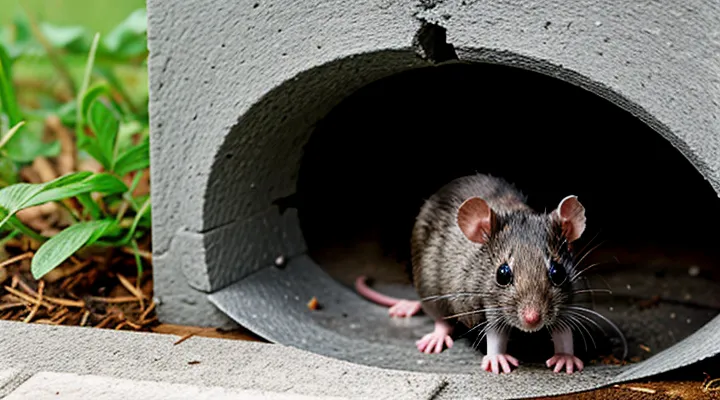
Understanding the Rat Problem
Why Rats Gnaw
Rats gnaw continuously because their incisors grow throughout life. The constant eruption of these teeth creates a natural need to wear them down, preventing over‑growth that could impair feeding.
Gnawing also serves as a method of environmental assessment. By biting through materials, rats test structural integrity, locate openings, and identify potential pathways to shelter or food sources.
Additional motivations include:
- Access to nutrition: chewing through barriers grants entry to stored grains, waste, or other edible items.
- Nest construction: rodents shape nesting material and enlarge cavities for brood chambers.
- Territorial signaling: bite marks leave scent cues that communicate occupancy to conspecifics.
- Stress relief: repetitive gnawing reduces tension caused by overcrowding or limited resources.
Understanding these drivers clarifies why sealing entry points must involve durable, chew‑resistant materials and comprehensive coverage of all potential gaps.
Common Entry Points and Hole Types
Rats gain access through structural gaps that align with their size and behavior. Typical pathways include:
- Openings around utility penetrations (pipes, wires, conduit) where the clearance is larger than 1 cm.
- Gaps beneath doors, windows, and garage doors, especially when weather‑stripping is worn or missing.
- Cracks in foundation walls, brickwork, or foundation slabs that extend from the exterior soil.
- Unsealed vents, chimney flues, and attic access points where screens are absent or damaged.
- Openings around exterior lighting fixtures, HVAC units, and roof eaves that lack proper flashing.
The holes themselves fall into distinct categories, each requiring a specific sealing approach:
- Circular holes: often created by gnawing around pipe sleeves or cable entries; best sealed with metal mesh or stainless‑steel flashing combined with a durable caulk.
- Rectangular or irregular gaps: commonly found in wall sheathing or floor joists; require rigid filler material such as cement board or pressure‑treated lumber, followed by a rodent‑proof sealant.
- Elongated slots: typical around door sweeps or window tracks; effectively blocked using steel wool or copper mesh packed tightly, then covered with a hard‑cure epoxy.
- Small punctures: usually the result of rats chewing through insulation or soft materials; sealed with expanding foam that contains a metal mesh core to resist future gnawing.
Identifying the exact location and shape of each entry point enables the selection of materials that resist repeated chewing, ensuring a long‑lasting barrier against infestation.
Preparation for Sealing
Safety First
Personal Protective Equipment
When repairing an opening that a rat could exploit, personal protective equipment (PPE) safeguards the worker from injuries and exposure to contaminants released by the animal or the sealing materials. Proper PPE reduces the risk of skin punctures, eye irritation, and inhalation of dust or fumes generated during cleaning and application of sealants.
Essential items include:
- Cut‑resistant gloves to prevent bites and protect against sharp debris.
- Safety goggles or face shield to block splinters, rodent droppings, and sealant spray.
- Disposable coveralls or a sturdy work shirt to keep clothing free of urine, feces, and chemicals.
- Respiratory protection (N95 or higher) when sanding, grinding, or applying solvent‑based sealants.
- Steel‑toe boots with slip‑resistant soles for stable footing on uneven surfaces.
Each component addresses a specific hazard encountered during the sealing process. Gloves and eye protection prevent direct contact with the animal and debris. Coveralls and boots isolate contaminants from the skin and reduce the chance of spreading pathogens. Respiratory gear limits inhalation of particulates that can cause respiratory irritation. Selecting appropriate PPE and ensuring it fits correctly enhances safety and contributes to a durable, rat‑proof repair.
Handling Rodents
Rats locate and exploit any opening that provides access to shelter, food, or water. Effective control begins with eliminating those pathways, especially gaps that rodents can gnaw through.
Identify potential entry points by inspecting the building envelope, foundation, utility penetrations, and interior fixtures. Look for signs such as fresh gnaw marks, droppings, or grease trails. Record each opening’s dimensions and material composition before proceeding.
Select sealing materials that resist rodent incisors. Stainless‑steel mesh (¼‑inch gauge), cement‑based mortar, expanding foam with metal reinforcement, and heavy‑duty steel wool are reliable options. Apply a corrosion‑inhibiting primer to metal surfaces to prolong durability.
Sealing procedure
- Clean the area; remove debris, loose paint, and old caulk.
- Fit steel wool or mesh into the opening, ensuring a tight fit that leaves no gaps.
- Cover the filler with a layer of high‑expansion polyurethane foam; allow it to cure according to manufacturer instructions.
- Apply a cementitious patch or metal flashing over the foam, embedding the steel reinforcement where possible.
- Finish with a weather‑resistant sealant to protect against moisture infiltration.
After installation, schedule periodic inspections to verify the integrity of the seal. Replace any compromised sections promptly, and maintain a clean environment that deters rodent attraction. Continuous monitoring ensures that the barrier remains effective and that rodent activity does not resume.
Inspecting the Area
Identifying Active Gnawing
Detecting ongoing gnawing activity is the first step before any repair work. Without confirming that a rodent is currently attacking a structure, resources may be wasted on sealing inactive points, while the animal continues to damage other areas.
Typical indicators include:
- Fresh gnaw marks on wood, plastic, or metal, identifiable by smooth, glossy edges.
- Small piles of shredded material or shredded insulation surrounding the opening.
- Presence of droppings or urine stains near the suspected entry.
- Audible scratching or chewing sounds, especially at night.
- Visible tracks or footprints in dust, flour, or other fine substrates.
Inspect each potential opening with a flashlight and magnifying glass. Run a thin probe, such as a bent wire or a disposable paintbrush, into the gap; resistance or the detection of chewed material confirms active use. Record the exact location, dimensions, and material condition to plan an effective seal.
When active gnawing is verified, prioritize sealing that point before moving to secondary locations. Use materials resistant to rodent teeth—steel wool, copper mesh, or heavy‑duty hardware cloth—combined with a durable sealant. Apply the barrier tightly, ensuring no gaps remain for future attempts. After completion, monitor the area for at least 48 hours to verify the absence of new gnaw marks or activity signs.
Assessing Hole Size and Location
When determining a seal, the first step is to identify every opening that a rodent could exploit. Examine exterior walls, foundations, utility penetrations, and roof eaves. Look for gaps around pipes, vents, and conduit sleeves. Note the material surrounding each opening, as this influences the choice of sealant.
Accurate measurement guides material selection. Use a flexible ruler or caliper to record the width, height, and depth of each aperture. Record dimensions to the nearest millimeter; even a 2‑mm gap can admit a determined rat. Compare measurements with product specifications: steel wool, expanding foam, or cementitious patches must exceed the opening size by at least 10 % to allow for compression and movement.
Key considerations for location include:
- Proximity to food sources or nesting sites, which increases attack frequency.
- Exposure to weather, which can degrade certain sealants over time.
- Structural load, ensuring that the repair does not compromise integrity.
- Accessibility for future inspection and maintenance.
By documenting size and position before applying any barrier, the sealing process becomes targeted, durable, and effective in deterring gnawing activity.
Choosing the Right Materials
Materials to Avoid («Caulk», «Wood», «Plastic»)
Caulk, even when labeled as rodent‑resistant, softens under humidity and can be chewed through within days. Its adhesive base lacks the structural integrity required to withstand the constant pressure of a rat’s incisors, making it an unreliable barrier.
Wood, whether hardwood or softwood, presents a natural food source for gnawing rodents. Rats readily bite into grain fibers, and any seams or joints in wooden plugs provide entry points. Additionally, wood expands and contracts with temperature changes, creating gaps that rats can exploit.
Plastic sealants and sheets often appear durable, but most formulations are not engineered for rodent penetration. Rats can gnaw through standard PVC, polyethylene, or acrylic with relative ease, especially at thin edges. Moreover, plastic can become brittle over time, cracking under stress and exposing the underlying opening.
Materials to avoid when blocking rodent entry:
- Standard caulk (silicone, latex, acrylic)
- Untreated wood or wooden plugs
- Generic plastic sealants, sheets, or tubing
Choosing substances that combine hardness, chew resistance, and permanent adhesion is essential for a lasting solution.
Recommended Materials («Steel Wool», «Hardware Cloth», «Cement», «Patching Compounds»)
Sealing openings to deter rat chewing requires materials that resist gnawing, adhere securely, and fill gaps completely. Selecting the appropriate product determines the longevity of the repair and prevents future entry.
- Steel wool – dense fibers compress tightly into cracks, creating a barrier that rats cannot bite through. When combined with a sealing agent, it stays in place and fills irregular shapes.
- Hardware cloth – woven metal mesh with openings no larger than 1 mm provides a physical shield. It can be cut to size, stapled or screwed over the opening, and covered with a sealant for added protection.
- Cement – mortar or concrete mixes harden into a solid mass that rats cannot gnaw. Apply a thin layer over steel wool or hardware cloth to lock the material in place and create a weather‑resistant surface.
- Patching compounds – epoxy‑based or polymer fillers bond to wood, drywall, or masonry. They expand slightly during curing, sealing any remaining voids and forming a smooth, durable finish.
When repairing a hole, start by inserting steel wool to fill the void, overlay with hardware cloth for structural strength, then apply cement or a suitable patching compound to create a seamless, chew‑proof surface. This layered approach maximizes resistance to rodent damage and ensures a lasting seal.
The Sealing Process
Cleaning the Hole
Before applying any sealant, the opening must be completely free of contaminants. Residual debris, dust, or gnaw marks provide a surface for rodents to re‑enter and can impair adhesion of the sealing material.
- Remove loose material with a screwdriver, wire brush, or vacuum.
- Scrape away any chewed wood, insulation, or paint using a putty knife.
- Wash the cavity with a detergent solution; rinse thoroughly to eliminate grease and urine.
- Disinfect with a diluted bleach solution (1 part bleach to 9 parts water) or a commercial rodent‑proof cleaner.
- Allow the area to dry completely; use a fan or low‑heat dryer if ambient conditions are humid.
A clean, dry surface ensures the chosen sealant bonds securely, eliminating gaps that a rat could exploit. Skipping this preparation step often results in premature failure of the repair and continued gnawing risk.
Filling Small Holes
Using Steel Wool
Steel wool provides a physical barrier that rodents cannot easily chew through. Its coarse fibers interlock, creating a mesh that resists gnawing while remaining flexible enough to conform to irregular openings.
To apply steel wool effectively:
- Choose grade #4 or #5; the thicker strands increase durability.
- Cut a piece slightly larger than the hole’s dimensions.
- Press the wool firmly into the aperture, ensuring no gaps remain.
- Secure the material with a layer of expanding foam, silicone sealant, or metal flashing to lock the fibers in place.
- Allow the sealant to cure according to the manufacturer’s instructions before exposing the area to rodents.
After installation, inspect the seal regularly. Replace worn or displaced wool promptly, as repeated chewing can create small openings that compromise the barrier. Combining steel wool with a waterproof sealant extends protection against moisture, preventing corrosion that could weaken the mesh over time.
Applying Expanding Foam (with proper precautions)
Expanding foam provides a rapid, durable barrier against rodent intrusion when applied correctly. Its ability to expand up to 30 times its original volume fills irregular gaps, creating a solid plug that rats cannot gnaw through.
Before use, remove debris, dust, and loose material from the opening. Select a low‑expansion, fire‑rated product designed for indoor applications. Equip gloves, eye protection, and a respirator; the chemicals release fumes that may irritate respiratory passages. Ensure adequate ventilation in the work area.
- Insert the foam nozzle into the cavity, maintaining a slight angle to direct flow inward.
- Dispense foam in short bursts, allowing each injection to expand before adding more. Overfilling creates pressure that can crack surrounding material.
- After the foam reaches the cavity’s limits, stop dispensing and let the material cure for the manufacturer‑specified time, typically 15–30 minutes.
- Trim excess foam with a utility knife once it has hardened. Sand edges if a smooth surface is required.
- Inspect the seal for gaps or cracks; apply a thin secondary layer if any voids remain.
Key safety precautions:
- Do not apply foam near open flames or electrical components; the product is flammable until fully cured.
- Keep the canister upright; tilting can cause uncontrolled discharge.
- Store the canister in a cool, dry place away from direct sunlight to prevent pressure buildup.
- Avoid contact with skin and eyes; immediate washing with water reduces irritation.
- Dispose of empty containers according to local hazardous waste regulations.
When executed with these measures, expanding foam creates a reliable, long‑lasting closure that denies rats access and eliminates the need for frequent maintenance.
Sealing Medium to Large Holes
Reinforcing with Hardware Cloth
Hardware cloth provides a durable barrier that resists rodent incisors. Choose a mesh size of ¼‑inch or smaller; larger openings allow teeth to penetrate. Galvanized steel prevents rust when exposed to moisture.
Cut the cloth to extend at least 2 inches beyond every side of the opening. Use tin snips or a metal shear for clean edges. Position the cut piece over the hole and secure it with corrosion‑resistant screws or self‑tapping fasteners spaced 4‑6 inches apart. Apply a waterproof sealant around each fastener to eliminate gaps.
For irregular or rounded openings, shape the cloth to follow the contour before fastening. Overlap adjacent pieces by 1 inch and seal the overlap with silicone caulk to create a continuous shield.
After installation, inspect the perimeter for loose edges or exposed threads. Reinforce any weak points with additional strips of hardware cloth or metal flashing. Regularly clean the surface to prevent debris buildup that could aid gnawing.
By integrating hardware cloth with proper fastening and sealing, the repaired aperture becomes a long‑lasting obstacle that deters rats from chewing through.
Applying Patching Compounds or Cement
Applying patching compounds or cement creates a durable barrier that resists gnawing and prevents rodents from re‑entering a structure. The material’s hardness and adhesion to masonry or wood make it unsuitable for a rat’s incisors, ensuring long‑term protection.
- Clean the opening thoroughly; remove dust, loose fibers, and any remnants of previous repairs.
- Choose a product rated for structural repair, such as a polymer‑modified cement or a two‑part epoxy filler, that can withstand compression.
- If using cement, mix according to the manufacturer’s water‑to‑powder ratio, achieving a smooth, lump‑free paste. For epoxy, combine the resin and hardener in the specified proportion and stir until uniform.
- Apply the mixture with a trowel, pressing firmly to fill the cavity completely. Overfill slightly to allow for shrinkage during curing.
- Smooth the surface level with the surrounding material, shaping a slight bevel to direct water away from the joint.
- Allow the repair to cure for the recommended period—typically 24 hours for cement and 4–6 hours for epoxy—maintaining a dry environment.
- Inspect the sealed area after curing; verify that no gaps or cracks remain and that the surface is solid under pressure.
Properly executed, a cement or epoxy patch eliminates the weak point that rats exploit, providing a reliable, long‑lasting seal against future gnawing attempts.
Finishing Touches
Painting and Aesthetics
Rats exploit gaps in structures; a durable barrier combined with a finished surface eliminates access and preserves visual integrity.
A robust solution begins with a sealant formulated to resist gnawing. After the sealant cures, a paint system provides protection from moisture, UV exposure, and further wear while blending the repaired area with surrounding surfaces.
Procedure
- Remove debris and loose material from the opening.
- Apply a rodent‑grade epoxy or silicone sealant, ensuring full coverage of the cavity.
- Allow the sealant to reach full hardness according to manufacturer specifications.
- Lightly sand the cured sealant to create a uniform substrate.
- Prime with a rust‑inhibiting, adhesion‑promoting primer compatible with the chosen topcoat.
- Apply two coats of high‑quality, low‑VOC paint matched to the existing color palette; allow adequate drying time between coats.
Aesthetic considerations dictate selection of paint that mimics the original hue, sheen, and texture. Matte finishes conceal minor imperfections, while semi‑gloss or gloss coatings highlight architectural details. Pigments with UV absorbers prevent fading, maintaining consistency over time.
Regular inspection detects early signs of damage; touch‑up painting restores both barrier performance and visual cohesion before rodents can re‑enter.
Monitoring the Sealed Area
After a closure is applied, continuous observation confirms that the barrier remains intact and that rodents cannot re‑enter.
Regular visual checks should be performed at least once a week for the first month, then monthly thereafter. Inspect the surface for new gnaw marks, cracks, or loosened material. Pay special attention to joints, edges, and any adjacent openings that could provide alternative access.
Supplementary detection methods increase reliability:
- Install a low‑light motion sensor or infrared camera aimed at the sealed zone; review footage weekly for any activity.
- Apply a non‑toxic powder or dust around the perimeter; re‑examine after 24 hours for fresh tracks.
- Use a handheld ultrasonic detector to identify hidden cavities or loose sections that may not be visible.
Document each inspection. Record the date, observed condition, and corrective actions taken. Store logs digitally for easy retrieval and trend analysis. If any compromise is identified, repair immediately with the same sealing materials used initially, then resume the monitoring cycle. This systematic approach ensures the closure remains effective over the long term.
Post-Sealing Prevention
Eliminating Food and Water Sources
Eliminating food and water sources is a critical step when securing openings to deter rodent intrusion. Rats are attracted to readily available nourishment; removing these incentives reduces the likelihood that they will target repaired gaps.
Identify all potential supplies within the premises. Store dry goods in airtight containers, preferably made of metal or heavy‑wall plastic. Dispose of spilled grain, crumbs, or pet food immediately. Keep garbage in sealed bins and remove waste from the area at least daily.
Control water availability. Repair leaking pipes, faucets, and roof penetrations. Wipe down countertops and floors after cleaning to remove residual moisture. Use drip‑free pet water dishes or place them on a tray that can be emptied regularly.
Maintain a clutter‑free environment. Stacks of cardboard, newspapers, or fabric provide shelter and concealment for food. Organize storage areas, elevate items off the floor, and discard unnecessary materials.
Implement the following checklist:
- Store all consumables in sealed, rodent‑proof containers.
- Clean surfaces after each meal preparation.
- Empty and seal trash containers nightly.
- Fix all leaks and eliminate standing water.
- Remove clutter that could hide food or water sources.
By systematically denying rats access to nutrition and hydration, the effectiveness of any structural sealing measures is greatly enhanced, leading to long‑term prevention of gnawing damage.
Maintaining a Clean Environment
A tidy surroundings reduce the likelihood that rats discover and exploit openings. Food scraps, spilled grain, and accumulated waste create scent trails that guide rodents to potential entry points. When debris clogs gaps, sealants cannot adhere properly, allowing gnawing damage to continue.
Removing contaminants and organizing the area before applying any barrier ensures that materials bond securely and remain intact. Clean surfaces also expose hidden cracks that might otherwise be overlooked.
- Sweep floors, countertops, and work surfaces daily to eliminate food particles.
- Dispose of garbage in sealed containers; empty them regularly.
- Store dry goods in airtight bins and keep them off the ground.
- Vacuum corners, behind appliances, and under shelving to clear dust and droppings.
- Wash walls and exterior siding with a mild detergent before applying sealant or mesh.
After the environment is sanitized, inspect all potential entry zones. Apply steel wool, copper mesh, or expanding foam to fill gaps, then cover with a durable caulk or cement. Re‑check the sealed areas monthly; replace compromised material promptly to prevent renewed gnawing activity.
Regular Inspections
Regular inspections confirm that sealed openings remain intact and that rodents have not created new entry points. Without systematic checks, even the most robust seal can be compromised by weather, structural movement, or animal activity.
Inspectations should occur at least once every month during active rodent seasons and quarterly when activity is low. During each visit, verify the following:
- Condition of sealant material (cracks, separation, erosion)
- Presence of gnaw marks or fresh chew holes around the sealed area
- Signs of rodent activity such as droppings, urine stains, or nesting material
- Integrity of surrounding structures (e.g., framing, siding, foundation) that could expose gaps
When a defect is identified, repair it immediately with the same material and technique used originally. Document the date, location, and nature of each finding to track trends and prioritize high‑risk zones. Maintaining a consistent inspection schedule reduces the likelihood of a breach and extends the effectiveness of the initial sealing effort.
Addressing Other Entry Points
After the primary opening is closed, examine the surrounding structure for any additional gaps that could serve as a rat’s route. Small holes, cracks, and openings around pipes, vents, and utility lines often go unnoticed but provide easy access.
Identify common entry points:
- Gaps around plumbing and electrical conduits
- Spaces beneath doors and windows
- Cracks in foundation walls or floor joists
- Openings at attic vents, roof eaves, and chimney flues
- Unsealed openings in crawl‑space or basement walls
For each location, apply a suitable barrier:
- Insert steel wool or copper mesh into narrow gaps, then cover with expanding foam or silicone sealant to prevent gnawing.
- Fit hardware cloth (¼‑inch mesh) over larger openings, secure with screws and a waterproof sealant.
- Use concrete patch or mortar for cracks in masonry, smoothing the surface to eliminate crevices.
- Install door sweeps and weatherstripping to close gaps beneath entry doors.
- Seal vent covers with metal flashing and reinforce with a layer of rigid insulation.
Regularly inspect the sealed areas, especially after heavy rain or seasonal temperature changes, and repair any new damage promptly. Maintaining a comprehensive barrier across all potential access points eliminates alternative routes and ensures long‑term protection against rodent intrusion.