
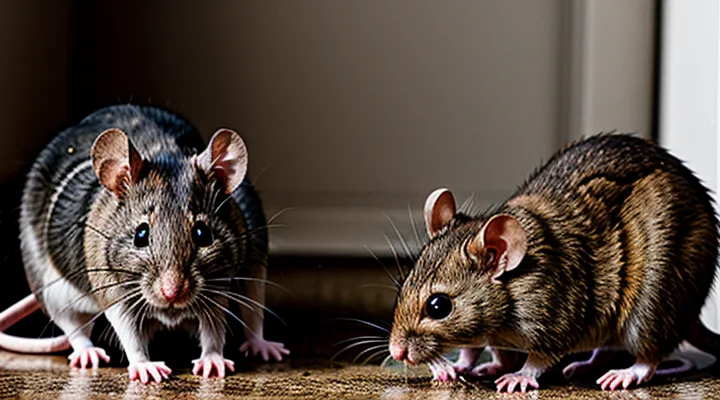
Understanding Musophobia «The Fear of Mice and Rats»
What is Musophobia?
Musophobia denotes an excessive, irrational fear of mice and rats, classified among specific phobias. The condition elicits intense anxiety when individuals encounter, anticipate, or even think about these rodents.
Typical manifestations include rapid heartbeat, sweating, trembling, shortness of breath, and an overwhelming urge to flee. Behavioral responses often involve avoidance of areas where rodents might appear, such as basements, kitchens, or agricultural settings.
Prevalence studies indicate that a notable minority of the population experiences clinically significant fear of rodents, with higher rates observed among individuals who have endured prior negative encounters or who report heightened sensitivity to threats.
Underlying factors comprise evolutionary predispositions favoring avoidance of potential disease carriers, conditioned learning from traumatic incidents, and cultural influences that reinforce negative attitudes toward mice and rats.
Effective interventions for reducing this fear encompass:
- Gradual exposure to rodent-related stimuli, progressing from pictures to controlled live contact.
- Cognitive restructuring to challenge distorted beliefs about danger and contamination.
- Relaxation training, including diaphragmatic breathing and progressive muscle relaxation, to mitigate physiological arousal.
- Systematic desensitization combining exposure with relaxation techniques.
- Professional guidance from psychologists specializing in anxiety disorders.
Implementation of these strategies supports the broader objective of mitigating rodent-related anxiety and restoring functional engagement with environments where mice and rats may be present.
Common Triggers and Symptoms
Physical Reactions
Physical responses to the presence of rodents often involve activation of the sympathetic nervous system. Typical manifestations include tachycardia, elevated blood pressure, perspiration, tremor, and gastrointestinal upset. These signs reflect the body’s immediate preparation for perceived danger.
The intensity of the reaction correlates with the perceived proximity and size of the animal. Visual cues such as movement or scent can trigger the same cascade even in the absence of a live specimen. Physiological monitoring—heart‑rate sensors, skin‑conductance meters, or respiratory belts—provides objective data for assessing progress during treatment.
Effective mitigation strategies focus on regulating the autonomic output:
- Slow, diaphragmatic breathing to increase vagal tone and lower heart rate.
- Progressive muscle relaxation, systematically tensing and releasing major muscle groups.
- Systematic desensitization through graded exposure to rodent‑related stimuli, beginning with pictures and advancing to controlled encounters.
- Cognitive reframing, replacing catastrophic imagery with factual information about rodent behavior and risk levels.
Consistent practice of these techniques reduces the frequency and magnitude of physical symptoms, facilitating a calmer response when rodents are encountered.
Emotional Responses
Emotional responses to the presence of small rodents are typically intense and immediate. Common reactions include heightened anxiety, sudden disgust, brief panic episodes, and a persistent state of hypervigilance. These feelings often arise before conscious appraisal, driven by instinctual threat detection.
Physiological mechanisms underpinning these reactions involve rapid activation of the amygdala, triggering the fight‑or‑flight cascade. Elevated cortisol levels, increased heart rate, and muscle tension prepare the body for swift action, reinforcing the subjective experience of fear.
Effective management of these emotional states relies on structured interventions:
- Cognitive restructuring to reinterpret the perceived threat.
- Controlled exposure sessions that gradually increase contact with rodents.
- Relaxation techniques such as diaphragmatic breathing and progressive muscle relaxation.
- Mindfulness practices that anchor attention to present sensations without judgment.
Desensitization protocols progress from visual exposure to tactile interaction, allowing the nervous system to recalibrate its threat assessment. Modeling behavior—observing calm responses from a trusted individual—provides a template for adaptive coping.
Consistent monitoring of emotional intensity, recorded in a brief log, reveals patterns and measures progress. Professional guidance, particularly from therapists experienced in anxiety treatment, enhances the likelihood of sustained improvement.
Strategies for Overcoming Your Fear
Gradual Exposure «Systematic Desensitization»
Understanding the Process
Fear of mice and rats manifests as heightened heart rate, rapid breathing, and avoidance behavior. Recognizing these physiological signals marks the initial stage of the therapeutic pathway.
The process of diminishing this aversion proceeds through distinct phases:
- Identify specific triggers by recording situations that provoke anxiety.
- Challenge distorted beliefs with factual information about rodent behavior and health risk.
- Apply systematic desensitization: begin with low‑intensity exposure (e.g., viewing pictures), then progress to live encounters under controlled conditions.
- Incorporate relaxation techniques such as diaphragmatic breathing or progressive muscle relaxation during exposure sessions.
- Reinforce successful encounters with positive self‑feedback and reward mechanisms.
Consistent execution of each phase restructures the fear response, replacing automatic alarm with measured appraisal. The end result is a measurable reduction in avoidance and physiological arousal when rodents are present.
Steps for Gradual Exposure
Gradual exposure reduces rodent‑related anxiety by systematically desensitising the nervous system. The process begins with mental preparation, proceeds through controlled interaction, and ends with independent tolerance.
- Identify personal triggers. List specific situations that provoke fear, such as sight, sound, or scent of rodents.
- Create a safe environment. Choose a quiet room, ensure no sudden movements, and keep a calming object nearby.
- Visualise rodents. Spend a few minutes each day picturing a mouse or rat, focusing on neutral details without emotional reaction.
- Observe from a distance. Watch live footage or a video of rodents at a distance that feels manageable, noting physiological responses.
- Reduce distance incrementally. Move the screen or screen size closer by a small, measurable amount each session, maintaining composure.
- Introduce a physical presence. Place a sealed container with a rodent in the same room, keeping a barrier until comfort increases.
- Touch a safe surface. With protective gloves, gently tap the container, allowing tactile contact without direct handling.
- Handle briefly. Under supervision, hold the animal for a few seconds, then release. Extend duration as confidence grows.
- Practice regularly. Conduct exposure sessions several times per week, tracking progress and adjusting steps as needed.
Consistency and patience ensure the fear diminishes, leading to functional coexistence with rodents.
Step 1: Imagined Exposure
Imagined exposure constitutes the initial phase in a systematic approach to diminish aversion toward small rodents. The technique relies on mental rehearsal of encounters, allowing the nervous system to adapt without direct contact.
The process unfolds as follows:
- Visualize a mouse or rat in a neutral setting, such as a laboratory cage, maintaining a calm posture.
- Concentrate on sensory details—size, coloration, movement—while observing from a safe mental distance.
- Introduce a gradual increase in proximity, first imagining the animal on a table, then inches away, and finally within arm’s reach.
- Pair each imagined scenario with a relaxation cue, such as controlled breathing or progressive muscle relaxation, to reinforce a non‑threatening response.
Consistent practice over several days conditions the brain to reinterpret the presence of rodents as non‑dangerous, establishing a foundation for subsequent real‑world exposure.
Step 2: Visual Exposure «Pictures and Videos»
Visual exposure through carefully selected images and video clips creates a controlled, non‑threatening context for confronting rodent‑related anxiety. Repeated viewing of neutral or mildly positive representations reduces the automatic alarm response by allowing the nervous system to habituate to the stimulus without direct contact.
- Choose material that depicts mice or rats in everyday, non‑aggressive settings (e.g., feeding, grooming, or moving calmly in a cage).
- Begin with static photographs; progress to short video segments lasting no more than 30 seconds.
- Set a viewing schedule of 5‑10 minutes per session, three times daily, maintaining a consistent routine.
- Record emotional reactions after each session to monitor desensitization progress.
Select high‑resolution content that avoids sudden movements or startling sounds. Gradual escalation from still images to dynamic footage supports systematic desensitization, while regular exposure reinforces the newly formed, less fearful association. Consistency and measured progression are essential for lasting reduction of rodent‑related fear.
Step 3: Indirect Physical Exposure «Cages, Droppings»
Step 3 focuses on indirect physical exposure through the presence of rodent habitats and waste. The strategy relies on gradual desensitisation by observing non‑threatening elements that signal a mouse or rat’s existence without direct contact.
The process begins with visual contact. Place a clear cage containing a live mouse or rat in a neutral room. Keep the door closed, allowing only the animal’s movement to be observed. Maintain a distance that feels safe, then reduce that distance over multiple sessions. The goal is to associate the sight of the animal with a predictable, controlled environment.
Next, incorporate evidence of rodent activity. Introduce a tray of droppings, nests, or gnawed objects near the observation area. Use these items to reinforce the notion that rodents are present but harmless when not approached directly.
Practical steps:
- Position a sealed cage on a table at eye level; keep lighting constant.
- Record the duration of each viewing session; increase time by 5‑10 minutes per session.
- Place a small dish of fresh droppings beside the cage; replace daily to maintain realism.
- Alternate sessions with the cage only, droppings only, and both combined to vary stimuli.
- After consistent exposure, reduce the physical barrier (e.g., open the cage door) while maintaining a safe distance, then gradually approach.
Consistent application of these measures builds tolerance to rodent cues, weakening the fear response and preparing the individual for direct interaction in later stages.
Step 4: Direct but Controlled Exposure «Pet Shops, Zoos»
Direct, controlled exposure in environments where rodents are present offers a practical means of diminishing fear. Pet shops and zoos provide predictable settings, professional supervision, and the possibility of gradual interaction with mice and rats.
Key actions for the exposure process:
- Identify a reputable pet shop or zoo that allows limited access to rodent enclosures.
- Arrange a brief, scheduled visit lasting no more than ten minutes.
- Observe the animals from a safe distance, focusing on their natural behavior.
- Progress to standing closer while maintaining a calm posture; avoid sudden movements.
- If tolerated, extend the stay by five‑minute increments over several sessions, always concluding before anxiety escalates.
- Record observations after each visit, noting physiological responses and any reduction in avoidance.
Consistent application of these steps builds familiarity, reduces threat perception, and supports long‑term desensitisation.
Cognitive Behavioral Therapy «CBT» Techniques
Identifying Negative Thought Patterns
Negative thought patterns amplify anxiety when a mouse or rat appears. Typical distortions include catastrophizing, overgeneralization, and mind‑reading. Catastrophizing labels a brief encounter as a sign of imminent danger. Overgeneralization extends a single incident to a universal threat. Mind‑reading assumes the animal will act aggressively without evidence.
To detect these distortions, observe internal dialogue during exposure:
- Record immediate thoughts the moment a rodent is sighted.
- Identify language that exaggerates risk, such as absolute terms («always», «never»).
- Highlight predictions about future harm that lack factual support.
After recognition, replace distorted statements with balanced alternatives. For example, transform “If I see a mouse, I will be attacked” into “A mouse may startle me, but it cannot cause injury.” Challenge each claim by asking for concrete proof, then rewrite the thought to reflect realistic outcomes.
Consistent monitoring of self‑talk, combined with evidence‑based replacement, weakens the mental pathways that sustain fear. This process builds a factual framework that reduces automatic panic when rodents are encountered.
Challenging and Replacing Irrational Beliefs
Overcoming a phobia of rodents begins with identifying the irrational beliefs that sustain the fear. Common misconceptions include the idea that all mice and rats are aggressive, that their presence inevitably leads to disease, or that a single encounter will cause lasting harm. These thoughts exaggerate risk and ignore statistical evidence of low danger.
The process of challenging these beliefs follows a structured approach:
- Record the specific thought that arises when a rodent is sighted.
- Examine factual information about rodent behavior and health risks.
- Compare the thought with verified data; note discrepancies.
- Formulate a balanced alternative, such as «Rodents generally avoid humans and pose minimal health threat when proper hygiene is maintained».
- Practice repeating the balanced statement whenever the original fear‑inducing thought appears.
Replacing irrational beliefs requires consistent reinforcement. Each time the balanced alternative is affirmed, neural pathways supporting the fear weaken, while those supporting realistic appraisal strengthen. Over time, the emotional response diminishes, allowing calm interaction with environments where mice or rats might be present.
Relaxation and Mindfulness Practices
Deep Breathing Exercises
Deep breathing exercises provide a physiological countermeasure to the acute anxiety that arises when mice or rats are sighted. By deliberately controlling the breath, the body shifts from a sympathetic “fight‑or‑flight” state to a parasympathetic state, lowering heart rate and cortisol levels.
The technique relies on three phases: inhalation, brief retention, and exhalation. A typical protocol suggests inhaling slowly through the nose for a count of four, holding the breath for a count of two, and exhaling gently through the mouth for a count of six. Each cycle should be repeated eight to ten times, forming a single session lasting approximately two minutes. Consistent practice—once or twice daily—strengthens the nervous system’s capacity to self‑regulate during unexpected rodent encounters.
When a mouse appears, initiate the breathing cycle before any movement. The focus on counting and rhythm creates a mental anchor, preventing the panic response from escalating. Repeating the exercise during exposure reinforces the association between the presence of rodents and a calm physiological state, gradually diminishing the fear response.
For optimal results, perform the exercise in a quiet environment initially, then transition to real‑world settings. Combine deep breathing with grounding techniques, such as feeling the feet on the floor, to enhance sensory awareness while maintaining composure. Regular application builds resilience, allowing individuals to confront rodent‑related anxiety with confidence.
Progressive Muscle Relaxation
Progressive Muscle Relaxation (PMR) provides a systematic method for reducing physiological arousal associated with rodent‑related anxiety. The technique involves alternating tension and relaxation of major muscle groups, which produces a detectable contrast between states and trains the nervous system to recognize and maintain a relaxed condition. Regular practice lowers baseline muscle tension, diminishes the fight‑or‑flight response, and creates a calmer internal environment that can be leveraged during exposure to mice or rats.
Key components of an effective PMR session:
- Identify a quiet setting, free from visual cues of rodents.
- Begin with the feet, contract the muscles for 4–6 seconds, then release completely for 10–15 seconds.
- Progress upward through calves, thighs, abdomen, chest, hands, arms, shoulders, neck, and facial muscles, applying the same tension‑release pattern.
- Focus attention on the sensation of release, allowing each group to become noticeably softer before moving to the next.
Integrating PMR with systematic exposure enhances desensitization. After a relaxation cycle, the individual can approach a controlled encounter with a mouse or rat while maintaining the relaxed muscular state. The reduced somatic tension interferes with the feedback loop that amplifies fear, thereby facilitating a more measured emotional response. Consistent daily practice, combined with gradual exposure, accelerates the decline of avoidance behaviours and promotes confidence in handling situations involving small rodents.
Guided Imagery
Guided imagery provides a structured mental rehearsal that reduces the physiological response associated with rodent‑related anxiety. The technique relies on vivid, controlled visualizations to replace automatic fear reactions with calmer, more adaptive patterns.
- Preparation – a quiet setting, comfortable posture, and a brief relaxation phase establish the mental space needed for effective visualization.
- Core visualization – the individual imagines a scenario involving mice or rats in a safe, controlled environment, such as observing a small animal from a distance while feeling secure.
- Progressive exposure – the imagined scene gradually introduces closer proximity, altered lighting, or gentle interaction, each step reinforced by the sensation of calm.
- Integration – after the session, the individual reflects on the experience, noting reduced tension and reinforcing the new mental script.
Applying this method to rodent phobia involves specific content: picture a clean laboratory cage, focus on the soft rustle of bedding, observe the animal’s movements without threat, and imagine a protective barrier that can be lowered incrementally. Repeating the sequence strengthens neural pathways that associate rodents with safety rather than danger.
Research indicates that guided imagery lowers cortisol levels, diminishes heart‑rate spikes, and promotes cognitive reappraisal of feared stimuli. Regular practice cultivates a resilient response, enabling the individual to confront real‑world encounters with reduced apprehension.
Practical Tips for Managing Encounters
Mouse and Rat Proofing Your Home
Sealing Entry Points
Sealing entry points eliminates the pathways that rodents use to infiltrate living spaces, thereby reducing encounters that trigger anxiety. By blocking access, the environment becomes less inviting for mice and rats, which directly diminishes the frequency of sightings and the associated fear response.
- Inspect foundations, walls, and ceilings for gaps larger than ¼ inch.
- Apply steel wool or copper mesh to small openings before applying sealant.
- Use caulk, expanding foam, or concrete patch to fill larger cracks.
- Install door sweeps and weather stripping on exterior doors.
- Cover vent openings with metal screens that resist chewing.
After repairs, verify integrity by conducting a visual check after heavy rain or wind, conditions that often reveal hidden breaches. Maintain a schedule for quarterly inspections, focusing on areas around utility lines, pipe entries, and attic access points. Regular upkeep prevents re‑entry, sustains a rodent‑free environment, and supports long‑term confidence in the home’s safety.
Eliminating Food Sources
Eliminating food sources directly reduces the likelihood of rodent activity, which in turn lessens the anxiety associated with their presence.
Secure storage is essential. Place all dry goods in airtight containers made of glass or heavy‑wall plastic. Dispose of opened packages promptly, and avoid leaving food unattended on countertops or tables.
Maintain cleanliness in the kitchen and dining areas. Sweep crumbs after each meal, wipe surfaces with a disinfectant, and vacuum regularly to remove hidden particles.
Manage waste effectively. Use bins with tight‑fitting lids, empty them daily, and keep them away from entry points. Compost bins should be sealed and positioned outdoors, not within the living space.
Control pet feeding habits. Feed animals at fixed times, remove uneaten food within 30 minutes, and store pet food in sealed containers.
Implement a systematic inspection routine. Identify and seal cracks, gaps, and openings around doors, windows, and utility lines. Apply steel wool or caulk to small gaps; use metal flashing for larger openings.
Typical actions for eliminating food sources:
- Store all consumables in sealed containers.
- Clean surfaces immediately after use.
- Remove waste daily and use secure bins.
- Seal pet food and limit feeding times.
- Inspect and repair structural entry points.
Consistent application of these measures deprives mice and rats of sustenance, diminishing their presence and the fear they provoke.
When to Seek Professional Help
Signs You May Need a Therapist
Fear of mice and rats can intensify beyond a simple aversion, interfering with daily activities and emotional stability. Recognizing when professional assistance is required prevents the escalation of anxiety and supports sustainable coping strategies.
Typical indicators that therapeutic intervention may be beneficial include:
- Persistent avoidance of locations where rodents might appear, resulting in missed work, school, or social engagements.
- Physical reactions such as rapid heartbeat, sweating, trembling, or shortness of breath at the mere thought of encountering a mouse or rat.
- Intrusive thoughts about rodents that dominate mental focus and disrupt concentration on unrelated tasks.
- Sleep disturbances, including nightmares or difficulty falling asleep, directly linked to rodent-related fears.
- Heightened irritability or mood swings triggered by reminders of the phobia, even in the absence of actual exposure.
- Reliance on safety behaviors—such as keeping doors locked, using traps, or constantly checking for pests—that consume excessive time and mental energy.
When several of these patterns appear consistently, consulting a mental‑health professional offers structured exposure techniques, cognitive restructuring, and coping tools tailored to rodent‑related anxiety. Early engagement with therapy reduces the risk of chronic avoidance and promotes functional resilience.
Types of Therapy Available
Rodent-related anxiety can be treated with several evidence‑based approaches. Each method targets the fear response and promotes adaptive coping.
- Cognitive‑behavioral therapy (CBT) restructures maladaptive thoughts and introduces coping skills.
- Exposure therapy gradually introduces controlled contact with mice or rats, diminishing avoidance.
- Systematic desensitization pairs relaxation techniques with incremental exposure, reducing physiological arousal.
- Eye‑movement desensitization and reprocessing (EMDR) processes distressing memories linked to rodent encounters.
- Virtual‑reality exposure creates realistic simulations without actual animals, supporting safe habituation.
- Pharmacological options, such as selective serotonin reuptake inhibitors, alleviate severe anxiety symptoms.
- Mindfulness‑based stress reduction cultivates present‑moment awareness, weakening automatic fear reactions.
CBT often serves as the foundational framework, providing tools for thought examination and behavior modification. Exposure and systematic desensitization rely on repeated, predictable interactions to rewire fear circuits. EMDR addresses traumatic recollections that may amplify the phobia. Virtual‑reality exposure offers a low‑risk environment for initial practice before real‑world encounters. Medication assists when anxiety impedes participation in psychotherapeutic techniques. Mindfulness practices enhance self‑regulation, supporting long‑term resilience.