
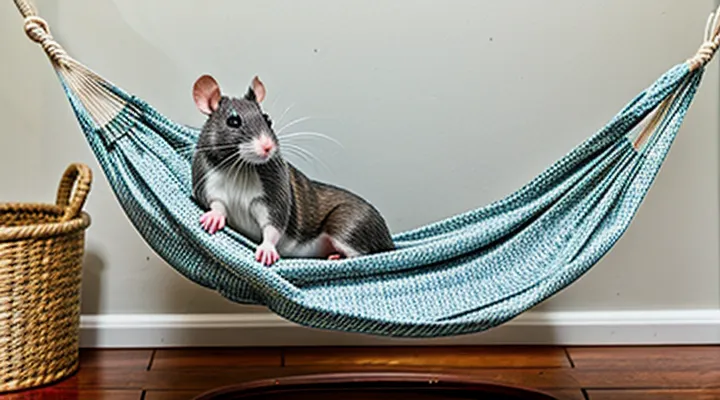
Why Make a DIY Rat Hammock?
«Benefits of Hammocks for Rats»
«Comfort and Security»
A well‑designed hammock provides a rat with a stable platform that mimics natural nesting sites while protecting it from injury. The following factors directly affect the animal’s comfort and sense of security.
- Material softness – Choose fleece, cotton flannel, or a low‑pile fabric that feels warm against the skin. Avoid rough synthetics that can cause skin irritation.
- Thickness and padding – A single‑layer fabric may be sufficient for short sessions, but adding a thin layer of batting increases cushioning for longer use and reduces pressure on small joints.
- Size and shape – The hammock should accommodate the rat’s fully stretched length with at least two inches of extra space on each side. A rectangular or gently curved shape prevents the animal from slipping out.
- Support points – Secure the ends to sturdy anchors such as metal brackets or reinforced cage bars. The distance between anchors must match the hammock’s width to keep tension even and prevent sagging.
- Edge treatment – Fold or stitch the perimeter to eliminate loose threads that could be chewed or entangle the rat. Rounded corners reduce the risk of sharp edges.
- Ventilation – Use breathable fabric and leave a small opening at one end to allow airflow, preventing overheating while the rat rests.
- Ease of cleaning – Select washable material and design the hammock so it can be removed without dismantling the cage. Regular cleaning eliminates odors and parasites, which contributes to a calm environment.
By adhering to these specifications, a homemade rat hammock delivers the tactile softness and structural stability that promote restful sleep and lower stress levels. The result is a secure, inviting retreat that aligns with the animal’s natural nesting behavior.
«Enrichment and Play»
A hammock designed for a pet rat serves as a dynamic enrichment tool, encouraging natural climbing, suspension, and exploration behaviors. The suspended platform expands the three‑dimensional space of the cage, prompting the animal to navigate vertical distances and develop coordinated movements.
Materials should be sturdy, chew‑resistant, and easy to sanitize. Preferred options include untreated natural fibers (e.g., cotton rope, sisal) or flexible plastic mesh. All components must be free of toxic dyes or adhesives. Secure attachment points—such as stainless‑steel hooks or reinforced cage bars—prevent accidental detachment.
Placement influences effectiveness. Install the hammock at a height that allows the rat to reach it from a nearby platform or ladder, yet remains low enough to avoid injury from a fall. Ensure the cage floor remains unobstructed to maintain a clear route for approach and retreat.
Integrating play elements enhances engagement:
- Attach small wooden chew blocks or fabric strips to the hammock’s edges.
- Suspend lightweight toys (e.g., ping‑pong balls, crinkly pouches) using short cords.
- Rotate the hammock’s position weekly to introduce novelty.
Maintenance routine:
- Remove the hammock weekly for inspection of wear or fraying.
- Wash with warm water and mild, non‑soap detergent; rinse thoroughly.
- Dry completely before re‑installation to prevent moisture accumulation.
Monitoring the rat’s interaction provides feedback on design suitability. Increased climbing frequency, reduced inactivity, and observable curiosity indicate successful enrichment. Adjust rope tension, height, or accessory placement based on observed preferences to maintain optimal stimulation.
«Temperature Regulation»
When designing a hammock for a pet rat, maintaining a stable thermal environment prevents stress and supports healthy metabolism. Rats thrive between 20 °C and 24 °C (68 °F–75 °F); temperatures outside this range can trigger shivering or overheating, compromising immunity.
- Use breathable fabrics such as cotton or fine fleece to allow air circulation while retaining gentle warmth. Avoid dense synthetics that trap heat.
- Incorporate a thin layer of natural insulation—e.g., shredded paper or pine bedding—under the hammock to buffer sudden temperature drops without creating a hot pocket.
- Position the hammock away from direct drafts, heating vents, and sunlight. A location near a wall reduces airflow turbulence while still permitting occasional fresh air.
- Install a small, low‑wattage heating pad beneath the support structure only if ambient temperature regularly falls below 18 °C (64 °F). Set the pad to a maximum of 30 °C (86 °F) and use a thermostat to avoid excessive heat.
- Monitor temperature with a digital hygrometer/thermometer placed close to the hammock. Check readings twice daily; adjust bedding thickness or heating source as needed.
Consistent temperature control enhances comfort and encourages natural resting behavior, ensuring the rat uses the hammock regularly and remains physiologically balanced.
«Why DIY Instead of Buying?»
«Cost-Effectiveness»
Creating a hammock for a pet rat can be accomplished with minimal expense while maintaining durability. Selecting inexpensive, readily available materials reduces overall cost. Common options include:
- Cotton fleece or soft fleece fabric, purchased by the yard, typically under $5.
- Lightweight nylon webbing, sold in 1‑meter lengths for approximately $2.
- Small wooden dowels or bamboo sticks for support, often found in craft stores for $1–$3 each.
Using scrap fabric from previous projects eliminates the need for new purchases. Cutting the material to size with a standard pair of scissors eliminates additional tool costs. Sewing the edges with a basic hand stitch or a simple running stitch provides sufficient reinforcement without requiring a sewing machine.
Calculating material expense per hammock yields a total under $15, significantly lower than commercial alternatives that often exceed $30. The low price point allows for multiple hammocks to be produced, enabling rotation for cleaning and wear reduction, which extends the lifespan of each unit.
Labor time averages 30–45 minutes per hammock, representing a modest investment of personal effort compared with the monetary savings. The combination of affordable supplies and brief assembly time makes the project highly cost‑effective for rat owners seeking functional enrichment without financial strain.
«Customization Options»
Creating a personalized hammock for a pet rat enhances comfort and encourages natural climbing behavior. Customization begins with material selection. Cotton canvas, fleece, and lightweight nylon each provide distinct texture and durability; cotton offers breathability, fleece adds warmth, while nylon ensures easy cleaning.
Size adjustments accommodate different rat breeds and cage dimensions. Measure the rat’s length from nose to tail tip, then add 10–15 % for movement space. Width should allow the animal to stretch fully without touching cage walls; typical dimensions range from 12 × 8 cm for dwarf rats to 20 × 12 cm for larger specimens.
Shape variations influence stability and aesthetic appeal. Options include a simple rectangular sling, a triangular pocket that fits snugly between bars, or a circular cocoon that cradles the rat. Each geometry requires specific attachment points: rectangular and triangular designs use two anchor loops, whereas a circular cocoon may need four evenly spaced hooks for balanced tension.
Attachment methods affect load distribution and ease of replacement. Common choices are:
- Metal S‑hooks clipped to cage bars, providing quick removal.
- Adjustable plastic buckles that allow tension fine‑tuning.
- Velcro straps wrapped around bar brackets, useful for temporary setups.
Additional accessories can tailor the hammock to individual preferences. Soft padding inserts increase cushioning; scented fabric strips encourage exploration; detachable chew toys attach to the hammock’s edge, fostering dental health.
When selecting options, prioritize compatibility with the cage’s bar spacing, the rat’s size, and the caretaker’s cleaning routine. Test tension by gently pulling the hammock; it should sag slightly under the rat’s weight without excessive stretch. Regularly inspect seams and attachment points for wear, replacing components before failure.
By systematically evaluating material, dimensions, shape, fastening, and accessories, a functional and attractive hammock can be crafted to meet the specific needs of any domestic rat.
«Personal Satisfaction»
Creating a hammock for a pet rat provides a tangible measure of personal achievement. The process transforms raw materials into a functional accessory, confirming that the builder can apply basic carpentry and textile skills without professional assistance. Completion of the project validates competence in measuring, cutting, and assembling, reinforcing confidence in one’s ability to solve practical problems.
The act of planning each step—selecting breathable fabric, determining appropriate dimensions, and securing attachment points—engages analytical thinking. Executing the plan demonstrates perseverance, as each stage requires precise execution and occasional adjustment. The resulting product serves as proof that the creator can translate abstract ideas into a usable object.
Personal fulfillment emerges from three observable outcomes:
- Visible result: A finished hammock that accommodates the rat’s size and weight.
- Positive feedback: The animal’s willingness to use the hammock confirms functional success.
- Skill reinforcement: Repetition of similar projects becomes easier, expanding the builder’s repertoire.
These outcomes collectively reinforce a sense of self-reliance. By mastering a niche DIY task, the individual affirms the capacity to enhance an animal’s environment through independent effort.
«Safety and Material Control»
When constructing a hammock for a pet rat, prioritize secure attachment points, non‑toxic fabrics, and structural integrity.
Choose materials that meet the following criteria:
- Weight capacity: Select rope or webbing rated for at least twice the animal’s maximum weight.
- Chemical safety: Verify that fabric, thread, and fasteners are free of heavy metals, BPA, and flame‑retardant chemicals.
- Durability: Opt for tightly woven cotton, hemp, or polyester with a minimum tensile strength of 150 psi.
- Ease of cleaning: Prefer removable covers that can be machine‑washed at 30 °C without shrinking.
Implement safety checks before installation:
- Test each anchor (e.g., ceiling joist, wall bracket) with a pull‑test device to confirm it can sustain the load plus a 20 % safety margin.
- Inspect all knots and stitching for slippage; reinforce with double‑backed knots or a sewing stitch that locks under tension.
- Ensure no loose ends or frayed fibers remain that could entangle the rat’s paws or tail.
- Position the hammock at a height that prevents accidental falls from furniture; a minimum clearance of 15 cm from the floor reduces injury risk.
Maintain material control throughout the project:
- Store unused rope and fabric in sealed, moisture‑free containers to prevent mold or degradation.
- Label each batch of material with purchase date and test results, enabling traceability if a defect emerges.
- Replace any component that shows signs of wear after a month of regular use, even if it appears visually intact.
By adhering to these guidelines, the hammock will provide a safe, comfortable perch that supports the rat’s natural climbing behavior while minimizing health hazards.
Materials and Tools You'll Need
«Fabric Choices»
«Fleece»
Fleece provides an ideal material for a rat-sized hammock because it is soft, lightweight, and resistant to fraying. Its pile surface offers a gentle grip that prevents the animal from slipping while allowing easy cleaning.
Key characteristics of fleece for this purpose:
- High loft creates a comfortable suspension without excessive bulk.
- Low static cling reduces the risk of the rat becoming tangled.
- Machine‑washable fibers simplify maintenance.
- Durable weave tolerates repeated stretching and knotting.
When selecting fleece, choose a medium‑weight fabric (approximately 250–300 gsm). Darker colors conceal dirt, while a plain weave eases cutting and sewing. Avoid fabrics with heavy nap or loose fibers that could shed into the cage.
Preparation steps:
- Measure the desired span between attachment points; typical domestic rats require a hammock length of 12–15 cm and a width of 8–10 cm.
- Cut a rectangular piece of fleece, adding a 1 cm margin on all sides for seam allowance.
- Fold the long edges inward by 0.5 cm, then sew a reinforced hem using a double‑stitch pattern.
- Punch two small reinforced eyelets or attach stainless‑steel D‑rings at opposite ends of the hem.
- Thread each eyelet with a 2 mm nylon cord, leaving a 5 cm tail for knotting to the cage bars.
The finished hammock should drape evenly, support the rat’s weight without sagging, and be removable for laundering. Properly tensioned cords maintain stability while allowing the animal to climb in and out effortlessly.
«Cotton»
Cotton provides a lightweight, breathable material that matches a small rodent’s need for a comfortable, temperature‑regulating resting surface. Its natural fibers allow easy cleaning and resist static buildup, reducing the risk of skin irritation.
When choosing cotton for a rat hammock, prioritize the following characteristics:
- Fabric weight between 120 g/m² and 180 g/m²; lighter fabrics sag excessively, heavier ones restrict movement.
- Plain weave or soft jersey; both offer smooth texture without protruding edges.
- Pre‑shrunken, color‑fast material; prevents size changes after washing and avoids dye transfer onto fur.
Cutting the fabric to size requires precise measurement of the cage’s dimensions. Mark a rectangular panel that extends at least 10 cm beyond each attachment point, then trim the corners to create a rounded profile that eliminates sharp angles.
Stitching steps:
- Fold the trimmed edges inward 0.5 cm and press with an iron to create a clean hem.
- Sew a double‑stitch along the hem using a 2‑mm polyester thread; the thread’s strength exceeds cotton’s tensile limit, preventing seam failure.
- Attach two reinforced eyelets or metal loops at opposite ends, spacing them 15–20 cm from each side to distribute load evenly.
Safety checks before installation:
- Verify that all seams are tight; pull gently on each edge to confirm no gaps.
- Ensure eyelets are securely anchored; loose hardware can become a choking hazard.
- Wash the finished hammock at 30 °C, then air‑dry; this removes residual chemicals and prepares the fabric for immediate use.
By adhering to these specifications, cotton becomes a reliable substrate for a homemade rat hammock, delivering durability, comfort, and ease of maintenance.
«Old T-shirts or Towels»
Old T‑shirts and towels provide soft, breathable fabric that tolerates the weight of a small rodent while resisting tearing. Their loose weave allows airflow, reducing moisture buildup and limiting odor. When selecting a garment, choose items without hard seams, excessive elastic, or decorative hardware that could injure the animal.
- Cut the chosen fabric into two equal strips, each 12–15 inches wide and 30–40 inches long, depending on the cage dimensions.
- Fold each strip in half lengthwise, then stitch a seam along the long edge, leaving the opposite side open for threading.
- Secure the open edge with a reinforced stitch or a few rows of strong, non‑slip thread to prevent fraying.
- Attach a short length of sturdy cord (nylon or cotton) to each end of the fabric loops, creating attachment points for the cage bars.
- Position the loops on opposite sides of the enclosure, adjust the tension so the hammock sags gently in the center, and test the load by placing the rat gently on the surface.
The resulting hammock offers a comfortable resting platform that can be replaced easily when the fabric shows wear, extending the utility of discarded clothing while providing a safe, hygienic habitat for the pet.
«Fabrics to Avoid»
When constructing a hammock for a pet rat, the choice of material directly affects safety and durability. Certain fabrics introduce hazards that can compromise the animal’s well‑being and shorten the hammock’s lifespan.
- Rough synthetics such as polyester fleece with loose fibers; they shed, creating ingestion risks.
- Heavy canvas treated with waterproofing chemicals; toxic residues may irritate skin and respiratory passages.
- Thin nylon mesh without reinforced stitching; it can tear under the rat’s weight, leading to sudden collapse.
- Slip‑prone silk or satin; smooth surfaces prevent the rat from gaining a secure grip, increasing the likelihood of falls.
- Fabric blends containing acrylic or olefin; these fibers retain static electricity, potentially causing discomfort.
Select textiles that are tightly woven, free of loose threads, and free of chemical treatments. The right material supports the rat’s natural climbing behavior while providing a sturdy, clean environment.
«Hanging Mechanisms»
«Metal Grommets or Eyelets»
Metal grommets or eyelets provide the only reliable points for attaching a rat hammock to a support structure. Choose stainless‑steel or brass components rated for at least 5 kg tensile strength; the extra capacity compensates for the animal’s movement and prevents deformation over time.
Select a diameter that matches the thickness of the fabric or webbing used for the hammock. A ¼‑inch (6 mm) opening accommodates most lightweight fabrics while allowing the material to pass through without fraying. Larger diameters weaken the grip and may allow the fabric to slip out under tension.
Installation follows a three‑step process:
- Pre‑drill a clean hole through the fabric, spacing the openings 2–3 inches (5–7 cm) from each edge to distribute load evenly. Use a hole punch or a fine drill bit to avoid tearing.
- Insert the grommet or eyelet, positioning the flange on the fabric side that will face the support. Ensure the flange lies flat against the material.
- Secure the metal part with a rivet, screw, or bolt according to the manufacturer’s instructions. Tighten until the flange is immobile but do not overtighten, which could compress the fabric and create weak points.
After installation, attach the hammock to the chosen anchor (e.g., a wooden beam or metal pipe) using a length of nylon cord or silicone rope. Loop the cord through the eyelet, pull to the desired height, and tie a double‑hitch knot to maintain tension. Verify that the hammock hangs level and that the grommets hold firm under a gentle pull before introducing the rat.
Regularly inspect the metal fittings for corrosion, cracks, or loosened fasteners. Replace any compromised component immediately to preserve safety and prevent the hammock from failing during use.
«Safety Pins (Temporary)»
Safety pins serve as provisional anchors while assembling a rat hammock. Their removable nature permits rapid adjustments before permanent hardware is installed.
- Choose pins with a closed clasp to prevent the tip from protruding.
- Opt for stainless‑steel or nickel‑coated variants to resist corrosion from animal saliva.
- Select a gauge that matches the fabric thickness; 1 mm to 1.5 mm pins accommodate typical fleece or canvas.
- Ensure the head diameter exceeds the fabric fold to distribute pressure evenly.
Attach pins by threading the closed end through the fabric edge, then pulling the clasp tight enough to hold without compressing the material. Position each pin at a minimum of 2 cm from the rat’s reach to avoid accidental snagging. Verify that the clasp lies flat against the surface to eliminate sharp edges.
Monitor the temporary fasteners during the initial usage period. If a pin begins to loosen, replace it immediately to maintain structural integrity. Prolonged reliance on safety pins can lead to fabric wear and increase the risk of injury.
When the hammock is ready for permanent suspension, remove each safety pin and replace it with a small eye bolt or a looped wire. Clean the fabric area where the pin was seated to prevent residual metal marks. Transitioning to fixed hardware finalizes the hammock’s safety and durability.
«Carabiners or Shower Curtain Rings»
Carabiners and shower‑curtain rings serve as the primary attachment points for a homemade rat hammock. Their function is to connect the fabric or rope to ceiling hooks, tree branches, or a sturdy frame while allowing quick release and adjustment.
When choosing between the two, consider the following factors:
- Load rating: select hardware rated for at least 1 kg to accommodate the rat and any movement.
- Diameter: internal opening should be 0.5 in (12 mm) or larger to pass rope or webbing without friction.
- Material: stainless steel or coated aluminum resists rust and corrosion in humid environments.
- Closure type: spring‑loaded carabiners provide secure locking; split‑ring curtains rely on a simple snap‑fit that may require a secondary knot for safety.
Installation steps:
- Attach a ceiling hook or branch anchor that can bear the specified load.
- Thread the hammock rope through the chosen hardware; for carabiners, close the gate fully; for curtain rings, push the ring onto the rope until it rests against the anchor.
- Tie a double‑overhand knot beneath the hardware to prevent slippage.
- Adjust the hammock height so the rat’s paws can reach the ground without excessive strain.
- Test the assembly by applying gradual weight, watching for any movement of the hardware or rope.
Maintenance recommendations include inspecting the metal for bends, cracks, or rust after each use, and replacing any compromised component immediately. Regular cleaning with mild soap and water preserves surface integrity and prevents residue buildup that could irritate the animal’s skin.
«Fabric Strips or Cording»
Fabric strips and cording form the core support for a homemade rat hammock. Choose a material that combines softness for the animal’s comfort with sufficient tensile strength to hold the rat’s weight. Natural fibers such as cotton or linen provide gentle texture, while synthetic options like nylon or polyester offer higher load capacity. Verify the break strength of the chosen rope; a minimum rating of 5 kg (11 lb) ensures a safety margin for most adult rats.
Measure the width of each strip. A width between 2 cm and 4 cm (¾‑1½ in) distributes pressure evenly and prevents the rat from slipping through. Cut the strips to a length that allows a sag of 10‑15 cm (4‑6 in) when suspended, typically 30‑40 cm (12‑16 in) for a standard cage height. If using cording, double the strands to increase durability and reduce the risk of fraying.
Secure the ends of the fabric or rope with sturdy knots. A double fisherman’s knot provides reliable holding power and resists slipping under load. After knotting, reinforce each junction with a small loop of heat‑shrink tubing or a few drops of non‑toxic fabric glue to prevent unraveling.
Attach the prepared strips to the cage’s anchor points. Recommended methods include:
- Threading the knots through pre‑drilled holes in the cage bars and tightening with a turnbuckle.
- Using metal eye bolts screwed into the cage frame, then looping the cords through the eyes and tightening with a locking carabiner.
- Securing the strips to a wooden dowel mounted across the cage ceiling, ensuring the dowel is firmly anchored.
Check the hammock for stability before introducing the rat. Apply gentle pressure to the center of the fabric; the support should exhibit minimal movement and no audible creaking. Replace any strip that shows signs of wear, fraying, or loss of elasticity. Regular inspection maintains a safe, comfortable resting platform for the pet.
«Cutting and Sewing Tools»
«Scissors»
Scissors are indispensable for shaping the fabric, rope, and reinforcement strips used in a rat hammock. Selecting the right pair prevents uneven cuts that could weaken the structure and jeopardize the animal’s safety.
- Blade type: Straight, stainless‑steel blades retain sharpness longer than serrated alternatives, delivering clean edges on cotton, fleece, or nylon.
- Length: Fifteen‑centimeter blades provide sufficient leverage for thick material while remaining maneuverable in tight workspaces.
- Safety features: Rounded finger guards reduce the risk of accidental injuries during repetitive cutting.
Before cutting, secure the material on a flat surface to avoid slipping. Mark cut lines with a fine‑point pen; this eliminates guesswork and ensures consistent dimensions for the hammock’s panels and suspension cords. When trimming rope, cut at a slight angle to create a clean, low‑profile end that will not fray when tied to the support points.
After each use, wipe blades with a dry cloth to remove fibers and apply a light coat of oil. Store scissors in a protective sheath to maintain alignment and prevent dulling. Regular maintenance prolongs performance, guaranteeing precise cuts throughout the construction process.
«Measuring Tape or Ruler»
A precise measurement is essential when cutting fabric, wood, or rope for a small‑scale hammock. Use a metal measuring tape or a rigid ruler to determine the length of each component. Record dimensions in centimeters to match the typical size of a domestic rat’s resting area, which should be about 30 cm wide and 45 cm long.
Before cutting, verify the distance between the two anchor points (e.g., the sides of a cage or a pair of brackets). Measure this span and add 5 cm to each side to allow for knots or stitching. Mark the material with a fine‑point marker at the exact points indicated by the tape or ruler, then cut straight across with scissors or a utility knife.
When assembling the suspension cords, measure the length needed to create a gentle sag. A common rule is to make each cord 1.5 times the anchor distance, then adjust by trimming a few centimeters after testing the tension. Use the tape to confirm that the final height of the hammock’s surface sits approximately 10 cm above the cage floor, providing enough clearance for the rat to climb in and out safely.
Key measurement steps:
- Determine anchor span; add allowance for knots.
- Mark fabric or rope at exact lengths.
- Cut components precisely.
- Measure cord length for proper sag.
- Verify final height above the floor.
Consistent use of a measuring tape or ruler eliminates guesswork, ensures structural integrity, and results in a comfortable, securely fitted hammock for a pet rat.
«Sewing Machine (Optional)»
A sewing machine is not required to assemble a rat hammock, but it can streamline fabric preparation and improve durability. When a machine is available, use it to cut, hem, and reinforce seams quickly, reducing the risk of uneven stitches that may weaken the structure.
Key advantages of employing a sewing machine:
- Precise straight stitching that holds fabric under repeated tension.
- Ability to create double‑stitched seams for added strength.
- Faster execution of repetitive tasks such as attaching straps or loops.
- Consistent edge finishing that prevents fraying.
If a machine is unavailable, hand‑stitching with a sturdy needle and polyester thread remains viable. In that case, reinforce each seam with a backstitch and add a few extra rows of stitching at stress points, such as the attachment loops and the hammock’s corners.
When using a machine, follow these practical steps:
- Lay the fabric flat, mark the cut lines, and trim to the desired dimensions.
- Sew a hem along all edges, using a ¼‑inch seam allowance.
- Fold the fabric to form the hammock shape, then stitch the side seams with a double‑stitch line.
- Attach reinforced loops or D‑rings for hanging, securing each with at least three rows of stitching.
- Inspect all seams for gaps, then trim excess thread and press the fabric to flatten seams.
Even without a machine, the same construction principles apply; the primary difference lies in the speed and uniformity of the stitching. Selecting a sewing machine remains optional, but it offers measurable efficiency and consistency for those seeking a professional finish.
«Needle and Thread»
A sturdy hammock for a pet rat depends on reliable stitching. Choose a needle with a sharp point and an eye large enough to accommodate thick, abrasion‑resistant thread. A size 10–12 upholstery needle works well with denim or canvas fabric, while a size 14–16 needle suits softer fleece.
Select thread that can bear the rat’s weight and resist chewing. Polyester or nylon upholstery thread, rated at least 200 g tensile strength, provides durability and minimal stretch. Avoid cotton thread, which frays quickly and may be gnawed.
When assembling the hammock, follow these steps:
- Cut fabric to the desired dimensions, leaving a 2‑inch margin on each side for seams.
- Fold the margin inward, press flat, and pin to maintain alignment.
- Thread the needle, tie a secure knot, and begin a double‑stitch along the folded edge, maintaining even spacing of ¼ inch.
- Reinforce corners with a backstitch, creating a strong anchor point for the hanging loops.
- Attach reinforced loops of thread or small webbing to the corners, ensuring each loop can support at least twice the rat’s weight.
Inspect each seam for gaps or loose stitches before hanging. Replace any compromised thread immediately to prevent failure during use.
«Fabric Markers or Chalk»
Fabric markers and chalk serve as the primary tools for transferring dimensions onto the material before cutting. Their bright pigments remain visible on most textiles, allowing precise layout of the hammock’s length, width, and attachment points. The process begins with measuring the desired span between the support structures, then drawing a straight line along the fabric using a marker or a line of chalk. For curved or ergonomic shapes, a flexible ruler can guide the hand while the marker outlines the contour.
When selecting a marker, opt for a permanent, water‑resistant ink that will not bleed through the fabric during sewing. Alcohol‑based variants provide sharp lines and dry quickly, reducing the risk of smudging. Chalk, preferably a washable, non‑toxic formulation, offers an alternative for fabrics that may react poorly to ink. It can be easily erased after cutting, leaving no permanent marks.
Key considerations for effective marking:
- Verify the fabric’s color contrast with the chosen pigment; dark fabrics require light‑colored chalk, while light fabrics work best with dark markers.
- Test a small area to ensure the ink or chalk does not spread when the material is stretched.
- Use a ruler or measuring tape to maintain consistent distances between attachment loops.
- Mark seam allowances (typically ¼‑½ inch) alongside the main cut line to simplify stitching later.
After the outlines are complete, double‑check all measurements against the planned hammock dimensions. Remove any excess chalk before cutting to prevent residue on the seam edges. The clear, accurate markings provided by fabric markers or chalk streamline the construction process, minimize material waste, and contribute to a sturdy, well‑fitted hammock for a pet rat.
Step-by-Step Hammock Construction
«Choosing Your Hammock Style»
«Single Layer Hammock»
A single‑layer hammock provides a lightweight, breathable perch that allows a domestic rat to rest comfortably while keeping the cage floor clear. The design consists of one piece of fabric stretched between two anchor points, eliminating the need for additional support layers that could trap fur or impede movement.
Materials
- 100 % cotton or fleece fabric, 12 × 18 in (30 × 45 cm)
- Two sturdy, rust‑free eye bolts or metal hooks approved for cage use
- 2 mm nylon or stainless‑steel cable, 24 in (60 cm) each
- Scissors, ruler, and a marker
Dimensions and preparation
- Measure the distance between the intended anchor points; typical cages require a span of 15–18 in (38–45 cm).
- Cut the fabric to a rectangle that exceeds the span by at least 4 in (10 cm) on each side, ensuring sufficient material for folding and stitching.
- Fold the long edges ½ in (1.3 cm) inward and sew a reinforced hem to prevent fraying.
Assembly steps
- Thread each cable through the hem on opposite short sides, leaving a 1‑in (2.5 cm) tail for knotting.
- Secure the cables to the eye bolts with a double‑loop knot, checking that the knot sits flush against the fabric to avoid pressure points.
- Install the eye bolts into the cage’s sidebars, spacing them to match the cable length while maintaining a slight upward angle for natural sag.
- Hang the hammock, adjust the tension so the fabric sags 2–3 in (5–7 cm) at its center, then test with gentle weight to confirm stability.
Safety and maintenance
- Verify that all metal components are smooth and free of sharp edges.
- Inspect the fabric weekly for wear, especially along the seams and cable attachment points.
- Replace the hammock if fraying or thinning becomes visible, as compromised material can cause injury.
The single‑layer configuration delivers a simple, cost‑effective solution that meets a rat’s need for elevation without excess bulk, ensuring a clean, safe environment for both animal and owner.
«Double Layer (Pouch) Hammock»
The double‑layer pouch hammock provides a secure, insulated resting space for a pet rat. The outer layer forms a sturdy support net, while the inner pocket offers a soft, breathable enclosure that retains body heat without trapping moisture.
Materials required:
- Two pieces of high‑strength nylon mesh (approximately 30 cm × 40 cm each)
- One piece of fleece or cotton fabric for the inner pouch (30 cm × 30 cm)
- 2 mm silicone‑coated sewing thread
- Small metal D‑rings for anchoring
- Scissors, needle, and a fabric glue suitable for mesh
Construction steps:
- Cut the mesh pieces to the specified dimensions, ensuring clean edges.
- Sew the two mesh panels together along three sides, leaving one short side open for the pouch insertion.
- Fold the fleece fabric into a rectangular pocket, stitch three sides, and leave the top open.
- Insert the fleece pocket into the open side of the mesh shell, then stitch the remaining side to enclose the pouch securely.
- Attach D‑rings to opposite corners of the outer mesh, reinforcing each with double stitching.
- Test the hammock by suspending it from a stable support; verify that the pouch holds its shape and the mesh distributes the rat’s weight evenly.
The completed double‑layer hammock offers durability, easy cleaning, and a comfortable micro‑environment, making it an effective DIY solution for small‑animal owners.
«Corner Hammock»
A corner hammock provides a compact, elevated resting area that fits snugly against two intersecting walls, maximizing space in a small cage. The design leverages the natural tendency of rats to seek high, secure spots while keeping the enclosure uncluttered.
Materials required:
- Two sturdy wooden dowels, 12‑inch length, ½‑inch diameter
- One piece of breathable fabric (cotton or fleece), 8 × 12 inches
- Four small eye bolts, stainless steel
- Two short lengths of nylon webbing, 6 inches each
- Screws and wall anchors appropriate for the cage material
- Heavy‑duty scissors and a drill with a ¼‑inch bit
Construction steps:
- Drill a ¼‑inch hole through each dowel, 1 inch from one end. Insert an eye bolt into each hole and secure with a washer and nut.
- Align the dowels at a right angle, forming the corner shape. Fasten the opposite ends to the cage walls using screws and anchors, ensuring the dowels are level and firmly supported.
- Fold the fabric in half lengthwise, creating a pocket. Thread each piece of nylon webbing through the pocket, then tie the ends to the eye bolts, forming a sling that hangs between the dowels.
- Adjust the webbing tension so the hammock sits 2‑3 inches above the cage floor, allowing easy entry and exit for the rat.
Installation guidelines:
- Position the hammock at a height that prevents the rat from falling onto hard surfaces while still allowing comfortable climbing.
- Verify that the dowels are anchored to load‑bearing points; a 200‑gram load test confirms stability.
- Ensure the fabric is taut but not stretched, preventing tears during vigorous activity.
Safety and maintenance:
- Inspect eye bolts and webbing weekly for signs of wear or corrosion.
- Replace fabric if fraying appears to avoid skin irritation.
- Clean the hammock with mild soap and warm water, rinse thoroughly, and air‑dry before re‑installing.
«Measuring and Cutting the Fabric»
«Determining Desired Size»
When planning a rat hammock, the first step is to define the dimensions that will accommodate the animal comfortably and safely. Measure the rat from the tip of the nose to the base of the tail; add 2–3 cm to this length to allow for movement. For width, measure the widest part of the torso and add a similar margin. The resulting rectangle forms the minimum fabric size.
Key factors influencing the final dimensions:
- Weight capacity: Select material that supports at least twice the rat’s body weight.
- Stretch factor: Account for fabric elasticity; a 10 % stretch allowance prevents sagging under load.
- Attachment clearance: Ensure the distance between mounting points exceeds the hammock’s width by 5–7 cm to avoid tension on the edges.
- Enclosure space: Verify that the hammock fits within the cage without obstructing ventilation or other accessories.
A practical formula:
Length = rat length + 2 cm
Width = torso width + 2 cm
Fabric size = (Length × Width) × 1.10 (to include stretch allowance)
Apply these calculations to produce a hammock that meets the rat’s physical needs while maintaining structural integrity.
«Cutting Fabric Pieces»
Cutting the fabric is the first critical step in constructing a safe, comfortable hammock for a pet rat. Select a breathable, lightweight material such as cotton, muslin, or a fine fleece. Avoid fabrics that shed fibers or contain loose threads, as these can pose choking hazards.
Measure the interior space where the hammock will hang. A typical enclosure allows a hammock width of 10–12 cm and a length of 20–25 cm. Mark these dimensions on the fabric, adding a 2 cm margin on all sides to accommodate stitching and reinforcement.
Use a sharp fabric scissors or rotary cutter to follow the marked lines precisely. Cut two identical rectangular pieces; one will serve as the hammock surface, the other as a reinforcement layer. Keep the edges clean to prevent fraying.
Reinforce the cut edges before assembly:
- Fold each edge inward 0.5 cm, press with an iron, and stitch a straight seam.
- Apply a thin strip of fabric glue along the folded edge for extra durability.
- Trim any excess thread after stitching.
The resulting fabric panels should be flat, uniform, and free of irregular cuts. These prepared pieces provide the foundation for a sturdy, rat‑friendly hanging bed.
«Adding Seam Allowance»
When stitching a small hammock for a pet rat, the seam allowance determines the durability of the final product. A consistent allowance prevents fabric fraying and ensures the structure can support the animal’s movement.
Calculate the allowance by adding a uniform margin to each edge of the pattern piece. For lightweight cotton or fleece, a ¼‑inch (6 mm) margin provides sufficient fabric for stitching without adding bulk. For heavier canvas, increase the margin to ⅜‑inch (10 mm) to accommodate stronger thread tension.
Steps for incorporating seam allowance:
- Measure the pattern dimensions and add the chosen allowance to all sides.
- Mark the extended lines on the fabric with a tailor’s chalk or fabric pen.
- Cut the fabric along the outer marks, preserving the original pattern inside.
- Align edges with the allowance facing inward, pin securely.
- Sew using a straight stitch, keeping the needle within the allowance zone.
- Trim excess fabric close to the seam line, leaving a small edge to avoid unraveling.
After stitching, reinforce each corner with a backstitch or a small bar tack. This reinforcement distributes stress evenly across the hammock, extending its lifespan and maintaining safety for the rat.
«Sewing the Hammock»
«Hemming Edges»
When constructing a hammock for a pet rat, securing the fabric edges prevents fraying, adds structural integrity, and creates a safe resting surface. A clean hem also distributes tension evenly across the suspension points, reducing the risk of tearing under the animal’s weight.
- Choose a fabric with low stretch, such as tightly woven cotton or canvas, that can withstand repeated cleaning.
- Cut the material to the desired dimensions, leaving an extra 2‑3 cm on all sides for the hem.
- Fold each edge inward by half the intended hem width (typically 1 cm), press with an iron to set the crease.
- Stitch a straight seam along the folded edge using a durable thread (polyester or nylon) and a medium‑weight needle. For added strength, double‑stitch the seam or use a backstitch on the corners.
- Trim any excess fabric, then reinforce the corners with a small square of fabric or a reinforced patch sewn in place.
After hemming, attach the suspension cords through reinforced eyelets or grommets positioned at the hemmed corners. Verify that the stitches hold under tension by pulling gently on each cord before installing the hammock. Finally, place the hammock in the cage, observe the rat’s interaction, and monitor the hem for signs of wear during routine cleaning.
«Assembling Layers (for Double Hammock)»
When constructing a two‑tiered hammock for a pet rat, the core of the project lies in correctly assembling the layers. The lower tier provides a firm base, while the upper tier adds cushioning and insulation. Proper layering prevents sagging and ensures durability.
Materials
- Two pieces of breathable fabric (e.g., cotton canvas), each 12 inches wide and 24 inches long.
- Non‑slip fabric backing (optional) for the lower tier.
- Lightweight webbing or nylon strips for suspension.
- Heavy‑duty thread and a sewing needle or machine.
- Scissors, ruler, and fabric marker.
Procedure
- Cut the two fabric pieces to the specified dimensions. Trim the non‑slip backing to match the lower piece if used.
- Align the lower piece with its backing, seam the long edges together, leaving a 1‑inch margin for stitching.
- Fold the edge inward, then stitch a hem to reinforce the seam and prevent fraying.
- Repeat the hemming process on the upper piece, but leave a 2‑inch opening on one short side for inserting the webbing.
- Thread the webbing through the opening, distribute it evenly across the width, and secure both ends with reinforced stitches.
- Position the upper tier over the lower tier, aligning the edges. Stitch the two layers together along the long sides, using a double stitch for strength.
- Attach suspension loops to the webbing ends, ensuring they can bear the rat’s weight without stretching.
The completed double-layered hammock offers a stable, comfortable perch that accommodates the animal’s activity while minimizing wear on the fabric. Proper stitching and secure webbing placement are essential for longevity and safety.
«Creating Pockets (for Pouch Hammock)»
Select a lightweight, breathable fabric such as cotton canvas or fleece. Cut two rectangles measuring approximately 10 cm × 15 cm; these will become the pocket walls. Trim excess thread to prevent fraying.
Sew the long edges of each rectangle together, leaving the short ends open. Reinforce the seam with a double stitch to withstand the rat’s claws. Turn the tubes inside out so the seams are hidden.
Create a closure for each pocket. Attach a small, self‑locking snap or a short length of Velcro tape to the open ends, ensuring the fastening is secure yet easy for the animal to open and close.
Integrate the pockets into the hammock body. Punch two evenly spaced holes through the hammock fabric, align each pocket’s opening with a hole, and thread a sturdy, non‑slip cord through the pocket and hammock. Tie a firm knot on the exterior side of the hammock, leaving a short tail for later adjustment.
Adjust the pocket positions by sliding the cords until the pockets sit at a comfortable height for the rat’s reach. Trim any excess cord and secure the tails with a few drops of fabric glue for added durability.
Test the assembled pockets by placing a small treat inside and observing the rat’s interaction. Verify that the pockets hold weight without tearing and that the closure remains functional after repeated use. If any stress points appear, reinforce them with additional stitching or a patch of fabric.
«Adding Hanging Attachments»
«Installing Grommets»
When constructing a homemade hammock for a pet rat, securing the fabric to the support points is essential. Grommets provide reinforced openings that prevent tearing under the animal’s weight and activity.
Begin by selecting metal or reinforced plastic grommets sized to match the thickness of the hammock material. A diameter of 4–6 mm works well for typical cotton or fleece fabrics. Prepare a grommet installation kit that includes a hole‑punch, setting tool, and anvil.
- Measure and mark attachment locations on the fabric, spacing them evenly (usually 6–8 inches apart) to distribute load evenly.
- Align the hole‑punch with each mark and apply steady pressure to create clean openings. Avoid ragged edges that could fray.
- Insert the grommet’s barrel through the hole from the underside of the fabric.
- Place the collar on the opposite side and position the setting tool over it.
- Strike the tool with a hammer until the collar snaps securely around the fabric, forming a tight seal.
- Inspect each installed grommet for uniform compression; any loose edges must be re‑set.
After all grommets are in place, attach sturdy cords or nylon straps through the collars, then fasten them to the chosen anchor points (e.g., a rod, ceiling hook, or cage bar). Verify that the hammock hangs level and can support the rat’s movements without excessive sagging. Properly installed grommets ensure durability and safety for the small pet’s climbing and resting activities.
«Creating Fabric Loops»
Creating the fabric loops that support a small‑animal hammock requires precise stitching and sturdy material. Proper loops distribute the rat’s weight evenly, prevent tearing, and allow secure attachment to ceiling hooks or a frame.
Materials needed:
- 100% cotton or canvas fabric, 1‑2 mm thickness
- Heavy‑duty polyester thread
- Sharp scissors
- Upholstery needle or sewing machine capable of handling thick fabric
- Measuring tape or ruler
- Two metal eye bolts or D‑rings for anchoring
- Optional fabric glue for reinforcement
Procedure:
- Cut two equal strips of fabric, each 3 inches wide and 12 inches long.
- Fold each strip in half lengthwise, forming a 1‑inch‑wide tube; press the fold flat.
- Sew along the long edge, leaving the ends open; this creates a reinforced channel.
- Turn the channel inside out so the seam lies on the interior.
- Thread a 1‑inch‑wide cord through the channel; pull until the cord is centered.
- Knot the cord at each end, leaving a ½‑inch tail for tying to the eye bolt or D‑ring.
- Attach the eye bolts to the ceiling or frame, spacing them according to the hammock’s width.
- Tie each loop’s tail securely around the corresponding eye bolt, ensuring the knot rests against the fabric to avoid pressure points.
Additional considerations:
- Use double stitching at the ends of each loop for extra strength.
- Test the loops with a gradual load before allowing the rat to use the hammock.
- Replace loops after several months of regular use, or if any fraying becomes visible.
«Attaching Rings or Carabiners»
Secure attachment points are essential for a rat-sized hammock to remain stable during use. The connection method determines whether the fabric will slip, tear, or hold reliably when the animal moves.
Choose rings or carabiners that meet these criteria:
- Stainless‑steel or zinc‑alloy construction to resist rust from cleaning.
- Inner diameter large enough to pass the fabric edge without crimping, typically 8–12 mm.
- Load rating of at least 500 g, providing a safety margin for a rat’s weight plus dynamic forces.
- Snap‑type carabiners with a locked gate to prevent accidental opening.
Prepare the hammock fabric by folding a 2 cm strip along each edge that will receive the hardware. Sew a reinforced hem using a double‑stitch pattern; this distributes stress and prevents fraying. If using rings, thread the folded edge through the ring before stitching, ensuring the ring sits flush against the fabric. For carabiners, attach a short length of webbing (≈5 cm) to the hem, then clip the carabiner onto the webbing.
Installation steps:
- Position the prepared edge at the desired hanging height.
- Align the ring or carabiner with the anchor point on the ceiling or support beam.
- Secure the anchor with a sturdy screw or eye bolt, using a washer to spread the load.
- Slide the ring onto the anchor bolt, or clip the carabiner’s gate closed onto the bolt.
- Verify that the fabric’s hem is tight and that the hardware does not wobble.
After attachment, apply a gentle pull on each side of the hammock to confirm that the rings or carabiners hold without deformation. Observe the rat’s behavior during a brief trial; any slipping or excessive sag indicates the need for larger hardware or additional reinforcement.
Safety Considerations and Best Practices
«Choosing Safe Materials»
«Non-Toxic Fabrics»
When constructing a hammock for a pet rat, the choice of fabric directly affects the animal’s health. Select materials that contain no harmful chemicals, dyes, or flame retardants. Certified organic cotton, hemp, and linen meet these criteria; they are breathable, durable, and free of synthetic additives. Synthetic options such as polyester can be safe only if they are labeled “Oeko‑Tex Standard 100” or “GOTS‑approved,” confirming the absence of toxic residues.
Key attributes to verify before purchase:
- Chemical certification – look for third‑party testing (e.g., Oeko‑Tex, GOTS).
- Fiber composition – 100 % natural fibers or clearly identified non‑toxic synthetics.
- Colorants – use fabric dyed with plant‑based or low‑impact inks; avoid azo or heavy‑metal pigments.
- Durability – fabrics should withstand regular cleaning without shedding fibers that a rat could ingest.
After cutting and stitching, wash the hammock in hot water (≥ 60 °C) with a mild, fragrance‑free detergent to remove residual processing agents. Rinse thoroughly and air‑dry before placing the hammock in the cage. Regular inspection for fraying or discoloration ensures the fabric remains safe throughout its use.
«Avoiding Loose Threads»
When assembling a rat hammock, loose yarn or fabric strands pose a safety risk. They can become entangled in the animal’s paws, cause skin irritation, or unravel under the weight of the enclosure. Securing every edge eliminates these hazards and extends the lifespan of the product.
To prevent loose threads, follow a disciplined finishing routine:
- Trim excess yarn within 2 mm of the stitch line; avoid long tails that can catch.
- Apply a lock stitch or backstitch at the start and end of each seam to lock the yarn in place.
- Use a binding stitch (e.g., whip stitch or overcast stitch) around all raw edges, pulling the thread snugly to compress the fabric.
- Reinforce high‑stress zones—attachment points, corners, and areas near the rat’s climbing routes—with a double layer of stitching or a small piece of fabric backing.
- After stitching, melt synthetic yarn ends with a low‑heat soldering iron or apply a thin coat of fabric glue to seal them permanently.
Inspect the hammock after each construction stage. Run a fingertip along every seam; any snagging indicates a loose strand that requires immediate correction. A thorough final check ensures the hammock remains secure for daily use.
«Appropriate Hardware»
Choosing the right hardware determines the safety and durability of a rat hammock. All components must support the animal’s weight, resist chewing, and attach securely to the mounting point.
- Rope or webbing: natural cotton or nylon, 3‑4 mm diameter, tensile strength ≥ 200 g.
- Swivel connector: stainless‑steel, 360° rotation, load rating ≥ 500 g.
- Carabiner or snap hook: spring‑loaded, rounded jaws, minimum opening 15 mm, load rating ≥ 300 g.
- Mounting eye bolts or wall anchors: stainless‑steel, thread size M4, load rating ≥ 1 kg, suitable for wood or drywall.
- Protective sleeve or PVC tubing: 5 mm inner diameter, placed over rope ends to prevent fraying.
Hardware quality hinges on material integrity and load capacity. Stainless‑steel resists corrosion and withstands repeated handling. Rope must be free of loose fibers that a rat could ingest. Load ratings should exceed the animal’s weight by at least three times to accommodate movement.
Optional accessories improve comfort and maintenance:
- Silicone pads under the hammock to prevent slipping on smooth surfaces.
- Adjustable clamps for fine‑tuning tension without re‑tying knots.
- Hygienic wipes for periodic cleaning of metal parts.
«Placement in the Cage»
«Secure Attachment»
A reliable hanging point is the foundation of a safe rat hammock. Choose a sturdy support such as a wooden dowel, metal pipe, or reinforced ceiling joist. Verify that the support can bear at least three times the expected load, accounting for the rat’s weight and movement.
Use hardware designed for animal enclosures: stainless‑steel eye bolts, heavy‑duty carabiners, or lockable hooks. Install the eye bolt by drilling a pilot hole, inserting a washer, and tightening a lock nut to prevent loosening under tension. For pipe or dowel supports, attach a U‑shaped bracket or clamp that distributes force evenly across the surface.
Secure the hammock fabric with two independent lines. Follow these steps:
- Cut two lengths of ¼‑inch nylon webbing, each 12–18 inches longer than the span between attachment points.
- Thread each webbing through a reinforced eyelet sewn into the hammock’s corners.
- Loop the webbing around the eye bolt or carabiner, then pull tight to eliminate slack.
- Tie a double fisher‑man's knot, then trim excess and apply a heat‑shrink sleeve for reinforcement.
Test the assembly before introducing the rat. Apply a gradual load of 2–3 kg, watch for any movement in the support or slippage in the knots. Re‑tighten if necessary. Regularly inspect the hardware for corrosion, wear, or deformation, and replace components that show signs of fatigue.
By selecting a robust anchor, employing corrosion‑resistant fittings, and double‑securing the suspension lines, the hammock remains stable, preventing accidental falls and ensuring a comfortable resting spot for the pet.
«Accessibility for Rats»
When constructing a hammock for a pet rat, the primary concern is ensuring the animal can reach, enter, and exit the suspension without strain. Design the support structure at a height that matches the rat’s climbing ability—typically 12–18 cm above the floor. Use a sturdy anchor point, such as a secure ceiling joist or a reinforced wall bracket, to prevent sagging under the hammock’s load.
Key accessibility elements:
- Entrance size – Openings must be at least 5 cm wide and 4 cm high to accommodate the rat’s body and allow comfortable passage.
- Approach path – Provide a short ramp or a set of low rungs leading to the hammock; angles should not exceed 30°, keeping the climb gentle.
- Surface texture – Cover the hammock fabric with a non‑slip material (e.g., fleece or textured canvas) to give the rat traction when stepping onto the platform.
- Weight capacity – Select rope or webbing rated for at least 500 g, well above the average 300 g domestic rat, to guarantee safety.
- Secure fastenings – Tie knots with a double‑hitch and reinforce with a small metal clasp; test each connection before allowing the rat to use the hammock.
Materials such as natural cotton rope, low‑persistence twine, or nylon webbing provide durability while remaining gentle on the animal’s paws. Avoid synthetic fabrics that shed fibers, which can be inhaled or ingested.
After assembly, verify accessibility by observing the rat’s movement. Adjust the ramp height or entrance dimensions if hesitation occurs. Regularly inspect the attachment points for wear; replace any compromised components promptly to maintain a safe environment.
«Avoiding Obstructions»
A clear installation space prevents damage to the hammock and protects the rat from injury. Begin by removing loose items such as toys, food dishes, and bedding clumps from the area where the hammock will hang.
Identify typical obstacles that interfere with a rat hammock:
- Horizontal cage bars that intersect the suspension line
- Electrical cords or lighting fixtures within reach
- Sharp edges of cage accessories, including climbing ladders and tunnels
- Overhanging shelves or ventilation grates
Prepare the environment with the following actions:
- Measure the distance between the two anchor points; ensure the span exceeds the hammock’s length by at least 2 inches.
- Cut away any protruding bar ends or cover them with smooth plastic guards.
- Route suspension cords away from electrical wiring; use cable clips to secure them to the cage frame.
- Position toys and enrichment items at least 4 inches below the lowest point of the hammock.
After installation, test the setup by gently pulling the hammock down to its full load. Observe the suspension line for contact with any remaining obstruction. Adjust anchor points or relocate accessories until the hammock swings freely without interference. This systematic clearance guarantees a safe, functional resting platform for a domestic rat.
«Maintenance and Cleaning»
«Regular Washing Schedule»
A homemade hammock for a pet rat accumulates urine, droppings, and bedding fibers, so a consistent cleaning routine prevents odor, bacterial growth, and material degradation. Establish a weekly wash cycle; adjust frequency during hot weather or if the rat exhibits increased activity.
- Remove the hammock from its mounting points.
- Rinse with lukewarm water to eliminate loose debris.
- Submerge in a solution of mild, unscented detergent (1 teaspoon per liter) for 5 minutes.
- Agitate gently; avoid twisting which can distort the fabric.
- Rinse thoroughly until no soap residue remains.
- Air‑dry on a clean surface, ensuring full exposure to airflow before reinstallation.
Document each wash date in a simple log. Consistent records reveal patterns, allowing timely adjustments to the schedule and ensuring the hammock remains a hygienic, comfortable perch for the rat.
«Inspecting for Wear and Tear»
When constructing a hammock for a pet rat, regular inspection prevents failure that could endanger the animal. Examine each component before first use and after every cleaning cycle.
- Fabric: Look for frayed edges, thinning threads, or small holes. Replace any panel that shows signs of tearing.
- Stitching: Verify that seams are tight and uniform. Loose or missing stitches must be re‑sewn with a strong, non‑abrasive thread.
- Support cords: Pull each rope or strap to detect loss of tension or fraying. Cut away any damaged sections and re‑attach fresh cord of equal diameter.
- Attachment points: Check hooks, eye bolts, or carabiners for corrosion, bending, or stripped threads. Tighten or replace hardware that no longer holds securely.
- Load test: Hang the hammock with a weight equal to twice the rat’s typical mass for a brief period. Observe any sagging, slipping, or audible creaking. If any abnormal behavior occurs, disassemble and repair before allowing the animal to use it.
Document inspection dates and actions taken. Consistent monitoring extends the hammock’s lifespan and maintains a safe environment for the rodent.
«Replacing Damaged Hammocks»
When a rat’s hammock shows tears, fraying, or loss of elasticity, replace it promptly to prevent injury and maintain a comfortable resting area.
First, inspect the existing hammock. Look for any ripped seams, exposed fibers, or weakened attachment points. Discard any piece that cannot be fully repaired; partial fixes often compromise safety.
Select suitable material. Opt for a breathable, tightly woven fabric such as cotton canvas or nylon mesh that can support a 300‑gram rodent without sagging. Avoid fabrics that shed fibers or contain toxic dyes.
Prepare the new hammock:
- Measure the space between the two anchor points. Add 5 cm to each side for seam allowance.
- Cut the fabric to the calculated dimensions, ensuring edges are straight.
- Fold each edge inward 1 cm, then fold again to create a double‑fold hem. Sew the hem with a strong, lock‑stitch seam; reinforce corners with an extra row of stitching.
Attach the hammock securely. Use stainless‑steel eye bolts or heavy‑duty hooks screwed into the wall or cage frame, spacing them to match the hammock’s width. Thread a durable nylon rope through the eye bolts, tie a double‑half‑hitch knot, and adjust tension so the hammock hangs level without excessive stretch.
Test the installation. Place a weight equivalent to the rat’s body mass in the center and observe for any sagging or movement. If the hammock remains stable, allow the rat to use it under supervision for a short period before full integration.
Maintain the hammock by cleaning it weekly with mild soap and warm water, then air‑drying completely. Replace the hammock at the first sign of wear to ensure continuous safety and comfort.
Advanced Hammock Designs and Variations
«Multi-Level Hammocks»
A multi‑level hammock provides a domestic rat with vertical space, encouraging climbing, nesting, and exercise while reducing stress. The design consists of two or more suspended platforms linked by sturdy cords, allowing the animal to move between levels without contacting the cage floor.
Materials required:
- Natural‑fiber rope (e.g., cotton or sisal) – 2 mm diameter, 5 m total length
- Lightweight plywood or untreated wood board – 15 cm × 15 cm × 1 cm per platform
- Non‑toxic adhesive or small nails for securing rope to wood
- Scissors, drill with 3 mm bit, and measuring tape
- Anchor points (metal hooks or sturdy cage bars)
Construction steps:
- Cut the wood into equal‑sized squares for each level.
- Drill two opposite holes near each board’s corners, 2 cm from the edge.
- Thread rope through holes, leaving 10 cm tails on each side; knot securely to form a loop.
- Attach loops to cage bars or hooks, spacing platforms 10–15 cm apart to accommodate the rat’s reach.
- Adjust tension so each platform hangs evenly, preventing sway that could cause injury.
- Test load by placing a small weight equivalent to the rat’s mass; verify stability before introducing the pet.
Safety considerations:
- Use only untreated, chemical‑free wood to avoid toxicity.
- Ensure rope knots are tight; loose ends may become chew hazards.
- Position platforms away from cage doors and feeding stations to maintain clear access.
- Replace worn rope or cracked wood promptly to preserve structural integrity.
A properly assembled multi‑level hammock integrates seamlessly into a rat’s enclosure, delivering vertical enrichment while remaining simple to build and maintain.
«Tube Hammocks»
Tube hammocks provide a secure, suspended platform that mimics a rat’s natural tendency to perch and explore. The design consists of a flexible cylindrical core—often a lightweight PVC or silicone tube—encased in a soft, breathable fabric such as fleece or cotton. The tube’s diameter should accommodate the animal’s body without excessive compression, typically 2–3 cm for a standard pet rat.
Materials and construction steps:
- Cut a tube segment 30–40 cm long; ensure ends are smooth to prevent injury.
- Slide a strip of fabric (approximately 5 cm wide) over the tube, overlapping the ends by 2 cm.
- Secure the fabric with a stitching pattern that runs longitudinally, using a strong, non‑toxicity thread.
- Attach two reinforced eyelets or metal loops to opposite sides of the fabric, spaced 20–25 cm apart.
- Connect the eyelets to ceiling hooks or a sturdy cage frame using stainless‑steel cord, maintaining a drop height of 15–20 cm from the floor.
Safety considerations include checking all connections for wear before each use, confirming that the cord can support at least twice the rat’s weight, and ensuring the fabric is free of loose fibers that could be ingested. Regular cleaning involves hand‑washing the fabric in mild detergent and inspecting the tube for cracks or deformation.
«Basket Hammocks»
Basket hammocks provide a sturdy, enclosed platform that mimics a natural nest while allowing a small pet rodent to lounge safely. The woven structure distributes the animal’s weight evenly, reducing pressure points on delicate paws and spine. Because the basket walls are woven tightly, the hammock resists tearing from claws and prevents the rat from slipping out when it shifts position.
Materials for a DIY basket hammock include untreated natural wicker, flexible willow rods, or thin hardwood slats. Select components that are non‑toxic, free of splinters, and capable of holding at least 200 g of weight. Secure the basket’s base with a layer of soft fleece or cotton padding to add comfort and absorb moisture. Attach two strong, rust‑proof eye bolts to opposite sides of the basket; these will anchor the hammock to a ceiling joist or a sturdy cage frame.
Construction steps:
- Cut wicker or slats to form a rectangular frame matching the rat’s body length (approximately 15 cm) and width (10 cm).
- Weave or interlace the side panels, leaving a small opening for entry that can be closed with a removable flap.
- Reinforce the bottom with a single layer of tightly woven material; avoid loose strands that could entangle the animal.
- Attach eye bolts using stainless‑steel screws, ensuring they are flush with the surface to prevent snagging.
- Thread two nylon webbing straps through the eye bolts, tie secure knots, and test the load before installation.
When mounting, position the hammock at a height that allows the rat to climb easily from a ladder or platform, typically 30–40 cm above the cage floor. Verify that the webbing remains taut and that the basket does not sway excessively; excessive movement can cause stress. Regularly inspect the woven walls for wear and replace any damaged sections to maintain structural integrity.
«Themed Hammocks»
Themed hammocks give pet rats a visual cue that distinguishes play areas from resting zones. A specific motif—such as a forest canopy, a nautical deck, or a vintage arcade—creates a recognizable environment that encourages exploration while supporting natural climbing behavior.
Selecting appropriate materials is essential. Use natural fibers like cotton or hemp for the hanging surface; they provide grip and are easy to clean. Reinforce attachment points with lightweight wooden dowels or plastic rods that can be painted to match the chosen theme. Avoid synthetic cords that may fray or cause paw injuries.
Construction proceeds in three stages:
- Measure the cage interior, allowing at least 12 inches of clearance on each side of the hammock.
- Cut the fabric to the required dimensions, then hem the edges to prevent unraveling.
- Attach the reinforced rods to the fabric, secure them to the cage bars, and test load capacity with a small weight before introducing the rat.
Decoration follows functional assembly. Paint or stencil the rods, add miniature accessories—such as faux leaves, tiny sails, or retro pixel art—using non‑toxic acrylics. Ensure all embellishments are firmly glued and free of sharp edges. The final product offers a safe, engaging perch that aligns with the selected visual theme and enhances the rat’s daily routine.