
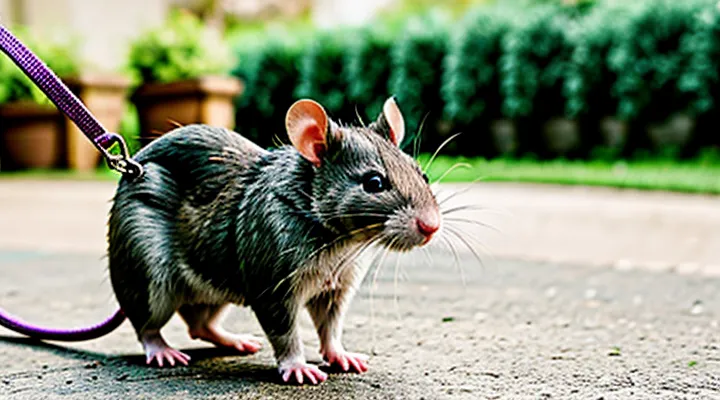
Why Make a DIY Rat Harness?
Benefits of a Harness for Rats
Safety During Outdoor Adventures
When a rat is taken outside with a homemade harness, safety must dominate every preparation step.
The harness must fit snugly without restricting breathing or movement. Measure the rat’s girth at the chest and around the neck, then cut adjustable straps that tighten securely yet release under sudden pressure to prevent choking. Choose breathable, lightweight fabric such as ripstop nylon; reinforce stitching with a heavy-duty thread to withstand pulling forces.
Key precautions for outdoor use include:
- Attach a breakaway clasp that disengages if the leash catches on an obstacle.
- Use a leash no longer than two feet to maintain control while allowing limited exploration.
- Inspect the terrain for hazards: sharp objects, toxic plants, extreme temperatures, and predators.
- Keep the rat within sight at all times; avoid dense underbrush or water bodies where the animal can become lost.
- Carry a small first‑aid kit with antiseptic wipes and a spare harness in case of damage.
Before leaving the home environment, conduct a short indoor trial. Observe the rat’s response to the harness, check for signs of stress, and verify that all connections remain intact. If any weakness appears, reinforce or replace the affected component prior to the outing.
During the adventure, monitor the rat’s behavior continuously. If the animal shows agitation, pause, assess the cause, and adjust the harness or route accordingly. Have a plan for rapid retrieval, such as a lightweight net or a calm, familiar voice to coax the rat back.
Implementing these measures ensures that a DIY rat harness provides secure, comfortable outdoor experiences while minimizing risk to the animal.
Training and Bonding Opportunities
A homemade rat harness creates a controlled environment for teaching basic commands and reinforcing positive behaviors. By fitting the animal with a secure, lightweight strap, owners can guide movement without causing distress, establishing a clear framework for interaction.
Training proceeds through incremental stages:
- Introduce the harness: Allow the rat to sniff and explore the device while it rests on a neutral surface. Attach briefly, then release, repeating until the animal tolerates the contact.
- Short leash walks: Connect a short, flexible leash and encourage forward steps with gentle hand cues. Reward each forward movement with a treat.
- Target training: Place a small object (e.g., a wooden block) on the floor. Prompt the rat to touch the object with its nose while on the harness, rewarding successful contacts.
- Recall practice: Call the rat’s name and use a consistent hand signal to signal return. Reinforce with a treat when the rat approaches.
Consistent repetition builds trust, reduces fear, and enhances the rat’s willingness to explore new spaces. The harness also facilitates safe outdoor exposure, allowing both animal and owner to share novel sensory experiences while maintaining control. Over time, the partnership evolves from basic obedience to a cooperative relationship grounded in mutual confidence.
Potential Drawbacks of Commercial Harnesses
Poor Fit and Discomfort
An ill‑fitting harness creates stress, restricts movement, and can lead to injury or escape. The root causes are measurable and correctable.
First, determine the rat’s body length from the base of the neck to the base of the tail. Add 10 % to allow for growth and slight movement. Measure chest circumference at the widest point; the strap should be no tighter than a fingertip’s width when closed. Use a flexible, lightweight material such as woven nylon or soft cotton; stiff fabrics transmit pressure and increase the risk of chafing.
Key considerations for a comfortable fit:
- Strap width: at least ¼ inch (6 mm) to distribute pressure evenly.
- Adjustment mechanism: a sliding knot or small metal buckle that can be tightened or loosened without slipping.
- Padding: a thin layer of fleece or silicone under the strap at contact points (neck and chest).
- Loop placement: position the neck loop just behind the ears and the chest loop just below the forelimbs; misplacement causes strain on the spine.
Observe the rat after the harness is applied. Indicators of discomfort include excessive grooming of the harness area, reluctance to move, flattened ears, or attempts to remove the device. If any sign appears, release the harness immediately, reassess measurements, and add padding or adjust strap tension. Re‑test after a short acclimation period before proceeding to longer sessions.
A systematic approach—accurate measurement, appropriate material selection, and careful adjustment—eliminates poor fit and ensures the rat can carry the harness without pain or restriction.
Limited Availability
When constructing a homemade rat harness, the most common obstacle is the scarcity of appropriately sized components. Commercial pet‑harness supplies are typically designed for larger animals, leaving few options that fit a small rodent without excessive bulk or discomfort.
Key items that often prove hard to obtain include:
- 1‑inch webbing or soft nylon strap; most retailers stock widths of 1½ inch or greater.
- Miniature buckles or D‑rings; standard pet‑hardware is usually ¼ inch or larger.
- Lightweight, breathable fabric for the body panel; fabric stores rarely carry pieces under 2 inches wide.
The limited market for these specialty parts forces makers to seek alternative sources. Viable strategies are:
- Purchase bulk fabric and cut to size, reducing waste and cost.
- Repurpose hardware from hobby kits (e.g., model‑airplane or jewelry supplies) that provide the required dimensions.
- Order from niche online vendors that specialize in small‑animal accessories, accepting longer lead times.
- Use 3‑D‑printed components, which can be printed on demand with custom dimensions.
Because supply chains for miniature pet‑gear are thin, planning ahead is essential. Order critical pieces weeks before beginning the project, and keep a small inventory of versatile materials such as narrow webbing and tiny fasteners for future adjustments. This approach mitigates interruptions caused by the limited availability of suitable components.
Essential Materials and Tools
Fabric Choices
Soft and Breathable Materials
Soft, breathable fabrics are essential for a comfortable rat harness. Materials such as lightweight cotton, bamboo fiber, and high‑denier polyester mesh allow air circulation while preventing chafing. Their low weight reduces strain on the animal’s neck and shoulders, promoting natural movement during exercise or transport.
When selecting fabric, consider the following criteria:
- Moisture wicking: Fibers that draw sweat away from the skin keep the harness dry and reduce the risk of skin irritation.
- Stretchability: Moderate elasticity accommodates growth and varying body shapes without compromising fit.
- Durability: Resistance to chewing and frequent washing extends the harness’s lifespan.
Cut the chosen material into strips of 0.5–1 cm width, then fold each strip with a double‑fold seam to create smooth edges. Sew the seams using a fine, non‑slip stitch to maintain flexibility. After assembly, test the harness on the rat, ensuring the fabric remains cool to the touch after short periods of wear. Regular laundering in mild detergent preserves breathability and prevents odor buildup.
Avoidance of Irritating Fabrics
Choosing the right material is critical for a functional rat harness. Rough or chemically treated fabrics can cause skin abrasions, allergic reactions, and stress, compromising the animal’s welfare and the durability of the device.
Fabric types that commonly irritate rodents include:
- Synthetic fleece with loose fibers that shed and embed in fur.
- Low‑grade polyester blends that retain static electricity.
- Heavy denim or canvas that restricts movement and traps heat.
- Fabrics treated with flame retardants or pesticides.
Materials that minimize irritation are:
- Soft, tightly woven cotton with a smooth finish.
- Natural hemp or linen, provided they are pre‑washed to remove residual chemicals.
- Lightweight, breathable bamboo fabric, known for hypoallergenic properties.
- High‑quality, tightly knit merino wool, offering warmth without friction.
When cutting and sewing, trim excess threads and avoid jagged edges. Use a mild, fragrance‑free fabric conditioner during the final wash to eliminate residual chemicals. Test a small fabric patch against the rat’s skin for at least fifteen minutes before assembling the full harness. This precaution ensures the chosen material will not provoke discomfort or injury.
Hardware Components
Small D-Rings
Small D‑rings are essential components for a homemade rat harness because they provide a secure point for attaching straps and a leash. Choose rings made from stainless steel or brass to resist corrosion and avoid skin irritation. Diameter of 2–3 mm fits comfortably on a rat’s body without adding bulk.
When selecting a D‑ring, verify the load rating exceeds the animal’s weight by at least three times. For a typical pet rat (200–300 g), a ring rated for 1 kg offers sufficient safety margin. Ensure the ring’s interior edge is smooth; sharp edges can damage fur or skin.
Installation steps:
- Cut a length of soft, breathable webbing (approximately 5 cm) for the strap that will pass through the D‑ring.
- Thread the webbing through the ring, forming a loop that sits on the rat’s chest.
- Secure the ends of the webbing with a strong stitch or a small snap button, keeping the knot away from the ring’s opening.
- Attach a lightweight swivel clip to the ring for the leash, preventing twisting during movement.
Maintenance tips:
- Inspect the ring weekly for signs of bending, rust, or wear.
- Clean with mild soap and warm water; dry thoroughly before reuse.
- Replace any ring that shows deformation or corrosion to maintain harness integrity.
Small D‑rings are readily available from pet‑craft suppliers, hardware stores, or online marketplaces. Look for items labeled “mini D‑ring” or “pet‑size D‑ring” to ensure appropriate dimensions. Using the correct ring material and size, combined with proper attachment technique, results in a reliable, comfortable harness for a rat.
Adjustable Clasps
Adjustable clasps are essential components for a functional rat harness because they permit precise fitting and quick release while maintaining safety. Selecting the right clasp type influences the harness’s durability and the animal’s comfort.
- Material choice: Stainless‑steel or brass hardware resists corrosion and withstands the bite forces of small rodents. Plastic clasps reduce weight but may break under stress; reserve them for lightweight designs.
- Size compatibility: Choose clasps with a jaw opening slightly larger than the harness strap width (typically 2–4 mm). Overly large clasps create slack; undersized clasps can damage the strap or pinch the animal’s skin.
- Adjustment mechanism: Slider‑style buckles or ratchet clasps allow incremental tightening without re‑tying knots. Ensure the slider moves smoothly along the strap and locks securely when tension is applied.
- Safety features: Incorporate a secondary release loop that disengages when excessive force is applied. This prevents the harness from becoming a choking hazard if the rat pulls sharply.
Installation steps:
- Thread the strap through the clasp’s loop, leaving a 5 mm tail for knotting.
- Pull the strap tight enough to eliminate slack but not so tight that it restricts movement.
- Secure the clasp by sliding the locking mechanism into the closed position; verify that the lock holds under gentle pulling.
- Test the release function by applying moderate pressure to the release tab; the clasp should open without resistance.
Maintenance guidelines:
- Inspect clasps after each use for signs of wear, corrosion, or deformation.
- Clean metal components with a mild soap solution and dry thoroughly to prevent rust.
- Replace any clasp that shows compromised integrity to avoid accidental escape or injury.
By integrating high‑quality adjustable clasps and following precise installation practices, a DIY rat harness achieves reliable fit, ease of adjustment, and safe operation.
Sewing Supplies
Needle and Thread
A sturdy needle and strong thread are fundamental tools for assembling a homemade rat harness. The needle must be fine enough to pass through the animal’s delicate skin without causing damage, yet sturdy enough to handle the tension of the stitching. Select a needle with a small, rounded eye—size 6 to 8 mm is optimal for most small rodents.
Thread choice directly affects the durability of the harness. Use a synthetic, high‑tensile material such as nylon or polyester, preferably in a color that contrasts with the rat’s fur for visual inspection. The thread should be at least 60 cm long to allow multiple passes without re‑tying.
When stitching, follow these precise actions:
- Thread the needle, pulling the end through the eye until a 5‑cm tail remains.
- Double the thread to create a stronger line; tie a secure knot at the tail.
- Begin at the harness’s base, inserting the needle from the inside out to hide the knot.
- Use a simple running stitch, spacing each pass 2‑3 mm apart to distribute stress evenly.
- After completing the perimeter, reinforce each corner with an overhand knot.
- Trim excess thread, leaving a 2‑cm tail for future adjustments.
Maintain consistent tension throughout the process; excessive pull can narrow the stitch, while slack stitches may open under load. After sewing, inspect the seam for gaps or frayed fibers and re‑stitch as needed before fitting the harness on the rat.
Fabric Scissors
Fabric scissors are the primary cutting tool for the textile components of a homemade rat harness. Their precision edge produces clean seams, preventing fraying that could irritate the animal’s skin. Selecting scissors with a sharp, stainless‑steel blade and a comfortable grip reduces hand fatigue during repeated cuts.
Key characteristics to evaluate:
- Blade length: 5–7 inches offers control for small fabric pieces.
- Edge type: Fine, straight edge yields smooth cuts; avoid serrated blades that snag delicate material.
- Handle design: Ergonomic, non‑slip material ensures steady pressure.
- Maintenance: Ability to disassemble for blade sharpening extends tool life.
When cutting fabric for the harness, place the material on a stable surface and secure it with pins or a lightweight clamp. Align the scissors at a slight angle to the grain of the fabric to minimize distortion. Execute steady, short strokes rather than forcing the blade, which preserves edge sharpness and produces uniform pieces.
After each use, clean the blades with a dry cloth, then apply a light oil film to prevent corrosion. Store the scissors in a protective sheath or dedicated drawer to avoid accidental damage. Proper care maintains cutting accuracy, directly influencing the fit and durability of the rat harness.
Measuring Tape
A measuring tape is essential for obtaining accurate dimensions when constructing a custom rat harness. Choose a flexible steel or fiberglass tape that extends at least 12 inches, allowing measurement of the animal’s body length, neck circumference, and chest girth without excessive slack.
When measuring, follow these steps:
- Neck circumference – Wrap the tape snugly around the rat’s neck, leaving one finger’s width between tape and skin to avoid constriction.
- Chest girth – Position the tape just behind the forepaws, encircling the torso at its widest point; record the value and add a 0.5‑inch allowance for seam overlap.
- Body length – Align the tape from the base of the skull to the base of the tail, keeping it straight; note the length for strap cut‑offs.
Mark each measurement directly on the tape with a fine‑point marker to prevent transcription errors. Use the recorded numbers to cut harness straps to the precise length, ensuring a secure but comfortable fit. Regularly re‑measure as the rat grows, adjusting the harness accordingly.
Step-by-Step Harness Construction
Taking Accurate Measurements
Neck Circumference
Measuring the rat’s neck circumference provides the baseline dimension for a secure yet comfortable harness. An undersized strap will dig into the skin, while an oversized one allows escape.
To obtain an accurate measurement, follow these steps:
- Choose a flexible cloth or silicone tape.
- Gently wrap the tape around the base of the neck, just above the shoulders.
- Record the length at the point where the tape meets without tension.
Add a 10‑15 % allowance to the recorded value; this extra space accommodates movement and prevents chafing. Typical adult rats require 2.5‑3.5 cm of neck opening, but verify each individual.
When drafting the harness pattern, use the adjusted measurement to define the inner width of the neck strap. Cut the strap length to the sum of the allowance and the recorded circumference, then attach the clasp or Velcro at the ends. Ensure the final loop slides over the neck without restriction and locks securely when the rat is positioned within the harness.
Chest Girth
Accurately determining the chest girth is the first step in constructing a functional rat harness. The measurement dictates strap length, ensures comfort, and prevents the animal from slipping out or experiencing restriction.
To obtain the chest girth, follow these precise actions:
- Place a flexible measuring tape around the rat’s ribcage, just behind the forepaws. The tape must lie snugly without compressing the skin.
- Record the length where the tape meets its zero point. Typical values range from 4 cm to 7 cm for adult rats, but individual variation is common.
- Add a safety margin of 5 % to the recorded number. This allowance accommodates movement and minor swelling while preserving a secure fit.
When cutting harness material, use the adjusted girth as the reference dimension. Cut each strap to the adjusted length, then attach buckles or knots that allow fine‑tuning. Verify the fit by sliding the harness onto the rat; the animal should move freely, and the strap should rest lightly against the body without digging into flesh.
Consistent application of the measured chest girth throughout the build process eliminates the need for trial‑and‑error adjustments after assembly.
Length Between Neck and Chest
Accurate measurement of the distance from the rat’s neck to its chest determines whether a homemade harness will fit securely without restricting breathing or movement.
First, calm the animal and gently hold it upright. Use a flexible measuring tape or a strip of paper wrapped around the base of the neck, then extend to the point where the chest folds under the forelimbs. Record the total length in millimeters or inches; most adult rats fall between 2.5 in (6.5 cm) and 3.5 in (9 cm).
Second, select a harness pattern that incorporates this measurement. The pattern should include:
- A neck strap that ends just before the measured point, leaving a small gap for the throat.
- A chest strap that runs parallel to the measured line, allowing the harness to sit snugly on the ribcage.
- Adjustable buckles or sliding knots positioned at the measurement junction for fine‑tuning.
Third, cut fabric or webbing to the recorded length plus a 10 % allowance for seam overlap and adjustment. Sew or tie the ends together, ensuring the stitching does not create sharp edges that could injure the rat’s skin.
Finally, test the fit by placing the harness on the animal and observing its behavior. The harness should stay in place when the rat moves but release easily when gentle pressure is applied to the buckles. If the harness slides or the rat shows signs of discomfort, re‑measure and adjust the strap lengths accordingly.
Cutting the Fabric Pieces
Main Body Strip
The main body strip forms the central segment of a homemade rat harness, providing structural support and distributing pressure evenly across the animal’s torso. Selecting the appropriate material is crucial: lightweight, breathable fabrics such as nylon webbing, polyester ribbon, or thin silicone sheet work best because they resist tearing while allowing movement.
When cutting the strip, measure the rat’s chest girth, add a small overlap of 0.5 in (1.3 cm) for secure fastening, and trim to a length that runs from the front neck ring to the rear waist loop. A width of 0.25–0.5 in (6–12 mm) offers sufficient rigidity without adding bulk. Use sharp scissors or a rotary cutter to achieve clean edges, then seal the ends with heat (if synthetic) or a light coating of non‑toxic adhesive to prevent fraying.
Attachment points are created by folding each end of the strip back 0.25 in (6 mm), stitching a reinforced loop, and inserting a small metal D‑ring or swivel snap. This configuration allows the leash to connect without pulling directly on the strip, reducing stress on the rat’s skin. For added comfort, line the interior of the strip with a thin layer of soft fabric, such as fleece or cotton, secured with a few evenly spaced stitches.
Key considerations for the main body strip:
- Material: strong, lightweight, breathable.
- Dimensions: length = chest girth + 0.5 in; width = 0.25–0.5 in.
- Edge treatment: sealed or reinforced to avoid fraying.
- Connection loops: folded, stitched, fitted with D‑rings or swivels.
- Interior lining: optional soft fabric for comfort.
Proper execution of these steps results in a durable, comfortable core component that enables safe handling and transport of the rat while minimizing the risk of injury.
Straps
Straps provide the only means of securing a rat without causing injury, and their design determines the harness’s comfort and durability. Choose material that resists fraying, such as woven nylon or soft polyester webbing, because these fibers maintain strength after repeated cleaning.
Key characteristics of effective straps:
- Width of ¼ – ½ inch prevents pressure points on the animal’s skin.
- Flat, non‑elastic construction offers predictable tension.
- Adjustable buckles or quick‑release clips allow rapid fitting and removal.
When cutting straps, measure the rat’s chest girth and add 1 inch for overlap. Use a sharp rotary cutter to achieve clean edges; jagged cuts increase the risk of tearing. Seal cut ends with a heat‑shrink tube or a dab of fabric glue to prevent unraveling.
Assembly steps:
- Thread each strap through a low‑profile buckle, ensuring the buckle’s tongue faces outward for easy access.
- Attach a D‑ring to the front strap, positioned just behind the rat’s forepaws; the D‑ring serves as the attachment point for the neck loop.
- Connect the rear strap to a second buckle, aligning it with the animal’s hindquarters to distribute load evenly.
- Tie the two straps together with a sliding knot that can be tightened or loosened without slipping.
Final inspection includes checking that all buckles close fully, that the D‑ring moves freely, and that no sharp edges remain. Test the harness on a stationary surface before placing it on the rat; adjust tension until the straps sit snugly without restricting breathing or movement.
Assembling the Harness
Sewing the Main Body
Sewing the main body of a homemade rat harness requires precise measurement, sturdy fabric, and reliable stitching. Begin by selecting a lightweight, breathable material such as cotton twill or fleece; these fabrics balance durability with comfort and reduce the risk of skin irritation. Cut two identical panels according to the rat’s torso dimensions, adding a ¼‑inch seam allowance on all edges.
Secure the panels with a temporary basting stitch, aligning the right sides together. Use a fine, strong thread—polyester or nylon—and a 3‑mm needle to prevent fabric distortion. Stitch a straight seam along the outer edges, leaving a 1‑inch opening at the ventral side for the adjustable strap system. Reinforce the opening with a double backstitch to maintain structural integrity.
After the primary seam is complete, create a reinforced loop for the neck strap:
- Fold a ½‑inch strip of fabric from the inner edge of the ventral opening.
- Sew the strip onto the seam with a tight, even stitch, forming a durable anchor point.
- Press the loop flat with an iron set to low heat to eliminate bulk.
Finish the body by top‑stitching ¼‑inch from the outer edge all the way around the harness. This edge stitching prevents fraying and adds a professional finish. Trim any excess thread and inspect the seam for gaps; a secure main body ensures the harness will support the animal without causing discomfort or failure during use.
Attaching the Straps
Attaching the straps securely determines whether the harness will stay in place without restricting the animal’s movement. Begin by measuring the rat’s chest circumference and the distance from the neck to the base of the spine. Cut two lengths of soft, breathable fabric—preferably a lightweight fleece or cotton—allowing an extra two centimeters for seam allowance.
- Fold each strip in half lengthwise, press, and stitch a straight seam to create a reinforced edge.
- Form a small loop at one end of each strap; this loop will serve as the attachment point for the buckles.
- Position the first strap around the neck, ensuring the loop rests on the left side. Secure the loop with a quick‑release buckle, adjusting for a snug but comfortable fit.
- Slide the second strap around the chest, aligning its loop opposite the first. Connect the two loops with a second buckle, creating a figure‑eight configuration that distributes pressure evenly.
- Verify that both straps lie flat against the fur, with no twists or gaps. Perform a gentle pull test to confirm that the buckles hold under tension.
- Trim any excess fabric, then reinforce the buckle attachment points with a few rows of stitching for added durability.
The final assembly should allow the rat to move freely while preventing escape. Regularly inspect the seams and buckles for wear, replacing components as needed to maintain safety.
Integrating Hardware
Integrating hardware into a DIY rat harness demands precise component selection and reliable attachment methods. The goal is to create a lightweight, adjustable system that withstands the animal’s movements while allowing safe handling.
Key components:
- Thin nylon webbing, 2 mm width, for the main body strap.
- Small stainless‑steel D‑rings for leash attachment.
- Low‑profile buckles (plastic or aluminum) for size adjustment.
- Micro‑screw eyelets (1 mm diameter) to reinforce stress points.
- Silicone padding strips, 2 mm thick, to prevent chafing.
Assembly steps:
- Cut two lengths of webbing to match the rat’s torso, leaving excess for adjustment.
- Thread a D‑ring through each webbing end, securing with a micro‑screw eyelet and a lock nut.
- Position silicone padding on the interior side of each strap; stitch in place using a fine, non‑absorbent thread.
- Attach buckles opposite the D‑rings; align the buckle slots with the eyelet holes to enable quick length changes.
- Test the harness by gently pulling the D‑rings; confirm that all connections hold under moderate tension without deformation.
Finalize by inspecting each joint for sharp edges, confirming that the harness distributes pressure evenly, and verifying that the hardware does not impede the rat’s natural movement. This configuration provides a durable, functional platform for safe handling and training.
Finishing Touches
Trimming Excess Fabric
Trimming excess fabric improves the harness’s fit, prevents snagging, and reduces weight, which is vital for a comfortable, secure restraint on a small rodent.
- Lay the cut‑out pieces flat on a clean surface.
- Use sharp fabric scissors or a rotary cutter to remove any surplus material beyond the seam lines.
- Cut close to the stitching line, leaving a margin of 1–2 mm to avoid exposing raw edges.
- After each cut, smooth the edge with a fingertip to ensure no stray threads remain.
A fine‑toothed seam ripper can be employed to lift loose threads that may have been pulled out during cutting. If the fabric is thick or layered, a small, sharp utility blade provides cleaner cuts without fraying.
Finalize the process by pressing the trimmed edges with a low‑heat iron, using a pressing cloth to protect the material. This step sets the seam, flattens the edge, and prepares the piece for the next assembly stage.
Reinforcing Seams
When constructing a homemade rat harness, the durability of each stitch directly affects the animal’s safety and the device’s longevity. Weak seams can open under tension, risking injury or escape. Reinforcement therefore transforms a basic stitch into a load‑bearing joint.
Select a thread that resists fraying and maintains strength when wet. Polyester or nylon embroidery floss, with a tensile rating of at least 30 lb, provides reliable performance. Pair the thread with a fine‑point, curved needle to pass through the narrow fabric without creating holes that enlarge over time.
Apply reinforcement using a double‑stitch technique:
- Stitch the original seam once, leaving a 2‑mm margin from the edge.
- Reverse direction and stitch a second parallel line, keeping the same spacing.
- Tie a secure knot at each end, then trim excess thread close to the fabric.
For high‑stress areas such as the strap attachment points, add a small fabric patch (e.g., a piece of ripstop nylon) on the interior side of the seam. Sew the patch with the same double‑stitch pattern, ensuring the edges overlap the original seam by at least 3 mm. This creates a reinforced zone that distributes load and prevents tearing.
Finally, test each reinforced seam by applying gentle pull pressure equal to the rat’s expected activity level. A properly reinforced seam will remain intact without stretching or loosening, confirming the harness is ready for safe use.
Fitting and Adjusting the Harness
First-Time Introduction to Your Rat
Positive Reinforcement Techniques
Positive reinforcement encourages a rat to associate the harness with a rewarding experience, increasing willingness to wear it and reducing stress during handling. Reward‑based training creates a clear connection between the desired behavior and a pleasant outcome, which accelerates habituation to new equipment.
- Use a clicker or distinct sound to mark the exact moment the rat performs the target action, then deliver a small, high‑value treat within one to two seconds.
- Begin with brief sessions (one to two minutes) focused on a single step, such as allowing the rat to sniff the fabric or tolerate a loose loop.
- Gradually shape behavior by rewarding successive approximations: first tolerate contact, then allow the strap to be slipped over a paw, and finally accept the fully assembled harness.
- Keep reinforcement consistent; offer the same type of treat each time to maintain a strong association.
- Select treats that the rat prefers, such as tiny pieces of dried fruit or specialized rodent rewards, and limit quantity to prevent overfeeding.
- Record the timing of each reward to ensure immediate delivery, which strengthens the link between action and positive outcome.
Integrate reinforcement into the construction process by testing each component before permanent attachment. Present the rat with a loose piece of material, reward acceptance, then secure it temporarily with a slip knot. Repeat for each strap, allowing the rat to experience success at each stage before moving on. This method reduces fear of the final product and simplifies the transition to a fully fitted harness.
Maintain the reinforcement schedule after the harness is complete. Offer treats each time the rat is placed in the harness for a brief walk or exercise session, gradually decreasing frequency as the behavior becomes reliable. Consistent reward delivery sustains the positive association and ensures long‑term compliance with the homemade harness.
Gradual Acclimation
Gradual acclimation prepares a rat to accept a harness without triggering fear or defensive behavior. The process begins with a calm, secure enclosure free of loud noises and sudden movements. Place the harness, unattached, on the cage floor for several hours so the animal can sniff and explore the material at its own pace.
Introduce the harness in short, controlled sessions.
- Day 1: Allow the rat to investigate the harness for up to five minutes while offering a favorite treat nearby. Do not attempt to slip it over the body.
- Day 2–3: Gently lift the harness and drape it loosely over the shoulders for a few seconds, then remove it. Reward immediately with a treat.
- Day 4–5: Position the harness partially, securing only one strap for ten seconds. Continue treating after each attempt.
- Day 6–7: Fasten both straps loosely, ensuring the rat can move freely. Keep the session under two minutes, then release the harness and provide a treat.
Consistent positive reinforcement reinforces the harness as a neutral or pleasant object. Use small food rewards, gentle vocal encouragement, and brief petting when the rat remains calm. Avoid prolonged handling; limit each exposure to the time needed for the rat to settle.
Observe the rat’s behavior for signs of stress: rapid breathing, excessive grooming, or attempts to escape. If any appear, pause the acclimation schedule and revert to the previous comfortable step. Extend exposure durations only after the rat shows no adverse reactions for multiple sessions.
Successful acclimation results in a rat that tolerates the harness for brief periods, paving the way for longer wear times during training or transport.
Ensuring a Secure and Comfortable Fit
Checking for Snugness
When evaluating a homemade rat harness, the primary goal is to confirm that the fit is secure without restricting movement or causing discomfort. Begin by placing the harness on the animal, ensuring the strap runs evenly across the back and under the belly. The harness should rest snugly against the skin, yet allow a fingertip’s width of space between the material and the body. This clearance prevents choking while maintaining control.
To test snugness:
- Gently pull the front loop upward; the harness should resist sliding off but not yank the rat’s skin.
- Observe the animal’s gait; a correctly fitted harness permits natural walking, climbing, and turning without wobbling.
- Monitor the rat’s behavior for signs of stress, such as excessive grooming of the harness area or attempts to escape.
If any of these checks reveal excess slack, tighten the adjustable straps incrementally, re‑checking after each adjustment. Conversely, if the harness feels tight enough to compress the ribcage or impede breathing, loosen the straps until the fingertip clearance is restored. Repeat the evaluation after each adjustment to ensure consistent fit across multiple sessions.
Avoiding Restriction of Movement
When constructing a homemade rat harness, the primary objective is to maintain full range of motion for the animal. The harness must support the body without compressing the spine, limiting limb extension, or impeding the tail.
Key design principles to prevent movement restriction:
- Use lightweight, flexible material such as breathable nylon or cotton webbing; heavy fabrics add unnecessary load.
- Position straps around the thorax, not the ribcage, to avoid pressure on the spine.
- Ensure each strap is adjustable with a quick‑release buckle, allowing fine‑tuning to the rat’s size.
- Provide a gap of at least one finger width between the strap and the skin to prevent chafing and compression.
- Incorporate a small, centered loop for the leash that aligns with the rat’s natural forward direction, preventing sideways pull.
After assembly, place the harness on the rat and observe gait. The animal should be able to walk, climb, and rear up without hesitation. Conduct a brief trial on a low surface; any signs of stiffness, limping, or reluctance indicate the need for strap adjustment or redesign. Regularly re‑evaluate fit as the rat grows or gains weight.
Troubleshooting Common Issues
Harness Slipping
When a homemade rat harness slides out of place, the animal may become stressed, escape, or sustain injury. Preventing slip begins with an accurate fit; the harness must contour the rat’s body without excess slack.
Key factors that cause slipping:
- Straps cut too long or positioned too high on the shoulders.
- Lack of tension‑adjusting hardware, such as quick‑release buckles or slide‑adjusters.
- Smooth fabric or thread that does not grip the animal’s fur.
- Weak stitching at stress points, allowing seams to open under movement.
To eliminate these problems, follow a systematic approach:
- Measure the rat’s neck circumference, chest girth (just behind the front legs), and back length from shoulder to base of tail. Add a minimal allowance—no more than 5 %—to accommodate breathing.
- Cut strap material from a low‑stretch, textured fabric (e.g., denim, canvas) or reinforce synthetic webbing with a rubberized coating to increase friction.
- Sew reinforced double‑stitch seams at every junction; use a polyester thread rated for tensile loads.
- Install adjustable metal buckles or plastic slide‑adjusters on each strap. Position the buckles on the side opposite the rat’s forepaws to keep pressure evenly distributed.
- Test the fit by placing the harness on the rat, securing all buckles, and gently pulling forward. The harness should stay snug while allowing the animal to move freely; any upward or backward movement indicates excess length.
- Observe the rat during a short supervised walk. If the harness shifts, tighten the corresponding strap incrementally until movement ceases.
Regularly inspect stitching, buckles, and fabric for wear. Replace any component that shows fraying or loss of tension to maintain a secure, non‑slipping harness throughout the rat’s life.
Rat Discomfort
When constructing a homemade rat harness, the primary concern is preventing physical and psychological distress. A harness that squeezes, chafes, or restricts natural movement will cause the animal to exhibit stress behaviors and may lead to injury.
Typical indicators of discomfort include:
- Persistent attempts to escape or remove the harness
- Excessive grooming or biting at the strap area
- Hunched posture or reduced activity levels
- Vocalizations such as high‑pitched squeaks when restrained
Design choices that reduce these risks involve selecting soft, breathable fabrics, avoiding sharp edges, and ensuring the strap width distributes pressure evenly across the torso. Adjustability is critical; the harness should slide a finger between the band and the rat’s body without being loose enough to slip off.
Before use, test the fit on a calm animal for a short period, observing behavior and checking for skin irritation. Gradually increase wear time, allowing the rat to become accustomed to the device while monitoring for any signs of unease.
Tips for Using and Maintaining the Harness
Introducing Your Rat to Walking
Short, Controlled Sessions
Short, controlled sessions keep a rat comfortable while it learns to accept a homemade harness. Brief exposure reduces stress, prevents fatigue, and allows the animal to focus on the new equipment rather than becoming overwhelmed by prolonged handling.
Guidelines for effective sessions:
- Limit each attempt to 3–5 minutes.
- Begin with the rat in a familiar enclosure; introduce the harness gently.
- Reward with a preferred treat immediately after the rat tolerates the harness for a few seconds.
- Pause if the rat shows signs of agitation; resume only after a brief calm period.
- Gradually increase tolerance time by 10‑15 seconds per successful session until the rat remains still for at least one minute.
Rewarding Good Behavior
When a rat learns to accept a homemade harness, consistent positive reinforcement solidifies the behavior. The moment the animal allows the strap to be placed, deliver a reward immediately; delay weakens the association between the action and the benefit.
Select incentives that align with the rat’s preferences. Typical choices include:
- Small pieces of fresh fruit (e.g., banana, apple)
- Tiny portions of unsalted nuts
- Commercial rat treats formulated for high palatability
- Brief, gentle petting combined with a soft spoken cue
Rewards must be sized to avoid overfeeding; a bite no larger than a pea suffices for each successful step. Rotate treat types to prevent habituation and maintain motivation.
Training sessions should be short, lasting no more than five minutes, and repeated several times daily. Begin with the harness loosely draped, then gradually tighten as the rat becomes accustomed. Each incremental adjustment that the rat tolerates should be followed by a treat, reinforcing tolerance and cooperation.
Document progress by noting which rewards elicit the strongest response. Adjust the schedule if the rat shows signs of stress, such as rapid breathing or avoidance. By adhering to immediate, appropriate reinforcement, the rat will reliably accept the harness, enabling safe handling and exploration.
Cleaning and Storage
Hand Washing Recommendations
Proper hand hygiene is essential when constructing a rat harness to prevent contamination of materials and protect the animal’s health. Wash hands before handling any fabric, fasteners, or tools, and after each interaction with the rat.
- Use warm water and liquid soap.
- Scrub for at least 20 seconds, covering palms, backs of hands, fingers, and under nails.
- Rinse thoroughly to remove all soap residue.
- Dry with a disposable paper towel or a clean cloth.
Repeat the washing process after trimming the rat’s fur, cleaning its cage, or disposing of waste. If soap and water are unavailable, apply an alcohol-based hand sanitizer containing a minimum of 60% ethanol or isopropanol; allow it to dry completely before resuming work.
Wear disposable gloves when cutting or stitching materials, but do not rely on gloves as a substitute for hand washing. Remove gloves carefully, discard them, and wash hands immediately afterward.
Maintain a dedicated cleaning station with soap, sanitizer, and towels within arm’s reach of the work area. This arrangement encourages consistent hygiene and reduces the risk of transferring pathogens to the harness or the rat.
Proper Storage to Prevent Damage
Store a completed rat harness in conditions that preserve its structural integrity and prevent contamination. Use a clean, airtight container made of sturdy plastic or metal; avoid cardboard boxes that can absorb moisture. Place the container in a cool, dry area away from direct sunlight, heating vents, or drafts, maintaining a temperature range of 15‑22 °C (59‑72 °F) and relative humidity below 50 %.
Before sealing, inspect the harness for loose stitches, frayed edges, or worn buckles. If any damage is detected, repair or replace the component before storage. Include a small desiccant packet to absorb residual moisture, and a silica gel indicator to monitor humidity levels.
Label the container with the date of construction and any special instructions (e.g., “do not expose to water”). Store the labeled container on a shelf that is out of reach of other pets, especially those that might chew the harness.
Periodic maintenance extends the lifespan of the harness:
- Every 30 days, open the container, examine the harness, and replace the desiccant if it is saturated.
- Every 90 days, wash the harness according to the material’s care guidelines (hand‑wash in mild soap, rinse thoroughly, air‑dry).
- Annually, re‑measure the harness to confirm fit and replace any worn hardware.
Adhering to these storage practices minimizes material degradation, prevents mold growth, and ensures the harness remains safe and functional for future use.
Safety Precautions
Constant Supervision
Constant supervision is essential when constructing a homemade rat harness. The animal’s small size and natural curiosity make it vulnerable to entanglement, choking, or escape if left unattended. Monitoring the rat throughout each step—measuring, cutting, stitching, and fitting—prevents accidental injury and ensures the harness conforms to the animal’s body without restricting movement.
Key supervision actions include:
- Observing the rat’s behavior while the harness is being adjusted; any signs of stress or discomfort require immediate modification.
- Checking all seams and closures for sharp edges or loose threads before the rat wears the device.
- Maintaining a clear work area to eliminate stray objects that could snag the harness during use.
By keeping the rat within sight and responding promptly to any irregularities, the builder guarantees a safe, functional harness and reduces the risk of harm during the DIY process.
Avoiding Dangerous Environments
When building a homemade rat harness, the first priority is to keep the work area free of hazards that could injure the animal or compromise the project.
Choose a location that is well‑ventilated, free of strong drafts, and isolated from other pets that might become aggressive. Avoid rooms with exposed electrical cords, open flames, or chemicals such as cleaning agents and solvents. Ensure the floor is stable and non‑slippery; a low‑pile carpet or a rubber mat works best.
Select materials that are non‑toxic and resistant to tearing. Discard any fabric or thread that shows signs of wear, fraying, or discoloration, as these can break under stress. Do not use adhesives containing solvents; opt for pet‑safe glue or stitch the components together.
Safety checklist for the workspace:
- Remove small objects that a rat could swallow or become entangled in.
- Keep all tools (scissors, needles, pliers) out of reach when not in use.
- Store sharp implements in a locked drawer.
- Maintain a temperature between 18 °C and 24 °C to prevent overheating or hypothermia.
- Verify that lighting is adequate to see fine details without causing glare.
Before fitting the harness, inspect the rat for injuries or skin conditions that could be aggravated. If the animal shows signs of stress, pause the assembly and allow it to calm in a quiet enclosure.
By systematically eliminating dangerous elements from the environment, the construction of a reliable, comfortable rat harness proceeds safely and efficiently.