
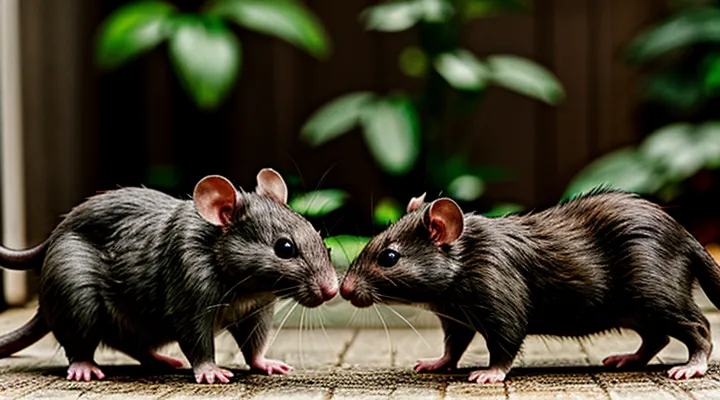
The Importance of Socialization for Rats
Why Rats Need Companionship
Rats are inherently social mammals; isolation triggers stress responses that manifest as stereotypic behaviors, reduced grooming, and heightened aggression. Their nervous systems are wired to seek interaction, making companionship a prerequisite for stable mental states.
- Social interaction promotes neurochemical balance, decreasing cortisol levels and enhancing dopamine activity.
- Group living encourages natural foraging and nesting behaviors, supporting musculoskeletal development.
- Presence of conspecifics facilitates learning of species‑specific communication cues, reducing fear of novel stimuli.
- Cohabitation extends average lifespan by mitigating immune suppression associated with chronic stress.
Providing a compatible partner or a small group satisfies these biological demands. Adequate cage space, enrichment items, and regular health monitoring ensure that social bonds remain positive and that hierarchical tensions do not compromise welfare.
Benefits of Proper Introduction
Properly introducing rats creates measurable advantages for individual health and group dynamics. Reduced aggression emerges when unfamiliar individuals meet under controlled conditions, leading to fewer injuries and lower cortisol levels. Cohesive colonies display smoother hierarchy formation, which minimizes dominance conflicts and stabilizes social structure.
Enhanced mental stimulation follows successful introductions. Exposure to new companions encourages exploratory behavior, strengthens problem‑solving abilities, and promotes natural foraging patterns. These factors contribute to overall cognitive resilience and lower incidences of stereotypic behaviors.
Physical health benefits include improved immune function. Stress reduction associated with amicable encounters boosts antibody production and accelerates wound healing. Social grooming further distributes ectoparasite control agents, decreasing parasite load across the group.
Practical outcomes for caretakers improve as well. Familiarity among rats simplifies handling, reduces the risk of bites, and facilitates routine tasks such as health checks and cage maintenance. Consistent social bonds also ease the integration of additional rats, saving time and resources.
Key benefits can be summarized:
- Decreased aggression and injury rates
- Stabilized social hierarchy and reduced dominance disputes
- Heightened cognitive engagement and exploration
- Strengthened immune response and faster recovery
- Simplified handling and routine care
«Effective rat socialization yields measurable welfare improvements», confirming that deliberate introduction protocols are essential for optimal colony performance.
Preparing for Introductions
Assessing Your Current Rats
Before beginning any interaction, a clear picture of each rat’s condition is essential. Accurate assessment prevents stress, injury, and unsuccessful socialization.
Key factors to evaluate:
- Physical health: check for wounds, respiratory sounds, coat condition, and weight stability.
- Age: younger rats adapt more quickly; older individuals may require slower introductions.
- Gender composition: mixed‑sex groups can provoke aggression; same‑sex pairings often reduce conflict.
- Temperament: note reaction to handling, vocalizations, and willingness to explore new environments.
- Social history: record previous cage mates, exposure to humans, and any past aggressive incidents.
Practical steps for assessment:
- Conduct a brief health check in a quiet area; record observations on a dedicated sheet.
- Perform a handling test: gently lift each rat, note resistance or calmness, and measure duration of tolerance.
- Observe behavior in a neutral enclosure for five minutes; look for signs of dominance, avoidance, or play.
- Review veterinary records for illnesses or treatments that could affect social dynamics.
When data are compiled, compare individuals to identify compatible pairs or groups. Prioritize rats with similar temperaments, health status, and age ranges. Adjust introduction plans based on documented differences, employing gradual exposure and supervised sessions. This structured evaluation lays the groundwork for successful integration and long‑term harmony.
Choosing New Rats: Age and Temperament
Choosing new rats requires evaluating two primary factors: age and temperament. Age determines developmental stage, health resilience, and adaptability to a household environment. Temperament predicts social compatibility, stress tolerance, and ease of training.
-
Age considerations
- Juveniles (4–8 weeks) exhibit rapid growth, high curiosity, and greater flexibility in forming bonds.
- Adolescents (8–12 weeks) display established personality traits while retaining learning capacity.
- Adults (12+ weeks) often possess stable temperaments but may be set in behavioral patterns that are harder to modify.
-
Temperament considerations
- Calm individuals remain composed during handling, reducing risk of injury.
- Curious rats explore new objects quickly, facilitating enrichment activities.
- Sociable specimens readily accept companions, essential for group housing.
- Assertive rats may dominate cage hierarchy; pairing with submissive partners mitigates conflict.
Selecting a pair of rats of similar age and complementary temperaments increases the likelihood of harmonious integration. Observe potential pets in a neutral environment, noting reactions to gentle touch and interaction with other rodents before finalizing the acquisition.
Setting Up a Neutral Introduction Space
Establishing a neutral introduction area is essential for successful rat socialization. The space should be unfamiliar to all parties, free from scents associated with the resident or newcomer, and designed to minimize stress.
Key elements include:
- A clean, non‑slippery surface such as a glass or acrylic tray.
- Low walls or a short fence to prevent escape while allowing visual contact.
- Neutral bedding (e.g., paper strips) that can be easily removed after the session.
- Separate food and water stations placed outside the immediate interaction zone to avoid competition.
- Adequate lighting that mimics natural conditions without creating glare.
Position the neutral zone away from the primary cage locations. Ensure ventilation without drafts, and maintain a stable temperature between 20 °C and 24 °C. Prior to the meeting, wipe the area with a mild, unscented solution and allow it to dry completely.
During the introduction, observe body language closely. Allow the rats to approach voluntarily, and intervene only if aggressive behavior such as biting or excessive chasing occurs. Limit the initial session to 10–15 minutes, then gradually extend exposure as confidence builds. After each encounter, clean the neutral space thoroughly to erase residual odors before the next session.
Introduction Methods
The «Smooth» or «Carrier» Method
The «Smooth» or «Carrier» Method offers a low‑stress approach for familiarizing new rats with existing colonies. The technique relies on a confined carrier that limits visual and olfactory exposure while permitting gentle scent exchange. By placing the newcomer inside the carrier and situating it within the main cage for short intervals, the resident rats become accustomed to the newcomer’s presence without direct contact. This gradual habituation reduces aggression and accelerates acceptance.
Key elements of the method include:
- Selecting a carrier large enough for the rat to move comfortably yet small enough to prevent escape.
- Positioning the carrier on a neutral area of the main enclosure, away from dominant individuals’ preferred spots.
- Maintaining the carrier for 10–15 minutes during the initial exposure, then extending the duration by 5‑minute increments over subsequent sessions.
- Monitoring resident behavior for signs of curiosity (sniffing, gentle pawing) versus hostility (lunging, vocalizations).
Once the resident group shows consistent neutral or positive reactions, the carrier can be removed, allowing a brief supervised interaction. Repeating the cycle until the newcomer integrates fully eliminates the need for forced introductions and supports a stable, cooperative colony.
The «Neutral Territory» Method
The neutral‑territory method creates a shared space where unfamiliar rats can meet without the presence of an established home base. By removing territorial advantages, the approach reduces aggression and encourages cooperative behavior during the first encounter.
- Select a clean, spacious enclosure that none of the rats consider a home.
- Place identical bedding, food, and enrichment items to eliminate visual cues of ownership.
- Introduce the animals simultaneously, allowing a brief adjustment period before interaction.
- Observe body language closely; pause the session if signs of stress or dominance emerge.
- Conduct multiple short sessions, gradually extending duration as confidence builds.
- After several successful meetings, transition the rats to a permanent habitat together.
Consistent monitoring, timely separation of conflicts, and gradual increase in shared time facilitate the development of a stable social hierarchy. The method proves effective for integrating new individuals into an existing group while minimizing stress.
The «Cage Swap» Method
The «Cage Swap» Method provides a structured approach to familiarizing unfamiliar rats through controlled exposure to each other’s living environment. By exchanging cages for a limited period, animals encounter the scent, sound, and visual cues of a conspecific without direct physical contact, reducing aggression and promoting curiosity.
Key advantages include accelerated scent acclimation, decreased territorial disputes, and a clear assessment of individual temperament. The method also allows observation of stress indicators before full integration, enabling timely intervention.
Implementation steps:
- Prepare two identical cages with fresh bedding, food, and water.
- Place each rat in its original cage for a 24‑hour acclimation period.
- Swap the cages, ensuring the opposite rat occupies the new environment for another 24‑hour period.
- Monitor behavior continuously; note signs of exploration, grooming, and reduced vocalization.
- After the swap, return rats to their original cages for an additional 24‑hour observation before attempting direct contact.
Critical considerations: maintain identical cage conditions to prevent environmental bias; limit swap duration to 24‑48 hours to avoid prolonged stress; conduct swaps during the rats’ active phase to encourage natural behavior. Failure to observe these parameters may result in heightened anxiety and counterproductive outcomes.
Monitoring and Troubleshooting
Signs of Stress or Aggression
When new rodents are added to an existing group, early detection of discomfort or hostility prevents injury and promotes harmonious co‑habitation. Observers must focus on behavioral and physiological cues that indicate a negative emotional state.
«Signs of stress or aggression» commonly include:
- Rigid posture, hair standing on end, or a hunched back.
- Rapid, shallow breathing and frequent grooming of the same area.
- Vocalizations such as high‑pitched squeaks or prolonged chattering.
- Biting, lunging, or persistent attempts to escape the enclosure.
- Excessive urination or defecation outside designated zones.
- Withdrawal into corners, refusal to explore, or avoidance of conspecifics.
Presence of multiple indicators warrants immediate intervention: separate the individuals, reassess enclosure conditions, and gradually re‑introduce using neutral territory. Consistent monitoring of these signals ensures a smoother integration process and reduces the likelihood of lasting conflict.
When to Separate
When two unfamiliar rats display persistent aggression, immediate separation prevents injury. Aggression signs include biting, lunging, and repeated vocalizations. A brief physical barrier, such as a divider, allows observation without direct contact.
If one rat exhibits signs of illness—lethargy, nasal discharge, or abnormal stool—isolating the healthy individual limits pathogen transmission. Quarantine the sick rat for a minimum of seven days, monitoring temperature and behavior.
During the initial exposure phase, limit interaction to five‑minute intervals. After each session, assess tolerance; if tension escalates, end the meeting and separate the animals for at least thirty minutes before attempting another session.
When introducing a new rat into an established pair, provide a neutral enclosure for the first meeting. If either rat attempts to dominate the space or displays mounting behavior, remove the intruder and repeat the introduction after a rest period.
Typical separation triggers:
- Persistent aggression beyond brief scuffles
- Observable health concerns in one individual
- Escalation during short, scheduled meetings
- Dominance or mounting attempts in a neutral environment
Adhering to these guidelines maintains safety and supports successful rat socialization. «Separate promptly when any of the listed conditions arise.»
Gradual Integration into the Main Cage
Introducing new rats to an established colony requires a measured approach that minimizes stress and promotes stable hierarchies. The method known as «Gradual Integration into the Main Cage» provides a framework for steady acclimatization.
- Begin with visual exposure: place the newcomer in a separate compartment adjacent to the main enclosure, allowing both groups to see each other for several hours daily.
- Progress to scent exchange: swap bedding or use a clean cloth to transfer odors between cages, encouraging familiarization without direct contact.
- Implement timed side‑by‑side sessions: open a small portal for brief, supervised interactions, increasing duration by 5–10 minutes each day as tolerance rises.
- Transition to shared space: once mutual tolerance is evident, relocate the newcomer into a neutral area within the main cage, monitoring behavior for signs of aggression or submission.
- Consolidate placement: after consistent peaceful cohabitation, remove barriers entirely, ensuring all individuals have access to food, water, and nesting resources.
Observation remains critical throughout each phase. Record dominant behaviors, retreat patterns, and grooming exchanges. Immediate separation is warranted if persistent fighting or severe stress indicators appear; return to the previous step before proceeding.
Successful integration results in cohesive group dynamics, reduced injury risk, and enhanced welfare for all rats involved.
Post-Introduction Care
Continuing to Observe Interactions
Observing rat interactions after the initial meeting remains essential for successful socialization. Continuous monitoring reveals subtle changes in hierarchy, stress levels, and bonding patterns that may not be apparent during the first encounter.
Key observations include:
- Body posture: relaxed limbs, upright ears, and smooth grooming indicate comfort; hunched backs, tucked tails, or rapid breathing suggest tension.
- Vocalizations: soft chirps or squeaks often accompany curiosity, whereas loud, high‑pitched cries can signal distress.
- Food sharing: simultaneous feeding or gentle nudging toward food demonstrates trust; hoarding or aggressive snatches require prompt separation.
- Movement patterns: synchronized exploration or gentle chasing reflects emerging companionship; persistent avoidance or forced retreats warrant reassessment.
Documenting each session supports objective assessment. Record date, duration, specific behaviors, and any interventions. Patterns emerging over several days guide adjustments such as enlarging the enclosure, providing additional enrichment, or re‑introducing the pair gradually.
Intervention should be timely but measured. When aggression escalates—teeth snapping, biting, or persistent lunging—remove the animals, allow a cooling‑off period, and re‑introduce using controlled barriers before full contact resumes.
Regular observation, precise documentation, and calibrated responses together sustain a stable, cooperative relationship between newly introduced rats.
Ensuring Harmony within the Group
Ensuring harmony within a rat group requires deliberate management of social dynamics. Conflict often stems from unclear hierarchy, limited resources, or abrupt introductions. Stable interactions promote health, reduce stress, and facilitate learning.
Practical measures include:
- Provide multiple feeding stations and water sources to prevent competition.
- Arrange cage enrichment so each individual can claim a personal retreat.
- Introduce new rats gradually, beginning with visual contact through a solid barrier, then short supervised sessions.
- Observe body language; dominant postures such as upright stance or tail flick indicate hierarchy, while submissive cues like crouching signal potential distress.
- Intervene only when aggression escalates beyond brief chases; use gentle redirection rather than physical removal.
Continuous observation allows early detection of tension. Adjust resource distribution or cage layout when patterns of aggression emerge. Periodic health checks confirm that stress-related illnesses are not developing, preserving overall group stability.