
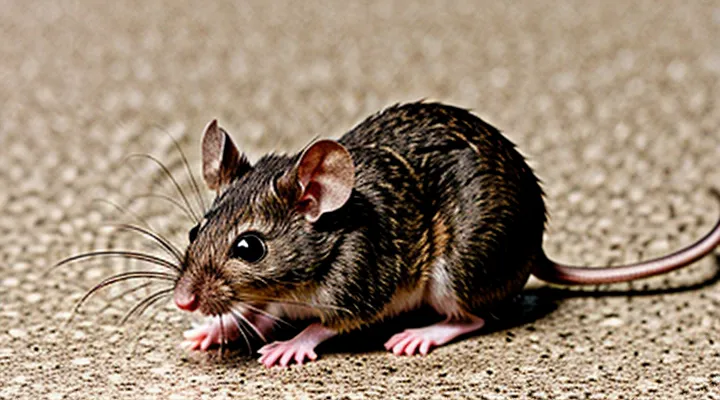
«Why Identification Matters»
«Health Risks»
Mouse feces present several serious health hazards. Direct contact or ingestion of contaminated material can transmit pathogens that cause acute and chronic illnesses. The most documented diseases include:
- Hantavirus pulmonary syndrome, contracted through inhalation of aerosolized droppings; symptoms begin with fever, muscle aches, and progress to respiratory distress.
- Salmonella infection, resulting from food contaminated by droppings; leads to gastrointestinal upset, fever, and dehydration.
- Leptospirosis, spread via urine and feces; produces high‑grade fever, headache, and potential kidney failure.
- Lymphocytic choriomeningitis virus, transmitted through bite or droplet exposure; may cause meningitis, encephalitis, and long‑term neurological deficits.
Allergic reactions occur when proteins in rodent waste become airborne, provoking sneezing, itchy eyes, and asthma attacks, especially in sensitive individuals. Children, the elderly, and immunocompromised persons face heightened risk because their defenses are weaker.
Contamination of surfaces and food supplies often goes unnoticed. Small droppings can blend with pantry items, leading to inadvertent consumption. Regular inspection of kitchens, storage rooms, and hidden corners reduces exposure. When droppings are discovered, use protective gloves, a N95 respirator, and a disinfectant solution containing bleach (1 part bleach to 10 parts water) to clean the area. Dispose of waste in sealed bags and wash hands thoroughly afterward.
Understanding these risks guides effective prevention. Maintaining sealed food containers, sealing entry points, and employing traps limit rodent activity, thereby decreasing the likelihood of droppings and associated health threats.
«Property Damage Prevention»
Identifying mouse feces promptly prevents structural deterioration, insulation loss, and costly repairs. Visible droppings indicate active infestation; early action limits gnawing on wiring, wood, and drywall, which can lead to fire hazards and compromised building integrity.
- Examine corners, cabinets, and behind appliances for small, dark, pellet‑shaped marks.
- Use high‑resolution images to compare droppings with other debris; mouse feces are typically 3‑5 mm long, tapered, and have a pointed end.
- Record locations on a floor plan to reveal travel routes and nesting sites.
- Clean contaminated areas with a disinfectant solution; wear gloves and a mask to avoid health risks.
- Seal cracks, gaps, and utility entry points larger than ¼ inch to block re‑entry.
- Install traps or bait stations along identified pathways; monitor and replace as needed.
Consistent detection and remediation protect wiring, structural components, and stored goods, reducing the likelihood of fire, water damage from compromised pipes, and expensive reconstruction. The systematic approach outlined above safeguards property value and minimizes maintenance expenses.
«Key Characteristics of Mouse Droppings»
«Size and Shape»
Mouse feces are typically 3–6 mm long and 1–2 mm wide. The length rarely exceeds 8 mm, and the width remains under 3 mm. This range distinguishes them from rat droppings, which often measure 12–20 mm in length.
The shape is uniformly cylindrical with tapered ends. Each pellet ends in a slightly pointed tip, giving a “spoon‑shaped” profile when examined from the side. The surface is smooth, lacking the ridges or fur that may appear on larger rodent droppings.
Key measurements and visual cues:
- Length: 3–6 mm (maximum 8 mm)
- Width: 1–2 mm (maximum 3 mm)
- Form: straight cylinder, tapered at both ends
- Surface: glossy, no visible fibers
These dimensions and the characteristic tapered cylinder provide reliable criteria for confirming mouse droppings in residential and commercial settings.
«Color and Texture»
Mouse droppings can be distinguished by two visual parameters: color and texture. Accurate assessment of these features reduces misidentification and guides effective pest control.
Typical coloration ranges from dark brown to almost black in fresh specimens. As droppings age or absorb moisture, they may fade to a lighter brown or gray. A reddish tint often indicates a diet high in insects or fruits. Uniform color suggests a single source, while streaks or mottling can signal contamination or decomposition.
Texture provides complementary clues. Fresh mouse feces feel firm and slightly dry, with a smooth outer surface. Slightly moist droppings exhibit a pliable consistency and may leave a faint residue on fingers. Dried specimens become crumbly, breaking into small fragments when pressed. A glossy sheen usually accompanies higher moisture content, whereas a matte finish accompanies drier samples.
Key distinctions from other rodent droppings:
- Size: mouse droppings measure 4–7 mm in length, smaller than rat feces.
- Shape: tapered ends and a rounded middle contrast with the more cylindrical form of larger rodents.
- Color‑texture combination: dark, firm, and smooth aligns with mouse activity; lighter, softer, and irregular textures often belong to other species.
Assessing color and texture together enables reliable identification without laboratory analysis.
«Location and Quantity»
Mouse droppings appear in predictable places and in characteristic amounts, allowing reliable detection without ambiguity. In residential settings, the most common sites are:
- Along walls, especially where baseboards meet the floor.
- Inside cabinets, behind stored food, and under pantry shelving.
- Near entry points such as gaps around pipes, vents, and door frames.
- In attic insulation, ceiling joists, and under floorboards.
- Around pet feeding stations and garbage containers.
The size and number of pellets convey the severity of an infestation. A single, isolated pellet typically measures 1–3 mm in length and 0.5 mm in width; a cluster of three to five pellets within a 10 cm radius suggests moderate activity, while dozens or hundreds spread across a larger area indicate a heavy population. Consistent accumulation in multiple locations confirms ongoing access to food and shelter.
Quantifying droppings aids in planning control measures. Document each site with clear photographs, noting the exact count and spatial distribution. Compare findings against the thresholds above to determine whether simple sanitation, trap placement, or professional extermination is required. This systematic approach ensures accurate assessment and effective remediation.
«Differentiating Mouse Droppings from Other Pests»
«Rat Droppings»
Rat droppings are a primary indicator of a rat infestation and must be distinguished from mouse feces to guide appropriate control measures.
Rat feces are typically ¼ to ½ inch (6–12 mm) long, ¼ inch (6 mm) wide, and have a blunt, rounded tip. The exterior appears smooth, while the interior may show a slightly darker core. Color ranges from dark brown to black, becoming lighter as the droppings age.
Key differences from mouse droppings:
- Length: mouse pellets are ¼ inch (6 mm) or less; rat pellets exceed this size.
- Shape: mouse feces are pointed at both ends; rat feces have a blunt, rounded end.
- Arrangement: mouse pellets are often found in clusters of 5‑12; rat pellets appear singly or in small groups.
- Location: mouse droppings favor high, hidden areas; rat droppings are commonly on the floor, near food sources, or in low‑lying corners.
Tips for photographing rat droppings:
- Use a macro lens or smartphone close‑up mode to capture detail.
- Include a ruler or coin for scale in the frame.
- Ensure even lighting to avoid shadows that obscure shape.
- Photograph from multiple angles to show both length and width.
Handling and reporting:
- Wear disposable gloves and a mask to prevent disease transmission.
- Place collected specimens in sealed containers labeled with date, location, and observed size.
- Submit samples to a professional pest‑management service for confirmation and treatment recommendations.
«Cockroach Droppings»
Cockroach droppings are small, dark, and irregularly shaped, typically measuring 1‑3 mm in length. The excrement appears as cylindrical or oval fragments with a glossy surface, often containing a single dark spot that indicates a partially digested food particle. Unlike mouse feces, which are usually uniform, rod‑shaped, and may contain visible seed or grain fragments, cockroach droppings lack a consistent length‑to‑width ratio and are more likely to be found in clusters near food sources, cracks, or wall voids.
Key visual distinctions:
- Size: cockroach droppings are generally shorter (1‑3 mm) than mouse droppings (4‑6 mm).
- Shape: cockroach excrement is irregular and cylindrical; mouse feces are straight, pointed, and resemble tiny rice grains.
- Surface texture: cockroach droppings have a smooth, slightly shiny coating; mouse droppings are matte and may show a rough edge.
- Associated residue: cockroach droppings often accompany shed skins, egg cases, or greasy smears; mouse droppings are frequently accompanied by gnaw marks and urine stains.
When inspecting a suspected infestation, locate droppings on surfaces such as countertops, behind appliances, or in dark corners. Use a magnifying lens to assess size and shape, then compare the observed characteristics with the criteria above. Accurate identification prevents misdirected pest control measures and ensures appropriate remediation strategies.
«Bat Droppings»
Bat droppings, commonly called guano, differ markedly from rodent feces. They appear as dark, glossy pellets ranging from 0.2 to 0.5 inches in length, often cylindrical with a smooth surface. The color varies from deep brown to black, sometimes with a slight sheen that reflects light. Odor is strong, pungent, and reminiscent of ammonia, especially when fresh.
Key characteristics that separate bat guano from mouse droppings include:
- Size: Bat pellets are generally larger and more uniform; mouse feces measure 0.1–0.2 inches and are tapered.
- Shape: Bat guano is cylindrical and solid; mouse droppings are thin, ribbon‑like, and may have a pointed end.
- Texture: Bat pellets feel firm and may crumble when pressed; mouse droppings are soft, crumbly, and may disintegrate easily.
- Location: Bat guano accumulates beneath roosting sites such as ceiling beams, attic corners, or cave entrances; mouse droppings are found along walls, behind appliances, and in low‑traffic pathways.
- Odor: Bat guano emits a sharp, ammonia‑like smell; mouse droppings have a milder, musky scent.
When photographing droppings for identification, use a macro lens or close‑up setting to capture surface detail. Include a scale reference, such as a ruler, to convey size accurately. Lighting should be even to avoid shadows that obscure texture.
To confirm the source, collect a small sample and examine it under magnification. Bat guano may contain visible insect fragments or plant material from the bat’s diet, while mouse feces often contain grain particles or hair. Laboratory analysis can further differentiate species by DNA testing if required.
Implementing these observations helps prevent misidentification, ensuring appropriate pest‑control measures and accurate documentation.
«Insect Frass»
Insect frass often appears in the same areas where rodent excreta are found, making accurate differentiation essential for pest assessment. Unlike mouse droppings, which are typically dark, cylindrical, and range from 3 mm to 6 mm in length, frass consists of fragmented, powdery, or granular material that varies in color from light tan to dark brown depending on the insect species and diet.
Key visual distinctions:
- Shape: mouse droppings are uniform rods; frass is irregular, sometimes spattered, and may include small pellets or fine dust.
- Texture: mouse feces feel firm and dry; frass feels soft, fluffy, or crumbly.
- Composition: frass may contain visible plant matter, exoskeleton fragments, or silk; mouse droppings lack such inclusions.
- Distribution: mouse droppings cluster near food sources, along walls, or in hidden corners; frass is often found near insect entry points, under appliances, or within insulation.
When evaluating a suspected sample, examine it under adequate lighting, compare size and consistency, and, if uncertainty remains, collect a specimen for microscopic analysis. Microscopic examination reveals chitinous particles in frass, whereas mouse feces display smooth, homogeneous fibers.
By applying these criteria, professionals can reliably separate insect frass from rodent droppings, ensuring appropriate remediation measures.
«Visual Guide: Mouse Dropping Photos»
«Fresh vs. Old Droppings»
Fresh mouse droppings appear glossy, dark, and retain a uniform shape. The edges are sharp, and the droppings may still emit a faint odor. Moisture content is high, causing the droppings to feel slightly damp when touched with a gloved finger. Photographs of fresh droppings typically show a deep brown or black coloration, with a smooth surface that reflects light.
Old droppings lose gloss and become matte. They turn lighter, ranging from brown to gray, and may develop cracks or frayed edges. The odor diminishes as volatile compounds evaporate. Texture becomes dry and crumbly; gentle pressure can cause the droppings to crumble into powder. In images, old droppings often display uneven surfaces and a faded appearance.
Key distinctions:
- Color: Fresh – dark, glossy; Old – lighter, matte.
- Texture: Fresh – moist, smooth; Old – dry, brittle.
- Edges: Fresh – sharp, intact; Old – frayed, cracked.
- Odor: Fresh – strong, musky; Old – weak or absent.
- Appearance in photos: Fresh – uniform, reflective; Old – irregular, dull.
«Droppings in Various Settings»
Mouse feces appear in a wide range of environments, each presenting distinct visual cues that aid identification. In residential kitchens, droppings typically line countertops, under appliances, and near food storage areas. They are dark, cylindrical, and about ¼ inch long, often clumped where food residue is present. In basements and crawl spaces, the same size and shape are common, but droppings may be mixed with dust, making them appear lighter in color. Attics frequently contain droppings on insulation, wiring, or stored items; the material surrounding the feces can obscure edges, so close inspection with a magnifying lens is advisable.
Commercial food‑service facilities exhibit similar droppings, but the volume can be higher due to abundant food sources. Droppings are often found near trash receptacles, dishwashing stations, and behind wall voids. In warehouses and storage units, feces accumulate in cardboard boxes, pallets, and shelving gaps; the droppings may be dry and fragmented, reflecting the low humidity of the environment. Laboratory or research settings show droppings on workbenches, equipment casings, and ventilation ducts; the presence of sterilized surfaces can cause droppings to retain a glossy sheen.
Key identification points across settings include:
- Length of 5–7 mm and width of 1–2 mm.
- Dark brown to black coloration, sometimes with a white tip where the tail ends.
- Uniform cylindrical shape with tapered ends.
- Absence of a surrounding waxy coating, differentiating mouse feces from insect droppings.
When inspecting any area, use a flashlight to highlight contrast, a disposable glove to avoid contamination, and a magnifying tool for detail. Document findings with photographs that capture scale references, such as a ruler or coin, to support accurate assessment.
«What to Do After Identification»
«Cleaning Up Droppings Safely»
When mouse droppings are discovered, immediate and safe removal prevents health hazards. Follow a structured approach to protect occupants and preserve surfaces.
First, isolate the area. Close doors, seal vents, and limit traffic to reduce aerosol spread. Next, equip yourself with disposable gloves, a N‑95 or higher respirator, eye protection, and a disposable gown if available. Do not reuse protective items after the task.
Prepare a cleaning solution by mixing a EPA‑approved disinfectant with water according to the label instructions. Alternatively, a 1 % bleach solution (10 ml bleach per liter of water) is effective against most pathogens carried by rodent waste.
Proceed with the cleanup:
- Moisten droppings and surrounding dust with the disinfectant solution. Let the liquid sit for the contact time specified on the product label (usually 5–10 minutes). This step minimizes the risk of airborne particles.
- Use a disposable paper towel or a damp cloth to lift the droppings. Place the material directly into a sealable plastic bag.
- Dispose of the bag in a covered outdoor trash container. Do not place contaminated waste in recycling bins.
- After removal, wipe the entire surface with a fresh disinfectant solution. Allow the surface to air‑dry; do not rinse unless the product label requires it.
- Decontaminate tools and reusable equipment with the same disinfectant before storage.
Finally, remove all protective gear without touching the exterior surfaces. Discard gloves, gowns, and paper towels in a sealed bag. Wash hands thoroughly with soap and water for at least 20 seconds, even if gloves were worn.
Adhering to these steps eliminates bacterial and viral threats while ensuring that the environment remains safe for occupants and future cleaning operations.
«Preventative Measures»
Preventative measures reduce the likelihood of finding rodent feces in residential or commercial spaces. Identify and block all potential entry points; inspect walls, foundation cracks, utility openings, and pipe sleeves, then apply steel wool, copper mesh, or caulk to seal gaps. Maintain a clean environment: store food in airtight containers, promptly clean crumbs and spills, and keep garbage bins sealed with tight‑fitting lids. Eliminate water sources by fixing leaks, drying damp areas, and removing standing water from pet dishes or plant trays. Manage vegetation around the building; trim shrubs, keep grass short, and remove debris that could shelter rodents. Deploy monitoring devices such as snap traps or electronic deterrents in known activity zones, and regularly check and replace them to sustain effectiveness.
- Seal gaps larger than ¼ inch with metal flashing or concrete.
- Install door sweeps on exterior doors.
- Use sealed storage for pet food and birdseed.
- Conduct monthly inspections of attics, basements, and crawl spaces.
- Keep compost piles away from structures and cover them securely.
«When to Call a Professional»
Identifying mouse droppings can be straightforward, but certain situations demand expert intervention. If droppings appear in large quantities, are located in inaccessible areas, or are accompanied by signs of infestation such as gnaw marks on structural components, a professional pest‑control service should be engaged immediately. Persistent odor, evidence of disease‑carrying parasites, or damage to electrical wiring also warrant specialist assessment to prevent health risks and property loss.
Typical indicators that exceed DIY capabilities include:
- Dropping clusters covering more than a few square feet.
- Presence of droppings in wall cavities, ceilings, or behind appliances.
- Evidence of nesting material combined with droppings.
- Signs of secondary pests (e.g., beetles feeding on mouse feces).
- Unexplained allergic reactions among occupants.
When any of these factors are observed, contacting a licensed exterminator ensures accurate identification, comprehensive remediation, and compliance with local health regulations. Professional technicians possess the tools and expertise to locate hidden colonies, apply targeted treatments, and verify that the environment is free from rodent contamination.
«Common Misconceptions About Mouse Droppings»
Mouse droppings often generate false assumptions that hinder accurate detection and effective control. Understanding what is and isn’t true about these signs prevents misdiagnosis and unnecessary measures.
- Size equals species – Many believe droppings under ¼ inch indicate a mouse, while larger pellets suggest a rat. In reality, mouse feces range from ¼ to ½ inch, overlapping with small‑rat dimensions; size alone cannot confirm species.
- Color reveals health – Darker, dried droppings are sometimes taken as evidence of disease. Color varies with moisture, age, and diet, not necessarily with pathogen presence.
- Location determines source – Finding droppings near food storage automatically points to a kitchen infestation. Mice travel along walls and may deposit waste far from feeding sites; placement must be considered alongside other evidence such as gnaw marks and nesting material.
- All droppings are fresh – Observers often assume any visible pellet is recent. Droppings can persist for weeks in undisturbed areas, so the presence of old feces does not guarantee an active problem.
Correct identification relies on several observable traits:
- Shape: elongated, slightly pointed ends, typically resembling a grain of rice.
- Consistency: soft when fresh, becoming brittle and crumbly after drying.
- Arrangement: often found in clusters along wall seams, behind appliances, or within concealed spaces.
When uncertainty remains, compare suspected pellets with high‑resolution reference images and, if possible, collect a sample for laboratory analysis. Accurate interpretation eliminates myths, directs appropriate remediation, and safeguards health.