
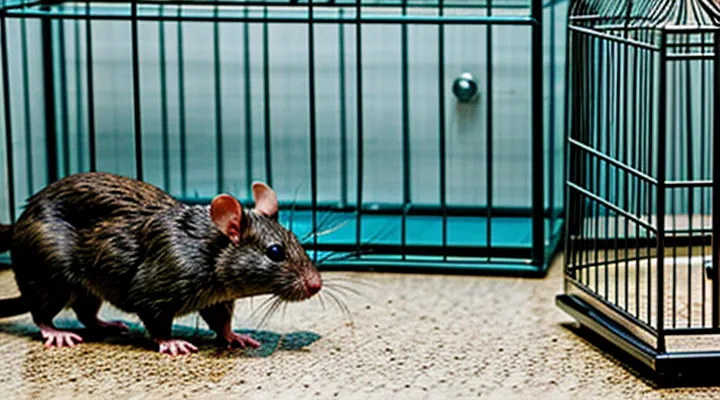
Initial Steps After Discovery
Confirm the Escape
Check the Cage Thoroughly
Inspecting the cage is the initial action when a pet rodent disappears. The animal often remains within the enclosure, concealed by bedding, equipment, or a faulty latch. A systematic examination eliminates false assumptions and narrows the search area.
- Remove all bedding, food dishes, and toys; place them on a clean surface.
- Examine the cage walls, corners, and underside for gaps, loose panels, or damaged mesh.
- Test the door latch and any ventilation openings; ensure they close securely.
- Lift the cage, turn it upside down gently, and shake lightly to dislodge hidden debris.
- Look behind the water bottle, under the slide, and inside any tunnels or tubes.
After confirming the cage is intact and free of the rat, expand the search to adjacent furniture, floorboards, and crevices where the animal could have escaped through an unnoticed opening.
Look for Immediate Signs of Presence
When a rat leaves its enclosure, the first priority is to identify any direct evidence of its recent activity. Observe the area surrounding the cage for the following indicators:
- Small droppings on the floor, near the cage door, or on nearby objects.
- Chewed wires, plastic bars, or cage accessories that show fresh bite marks.
- Scattered bedding material, shredded paper, or torn cardboard left outside the cage.
- Wet spots or urine stains on surfaces, especially on wood or tile.
- Fresh footprints or tail marks in dust, sand, or loose substrate.
Check the cage itself for signs that the animal passed through it recently. Look for displaced latch mechanisms, loosened hinges, or gaps in the door frame. Examine the interior for disturbed food, water bottles tipped over, or bedding that has been disturbed in a specific direction.
If the environment includes furniture or clutter, scan underneath and behind these items. Rats tend to hide in tight spaces; any disturbed debris, moved objects, or newly disarranged items may point to the escape route.
Finally, listen for subtle sounds—scratching, faint squeaks, or the rustle of material as the rat moves. These auditory clues can confirm the presence of a rat even when visual evidence is limited.
Secure the Area
Close Doors and Windows
When a pet rodent slips from its enclosure, the first priority is to prevent further movement beyond the immediate area. Sealing all potential exit routes traps the animal within a confined zone, making detection and capture manageable.
Close every interior door that leads to rooms not involved in the search. Verify that each door latch engages fully; if a latch is loose, use a temporary brace such as a wooden block or a heavy object to keep it shut.
Secure all windows, including basement and attic openings. Lower blinds or curtains, then slide the window fully closed. If the window cannot be locked, wedge a sturdy piece of furniture or a stack of books against the frame to block the opening.
Check for gaps under doors or around window frames. Insert rolled towels, foam pipe insulation, or weather‑stripping to eliminate cracks larger than a few centimeters.
Implement the following checklist:
- Lock or barricade interior doors leading away from the search zone.
- Fully close and lock windows; use temporary wedges if necessary.
- Seal gaps under doors and around window frames with appropriate material.
- Verify that all barriers remain intact before commencing the search.
By confining the environment, the escaped rat’s range is limited, increasing the likelihood of locating its hiding spot quickly and reducing the risk of it entering hidden spaces such as crawlspaces or neighboring rooms.
Block Potential Escape Routes
Blocking potential escape routes is a prerequisite for locating a missing rodent. Without containment, the animal can move beyond the immediate area, complicating detection and increasing the risk of loss.
Typical pathways include:
- Gaps between the cage base and the floor
- Openings in cage doors or latches
- Ventilation slots larger than the rodent’s body
- Cracks in walls, floorboards, or baseboards
- Unsecured pet doors or cabinet hinges
To secure these routes, follow a systematic approach:
- Remove the cage from its location and inspect the surrounding floor for any voids. Place a rigid barrier, such as a sheet of plywood or a thick cardboard, beneath the cage to eliminate floor gaps.
- Examine door mechanisms and latch hardware. Install a secondary latch or a piece of wire mesh over the opening to prevent unauthorized egress.
- Cover ventilation slots with fine metal mesh that allows airflow but blocks passage. Secure the mesh with stainless‑steel staples or zip ties.
- Seal cracks and seams using expanding foam or silicone caulk. Apply the sealant flush with the surface to avoid creating new hiding spots.
- Fit the cage’s base with a removable tray that can be locked in place, preventing the animal from slipping beneath the cage.
After sealing, monitor the area for signs of movement—droppings, gnaw marks, or fresh footprints. If evidence appears, focus the search within the newly defined perimeter. Continuous observation combined with a fully sealed environment maximizes the likelihood of recapturing the escaped rodent.
Strategies for Locating Your Rat
Create a Safe and Appealing Zone
Set Up Food and Water Stations
Place food and water stations strategically to lure a missing rat back into a confined area. Select locations that intersect likely travel routes, such as near walls, under furniture, or along the path the animal would use to explore. Use familiar diet items to increase attraction; rodents respond predictably to grains, seeds, or commercial rat pellets. Offer water in shallow dishes to prevent spillage and reduce scent dispersion, which can deter the animal.
- Position a small dish of dry food within 30 cm of the last known cage opening.
- Place a second dish of fresh water 50–70 cm away, creating a short foraging corridor.
- Add a third station containing a high‑value treat (e.g., peanut butter or fruit) at a corner where the rat may feel safe.
- Refresh food and water every two hours to maintain scent strength and prevent spoilage.
- Monitor stations from a distance, noting any depletion or disturbance.
Maintain a quiet environment while stations are active. Eliminate competing odors by removing strong-smelling cleaners or food waste. Once the rat consumes the bait, observe its movement pattern to pinpoint a re‑capture location. This method confines the search area, reduces time spent hunting, and increases the probability of a swift, humane recovery.
Provide Familiar Bedding and Toys
Rats rely heavily on scent and tactile familiarity. When a pet rat escapes, re‑creating elements from its home cage increases the likelihood of drawing it back to a predictable area.
- Place the same type of substrate (paper, aspen shavings, or fleece) in several potential hideouts. The familiar odor encourages the rat to explore those spots.
- Arrange favorite toys—chew blocks, tunnels, or climbing ladders—near the bedding. Objects that the rat has previously interacted with retain residual scent and provide a sense of safety.
- Position these setups close to entry points, under furniture, or in corners where the animal could have slipped. The combination of familiar texture and recognizable objects creates a strong attractant.
- Check the arranged areas regularly, using a flashlight to spot movement. If the rat approaches but does not enter, add a small amount of fresh bedding or a treat on top of the toys to reinforce the lure.
By concentrating known bedding material and cherished toys in strategic locations, the escaped rat is more likely to return to a familiar environment, simplifying the recovery process.
Conduct a Systematic Search
Start from the Cage's Location
Begin the search at the exact spot where the cage was placed. The cage’s coordinates define the most probable exit area and provide a reference for mapping the surrounding environment.
- Inspect the cage interior for signs of disturbance: chewed bars, displaced bedding, or torn hinges.
- Examine the immediate perimeter (0‑2 ft radius) for footprints, droppings, or gnawed materials.
- Identify potential exit routes: gaps under the cage, nearby openings in walls or floors, and loose items that could serve as shortcuts.
- Extend the search outward in concentric circles, increasing the radius by 5 ft each step, while documenting any new evidence.
- Use a flashlight or low‑light source to reveal hidden tracks in dark corners or under furniture.
- If the rat is not found within the first 10 ft, set up motion‑activated traps or bait stations along the identified routes and monitor them regularly.
Returning to the cage’s original location after each inspection ensures that no new clues are missed and keeps the search focused on the most likely area of escape.
Search Room by Room
A disciplined sweep of each area increases the likelihood of recovering a rat that has left its enclosure. Begin by sealing doors, windows, and any openings that could allow further escape. This containment prevents the animal from moving beyond the search zone and reduces the chance of it re‑entering already inspected spaces.
- Examine the cage interior and the floor directly beneath it; check for droppings, gnaw marks, or displaced bedding that indicate recent movement.
- Proceed to the adjacent room, scanning low‑lying surfaces, behind furniture, and inside cabinets. Rats favor tight, dark spaces; lift cushions, slide panels, and peer into vents.
- Deploy a safe, humane trap in each room where evidence appears, baited with food the rat prefers. Position traps along walls and near potential escape routes.
- Record each room visited, noting observations and trap placements. A simple log prevents redundancy and guides re‑inspection if the animal remains unfound.
- If the search concludes without success, repeat the cycle, expanding the radius outward from the original cage location, and reassess any previously examined rooms for overlooked signs.
Completing the room‑by‑room process methodically, documenting findings, and maintaining containment are essential components of an effective recovery operation.
Use Sensory Cues
Listen for Scratching or Squeaking
When a rat slips out of its enclosure, the most reliable indicator of its whereabouts is the sound it produces while moving. Rats generate distinct noises—short, sharp squeaks when startled and rapid, repetitive scratching when they gnaw on surfaces. Detecting these sounds narrows the search area and reduces the time required to recapture the animal.
- Remain silent for several minutes to let any ambient noise subside.
- Position your ears close to potential hiding spots such as behind furniture, under appliances, and inside cabinets.
- Listen for high‑pitched squeaks, especially when the rat is disturbed or attempts to flee.
- Pay attention to rhythmic scratching, which often occurs when the rodent attempts to escape through walls, vents, or floorboards.
- If a sound is identified, approach slowly, keeping the source in the center of your auditory field.
- Use a flashlight to illuminate the area while maintaining a low voice to prevent further agitation.
Repeatedly scanning the environment with these auditory cues allows you to pinpoint the rat’s location quickly and handle the situation safely.
Look for Droppings or Gnaw Marks
When a pet rat escapes, the quickest way to narrow its location is to follow the physical evidence it leaves behind. Droppings and gnaw marks provide a reliable trail that can be traced even in cluttered environments.
Fresh droppings are dark, shiny, and roughly the size of a grain of rice. They appear in clusters near feeding areas, along walls, or on surfaces the rat has recently traversed. Examine corners, under furniture, and behind appliances; the presence of multiple pellets indicates the direction of movement.
- Identify the most recent droppings by their moisture and color.
- Observe the pattern: a line of pellets suggests a straight path, while scattered groups may signal a search for shelter.
- Follow the trail from the newest droppings toward older ones, noting any changes in direction.
Gnaw marks complement droppings by revealing the rat’s attempts to escape confinement or create a new hiding place. Look for shallow, crescent-shaped bites on wood, plastic, or cardboard. Fresh gnawing shows lighter color and smoother edges; older marks darken and become rougher.
- Scan cage bars, nearby furniture, and structural supports for fresh incisions.
- Compare the depth and angle of cuts; deeper, angled bites often indicate a rat pushing against an obstacle.
- Prioritize areas where gnaw marks intersect with droppings, as these points usually mark the rat’s current position.
By systematically tracking droppings and gnaw marks, the search area contracts quickly, allowing a prompt and effective recapture.
Employ Humane Traps
Types of Live Traps
When a pet rat escapes, a humane capture device increases the likelihood of a quick, stress‑free return. Live traps allow observation of the animal while it remains unharmed, facilitating safe handling once the rodent is secured.
- Standard cage trap – a rectangular enclosure with a hinged door triggered by a pressure plate; bait placed at the far end draws the rat through, closing the door instantly. Suitable for single‑rat retrieval, easy to set up, and compatible with various bait types.
- Multi‑catch cage – similar mechanism to the standard model but equipped with multiple entry points and an internal divider, allowing capture of several individuals without resetting. Ideal for environments where more than one rat may be present.
- Tunnel trap – a narrow, elongated tube with a side door activated by a sliding latch; the rat enters seeking bait and pulls the latch shut. Its compact shape fits into crevices and under furniture, targeting hidden escape routes.
- Drop‑trap – a weighted platform that releases a cover when the rat steps onto a trigger plate, causing the animal to fall into a secure compartment below. Provides rapid containment and prevents the rat from climbing back out.
- Live‑catch snap trap – a spring‑loaded door that snaps shut without harming the animal, often paired with a transparent cover for visual monitoring. Offers quick closure and reduces the chance of escape during transport.
Selecting the appropriate trap depends on the layout of the room, the rat’s familiarity with the environment, and the need for single versus multiple captures. Bait choices such as fresh fruit, nuts, or commercial rodent treats improve attraction, while placing traps along known pathways—near openings, along walls, and close to the original cage—maximizes encounter rates. Once the rat is secured, transport it gently to its cage, release it, and inspect the enclosure for future escape prevention.
Baiting and Placement Tips
When a pet rat escapes the cage, the quickest way to lure it back is to use effective bait and strategic placement.
Select bait that matches the rat’s preferences. Fresh fruits such as apple slices, berries, or banana work well because their natural sugars attract rodents. Small portions of high‑protein foods—hard‑boiled egg, cooked chicken, or low‑fat cheese—provide a strong incentive for a hungry rat. Avoid processed snacks that contain artificial flavors, as they may deter the animal.
Place bait in locations where the rat is likely to travel. Start with the immediate vicinity of the cage, then expand outward in a spiral pattern, setting traps every 2–3 feet. Position bait on flat surfaces, not on elevated or slippery areas, to give the rat a stable foothold. Use a shallow dish or a piece of cardboard to keep the bait from rolling away.
Timing influences success. Lay bait in the early evening when rats are most active, and check it at regular intervals—every 30 minutes for the first two hours, then hourly. If the bait remains untouched, relocate it to a new spot to prevent the rat from associating a specific area with a dead end.
Maintain a clean environment around the bait. Remove debris, food crumbs, and competing scents that could distract the rat. Keep the area quiet; sudden noises may startle the animal and cause it to hide elsewhere.
Key practices
- Use fresh, aromatic foods that rats naturally seek.
- Arrange bait in a concentric pattern expanding from the original cage location.
- Deploy bait on stable, low‑profile surfaces.
- Initiate placement during peak activity periods and monitor frequently.
- Eliminate competing odors and clutter around each bait site.
Preventing Future Escapes
Cage Security Enhancements
Check for Gaps and Weaknesses
When a rodent escapes, the first investigative step is a systematic inspection of the enclosure for structural failures. Examine every joint, latch, and hinge; any misalignment, rust, or worn seal can create an opening large enough for a small animal. Pay particular attention to the corners where panels meet, as these areas often develop cracks that are difficult to see without close scrutiny.
Identify and document each deficiency before attempting repairs. A concise checklist can streamline the process:
- Verify that all locks engage fully and hold under pressure.
- Inspect mesh or wire panels for torn fibers or stretched sections.
- Test door sweeps and seals for gaps exceeding a quarter‑inch.
- Examine the floor for holes, loose tiles, or damaged bedding that could conceal an exit.
- Confirm that ventilation openings are covered with fine mesh that cannot be pushed aside.
After cataloguing weaknesses, reinforce or replace compromised components. A fully sealed environment reduces the likelihood of further escape and simplifies subsequent tracking efforts.
Secure Latches and Doors
Secure latches and doors form the first line of defense against a rat escaping its enclosure. A compromised latch allows the animal to slip out, turning a simple containment issue into a search operation. Evaluate each locking mechanism before any handling of the cage.
Inspect the latch for wear, rust, or deformation. Replace any component that shows signs of fatigue. Use stainless‑steel hardware to resist corrosion and chewing. Verify that the door aligns perfectly with the frame; a misaligned door creates a gap large enough for a small rodent to push through.
When installing a new latch, follow these steps:
- Choose a latch with a double‑locking feature that requires two separate actions to release.
- Apply a lock‑tightening adhesive to the screw threads to prevent loosening under pressure.
- Test the latch repeatedly with a force equivalent to a rat’s bite strength (approximately 1.5 kgf) to confirm resistance.
- Secure the door with a secondary latch or a sliding bolt that engages when the primary lock is closed.
If an escape occurs, the first clue often lies in the latch’s condition. Look for broken teeth, stripped threads, or missing pins. Document the failure point, replace the faulty hardware, and re‑secure the cage before resuming any handling.
Regular maintenance—monthly visual checks, quarterly tightening of all screws, and annual replacement of high‑stress components—reduces the likelihood of future escapes and minimizes the need for time‑consuming searches.
Environmental Enrichment
Provide Adequate Space and Stimulation
Providing a rat with sufficient living area and regular enrichment reduces the likelihood of escape and simplifies recovery if it does occur. A cramped environment triggers stress‑driven behaviors such as gnawing cage bars or seeking hidden routes. Adequate space allows natural movement patterns, while stimulation satisfies exploratory instincts, keeping the animal occupied and less inclined to flee.
Key actions to ensure appropriate space and stimulation:
- Choose a cage that offers at least 0.5 sq ft of floor space per adult rat; larger enclosures are preferable for groups.
- Include multiple levels, tunnels, and climbing structures to mimic a complex habitat.
- Rotate toys, chew blocks, and foraging puzzles weekly to maintain novelty.
- Schedule daily interaction sessions lasting 10‑15 minutes per rat to reinforce trust and reduce anxiety.
- Monitor waste and signage for signs of stress, such as excessive bar‑gnawing or stereotypic pacing.
When a rat escapes, its familiarity with enrichment items can guide the search. Follow these steps:
- Inspect all enrichment objects for recent gnaw marks or displaced components; these indicate the escape route.
- Examine elevated platforms and tunnels for footprints or droppings, as the rat will likely use familiar pathways.
- Search nearby concealed spaces that replicate elements of the cage environment (e.g., cardboard tubes, fabric bundles).
By maintaining ample space and varied stimulation, owners create predictable patterns of movement that aid in locating a missing rat quickly and reduce the overall risk of escape.
Regular Cage Maintenance
Regular maintenance of a rat’s enclosure directly influences the ability to locate an animal that has left its habitat. A well‑kept cage provides clear evidence of movement, eliminates accidental gaps, and establishes a predictable environment that simplifies the search process.
- Clean the cage daily; remove bedding, droppings, and food residues. Fresh surfaces reveal footprints or disturbed material that point to the escape route.
- Inspect door latches, hinges, and locks before each use. Confirm that all mechanisms engage fully and that no rust or wear compromises closure.
- Examine the cage walls, mesh, and ventilation panels for tears, loose wires, or worn seams. Repair any damage immediately to prevent unnoticed openings.
- Keep the surrounding area free of clutter. A tidy space reduces hiding places and makes visual tracking more efficient.
Each of these actions creates a record of the rat’s recent activity. When an escape occurs, the caretaker can quickly identify the last point of contact, follow fresh tracks, and narrow the search area. Additionally, routine checks reduce the likelihood of unnoticed exits, decreasing the frequency of recovery efforts.
Implement a maintenance schedule: daily cleaning, weekly lock and structural inspection, and monthly comprehensive review of all cage components. Consistent adherence to this routine maximizes control over the enclosure and enhances the speed and accuracy of locating a missing rat.