
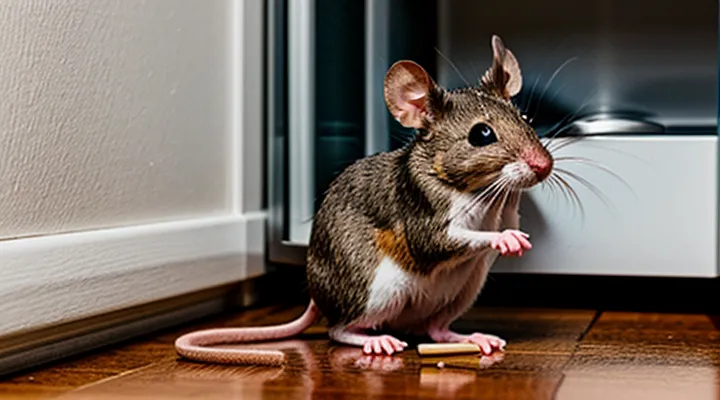
«Initial Signs of a Mouse Infestation»
«Recognizing Droppings»
Droppings provide the most immediate evidence of mouse activity. Their size, shape, and placement reveal the presence, size, and movement patterns of the rodent.
Typical mouse droppings measure 3–6 mm long, 1–2 mm wide, and appear as dark, tapered pellets with pointed ends. Fresh droppings are moist and may have a faint odor; older specimens dry to a crumbly texture and turn lighter in color. A cluster of pellets indicates a feeding or nesting site, while isolated droppings suggest a travel route.
Key locations where droppings accumulate include:
- Along walls, especially near baseboards or behind appliances.
- Inside cabinets, pantry shelves, and food storage areas.
- Near known entry points such as gaps around pipes or vents.
- In hidden corners of closets, attics, and crawl spaces.
When inspecting, use a flashlight to illuminate dark corners and a disposable glove to collect a sample for confirmation. Compare the collected specimen with reference images or consult a pest‑control professional to distinguish mouse droppings from those of larger rodents or insects.
Identifying droppings promptly narrows the search area, allowing targeted placement of traps or sealing of entry points, thereby increasing the efficiency of any control effort.
«Unusual Noises»
Unusual sounds often reveal the presence of a mouse before visual evidence appears.
Common auditory indicators include:
- Light scratching on walls, ceilings or stored boxes.
- Rapid scurrying across floorboards, especially near hidden passages.
- Repetitive gnawing on wood, plastic or wiring.
- High‑pitched squeaks emitted from concealed nesting sites.
- Soft thumps caused by the animal dropping food or debris.
To pinpoint the source, eliminate background noise, then pause in each room and listen for directional changes in the sounds listed above. Move slowly along walls, pausing at regular intervals to detect variations in volume or tone.
Record the noises with a smartphone or dedicated recorder; playback can highlight patterns that are difficult to hear in real time. If a specific area consistently produces the same sound, place a motion‑activated camera or a baited trap there to confirm activity.
By systematically monitoring and documenting these atypical noises, you can locate the mouse’s pathways and nesting locations with minimal disruption to the household environment.
«Gnaw Marks and Damage»
Gnaw marks provide direct evidence of mouse activity and indicate the paths they use to reach food, water, and shelter. Fresh bite edges appear smooth and glossy, while older marks become dull and may show splintered wood or frayed insulation.
Common locations for rodent chewing include:
- Baseboards and wall cavities where wires and pipes run
- Furniture legs, especially near corners or under cushions
- Food storage containers, particularly plastic or cardboard packaging
- Structural elements such as joists, studs, and attic framing
The size and shape of gnaw marks help differentiate mice from larger rodents. Mouse incisors create holes approximately ¼ inch (6 mm) in diameter, with a characteristic V‑shaped bite pattern. Rats produce larger, rounder openings up to ½ inch (12 mm) and exhibit more ragged edges.
Inspecting damage also reveals secondary risks. Chewed electrical wiring can cause shorts or fire hazards, while compromised insulation reduces energy efficiency and may allow drafts. Prompt identification of gnaw marks enables targeted trapping or exclusion measures, limiting further structural harm.
«Unpleasant Odors»
Unpleasant odors often signal rodent activity inside a residence. The smell typically originates from urine, feces, secretions, and decomposing bodies, and it can concentrate in hidden areas such as wall voids, attics, or behind appliances.
Urine leaves a sharp, ammonia‑like scent that may linger on surfaces and fabrics. Feces emit a musky odor, especially when mixed with moisture. Nesting material—soft insulation, shredded paper, or fabric—absorbs these scents, creating a damp, sour smell. A dead mouse produces a strong, putrid odor that spreads quickly through surrounding spaces.
To use odor detection effectively, follow these steps:
- Scan rooms for lingering smells, noting areas with stronger intensity.
- Inspect baseboards, corners, and behind furniture for dark stains or wet spots.
- Use a flashlight to examine concealed spaces, such as under sinks, inside cabinets, and within wall openings.
- Place a piece of clean cloth near suspected zones; if the cloth becomes damp or emits a foul smell, the area likely contains rodent waste.
- Employ a commercial odor detector or a small piece of activated charcoal to confirm the presence of ammonia or sulfur compounds associated with mouse excrement.
After locating the source, clean the area with an enzymatic cleaner to break down urine and fecal residues, then seal entry points to prevent further intrusion. If the odor persists despite cleaning, consider the possibility of a dead mouse and remove the carcass promptly to eliminate the source of decay.
«Pet Behavior Changes»
Pets often reveal the presence of hidden rodents through subtle shifts in routine. When a cat suddenly stalks empty corners or a dog begins sniffing near baseboards, these actions signal a potential mouse intrusion. Recognizing these cues allows homeowners to apply straightforward detection techniques without extensive equipment.
Typical behavior changes include:
- Heightened alertness in quiet areas
- Persistent pawing or scratching at walls and floorboards
- Unusual vocalizations, such as chirping or low growls
- Sudden interest in previously ignored spaces, like closets or under furniture
- Increased pacing or restless movement near potential entry points
Once these signs appear, implement the following steps:
- Inspect the indicated zones for droppings, gnaw marks, or shredded material.
- Place snap traps or humane catch devices along walls where the pet showed interest.
- Seal visible gaps in flooring, cabinetry, and exterior walls to prevent further entry.
- Monitor pet reactions after trap placement; continued focus suggests active rodent activity.
- Clean affected areas with a disinfectant solution to eliminate scent trails that may attract additional mice.
Observing pet behavior provides an immediate, low‑cost indicator of rodent activity. Integrating these observations with basic trapping and exclusion methods yields an efficient strategy for locating and removing mice from a residence.
«Pinpointing the Mouse's Location»
«Inspecting Common Entry Points»
«Doors and Windows»
When searching for a mouse inside a residence, doors and windows are the most common points of entry and the first locations where evidence appears. Inspect each door frame and window sill for small openings, loose weatherstripping, or damaged screens. Close all exterior doors, then examine the gap between the door and the floor; a gap wider than a quarter‑inch often allows rodents to slip through.
Look for signs of activity around these openings:
- Fresh gnaw marks on wood or plastic trim
- Droppings near the base of the door or window
- Dark streaks along walls indicating travel routes
- Fresh scent marks or urine stains on the floor or windowsill
Seal identified gaps with steel wool, caulk, or foam sealant, and replace torn screens. After sealing, position snap traps or live‑capture devices a few inches inside the door or window frame, aligning them with the mouse’s likely path. Regularly check the traps and re‑inspect the door and window areas for new evidence, adjusting placement as needed. This systematic focus on doors and windows maximizes detection speed and reduces the chance of future infestations.
«Utility Pipes and Vents»
Utility pipes and ventilation shafts provide direct pathways between a home’s interior and the outdoors, making them common routes for rodent ingress. Mice exploit gaps around pipe sleeves, vent covers, and junctions to travel unseen, often remaining hidden until damage or droppings appear.
Typical indicators of mouse presence in these systems include gnaw marks on insulation, shredded material in vent ducts, faint urine odor, and small droppings near pipe entry points. Observation of these signs should prompt immediate inspection of the surrounding infrastructure.
Effective inspection and detection follow a clear sequence:
- Shut off water and gas supplies to prevent accidental exposure while accessing pipe interiors.
- Remove vent grilles and pipe sleeves using appropriate tools; avoid forcing components that could cause damage.
- Shine a focused light source into each opening; observe for movement, nesting material, or fresh droppings.
- Place non-toxic, rodent‑specific adhesive traps or snap traps at the entry point, positioning them perpendicular to the flow direction.
- Seal identified gaps with steel wool, copper mesh, or expanding foam designed for pest exclusion.
Regular maintenance of utility penetrations, combined with systematic monitoring, reduces the likelihood of mouse colonization and limits subsequent infestation throughout the residence.
«Cracks in Walls and Foundations»
Cracks in walls and foundations provide direct pathways for rodents, making them primary indicators when searching for a house mouse. Small openings as narrow as a pencil tip can accommodate a mouse’s body, allowing entry into concealed spaces such as crawl spaces, basements, and interior wall cavities. Visible fissures often connect to larger voids where mice establish nests, store food, and travel undetected.
Inspecting these fissures involves systematic observation and targeted probing:
- Use a flashlight to illuminate shadowed cracks; look for fresh gnaw marks, droppings, or urine stains near the opening.
- Insert a thin, flexible inspection mirror or a borescope to view interior conditions without enlarging the gap.
- Apply a gentle airflow test by blowing through the crack; a noticeable draft may indicate a larger cavity behind the surface.
- Seal identified cracks with steel wool and caulk after confirming mouse activity to prevent further ingress.
Monitoring the area after sealing confirms the effectiveness of the intervention. Absence of new droppings, gnaw marks, or audible scurrying within 48 hours suggests the mouse has been excluded, while continued signs point to additional hidden openings that require further inspection.
«Searching Active Zones»
«Kitchen and Pantry Areas»
The kitchen and pantry present the greatest likelihood of rodent presence because food, water and shelter are readily available. Identifying a mouse in these areas requires systematic observation and targeted control measures.
Visible indicators include droppings near food packages, gnaw marks on packaging or wiring, shredded paper, and faint odors of urine. Listen for faint scurrying sounds behind appliances, especially at night when mice are most active.
Inspection routine
- Remove all items from shelves and examine the interior surfaces for droppings, urine stains or gnaw marks.
- Check behind and beneath the refrigerator, stove, and dishwasher; focus on gaps larger than ¼ inch.
- Inspect the underside of countertops and the interior of cabinets, paying attention to corners and joist spaces.
- Examine stored food containers for tears, holes or signs of contamination; discard any compromised goods.
- Use a flashlight to trace possible pathways along baseboards, wall voids and pipe entry points.
Placement of traps should correspond to observed activity. Position snap or live traps along walls, near identified droppings, and within 2 feet of entry holes. Bait with high‑protein foods such as peanut butter or small pieces of cheese. Seal all discovered openings with steel‑wool and caulk to prevent re‑entry.
Maintain strict sanitation: store dry goods in airtight containers, clean crumbs immediately, and empty trash daily. Regularly rotate trap locations to cover new potential routes. Consistent monitoring and immediate removal of captured rodents reduce the risk of infestation spreading throughout the household.
«Basements and Attics»
Basements and attics are prime locations for mouse activity because they offer darkness, insulation and easy access to structural gaps. Inspect these areas thoroughly to identify signs of infestation and to place control measures effectively.
Examine walls, beams and insulation for droppings, gnaw marks, shredded material or nesting debris. Use a high‑intensity flashlight to illuminate corners and hidden crevices, and a handheld mirror to view behind panels. Record any evidence and the exact locations where it appears.
Seal potential entry points before deploying traps. Apply steel wool or copper mesh to small holes, and use expanding foam for larger gaps around pipes, vents and utility lines. Ensure that doors and windows in the basement and attic close tightly, and install weather‑stripping where needed.
Deploy traps strategically:
- Place snap or live‑catch traps along walls, behind stored items and near identified droppings.
- Position baited traps in corners where mice travel to reach food sources.
- Use multiple traps per 10‑square‑foot section to increase capture probability.
- Check traps daily, remove captured rodents, and reset with fresh bait.
Maintain a clean environment to reduce attractants. Store boxes, linens and other items off the floor, and keep food waste sealed. Regularly vacuum debris and dispose of it in a sealed bag to eliminate scent trails.
Conduct monthly inspections, especially after seasonal changes that may drive mice to seek shelter. Document findings, replace worn traps, and reinforce any newly discovered gaps to prevent re‑infestation.
«Behind Appliances and Furniture»
Mice frequently use the space behind refrigerators, stoves, washing machines, and large pieces of furniture as shelter because those areas provide darkness, warmth, and limited disturbance.
Typical indicators of activity in these concealed zones include gnaw marks on wiring or wood, shredded material, droppings, and faint oily trails that shine when a flashlight is angled across the floor.
To conduct a thorough search, follow these steps:
- Disconnect power to appliances before moving them; this prevents electrical hazards and reduces the chance of startling a rodent.
- Pull each appliance away from the wall enough to expose the gap of at least 2–3 inches.
- Use a high‑intensity flashlight or a headlamp to illuminate the dark space; a narrow beam reveals droppings and tracks more clearly.
- Insert a thin, flexible inspection mirror or a small camera probe to view behind furniture legs and under sofas without dismantling them.
- Record any evidence of nesting material, food particles, or live sightings; note the exact location for targeted control measures.
Safety equipment such as gloves, dust masks, and eye protection should be worn throughout the inspection to avoid contact with urine, saliva, or dust that may contain allergens.
After locating the rodent’s hideout, seal entry points with steel wool or caulk, set appropriate traps directly in the identified zone, and monitor the area for several days to confirm the absence of further activity.
«Methods for Confirmation»
«Using Flour or Powder Trails»
Using fine flour or a light powder creates a visible trail that reveals a mouse’s movements. The material settles quickly, allowing the animal to disturb it as it passes, leaving footprints or dust patterns that indicate its route.
Apply the method as follows:
- Choose a low‑traffic area where signs of activity have been observed, such as near suspected entry points, pantry shelves, or behind appliances.
- Spread a thin, uniform layer of flour or baby powder about ¼ inch thick across the targeted surface.
- Monitor the trail at regular intervals, preferably during night hours when rodents are most active.
- Look for disturbed patches, smudged lines, or scattered grains that trace the mouse’s path.
Interpretation of the evidence:
- Continuous, unbroken lines suggest a direct route, often leading to a nest or food source.
- Multiple intersecting trails indicate a network of pathways, pointing to several access points.
- Sparse or isolated disturbances may signal occasional foraging rather than a permanent infestation.
Safety considerations:
- Use food‑grade flour or non‑toxic powder to avoid contaminating surfaces where food is prepared.
- Keep the material away from pets that might ingest it.
- Clean the trail after observation to prevent attracting other pests.
Enhancement tips:
- Combine the powder trail with a small amount of non‑edible, scented powder (e.g., cinnamon) to discourage the mouse from avoiding the area.
- Place a sticky trap or a snap trap at the end of a clearly marked trail for immediate capture.
- Refresh the powder nightly if the mouse remains active, ensuring the trail stays visible.
The flour or powder trail method provides a simple, low‑cost way to map rodent activity and target control measures effectively.
«Strategic Placement of Monitoring Traps»
Effective rodent detection relies on positioning monitoring traps where mice are most likely to travel. Identify zones of activity by inspecting droppings, gnaw marks, and food spillage. Focus on walls, baseboards, and corners adjacent to food storage, water sources, and potential nesting sites.
Strategic placement follows a simple sequence:
- Locate fresh signs of mouse movement; prioritize areas with recent droppings.
- Map orthogonal pathways that connect food, water, and shelter; mice typically run along walls.
- Position traps perpendicular to these pathways, about 2–3 inches from the wall, with the trigger side facing the expected direction of travel.
- Deploy traps at a height of 1–2 inches above the floor, matching the mouse’s natural foraging level.
- Space multiple traps 10–15 feet apart in high‑traffic zones to maximize coverage without overlap.
Maintain the system by checking traps daily, recording captures, and replenishing bait with a fresh, high‑protein lure. Replace any trap that has been triggered or shows signs of tampering. Consistent monitoring and adjustment based on capture data refine the placement strategy, increasing the likelihood of locating the intruder quickly.
«Employing a Stethoscope or Listening Device»
A stethoscope or electronic listening device can pinpoint rodent activity without visual confirmation. The instrument captures subtle sounds such as scurrying, gnawing, or breathing, which are often inaudible to the unaided ear.
To apply this technique, follow these steps:
- Select a high‑sensitivity stethoscope or a compact ultrasonic detector designed for pest monitoring.
- Turn off background appliances that generate noise (e.g., fans, televisions).
- Place the diaphragm or sensor against walls, ceilings, and floorboards where signs of mouse presence (droppings, gnaw marks) have been observed.
- Listen for intermittent rustling, squeaks, or rapid breathing patterns; a consistent rhythm usually indicates a live animal.
- Mark the location of the loudest sounds, then set traps or seal entry points in that area.
Key considerations:
- Use a binaural stethoscope to compare left‑right acoustic differences, which helps locate the source more precisely.
- Electronic detectors often include visual displays that translate sound frequency into a heat‑map, simplifying interpretation.
- Conduct the examination during quiet nighttime hours when mouse activity peaks and ambient noise is minimal.
By systematically scanning suspected zones with a listening instrument, one can locate hidden rodents quickly, reduce unnecessary trap placement, and focus remediation efforts on the exact infestation sites.
«Preventative Measures After Location»
«Sealing Entry Points»
Sealing entry points eliminates the most common way mice access a home. Locate gaps larger than a quarter‑inch by inspecting the exterior foundation, windows, doors, utility penetrations, and vent openings. Use a flashlight to reveal cracks behind baseboards, around pipe sleeves, and beneath appliances.
Apply appropriate materials to each opening:
- Steel wool or copper mesh for irregular gaps, then cover with caulk or expanding foam.
- Silicone or acrylic sealant for small cracks around windows and door frames.
- Sheet metal flashing or metal trim for larger holes around vents and utility lines.
- Weather‑stripping on doors and windows that do not close tightly.
After sealing, re‑check all treated areas after heavy rain or temperature changes. Replace worn sealant promptly to maintain a barrier that prevents future infestations. Regular inspection during seasonal transitions ensures the home remains mouse‑proof.
«Maintaining Cleanliness»
Keeping the home free of debris, food residue, and clutter creates an environment where mouse activity becomes visible. Dust, crumbs, and disorganized storage hide droppings, gnaw marks, and pathways, making detection difficult and encouraging infestation.
A tidy space reduces hiding places, allows scent trails to spread, and simplifies the identification of entry points. Regular removal of waste eliminates attractants, while organized storage prevents rodents from nesting in concealed areas.
- Sweep and vacuum floors daily, focusing on corners and under appliances.
- Wipe countertops and tables after meals; discard food scraps in sealed containers.
- Store pantry items in airtight bins; inspect packaging for damage.
- Empty trash cans each night; use bins with tight‑fitting lids.
- Organize basements, attics, and garages; eliminate piles of cardboard, fabric, or paper.
- Seal gaps around pipes, vents, and doors with steel wool or caulk.
Implementing these practices reveals mouse signs promptly, limits food sources, and restricts access to shelter, thereby facilitating swift location and removal of the rodent.
«Proper Food Storage»
Proper food storage reduces the likelihood that mice will be attracted to a home, thereby limiting the number of potential hiding spots and making any remaining activity easier to locate. When food is sealed, stored correctly, and cleaned regularly, rodents lose a primary incentive to explore walls, cabinets, and appliances, which are common pathways for detection.
- Keep dry goods in airtight containers made of plastic, glass, or metal.
- Store perishable items in the refrigerator or freezer; discard expired products promptly.
- Place pet food in sealed bins and remove leftovers after each feeding.
- Clean crumbs and spills immediately; sweep, vacuum, or wipe surfaces after meals.
- Rotate pantry stock so older items are used first, preventing spoilage that can attract pests.
These measures create a clear environment for tracking mouse movement. With fewer food sources, droppings, gnaw marks, and scent trails become more noticeable, allowing simple methods such as visual inspection, tape monitoring, and dust tracking to yield reliable evidence. Consistent application of proper storage practices maintains a low‑attractiveness setting, which complements any detection strategy.