
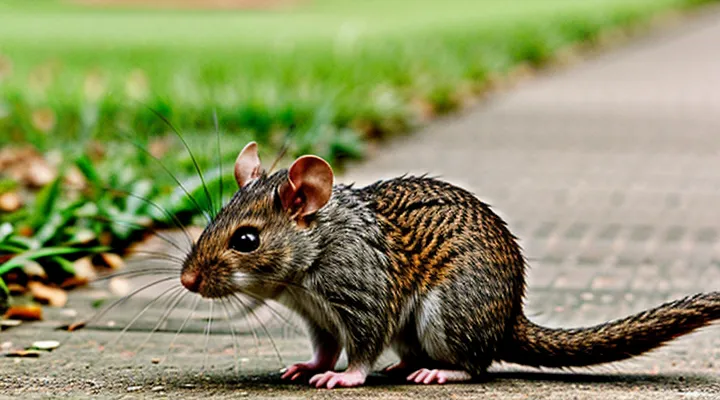
Understanding the Problem: Why Identification Matters
The Need for Accurate Identification
Ecological Impact of Misidentification
Misidentifying a short‑tailed rodent that resembles a rat can trigger inappropriate management actions, altering local ecosystems. When control programs treat the species as an urban pest, they often employ broad‑spectrum rodenticides. These chemicals persist in soil and water, exposing non‑target wildlife such as ground‑nesting birds, amphibians, and beneficial insects. Accidental poisoning reduces biodiversity and disrupts food webs that rely on the rodent as a prey item.
Incorrect classification also skews population monitoring. Data sets that conflate the short‑tailed species with true rats inflate pest estimates, prompting unnecessary habitat modification. Removal of vegetation to deter perceived infestations eliminates cover for native small mammals and invertebrates, leading to declines in species that depend on the same microhabitats.
Disease dynamics shift when the rodent is misidentified. Public health agencies may allocate resources to control diseases associated with rats, overlooking pathogens specific to the short‑tailed species. This misallocation hampers surveillance for emerging zoonoses and may allow novel disease vectors to establish unchecked.
Ecological consequences extend to predator communities. Raptors, snakes, and mammalian carnivores that specialize on the short‑tailed rodent experience reduced food availability if populations are artificially suppressed. Reduced prey density can force predators to shift to alternative, sometimes less desirable, prey, further destabilizing trophic interactions.
Key outcomes of misidentification include:
- Non‑target poisoning and chemical runoff
- Habitat degradation from unnecessary eradication measures
- Distorted population metrics affecting conservation planning
- Misguided disease monitoring and control efforts
- Decline in predator populations reliant on the species
Accurate identification prevents these impacts, supporting balanced pest management, reliable ecological data, and the preservation of native biodiversity.
Health and Safety Concerns
Encountering a small, short‑tailed rodent that looks like a rat presents immediate health hazards. These animals can carry pathogens such as hantavirus, leptospirosis, salmonella, and plague, all capable of transmitting to humans through urine, droppings, or bites. Their presence also indicates possible contamination of food stores, water supplies, and work surfaces, increasing the risk of gastrointestinal illness. Allergens in fur and dander may trigger respiratory reactions, especially in sensitive individuals. Structural damage caused by gnawing can expose occupants to electric shock or fire hazards.
Key safety actions include:
- Wear disposable gloves and a particulate respirator when handling traps, droppings, or contaminated materials.
- Disinfect surfaces with an EPA‑registered rodent‑borne pathogen solution after removal.
- Seal entry points using steel‑wool or cement to prevent re‑infestation.
- Employ snap or electronic traps instead of poison to avoid secondary poisoning of pets or wildlife.
- Report sightings to a licensed pest‑control professional for assessment and eradication.
Failure to implement these measures can result in disease outbreaks, allergic incidents, and property damage, underscoring the necessity of prompt, controlled response.
Key Physical Characteristics for Differentiation
Body and Tail Morphology
Tail Length and Proportions
Tail length provides a reliable metric for separating a short‑tailed rodent from a true rat. Rats typically possess tails that equal or exceed the length of the head‑body axis, often reaching 100–130 % of that measurement. In contrast, species resembling rats but classified as short‑tailed rodents exhibit tails that fall below 80 % of the head‑body length, frequently measuring 50–70 %.
Key proportional guidelines:
- Head‑body length (HB): measured from the tip of the nose to the base of the tail.
- Tail length (TL): measured from the tail base to the tip.
- Ratio TL / HB:
- Rat‑like rodent: ≥ 1.0 (often 1.0–1.3).
- Short‑tailed rodent: ≤ 0.8 (commonly 0.5–0.7).
When evaluating a specimen, record HB and TL with calipers, compute the ratio, and compare it against the thresholds above. A ratio below 0.8 strongly indicates a short‑tailed species, even when other morphological features resemble a rat.
Body Shape and Size
Body shape provides the primary visual cue for separating a short‑tailed rodent from a typical rat. The rodent’s torso is compact, with a pronounced curvature that creates a slightly arched back when viewed laterally. Unlike the elongated, fairly straight trunk of a common rat, the short‑tailed species exhibits a broader chest and a narrower waist, giving the silhouette a more trapezoidal outline.
Size measurements reinforce the visual distinction. Adult individuals range from 15 to 20 cm in head‑body length, considerably shorter than the 20 to 30 cm length typical of rats. Tail length remains under 5 cm, rarely exceeding one‑quarter of the head‑body dimension, whereas rat tails commonly match or surpass body length. Weight clusters between 40 and 80 g, whereas rats frequently exceed 150 g.
Key morphological markers:
- Head‑body length: 15–20 cm (short‑tailed) vs. 20–30 cm (rat).
- Tail length: ≤5 cm, less than 25 % of body length vs. tail ≈ body length.
- Chest width: noticeably broader relative to waist, producing a trapezoidal torso.
- Overall mass: 40–80 g vs. 150 g+ for rats.
These dimensions, taken together, enable reliable identification without reliance on coloration or behavior.
Fur Color and Texture
Fur coloration and texture provide reliable cues when separating a short‑tailed rodent that visually mimics a rat from other species. Typical rat‑like rodents display a uniform, coarse coat ranging from dark brown to black, often with a glossy sheen. In contrast, true short‑tailed varieties such as the deermouse (Peromyscus) exhibit a finer, softer pelage with distinct dorsal‑ventral contrast: a reddish‑brown back, lighter gray‑brown flanks, and a pale belly.
Key texture indicators include:
- Coarseness: Rough, bristly hairs suggest a true rat; smooth, velvety fur points to a deermouse or similar species.
- Length: Short‑tailed rodents generally have shorter guard hairs, resulting in a less shaggy appearance.
- Gloss: High gloss indicates dense, oily fur typical of rats; matte finish aligns with species that possess thinner, drier coats.
Color patterns further refine identification. A rat‑like rodent may lack distinct markings, whereas many short‑tailed species bear a dorsal stripe or a clear demarcation between upper and lower body colors. Observing these attributes in situ, or through high‑resolution photography, enables precise discrimination without reliance on tail length alone.
Head and Facial Features
Ear Size and Shape
Ear dimensions provide reliable cues when separating a short‑tailed rodent that resembles a rat from other species. The ears of true rats are relatively small, rounded, and lie close to the head, creating a compact silhouette. In contrast, many mice display larger, more triangular ears that extend outward from the skull, giving a pronounced ear profile. The presence of a visible ear cartilage ridge often indicates a mouse, whereas rats typically lack this feature.
Key ear characteristics to assess:
- Size – Rat ears measure roughly 1–1.5 cm in length; mouse ears exceed 1.5 cm and can approach 2 cm.
- Shape – Rat ears are rounded; mouse ears are angular or pointed.
- Position – Rat ears sit flush against the head; mouse ears project outward, creating a noticeable gap.
- Hair coverage – Rat ears are sparsely haired; mouse ears may show a denser fur covering, especially along the edges.
By evaluating these parameters, observers can quickly differentiate a short‑tailed rodent that looks like a rat from similar small mammals.
Eye Prominence
Eye prominence serves as a primary visual indicator when identifying a short‑tailed rodent that resembles a rat. The eyes of true rats (Rattus spp.) sit relatively low on the skull, appear modestly sized, and lack noticeable bulging. In contrast, several rat‑like species—such as certain mice, voles, or shrews—exhibit eyes that project more prominently from the facial plane.
Key characteristics of eye prominence include:
- Position: Eyes set higher on the head create a more forward‑facing gaze.
- Size: Larger ocular diameter relative to skull length enhances visibility.
- Bulge: A convex orbital rim produces a pronounced, rounded appearance.
- Visibility from above: When the animal is observed from a dorsal perspective, prominent eyes remain clearly discernible.
Comparative observations:
- Rattus spp.: Low‑set, modest eyes; orbital rim flush with skull.
- Peromyscus spp. (deer mice): Slightly elevated eyes, modest bulge.
- Microtus spp. (voles): High‑set, noticeably protruding eyes.
- Sorex spp. (shrews): Extremely prominent, almost spherical eyes.
Field guidance:
- Approach the animal from a side or dorsal angle to assess eye placement without causing stress.
- Measure the ratio of eye diameter to head length; values above 0.15 often indicate a non‑rat species.
- Note the curvature of the orbital bone; pronounced curvature correlates with increased eye prominence.
- Record observations alongside other traits such as tail length and ear size for a comprehensive identification.
Snout Configuration
The snout provides a reliable metric for separating rat‑like short‑tailed rodents from other species. Length, width, and the profile of the rostrum differ noticeably among common candidates such as Norway rats, roof rats, voles, and certain mouse species.
- Length: Rats possess a relatively long, straight snout extending beyond the upper incisors; mice exhibit a shorter, more rounded rostrum that ends near the eye line. Voles display a blunt, stubby snout that terminates abruptly.
- Width: Rat snouts are broad and robust, creating a rectangular cross‑section. In contrast, mouse snouts are narrow and triangular, while vole snouts are moderately wide but lack the pronounced rectangular shape of rats.
- Nasal pad and nostril orientation: Rats have a pronounced nasal pad with laterally flared nostrils, facilitating heavy airflow. Mice show a subtle pad and forward‑facing nostrils. Voles feature a flattened pad and slightly upward‑tilted nostrils.
- Whisker arrangement: Rat whiskers (vibrissae) are long, evenly spaced, and extend well beyond the mouth margin. Mouse whiskers are shorter and cluster closer to the rostral edge. Voles possess dense, short whiskers confined to the immediate snout region.
These attributes remain consistent across age groups and are observable without dissection. When encountering a short‑tailed rodent that resembles a rat, measure snout length relative to head width, assess nasal pad prominence, and examine whisker length. The combination of a long, broad snout with a pronounced nasal pad and extended whiskers confirms rat identification; deviations point to alternative taxa.
Whiskers and Vibrissae
Whiskers, or vibrissae, provide the primary tactile cue for separating a short‑tailed rodent that resembles a rat from other small mammals. These specialized hairs are thicker, longer, and more deeply rooted than ordinary fur, allowing precise detection of objects within a few centimeters of the snout.
Key vibrissal features to examine:
- Length: vibrissae extend beyond the muzzle tip, often reaching 1.5–2 cm in adult specimens.
- Arrangement: a dense, symmetrical array of supra‑orbital, mystacial and genal whiskers forms a well‑defined facial grid.
- Thickness: each whisker exhibits a diameter of 0.1–0.2 mm, markedly greater than surrounding pelage.
- Tactile sensitivity: rapid, rhythmic forward‑backward sweeps indicate an active sensory system typical of true rats.
When these attributes are present, they confirm the animal’s classification within the Muridae family, distinguishing it from similar‑looking rodents such as pocket mice or voles, whose whiskers are shorter, sparser, and less robust.
Feet and Limbs
Forelimb Structure
Forelimb anatomy provides reliable criteria for separating short‑tailed rodent species that superficially resemble rats. The skeletal framework, digit configuration, and claw morphology differ enough to serve as diagnostic markers.
The humerus of a true rat is robust, with a pronounced deltoid crest that supports powerful forelimb extension. In contrast, voles and other small rodents possess a slimmer humerus and a reduced crest, reflecting a weaker pulling motion. The radius and ulna in rats show extensive fusion near the distal end, limiting pronation, whereas many short‑tailed relatives retain separate shafts, allowing greater rotational flexibility.
Digit count and length further clarify identity. Rats exhibit four well‑developed digits with a vestigial fifth metacarpal; the first digit bears a large, curved claw used for digging. Voles typically present five functional digits, each ending in a relatively straight claw adapted for clinging to vegetation. The spacing between digits is narrower in rats, creating a compact paw suitable for burrowing.
Key forelimb traits for identification:
- Humeral crest size: prominent in rats, modest in other short‑tailed rodents.
- Radius‑ulna fusion: extensive in rats, partial or absent in voles.
- Digit number: four functional digits plus a reduced fifth in rats; five fully functional digits in most non‑rat species.
- Claw shape: large, curved claw on the first digit of rats; smaller, straighter claws on all digits of relatives.
- Metacarpal length: shortened in rats, elongated in many other species.
Muscular attachments correspond to these skeletal differences. The triceps brachii in rats is hypertrophied, providing strong extension for digging. Voles display a more balanced forearm musculature, supporting both climbing and limited excavation.
By evaluating humeral morphology, radius‑ulna relationship, digit configuration, and claw form, observers can accurately differentiate a short‑tailed rodent that looks like a rat from genuine rat specimens.
Hindlimb Structure
The hindlimb of a short‑tailed rodent differs from that of a true rat in several measurable traits. The femur is proportionally shorter, often less than one‑third of head‑body length, whereas in Rattus spp. the femur approaches one‑quarter. The tibia is similarly reduced, resulting in a more compact overall limb.
Digit morphology provides additional clues. Short‑tailed species typically possess five well‑separated toes with distinct, slightly curved ungual claws, while rats exhibit a broader, flattened foot with fused or reduced lateral digits. The plantar surface of the rodent shows pronounced pads on each toe, whereas rats have a smoother, less padded sole.
Muscle attachment sites on the pelvis reveal functional differences. The greater trochanter of the rodent’s femur is positioned more laterally, supporting a greater range of lateral movement for climbing. In contrast, the rat’s greater trochanter aligns more posteriorly, favoring rapid sprinting.
The ankle joint (talus) in the short‑tailed animal displays a narrower trochlear surface, limiting dorsiflexion but enhancing stability on uneven substrates. Rats possess a broader talar trochlea, allowing greater flexibility during high‑speed locomotion.
Key measurements for identification:
- Femur length: ≤ 30 mm (rodent) vs. > 30 mm (rat)
- Tibia‑to‑femur ratio: ~ 0.9 (rodent) vs. ~ 1.1 (rat)
- Toe length: uniform, 4–5 mm (rodent) vs. variable, 3–7 mm (rat)
- Presence of distinct plantar pads: yes (rodent), absent or reduced (rat)
These anatomical distinctions enable reliable separation of short‑tailed rodents from rats when visual examination of hindlimb structure is performed.
Habitat, Behavior, and Diet as Differentiating Factors
Preferred Habitats
Indoor vs. Outdoor Environments
When evaluating a short‑tailed rodent that resembles a rat, the setting in which it is found provides decisive clues. Indoor specimens typically encounter human structures, limiting their movement to confined spaces such as walls, ceilings, and floor cavities. Outdoor individuals exploit broader habitats, ranging from leaf litter to burrows beneath vegetation.
Key environmental indicators include:
- Location of nests – Indoor nests appear in insulated corners, behind appliances, or within ceiling voids; outdoor nests are constructed in soil, compost piles, or dense ground cover.
- Food sources – Indoor rodents rely on stored grains, pet food, and waste; outdoor counterparts scavenge seeds, insects, and natural detritus.
- Pathways – Indoor movement follows utility conduits, plumbing, and ventilation shafts; outdoor travel uses open ground, burrow networks, and vegetation corridors.
- Presence of predators – Outdoor settings feature natural predators such as birds of prey and snakes, influencing nocturnal activity patterns; indoor environments lack such threats, leading to constant activity.
Observing these factors allows precise differentiation between a domestically situated rodent and one inhabiting the external environment, facilitating accurate identification and appropriate control measures.
Urban vs. Rural Settings
Identifying a short‑tailed rodent that resembles a rat requires attention to the environment in which it is found. Urban and rural locales present distinct cues that aid separation of species, behavior, and ecological context.
In cities, rodents exploit built‑infrastructure. Typical signs include gnaw marks on plastic or metal, droppings near garbage containers, and nests concealed within wall voids or ceiling spaces. Species most often encountered are the Norway rat (Rattus norvegicus) and the roof rat (Rattus rattus), both possessing relatively long tails. When a specimen displays a noticeably shorter tail, it is more likely to be a house mouse (Mus musculus) or a brown rat variant with a truncated tail. Urban individuals tend to be smaller, display limited foraging ranges, and show increased tolerance of human activity.
Rural settings provide different habitats. Grain stores, barns, and open fields support species such as meadow voles (Microtus pennsylvanicus), deer mice (Peromyscus maniculatus), and field rats (Rattus norvegicus) with naturally shorter tails. Evidence includes burrows in soil, nests in hay, and droppings near feed troughs. Rural rodents often exhibit greater wariness of humans, larger home ranges, and a diet richer in seeds and vegetation.
Key distinguishing factors by setting:
- Tail length relative to body: urban mouse – tail ≈ body length; rural vole – tail markedly shorter.
- Nesting location: wall voids or ceilings (urban) vs. ground burrows or hay piles (rural).
- Foraging pattern: limited to waste sites (urban) vs. scattered across fields and storage bins (rural).
- Behavioral response: reduced flight distance in city environments; heightened alertness in open countryside.
Behavioral Patterns
Nocturnal vs. Diurnal Activity
When trying to separate a short‑tailed rodent that looks like a rat from true rats, the pattern of daily activity offers a reliable clue. True rats (Rattus spp.) are primarily nocturnal; they emerge after dusk, forage in darkness, and retreat to burrows or sewers before sunrise. Their eyes are relatively small, adapted for low‑light vision, and they rely heavily on whisker and olfactory cues during night foraging.
In contrast, many short‑tailed species that mimic rat morphology, such as certain Peromyscus or Mus musculus variants, display diurnal or crepuscular habits. These animals are most active during daylight or at twilight, exhibit larger, more forward‑positioned eyes for enhanced visual acuity, and often forage on the surface rather than underground. Observations of peak activity times—recorded by motion‑activated cameras or direct field notes—can therefore distinguish the two groups.
Additional behavioral markers reinforce the activity pattern distinction. Nocturnal rats tend to be highly secretive, limiting movement to narrow pathways and exhibiting strong avoidance of open light. Diurnal look‑alikes are more willing to cross exposed terrain, display bold foraging behavior in daylight, and may be heard vocalizing during the day. Recognizing these temporal and behavioral differences reduces misidentification risk and guides appropriate management actions.
Burrowing Habits
Burrowing behavior provides reliable clues for separating a short‑tailed rodent that resembles a rat from true rats. Unlike Rattus species, which favor surface runways and occasional shallow nests, the short‑tailed form constructs extensive underground chambers that reflect its ecological niche.
Key differences in burrow architecture:
- Entrance size: openings measure 2–3 cm in diameter, smaller than the 3–4 cm typical of rat tunnels.
- Tunnel depth: primary shafts extend 30–60 cm below ground, whereas rats rarely exceed 20 cm.
- Chamber complexity: multiple interconnected rooms with nesting material, food stores, and waste pits; rat burrows usually consist of a single nest chamber.
- Soil displacement: clear spoil piles of loose soil accumulate at tunnel mouths, indicating active excavation; rat activity leaves minimal surface disturbance.
Observing these patterns in the field—entrance dimensions, depth, chamber layout, and spoil accumulation—enables accurate identification of the short‑tailed, rat‑like rodent based on its distinct burrowing habits.
Social Structures
Social organization offers reliable criteria when recognizing a short‑tailed rodent that resembles a rat.
Rats typically form large, fluid colonies with a clear dominance hierarchy; individuals occupy overlapping burrows and display frequent aggressive interactions. In contrast, many short‑tailed species—such as voles, wood rats, or certain mouse varieties—exhibit smaller, more stable groups, limited territorial overlap, and cooperative nesting behaviors.
Key social traits that aid differentiation:
- Group size: Colonies of true rats often exceed dozens of individuals; short‑tailed counterparts usually maintain groups of fewer than ten.
- Hierarchy: Rats establish a pronounced alpha‑beta structure; short‑tailed rodents show weaker rank differentiation or egalitarian arrangements.
- Burrow use: Rats share extensive tunnel networks; short‑tailed species favor discrete, family‑level burrows with minimal sharing.
- Communication: Rats rely heavily on ultrasonic vocalizations and scent marking for dominance; short‑tailed rodents employ softer calls and limited scent marking.
Field observation of these behaviors—recording colony composition, nest architecture, and interaction patterns—provides concrete evidence for accurate identification. By integrating social structure data with morphological cues, researchers can distinguish short‑tailed rodents from true rats with confidence.
Dietary Preferences
Herbivorous Traits
Herbivorous rodents exhibit specific anatomical and behavioral characteristics that aid identification when encountering a short‑tailed animal similar in appearance to a rat. Unlike omnivorous or carnivorous relatives, these species possess dental and digestive adaptations optimized for plant material.
- Incisor enamel thickened for continuous grinding of fibrous vegetation.
- Molars with broad, flat crowns and complex ridges to break down cellulose.
- Gastrointestinal tract elongated, featuring a large cecum for microbial fermentation.
- Foraging behavior focused on grasses, seeds, and leafy shoots; limited interest in animal protein.
- Stomach acidity lower than that of meat‑eating rodents, reflecting reduced need for protein digestion.
These traits provide reliable criteria for distinguishing a herbivorous short‑tailed rodent from a rat‑like omnivore during field observation.
Omnivorous Habits
The short‑tailed rodent often confused with a rat exhibits a flexible diet that includes both plant and animal matter. Unlike true rats, which rely heavily on grains and refuse, this species regularly consumes seeds, fruits, insects, and small vertebrates. The presence of animal protein in stomach contents signals a broader foraging range and a higher propensity for opportunistic predation.
Key dietary components:
- Seeds and nuts from grasses and shrubs
- Fresh berries, fruits, and tubers
- Insects such as beetles, larvae, and grasshoppers
- Small reptiles, amphibians, or bird eggs when available
These omnivorous habits influence bite marks on food items, the pattern of waste deposits, and the timing of foraging activity. Detecting remnants of animal tissue alongside plant material in droppings or stomach analysis provides a reliable criterion for separating this rodent from typical rat species.
Insectivorous Tendencies
When a short‑tailed mammal resembles a rat, its feeding habits often provide decisive clues. Species that supplement their diet with insects display patterns absent in strictly granivorous or omnivorous relatives.
Insect‑eating rodents exhibit:
- Preference for arthropods such as beetles, moth larvae, and earthworms.
- Activity peaks during twilight or night, when prey are most accessible.
- Use of whisker‑guided probing to locate hidden insects in soil or leaf litter.
These tendencies are reflected in anatomy. Enlarged incisors and sharp, pointed molars facilitate puncturing exoskeletons. The palate is often narrower, allowing precise tongue manipulation. Muscular forelimbs and robust claws support digging and turning over debris to expose prey.
Field observers can confirm insectivory by noting:
- Presence of insect remains in fecal pellets or stomach contents.
- Frequent foraging in moist microhabitats—under logs, in compost, or near water sources.
- Rapid, low‑profile movements that differ from the more deliberate pacing of typical rats.
Recognizing these dietary and morphological signals enables reliable separation of a short‑tailed, rat‑like rodent that relies on insects from its non‑insectivorous counterparts.
Common Rodent Species Resembling Rats
Voles and Their Distinguishing Features
Meadow Voles
Meadow voles (Microtus pennsylvanicus) are small, herbivorous rodents that frequently appear in grassland and meadow environments. Adult body length ranges from 10 to 14 cm, with a tail that measures only 2 to 4 cm—significantly shorter than a typical rat’s tail. Fur is dense, brown to gray, and lacks the coarse texture seen on rat pelage. Eyes are relatively large, ears are hidden beneath the fur, and the whiskers are short and fine.
Key field characteristics that separate meadow voles from rat‑like rodents include:
- Tail length: less than one‑quarter of total body length.
- Body shape: compact, rounded torso without the elongated, muscular build of rats.
- Fur texture: soft, uniform, without the shaggy, oily coat of rats.
- Foot structure: broad hind feet with well‑developed pads for digging; rats possess narrower, more elongated feet.
- Habitat preference: open fields, tall grasses, and agricultural margins; rats favor sewer systems, basements, and human‑made structures.
- Dental pattern: molars with a high, rounded cusp pattern typical of voles; rat molars are flatter with incisors that protrude markedly.
Behaviorally, meadow voles create shallow burrow systems and surface runways among vegetation. They are active both day and night, but their foraging patterns focus on grasses, seeds, and tender shoots. In contrast, rat‑like species show a stronger preference for stored food items and exhibit nocturnal activity centered around human habitation.
When assessing a captured specimen, examine tail proportion, ear visibility, and fur condition first. Follow with a rapid check of dental morphology—voles display a characteristic V‑shaped molar pattern. These observable traits provide reliable differentiation without the need for laboratory analysis.
Bank Voles
Bank voles (Myodes glareolus) are small, forest‑dwelling rodents often mistaken for rats because of their compact bodies and dark fur. Adult individuals weigh 20–35 g and measure 10–13 cm in head‑body length, with tails that are noticeably shorter than the body, typically 3–5 cm. Their ears are rounded and lack the prominent hair tufts found on many rat species.
Key features that separate bank voles from rats:
- Tail: proportionally short, less than half the head‑body length; rats possess tails equal to or longer than their bodies.
- Skull shape: voles have a blunt, rounded skull; rats display a more elongated, angular cranium.
- Whisker length: vole whiskers are short and fine; rat whiskers are long and robust.
- Fur texture: bank vole fur is dense and soft, often with a reddish‑brown hue; rat fur is coarser and typically gray‑brown.
- Foot size: voles have small, delicate feet with five toes; rats have larger, heavier feet with strong claws.
Behavioral clues reinforce identification. Bank voles are primarily nocturnal, constructing shallow burrows beneath leaf litter or in grassy banks, and they exhibit a cautious, solitary foraging style. Rats, by contrast, are more aggressive, often form colonies, and favor deeper, more complex tunnel systems.
Observing droppings can also aid differentiation. Vole pellets are small, cylindrical, and contain a single, compacted urine stain; rat droppings are larger, more rectangular, and lack a distinct urine spot.
Combining morphological measurements, fur characteristics, and ecological habits provides a reliable method for distinguishing bank voles from rat‑like rodents.
Shrews and Their Unique Traits
Common Shrews
Common shrews are small, insect‑eating mammals that often cause confusion with short‑tailed rodents resembling rats. Their size, anatomy, and habits provide clear criteria for separation.
The body length of a typical shrew ranges from 5 to 9 cm, considerably shorter than the 15–20 cm length of most short‑tailed rat‑like species. Shrews possess a pointed snout, a high forehead, and a set of sharp, interlocking teeth adapted for crushing insects. In contrast, rat‑like rodents display a blunt muzzle, a lower skull profile, and continuously growing incisors.
Key external features distinguish the two groups:
- Tail proportion – Shrew tails are thin, hair‑covered, and rarely exceed one‑third of total body length. Short‑tailed rodents have a relatively thick, hair‑sparse tail that may approach half the body length.
- Fur texture – Shrew pelage is dense, velvety, and often uniformly colored. Rat‑like species exhibit coarser, multi‑toned fur with distinct dorsal‑ventral contrast.
- Ear size – Shrews have small, concealed ears hidden in fur; rat‑like rodents show larger, visible ears with a well‑defined pinna.
- Foot morphology – Shrew feet are compact with five toes on each hind foot and lack noticeable pads. Short‑tailed rodents present broader feet with pronounced pads and, in some species, a rudimentary claw on the first digit.
Behavioral differences reinforce identification:
- Activity pattern – Shrews are primarily diurnal to crepuscular, maintaining high metabolic rates and constant foraging. Rat‑like rodents tend toward nocturnal activity and may cache food.
- Habitat preference – Shrews favor moist leaf litter, grasslands, and low vegetation where insects abound. Short‑tailed rodents occupy drier ground cover, burrow systems, and agricultural fields.
- Diet – Shrews consume insects, worms, and other invertebrates exclusively. Rat‑like species are omnivorous, ingesting seeds, plant material, and occasional animal matter.
When encountering a small mammal that resembles a rat, assess size, snout shape, tail proportion, ear visibility, and habitat use. These criteria enable reliable distinction between common shrews and short‑tailed rodent look‑alikes.
Water Shrews
Water shrews are small, semi‑aquatic mammals that often cause confusion with rat‑like rodents because of their compact bodies and short tails. Their total length ranges from 10 to 15 cm, with the tail comprising roughly one‑third of that measurement. The tail is densely furred, laterally compressed, and lacks the naked, scaly appearance typical of rat tails.
The fur of water shrews is dark brown to black on the dorsal side and lighter, sometimes grayish, ventrally. Unlike rats, which display a distinct, coarse pelage and a pronounced dorsal stripe in some species, water shrews possess uniformly glossy hair that repels water. Their heads are proportionally large, with pronounced, forward‑projecting whiskers (vibrissae) that aid in detecting prey underwater. The eyes are small, and the ears are reduced to barely visible openings, contrasting with the larger, more visible ears of most rats.
Key anatomical differences include:
- Dental structure: Water shrews have sharp, interlocking incisors and a set of uncinate (hooked) teeth designed for gripping slippery aquatic invertebrates; rats possess a single pair of continuously growing incisors and molars suited for gnawing plant material.
- Foot morphology: The hind feet of water shrews are webbed, providing propulsion in water; rat feet are broad and naked, optimized for terrestrial locomotion.
- Scent glands: Water shrews lack the prominent anal scent glands found in many rat species, resulting in a weaker odor profile.
- Habitat preference: Water shrews are found near streams, ponds, and wetland margins, where they hunt insects, larvae, and small crustaceans. Rats, even short‑tailed variants, prefer dry, burrowed environments and display omnivorous feeding habits that include seeds, fruits, and refuse.
Behaviorally, water shrews exhibit rapid, erratic swimming bursts and can remain submerged for short periods while foraging. Their metabolic rate is exceptionally high, requiring frequent feeding—often every few hours. In contrast, short‑tailed rats display nocturnal activity patterns, rely on scent cues for navigation, and can survive longer intervals without food.
When encountering a diminutive, short‑tailed rodent near water, assess tail fur density, foot webbing, dental arrangement, and habitat context. The presence of a densely furred, laterally compressed tail, webbed hind feet, and sharp, interlocking teeth reliably indicates a water shrew rather than a rat‑like rodent.
Other Similar Rodents
Mice (e.g., House Mouse, Field Mouse)
Mice, such as the house mouse (Mus musculus) and the field mouse (Apodemus sylvaticus), share several characteristics with rats but differ in key anatomical and ecological traits. Recognizing these differences enables reliable identification of a short‑tailed rodent that resembles a rat.
The head‑to‑body proportion is shorter in mice; the skull is narrower and the muzzle less blunt. Ear size is relatively larger compared to body length, and the eyes are proportionally bigger. Fur coloration varies: house mice typically exhibit a uniform gray‑brown coat, while field mice display a more varied dorsal pattern with a distinct stripe along the spine.
Tail morphology provides a decisive clue. In mice, the tail is thin, often longer than the body, and covered with sparse hair. Rats possess a thicker, shorter tail, densely furred. The presence of a pronounced hairless stripe on the ventral surface of the tail is characteristic of mice.
Behavioral observations support visual identification. Mice prefer indoor environments, grain stores, and low vegetation, whereas rats favor sewers, basements, and larger burrow systems. Activity cycles differ: mice are primarily nocturnal but may exhibit crepuscular foraging; rats show a broader activity window.
A concise checklist for distinguishing mice from rats:
- Head shape: narrow, pointed vs. broad, blunt.
- Ear size: large relative to head vs. moderate.
- Tail: long, slender, mostly hairless vs. short, thick, furred.
- Fur pattern: uniform gray‑brown (house mouse) or striped dorsal (field mouse) vs. coarse brown‑black coat.
- Habitat: domestic interiors, small field niches vs. larger underground networks.
- Size: total length typically under 15 cm vs. 20–30 cm for rats.
Applying these criteria yields accurate differentiation of mouse species from rat look‑alikes in field surveys and pest‑management contexts.
Lemmings
Lemmings are frequently confused with rats because of their similar body shape and quick movements. Accurate identification relies on several anatomical and ecological markers.
Physical characteristics that separate lemmings from rats include:
- Tail: Lemmings possess a tail that is markedly shorter, often less than one‑third of the body length, whereas rats have a proportionally longer tail.
- Fur coloration: Lemmings display seasonal coat changes; winter fur is dense and grey‑white, while summer fur is brownish. Rats maintain a consistent brown to black coat year‑round.
- Ear size: Lemmings have small, rounded ears hidden in the fur; rats exhibit larger, more exposed ears.
- Foot structure: Lemmings’ hind feet feature elongated toes with a pronounced plantar pad, adapted for snow locomotion. Rats have shorter toes with a less developed pad.
- Skull and dentition: Lemmings’ skulls are compact with a reduced rostrum; the incisor enamel shows a distinctive orange hue but is narrower than that of rats. Rats have a broader skull and larger incisor roots.
Behavioral and habitat clues further aid differentiation:
- Habitat: Lemmings inhabit tundra, alpine meadows, and sub‑arctic grasslands, rarely entering human dwellings. Rats are commensal, thriving in urban and agricultural settings.
- Social pattern: Lemmings form large, fluctuating populations that can undergo mass migrations. Rats maintain relatively stable colonies with defined hierarchies.
- Diet: Lemmings consume primarily grasses, mosses, and seeds; rats are omnivorous, eating grains, waste, and protein sources.
When encountering a short‑tailed rodent that resembles a rat, systematic assessment of tail length, ear size, fur cycle, foot morphology, skull features, and ecological context provides a reliable basis for identification.
Practical Identification Techniques
Trapping and Observation Methods
Live Trapping Considerations
When capturing a short‑tailed rodent that resembles a rat, the trapping protocol must protect the animal, preserve diagnostic features, and yield reliable data. Choose traps that minimize stress and injury, such as Sherman live traps or multi‑capture cage traps with smooth interior surfaces. Position devices near suspected activity zones—burrow entrances, food sources, or runways—based on preliminary observations. Set traps in the late afternoon, check them at sunrise, and release captures promptly to prevent overheating.
Key considerations:
- Trap size and entry dimensions – ensure the aperture accommodates the target’s body length without allowing larger species to enter.
- Bait selection – use foods preferred by the species (e.g., grain, fruit, or protein pellets) while avoiding strong odors that may deter. Rotate bait types to assess preferences.
- Habitat compatibility – place traps on stable ground, away from excessive moisture or direct sunlight, to maintain trap integrity and animal comfort.
- Non‑target exclusion – install size‑restrictive inserts or secondary barriers to reduce captures of birds, reptiles, or larger mammals.
- Sanitation and decontamination – clean traps with a mild disinfectant between uses to prevent disease transmission and eliminate residual scents that could affect trap efficacy.
- Data collection – record capture time, location, trap number, and environmental conditions; photograph the specimen before handling to document external characteristics.
- Regulatory compliance – obtain necessary permits, follow animal welfare guidelines, and adhere to local wildlife regulations.
After release, monitor the area for repeated activity to confirm species presence and assess population density. Consistent application of these practices enables accurate identification while maintaining ethical standards.
Visual Assessment in the Field
Accurate field identification of a short‑tailed rodent that resembles a rat relies on systematic visual assessment. Observers should focus on measurable traits, habitat cues, and behavior patterns that separate this species from true rats and other rodents.
Key visual criteria:
- Body length: total length typically 15–20 cm, excluding tail.
- Tail proportion: tail shorter than half the body length; often scaly, sparsely haired.
- Ear size: ears small relative to head, rounded, with limited visibility of the inner ear.
- Fur texture and coloration: coarse, dark brown to gray dorsal fur; lighter ventral side; occasional dorsal stripe absent in true rats.
- Whisker arrangement: shorter, less prominent whiskers; positioned lower on the snout.
- Foot morphology: broader hind feet with pronounced pads; toe count matches rodent standard (five per foot) but claw curvature differs.
- Eye placement: eyes set slightly higher on the skull, providing a narrower field of view.
Field techniques to enhance visual discrimination:
- Approach from downwind to prevent disturbance and maintain clear sightlines.
- Use a handheld flashlight or headlamp at low angle during twilight to highlight tail length and fur texture.
- Capture several high‑resolution photographs from multiple angles; include a scale reference such as a ruler or known object.
- Record immediate observations on a waterproof field notebook, noting habitat type (e.g., grassland, scrub, agricultural edge) and any signs of activity (burrows, gnaw marks, droppings).
Documentation of these visual elements creates a reliable dataset for species verification and supports subsequent taxonomic analysis.
Use of Field Guides and Expert Resources
Consulting Local Wildlife Guides
Consulting local wildlife guides offers the most reliable pathway to correctly identify a short‑tailed rodent that bears a strong resemblance to a rat. Guides possess region‑specific knowledge of species distribution, habitat preferences, and distinguishing characteristics that are often unavailable in generic field manuals.
When engaging a guide, follow these steps:
- Verify the guide’s credentials through local conservation agencies or wildlife societies.
- Provide clear photographs or physical descriptions, emphasizing tail length, ear size, fur texture, and coloration.
- Request a comparative analysis with known species in the area, such as the Norway rat, house mouse, and native pocket gophers.
- Ask for documentation of the identification, including field notes and, if possible, a voucher specimen or reference to a museum collection.
The information obtained from a qualified guide should be cross‑checked with regional taxonomic keys and, when necessary, confirmed by a professional biologist. This systematic approach minimizes misidentification and ensures accurate reporting for research, pest management, or conservation efforts.
Engaging with Pest Control Professionals
When a short‑tailed rodent that resembles a rat appears in a residence, professional assessment is the most reliable method for accurate identification and appropriate response. Pest‑control experts possess the training, equipment, and reference collections needed to differentiate species that share superficial characteristics but require distinct management strategies.
Engaging a specialist begins with clear communication. Provide the following information to ensure an efficient evaluation:
- Exact locations where the animal was sighted (e.g., attic, basement, kitchen).
- Description of physical features (tail length, fur color, ear size) and any observed behavior.
- Date and time of the first observation.
- Evidence such as droppings, gnaw marks, or photographs.
A qualified technician will conduct a site inspection, collect samples if necessary, and compare findings against taxonomic keys. The outcome determines whether the creature is a common house mouse, a field mouse, a rat, or a less common species such as a vole. This distinction influences the choice of control measures, legal considerations, and health‑risk assessments.
After identification, the professional outlines a tailored action plan. The plan typically includes:
- Immediate containment or removal techniques appropriate for the species.
- Recommendations for habitat modification to eliminate attractants.
- Scheduled monitoring to verify the effectiveness of interventions.
Selecting a licensed provider with documented experience in small‑mammal identification reduces the risk of misdiagnosis and unnecessary pesticide use. Verify credentials, request references, and confirm that the service includes a written report detailing the species, the rationale for chosen methods, and follow‑up procedures.
In summary, accurate species determination relies on expert input. Supplying precise observations, allowing a thorough inspection, and adhering to the specialist’s recommendations ensure effective, legally compliant, and humane resolution of the rodent issue.