
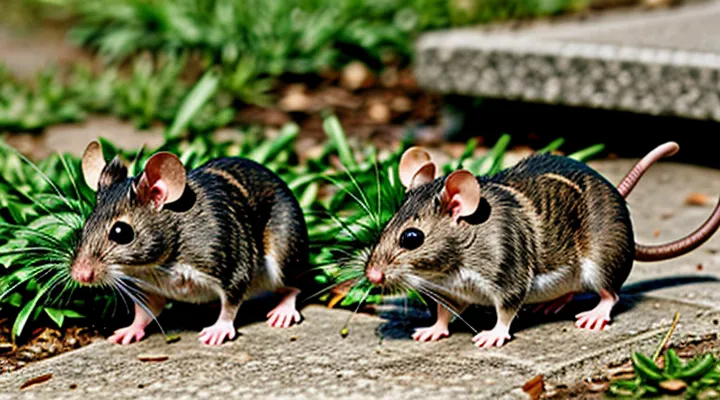
Size and Body Shape Differences
Body Length and Weight
Mice and rats differ markedly in body length and weight, two metrics that provide reliable identification.
Typical adult house mice (Mus musculus) measure 6–10 cm from nose to the base of the tail, with total length including the tail reaching 12–20 cm. Their mass ranges from 10 to 30 g, seldom exceeding 35 g.
In contrast, adult Norway rats (Rattus norvegicus) exhibit body lengths of 18–25 cm, and total lengths of 30–45 cm when the tail is included. Their weight commonly falls between 250 and 350 g, with large individuals approaching 500 g.
Key points for rapid assessment:
- Body length (nose‑to‑base): mouse ≈ 6–10 cm; rat ≈ 18–25 cm.
- Total length (including tail): mouse ≈ 12–20 cm; rat ≈ 30–45 cm.
- Weight: mouse ≈ 10–30 g; rat ≈ 250–350 g.
These dimensional thresholds enable clear separation of the two species in field observations and laboratory settings.
Snout Shape and Head Size
Mice possess a sharply tapered snout that forms a narrow, triangular profile when viewed from the side. The tip of the snout extends forward with a slight upward curve, giving the facial region a delicate appearance. Rats display a broader, more blunt snout; the front of the head appears flattened and the nasal bones are less elongated, resulting in a sturdier facial outline.
Head size further separates the two species. A mouse’s head is modest in proportion to its body length, often appearing diminutive and compact. In contrast, a rat’s head is noticeably larger relative to its torso, presenting a robust, muscular silhouette. These morphological distinctions provide reliable criteria for rapid identification in field and laboratory settings.
Ear Size and Hairiness
Mice possess ears that appear large in proportion to their skulls; the ear length typically exceeds one‑third of the head width. Rat ears are comparatively small, rarely surpassing one‑fourth of the head width, and their pinnae are thicker and less mobile.
Fur characteristics further separate the two species. Mice display a dense, soft coat covering the entire body, including the ears, which often retain a fine layer of hair. Rats exhibit coarser, sparser fur, with a noticeable reduction of hair on the ear surfaces, resulting in a smoother appearance.
Key visual cues for identification:
- Ear size: mouse ear > ⅓ head width; rat ear ≤ ¼ head width.
- Ear hair: mouse ears retain fine hair; rat ears appear largely hairless.
- Overall coat: mouse fur dense and soft; rat fur coarse and patchy.
Distinctive Physical Features
Tail Characteristics
Mice possess tails that are relatively short, typically measuring 3‑5 cm, and exhibit a uniform, fine hair covering. The tail surface is smooth, lacking visible scales, and the diameter tapers gradually from base to tip. In contrast, rats have longer tails ranging from 15‑30 cm, with a thicker, more robust build. Their tails display a distinct pattern of overlapping scales and are often coarser, sometimes showing slight ridges or visible blood vessels.
Key tail distinctions:
- Length: mouse tail ≈ 30‑50 % of body length; rat tail ≈ 70‑80 % of body length.
- Surface texture: mouse tail smooth and hair‑covered; rat tail scaly and sometimes sparsely haired.
- Diameter: mouse tail consistently slender; rat tail noticeably thicker, especially near the base.
- Flexibility: mouse tail highly flexible, capable of tight curls; rat tail more rigid, maintaining a straighter posture.
These morphological features provide reliable criteria for rapid identification when visual inspection is required.
Foot Size and Proportions
Foot size provides a reliable metric for separating mice from rats. Mice typically possess feet measuring 10–13 mm in total length, while rats exhibit feet ranging from 15 mm to 20 mm. The disparity reflects overall body scale and influences locomotion patterns.
Key proportional differences include:
- Toe count: Both species have five toes per hind foot, but mouse toes are proportionally shorter relative to the foot length.
- Pad dimensions: Mouse foot pads occupy roughly 30 % of the foot surface; rat foot pads cover about 45 %, creating a broader contact area.
- Digit spacing: In mice, digits are tightly clustered; rats display wider spacing, contributing to a more robust appearance.
These measurements, when combined with other morphological cues, enable precise identification of the two rodent groups.
Fur Color and Texture
Mice typically possess fine, soft fur that lies close to the body. Common colors include light gray, brown, or pure white, with a uniform appearance across the coat. Texture feels silky to the touch, and individual hairs are short and loosely arranged.
Rats display coarser, denser fur that feels rougher. Predominant colors are darker shades such as brown, black, or mottled patterns with patches of gray. The hair is thicker, longer, and lies flatter against the skin, giving the animal a sturdier silhouette.
Key points for identification:
- Fur fineness: mouse – delicate; rat – robust.
- Common coloration: mouse – light, uniform; rat – dark, varied.
- Texture perception: mouse – silky; rat – coarse.
These attributes, when examined alongside other anatomical features, provide reliable criteria for separating the two species.
Behavioral and Habitat Clues
Droppings and Their Appearance
Droppings provide a reliable indicator when separating small rodents from larger ones. The physical attributes of feces differ markedly between the two species, allowing identification without direct observation.
- Size: fecal pellets from a mouse average 2–4 mm in length, while rat droppings range from 10–20 mm.
- Shape: mouse pellets are uniformly cylindrical with smooth edges; rat pellets are thicker, often slightly flattened, and may exhibit blunt ends.
- Color: fresh mouse droppings appear dark brown to black; rat droppings tend toward a lighter, reddish‑brown hue.
- Consistency: mouse feces are dry and crumbly; rat feces retain moisture, feeling softer to the touch.
- Odor: mouse droppings emit a faint, almost neutral scent; rat droppings produce a stronger, musky odor detectable at close range.
These characteristics, observed in isolation or combination, enable accurate discrimination between the two rodent types.
Gnaw Marks and Damage Patterns
Gnaw marks provide reliable evidence for separating mice from rats. Mice produce shallow, narrow incisions typically 2–3 mm wide, with clean edges that follow the grain of wood or the line of a cable. Rats generate deeper, broader scars, often 5–10 mm wide, with ragged edges and occasional splintering of the substrate. The shape of the bite reflects the size of the incisors: mouse incisors are fine and produce parallel lines, whereas rat incisors are robust, leaving V‑shaped or U‑shaped gouges.
Damage patterns extend beyond the bite itself. Mice frequently target soft materials such as insulation, paper, or food packaging, creating multiple small perforations clustered near entry points. Rats favor structural components, chewing through beams, baseboards, and pipes, resulting in larger, isolated holes that may compromise integrity. Evidence of repeated gnawing appears as concentric rings of wear around a single opening in rat damage, while mouse activity shows a series of adjacent holes along a linear path.
Key distinguishing features can be summarized:
- Width of gnaw mark: mouse ≈ 2–3 mm; rat ≈ 5–10 mm.
- Edge quality: mouse = smooth, parallel; rat = ragged, V/U‑shaped.
- Material preference: mouse = soft, pliable; rat = hard, structural.
- Hole pattern: mouse = clustered, linear; rat = isolated, concentric.
Recognizing these characteristics enables accurate identification of the responsible rodent, facilitating targeted control measures.
Nesting Habits and Locations
Mice construct nests primarily in concealed indoor spaces such as wall voids, ceiling insulation, and stored grain containers. Nest materials consist of shredded paper, fabric fibers, and soft plant matter, creating compact, dome‑shaped structures that accommodate one to several individuals.
Rats favor larger, more open nesting sites, often located in outdoor burrows, sewer systems, or beneath building foundations. Their nests incorporate sturdier debris—plastic, wood shavings, and coarse vegetation—forming extensive chambers that can house multiple generations.
Key distinctions in nesting behavior:
- Size: mouse nests measure 5–15 cm in diameter; rat nests exceed 30 cm and may span interconnected tunnels.
- Location preference: mice select confined, elevated indoor niches; rats occupy ground‑level or subterranean spaces.
- Material choice: mice prioritize soft, lightweight fibers; rats utilize durable, coarse substrates.
- Social arrangement: mouse nests typically support a small family unit; rat nests accommodate larger colonies with hierarchical organization.
Understanding these patterns assists in accurate identification of rodent activity and informs targeted control measures.
Sounds and Vocalizations
Mice and rats produce distinct vocal patterns that enable reliable identification in field and laboratory settings. Acoustic analysis reveals consistent differences in frequency, duration, and social context.
- Mice emit high‑frequency ultrasonic squeaks ranging from 50 kHz to 100 kHz, often brief (5–30 ms). Typical calls include «ultrasonic chirps» during exploration and «alarm squeaks» when threatened.
- Rats generate lower‑frequency ultrasonic vocalizations (UUVs) between 20 kHz and 50 kHz, with longer pulses (30–150 ms). Common calls comprise «22‑kHz distress calls» associated with pain or fear and «50‑kHz contact calls» during play or mating.
Frequency spectra provide quantitative separation: mouse calls cluster above 60 kHz, whereas rat calls rarely exceed 55 kHz. Temporal patterns further differentiate species; mouse vocalizations display rapid succession, while rat calls exhibit extended intervals. Contextual usage aligns with social behavior: mice rely on ultrasonic squeaks for immediate predator alerts, whereas rats employ distress calls to signal sustained threat and contact calls for affiliative interactions.
Common Species to Consider
House Mouse
The house mouse (Mus domesticus) is a small rodent whose physical and behavioral traits provide reliable criteria for separation from larger rat species.
Size and proportion distinguish the animal clearly. An adult house mouse typically measures 6–10 cm in body length, with a tail of comparable length, and weighs 10–25 g. In contrast, rats exceed 20 cm in body length, possess tails longer than the head‑body segment, and weigh several hundred grams.
Key morphological markers include:
- Head shape: triangular, with a pointed snout; rat heads are broader with a blunt nose.
- Ears: proportionally large, often exceeding the size of the eye; rat ears are smaller relative to the head.
- Fur coloration: uniform dorsal coat ranging from gray to brown; rats frequently display a two‑tone pattern with a darker dorsal surface and lighter ventral side.
- Tail: slender, hairless, and nearly as long as the body; rat tails are thicker, sometimes covered with sparse hair.
Behavioral differences further aid identification. House mice display rapid, erratic movements, prefer climbing and navigating narrow passages, and tend to forage nocturnally in close proximity to human dwellings. Rats exhibit more deliberate locomotion, favor open pathways, and are capable of swimming over longer distances.
Reproductive output also varies. A house mouse can produce a litter of 4–8 offspring every three weeks, leading to swift population growth. Rats generate larger litters (6–12) but at longer intervals, usually four weeks.
These concise characteristics enable accurate discrimination between a house mouse and rat specimens encountered in residential or laboratory environments.
Norway Rat
The Norway rat (Rattus norvegicus) is the largest common rodent found in human‑occupied environments. Adult body length typically reaches 20–25 cm, with a tail length of 18–20 cm, markedly longer than that of most mouse species. Fur is coarse, brown to black, and the tail is thick, covered with scales and sparse hair, contrasting with the slender, hairless tail of a mouse.
Ears are proportionally small, hidden by dense fur, and the skull features a broad, blunt snout and robust incisors. In contrast, mice possess larger ears relative to head size, a pointed snout, and a lighter skeletal structure.
Behavioral patterns differ significantly. Norway rats exhibit strong burrowing instincts, constructing complex tunnel systems and favoring sewers, basements, and outdoor burrows. They are primarily nocturnal, but may display diurnal activity when food sources are abundant. Mice tend to occupy interior walls, attics, and stored‑food areas, showing greater agility in confined spaces.
Reproductive output provides another distinction. A Norway rat produces litters of 6–12 offspring after a gestation period of about 21 days, whereas mice commonly bear 4–8 young after roughly 19 days. This results in faster population growth for rats in suitable habitats.
Ecological impact is observable through diet and disease transmission. Norway rats are omnivorous, consuming grains, waste, and small animals, and are known carriers of pathogens such as leptospirosis and hantavirus. Mice, while also omnivorous, prefer seeds and plant material and are less frequently associated with severe zoonotic diseases.
Key identifiers for field assessment:
- Body length ≥ 20 cm, tail thick and scaled
- Fur coarse, coloration dark brown to black
- Ears small, concealed by fur
- Snout broad, skull robust
- Burrow complexes in subterranean or outdoor settings
- Larger litters, gestation ~21 days
These characteristics enable reliable separation of Norway rats from mouse species in both domestic and urban investigations.
Roof Rat
The roof rat (Rattus rattus) is a slender rodent commonly found in attics, eaves, and other elevated structures. It differs markedly from house mice in several measurable traits.
- Body length: 6–9 inches (including the tail), considerably longer than the typical mouse length of 3–4 inches.
- Tail: Almost hairless, longer than the body, and displays a uniform thickness; mouse tails are shorter, often tufted or scaled.
- Ears: Large, proportionally wider, and set low on the skull; mouse ears are relatively small and positioned higher.
- Nose: Sharply pointed, giving a more triangular facial profile; mice have a blunter nose shape.
- Fur coloration: Usually black or dark brown with a glossy sheen; mice exhibit a broader range of colors, often lighter gray or brown.
- Climbing ability: Strongly adapted to vertical surfaces, using a prehensile tail for balance; mice are less adept at climbing steep, smooth surfaces.
Behavioral indicators also assist identification. Roof rats are nocturnal, display aggressive foraging, and leave droppings that are larger and more cylindrical than the small, pellet‑shaped mouse droppings. Their gnaw marks are deeper and more extensive, reflecting a more robust jaw structure.
Recognizing these characteristics enables accurate separation of roof rats from mouse species, supporting effective pest management and ecological assessment.
When to Seek Professional Help
Signs of Infestation
Identifying an infestation requires observation of concrete evidence left by the rodents. Distinguishing between the two species relies on specific indicators that differ in size, behavior, and damage patterns.
Common signs of a rodent problem include:
- Droppings: small, dark pellets (≈⅛ inch) typical of mice; larger, thicker pellets (≈¼ inch) characteristic of rats.
- Gnaw marks: fine, shallow bites on wires, plastic, or thin wood suggest mice; deep, robust gnawing on thicker materials points to rats.
- Nesting material: shredded paper, fabric fibers, or insulation gathered in concealed corners often belong to mice; larger piles of shredded cardboard or burlap are more consistent with rat activity.
- Footprints: tiny, delicate prints in dusty areas indicate mice; broader, heavier prints signal rats.
- Noises: high‑pitched squeaking and rapid scurrying at night are typical of mice; louder, more resonant scratching or squealing suggests rats.
Additional evidence that confirms a severe infestation:
- Grease trails: oily smears along walls or baseboards where rodents travel.
- Damage to food packaging: punctured bags or chewed containers.
- Presence of burrows: shallow, extensive tunnels in soil or under foundations often belong to rats; shallow surface holes near low vegetation may indicate mice.
Prompt detection of these signs enables targeted control measures and prevents further structural damage.
Health Risks Associated
Correct identification of small rodents directly influences public‑health decisions. Mice and rats differ in pathogen reservoirs, allergen production, and bite severity; conflating the two can lead to ineffective control strategies and heightened exposure to disease.
Key disease vectors include:
- Hantavirus, predominantly associated with mice; transmission occurs through aerosolized droppings.
- Leptospira spp., more common in rats; infection follows contact with contaminated urine.
- Salmonella enterica, found in both species, spreads via fecal contamination of food surfaces.
- Lymphocytic choriomeningitis virus, linked to mouse populations, presents a risk to immunocompromised individuals.
Allergenic impact varies by species. Mouse urine and dander contain high concentrations of the protein Mus m 1, a potent trigger for occupational asthma. Rat allergens, primarily Rat n 1, elicit similar respiratory responses but at lower environmental concentrations. Accurate species assessment enables targeted ventilation and cleaning protocols.
Bite incidents differ in clinical severity. Rat incisors deliver deeper puncture wounds, increasing the likelihood of secondary bacterial infection. Mouse bites are typically superficial yet can still transmit zoonotic agents when the animal’s oral flora is introduced into broken skin.
Effective mitigation relies on species‑specific monitoring. Trapping records should distinguish between mouse and rat captures; chemical controls must target the appropriate rodent’s behavioral patterns. Integrated pest‑management plans that incorporate precise identification reduce the overall health burden linked to rodent exposure.
Effective Pest Control Strategies
Correct species identification determines the choice of control measures. Mice and rats differ in measurable traits. Size ranges from 2–4 inches for mice to 6–12 inches for rats. Tail length matches body length in mice, while rats possess shorter tails relative to body size. Ear size is proportionally larger in mice. Behavioral patterns include nocturnal foraging in mice and more opportunistic activity in rats. These distinctions guide selection of interventions.
Effective pest control strategies incorporate the following elements:
- Exclusion: seal openings smaller than ¼ inch to prevent mouse entry; use hardware cloth with mesh no larger than ½ inch for rat entry points.
- Trapping: employ snap traps calibrated to target body mass; lightweight spring mechanisms suit mice, heavier spring tension suits rats.
- Baiting: apply rodenticide formulations with dosage adjusted for species weight; lower concentrations avoid secondary poisoning of non‑target animals when dealing with mice.
- Habitat modification: remove food sources, reduce clutter, and maintain vegetation height below 3 feet to deter both species, with particular emphasis on eliminating dense ground cover favored by rats.
Monitoring integrates species‑specific data. Capture records indicate population trends; regular inspection of trap catch confirms effectiveness. Adjustments to exclusion materials or bait concentration follow observed shifts.
Implementation of these measures reduces infestation risk while minimizing non‑target impact. Accurate differentiation between the two rodents remains the foundation of a targeted, efficient control program.