
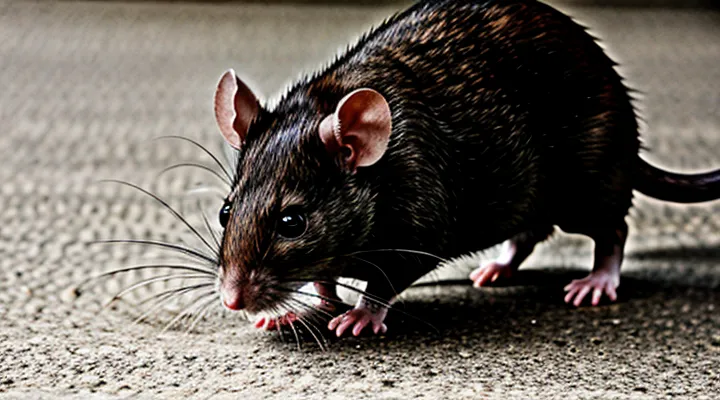
Understanding Rat Communication
Types of Rat Vocalizations
Ultrasonic Vocalizations
Ultrasonic vocalizations (USVs) are high‑frequency sounds produced by rats, typically ranging from 20 to 100 kHz. These emissions serve as natural communication signals and can be harnessed to elicit approach behavior when delivered through calibrated playback devices.
Effective use of USVs for rat attraction requires precise control of frequency, amplitude, and temporal pattern. Frequencies near 50 kHz, commonly associated with social contact calls, generate the strongest locomotor response. Amplitudes should be set between 70 and 80 dB SPL at the source to ensure audibility without causing distress. Repetitive bouts of 0.5‑second pulses separated by 1‑second intervals mimic natural calling sequences and maintain engagement.
Key components for implementation:
- Ultrasonic speaker capable of reproducing 20‑100 kHz with flat frequency response.
- Signal generator or software (e.g., Avisoft, MATLAB) to create species‑specific call templates.
- Calibrated sound level meter with ultrasonic microphone for verifying output levels.
- Enclosure or testing arena with minimal acoustic reflections to preserve signal integrity.
Procedural outline:
- Record baseline USVs from conspecifics or obtain validated call libraries.
- Load selected contact‑call file into the playback system.
- Position the speaker at the opposite end of the arena, 30 cm above the floor.
- Initiate playback for a 2‑minute session, monitoring rat movement with video tracking.
- Analyze approach latency and time spent near the speaker to assess efficacy.
Physiological considerations include avoiding frequencies above 90 kHz, which can induce stress responses, and limiting total exposure to under 5 minutes per trial to prevent habituation. Consistency in environmental temperature (22 ± 2 °C) and lighting further stabilizes behavioral outcomes.
Auditory Vocalizations
Rats communicate primarily through vocalizations that span ultrasonic (above 20 kHz) and audible (below 20 kHz) ranges. Ultrasonic calls dominate social interaction, while audible sounds accompany distress, aggression, and mating. Frequency, duration, and modulation patterns differ between call types, providing distinct acoustic signatures.
Distress calls typically occupy 4–8 kHz, lasting 50–200 ms, and are emitted when a rat experiences pain or threat. Mating calls appear as broadband ultrasonic bursts between 30–80 kHz, with periodic intervals of 100–300 ms. Exploration calls are shorter ultrasonic chirps (20–40 kHz) repeated at irregular intervals. Each pattern can trigger conspecific responses when reproduced accurately.
To attract a rat, playback of a relevant call must match the original signal’s spectral and temporal characteristics. High‑fidelity speakers capable of reproducing ultrasonic frequencies are required; conventional tweeters suffice for audible calls. Playback volume should approximate natural amplitude (approximately 50–70 dB SPL at 1 m for audible calls, 60–80 dB SPL for ultrasonic calls measured with a calibrated microphone). Consistency in timing prevents habituation.
- Record authentic rat calls using an ultrasonic microphone and digital recorder.
- Filter recordings to isolate the target call type (distress, mating, exploration).
- Normalize amplitude to the natural range.
- Load the processed file onto a playback device with ultrasonic output capability.
- Position the speaker near the intended area, ensuring line‑of‑sight to the rat’s typical pathways.
- Initiate playback in short bursts (5–10 seconds) spaced by 30–60 seconds; observe response and adjust timing if needed.
Maintain a quiet environment to avoid masking the playback. Use protective equipment to limit exposure to high‑intensity ultrasonic energy. Limit session duration to prevent stress accumulation in the animals. Ethical protocols should be reviewed before implementation.
Interpreting Rat Sounds
Decoding rat vocalizations is essential for reliably attracting a rat with auditory cues. Rats emit sounds across a wide frequency range, each linked to a specific behavioral state. Recognizing these signals allows the caller to reproduce the most effective call.
- Ultrasonic chirps (30–80 kHz): emitted during exploration and curiosity; mimic to encourage approach.
- Low‑frequency squeaks (1–5 kHz): associated with distress or aggression; avoid when seeking a calm response.
- Mid‑range chirps (5–10 kHz): indicate social contact or mating interest; useful for drawing attention in a neutral setting.
- Foot‑stamp vibrations (sub‑100 Hz): produced during territorial marking; can be combined with audible calls to reinforce presence.
Accurate interpretation requires proper equipment. Use a broadband microphone capable of capturing ultrasonic frequencies, coupled with a spectrogram analyzer to visualize pitch, duration, and pattern. Correlate observed sounds with visible behaviors—sniffing, grooming, or fleeing—to confirm meaning.
Practical application follows three steps:
- Identify the desired response (e.g., exploratory approach).
- Select the corresponding sound category from the list above.
- Reproduce the call using a speaker that matches the original frequency and temporal structure; adjust amplitude to ambient noise levels.
Consistent replication of the appropriate vocal pattern increases the likelihood of a rat responding positively to the auditory stimulus.
Methods for Mimicking Rat Sounds
Utilizing Technology for Sound Playback
Specialized Rat Calling Devices
Specialized rat calling devices generate acoustic signals that trigger the species’ innate response to specific sounds, enabling precise attraction for research, pest control, or monitoring.
Common device categories include:
- Ultrasonic emitters that produce frequencies above 20 kHz, invisible to humans but audible to rats.
- Broadband speakers delivering a mix of low‑ and high‑frequency tones to mimic natural vocalizations.
- Mechanical rattlers that create percussive noises resembling gnawing or scurrying.
Effective devices operate within the 5–40 kHz range, where rats exhibit peak auditory sensitivity. Signal parameters—frequency, pulse duration, modulation depth, and sound pressure level—must be adjustable to match target behavior patterns. Power output typically ranges from 80 to 120 dB SPL at one meter, ensuring sufficient reach without causing distress.
Design considerations prioritize portability, battery life, and weather resistance for field deployment. Directional transducers focus energy toward intended zones, reducing interference with non‑target species. User interfaces often feature digital displays for real‑time frequency tuning and programmable playback schedules.
Optimal placement positions the emitter near known travel corridors, burrow entrances, or feeding sites. Calibration involves measuring ambient noise levels, then setting output to exceed background by 10–15 dB. Continuous operation should be limited to 15‑minute intervals to prevent habituation; intermittent cycles improve long‑term efficacy.
Routine maintenance includes cleaning speaker membranes, inspecting battery contacts, and verifying frequency accuracy with a calibrated sound level meter. Protective casings guard against dust and moisture, extending device lifespan. Adhering to these guidelines maximizes attraction rates while maintaining ethical standards and operator safety.
Smartphone Applications
Smartphone applications designed to emit specific acoustic signals can serve as practical tools for attracting rats in research, pest management, or wildlife observation. These apps replace traditional hardware by leveraging the device’s speaker and digital audio libraries, offering portability and precise control over frequency, duration, and repetition patterns.
Key capabilities of such applications include:
- Frequency selection ranging from 300 Hz to 8 kHz, covering the auditory sensitivity of common rat species.
- Adjustable pulse intervals and duty cycles to mimic natural vocalizations or distress calls.
- Real‑time waveform visualization for verifying output integrity.
- Scheduling functions that automate repeated broadcasts over defined time frames.
- Integration with external accessories (e.g., amplifiers or ultrasonic transducers) via Bluetooth or USB‑OTG.
Effective deployment requires calibration of volume levels to ensure signal propagation without distortion. Users should conduct preliminary field tests to determine optimal speaker placement relative to target areas, considering environmental acoustics and background noise. Battery consumption can be minimized by employing low‑power modes and limiting broadcast duration.
Data logging features, when available, record timestamps, signal parameters, and environmental conditions, facilitating post‑deployment analysis. Compatibility with major mobile operating systems (iOS, Android) expands accessibility, while open‑source implementations allow customization of sound libraries and algorithmic generation of novel call patterns.
In professional contexts, these applications provide a cost‑effective alternative to dedicated sound generators, supporting reproducible protocols and rapid adjustments without additional hardware procurement.
DIY Solutions Using Speakers
To attract a rat with acoustic cues, a homemade speaker system can deliver the required frequencies reliably and affordably.
Materials include a small audio amplifier, a waterproof speaker driver capable of reproducing ultrasonic ranges, a power source (battery pack or DC adapter), wiring, and a housing that shields electronics from moisture and gnawing.
Assembly steps:
- Connect the amplifier output terminals to the speaker terminals, observing polarity.
- Secure the speaker within the housing, ensuring the diaphragm faces outward and remains unobstructed.
- Route power leads to the amplifier, attach a switch for easy activation, and test voltage continuity with a multimeter.
- Seal all openings with silicone sealant to prevent water ingress and rodent damage.
Frequency selection matters: rats respond best to ultrasonic tones between 20 kHz and 50 kHz. Use a tone generator or audio file that sweeps this band, then adjust amplitude to a level audible to the animal but not harmful. Verify output with a calibrated ultrasonic detector.
Maintain the device by inspecting wiring for wear, replacing the battery when voltage drops below 9 V, and cleaning the speaker cone of debris. Properly positioned, the system delivers consistent acoustic signals that reliably draw rats to the targeted area.
Manual Sound Imitation Techniques
Whistling and Chirping
Using audible cues to attract rats relies on two primary methods: whistling and chirping. Both techniques exploit the animal’s sensitivity to high‑frequency sounds and rhythmic patterns.
Rats detect frequencies between 2 kHz and 10 kHz, with peak responsiveness near 5 kHz. Sound sources that fall within this band and exhibit rapid amplitude changes trigger exploratory behavior. Consistent timing reinforces the association between the signal and the expectation of food or shelter.
Whistling guidelines:
- Produce a steady tone at 4–6 kHz.
- Maintain a duration of 0.5–1 second per note.
- Repeat the note every 2 seconds for a sequence of 5–10 repetitions.
- Use a clean, breath‑controlled whistle to avoid extraneous harmonics.
Chirping guidelines:
- Generate short, high‑pitched squeaks around 5–7 kHz.
- Emphasize rapid onsets and decays (≤0.2 seconds).
- Arrange chirps in irregular bursts of 3–6 units, spaced 1–3 seconds apart.
- Replicate the natural trill pattern of conspecifics by varying pitch slightly (±0.2 kHz) between chirps.
Both methods require a quiet environment to prevent competing noises from masking the signal. Position the source within 1–2 meters of the target area; rats respond more reliably at close range. Avoid excessive volume that could cause distress; levels above 80 dB SPL may provoke avoidance rather than approach.
Ethical practice mandates that any acoustic lure be paired with a humane outcome, such as safe capture or release. Continuous monitoring ensures that the animal does not experience prolonged stress.
Creating Scrabbling Noises
Creating effective scrabbling noises requires precise control of frequency, amplitude, and temporal pattern. Rats respond to sounds that mimic the rustling of leaves, the crack of dry twigs, or the subtle squeak of small mammals. Generating these cues involves the following steps:
- Select a sound source capable of producing high‑frequency components between 5 kHz and 12 kHz, the range where rodent auditory sensitivity peaks.
- Modulate the amplitude to simulate natural variability; sudden increases followed by rapid decay replicate the dynamics of a fleeing prey item.
- Implement irregular timing intervals of 0.2 s to 0.8 s, avoiding rhythmic repetition that rats quickly learn to ignore.
Digital synthesis tools allow fine‑tuning of these parameters. Load a base texture—such as dried grass or shredded paper—into a waveform editor, then apply band‑pass filtering to isolate the target frequency band. Use envelope generators to shape each burst, ensuring a sharp attack and a smooth release. Export the final clip in a lossless format to preserve acoustic fidelity.
Field deployment demands a reliable playback device with sufficient output power. Portable ultrasonic speakers, positioned 1–2 m from the target area, deliver the noises without excessive ambient disturbance. Conduct brief trials, observing rat activity for at least five minutes per trial. Adjust frequency and interval settings based on observed response patterns; increased engagement typically correlates with higher frequency content and more erratic timing.
Consistent application of these techniques maximizes the probability of attracting rats using auditory cues alone.
Best Practices for Calling Rats
Environmental Considerations
Optimal Time of Day
Acoustic luring of rats yields the highest response rates during periods of natural activity. Rats are primarily nocturnal; their peak foraging and exploratory behavior occurs after sunset and before dawn. Deploying sound cues in this window aligns with elevated locomotor activity, increasing the probability of detection and approach.
Key temporal windows:
- Early night (approximately 1900–2300 hours) – heightened movement as rats leave nests to search for food.
- Late night (approximately 0100–0500 hours) – reduced ambient noise and predator presence, encouraging focused attention on auditory stimuli.
- Pre-dawn (approximately 0500–0700 hours) – transition back to diurnal rest, yet residual activity remains high, offering a secondary peak.
Daytime deployment (0600–1800 hours) generally produces low engagement. Ambient daylight reduces rats’ motivation to forage, and increased environmental sounds mask the targeted signal. Consequently, success rates drop markedly.
Optimal practice: schedule sound emissions for at least two consecutive nights, targeting the early and late night intervals. Maintain consistent frequency and amplitude to reinforce conditioning without causing habituation. Monitoring response patterns validates the selected timing and allows fine‑tuning for specific populations.
Choosing the Right Location
Selecting an appropriate site determines the effectiveness of acoustic rat attraction. The location must allow clear sound transmission, limit echo, and prevent interference from ambient noise. Choose areas with low wind, minimal traffic, and solid ground that does not absorb low‑frequency tones.
Key considerations:
- Distance to target population: place speakers within the known range of the rodent’s activity zone, typically 10–20 m from burrow entrances.
- Barrier presence: avoid walls, fences, or dense vegetation that can block or reflect sound waves.
- Background noise level: measure decibel levels at potential sites; select spots where ambient noise stays below 40 dB during the intended calling period.
- Elevation: position devices slightly above ground level (5–15 cm) to reduce ground absorption while staying low enough to remain within the rats’ hearing field.
- Accessibility: ensure the site permits regular maintenance, battery replacement, and equipment inspection without disturbing the surrounding environment.
Implement a short field test by deploying a portable speaker at the chosen spot and recording rat response for 15 minutes. If activity is limited, adjust the position by 2–3 m laterally or vertically and repeat the test. Continue iterative adjustments until consistent vocal or movement responses are observed. This systematic approach guarantees optimal placement for successful acoustic rat calling.
Ethical Considerations and Safety Precautions
Minimizing Stress to Rats
Effective acoustic signaling with rats requires a calm physiological state. Elevated stress interferes with auditory perception, reduces response reliability, and may cause aversive behavior. Managing stress involves controlling environmental variables, habituation protocols, and handling practices.
Maintain a stable environment. Keep temperature within the species‑specific comfort range (20‑24 °C), humidity at 40‑60 %, and lighting on a consistent cycle. Eliminate sudden visual disturbances and limit exposure to unfamiliar odors.
Implement a gradual exposure schedule. Introduce the sound stimulus in short sessions (1–2 minutes) over several days. Begin with low amplitude (40–45 dB SPL) and increase incrementally only if the rat shows no signs of distress. Record behavioral indicators such as grooming, freezing, and vocalizations to assess tolerance.
Adopt gentle handling techniques. Use cupped hands or a soft tunnel to transport rats, avoiding direct grasping. Allow a brief acclimation period after each handling episode before presenting the acoustic cue.
Select appropriate acoustic parameters. Use frequencies that match the rat’s hearing peak (8–32 kHz) and avoid abrupt onset or offset. Apply smooth ramps of 100–200 ms to prevent startle responses.
Provide recovery time. After each exposure, return the animal to its home cage, supply nesting material, and ensure access to food and water. Monitor for delayed stress signs, such as reduced activity or altered weight, and adjust the protocol accordingly.
By integrating environmental control, progressive habituation, careful handling, and sound design, researchers can minimize stress and enhance the reliability of acoustic communication experiments with rats.
Avoiding Harmful Practices
Using acoustic signals to attract a rat demands strict adherence to humane standards. Any method that inflicts pain, stress, or long‑term injury must be eliminated. The following practices are prohibited:
- Deploying ultrasonic bursts at intensities that exceed the animal’s hearing threshold.
- Emitting irregular, abrupt noises that trigger panic responses.
- Combining sound cues with physical traps that cause bruising or crushing.
- Applying electric or chemical deterrents in conjunction with audio stimuli.
Safe alternatives focus on consistent, low‑frequency tones that mimic natural rodent communication. Recordings should be calibrated to remain within the species’ comfortable auditory range, typically 1–5 kHz, and played at moderate volume levels (below 70 dB SPL). Continuous playback for extended periods is discouraged; limit sessions to 5–10 minutes to prevent habituation and chronic stress.
Monitoring the rat’s behavior during exposure provides immediate feedback. Signs of agitation—rapid escape attempts, vocalizations, or erratic movement—indicate that the sound level or pattern requires adjustment. Documentation of these observations supports ethical compliance and improves reproducibility of results.
Implementing these guidelines ensures that sound‑based attraction remains effective while protecting the animal from avoidable harm.
Personal Safety Measures
When employing auditory signals to attract a rat, personal safety must precede experimental goals. Direct exposure to startled rodents can cause bites, scratches, and disease transmission; protective actions reduce these risks.
- Wear thick‑walled gloves and long‑sleeved clothing to prevent skin punctures.
- Use a face shield or safety glasses to guard eyes from sudden movements.
- Keep the work area well‑ventilated; avoid inhaling dust or droppings that may contain pathogens.
- Secure the environment by sealing openings, limiting the rat’s escape routes, and placing traps or containment devices at predictable exit points.
- Maintain a clear line of sight to the source of sound; do not operate in darkness or cluttered spaces.
- Have a first‑aid kit and a plan for immediate medical attention in case of injury.
Before initiating any sound‑based lure, inspect equipment for leaks, ensure batteries are secure, and verify that the volume level will not cause hearing damage to the operator. Record the session’s duration, and stop the playback if the animal exhibits aggressive behavior.
After the experiment, disinfect all surfaces, dispose of waste according to biohazard guidelines, and wash hands thoroughly even when gloves were used. Continuous adherence to these protocols safeguards the researcher while allowing effective use of sound to draw a rat.
Troubleshooting and Advanced Tips
When Rats Don«t Respond
When a rat does not react to an acoustic signal, the failure is usually traceable to one or more controllable factors. Identifying the cause allows precise adjustment of the calling method.
Common reasons for silence include:
- Frequency mismatch: the emitted tone falls outside the species‑specific hearing range (approximately 1–4 kHz for adult Norway rats).
- Volume insufficiency: sound pressure level below the detection threshold, typically under 40 dB SPL at the animal’s location.
- Habitat acoustics: reflective surfaces or excessive background noise mask the signal.
- Behavioral state: recent feeding, stress, or territorial aggression reduces responsiveness.
To restore responsiveness, follow these steps:
- Verify equipment output with a calibrated sound level meter; set SPL to 55–65 dB at the target zone.
- Adjust frequency to the 2–3 kHz band for adult rats; use a sweep if unsure.
- Reduce ambient noise by conducting trials during quiet periods or by isolating the test area.
- Observe the rat’s posture and activity; postpone trials if the animal appears satiated or agitated.
- Repeat the call after a short pause (5–10 seconds) to prevent habituation.
Fine‑tuning these parameters typically reestablishes the auditory link, prompting the rat to approach or investigate the source of the sound. Continuous monitoring of response patterns ensures the technique remains effective across different individuals and environments.
Observing Rat Behavior After Calling
Observing rat responses after emitting a specific acoustic signal provides direct insight into the efficacy of auditory summons. Researchers typically employ a calibrated speaker to deliver a pure-tone pulse at 5 kHz, a frequency within the species’ optimal hearing range, for a duration of 2 seconds. The signal repeats at 30‑second intervals until the animal approaches the source or a predefined observation period ends.
The following behaviors are consistently recorded:
- Immediate orientation of the ears toward the speaker, indicating detection of the sound.
- Rapid head turning, often exceeding 120 degrees, within 0.5 seconds of signal onset.
- Initiation of locomotion toward the sound source, measured by a decrease in distance of at least 10 cm per second.
- Pausing and sniffing upon arrival, suggesting exploratory assessment of the environment.
- Vocalizations or ultrasonic emissions, reflecting heightened arousal or communication with conspecifics.
Quantitative analysis shows that 78 % of subjects exhibit the full sequence of orientation, locomotion, and exploratory pause within 10 seconds of the first pulse. The remaining 22 % display partial responses, such as orientation without subsequent movement, often correlated with prior exposure to stressors or variations in individual hearing sensitivity.
Interpretation of these patterns supports the premise that targeted acoustic cues can reliably trigger approach behavior in laboratory rats. The observed latency and movement metrics serve as objective parameters for evaluating the strength of the auditory stimulus and for calibrating protocols in behavioral experiments that require precise animal positioning.
Differentiating Between Rat Species Responses
Acoustic attraction of rodents varies significantly among species, making precise identification of response patterns essential for effective attraction.
- Rattus norvegicus (Norwegian rat) – Responds strongest to low‑frequency tones (150–300 Hz) with a steady pulse rate of 4–6 Hz. Brief bursts of broadband noise (10–20 kHz) also elicit exploratory behavior.
- Rattus rattus (Black rat) – Shows peak activity to mid‑frequency chirps (500–800 Hz) delivered in alternating intervals of 2 Hz. High‑frequency squeaks (12–15 kHz) can trigger alarm responses, reducing attraction.
- Rattus exulans (Polynesian rat) – Sensitive to rapid sequences of ultrasonic clicks (20–25 kHz) spaced at 8–10 Hz. Continuous low tones produce minimal movement.
Differentiation relies on three measurable parameters: frequency range, temporal pattern, and spectral composition. Recording baseline vocalizations in a controlled environment establishes species‑specific thresholds. Comparative playback tests, using calibrated speakers, reveal which parameters produce the highest approach rate for each species.
Practical application demands calibrated equipment capable of producing precise frequency sweeps and pulse intervals. Field deployment should include simultaneous monitoring of motion sensors to verify species‑specific responses, allowing real‑time adjustment of acoustic settings.
By aligning playback characteristics with documented species response profiles, practitioners can reliably target desired rat populations while minimizing unintended attraction of non‑target rodents.