
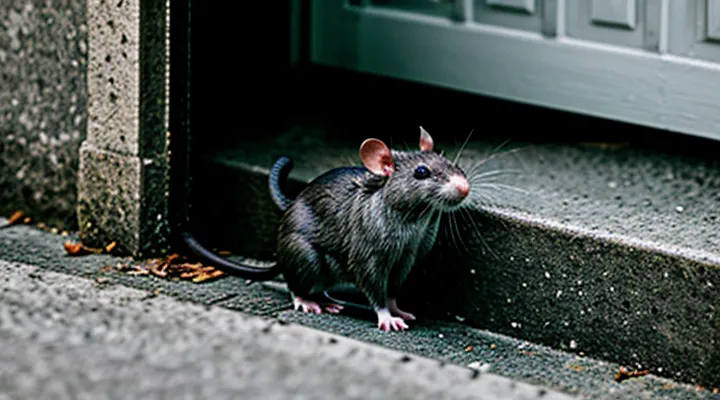
The Rat's Sensory Toolbox
Olfaction: The World Through Scent
Unraveling Complex Odors
Rats possess an olfactory apparatus that surpasses many mammals in sensitivity and resolution. Thousands of odorant receptors line the nasal epithelium, each capable of binding multiple volatile molecules. The sheer number of receptors creates a high‑dimensional detection space, allowing discrimination among thousands of chemically distinct cues.
Complex odors rarely consist of single compounds; they are mixtures of dozens to hundreds of volatile substances. Rats decode such mixtures through a combinatorial strategy: each odorant activates a unique pattern of receptors, and overlapping patterns generate a composite neural signature. This signature is transmitted to the olfactory bulb, where spatially organized glomeruli amplify and refine the signal before cortical processing.
Key mechanisms underlying mixture analysis include:
- Receptor diversity – over 1,000 functional receptor genes provide the basis for fine‑grained chemical resolution.
- Temporal dynamics – rapid firing patterns encode concentration changes, enabling detection of transient components.
- Lateral inhibition – interneuronal circuits suppress weaker signals, sharpening contrast between dominant and subordinate odorants.
- Pattern learning – experience‑dependent plasticity adjusts synaptic weights, improving discrimination of behaviorally relevant blends.
Behavioral outcomes reflect this sophisticated processing. Rats navigate mazes, locate food, and avoid predators by extracting salient features from complex odor landscapes. Experiments demonstrate that even when major components are masked, rodents can identify target scents through subtle cues, highlighting the robustness of their olfactory decoding system.
Navigating by Scent Trails
Rats rely on a highly developed olfactory system to construct and follow scent trails that guide movement through complex environments. Volatile compounds released from urine, glandular secretions, and footpad residues create a chemical map that persists for several minutes, allowing individuals to trace routes even in complete darkness.
Detection occurs primarily in the main olfactory epithelium, where receptor neurons bind specific odorants and transmit signals to the olfactory bulb. Parallel processing in the vomeronasal organ extracts pheromonal information, facilitating discrimination between conspecific markings and environmental odors. Neural circuits integrate intensity gradients, generating directional cues that steer locomotion toward the strongest scent source.
Behavioral patterns exhibit a sequence of actions: initial exploration, trail acquisition, and continuous reinforcement through periodic re‑marking. Rats adjust walking speed to maintain contact with the odor gradient, and they exhibit rapid correction when the trail is disrupted, demonstrating real‑time sensory feedback.
Key advantages of olfactory navigation include:
- Functionality in low‑light or nocturnal settings where visual cues are unreliable.
- Direct association of scent intensity with resource locations such as food caches.
- Immediate detection of predator odorants, enabling swift avoidance responses.
- Transmission of social information, allowing individuals to locate nest sites and mates.
Experimental verification employs maze configurations infused with controlled odorants, high‑resolution tracking of movement trajectories, and electrophysiological recordings from olfactory receptors. Results consistently show that rats can sustain accurate trail following over distances exceeding several meters, confirming the efficiency of scent‑based orientation.
«Rats can maintain a scent trail for up to 30 minutes», a finding reported in recent neuroethological studies, underscores the temporal stability of chemical pathways and their relevance to spatial cognition.
Audition: A Symphony of High Frequencies
Ultrasonic Communication
Rats emit vocalizations above 20 kHz that are inaudible to humans. These ultrasonic calls travel short distances in cluttered environments, allowing precise transmission of information without alerting predators.
Production of ultrasonic signals relies on rapid oscillations of the laryngeal muscles. Specialized auditory hair cells in the cochlea are tuned to frequencies up to 100 kHz, providing acute sensitivity to these high‑frequency sounds.
Ultrasonic communication supports several behavioral functions:
- Alarm signalling that warns conspecifics of imminent threats.
- Coordination of group foraging through brief contact calls that convey location and activity.
- Reinforcement of social bonds via grooming‑related chirps exchanged during close physical interaction.
- Navigation in dark burrows, where echo‑based perception augments tactile cues.
Neural pathways linking the inferior colliculus to the auditory cortex process ultrasonic inputs with millisecond precision, enabling rapid decision‑making. Pharmacological disruption of the cochlear amplifier diminishes call detection, confirming the reliance of these rodents on high‑frequency hearing for environmental awareness.
Locating Sounds in Darkness
Rats rely on acute auditory processing to determine the origin of sounds when visual cues are unavailable. Their small head size creates a narrow interaural distance, yet neural circuits extract precise spatial information from subtle differences in sound arrival.
Key auditory cues employed in darkness include:
- Interaural time difference (ITD): minute disparities in the arrival time of a wave at each ear allow detection of azimuthal position.
- Interaural level difference (ILD): variations in sound intensity between ears provide additional directional data, especially for higher frequencies.
- Spectral filtering: the shape of the ear canal modifies frequency content, furnishing cues about elevation and front‑back distinction.
Behavioral experiments demonstrate rapid orientation toward novel acoustic sources. Rats trained to locate hidden speakers in complete darkness achieve accuracy within a few centimeters, indicating efficient integration of the above cues. Electrophysiological recordings from the inferior colliculus and auditory cortex reveal neurons tuned to specific ITD and ILD combinations, confirming the neural basis for spatial hearing.
The auditory system operates synergistically with whisker‑based mechanosensation. Vibrations transmitted through the skull during vocalizations generate tactile feedback that refines localization, particularly for low‑frequency sounds that produce limited ITD cues.
Overall, the combination of binaural timing, intensity gradients, and spectral shaping equips rats with a robust mechanism for navigating and foraging in environments devoid of light.
Vision: A Dim and Blurry Perspective
Low Light Adaptation
Rats possess a visual system specially tuned for dim environments, allowing them to navigate and locate resources when illumination is minimal. Their retinas contain a high proportion of rod photoreceptors, which are more sensitive to low photon counts than cones. This cellular composition enhances photon capture, extends the range of detectable light, and supports motion detection in near‑darkness.
Key physiological and behavioral adaptations include:
- Enlarged pupils that dilate rapidly, maximizing light entry.
- A reflective tapetum lucidum behind the retina, which redirects scattered photons back through photoreceptors.
- Elevated expression of rhodopsin, the light‑sensing pigment that amplifies signal transduction under low‑light conditions.
- Preference for nocturnal activity patterns, reducing competition and predation while exploiting the limited ambient light.
Limited Color Perception
Rats possess a visual system optimized for low‑light environments rather than vibrant coloration. Their retinas contain two types of cone photoreceptors, each sensitive to short (≈360 nm) and medium (≈510 nm) wavelengths. The absence of a third cone class eliminates sensitivity to longer wavelengths, resulting in dichromatic vision that distinguishes only shades of blue‑green and gray.
Experimental studies using electroretinography and behavioral discrimination tasks demonstrate that rats reliably differentiate between bright and dark stimuli but fail to separate colors that differ solely in the red spectrum. For example:
- When presented with monochromatic LEDs at 460 nm and 530 nm, rats show consistent choice preferences.
- Identical intensity LEDs at 620 nm and 650 nm produce no statistically significant discrimination.
The limited color range aligns with the nocturnal and subterranean habits of the species. In dim conditions, contrast in luminance outweighs chromatic information for detecting predators, locating food, and navigating tunnels. Consequently, the visual cortex allocates processing power to motion detection and spatial resolution rather than hue discrimination.
Understanding this constraint informs the design of laboratory environments and enrichment devices. Lighting that emphasizes the blue‑green spectrum enhances visual engagement, while red lighting remains largely invisible to the animal, reducing stress without compromising visual cues.
Somatosensation: The Whisker-Guided Universe
Whisker Function and Mapping
Rats rely on their vibrissae to acquire detailed spatial information that compensates for limited visual acuity. Each whisker contains a dense array of mechanoreceptors that transduce minute deflections into neural signals, enabling detection of surface texture, object shape, and airflow patterns.
Key functional properties of whiskers include:
- High‑frequency sensitivity to vibrations generated by contact with substrates.
- Directional selectivity, allowing discrimination of forward versus lateral movements.
- Rapid adaptation, providing real‑time updates during locomotion.
Sensory signals from individual vibrissae travel via the trigeminal pathway to the primary somatosensory cortex, where a precise somatotopic map—known as the barrel field—preserves the spatial arrangement of the whisker pad. Each cortical barrel corresponds to a single whisker, maintaining one‑to‑one correspondence that supports fine‑grained tactile discrimination. The organization allows integration of multi‑whisker input, generating a coherent representation of the environment that guides exploratory behavior and navigation.
Tactile Exploration and Object Recognition
Rats rely on an elaborate tactile system to gather information about their surroundings. The primary sensory organ is the set of facial whiskers, known as «vibrissae», which move rhythmically to sample surfaces. Each whisker transmits mechanical deflections to a dedicated pathway that terminates in the somatosensory cortex, where the barrel field organizes inputs from individual whiskers.
Object recognition emerges from the integration of spatial and temporal patterns generated during active whisking. Neurons in the barrel cortex encode parameters such as texture roughness, object shape, and distance, allowing discrimination between seemingly identical items. Experimental paradigms demonstrate this capability:
- Gap‑crossing tasks reveal precise distance estimation based on whisker feedback.
- Texture discrimination assays show differential firing rates when rats encounter surfaces of varying coarseness.
- Object‑identification tests confirm rapid classification of novel shapes after limited tactile exposure.
The sensorimotor loop governing whisker movement adjusts force and angle according to the detected properties, ensuring efficient exploration. Plasticity within the cortical representation refines recognition performance with repeated exposure, supporting adaptive behavior in complex environments.
Taste: Distinguishing Edible from Toxic
Receptor Diversity
Rats possess a broad array of sensory receptors that enable detection of chemical, tactile, auditory, and visual cues across diverse environments. This receptor diversity underlies the animal’s capacity to navigate complex habitats, locate food, and avoid predators.
Key receptor families include:
- Olfactory receptors: millions of variants expressed in the nasal epithelium, providing discrimination of volatile compounds at sub‑ppm concentrations.
- Gustatory receptors: multiple taste‑cell types located on the tongue and palate, each tuned to sweet, bitter, umami, salty, and sour stimuli.
- Mechanoreceptors: Merkel cells, Pacinian corpuscles, and hair‑cell complexes in the skin and whisker follicles, delivering high‑resolution tactile feedback.
- Auditory hair cells: inner ear sensory cells specialized for ultrasonic frequencies up to 100 kHz, supporting communication and echolocation.
- Photoreceptors: rod and cone cells with peak sensitivity in low‑light conditions, facilitating nocturnal navigation.
The genetic mechanisms driving this diversity involve extensive gene families, alternative splicing, and receptor turnover. For example, the olfactory receptor gene repertoire exceeds 1,200 functional loci, each regulated by distinct promoter elements that respond to environmental exposure. Similarly, mechanosensory channels such as Piezo1 and Piezo2 exhibit isoform variation that modulates threshold sensitivity in different tissue regions.
Functional implications of receptor heterogeneity are evident in behavioral assays. Rats with reduced olfactory receptor expression show impaired foraging efficiency, while selective ablation of whisker mechanoreceptors diminishes spatial learning performance. These findings illustrate how the multiplicity of sensory detectors shapes the animal’s perception of its surroundings.
Food Preferences and Aversions
Rats exhibit distinct dietary patterns shaped by olfactory acuity, gustatory receptors, and learned associations. Sweet solutions trigger robust intake, reflecting high sensitivity of the sweet‑taste pathway. Protein‑rich foods, such as soy and lean meat, are favored when rats experience mild caloric deficit, indicating adaptive regulation of macronutrient balance. Fatty substrates elicit moderate consumption; however, preference intensifies when accompanied by strong odor cues, underscoring the primacy of scent in food selection.
Aversions develop through exposure to bitter compounds, including alkaloids and certain synthetic preservatives. When a novel taste is paired with gastrointestinal discomfort, rats rapidly develop conditioned taste aversion, avoiding the stimulus in subsequent trials. High‑salt concentrations provoke limited intake, as excessive sodium disrupts osmotic homeostasis. Additionally, strong acidic or sour flavors reduce consumption, reflecting innate protective mechanisms against potentially harmful pH levels.
Key determinants of preference and aversion include:
- Odor intensity: strong, pleasant aromas increase approach behavior.
- Texture: soft, easily masticated items are preferred over coarse, fibrous material.
- Prior experience: repeated exposure without adverse effects reinforces acceptance.
- Nutrient state: hunger elevates drive for energy‑dense foods, while satiety shifts focus to micronutrient sources.
Understanding these dietary choices provides insight into rats’ sensory world, revealing how chemical cues and physiological needs converge to shape feeding behavior.
Beyond Individual Senses: Integrated Perception
Multisensory Integration
Rats continuously combine signals from vision, olfaction, audition, and tactile whisker input to construct a coherent representation of their surroundings. This process, termed multisensory integration, relies on rapid convergence of modality‑specific pathways within shared neural hubs.
Key integration sites include:
- Superior colliculus, where visual and auditory cues align to guide orienting movements.
- Barrel cortex, which merges vibrissal touch with concurrent odor information to refine object localization.
- Posterior parietal cortex, which synthesizes spatial data from multiple senses for navigation.
- Hippocampal formation, which incorporates multimodal context to support memory encoding of routes and food sources.
Experimental evidence derives from in‑vivo electrophysiology, two‑photon calcium imaging, and optogenetic manipulation. Recordings reveal that neurons in these structures display subthreshold summation of inputs, followed by suprathreshold spikes when cross‑modal coincidence exceeds a threshold. Temporal precision of integration is on the order of tens of milliseconds, enabling real‑time behavioral adjustments.
Behaviorally, multisensory integration enhances foraging efficiency, predator detection, and social communication. Rats exposed to congruent visual‑olfactory cues locate food faster than when cues are presented in isolation. Conversely, conflicting signals trigger heightened vigilance and altered locomotor patterns, indicating a decision‑making mechanism that weighs sensory reliability.
Overall, the rat brain exemplifies a distributed architecture in which distinct cortical and subcortical regions coordinate to fuse disparate sensory streams, producing an adaptive perception of the external world.
Brain Mechanisms of Perception
Rats process sensory information through a tightly integrated network of cortical and subcortical structures. Primary visual cortex (V1) receives retinal signals via the thalamic lateral geniculate nucleus, where orientation and spatial frequency tuning emerge. The superior colliculus contributes to rapid orienting responses by integrating visual and auditory cues, while the posterior parietal cortex synthesizes multisensory inputs to guide navigation. Hippocampal place cells generate spatial maps that reflect environmental geometry, relying on inputs from the entorhinal cortex’s grid cells.
Key neural mechanisms include:
- Synaptic plasticity in V1 that refines receptive fields based on experience.
- Cross‑modal convergence in the superior colliculus enabling threat detection.
- Theta‑rhythmic coupling between hippocampus and entorhinal cortex that supports spatial memory formation.
- Neuromodulatory regulation by acetylcholine, which enhances signal‑to‑noise ratios during attentive states.
Ecological Implications of Rat Perception
Predator Avoidance
Rats rely on a finely tuned set of sensory and behavioral processes to detect and evade potential predators. Rapid assessment of danger begins with olfactory receptors that identify predator scents, auditory organs that register low‑frequency rustles, and whisker arrays that sense air currents and near‑field vibrations. These inputs converge on brain regions that generate immediate defensive actions.
Key components of the avoidance system include:
- Olfactory detection of kairomones such as cat urine or fox feces.
- Auditory sensitivity to sudden broadband noises exceeding 70 dB.
- Vibrissal monitoring of airflow disturbances caused by approaching mammals.
Upon confirming threat presence, rats employ stereotyped responses. Freezing minimizes movement cues, while rapid sprinting to burrows or concealed routes increases distance from the predator. In addition, ultrasonic vocalizations serve as alarm signals that alert conspecifics to danger, prompting coordinated escape.
Neural pathways underlying these reactions involve the amygdala for threat evaluation, the hypothalamus for autonomic activation, and the periaqueductal gray for motor execution. Synaptic plasticity within these circuits enhances detection efficiency after repeated exposures, leading to faster reaction times.
The effectiveness of «predator avoidance» directly influences individual survival probabilities and shapes population structure. Elevated escape success rates correlate with higher reproductive output, while persistent predation pressure drives selection for heightened sensory acuity and more elaborate escape tactics.
Foraging Strategies
Rats rely on multimodal sensory integration to locate and evaluate food sources. Olfactory cues dominate initial detection, with volatile compounds guiding movement toward potential items. Tactile exploration through whisker contact refines spatial mapping, allowing discrimination of texture and size before ingestion.
Key foraging tactics include:
- Scatter searching – frequent short excursions across a defined area, maximizing encounter probability with randomly distributed resources.
- Route memorization – repeated traversal of efficient pathways, reinforced by landmark recognition and path integration.
- Risk assessment – rapid evaluation of predator cues, such as sudden vibrations or alarm pheromones, prompting immediate retreat or concealment of food.
- Social information use – observation of conspecific feeding behavior, leading to recruitment to abundant patches and avoidance of depleted zones.
Temporal patterns adapt to environmental stability. In predictable settings, rats develop circadian feeding schedules aligned with reduced predation risk. In volatile habitats, opportunistic bursts of activity replace fixed routines, emphasizing flexibility.
Nutrient composition influences selection. High‑energy items, particularly those rich in carbohydrates and lipids, receive priority when metabolic demand rises. Conversely, protein‑rich sources are sought during reproductive periods, reflecting hormonal modulation of taste sensitivity.
Overall, foraging strategies illustrate the intricate link between sensory perception and decision‑making in rats, revealing a balance between resource acquisition and survival imperatives.
Human Interaction and Rat Perception
Baiting and Trapping Strategies
Rats rely heavily on olfaction, tactile feedback, and nocturnal vision; control methods must align with these sensory priorities.
Effective baits exploit innate preferences for high‑energy nutrients and strong odor signatures. Common choices include:
- «peanut butter» – dense fat, persistent scent
- «sunflower seeds» – protein‑rich, aromatic
- «dry cat food» – mixed macronutrients, volatile compounds
- «canned fish» – intense marine odor, attractive to omnivores
Trap design should minimize visual disturbance and provide secure contact points for whisker and paw detection. Low‑profile devices with smooth entryways reduce hesitation, while placement along established runways—typically within 10 cm of walls—maximizes encounter rates.
Typical trap categories suitable for rodent control are:
- Snap traps – rapid immobilization, minimal after‑effects
- Live‑capture cages – humane retrieval, requires frequent monitoring
- Electronic traps – voltage‑induced lethality, low maintenance
Deployment timing must correspond to peak activity periods, generally between dusk and early morning. Positioning devices at intervals of 1–2 m along suspected pathways ensures coverage without overcrowding.
Continuous assessment of capture data guides bait rotation and trap relocation, preventing habituation and maintaining efficacy.
Understanding Rat Behavior in Urban Environments
Rats thriving in cities exhibit behavior shaped by dense human activity, limited resources, and complex infrastructure. Their survival depends on rapid assessment of risk, efficient exploitation of food sources, and flexible social coordination.
Sensory systems dominate decision‑making. Olfactory receptors detect minute traces of waste, enabling identification of viable foraging sites across meters of tunnel. Auditory sensitivity to low‑frequency vibrations alerts individuals to approaching predators or mechanical disturbances. Whisker arrays provide tactile feedback for navigation in dark, confined passages, supporting precise movement through cluttered environments.
Social organization optimizes resource acquisition. Colonies maintain hierarchies that allocate breeding responsibilities while subordinate members focus on exploration and food transport. Communication relies on scent marking, vocalizations, and body language, synchronizing group responses to sudden changes such as garbage collection schedules or construction activity.
Interaction with urban infrastructure reveals adaptive strategies:
- Exploitation of sewer networks for shelter and water access.
- Utilization of building cavities to establish nesting sites near heat sources.
- Seasonal adjustment of foraging routes to avoid increased traffic density.
- Development of nocturnal activity patterns that reduce exposure to human disturbance.
These behavioral traits illustrate how rats continuously reinterpret the urban landscape, converting human-generated challenges into opportunities for sustained colonization.