
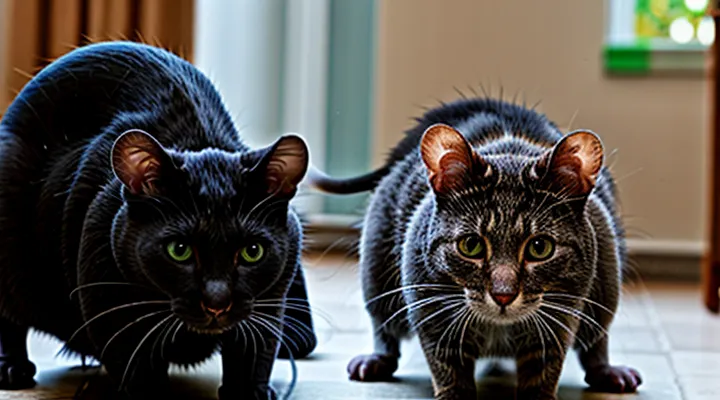
Understanding the Feline-Rodent Dynamic
Historical Perceptions of Predator and Prey
The Traditional View of Cats and Rats
The traditional perception of cats and rats rests on a long‑standing predator‑prey narrative. Cats are classified as efficient hunters, valued for their ability to suppress rodent populations in homes, farms, and warehouses. Rats are portrayed as destructive vermin, responsible for contaminating food supplies, damaging structures, and transmitting disease. This dichotomy appears repeatedly in folklore, literature, and early scientific observations.
Key elements of the conventional view include:
- Cats instinctively chase and kill rats, a behavior reinforced through domestication and selective breeding.
- Rats develop avoidance strategies, such as heightened vigilance and rapid escape responses, when exposed to feline presence.
- Human societies have historically encouraged cat ownership to protect grain stores and urban food sources from rat infestations.
- Cultural depictions often cast cats as heroic protectors and rats as cunning adversaries, reinforcing the binary image.
These assumptions shaped early pest‑control practices, influencing the development of veterinary training, urban planning, and agricultural management. Contemporary research reveals more nuanced interactions, but the traditional framework continues to inform public expectations and policy decisions.
Deviations from the Stereotype
Observations from urban and laboratory environments reveal several ways the traditional predator‑prey narrative between felines and rodents breaks down. Cats occasionally tolerate the presence of rats when food sources are abundant, reducing the incentive to hunt. In some households, rats learn to navigate around cats by exploiting nocturnal activity patterns that differ from the cat’s peak hunting times. Certain rat populations develop heightened wariness, displaying avoidance behaviors that limit direct encounters.
Key deviations include:
- Mutual indifference – when both species receive regular feeding, aggressive interactions decline sharply.
- Co‑habitation in shared shelters – abandoned warehouses and basement spaces host colonies of rats alongside stray cats that use the same structures for resting.
- Behavioral adaptation – rats raised in proximity to non‑hunting cats exhibit reduced flight responses, allowing them to move within the same rooms without triggering pursuit.
- Dietary shift in cats – domestic cats receiving commercial diets show lower predatory drive toward small mammals, resulting in passive coexistence.
Scientific reports confirm that environmental stability, reduced competition for food, and habituation to each other's scent cues contribute to these patterns. The evidence challenges the assumption that feline presence inevitably eliminates rodent infestations, emphasizing the need for nuanced pest‑management strategies that consider behavioral flexibility in both species.
Factors Influencing Coexistence
Environmental Conditions and Resource Availability
Urban Landscapes and Shared Habitats
Rats and cats occupy overlapping niches in dense city environments, where built structures, waste streams, and green corridors create a mosaic of habitats. The architecture of streets, alleys, and high‑rise complexes provides shelter, foraging sites, and movement pathways that both species exploit.
Key factors shaping their shared spaces include:
- Structural complexity: Cracks, utility tunnels, and abandoned buildings offer rats refuge, while elevated ledges and balconies serve as perches for cats.
- Resource distribution: Food waste accumulates near markets and restaurants, attracting rats; cats patrol these zones to hunt or scavenge.
- Temporal partitioning: Rats are primarily nocturnal, reducing direct encounters with diurnal cats that dominate daylight hours.
- Human activity: Waste management practices, pest control measures, and pet ownership patterns alter population densities and interaction rates.
Spatial segregation emerges as a natural outcome of these pressures. Rats concentrate in subterranean networks and low‑lying debris, whereas cats dominate open rooftops, park benches, and street‑level sightlines. Overlap occurs at transitional zones—such as garbage collection points—where predation risk for rats increases and cat foraging success is enhanced.
Management strategies that influence coexistence focus on habitat modification:
- Secure waste containers to limit attractants.
- Install exclusion devices in utility shafts to deter rat ingress.
- Promote responsible outdoor cat practices, including controlled roaming and vaccination, to reduce stray populations.
- Enhance urban green spaces with dense vegetation that offers refuge for native wildlife while discouraging excessive rat colonization.
By aligning infrastructure design, waste policies, and animal welfare measures, city planners can shape environments where rats and cats occupy distinct but interrelated niches, minimizing conflict and supporting ecological balance.
Food Scarcity and Competition
Food scarcity intensifies competition between rodents and felines that share urban and rural habitats. Limited resources force rats to expand foraging ranges, increasing encounters with cats that patrol the same territories for prey. When natural food supplies decline, rats exploit human waste, sewers, and stored grain, while cats shift from hunting live prey to scavenging leftovers or hunting opportunistically in the same areas.
Competition manifests in several observable patterns:
- Rats increase nocturnal activity to avoid direct confrontation with cats, exploiting periods when feline predation pressure is lower.
- Cats adjust hunting strategies, focusing on ambush tactics near known rat pathways and using scent cues to locate hidden infestations.
- Both species develop spatial avoidance zones; rats establish burrow networks away from high‑cat traffic, while cats patrol perimeters of known rodent hotspots.
Physiological stress rises for both species under food shortage. Rats exhibit elevated cortisol levels, leading to faster reproduction cycles that can temporarily boost population density despite higher predation risk. Cats experience weight loss and reduced hunting efficiency, prompting some individuals to form loose colonies that share information about food sources and predator presence.
Effective management of this competition requires controlling waste generation, securing storage facilities, and maintaining habitat structures that limit overlapping foraging zones. Reducing accessible food for rats diminishes their attraction to cat‑occupied areas, while providing supplemental feeding for cats can lower predation pressure on vulnerable rodent populations.
Behavioral Adaptations and Learned Responses
Rat Evasion Strategies
Rats have developed multiple behavioral and physiological mechanisms that diminish the risk of feline predation. These mechanisms enable rodents to occupy environments where cats are present while maintaining population stability.
- Shift to crepuscular or nocturnal foraging to avoid peak cat activity.
- Emit and detect ultrasonic vocalizations that signal danger and trigger rapid retreat.
- Produce dense, oily secretions that reduce scent detection by cats.
- Construct extensive burrow systems with multiple escape routes.
- Exhibit high‑speed sprint bursts exceeding 8 m s⁻¹ when a cat approaches.
- Maintain heightened vigilance, scanning surroundings with frequent head movements.
- Communicate alarm through high‑frequency squeaks, prompting nearby rats to freeze or flee.
The combination of temporal avoidance, olfactory masking, architectural complexity, and rapid locomotion creates a dynamic equilibrium that permits rats and cats to share habitats without constant lethal encounters.
Cat Hunting Efficacy and Motivations
Cats possess innate predatory circuitry that drives rapid detection, pursuit, and capture of small mammals. Visual acuity attuned to motion, auditory sensitivity to high‑frequency rustles, and whisker feedback for precise spatial judgments enable efficient localization of rodents. Muscular coordination supports explosive acceleration and silent stalking, while retractable claws provide grip and lethal force. These physiological traits translate into a high success rate when confronting rats, especially juveniles or individuals weakened by disease or competition.
Motivations for feline hunting are multifaceted:
- Nutritional need – solitary hunters may supplement diet with prey when food availability fluctuates.
- Instinctual drive – the predatory sequence (search, stalk, pounce, kill) is hard‑wired, manifesting even in well‑fed domestic cats.
- Territorial reinforcement – eliminating potential competitors reduces prey density within a cat’s range, securing resources.
- Play behavior – repetitive capture attempts reinforce motor skills and maintain readiness for opportunistic feeding.
Environmental variables modulate efficacy. Dense clutter or abundant shelter diminishes line‑of‑sight, lowering capture probability. Conversely, open alleys, low lighting, and predictable rodent pathways increase encounter rates. Seasonal shifts affect rodent activity patterns, aligning with peak feline hunting periods.
Understanding these mechanisms clarifies why cats can coexist with rats in shared habitats: predation pressure curtails rodent populations, while rats adapt by exploiting micro‑refuges and nocturnal schedules, establishing a dynamic equilibrium.
Human Intervention and Influence
Pet Ownership and Controlled Environments
Pet owners who keep both small rodents and felines must design a living space that limits predatory impulses while preserving the health of each animal. A secure, escape‑proof cage for the rodent placed on a stable surface eliminates direct contact. Position the cage behind a solid barrier—such as a glass or acrylic panel—to block visual cues that trigger chase behavior.
Environmental factors influence stress levels. Maintain a temperature range of 18‑24 °C and a humidity level of 40‑60 % inside the rodent enclosure. Provide nesting material, tunnels, and chewable objects to encourage natural foraging. For the cat, supply elevated perches, scratching posts, and interactive toys to redirect hunting instincts toward appropriate outlets.
Behavioral protocols reinforce safety. Supervise any exposure to the rodent enclosure, allowing the cat to observe without direct access. Use a click‑train system to reward the cat for calm observation. Schedule regular play sessions for the cat to reduce idle predatory drive. Rotate enrichment items for both species to prevent boredom.
Key practices for responsible cohabitation:
- Install a lockable, ventilated cage with a transparent front panel.
- Keep the cage out of reach of the cat’s paws and claws.
- Provide the cat with visual and olfactory distractions (e.g., feather wands, scent diffusers).
- Conduct brief, supervised viewing periods, rewarding the cat for non‑aggressive behavior.
- Clean the rodent habitat daily to control odor and disease risk.
- Conduct routine veterinary checks for both animals, focusing on parasite prevention and vaccination status.
Adhering to these measures creates a controlled environment where both pets can thrive without compromising safety.
Pest Control Measures and Their Impact
Effective pest‑management strategies shape the dynamic between rodents and felines in shared environments. Chemical rodenticides reduce rat populations quickly but pose toxicity risks to cats that may ingest poisoned prey, leading to secondary poisoning and potential organ damage. Integrated approaches that combine reduced‑toxicity baits with strict monitoring mitigate these hazards while maintaining control efficacy.
Physical barriers such as sealed entry points, wire mesh, and trap‑proof containers limit rodent access without affecting feline movement. When installed properly, they decrease the likelihood of cats encountering live rats, lowering stress and predation incidents. Regular inspection ensures integrity and prevents accidental entrapment of pets.
Biological methods, including the introduction of predatory birds or the use of feral cat colonies, influence rat behavior through increased perceived threat. However, heightened predation pressure can drive rats to seek hidden refuges, potentially elevating infestation in concealed areas. Balancing predator presence with habitat modification reduces this displacement effect.
Monitoring and data collection underpin adaptive management. Key metrics include:
- Rodent capture rates per month
- Incidence of feline exposure to toxic bait
- Frequency of structural breaches
- Observed changes in cat hunting behavior
By aligning chemical, physical, and biological tactics with continuous assessment, stakeholders can sustain effective rat suppression while safeguarding feline health and preserving ecological balance.
Case Studies and Observations
Documented Instances of Neutral Interaction
Shared Territories Without Aggression
Rats and cats can occupy the same space when environmental conditions and behavioral cues reduce the likelihood of conflict. Proper resource distribution, habitat design, and conditioning techniques create a stable coexistence.
Key factors that enable peaceful sharing:
- Separate feeding stations – placing food bowls at a distance prevents competition and limits scent trails that trigger predatory instincts.
- Vertical complexity – installing shelves, ramps, and elevated platforms gives rats refuge above cat sightlines, while cats retain ground access.
- Predictable routines – consistent cleaning schedules and predictable human presence diminish stress for both species, reducing aggressive responses.
- Gradual exposure – controlled visual and olfactory introductions allow each animal to recognize the other as a non‑threatening presence before unrestricted interaction.
Behavioral observations support these measures. Rats display reduced flight responses when escape routes are available, and cats show lower stalking frequency when prey cues are absent. Monitoring stress indicators—such as vocalization patterns, grooming frequency, and territorial marking—provides early warning of potential escalation.
Implementing the outlined strategies results in shared territories where neither species perceives the other as a direct threat. This arrangement sustains animal welfare while allowing owners to manage multi‑species households efficiently.
Mutual Disregard and Parallel Existence
Rats and cats often share the same urban and domestic spaces without direct interaction. Each species follows its own activity pattern, limiting overlap: cats hunt primarily at dusk and night, while rats are most active during early night and pre‑dawn hours. This temporal separation reduces encounters, allowing both to occupy the same territory while remaining largely indifferent to one another.
Physical boundaries also contribute to parallel existence. Cats patrol perimeters, marking routes with scent and visual cues; rats navigate through concealed passages, sewers, and wall voids. The distinct spatial niches prevent frequent contact, reinforcing a state of mutual disregard. Consequently, neither species adapts specialized defenses or strategies aimed specifically at the other.
Typical manifestations of this coexistence include:
- Cats ignoring rats that remain hidden or out of sight.
- Rats avoiding open areas where feline patrols are evident.
- Both species exploiting shared food sources without direct competition; cats may scavenge leftovers, rats consume waste, and each sustains its own diet.
- Seasonal fluctuations in activity levels causing temporary increases in overlap, yet the overall pattern stays non‑confrontational.
The result is a stable ecological arrangement in which rats and cats persist side by side, each maintaining its own behavioral regime while minimally influencing the other's survival prospects.
Factors Leading to Peaceful Equilibrium
Abundant Food Sources for Both Species
Abundant food supplies create a shared ecological niche that reduces direct competition between rats and cats. When resources are plentiful, rats experience lower pressure to venture into territories heavily patrolled by cats, while cats receive sufficient prey without needing to hunt aggressively.
Key food sources supporting both species include:
- Stored grains and cereals in warehouses or pantries
- Compost heaps and organic waste containing insects and small vertebrates
- Pet food left unattended in outdoor feeding stations
- Fruit fallen from trees, especially berries and apples
- Small vertebrates such as mice and insects that thrive in nutrient‑rich environments
Providing reliable food sources diminishes the incentive for cats to hunt rats aggressively. Controlled feeding stations placed away from primary rat pathways allow cats to satisfy nutritional needs without prompting predatory encounters. Regular monitoring of waste management and secure storage of consumables further stabilizes the food landscape, fostering a balanced coexistence.
Established Routines and Territories
Rats and cats can share a household when each animal’s daily pattern and spatial limits are clearly defined.
Rats typically occupy lower levels, nest boxes, and hidden corners. Their range extends to any area offering shelter and proximity to food sources. Cats favor elevated spots, perches, and clear sightlines that enable monitoring of movement. When the two zones overlap, stress escalates.
A predictable schedule reduces encounters. Rats are most active at dusk and during the night; cats, especially indoor ones, often align with the same periods but may also hunt during daylight. Providing food for rats at fixed times creates a routine that limits wandering. Simultaneously, offering cats regular meals and play sessions establishes a pattern that discourages random prowling.
Guidelines for maintaining separate routines and territories:
- Place rat cages on the floor, away from windows and cat pathways.
- Install a solid lid or mesh cover to prevent cat access.
- Supply rats with enrichment objects that occupy their attention during peak cat activity.
- Schedule cat feeding and interactive play before the rats’ active window, then retreat the cat to a different room.
- Use scent barriers such as feline pheromone diffusers near rat areas to signal “no‑entry” to the cat.
Consistent application of these measures creates distinct zones and predictable behaviors, allowing both species to coexist without direct confrontation.
The Spectrum of Interactions
From Predation to Tolerance
Rare Symbiotic Relationships
Rats and cats are typically portrayed as antagonists, yet documented observations reveal occasional mutualistic arrangements that deviate from the norm. Such rare symbiotic interactions emerge when environmental pressures create overlapping niches and each species offers a tangible advantage to the other.
In agricultural settings, feral cats may tolerate resident rat colonies when the rodents occupy burrows that provide shelter from extreme weather. The rats, in turn, benefit from reduced predation by larger carnivores because the presence of cats deters those threats. This indirect protection allows rat populations to persist in proximity to felines without direct predation.
Behavioral adaptations further facilitate coexistence. Rats develop heightened vigilance and altered foraging patterns to avoid cat patrol routes, while cats exhibit reduced hunting drive in areas where rats supply a steady source of ectoparasite hosts. Cats that groom rats remove ticks and fleas, decreasing the rodents’ parasite load and improving their health. The rodents, in return, generate waste that enriches soil, supporting the small prey base that sustains the cats.
Observed examples of these uncommon alliances include:
- Barn environments where cats patrol perimeters, rats occupy lofts, and both species experience lower mortality from external predators.
- Urban rooftops where colonies of rats share nesting sites with feral cats; mutual grooming reduces ectoparasite prevalence.
- Rural homesteads where cats protect rat‑populated grain stores from snakes, while rats maintain the structural integrity of storage buildings through burrowing.
These cases illustrate that, under specific ecological constraints, rats and felines can transition from predator‑prey dynamics to a functional partnership, highlighting the complexity of interspecies relationships beyond conventional antagonism.
Occasional Conflicts and Territorial Disputes
Rats and cats share environments such as farms, warehouses, and urban apartments, yet they do not always maintain peaceful boundaries. When resources become scarce, cats may perceive rats as intruders and assert dominance, while rats may defend nesting sites against feline intrusion. These encounters produce brief, high‑intensity confrontations that rarely result in long‑term hostility but can influence spatial organization within the shared habitat.
Key factors that trigger disputes include:
- Limited shelter locations, forcing both species to compete for crevices, boxes, or wall voids.
- Overlap of hunting routes, where a cat’s patrol intersects a rat’s foraging path.
- Sudden changes in food availability, prompting rats to venture into areas previously avoided by cats.
Cats typically respond with stalk‑and‑pounce tactics, relying on speed and stealth. Rats counter with rapid retreats into narrow passages, using agility to evade capture. In many cases, the cat abandons the chase after a few unsuccessful attempts, recognizing the energy cost outweighs the benefit.
Territorial adjustments follow each encounter. Cats may expand their patrol perimeter to encompass previously contested zones, while rats may relocate colonies to less exposed sections of the structure. Over time, this dynamic creates a shifting mosaic of occupied and vacant micro‑habitats, reducing the frequency of direct clashes.
Understanding these patterns helps caretakers design coexistence strategies, such as providing separate nesting modules for rats and installing elevated perches for cats, thereby minimizing overlap and preserving the overall stability of the shared environment.
Implications for Urban Wildlife Management
Understanding Species Interactions in Populous Areas
Rats and domestic cats frequently share urban habitats, creating a dynamic where predator and prey coexist amid human activity. Their interaction is shaped by resource availability, spatial structure, and behavioral adaptation.
Urban environments provide abundant food waste, shelter in building crevices, and constant human presence. These factors reduce the distance between rat colonies and cat territories, increasing encounter rates. Cats, driven by instinctual hunting behavior, target rats that venture into their patrol zones. Rats respond with heightened vigilance, altered foraging times, and use of complex tunnel networks to evade detection.
Key mechanisms governing this coexistence include:
- Temporal partitioning – rats shift activity to periods when cats are less active, often during daylight hours, while cats adjust hunting bouts to nocturnal peaks.
- Spatial segregation – dense structures create micro‑habitats where rats can hide, limiting direct contact with cats.
- Behavioral plasticity – both species modify movement patterns; cats learn to exploit predictable rat routes, and rats develop escape strategies such as rapid climbing or burst locomotion.
- Human-mediated factors – waste management practices, pest control measures, and the presence of feeding stations for cats directly influence population densities and interaction intensity.
Population stability emerges when these mechanisms balance predation pressure with rat reproductive capacity. Excessive cat predation can suppress rat numbers, but abundant resources often sustain rat populations despite losses. Conversely, high rat densities may attract more feral or stray cats, reinforcing the predator‑prey link.
Effective urban wildlife management leverages this understanding by controlling waste, regulating cat populations, and designing building features that limit rodent shelter. Such interventions modify the interaction framework, promoting coexistence that minimizes conflict and reduces disease transmission risk.
Promoting Humane Approaches to Coexistence
Rats and domestic felines often share the same household or building, creating a dynamic that can be managed without resorting to lethal methods. Humane coexistence requires understanding animal behavior, providing adequate resources, and establishing clear boundaries.
- Secure food sources: Store grains, pet food, and waste in sealed containers to reduce attraction.
- Designated refuge zones: Install elevated platforms or enclosed hideouts for rats, ensuring cats cannot access them.
- Controlled interaction: Supervise any direct contact, using leashed cats or confined spaces to prevent predatory stress.
- Enrichment for cats: Provide scratching posts, toys, and hunting simulators to satisfy instinctual drives without targeting rats.
- Monitoring and adjustment: Record incidents of aggression, modify environmental factors, and consult veterinary or pest‑management professionals as needed.
Implementing these measures reduces conflict, supports the welfare of both species, and aligns with ethical standards for animal stewardship.