
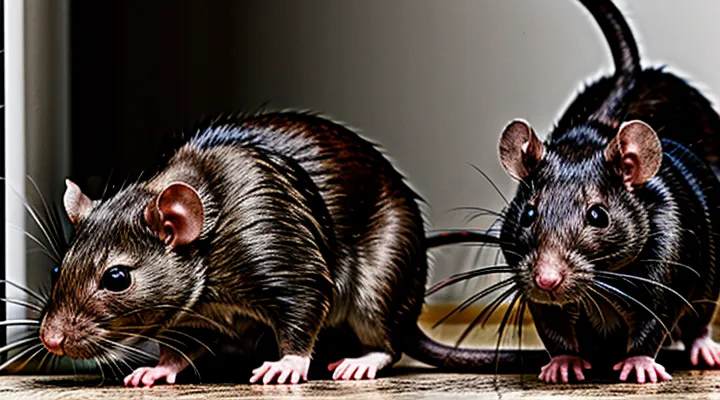
Understanding Rat Mating Behavior
Factors Influencing Mating Frequency
Rats breed continuously when conditions permit, but the rate of copulation varies according to several measurable influences.
- Photoperiod – Longer daylight periods increase gonadotropin release, shortening the interval between estrus cycles. Short days suppress reproductive hormones, reducing mating attempts.
- Ambient temperature – Temperatures between 20 °C and 25 °C optimize metabolic efficiency and promote frequent mating. Extreme heat or cold elevates stress hormones, delaying estrus.
- Nutritional status – Adequate protein and caloric intake accelerate sexual maturation and sustain high mating frequency. Calorie restriction lowers leptin levels, inhibiting estrous cycles.
- Population density – High densities raise aggression and territorial behavior, limiting successful encounters. Moderate densities encourage frequent pairing.
- Sex ratio – An excess of males intensifies competition, potentially increasing overall mating events but reducing individual male success. A balanced ratio maximizes pair formation.
- Age – Young adults (8–12 weeks) exhibit peak receptivity and maximal copulation rates. Fertility declines after six months, lengthening inter‑mating intervals.
- Health and parasite load – Chronic illness or heavy parasite burden suppress immune function and reproductive hormone production, resulting in fewer mating episodes.
- Stressors – Exposure to predators, loud noises, or handling elevates corticosterone, which directly inhibits luteinizing hormone surges and reduces copulatory behavior.
Each factor interacts with the endocrine system, modulating the hypothalamic‑pituitary‑gonadal axis that governs estrus onset and sexual drive. Understanding these variables enables precise predictions of rat reproductive frequency under diverse laboratory or field conditions.
Seasonal Variations in Reproduction
Rats exhibit distinct reproductive cycles that align with seasonal environmental cues. In temperate zones, breeding activity intensifies during spring and summer when daylight lengthens and ambient temperatures rise. Elevated photoperiod stimulates hypothalamic release of gonadotropin‑releasing hormone, accelerating ovarian follicle development in females and increasing sperm production in males.
Food abundance during warm months further promotes estrus onset. Studies of wild Norway rats (Rattus norvegicus) show that litter size averages 8–12 pups in summer, compared with 5–7 pups in autumn. Gestation length remains constant at approximately 21–23 days, but the interval between litters shortens when resources are plentiful, allowing up to six litters per year in optimal conditions.
In contrast, populations inhabiting indoor environments experience reduced seasonal fluctuation. Constant temperature, artificial lighting, and steady food supply enable continuous breeding, often resulting in year‑round litter production. Roof rats (Rattus rattus) display a similar pattern, though their peak reproductive output tends to occur slightly later in the year, coinciding with the onset of the rainy season in tropical regions.
Key factors influencing seasonal reproductive variation:
- Photoperiod length: longer days trigger hormonal cascades that advance sexual maturity.
- Temperature: optimal range (20–30 °C) enhances mating frequency and sperm viability.
- Food availability: surplus nutrition accelerates estrus cycles and increases litter size.
- Habitat stability: indoor or sheltered settings diminish external seasonal signals, leading to continuous breeding.
Understanding these patterns clarifies how environmental rhythms dictate the frequency and magnitude of rat reproduction across different ecosystems.
Gestation and Birth
Duration of Pregnancy
Rats reach full term after a brief gestation of approximately 21 to 23 days, with 22 days representing the average for most laboratory strains. This interval is consistent across both male and female breeding cycles, allowing rapid turnover in populations.
Key factors that can modify the length of pregnancy include:
- Strain genetics – Some wild‑type or hybrid strains exhibit gestations as short as 20 days or as long as 24 days.
- Environmental temperature – Cooler ambient conditions tend to extend gestation by one to two days, while warmer settings may shorten it.
- Maternal nutrition – Adequate protein and caloric intake maintains the standard 22‑day period; severe deficits can delay parturition.
- Parity – First‑time (primiparous) females often experience slightly longer gestations than experienced breeders.
The short gestational period, combined with early sexual maturity (approximately 5–6 weeks), underpins the high reproductive output of rats. Each litter typically contains 6–12 pups, and the brief interval between successive pregnancies enables multiple litters per year, driving rapid population expansion under favorable conditions.
Litter Size and Frequency
Rats reach sexual maturity at 5–8 weeks, after which females can produce multiple litters each year. The gestation period lasts 21–23 days, and ovulation occurs immediately after parturition, allowing a new pregnancy to begin within 24 hours. Consequently, a healthy female can give birth to 5–7 litters annually under optimal conditions.
Average litter size ranges from 6 to 12 pups; extremes of 2 and 20 have been recorded in laboratory and wild populations. Factors influencing litter size include:
- Strain or species (Norway rats typically produce larger litters than roof rats)
- Nutrition and body condition of the dam
- Season, with longer daylight periods modestly increasing pup numbers
Reproductive output declines with age, and after 12 months females show reduced litter sizes and longer intervals between births. Environmental stressors such as crowding, limited food, or high parasite loads can extend the inter‑litter interval to 30–45 days, compared with the usual 25–30 days in well‑fed colonies.
Overall, the combination of brief gestation, immediate post‑partum estrus, and relatively large litters enables rats to sustain high population growth rates when resources permit.
Post-Partum Estrus
Post‑partum estrus is the first fertile cycle that occurs shortly after a rat gives birth. Hormonal changes—particularly the rapid decline of prolactin and the resurgence of luteinizing hormone—trigger ovulation within 12–24 hours of parturition. The ensuing estrus lasts approximately 4–6 hours, after which the female enters a brief anestrus before the next cycle.
The timing of post‑partum estrus directly influences the species’ high reproductive turnover. Because litters can be produced as early as three weeks after the previous birth, the interval between successive pregnancies averages 21–23 days under optimal conditions. This short inter‑litter interval is sustained by the ability of females to conceive during the post‑partum estrus, thereby minimizing the non‑reproductive phase.
Key physiological features of post‑partum estrus:
- Ovulation occurs without a preceding luteal phase, eliminating the typical proestrus interval.
- Estrogen peaks coincide with the onset of maternal care, yet do not impair pup‑directed behaviors.
- Corpus luteum formation is transient; progesterone levels fall sharply, permitting immediate receptivity to mating.
Consequences for population dynamics include accelerated generational turnover and heightened potential for rapid population expansion when resources are abundant. Understanding the mechanisms of post‑partum estrus is essential for accurate modeling of rat reproductive cycles and for designing effective control strategies.
Developmental Stages of Rat Pups
From Birth to Weaning
Rats achieve a high reproductive turnover because newborns develop rapidly and reach independence within a few weeks. After a gestation period of 21‑23 days, litters of 6‑12 pups are born altricial: hairless, eyes closed, and weighing about 1.5 g. Immediate dependence on the dam for warmth, nutrition, and protection defines the first days of life.
Development proceeds in distinct phases:
- Days 0‑3: Pups remain immobile, nursing every 1‑2 hours; body temperature is regulated by the mother.
- Days 4‑7: Fur begins to emerge, ear pinna opens, and locomotor activity increases; nursing frequency declines to every 3‑4 hours.
- Days 8‑14: Eyes open, teeth erupt, solid food is introduced; pups begin to explore the nest and exhibit social play.
- Days 15‑21: Growth accelerates, weight triples; pups consume increasing amounts of solid food while still nursing.
- Days 21‑28: Weaning completes; pups are fully capable of independent feeding and social interaction.
Weaning marks the transition from maternal reliance to self‑sufficiency. Female pups attain sexual maturity as early as 5 weeks, and can conceive within days after weaning. This short interval between birth and reproductive capability enables multiple breeding cycles per year, driving the overall frequency of rat reproduction.
Sexual Maturity in Young Rats
Sexual maturity in laboratory rats typically occurs between 5 and 7 weeks of age for both sexes, although precise timing varies with strain, nutrition, and housing conditions. Inbred strains such as Wistar and Sprague‑Dawley reach puberty slightly earlier than outbred lines, often showing first estrus at 38–42 days for females and first sperm production at 45–55 days for males.
Key determinants of maturation speed include:
- Dietary protein content – diets with ≥20 % protein accelerate gonadal development.
- Photoperiod – extended light cycles (14–16 h) shorten the interval to first estrus.
- Body weight – individuals attaining 150–180 g (females) or 200–250 g (males) typically exhibit hormonal markers of puberty.
- Social environment – group housing can delay or advance onset depending on dominance hierarchies.
Physiological markers signaling readiness for reproduction are readily measurable. In females, vaginal cytology transitions from a predominance of cornified cells to a regular estrous cycle, accompanied by rising plasma estradiol and luteinizing hormone (LH) levels. In males, increased testicular weight, the appearance of sperm in epididymal smears, and elevated serum testosterone confirm functional maturity.
Understanding the onset of sexual capability is essential for estimating the potential number of litters a breeding colony can produce within a given period. Early maturation permits a shorter generation interval, thereby increasing the maximum litter frequency achievable under optimal husbandry. Conversely, delayed puberty reduces reproductive output and extends the time required to reach population targets.
Lifespan and Reproductive Potential
Rats reach sexual maturity at five to six weeks of age, allowing breeding to begin shortly after weaning. The gestation period lasts 21‑23 days, and each litter typically contains six to twelve offspring. A healthy adult female can produce five to seven litters per year, resulting in a potential of 30‑84 progeny over her reproductive lifespan.
The average lifespan of a laboratory or pet rat is two to three years, with females generally living slightly longer than males. Reproductive capacity declines after the second year, as hormonal changes reduce litter size and frequency. Early mortality in wild populations shortens the effective breeding window, but the rapid maturation and short gestation compensate by enabling swift population turnover.
Key parameters influencing rat reproductive output:
- Sexual maturity: 5‑6 weeks
- Gestation: 21‑23 days
- Litter size: 6‑12 pups
- Litters per year: 5‑7
- Lifespan (average): 2‑3 years
- Peak reproductive years: 0‑2 years
These figures illustrate that the short lifespan of rats is offset by an exceptionally high reproductive potential, allowing multiple generations within a single year.
Environmental Factors Affecting Reproduction
Impact of Food Availability
Food abundance accelerates rat reproductive cycles. When caloric intake meets or exceeds metabolic demands, females enter estrus within three to four weeks after weaning, compared with six to eight weeks under limited resources. The shortened interval between litters permits up to eight litters per year, each containing 8‑12 pups on average.
Nutrient restriction extends the pre‑pubertal period, lengthens the postpartum estrous interval, and reduces litter size to 4‑6 offspring. Under severe scarcity, females may forgo breeding altogether for several months, decreasing annual litter production to fewer than three.
Empirical studies provide quantitative benchmarks:
- High‑food conditions: inter‑litter interval ≈ 21 days; average annual litters ≈ 7‑8; mean litter size ≈ 10.
- Moderate restriction: inter‑litter interval ≈ 35 days; annual litters ≈ 4‑5; mean litter size ≈ 7.
- Severe restriction: inter‑litter interval > 50 days; annual litters ≤ 2; mean litter size ≈ 5.
These patterns arise from hormonal modulation. Adequate protein and energy elevate leptin and insulin, which stimulate gonadotropin‑releasing hormone secretion, advancing ovarian activity. Conversely, low leptin signals energy deficit, suppressing the reproductive axis.
Understanding the link between food supply and rat breeding frequency informs pest‑management strategies. Manipulating resource availability can intentionally depress population growth, while laboratory colonies require consistent nutrition to maintain expected reproductive output.
Influence of Shelter and Habitat
Rats reproduce more rapidly when shelter provides protection from predators, extreme weather, and human disturbance. Secure nesting sites reduce stress hormones, allowing females to enter estrus cycles at shorter intervals.
Dense vegetation, ground debris, or structural voids create micro‑habitats where temperature remains relatively constant. Stable temperatures accelerate spermatogenesis in males and ovarian development in females, shortening the period between litters.
Food availability interacts with shelter quality. When shelter is abundant, rats can store food, maintaining body condition that supports frequent breeding. Conversely, exposed habitats force foraging trips, increasing energy expenditure and lengthening the gestation‑to‑next‑litter interval.
Key habitat features influencing reproductive frequency:
- Nesting density: clusters of nests enable communal thermoregulation and reduce individual exposure.
- Structural complexity: multiple entry points and escape routes lower predation risk.
- Microclimate stability: insulated spaces maintain optimal humidity and temperature.
- Proximity to resources: closeness to waste or grain stores minimizes travel time and energy loss.
Studies show that rats in urban sewers or abandoned buildings produce litters every 21–24 days, while those in open fields may extend the cycle to 30 days or more. The primary determinant is the degree to which shelter mitigates environmental stressors, directly affecting the speed of reproductive cycles.
Stress and Population Density
Rats adjust their reproductive output in response to environmental pressures. Elevated stress hormones, particularly cortisol, suppress gonadotropin‑releasing hormone, leading to delayed estrus cycles and reduced litter size. Chronic exposure to predators, noise, or handling produces similar hormonal inhibition, shortening the breeding season.
Population density exerts a complementary influence. When individuals occupy confined spaces with limited resources, aggressive encounters rise, triggering social stress that mirrors the hormonal effects of external stressors. High density also depletes food and nesting sites, prompting females to extend inter‑litter intervals and males to decrease sperm production.
Key mechanisms linking stress and crowding to reproductive frequency include:
- Hypothalamic‑pituitary‑adrenal (HPA) activation – cortisol elevation down‑regulates the hypothalamic‑pituitary‑gonadal axis.
- Altered pheromonal communication – dense groups dilute male‑produced pheromones that normally stimulate ovulation.
- Resource allocation shift – energy is redirected from gametogenesis to maintenance and immune function under competitive conditions.
Consequently, rats in low‑stress, spacious environments exhibit the highest breeding rates, with females capable of producing a new litter every 21–23 days. In contrast, sustained stress or overcrowding can extend the interval to 30 days or more and lower average litter size from eight to four pups.
Controlling Rat Populations
Methods of Population Management
Rats reproduce with a short gestation period and large litters, enabling populations to double in a matter of weeks. Effective control therefore requires interventions that interrupt breeding cycles and reduce survivorship.
Environmental sanitation removes food and shelter, limiting resources that support rapid growth. Sealing building gaps, repairing screens, and maintaining clean waste storage prevent entry and nesting.
Trapping provides immediate removal of individuals, especially when placed along known travel routes. Snap traps and live‑capture devices should be positioned near burrows, walls, and food sources, checked daily, and disposed of according to local regulations.
Poison baits deliver lethal doses to foraging rats. Bait stations must be tamper‑resistant, placed out of reach of non‑target species, and monitored for effectiveness. Rotating active ingredients helps prevent resistance.
Biological agents, such as predatory birds or feral cats, add natural pressure on populations but require habitat support and monitoring to avoid ecological imbalance.
Integrated pest management (IPM) combines the above tactics with regular monitoring. A typical IPM cycle includes:
- Inspection of premises to identify infestations and entry points.
- Assessment of population density using trap counts or visual signs.
- Implementation of sanitation, exclusion, and control measures tailored to the infestation level.
- Evaluation of outcomes and adjustment of strategies as needed.
Consistent application of these methods curtails the exponential increase characteristic of rat reproduction, maintaining populations at levels that do not threaten health or property.
Importance of Early Intervention
Rats reach sexual maturity within 5–6 weeks, allowing multiple breeding cycles each year. A typical female can produce 5–7 litters annually, each containing 6–12 offspring. This rapid turnover creates exponential population growth if unchecked.
Early detection of breeding activity limits expansion before numbers become unmanageable. Interventions applied during the first weeks of gestation reduce litter size and prevent subsequent generations from establishing. Prompt measures also lower the risk of disease transmission associated with dense rodent colonies.
Effective early actions include:
- Monitoring of trap captures for signs of increased juvenile presence.
- Installation of barriers before peak breeding months to restrict access to food sources.
- Application of fertility‑reducing agents shortly after the first observed mating events.
Implementing control strategies at the onset of reproductive cycles yields measurable reductions in overall population density, minimizes crop damage, and decreases public‑health hazards related to rodent infestations.