
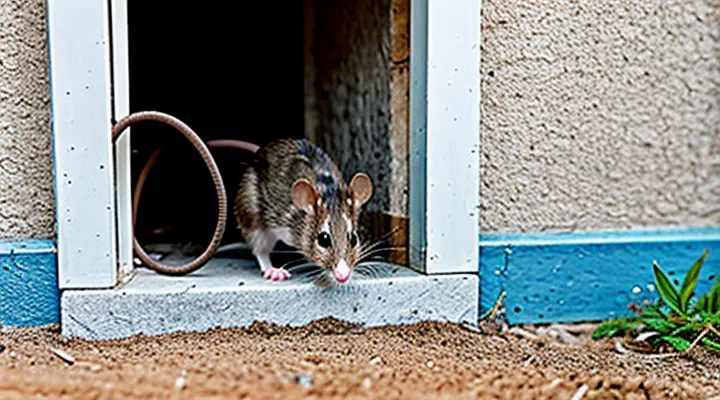
Understanding Mice Behavior Near Foundations
Why Mice Are Attracted to Foundations
«Shelter and Warmth Seeking»
Mice are driven to occupy spaces that maintain a stable temperature and protect them from predators. The foundation of a building offers numerous micro‑environments that meet these needs, making it a primary target for infiltration.
When external temperatures drop, mice seek interior zones where heat generated by appliances, water heaters, and human activity is retained. Cracks, gaps, and openings in the foundation allow the animals to move from the cold exterior into these warmer zones while remaining hidden from sight.
Typical pathways that provide both shelter and heat include:
- Cracks in concrete slabs – small fissures expand with temperature fluctuations, creating insulated channels.
- Utility penetrations – gaps around pipes, cables, and conduit sleeves transmit heat from water heaters or HVAC equipment.
- Vent shafts and dryer exhausts – vertical openings connect exterior air to interior ducts, offering protected routes.
- Crawl‑space entrances – low‑lying access points beneath the house retain ground heat and are rarely inspected.
- Foundation wall joints – seams between poured concrete and blockwork form concealed passages.
Each of these routes shields mice from wind, precipitation, and predators while delivering a consistent thermal buffer. Sealing gaps, installing metal flashing, and maintaining clearances around utilities reduce the availability of such refuges, limiting the animals’ ability to exploit the foundation for shelter and warmth.
«Food and Water Proximity»
Mice are drawn to foundations that provide immediate access to nourishment. When a building’s perimeter contains leaking pipes, standing water, or improperly stored food, the rodents perceive a low‑risk path to sustenance and are more likely to exploit structural gaps.
- Cracks near a kitchen sink or dishwasher where water drips create moisture that softens concrete, allowing entry.
- Gaps adjacent to outdoor trash bins or pet feeding stations supply food odors that guide mice to the nearest opening.
- Openings around basement utility lines often intersect with condensation sources, offering both water and a concealed route.
- Deteriorated foundation blocks near garden beds where compost or spilled grain is present attract foraging behavior and encourage burrowing into seams.
Reducing these attractants limits the incentive for mice to breach the foundation. Seal cracks, repair leaks, store food in sealed containers, and relocate feeding stations away from the building envelope. Continuous monitoring of moisture levels and waste management near the foundation lowers the probability of rodent infiltration.
Common Mouse Species Found Near Homes
«House Mouse (Mus musculus)»
The house mouse (Mus musculus) is a small, omnivorous rodent adapted to human environments. Its body length averages 7–10 cm, and it can squeeze through openings as narrow as 6 mm. This ability enables the species to exploit structural weaknesses in residential foundations.
Mice locate entry points by following moisture, food sources, and shelter cues. The most common pathways through a building’s foundation include:
- Cracks in concrete slabs or masonry walls, often created by settling or temperature fluctuations.
- Gaps around perimeter drainage pipes, especially where pipe sleeves are not sealed.
- Openings around utility penetrations such as electrical conduit, gas lines, and water mains; improper caulking leaves gaps.
- Unsealed vent stacks and chimney flues that extend through the foundation.
- Crawl‑space access points where the floor joist or sill plate is not tightly fitted to the foundation wall.
- Expansion joints and control joints that have deteriorated or lack proper filler material.
Each opening provides a direct route from the soil or surrounding yard into interior spaces. Once inside, mice use their keen sense of smell to locate food and nesting material, establishing colonies that can expand rapidly.
Preventive measures target these routes: inspect foundations for fractures, apply steel wool or silicone‑based sealants to narrow gaps, install metal flashing around pipe sleeves, and maintain a tight seal on all utility penetrations. Regular monitoring of crawl‑space vents and expansion joints reduces the likelihood of new ingress points forming.
«Deer Mouse (Peromyscus maniculatus)»
The deer mouse (Peromyscus maniculatus) is one of the smallest rodent species that commonly infiltrates residential structures. Its body length averages 3–4 inches, and it can pass through openings as narrow as ¼ inch, allowing it to exploit minute defects in a building’s foundation.
Foundation vulnerabilities that admit deer mice include:
- Cracks in poured‑concrete slabs, especially where settling has occurred.
- Gaps around perimeter drainage pipes, vent stacks, and utility conduits that are not sealed with expandable foam or metal collars.
- Openings at the junction of the foundation and the sill plate, often left unfilled when retrofitting windows or doors.
- Soil erosion that creates voids beneath the footing, exposing the underside of the slab to burrowing activity.
Deer mice are nocturnal foragers that travel along the soil‑foundation interface. Their agility enables them to climb vertical surfaces, so they can also use exposed rebar, decorative stone, or damaged brickwork as a bridge to interior walls. Once inside, they use interior voids—such as wall cavities and crawl spaces—to reach food sources and nesting sites.
Effective prevention focuses on sealing all identified entry points with appropriate materials (e.g., hydraulic cement for cracks, steel flashing for pipe penetrations) and maintaining a clear perimeter free of debris that could conceal gaps. Regular inspection of the foundation after seasonal temperature fluctuations helps detect new fissures before they become permanent access routes for deer mice.
Primary Entry Points Through the Foundation
Gaps and Cracks in the Foundation
«Hairline Cracks and Expansion Joints»
Mice exploit the smallest openings in a building’s foundation. Hairline cracks, often less than a millimeter wide, appear around footings, slab edges, and beneath load‑bearing walls. These fissures develop from soil movement, temperature fluctuations, and settling. Because rodents can compress their bodies to pass through gaps as narrow as 6 mm, even a barely visible fracture provides a viable passage.
Expansion joints, designed to accommodate structural movement, consist of flexible filler material that can deteriorate over time. Cracking, tearing, or loss of sealant creates gaps comparable to those in hairline fissures. Joint locations—around perimeter walls, beneath decks, and at transitions between concrete sections—are frequent entry points when the seal is compromised.
To reduce intrusion risk, follow a systematic inspection and repair protocol:
- Visually examine the entire perimeter of the foundation for cracks, gaps, and damaged joint filler.
- Use a flashlight and magnifying glass to detect fissures narrower than 2 mm.
- Clean each opening of debris, dust, and organic matter that could attract rodents.
- Apply a suitable sealant (e.g., polyurethane caulk, epoxy, or hydraulic cement) that remains flexible after curing.
- Replace deteriorated expansion joint material with a high‑quality, weather‑resistant backer rod and silicone‑based joint compound.
- Install a metal or heavy‑duty plastic flashing over repaired sections to provide an additional barrier.
- Conduct a follow‑up inspection after seasonal temperature changes to verify seal integrity.
Regular maintenance of these micro‑openings eliminates the most common hidden routes used by mice to infiltrate a home’s foundation.
«Deteriorated Mortar Between Bricks/Blocks»
Deteriorated mortar between bricks or blocks creates openings that allow mice to infiltrate a building’s foundation. Cracks, crumbling, and loss of cohesion reduce the seal that normally blocks rodent movement. Even narrow fissures provide a pathway because mice can squeeze through gaps as small as a quarter of an inch.
Typical signs of compromised mortar include:
- Visible gaps or voids along brick joints
- Loose or falling pieces of mortar when tapped
- Moisture stains indicating water penetration, which accelerates decay
When mortar deteriorates, the structural integrity of the foundation weakens, and the voids become permanent entry points. Mice exploit these openings to travel from soil to interior spaces, using the gaps as direct routes to walls, crawl spaces, and utility openings.
Remediation requires restoring the mortar to a continuous, solid barrier. Effective steps are:
- Remove all loose and crumbling material with a chisel or grinder.
- Clean joints to eliminate dust, debris, and organic matter.
- Apply a suitable mortar mix, ensuring penetration into the entire depth of the joint.
- Tool the surface to achieve a tight, weather‑resistant seal.
- Inspect completed work for remaining gaps and repair any deficiencies promptly.
Regular inspection of mortar condition, especially after heavy rain or freeze‑thaw cycles, prevents the formation of new entry routes and maintains the foundation’s defensive function against rodents.
Utility Line Openings
«Pipes and Conduits Entering the Home»
Pipes and conduits that pass through a building’s foundation create continuous pathways from the exterior to interior spaces. Small gaps around pipe sleeves, cracked vent stacks, and unsealed utility penetrations provide direct access for rodents seeking shelter and food.
Typical entry points include:
- Gaps between pipe collars and the surrounding concrete or mortar, often left after installation or due to settlement.
- Cracks or broken sections of vent pipes, especially in older homes where corrosion weakens the material.
- Openings around electrical conduit sleeves that are not properly caulked or fitted with steel wool.
- Service lines for water, gas, or sewer that lack rubber gaskets or are improperly aligned.
- Gaps around HVAC ductwork that penetrates the foundation slab or crawl‑space floor.
Mitigation measures focus on sealing and reinforcing these vulnerabilities. Apply expanding polyurethane foam or high‑grade silicone sealant to fill irregular gaps. Install stainless‑steel pipe collars with a tight fit, then wrap the joint with metal flashing tape. Replace damaged vent sections with corrosion‑resistant material and secure all sleeves with airtight grommets. Regular inspection of the foundation perimeter, especially after seasonal temperature shifts, helps detect new cracks before they become exploitable routes.
«Unsealed Gaps Around Wires»
Mice exploit any opening that connects the exterior to interior spaces, and unsealed gaps around electrical, telephone or cable wires provide a direct pathway. When conduit, conduit sleeves, or cable sheathing pass through the foundation or exterior walls without proper caulking, a void of a few millimeters remains. Rodents can squeeze through openings as small as ¼ inch, making these gaps highly vulnerable.
Typical conditions that create such entry points include:
- Improperly installed conduit that does not sit flush against the concrete or brick.
- Missing or deteriorated sealant around cable entries.
- Gaps left after renovations where wires are rerouted without re‑sealing.
- Penetrations made for utility upgrades that are not backfilled with expanding foam or mortar.
To eliminate this route, the following actions are required:
- Inspect all wire penetrations in the foundation, crawl space, and exterior walls.
- Remove any loose debris or old caulk that no longer adheres.
- Apply a durable, rodent‑resistant sealant—such as silicone‑based caulk or polyurethane foam—ensuring the material fills the gap completely.
- Cover the sealed area with a metal or hard‑plastic plate when possible, adding a physical barrier.
- Conduct periodic checks, especially after seasonal temperature changes that can cause sealant shrinkage.
By sealing these voids, homeowners remove a common access point, reducing the likelihood that mice will infiltrate the structure via wiring routes.
Vents and Weep Holes
«Foundation Vents and Their Integrity»
Foundation vents provide direct access points from the soil to interior spaces, making them a primary conduit for rodent intrusion. Their design often includes openings for ventilation, drainage, or utility lines, which, if not properly sealed, allow mice to squeeze through gaps as small as a quarter‑inch. The integrity of these vents depends on material condition, installation quality, and maintenance practices.
Key factors affecting vent vulnerability include:
- Cracked or corroded metal panels that create fissures.
- Loose or missing vent covers, louvers, or mesh screens.
- Deteriorated sealant around vent frames, allowing gaps.
- Unfinished openings left for future upgrades, left unprotected.
Inspection should focus on visual assessment of each vent, probing for loose components, and testing for airflow around seams. When deficiencies are identified, corrective actions involve installing rodent‑proof mesh (minimum ¼‑inch aperture), applying high‑quality silicone or polyurethane sealant, and securing fasteners with corrosion‑resistant hardware. Regular maintenance schedules, performed at least twice a year, help preserve vent integrity and prevent mice from exploiting these routes.
«Weep Holes in Brick Veneer»
Weep holes are small openings left in brick veneer walls to allow moisture from behind the cladding to escape. They are typically positioned at the base of the wall, spaced at regular intervals, and covered with a perforated material that permits airflow while protecting the interior from large debris.
Mice exploit these openings because the gaps often exceed the size of a mouse’s body, especially when the covering material deteriorates or becomes dislodged. Moisture accumulation near the holes creates a favorable environment, attracting rodents that seek shelter and food sources inside the structure. Once a mouse gains access through a weep hole, it can travel along the cavity behind the veneer and enter the living space through additional cracks or utility penetrations.
Inspecting weep holes involves checking for visible damage, missing covers, and signs of rodent activity such as gnaw marks, droppings, or nesting material. Use a flashlight to examine the interior of the cavity for chew damage on the brick or mortar. Confirm that the drainage path remains clear; clogged holes can increase humidity, further encouraging infestation.
Preventive measures include:
- Installing stainless‑steel mesh or hardware cloth over each opening, ensuring a mesh size no larger than ¼ inch.
- Replacing cracked or missing covers with new, properly fitted flashing.
- Applying a rodent‑resistant sealant around the perimeter of each hole to eliminate gaps while preserving ventilation.
- Conducting regular maintenance to remove debris and verify that the mesh remains intact.
Implementing these steps reduces the likelihood that weep holes serve as entry routes for mice, maintaining both the structural integrity of the veneer and the overall pest resistance of the building.
Damaged Basement Windows and Doors
«Broken or Loose Window Panes»
Broken or loose window panes create direct pathways for mice to move from the exterior into interior spaces. Cracked glass fragments leave openings that bypass the building envelope, while panes that are not securely seated allow small gaps around the frame. These gaps are large enough for adult mice to squeeze through, providing a shortcut that bypasses more protected foundation walls.
Common ways the defect facilitates entry include:
- Fractured glass that shatters, leaving irregular openings.
- Loose sash that does not seal against the frame, producing a continuous gap.
- Deteriorated weatherstripping that no longer blocks airflow or rodent movement.
- Improperly installed replacement panes that leave misaligned edges.
Remediation requires immediate replacement of damaged glass, reinforcement of the window frame, and installation of intact weatherstripping. Sealing any residual gaps with rodent‑proof material eliminates the route and reduces the likelihood of future intrusion.
«Gaps Under Basement Doors»
Mice routinely use the space beneath exterior basement doors as a direct path into a home’s interior. The clearance required for a mouse is as small as ¼ inch (6 mm); many doors sit on uneven floors, leaving gaps that meet or exceed this dimension. When the threshold is not flush with the slab, rodents can slip through the opening while remaining hidden from visual inspection.
Typical conditions that create usable gaps include:
- Settling of the foundation, which lifts the door frame away from the concrete.
- Improper installation of the door, leaving a gap between the bottom edge and the floor.
- Weather‑related movement of the slab or door hardware, widening existing spaces.
Once inside, mice can travel along the foundation wall, enter crawl spaces, or move directly onto interior flooring. The presence of gnaw marks on the door bottom, shredded insulation, or droppings near the threshold often indicates active use of the gap.
Effective mitigation focuses on sealing the opening and preventing future enlargement:
- Measure the existing clearance with a ruler or caliper; any gap larger than ¼ inch must be closed.
- Install a metal or heavy‑duty rubber threshold that extends at least 2 inches beneath the door, overlapping the slab to block entry.
- Apply a continuous bead of silicone or polyurethane sealant along the perimeter of the threshold, ensuring adhesion to both the door frame and concrete.
- Use expanding foam insulation only where it will not create additional voids; trim excess material flush with the floor surface.
- Inspect the seal annually, especially after seasonal temperature shifts that may cause concrete expansion or contraction.
By eliminating the sub‑door opening, homeowners remove a primary conduit for rodent intrusion, reducing the likelihood of infestation throughout the foundation area.
Porches, Decks, and Patios
«Access Underneath Concrete Slabs»
Mice exploit the space beneath concrete slabs to reach interior spaces. Their small size allows them to squeeze through cracks as narrow as ¼ inch, and the natural tendency to travel along low‑light pathways guides them toward any opening at the slab‑soil interface. Moisture, soil erosion, and settlement can enlarge these gaps, creating a permanent conduit for rodents.
Typical conditions that create access under slabs include:
- Shrinkage or cracking of the concrete due to temperature fluctuations.
- Soil movement caused by moisture expansion, freeze‑thaw cycles, or landscaping activities.
- Inadequate sealing of expansion joints or utility penetrations.
- Absence of a vapor barrier or inadequate compaction of the sub‑grade.
Detecting these entry points involves visual inspection of the slab perimeter, probing for hollow sounds, and monitoring for droppings or gnaw marks near the base of walls. Infrared cameras can reveal temperature differentials that indicate voids beneath the slab.
Effective mitigation strategies are:
- Seal all cracks and joints with polyurethane or epoxy sealant rated for rodent resistance.
- Install a continuous metal or concrete flashing around the slab’s perimeter, extending at least 6 inches below grade.
- Apply a layer of coarse aggregate or crushed stone beneath the slab to reduce soil settlement and discourage burrowing.
- Maintain proper drainage to prevent water pooling that can erode soil and widen gaps.
- Conduct regular inspections after severe weather or construction work to address new openings promptly.
By addressing the structural weaknesses beneath concrete slabs, homeowners eliminate a primary conduit that mice use to infiltrate a building’s foundation.
«Entry Through Support Structures»
Mice exploit weaknesses in a building’s support framework to bypass the foundation and reach interior spaces. Structural elements such as joists, beams, piers, and crawl‑space columns often contain gaps, cracks, or damaged wood that create unobstructed passages.
- Cracks in concrete footings adjacent to support posts
- Openings around utility penetrations (plumbing, electrical conduit) that intersect joists
- Gaps between sill plates and wall studs where moisture has caused shrinkage
- Deteriorated wooden beams with split or rotted sections
- Unsealed vent grilles or crawl‑space access doors mounted on support frames
Inspection should focus on visible seams, the underside of joists, and the junctions where support members meet foundation walls. Use a flashlight and a flexible mirror to reveal concealed openings, and probe suspect areas with a thin rod to assess size.
Sealing measures include injecting expanding polyurethane foam into small cracks, installing metal flashing or steel mesh over larger gaps, and replacing compromised timber with pressure‑treated lumber. Ensure all utility openings are fitted with stainless‑steel sleeves and that vent covers are secured with fine‑mesh screens. Regular maintenance of these support structures reduces the likelihood of rodent ingress through the foundation.
Factors Increasing Vulnerability
Landscaping and Vegetation
«Overgrown Shrubs and Vines Near Foundation»
Overgrown shrubs and vines that grow up against a house’s foundation create a direct conduit for rodents. Dense foliage bridges the gap between the ground and the building envelope, allowing mice to climb or crawl onto the exterior wall without exposing themselves to predators. Roots and tangled vines can pry apart mortar joints, widen cracks, and create new openings that are large enough for a mouse to squeeze through.
Key effects of excessive vegetation on foundation integrity:
- Bridge formation – branches and vines act as natural ladders, reaching the siding or brick and providing continuous cover.
- Moisture retention – plant material holds water against the foundation, softening mortar and accelerating deterioration of sealants.
- Soil displacement – root growth pushes soil away from the footing, exposing voids and increasing the likelihood of gaps forming.
- Cover for burrowing – mice use the shade and protection of the plants to dig shallow tunnels that intersect existing cracks.
Eliminating or trimming vegetation within a minimum of 12 inches from the foundation removes these pathways. Regular inspection of the perimeter for new growth, combined with sealing any newly exposed cracks, reduces the probability of rodent ingress.
«Piles of Debris and Woodpiles»
Piles of debris and stacked wood placed close to a building’s foundation create immediate pathways for mice seeking shelter and food. Loose material rests against foundation walls, filling cracks and gaps that would otherwise be too narrow for a rodent to exploit. Moisture retained in organic debris softens soil, allowing mice to burrow directly beneath the slab and emerge through the weakened perimeter.
- Debris contacts foundation → cracks enlarge, providing entry points.
- Woodpiles rest on soil → rodents tunnel through wood, reach foundation, and gnaw openings.
- Accumulated leaves and mulch retain humidity → soil softens, easing burrowing activity.
- Gaps created by uneven piles → mice use them as bridges to climb onto the exterior wall.
Removing external clutter eliminates the bridge between the ground and the structure. Store firewood on pallets, keep a clearance of at least two feet from the foundation, and seal any visible cracks with cement or steel wool. Regular inspection of the perimeter prevents re‑accumulation and denies mice the shelter they require to infiltrate the house.
Drainage Issues
«Water Accumulation Near Foundation»
Water pooling against the foundation creates moisture‑rich soil that softens concrete cracks and mortar joints. As the substrate expands, existing fissures widen, providing unobstructed pathways for rodents to push through.
Excess moisture also erodes the protective sealant on foundation walls. When sealant deteriorates, gaps form at the base of the wall, allowing mice to slip inside without confronting a solid barrier.
Persistent dampness encourages the growth of mold and rot in wooden sill plates and joist hangers. Decayed wood loses integrity, resulting in hollow channels that rodents exploit as hidden tunnels.
Because mice seek elevated humidity for nesting, they are drawn to areas where water accumulates. The presence of standing water near the foundation increases the likelihood that a mouse will investigate and ultimately enter through any compromised opening.
Key impacts of water accumulation on mouse ingress:
- Expansion of cracks and joints in concrete and masonry.
- Degradation of exterior sealants and waterproofing membranes.
- Rot and decay of wood components adjacent to the foundation.
- Attraction of rodents to humid microenvironments near entry points.
«Saturated Soil Conditions»
Saturated soil surrounding a building creates conditions that facilitate rodent movement toward the foundation. Waterlogged ground reduces the soil’s cohesion, allowing small gaps to open around footings, crawl spaces, and slab edges. As the soil expands and contracts with moisture fluctuations, it can push against concrete, forming fissures that are large enough for mice to squeeze through.
- Moisture‑softened soil erodes mortar joints, producing openings at the base of exterior walls.
- Hydrostatic pressure lifts concrete slabs slightly, separating them from the underlying soil and exposing a gap beneath the floor.
- Swelling clays generate pressure on foundation walls, cracking sealants and allowing entry at points where caulking has failed.
- Periodic drying creates shrinkage cracks that remain after the soil dries, leaving permanent pathways.
Mice exploit these pathways because they require minimal clearance and provide direct access to interior voids. Preventive measures include installing a waterproof barrier beneath the foundation, maintaining proper grading to divert water away from the structure, and sealing any visible cracks with durable, moisture‑resistant material. Regular inspection after heavy rain or snow melt is essential to detect new openings before rodents can establish a presence.
Construction Flaws and Age
«Original Building Defects»
Original building defects create pathways that permit mouse infiltration beneath a structure. Cracks in concrete footings, often resulting from shrinkage or thermal movement, expose gaps large enough for rodents to squeeze through. Uneven settlement may cause separation between the slab and foundation walls, forming voids that serve as tunnels.
Improperly sealed utility penetrations provide additional access points. Openings around water, gas, and electrical lines that lack metal or silicone flashing remain uncovered, allowing direct entry. Gaps around pipe sleeves, especially where they intersect the slab, can be as small as a quarter‑inch and still accommodate a mouse.
Deteriorated or missing mortar joints in block or brick foundations create fissures that connect interior spaces with the soil. When mortar crumbles, the resulting cavities expand over time, increasing the size of the passage.
Inadequate vapor barrier installation leads to moisture accumulation under the slab, weakening concrete and encouraging crack formation. Moist environments also attract rodents, prompting them to explore any emerging openings.
Typical defects can be identified through a systematic inspection:
- Visible cracks or gaps in footings and walls
- Unsealed utility entries and pipe sleeves
- Crumbling mortar or missing bricks
- Absence or damage to vapor barriers
- Settlement‑induced separation between slab and foundation
Addressing each defect—by sealing cracks, installing proper flashing, repairing mortar, and restoring moisture barriers—eliminates the structural weaknesses that facilitate mouse entry through the foundation.
«Wear and Tear Over Time»
Mice exploit structural deterioration that accumulates as a building ages. Continuous exposure to moisture, temperature fluctuations, and ground movement gradually enlarges existing fissures and creates new openings in the foundation. These imperfections become primary pathways for rodents seeking shelter and food.
Typical degradation‑related entry points include:
- Cracks in concrete slabs or footings that widen over months or years.
- Gaps around utility penetrations, such as water, gas, or electrical lines, where sealant deteriorates.
- Deteriorated masonry joints, especially where mortar has eroded or been displaced.
- Unsealed openings around vent pipes and drainage systems that shift with settling.
- Spaces beneath crawl‑space doors or access panels where weatherstripping has worn out.
As the building settles, differential movement can cause joint displacement, further compromising the barrier against rodents. Regular inspection of these vulnerable zones and timely repair of compromised materials reduce the likelihood that mice will exploit wear‑induced gaps.
Preventing Mouse Entry
Sealing Entry Points
«Using Steel Wool and Caulk»
Mice exploit small openings in the foundation to reach interior spaces. Steel wool and caulk provide a reliable barrier when applied correctly.
Steel wool creates a physical obstruction that rodents cannot bite through. Its dense fibers interlock, preventing teeth from penetrating while allowing air flow. For optimal performance, choose 000–0000 grade wire; coarser grades leave gaps large enough for mice.
Caulk seals the surrounding area, locking the steel wool in place and eliminating drafts that could draw pests. Silicone‑based or polyurethane caulk adheres to concrete, brick, and wood, maintaining flexibility as the structure shifts.
Application procedure
- Identify all gaps larger than ¼ inch around pipe sleeves, vent openings, and foundation cracks.
- Pack the opening tightly with steel wool, ensuring no visible voids.
- Apply a continuous bead of silicone or polyurethane caulk over the steel wool, smoothing it to create a seamless seal.
- Inspect the cured seal for cracks; reapply caulk if any separation appears.
Combining these materials blocks entry routes without compromising structural integrity, offering a durable, low‑maintenance solution for preventing rodent intrusion through the foundation.
«Repairing Cracks with Mortar»
Mice exploit gaps in a building’s footing to reach interior spaces. Cracks in concrete foundations provide a direct path, especially when moisture expands the openings. Sealing these fissures with mortar eliminates the most common conduit for rodent intrusion.
Mortar application follows a precise sequence:
- Clean the crack thoroughly; remove dust, loose particles, and any vegetation.
- Dampen the area with water to improve adhesion, but avoid excess saturation.
- Mix mortar to a smooth, workable consistency; a blend of Portland cement, sand, and water is standard.
- Pack the mortar into the void using a trowel, ensuring it fills the entire depth and contacts the surrounding concrete.
- Smooth the surface, feathering the edges to blend with the existing foundation.
- Allow the repair to cure for at least 24 hours before exposing it to traffic or moisture.
Properly repaired cracks close the primary entry route, reducing the likelihood of mouse activity throughout the structure. Regular inspection of the foundation, combined with timely mortar maintenance, sustains this barrier over the long term.
Maintaining the Perimeter
«Clearing Vegetation Away from Foundation»
Vegetation that grows up against a building’s foundation creates a direct pathway for mice to reach the structure. Stems, vines, and dense shrubbery can act as a bridge, allowing rodents to climb from the ground level to the foundation walls without exposing themselves to open space.
When plants touch the foundation, they retain moisture against the masonry, creating a humid micro‑environment that attracts mice seeking shelter and water. The root systems can also create gaps in the soil, providing additional entry points for burrowing rodents.
- Eliminates bridge: Removing plants breaks the continuous surface that mice use to climb.
- Reduces shelter: Open space around the foundation leaves no cover for rodents to hide.
- Lowers moisture: Exposed foundation walls dry faster, making the area less appealing to mice.
- Improves visibility: A clear perimeter allows easier detection of cracks, holes, and gnaw marks.
Effective clearance practices include:
- Cutting back all vegetation to at least 12 inches (30 cm) from the exterior wall.
- Pruning tree branches so they remain well above the roofline and do not touch the house.
- Removing mulch, leaf litter, and compost piles from the immediate foundation zone.
- Maintaining a trimmed lawn and regularly disposing of garden debris.
- Inspecting the cleared area for gaps in the footing or slab and sealing them promptly.
Consistent removal of plant material around the foundation deprives mice of the most common access route, significantly reducing the likelihood of infestation.
«Ensuring Proper Drainage»
Proper drainage reduces the likelihood that mice will exploit foundation gaps. Water accumulation softens concrete, expands existing cracks, and creates soil conditions that encourage burrowing. When moisture is directed away from the building envelope, the structural integrity of the foundation remains intact, limiting the openings that rodents can use.
- Grade the soil so it slopes at least 6 inches within the first 10 feet away from the foundation.
- Install French drains or perforated pipe to collect and divert groundwater.
- Fit gutters and downspouts with extensions that discharge water at least 4 feet from the house.
- Use splash blocks or drainage mats beneath downspout outlets to prevent runoff pooling.
- Position a sump pump in basements prone to flooding; test the pump regularly.
- Seal any visible cracks with hydraulic cement after the surrounding area is dry.
Routine inspection supports long‑term effectiveness. Check the grading after heavy rain, clear debris from drainage channels, and verify that downspout extensions have not shifted. Repair new cracks promptly, and ensure that sump pump discharge remains unobstructed. Consistent maintenance preserves a dry foundation, denying mice the moisture‑rich pathways they need to gain entry.
Regular Inspections
«Seasonal Checks for Damage»
Regular seasonal inspections are essential for identifying foundation vulnerabilities that allow rodents to infiltrate a home. Early detection of cracks, moisture intrusion, and deteriorated sealants prevents mice from exploiting these openings.
-
Spring: Examine the perimeter for newly formed gaps caused by thawing soil. Verify that weep holes are clear and that drainage systems direct water away from the foundation. Repair any hairline cracks before they expand with seasonal moisture.
-
Summer: Inspect exterior siding and foundation walls for signs of shrinkage or settling. Check the integrity of vent covers, utility penetrations, and crawl‑space vents; replace damaged screens or metal flashing. Ensure that landscaping does not press against the foundation, creating pressure points.
-
Fall: Look for increased moisture levels as precipitation rises. Seal any openings identified during earlier inspections, and reinforce insulation around the crawl space to discourage nesting. Confirm that sump pump discharge lines remain unobstructed.
-
Winter: Assess the foundation for ice‑induced movement that may widen existing fissures. Verify that exterior caulking around doors, windows, and utility entries remains flexible and intact. Apply a weather‑resistant sealant to any exposed joints that show signs of contraction.
Consistent, season‑specific checks reduce the likelihood that rodents will find a pathway through the foundation, maintaining the structural integrity of the building and limiting the need for costly remediation.
«Monitoring for Signs of Activity»
Monitoring for signs of activity is essential for early detection of rodent intrusion through a building’s foundation. Inspectors should focus on the following indicators:
- Fresh gnaw marks on wood, insulation, or plastic near baseboard joints.
- Accumulated droppings, typically dark, pellet‑shaped, and found in corners, behind appliances, or along wall voids.
- Distinctive musky odor, especially in crawl spaces and basement corners.
- Visible burrows or tunnels in soil adjacent to foundation walls, often near moisture sources.
- Chewed or displaced wiring, piping, and utility conduits near entry points.
Regular visual surveys increase reliability. Conduct inspections quarterly, and after heavy rain or temperature shifts, when mice are more likely to seek shelter. Use a flashlight with a focused beam to examine low‑light areas and a magnifying lens for small droppings. For concealed spaces, deploy motion‑activated cameras or infrared sensors to capture nocturnal activity.
When signs are identified, document location, quantity, and condition of evidence. Correlate findings with structural features such as cracks, gaps around utility penetrations, and vent openings. This data guides targeted sealing measures and placement of bait stations, reducing the risk of infestation spreading deeper into the structure.