
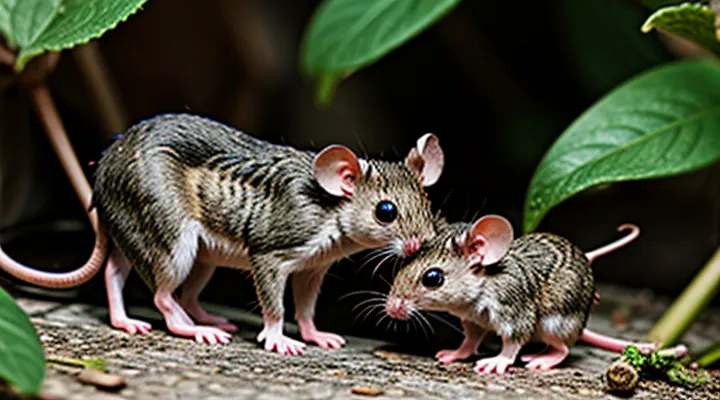
The Reproductive Cycle of a Female Mouse
Estrous Cycle Duration
The estrous cycle of the laboratory mouse lasts approximately four to five days. It consists of four phases: proestrus (0.5–1 day), estrus (0.5 day), metestrus (0.5–1 day), and diestrus (2–3 days). Each phase is defined by characteristic hormonal profiles and vaginal cytology.
Because a female mouse can become receptive to mating during the brief estrus phase, the short cycle permits multiple opportunities for conception within a single year. Assuming regular cycling, a mouse can experience up to 80–90 estrus periods annually.
Consequently, the duration of the estrous cycle directly determines the maximum number of litters a female can produce. With an average gestation of 19–21 days and a typical weaning interval of 21 days, a mouse can theoretically generate:
- 6–8 litters per year under optimal conditions
- 5–7 litters per year when accounting for natural variations in cycle length and health status
Thus, the four‑to‑five‑day estrous cycle underlies the high reproductive output observed in female mice.
Ovulation and Fertility Windows
Female mice reach sexual maturity at 5–6 weeks, entering a regular estrous cycle that dictates the timing of ovulation and the length of the fertile period. Each cycle lasts approximately 4–5 days and consists of four phases: proestrus, estrus, metestrus, and diestrus. Ovulation occurs at the transition from proestrus to estrus, triggered by a surge in luteinizing hormone. The fertile window spans roughly 12–14 hours after this hormonal peak, during which oocytes are released and can be fertilized if mating occurs. Failure to mate within this interval results in the oocytes undergoing apoptosis, and the female returns to diestrus until the next cycle.
Key parameters influencing the number of pups a single female can produce include:
- Cycle frequency: With a 4‑day cycle, a mouse can experience up to 7–8 cycles per month, providing multiple opportunities for conception.
- Age-related decline: Peak fertility occurs between 8 and 12 weeks; after 6 months, ovulation rates and embryo viability decrease markedly.
- Environmental factors: Light cycles, nutrition, and stress modify hormonal rhythms, shortening or extending the fertile window.
- Mating behavior: Prompt copulation during estrus maximizes fertilization success; delayed or absent mating reduces litter probability.
The cumulative effect of these ovulatory cycles determines the total reproductive output. Assuming optimal conditions, a female mouse can produce a new litter every 21–23 days, with each litter averaging 6–8 pups. Over a typical reproductive lifespan of 10 months, this pattern yields roughly 150–200 offspring, contingent on consistent ovulation and successful mating during each fertility window.
Factors Influencing Litter Size
Age and Reproductive Prime
Female mice reach sexual maturity at 5–6 weeks of age. From this point until approximately 8–10 months, fertility remains high; after this window, conception rates decline sharply and litter sizes shrink.
The reproductive prime can be divided into three intervals:
- Early prime (5 weeks – 3 months): estrous cycle length ~4 days, conception probability > 90 %, average litter size 6–8 pups.
- Mid prime (3 months – 6 months): conception probability 70–80 %, average litter size 5–7 pups.
- Late prime (6 months – 8–10 months): conception probability 30–50 %, average litter size 4–5 pups.
A healthy adult female can produce a new litter every 21–28 days under optimal conditions. Assuming a constant 25‑day interval and an average of 6 pups per litter during the early prime, the potential offspring count is:
- Early prime (≈ 2 months): ~2 litters → ~12 pups.
- Mid prime (≈ 3 months): ~3 litters → ~18 pups.
- Late prime (≈ 2 months): ~2 litters → ~8 pups.
Summing these estimates yields roughly 38 offspring over the full fertile lifespan. Individual outcomes vary with genetics, diet, and housing, but the age‑related decline in fecundity defines the upper limit of reproductive output.
Nutritional Status and Health
Nutritional adequacy directly influences the reproductive output of a female mouse. Sufficient protein, energy, and micronutrients support ovarian development, ovulation rate, and embryo survival. Deficiencies in amino acids reduce follicular growth, leading to smaller litters, while excess caloric intake can increase litter size but may compromise offspring viability due to maternal obesity‑related metabolic stress.
Key dietary components affecting litter size include:
- Protein (15–20 % of diet): promotes follicle maturation and embryonic implantation.
- Energy density (3.5–4.0 kcal/g): sustains gestation; both under‑ and over‑nutrition alter pup weight.
- Calcium and phosphorus: essential for uterine contractility and skeletal development of embryos.
- Vitamin A and E: protect against oxidative damage during gestation, improving fetal survival.
- Essential fatty acids: modulate hormone synthesis, influencing ovulation frequency.
Health status modulates these effects. Chronic infections, parasitic load, or inflammatory conditions suppress gonadotropin release, reducing ovulation frequency and increasing embryonic loss. Immunocompetence, reflected by normal leukocyte counts and cytokine profiles, correlates with higher litter numbers. Genetic background interacts with nutrition; strains with high fecundity require balanced diets to realize their reproductive potential, whereas poorly nourished individuals of the same strain exhibit markedly reduced offspring numbers.
Optimizing diet and maintaining disease‑free conditions maximize the reproductive capacity of a female mouse, allowing her to approach the species‑specific upper limit of litter size while ensuring offspring health.
Genetic Predisposition
Genetic predisposition determines the upper limits of a female mouse’s reproductive output. Specific alleles influence ovulation rate, embryo viability, and uterine capacity, establishing a heritable baseline for litter size. Studies on inbred strains reveal that C57BL/6 females average 6–8 pups per litter, whereas CD‑1 outbred females frequently exceed 12, reflecting distinct genetic architectures.
Key genetic components include:
- Quantitative trait loci (QTL): Multiple QTL on chromosomes 2, 7, and 11 correlate with increased litter size; each contributes 5–10 % of phenotypic variance.
- Hormone‑related genes: Variants in Fshb and Lhr modify follicle‑stimulating hormone signaling, altering the number of ovulated oocytes.
- Placental efficiency genes: Polymorphisms in Igf2 and Pparγ affect nutrient transfer, influencing embryonic survival rates.
- Epigenetic regulators: DNA methylation patterns at the Mest locus modulate reproductive capacity across generations.
Heritability estimates for litter size range from 0.30 to 0.45, indicating that nearly half of the observed variation can be attributed to genetic factors. Selective breeding programs exploit this by pairing high‑output females with males carrying favorable alleles, progressively raising the average offspring count in successive generations.
Environmental variables—nutrition, photoperiod, and stress—modify the expression of genetic potential but cannot surpass the ceiling set by the genome. Consequently, the maximum number of pups a single female mouse can produce is constrained primarily by her genetic makeup, with strain‑specific allelic combinations defining the realistic upper bound.
Environmental Stressors
Environmental stressors substantially modify the reproductive output of laboratory and wild female mice. Exposure to extreme temperature, altered photoperiod, limited nutrition, and chemical contaminants directly influences both the size of each litter and the interval between pregnancies.
- Temperature extremes: Heat above 30 °C reduces ovulation rates and shortens gestation, often resulting in litters of fewer than five pups. Cold stress (below 15 °C) prolongs estrous cycles, decreasing the number of litters per year.
- Photoperiod disruption: Constant light or darkness suppresses melatonin secretion, leading to irregular estrous cycles and a typical reduction of 20 % in total offspring produced over a breeding season.
- Nutrient scarcity: Caloric restriction of 30 % below maintenance level lowers serum insulin and leptin, causing a 30‑40 % decline in pup numbers per litter and extending the inter‑lactational interval.
- Chemical pollutants: Persistent organic pollutants such as bisphenol A and phthalates interfere with endocrine signaling, decreasing follicular development and producing litters with 1‑2 fewer pups on average.
Cumulative exposure to multiple stressors compounds these effects, often yielding a synergistic decline in reproductive capacity that can halve the total number of offspring a female mouse would generate under optimal conditions.
Frequency of Reproduction
Gestation Period
The gestation period of a laboratory mouse averages 19–21 days from conception to birth. This interval remains relatively constant across most strains, though slight variations occur due to genetics, maternal age, and environmental conditions such as temperature and nutrition.
Key characteristics of the mouse gestation:
- Duration: 19 ± 1 days under standard laboratory conditions.
- Onset of parturition: Typically on day 20, with a narrow window of ±2 days.
- Fetal development: Embryos reach full organogenesis by day 12, after which rapid growth precedes delivery.
- Influencing factors: Elevated ambient temperature can shorten gestation by 0.5–1 day; malnutrition or extreme stress may extend it by a comparable margin.
Understanding the precise length of pregnancy is essential for scheduling breeding cycles and predicting the timing of litter emergence, which directly impacts the calculation of a female mouse’s reproductive output.
Postpartum Estrus
Post‑partum estrus is the immediate return to sexual receptivity that occurs in a female mouse a few hours after delivering a litter. The phenomenon is driven by a rapid decline in prolactin and a surge of luteinizing hormone, which together re‑initiate the estrous cycle without a prolonged anestrus period. As a result, a dam can become pregnant again while still nursing the current offspring.
The timing of post‑partum estrus directly influences the total number of pups a single female can produce over her reproductive lifespan. Because the interval between successive pregnancies shortens, the cumulative litter count rises even though each individual litter may contain fewer pups due to limited maternal resources. The pattern can be summarized as follows:
- Estrus onset: 4–12 hours after parturition.
- Ovulation: occurs within the same estrus, permitting immediate fertilization.
- Inter‑litter interval: often 3–4 weeks, combining gestation (≈19 days) and the brief post‑partum estrus period.
Physiological constraints moderate the ultimate offspring output. Repeated breeding cycles elevate metabolic demand, leading to reduced average litter size after the second or third conception. Nevertheless, the capacity for multiple, closely spaced litters enables a female mouse to generate a substantially larger total progeny count than would be possible with a single, isolated pregnancy.
Weaning and Subsequent Pregnancies
A female mouse typically weans her pups at 21 days of age. At this point the mother’s lactational suppression of ovulation ends, and a postpartum estrus occurs. Consequently, she can become pregnant again within 24 hours of weaning.
The rapid turnover of litters drives the cumulative number of offspring a single female can produce. Key factors include:
- Litter size: average 5–8 pups; extremes 3–12.
- Inter‑litter interval: 28–35 days, encompassing gestation (≈19 days) plus weaning.
- Reproductive lifespan: 8–10 months under optimal conditions.
Assuming a constant litter size of 7 and a 30‑day interval, a mouse can generate roughly 10 litters per year, yielding about 70 offspring. In laboratory settings with ideal nutrition and minimal stress, total output may reach 80–90 pups before senescence reduces fertility.
Early weaning therefore directly influences the frequency of subsequent pregnancies and the overall reproductive capacity of the female mouse.
The Cumulative Reproductive Potential
Average Litter Size
The average litter size of a domestic female mouse (Mus musculus) ranges from six to eight pups, with most laboratory colonies reporting a mean of 7.2 ± 1.4. Wild populations exhibit a broader spectrum, typically between four and ten offspring, reflecting environmental pressures and genetic diversity.
Key factors influencing litter size include:
- Age of the dam: peak reproductive output occurs between 8 and 12 weeks; younger or older females produce smaller litters.
- Nutritional status: protein‑rich diets increase embryo survival and result in larger litters, whereas caloric restriction reduces numbers.
- Strain genetics: inbred laboratory strains such as C57BL/6 tend toward the lower end of the range, while outbred strains like CD‑1 often exceed eight pups per litter.
- Seasonal cues: wild mice experience higher litter sizes during periods of abundant food and favorable temperatures.
Reproductive cycles allow a female mouse to produce multiple litters per year. With a gestation period of approximately 19–21 days and a weaning interval of 21 days, a healthy adult can generate up to five litters annually. Multiplying the average litter size by the maximum number of litters yields a theoretical annual offspring count of roughly 35–40 pups per female under optimal conditions.
Number of Litters per Year
Female laboratory mice reach sexual maturity at 6‑8 weeks and can become pregnant within 24 hours after giving birth. The gestation period lasts 19‑21 days, and the postpartum estrus allows a new conception almost immediately. Under optimal laboratory conditions—consistent temperature, adequate nutrition, and minimal stress—an adult female can produce between five and ten litters annually. In well‑controlled environments, the average is about eight litters per year, yielding roughly 80‑120 offspring per female over her reproductive lifespan.
Factors influencing the number of litters per year include:
- Strain genetics – hybrid and outbred strains tend to have higher reproductive rates than inbred lines.
- Age – peak fertility occurs between 8 and 20 weeks; litter frequency declines after 30 weeks.
- Nutrition – high‑calorie diets and protein‑rich feed increase litter intervals; deficiencies lengthen the cycle.
- Housing density – moderate crowding can stimulate breeding, whereas extreme overcrowding suppresses estrus cycles.
- Health status – absence of disease and parasites is essential for maintaining short inter‑litter intervals.
When any of these variables deviate from optimal levels, the inter‑litter interval extends, reducing the annual litter count to as few as three or four. Conversely, intensive breeding programs that control all parameters can push the number toward the upper limit of ten litters per year.
Maximum Recorded Offspring
The highest litter ever documented for a single female mouse comprised 20 pups. The record originated from a laboratory study of the inbred C57BL/6 strain, in which a 10‑week‑old female was mated with a proven male and housed under optimal temperature (22 °C), humidity (55 %), and unrestricted access to standard rodent chow and water. The litter was delivered after a gestation of 19 days, and all offspring survived the first 24 hours.
- Species: Mus musculus domesticus (laboratory mouse)
- Strain: C57BL/6
- Female age at conception: 10 weeks
- Environmental conditions: thermoneutral, constant lighting, ad libitum nutrition
- Litter size: 20 pups (alive at birth)
- Survival rate to weaning (21 days): 95 %
Subsequent reports of larger litters (e.g., 22–27 pups) involve wild‑caught mice or mixed‑species colonies, where data are anecdotal and lack controlled verification. The 20‑pup litter remains the only rigorously confirmed maximum under standardized experimental conditions.
Reproductive Strategies and Survival
High Fecundity as a Survival Mechanism
Female mice can produce up to twelve pups per litter, with some strains reaching fifteen under optimal conditions. A single female may generate several litters each year, resulting in over a hundred offspring during a typical lifespan.
High reproductive output compensates for elevated mortality rates. Predation, disease, and competition rapidly reduce individual survival; producing many young ensures that a sufficient number reach reproductive age to sustain the population.
Key reproductive parameters:
- Gestation period: 19–21 days.
- Post‑partum estrus: occurs within 24 hours, allowing immediate re‑mating.
- Weaning age: 21 days, after which females become fertile again.
- Typical inter‑litter interval: 30–35 days.
Factors influencing litter size include genetic strain, nutritional status, ambient temperature, and social environment. Adequate protein intake and low stress levels correlate with larger litters, while overcrowding and poor diet suppress fecundity.
The combination of short gestation, rapid return to fertility, and large litter sizes creates a reproductive strategy that maximizes gene propagation despite high attrition. Population models that incorporate these parameters predict exponential growth under favorable conditions, underscoring fecundity as a primary driver of mouse survival.
Predation and Population Dynamics
Female mice can produce up to 12–14 pups per litter, with the potential for several litters each breeding season. In natural environments, predation exerts a continuous mortality pressure that limits the number of offspring that survive to reproductive age. Predators such as owls, snakes, and carnivorous mammals preferentially remove vulnerable juveniles, reducing the effective reproductive output of a female.
High predation risk triggers behavioral adaptations that influence population dynamics. Females in predator‑rich habitats tend to:
- Shorten the interval between estrus cycles to increase reproductive frequency.
- Select nesting sites with greater concealment, even at the cost of reduced food availability.
- Accelerate weaning, allowing pups to leave the nest earlier and lower exposure to nest predators.
These adjustments raise the number of offspring produced but do not guarantee higher recruitment because predator density directly determines juvenile survival rates. Population models that incorporate predation mortality show a dampened growth curve: as predator abundance rises, the net reproductive rate (R0) declines, leading to stable or declining mouse populations despite high fecundity.
Conversely, in areas with limited predation, the excess of offspring can result in rapid population expansion, followed by resource depletion and subsequent density‑dependent mortality. Thus, predation interacts with reproductive capacity to shape the oscillations typical of rodent populations, producing cycles of boom and bust that are observable in field studies.
Human Impact on Mouse Populations
Female mice can produce up to twelve litters per year, each containing an average of six to eight pups; under optimal conditions a single individual may generate more than seventy offspring annually. This extraordinary fecundity makes mouse populations highly responsive to external pressures.
Human activities that alter mouse numbers include:
- Habitat fragmentation and urban development that remove shelter and food sources, reducing breeding sites.
- Intensive pest‑control programs that employ anticoagulant rodenticides, causing direct mortality and sub‑lethal effects on reproduction.
- Laboratory breeding for research, which creates isolated colonies with controlled breeding schedules and limited genetic diversity.
- Agricultural practices such as monoculture planting and pesticide application, which modify food availability and exposure to toxicants.
- Climate change that shifts temperature and precipitation patterns, influencing survival rates of juveniles and adult females.
These interventions generate rapid population declines in some locales and explosive growth in others, depending on the balance between mortality and reproductive capacity. Reduced population size can lead to genetic bottlenecks, lowering resilience to disease and environmental change. Conversely, unchecked expansion raises the risk of human‑mouse conflict and disease transmission.
Effective management relies on integrated pest‑management (IPM) strategies: habitat modification to deter nesting, targeted use of non‑chemical control methods, and monitoring programs that track reproductive output and population density. Continuous assessment allows adjustment of interventions to maintain mouse numbers within ecological and public‑health thresholds.
Practical Implications
Pest Control Considerations
A female mouse can produce up to twelve pups per litter and may have a new litter every three weeks under optimal conditions. This rapid reproductive cycle drives exponential population growth, making early intervention essential for effective pest management.
Sanitation measures that limit access to food and nesting materials directly reduce breeding opportunities. Eliminating spilled grain, securing garbage containers, and maintaining clean storage areas deprive mice of the resources needed to sustain large litters.
Physical barriers prevent entry into structures. Sealing gaps larger than ¼ inch, installing door sweeps, and repairing vent screens block ingress, limiting the chance for a single breeding female to establish a colony.
Control tactics should combine monitoring with targeted action:
- Deploy snap traps or electronic devices in high‑activity zones; replace or reposition them weekly.
- Apply rodenticides in secured bait stations, ensuring compliance with local regulations and safety protocols.
- Conduct regular inspections of attics, basements, and crawl spaces to identify signs of nesting or recent litters.
- Use pheromone‑based monitoring stations to gauge population trends and adjust treatment intensity accordingly.
Integrating these practices curtails the breeding potential of a solitary female mouse, preventing the escalation of infestations and reducing long‑term control costs.
Laboratory Mouse Breeding
Laboratory mouse breeding programs rely on precise knowledge of a female’s reproductive output. Under standard conditions a mouse typically produces 6 – 12 pups per litter. Maximum litter sizes of 20 – 22 have been recorded in highly selected strains when nutrition, temperature, and photoperiod are optimized. A single female can generate 5 – 7 litters annually, resulting in a potential total of 30 – 84 offspring per year.
Key variables that modify litter size and frequency include:
- Strain genetics – Inbred lines such as C57BL/6 often yield smaller litters than outbred stocks.
- Age – Peak fecundity occurs between 8 and 20 weeks; fertility declines sharply after 30 weeks.
- Nutrition – High‑protein, calorie‑dense diets increase both litter size and pup survival.
- Housing density – Overcrowding reduces mating success; moderate group housing (2–3 females per cage) maximizes breeding efficiency.
- Photoperiod and temperature – 12‑hour light cycles and ambient temperatures of 20 °C–24 °C promote optimal estrous cycles.
Breeding protocols typically schedule mating pairs for a 2‑day cohabitation, followed by a 21‑day gestation period. Post‑partum, females are weaned at 21 days, allowing immediate re‑entry into the breeding cycle. Monitoring estrous cycles via vaginal cytology can further refine timing, increasing the likelihood of successful conception.
Overall, a well‑managed laboratory mouse colony can expect each breeding female to contribute dozens of offspring per year, with the exact number dictated by genetic background and environmental conditions.
Conservation of Endangered Rodent Species
Female mice can produce multiple litters per year, each containing several pups; a typical laboratory strain yields 5–8 offspring per litter and may breed every 4–6 weeks, resulting in 10–20 young annually. Wild species often exhibit similar potentials, though environmental stress can reduce litter size and breeding frequency.
High reproductive capacity influences conservation planning for threatened rodents. Rapid population growth can offset losses from predation, disease, or habitat fragmentation, yet unchecked breeding in small, isolated groups risks inbreeding depression and loss of genetic variability. Effective programs must balance prolific reproduction with genetic management.
Key conservation actions include:
- Monitoring breeding cycles and litter outcomes in both captive and wild populations.
- Adjusting habitat conditions to support optimal nutrition and shelter, thereby sustaining natural reproductive rates.
- Implementing controlled breeding pairs to preserve genetic diversity while exploiting natural fecundity.
- Recording offspring survival rates to identify mortality bottlenecks and improve intervention strategies.