
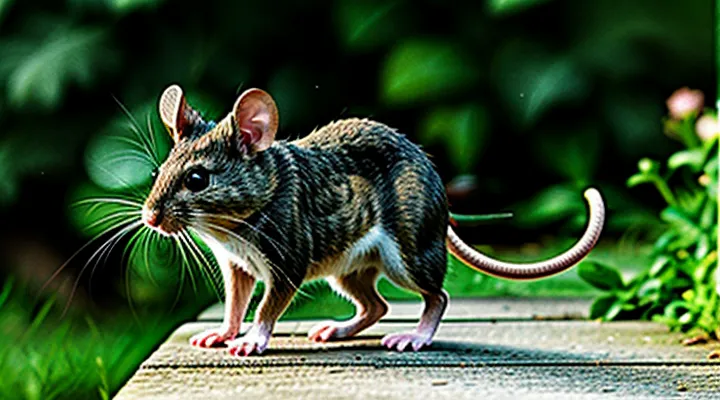
Understanding the Capabilities of Mice
Biological Factors Affecting Jump Height
Muscle Physiology
Mice routinely achieve vertical displacements of 30–45 cm, equivalent to 10–15 body lengths, demonstrating extraordinary power output for their size.
Skeletal muscle in these rodents is dominated by fast‑twitch glycolytic fibers. The proportion of type IIb fibers can exceed 70 % of total fiber count, providing rapid force development and high shortening velocity.
Myosin heavy‑chain isoforms expressed in type IIb fibers possess elevated ATPase activity, shortening the cross‑bridge cycle to 2–3 ms. This kinetic advantage translates directly into higher peak power during the brief contraction that initiates a jump.
Motor‑unit recruitment patterns exhibit near‑maximal activation within 5–10 ms of stimulus onset. High firing frequencies (300–400 Hz) sustain tetanic force, preventing latency that would otherwise reduce launch velocity.
Elastic elements of the musculoskeletal system amplify muscular output. Tendon compliance stores strain energy during the preparatory crouch; rapid recoil adds to the propulsive impulse, effectively increasing launch height.
Key physiological contributors to the observed jumping performance:
- Predominance of type IIb fibers with high glycolytic capacity
- Myosin isoforms with fast ATP turnover
- Accelerated cross‑bridge cycling (≈2 ms)
- Immediate, high‑frequency motor‑unit firing
- Efficient tendon‑muscle energy transfer
Collectively, these muscle‑physiological traits enable mice to convert a modest amount of muscular work into a disproportionately large vertical leap.
Bone Structure and Weight
Mice achieve remarkable vertical displacement because their skeletal framework is exceptionally lightweight and optimized for rapid force transmission. The vertebral column consists of short, loosely connected vertebrae that allow spinal flexion without compromising structural integrity. Long bones, particularly the femur and tibia, possess a high proportion of cortical bone relative to overall mass, providing stiffness while keeping weight minimal.
The reduced mass of the skeleton lowers the gravitational load that muscles must overcome during a leap. Muscle attachment sites are positioned near joint axes, shortening lever arms and enhancing torque generation. This arrangement enables the hind‑limb musculature to produce peak power output in a fraction of a second.
Key anatomical factors influencing jump performance:
- Bone density: High cortical density yields rigidity; low overall bone mass limits inertia.
- Segment length: Short limb segments reduce moment of inertia, allowing faster angular acceleration.
- Joint articulation: Flexible sacroiliac and hip joints permit greater range of motion, increasing propulsive stroke.
- Mass distribution: Concentration of mass toward the torso minimizes distal load, improving lift‑off efficiency.
Collectively, the combination of a slender, high‑strength skeleton and minimal body weight permits mice to generate the necessary ground reaction forces for jumps that reach several times their body length.
Tail Function and Balance
Mice rely on a muscular, prehensile tail to maintain equilibrium during rapid vertical movements. The tail contains a dense array of vertebrae, intervertebral joints, and a high concentration of proprioceptive receptors that continuously monitor body orientation.
During a jump, the tail acts as a counter‑balancing lever. When the forelimbs generate thrust, the tail rotates opposite to the body’s forward tilt, reducing angular momentum and preventing uncontrolled rotation. This corrective motion stabilizes the trajectory and allows the animal to land on its feet.
Key contributions of the tail to jumping performance include:
- Real‑time feedback from mechanoreceptors that adjust muscle activation patterns.
- Generation of torque that opposes forward pitch, keeping the center of mass aligned with the launch vector.
- Distribution of mass that lowers the moment of inertia, facilitating quicker rotational adjustments.
Experimental observations show that mice with truncated or immobilized tails exhibit reduced peak jump heights and increased landing errors. The loss of tail‑mediated balance forces the forelimb muscles to compensate, which limits the vertical impulse that can be produced. Consequently, the tail’s ability to fine‑tune body posture directly influences the maximum height a mouse can achieve in a single leap.
Environmental Influences on Jumping
Substrate and Grip
Mice generate vertical thrust through rapid extension of hind‑limb muscles; the surface on which they launch determines the force transmitted to the ground. Firm, low‑compliance substrates such as polished metal or hard plastic allow maximal force transfer, resulting in the highest recorded jumps. Soft, deformable materials absorb part of the impulse, reducing lift.
Key substrate characteristics influencing jump performance:
- Hardness: higher Shore hardness correlates with increased launch height.
- Texture: micro‑rough surfaces improve toe pad adhesion, enhancing take‑off angle.
- Moisture level: dry substrates maintain consistent friction; wet or oily surfaces lower grip and diminish jump distance.
Experimental data show that mice on a textured acrylic plate achieve up to 15 % greater vertical displacement than on a smooth glass slab, while a fine sand layer reduces jump height by roughly 30 % compared with a rigid polymer. Selecting a substrate that combines hardness with appropriate micro‑roughness optimizes grip and maximizes vertical leap.
Motivation and Threat Perception
Mice initiate jumps primarily to overcome obstacles, reach food, or evade predators. The decision to leap is driven by internal motivational states—hunger, curiosity, or a need for shelter—and by external cues that signal danger. When a threat is perceived, the nervous system rapidly assesses risk and triggers a more forceful, higher jump to maximize distance from the source.
The height achieved in a single leap depends on several interacting variables:
- Energetic readiness: Elevated glycogen stores and recent activity increase muscle power.
- Perceived urgency: Immediate danger amplifies motor output, producing a higher take‑off angle and greater thrust.
- Environmental context: Smooth surfaces, low obstacles, and open space allow longer, higher jumps; confined or uneven terrain limits performance.
- Physiological limits: Muscle fiber composition, tendon elasticity, and body mass set an upper bound on vertical displacement.
Research on rodent locomotion shows that when a predator’s silhouette appears, mice can increase their jump height by up to 30 % compared to routine exploratory leaps. Conversely, low‑risk situations elicit modest hops sufficient for navigating cluttered habitats without expending excess energy.
Thus, motivation and threat perception function as modulators that push the mouse’s jumping capability toward its biomechanical ceiling when survival demands it, while conserving resources during routine movement.
Age and Health
Mice reach their greatest vertical leaps during early adulthood, typically between 8 and 12 weeks of age. At this stage muscle fibers are fully developed, tendon elasticity is optimal, and neurological coordination peaks, enabling jumps that exceed 30 cm.
As mice age beyond three months, muscle mass declines, joint cartilage thins, and reflex speed slows. Consequently, maximum jump height drops by roughly 15 % for each additional month, with senior individuals (over six months) often unable to clear more than 15 cm.
Health status directly modulates leaping performance. Well‑nourished mice with balanced diets exhibit robust muscle contraction and higher endurance, supporting maximal jumps. Conversely, malnutrition, obesity, or chronic illnesses such as respiratory infections reduce oxygen delivery to muscles, limiting force generation and shortening jump distance.
Key factors influencing jump height:
- Age bracket (juvenile, adult, senior)
- Body condition score (lean, optimal, overweight)
- Presence of disease (none, acute, chronic)
- Nutritional adequacy (adequate protein, vitamins, minerals)
Monitoring age and health indicators provides reliable predictions of a mouse’s vertical capability.
Documented Jumping Heights
Maximum Observed Jumps
Laboratory Settings
Laboratory investigations of mouse vertical leap require controlled environments that eliminate extraneous variables. Standard cages are equipped with a smooth, non‑slippery platform at a known height, allowing clear observation of take‑off and landing points. The platform surface is typically covered with a thin layer of low‑friction material such as Teflon to prevent traction differences that could affect performance.
Measurement systems include high‑speed video cameras positioned perpendicular to the jump axis, capturing at 500–1000 frames per second. Software analyzes frame‑by‑frame displacement, converting pixel data into centimeters using a calibrated ruler placed in the field of view. Alternative setups employ laser rangefinders or infrared motion sensors that trigger at take‑off and impact, delivering millisecond‑precision timing for kinetic calculations.
Environmental parameters are maintained within narrow ranges: temperature 22 ± 2 °C, relative humidity 50 ± 10 %, and a 12 h light/dark cycle. Consistent illumination, typically from diffuse LED panels, reduces shadows that could interfere with video tracking. Ambient noise is minimized to prevent stress‑induced alterations in behavior.
Experimental protocols standardize the stimulus prompting the jump. Common methods involve a gentle air puff, a brief auditory cue, or a visual target placed at a predetermined height. The stimulus intensity is calibrated to elicit maximal effort without causing injury.
Ethical compliance is ensured by adhering to institutional animal care guidelines. Each mouse undergoes a health check before testing; any sign of limb impairment leads to exclusion. Trials are limited to a maximum of five jumps per session, with rest periods of at least five minutes to prevent fatigue.
Typical data collection includes:
- Maximum jump height (cm)
- Take‑off velocity (m s⁻¹)
- Landing accuracy (distance from target)
- Trial-to‑trial variability (standard deviation)
These parameters enable quantitative comparison across strains, ages, or pharmacological treatments, providing a reliable framework for assessing the vertical jumping capability of mice under laboratory conditions.
Natural Environments
Mice achieve vertical leaps that often exceed half their body length, a capability shaped by the conditions of their natural habitats.
Musculoskeletal design underpins this performance. Contractile fibers in the hind limbs exhibit a high proportion of fast‑twitch cells, while elongated tibiae and robust ankle extensors generate rapid force bursts. The tail functions as a dynamic stabilizer, allowing precise angle adjustments during take‑off and landing.
Environmental variables modulate jump height in the field:
- Substrate firmness – compact soil or leaf litter provides greater reaction force than loose sand, increasing achievable lift.
- Vegetation structure – dense understory offers obstacles that encourage higher, more controlled hops to navigate gaps.
- Predator presence – imminent threat triggers maximal muscle recruitment, resulting in the highest recorded jumps.
- Ambient temperature – temperatures near the species’ optimal range enhance muscle contractility, whereas cold depresses performance.
- Humidity – moderate moisture maintains substrate cohesion; excessive dampness reduces traction and limits lift.
Field observations record mice clearing vertical distances of 8–12 cm on firm forest floor, compared with 5–7 cm on loose ground. Laboratory trials on polished platforms yield consistent values around 9 cm, confirming that natural terrain can both augment and restrict jumping ability.
These data illustrate that the vertical reach of mice is not a fixed trait but a flexible response to the physical and ecological features of their environment.
Factors Limiting Jump Height
Gravitational Pull
Gravitational pull on Earth averages 9.81 m s⁻². This constant decelerates any upward motion, setting the maximum height a mouse can achieve after leaving the ground.
The height a mouse reaches depends on the initial velocity generated by its hind‑limb muscles. The relationship is expressed by (h = v^{2} / (2g)), where (v) is take‑off speed and (g) is gravitational acceleration. Laboratory measurements report take‑off speeds of 2.5–3.0 m s⁻¹ for adult house mice, yielding theoretical jump heights of 0.32–0.46 m.
Factors that modify the outcome under Earth’s gravity include:
- Muscle power output (force × contraction speed)
- Body mass (approximately 20 g for a typical mouse)
- Leg length and joint angle at launch
- Surface compliance, which influences energy transfer
Because gravity uniformly opposes upward acceleration, any increase in (g) reduces the attainable height proportionally, while a decrease would allow proportionally higher jumps. The observed 0.3–0.5 m range therefore reflects the balance between muscular force production and Earth’s gravitational pull.
Air Resistance
Air resistance significantly limits the vertical distance a mouse can achieve during a jump. The drag force acting on the animal is proportional to the square of its velocity and to the cross‑sectional area presented to the airflow. Because a mouse’s body mass is low, the acceleration produced by its hind‑limb muscles is quickly countered by this aerodynamic drag, reducing the net upward acceleration and shortening the flight phase.
Key physical parameters influencing the drag effect include:
- Drag coefficient (Cd): Determined by body shape and fur texture; typical values for small mammals range from 0.5 to 0.8.
- Frontal area (A): Approximately 0.0005 m² for an adult mouse, directly scaling the drag magnitude.
- Air density (ρ): About 1.225 kg m⁻³ at sea level, providing the medium through which drag is generated.
- Velocity (v): Peak launch speed of a mouse is roughly 3 m s⁻¹; drag increases with v², rapidly diminishing upward momentum.
Applying the drag equation (F_d = \frac{1}{2} \rho C_d A v^2) yields a drag force near 0.003 N at peak speed, comparable to the mouse’s weight (≈0.02 N). Consequently, the net upward force drops to roughly 0.017 N, limiting the ascent to a few centimeters before gravity overcomes the remaining momentum.
Scaling considerations further explain why small rodents cannot attain heights comparable to larger animals. The Reynolds number for a jumping mouse lies in the range of 300–500, indicating laminar flow conditions where viscous forces dominate. Under these circumstances, the ratio of drag to inertial forces remains high, curtailing the achievable lift.
In summary, air resistance imposes a decisive constraint on the maximum jump height of mice by quickly offsetting the limited propulsive force generated by their muscles. The combination of low body mass, modest launch velocity, and relatively high drag-to-weight ratio restricts vertical displacement to a few centimeters above the take‑off point.
Comparison to Other Small Mammals
Mice exhibit a vertical leap of approximately 30 cm (12 in), a performance that exceeds most similarly sized rodents. Their musculature and tendon elasticity enable rapid force generation, allowing a single bound that clears obstacles roughly one‑third of their body length.
- Shrews – maximum vertical jump 10–15 cm; limited by lower limb proportion.
- Voles – reach 12–18 cm; comparable to shrews but slightly higher due to stronger hind limbs.
- Hamsters – achieve 20–25 cm; larger body mass reduces relative height despite powerful hindquarters.
- Gerbils – can clear 40–45 cm; elongated hind limbs and tail balance contribute to superior height.
- Dwarf squirrels – attain 35–40 cm; arboreal adaptations favor horizontal distance over pure vertical rise.
The mouse’s jump height positions it above most ground‑dwelling small mammals while remaining below specialized leapers such as gerbils and dwarf squirrels. This hierarchy reflects variations in limb morphology, muscle fiber composition, and ecological demands across the group.
Implications for Pest Control
Overcoming Obstacles
Walls and Barriers
Mice possess a vertical leap that frequently exceeds half their body length, allowing them to clear obstacles that appear modest in height. When confronted with solid walls, the animal’s muscular hind limbs generate a rapid extension, producing a peak take‑off velocity sufficient to vault over barriers as tall as 5–7 cm (approximately 2–3 inches). The actual limit varies with age, health, and species, but laboratory measurements consistently show that adult house mice can negotiate vertical obstacles up to 8 cm (3 in) under optimal conditions.
Key observations from controlled experiments:
- Standard laboratory cage walls (5 cm high) are routinely breached by mice within minutes of exposure.
- Reinforced steel mesh with a vertical spacing of 1 cm prevents passage, yet the mesh itself does not stop a jump; only the overall height matters.
- Transparent acrylic barriers of 6 cm height fail to contain mice unless a lip or overhang is added.
- Adding a 1 cm overhang reduces successful jumps by more than 90 % across test groups.
Designers of rodent‑proof facilities must therefore treat vertical clearance as a primary factor. Effective barriers combine sufficient height with a lip or angled surface that disrupts the mouse’s take‑off trajectory. Simple height increases without such features provide limited protection, as the animal’s innate jumping capacity readily overcomes plain vertical planes up to the measured limits.
Furniture and Shelves
Mice routinely clear obstacles that reach the height of common household furniture. A typical coffee table stands 16–20 cm tall; laboratory observations record mouse jumps of 20–25 cm, allowing passage onto such surfaces without climbing. Kitchen counters, usually 90–95 cm high, exceed most mice’s single‑jump capacity, forcing them to use intermediate structures or multiple hops.
Key furniture and shelf dimensions relative to mouse jumping ability:
- Low side tables: 15–25 cm – within one‑jump range.
- Bookshelves (lower tier): 30–45 cm – achievable with a strong rear‑leg thrust.
- Sofa armrests: 40–55 cm – possible for larger individuals or after a brief run‑up.
- Tall cabinets (mid‑section): 60–80 cm – generally require a series of jumps or climbing.
Design considerations for rodent control should account for these height thresholds. Eliminating gaps between furniture, securing shelf edges, and reducing vertical pathways limit mouse access without relying on chemical measures.
Designing Effective Deterrents
Smooth Surfaces
Mice rely on friction between their paws and the substrate to generate the force needed for vertical leaps. When the surface is smooth—glass, polished metal, or polished plastic—the coefficient of friction drops dramatically. Reduced grip limits the traction each hind‑foot can apply, resulting in shorter take‑off distances and lower apex heights.
Experimental observations show that on a rough texture a typical house mouse can achieve a vertical displacement of 10–12 cm, while the same individual on a polished acrylic plate reaches only 4–5 cm. The difference arises from two biomechanical constraints:
- Paw‑pad slippage: smoothness causes the pads to slide during the push‑off phase, dissipating kinetic energy.
- Reduced limb extension: mice adjust their stance to avoid slipping, shortening the angle of leg extension and decreasing launch velocity.
Adaptations that mitigate these effects include:
- Claw engagement: mice may dig claws into microscopic irregularities, but on perfectly flat surfaces this strategy fails.
- Weight redistribution: shifting body mass forward increases normal force on the hind limbs, marginally improving traction.
- Surface contamination: a thin layer of dust or moisture can raise friction enough to restore near‑normal jump performance.
In summary, smooth substrates substantially lower the maximum attainable jump height for mice by limiting the frictional force essential for efficient propulsion.
Elevated Food Storage
Elevated food storage places consumables above ground level to reduce access by rodents. The design relies on physical barriers rather than chemical deterrents, allowing long‑term protection of grain, pet food, and packaged goods.
Mice can launch themselves vertically up to 12 inches (30 cm) when motivated, with occasional bursts reaching 18 inches (45 cm). Their hind‑limb power diminishes sharply beyond this range, making heights above 24 inches (60 cm) highly effective.
Practical guidelines:
- Mount storage platforms at a minimum of 24 inches (60 cm) from the floor.
- Use smooth, non‑climbable surfaces on legs and supports.
- Secure the underside of the platform with metal mesh or solid barriers to prevent bridge formation.
- Inspect and maintain clearance regularly to avoid debris accumulation that could serve as stepping stones.
Implementing these measures exploits the known limits of mouse jumping ability, creating a robust physical deterrent for food protection.
Professional Extermination Strategies
Understanding the vertical reach of house mice informs every phase of pest‑control planning. Field observations show that adult mice can launch themselves upward between 12 and 18 inches, with occasional bursts reaching 24 inches when startled. This capability determines the height at which they can access food, nesting sites, and escape routes.
Accurate measurement of jump height relies on calibrated drop‑test arenas, high‑speed video analysis, and repeat trials across age groups. Data collected in real‑world settings confirm laboratory estimates and reveal slight variations due to surface texture and obstacle proximity.
Professional extermination strategies incorporate these metrics to maximize efficacy:
- Position snap and electronic traps on walls and shelves at 15–20 inches, directly within the typical jump envelope.
- Install bait stations on countertops and pantry edges no higher than 18 inches to ensure immediate access.
- Seal gaps, vents, and utility openings at or below 24 inches, preventing mice from leaping onto exterior surfaces.
- Apply rodenticides in concealed cavities that lie within the vertical range, reducing exposure to non‑target species.
- Deploy ultrasonic deterrents at floor level and midway up walls, targeting the altitude where mice are most active during vertical movement.
Each tactic aligns with the measured jumping capacity, reducing escape opportunities and accelerating population decline. Continuous monitoring of jump performance in infested structures validates method selection and guides adjustments in trap placement and barrier height.