
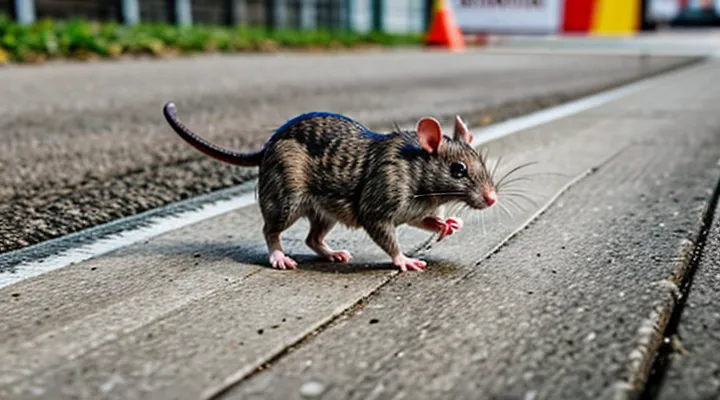
Understanding Rat Speed
Average Running Speed
Rats achieve a typical sprint of 5 to 8 mph (8–13 km/h) when motivated by food or escape. Laboratory measurements of adult Norway rats (Rattus norvegicus) on a 1‑meter track report an average speed of 6.2 mph (10 km/h) over a 10‑second interval. Wild brown rats (Rattus rattus) measured in urban alleyways reach up to 7.5 mph (12 km/h) during brief bursts.
Key factors influencing the average running speed include:
- Body mass: individuals weighing 250–300 g run faster than lighter juveniles.
- Surface type: smooth surfaces yield higher velocities than rough terrain.
- Motivation level: pursuit of food or avoidance of predators increases sprint intensity.
Overall, the consistent range of 5–8 mph represents the baseline performance for mature rats under standard laboratory or field conditions.
Factors Influencing Rat Speed
Breed and Size
Rats differ markedly in running velocity depending on breed and body dimensions. The most common laboratory species, the Norway rat (Rattus norvegicus), typically reaches 8 km/h (5 mph) over short bursts, while the roof‑top rat (Rattus rattus) can achieve up to 13 km/h (8 mph) when startled. Wild populations exhibit a broader range because size variation influences stride length and muscle power.
Key size parameters affecting speed:
- Body length (head‑to‑tail): 15–40 cm. Longer individuals usually generate longer strides, contributing to higher peak speeds.
- Weight: 150–500 g. Moderate mass balances acceleration and endurance; excessively heavy rats lose agility, whereas very light specimens may lack the force for rapid acceleration.
- Tail length: 15–30 cm. Serves as a counter‑balance during high‑speed maneuvers, improving stability but not directly increasing forward velocity.
Breed‑specific trends:
- Norway rat: Compact build, robust musculature; optimal for sustained moderate speeds.
- Roof‑top rat: Slender frame, proportionally longer limbs; excels in brief, high‑velocity sprints.
- Dwarf laboratory strains (e.g., Sprague‑Dawley dwarf): Reduced body mass, limited stride; maximum speed approximately 5 km/h (3 mph).
Overall, larger, longer‑limbed breeds tend to run faster, while increased body mass can diminish peak velocity. Speed assessments should account for both breed identity and individual size metrics to yield accurate performance estimates.
Environment and Terrain
Rats achieve their peak velocities on flat, dry surfaces where traction is maximal. Laboratory observations show sprint speeds of 2.5–3.0 m s⁻¹ on polished metal or acrylic floors, while the same individuals drop to 1.2–1.5 m s⁻¹ on coarse sand or loose mulch.
Key environmental variables influencing locomotion include:
- Surface texture: smooth substrates reduce foot slip, allowing longer stride lengths; rough or granular media increase foot‑pad deformation, shortening strides.
- Moisture level: wet surfaces can either enhance grip on certain materials (e.g., wet wood) or cause slippage on low‑friction plastics, altering speed by up to 30 %.
- Temperature: optimal muscle performance occurs between 20 °C and 30 °C; below 10 °C, metabolic slowdown reduces sprint capacity by roughly 40 %.
- Incline: a 5 % uphill grade cuts speed by about 20 %; steeper angles (>15 %) often force rats to switch from running to climbing, dramatically lowering forward velocity.
Terrain complexity also matters. In cluttered environments—such as dense vegetation or debris piles—rats prioritize maneuverability over raw speed, employing rapid directional changes and shorter steps. This behavioral shift reduces average forward progress to 0.6–0.8 m s⁻¹, despite the animal’s physiological capability for higher rates on open ground.
Field studies in urban sewer systems corroborate laboratory data: rats navigate wet concrete at near‑maximum sprint speeds, while navigating cracked brickwork or oily residues yields measurable deceleration. Consequently, assessments of rat locomotor performance must account for the specific substrate, moisture conditions, temperature, and topographical features present in each setting.
Motivation and Threat Perception
Rats increase their velocity when seeking food, mates, or shelter. Energetic gain from a discovered resource triggers bursts of sprinting that can reach 2.5 m s⁻¹ on smooth surfaces. The drive to obtain high‑calorie items outweighs the metabolic cost of rapid movement, prompting sustained high‑speed runs during foraging bouts.
When a predator or sudden disturbance is detected, threat perception activates a rapid escape response. Visual looming, ultrasonic alarm calls, and tactile vibrations trigger a switch from exploratory pacing to maximal sprinting, often exceeding 3 m s⁻¹ for short distances. The nervous system prioritizes reflex pathways that minimize decision latency, allowing the animal to outrun the approaching danger.
Key factors influencing speed under these motivations:
- Resource value: Higher caloric or reproductive benefit → longer, faster runs.
- Predator proximity: Closer threat → immediate maximal sprint, reduced maneuvering.
- Environmental complexity: Open terrain → higher top speed; cluttered spaces → frequent acceleration–deceleration cycles.
- Physiological state: Well‑fed, rested rats achieve higher peak velocities than fatigued individuals.
The interaction of reward seeking and danger avoidance shapes the rat’s speed profile, producing a spectrum from moderate cruising during routine exploration to explosive bursts when motivation or threat intensity spikes.
The Physiology of Rat Movement
Muscular Structure and Adaptations
Rats achieve high sprint velocities through a muscular system optimized for rapid contraction and efficient force transmission. The hindlimb musculature dominates propulsion, with the gastrocnemius, soleus, and plantaris containing a predominance of type IIb fast‑twitch fibers. These fibers generate peak power within milliseconds, enabling bursts of acceleration. Parallelly, the quadriceps femoris and hip flexors provide thrust during the drive phase, while the hamstrings and gluteal group coordinate limb retraction and stabilization.
Key adaptations supporting swift movement include:
- Fiber composition: >70 % of hindlimb fibers are fast‑twitch, favoring anaerobic ATP production and high shortening velocity.
- Tendon elasticity: The Achilles tendon stores elastic energy during stance, releasing it at toe‑off to amplify limb extension without additional metabolic cost.
- Neuromuscular recruitment: Motor units fire at high frequencies, reducing latency between stimulus and contraction and allowing precise timing of gait cycles.
- Limb morphology: Long distal segments increase stride length, while lightweight bone structure minimizes inertial load.
- Tail dynamics: Muscular control of the tail provides counter‑balance, enhancing stability during rapid directional changes.
Metabolic support derives from elevated glycogen reserves in muscle fibers and rapid glycolytic flux, sustaining energy output for short, high‑intensity sprints. The combination of fiber type dominance, elastic tendon function, optimized neural activation, and specialized limb architecture equips rats with the capacity to reach speeds that rival much larger mammals on comparable terrain.
Locomotion Mechanics
Rats achieve rapid movement through a combination of skeletal design, muscle composition, and neural coordination. Their lightweight skull, elongated vertebral column, and flexible pelvis enable a high stride frequency while maintaining stability on varied surfaces.
The primary drivers of rat locomotion include:
- Muscle fiber distribution – a predominance of fast‑twitch fibers in hindlimb muscles generates quick, powerful contractions.
- Tendon elasticity – elastic storage in the Achilles and gastrocnemius tendons reduces energy loss during each step.
- Neuromuscular timing – spinal central pattern generators synchronize limb cycles, allowing seamless transitions between walking, trotting, and galloping.
Kinematic analyses reveal that rats can reach sprint speeds of 1.5–2.0 m s⁻¹ (≈3.3–4.5 mph) over short distances, while sustained locomotion settles near 0.5 m s⁻¹ (≈1.1 mph). These values depend on variables such as substrate compliance, incline, and body mass. On smooth laboratory flooring, stride length averages 5–7 cm with a cadence of 10–12 steps per second; on rough terrain, stride length shortens and cadence rises to preserve traction.
Metabolic constraints limit prolonged high‑velocity running. Oxidative capacity of the gastrocnemius supports endurance up to 5 minutes, after which lactate accumulation forces a reduction to walking gait. Thermal regulation also influences speed; elevated ambient temperatures trigger earlier transition to slower locomotion to prevent overheating.
Overall, rat locomotion mechanics integrate anatomical efficiency, rapid muscle activation, and adaptive gait modulation, producing the observed range of velocities across different environmental conditions.
Endurance vs. Sprint Speed
Rats achieve two distinct performance profiles when moving: short‑duration sprints and prolonged locomotion. Laboratory measurements show peak sprint speeds between 8 and 10 mph (13–16 km h⁻¹) lasting less than 30 seconds before fatigue sets in. Sprint bursts rely on fast‑twitch muscle fibers, high anaerobic glycolysis, and rapid recruitment of motor units. Energy is supplied primarily by phosphocreatine and glycogen stores, which deplete quickly.
Endurance running operates at a markedly lower velocity, typically 2–3 mph (3–5 km h⁻¹) for distances up to several hundred meters. This mode engages slow‑twitch fibers, oxidative metabolism, and sustained cardiac output. Rats maintain this pace for several minutes, with oxygen consumption stabilizing near their maximal aerobic capacity.
Key differences:
- Velocity: sprint ≈ 8–10 mph; endurance ≈ 2–3 mph.
- Duration: sprint ≤ 30 s; endurance ≥ 2 min.
- Energy system: anaerobic phosphagen/glycolytic vs. aerobic oxidative.
- Muscle recruitment: fast‑twitch dominant vs. mixed, with a higher proportion of slow‑twitch fibers.
Experimental protocols that alternate sprint intervals with recovery periods reveal a rapid decline in peak speed after the first few repetitions, confirming limited anaerobic reserve. Continuous treadmill runs at moderate inclines demonstrate steady heart rates and respiratory exchange ratios indicative of aerobic dominance.
Overall, rat locomotion exhibits a clear trade‑off: maximal velocity is achieved only in brief, high‑intensity bursts, while sustained movement requires reduced speed and reliance on oxidative pathways.
Comparing Rat Speed to Other Animals
Common Urban Pests
Rats dominate urban environments because of adaptability, reproductive capacity, and ability to navigate confined spaces. Laboratory measurements show that Norway rats (Rattus norvegicus) achieve sprint speeds of 8 km/h (5 mph) over short distances, while roof rats (Rattus rattus) reach up to 13 km/h (8 mph). These velocities enable rapid escape from predators and efficient foraging across alleys, sewers, and building interiors. Speed contributes to the difficulty of eradication, as rodents can cover a 30‑meter corridor in less than five seconds.
Other common urban pests exhibit distinct behaviors that affect control strategies:
- House mice (Mus musculus): maximum sprint 13 km/h, high reproductive rate, frequent entry through small openings.
- Cockroaches (Blattella germanica): run up to 5 km/h, tolerate extreme temperatures, hide in wall voids and appliances.
- Pigeons (Columba livia domestica): flight speed 80 km/h, congregate on rooftops and ledges, spread pathogens via droppings.
- Bed bugs (Cimex lectularius): crawl 0.5 km/h, hide in mattress seams, resilient to many insecticides.
Effective management relies on sealing entry points, removing food sources, and applying targeted bait or traps that account for the rapid movement of rats and the specific habits of each species. Continuous monitoring and prompt response reduce population growth and limit health risks associated with these pests.
Small Mammals
Rats belong to the diverse group of small mammals that exhibit high locomotor performance relative to body size. Their sprint capability reaches 8–9 m s⁻¹ (approximately 18–20 mph) in short bursts, a speed comparable to that of many mid‑size predators.
Compared with other members of the same size class, rats rank among the fastest:
- House mouse: 5 m s⁻¹ (≈ 11 mph)
- Eastern chipmunk: 7 m s⁻¹ (≈ 16 mph)
- American pygmy shrew: 4 m s⁻¹ (≈ 9 mph)
Speed variation depends on species, age, and physiological condition. Muscular fiber composition, limb length, and tail balance contribute to rapid acceleration. Environmental factors such as substrate texture and temperature also affect maximum velocity.
Researchers determine sprint speed using high‑speed video analysis or runway tracks equipped with timing gates. Data collection typically involves repeated trials to account for individual variability and to establish reliable performance benchmarks.
Human Perception of Rat Speed
Human observers often misjudge the velocity of a rat because visual cues conflict with actual locomotor performance. The animal’s small stature compresses the visual angle, making rapid strides appear less dramatic, while sudden bursts create a perception of greater speed.
Key factors shaping perception:
- Contrast between rat fur and background; low contrast reduces apparent motion.
- Lighting conditions; shadows and glare distort speed cues.
- Observer distance; greater distance diminishes detail, leading to underestimation.
- Motion blur; rapid movement creates streaks that the brain interprets as faster travel.
Empirical data provide a baseline for comparison. Laboratory rats sustain a maximum sprint of approximately 8 mph (13 km/h); some wild specimens reach up to 12 mph (19 km/h) during short escapes. Average cruising speed on flat surfaces lies between 3 and 5 mph (5–8 km/h).
Common perceptual errors:
- Overestimation during escape responses, when rats accelerate from rest to peak speed within seconds.
- Underestimation when rats navigate cluttered environments, where intermittent pauses interrupt continuous motion.
- Misinterpretation of vertical movement; climbing or jumping can be perceived as slower forward travel despite comparable kinetic energy.
Understanding these biases clarifies why anecdotal reports of “extremely fast rats” diverge from measured performance. Accurate assessment requires controlled observation conditions that isolate speed from confounding visual factors.
Practical Implications of Rat Speed
Evasion Techniques
Rats achieve escape through rapid acceleration, agile maneuvering, and sensory awareness. Their top sprint can exceed 8 mph, allowing brief bursts that outpace many predators. Speed alone does not guarantee safety; coordinated evasion strategies amplify survival odds.
Effective evasion techniques include:
- Sudden directional changes within a few centimeters, exploiting flexible spine articulation.
- Utilization of low‑profile tunnels and burrows that conceal movement from visual detection.
- Deployment of whisker‑mediated tactile feedback to navigate obstacles at high velocity.
- Emission of ultrasonic vocalizations that disrupt predator targeting systems.
- Adoption of erratic, non‑linear paths that reduce predictability for pursuers.
These methods integrate with the animal’s locomotor capacity, creating a multifaceted defense that maximizes distance from threats while minimizing exposure time. The combination of speed and adaptive behavior defines the rat’s proficiency in avoiding capture.
Predatory Avoidance
Rats rely on rapid bursts of movement to evade predators. Laboratory measurements indicate sprint speeds of 2.5–3.0 m s⁻¹ for adult Norway rats, a velocity sufficient to cover a typical escape distance of 2–3 m within one second. This performance is achieved through a combination of muscular power, flexible spine articulation, and a high proportion of fast‑twitch muscle fibers.
Key physiological mechanisms underlying escape behavior include:
- Enhanced proprioception: Vibrissae and auditory cues trigger immediate motor responses.
- Neurological reflex arcs: Short latency pathways bypass cortical processing, reducing reaction time to 30–50 ms.
- Energy storage in tendons: Elastic recoil contributes to acceleration during the initial phase of a sprint.
Environmental factors modulate avoidance efficiency. Open substrates increase detection risk, prompting rats to favor cluttered terrain where visual obstruction and tactile feedback improve concealment. In urban settings, rats adjust path selection to exploit shadows, debris, and underground passages, thereby extending the effective range of their rapid escape capability.
Predatory pressure also shapes behavioral patterns. Rats exhibit heightened vigilance during crepuscular periods, when many predators are most active, and demonstrate learned avoidance of specific predator scents after repeated exposure. These adaptations collectively enhance survival odds by maximizing the utility of their innate speed.
Pest Control Considerations
Rats can reach bursts of 8 mph, covering short distances in seconds. Their rapid movement limits the window for effective interception, requiring pest‑control measures that act faster than the animal’s response time.
Key considerations for managing fast‑moving rodents include:
- Bait accessibility: Place poison or traps along known runways where rats must slow down, such as near walls, corners, or confined entry points.
- Trap selection: Use snap or electronic traps that activate instantly upon contact; adhesive boards lose efficacy against swift escape attempts.
- Placement timing: Deploy devices during periods of reduced activity (late night to early dawn) when rats are less likely to sprint away from disturbances.
- Barrier design: Install tight‑fit exclusion panels and door sweeps that eliminate gaps larger than ¼ inch, preventing quick entry through small openings.
- Monitoring frequency: Conduct inspections at intervals of 12‑24 hours to replace or reposition devices before rats can adapt or avoid them.
Effective control programs integrate these elements, ensuring that response mechanisms outpace the animal’s natural speed and agility.