
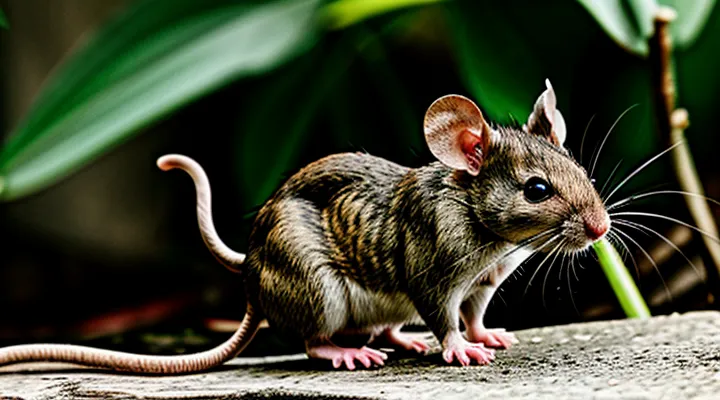
Understanding Rats and Mice
Distinct Species, Not Transformations
Rats and mice are separate species; a rat cannot change into a mouse. Both belong to the family Muridae, yet they occupy different genera: rats are classified under Rattus, mice under Mus. This taxonomic split reflects distinct evolutionary lineages.
Key differences include:
- Body size: rats typically weigh 200–500 g, mice 15–30 g.
- Tail proportion: rat tails equal or exceed body length; mouse tails are shorter relative to the body.
- Ear dimensions: mouse ears are proportionally larger.
- Skull morphology: rat skulls have a broader rostrum; mouse skulls are more delicate.
- Reproductive output: mice produce larger litters more frequently than rats.
- Habitat preference: rats favor sewers, basements, and outdoor burrows; mice thrive in fields, grain stores, and indoor walls.
Genetic analysis shows divergence of approximately 10 % in mitochondrial DNA between Rattus norvegicus and Mus musculus, confirming separate species status. Chromosome counts differ: the common rat has 42 chromosomes, the house mouse 40.
Ecologically, rats act as opportunistic omnivores, often dominating larger urban environments, while mice specialize in seed consumption and serve as primary prey for numerous predators. These distinctions reinforce that rats and mice are fundamentally different organisms, not stages of a single transformation.
Key Differences Between Rats and Mice
Size and Physical Characteristics
Rats and mice differ markedly in body length, weight, and skeletal structure. Adult rats typically measure 20–25 cm from nose to tail base, with total length including the tail reaching 30–40 cm, and weigh 250–500 g. Mice average 7–10 cm body length, 10–15 cm total length, and weigh 15–30 g. The skull of a rat is broader, with a pronounced, squared snout, while a mouse possesses a more triangular, delicate skull and a pointed nose.
Tail morphology provides another clear distinction. Rat tails are thick, scaly, and often shorter than the body, serving as balance aids. Mouse tails are slender, hair‑covered, and proportionally longer, contributing to thermoregulation. Limb proportions also vary: rats have longer hind limbs relative to forelimbs, supporting stronger jumps; mice exhibit more uniform limb lengths, favoring rapid, erratic scurrying.
Key physical parameters:
- Body mass: rat ≈ 250–500 g; mouse ≈ 15–30 g
- Head shape: rat = broad, square; mouse = narrow, triangular
- Tail: rat = thick, scaly, shorter; mouse = thin, furred, longer
- Skull size: rat ≈ 2 × mouse dimensions
- Hind‑limb length: rat > mouse, enabling higher leaps
These measurable traits define the observable gap between the two species, clarifying why a true conversion is biologically implausible despite superficial resemblances in certain dwarf rat varieties.
Habitat and Behavior
Rats and mice share many ecological niches, thriving in urban, agricultural, and wild environments. Both species exploit human structures for shelter, yet rats typically occupy larger burrows or sewer systems, while mice prefer cracks, attics, and grain stores. Their adaptability to diverse habitats underlies the frequent overlap that fuels misconceptions about species identity.
Behaviorally, rats exhibit pronounced social hierarchies, with dominant individuals controlling access to food and nesting sites. Mice display more fluid group dynamics, forming temporary colonies that disperse when resources shift. Both species are nocturnal, relying on keen olfactory and tactile senses to navigate complex surroundings.
Key behavioral traits relevant to the transformation myth include:
- High reproductive rates: rats produce 5–10 litters per year, mice up to 10, ensuring rapid population turnover.
- Opportunistic feeding: omnivorous diets allow both to exploit leftovers, seeds, and insects, supporting survival in varied habitats.
- Grooming and nest-building: meticulous grooming reduces parasite load; nests constructed from shredded material provide insulation and protection.
These overlapping habitats and shared behaviors create the illusion that a rat could become a mouse, though genetic and morphological distinctions remain fixed. The convergence of environmental tolerance and similar activity patterns explains why observers often mistake one for the other.
Diet and Lifespan
Rats and mice share a common genetic framework, yet their diets produce markedly different longevity outcomes. High‑protein, low‑fat feeds extend mouse lifespan by up to 30 % in laboratory settings, while rats consuming the same ratios show modest gains of 10–15 %. Caloric restriction of 20–30 % without malnutrition consistently lengthens life in both species, but mice respond more dramatically, often living twice as long as ad libitum‑fed counterparts.
- Protein source: Casein‑based diets favor mouse growth and delay age‑related decline; plant‑based proteins yield similar benefits in rats but with slower onset.
- Fat content: Saturated fats above 10 % of calories accelerate cardiovascular aging in rats; mice tolerate slightly higher levels before mortality rises.
- Fiber: Soluble fiber improves gut microbiota diversity, correlating with reduced inflammation and extended lifespan in both rodents; mice exhibit a stronger microbiome shift.
- Micronutrients: Selenium and vitamin E supplementation reduces oxidative damage, extending mouse median survival by 12 %; rat studies show a 7 % increase.
Longevity differences stem from metabolic rate, body size, and hormonal regulation. Mice possess a faster basal metabolism, making them more sensitive to dietary fluctuations. Rats, being larger, store energy more efficiently, which buffers short‑term dietary stress but dampens the lifespan extension seen with strict caloric limitation.
In summary, adjusting macronutrient ratios, limiting calories, and ensuring adequate micronutrients can transform a rat’s health profile to resemble that of a mouse, producing measurable gains in lifespan while highlighting the species‑specific dietary thresholds that govern aging.
The «Transformation» Misconception
Why People Confuse Rats and Mice
Similarities in Appearance
Rats and mice share a compact, elongated body covered with short, dense fur that can range from brown to gray. Both species possess a pointed snout, prominent whiskers, and large, rounded ears positioned near the head’s top, creating a visual profile that often leads to confusion.
- Body length: overlapping measurements, with some rat subspecies measuring as little as 6 cm, comparable to larger mice.
- Tail: hairless, cylindrical, proportionally long relative to torso; both exhibit a tapering tip.
- Dentition: incisors that grow continuously, chisel-shaped, with a similar enamel‑dentin structure.
- Foot structure: five toes on each hind foot, equipped with sharp claws for climbing and digging.
- Fur texture: uniform, soft undercoat beneath a coarser outer layer, facilitating similar tactile perception.
Color patterns display limited variation; dorsal fur typically darker than ventral fur, a trait shared across most rat and mouse breeds. Ear cartilage maintains a thin, pliable consistency, while eye placement on the sides of the head provides a comparable field of view.
The convergence of these morphological traits explains frequent misidentification in field observations and underscores the close evolutionary relationship between the two rodent groups.
Shared Environments
Rats and mice frequently occupy the same habitats, including grain stores, urban sewers, and laboratory cages. Overlap in shelter, food sources, and nesting material creates a dynamic where both species compete for limited resources while also influencing each other’s behavior and physiology.
- Shared nesting sites increase exposure to each other’s scent marks, which can alter stress hormone levels in both animals.
- Competition for identical food items leads to dietary convergence, sometimes resulting in similar gut microbiota profiles.
- Co‑habitation facilitates the exchange of parasites and pathogens, affecting disease prevalence across populations.
- Environmental enrichment designed for one species often benefits the other, promoting motor skill development and cognitive performance.
These interactions demonstrate that a common environment does not merely host rats and mice side by side; it actively shapes their biological traits, health outcomes, and observable characteristics.
The Impossibility of Species Change
Genetic Barriers
Genetic barriers separate species at the molecular level, preventing a rat from developing the phenotype of a mouse. Chromosomal incompatibility is the primary obstacle; rats possess 42 chromosomes while mice have 40, which disrupts proper pairing during meiosis and blocks the formation of viable hybrid gametes. Gene regulatory networks also diverge: transcription factors that control limb length, fur texture, and metabolic rate differ between the two rodent lineages, producing distinct developmental pathways that cannot be simultaneously activated.
Additional mechanisms reinforce species separation:
- DNA sequence divergence – accumulated mutations in coding regions alter protein function, rendering rat proteins incompatible with mouse cellular environments.
- Epigenetic patterns – species‑specific DNA methylation and histone modifications regulate gene expression differently, creating a barrier to cross‑species transcriptional programs.
- Reproductive isolation – behavioral and physiological differences reduce the likelihood of interbreeding, limiting opportunities for genetic exchange.
Experimental manipulation of these barriers, such as CRISPR‑mediated gene editing or chromosome engineering, can temporarily bypass individual obstacles, but comprehensive conversion of a rat into a mouse remains unattainable because the combined effect of multiple, interdependent genetic safeguards preserves species integrity.
Evolutionary Processes
Rats and mice belong to the same family, Muridae, yet they differ in size, behavior, and genetic makeup. Evolutionary mechanisms can produce lineages that shift from rat-like to mouse-like traits over generations.
Genetic mutations introduce new alleles that affect body size, cranial structure, and metabolic rate. When a mutation reduces overall size, offspring may resemble mice more closely than their rat ancestors. Such changes persist if they enhance reproductive success in the prevailing environment.
Natural selection filters these mutations. In habitats where smaller size improves access to food or evasion of predators, individuals with mouse‑like dimensions gain a reproductive advantage. Over many cycles, the population’s average phenotype moves toward the mouse form.
Genetic drift can accelerate this shift in small, isolated populations. Random fluctuations in allele frequencies may fix size‑reducing genes, even without a strong selective pressure, leading to rapid phenotypic change.
Speciation events, driven by geographic or ecological barriers, can separate a rat population into distinct lineages. Divergent selection pressures on the isolated groups may produce one lineage that adopts mouse characteristics while the other retains typical rat traits.
Hybridization between closely related murids occasionally transfers mouse‑associated genes into rat populations. Introgression of such alleles can introduce mouse‑like traits without a full speciation event.
Key evolutionary processes contributing to a rat‑to‑mouse transition
- Mutation: generation of size‑affecting alleles
- Natural selection: favoring reduced body dimensions in specific niches
- Genetic drift: random fixation of small‑size alleles in limited groups
- Speciation: divergent evolution under distinct environmental pressures
- Hybridization: gene flow introducing mouse‑type traits
Collectively, these mechanisms illustrate how a lineage originally classified as rat can evolve into a form indistinguishable from a mouse, reflecting the fluid nature of species boundaries within Muridae.
Scenarios That Might Suggest a «Transformation»
Juvenile Rats Mistaken for Mice
Growth Stages of Rats
Rats progress through distinct developmental phases that determine size, behavior, and physiological capacity.
- Neonatal (birth to 10 days): Newborns weigh 5–7 g, lack fur, have closed eyes, and depend entirely on maternal milk. Their thermoregulation is limited; ambient temperature must remain above 30 °C.
- Pre‑weaning (10 days to 21 days): Fur appears, eyes open, and the pups begin exploring the nest. Incisor eruption enables solid food intake; weight increases to approximately 30 g.
- Weaning (21 days to 35 days): Full transition to solid diet occurs. Social hierarchy within the litter emerges, and locomotor skills mature. Body mass reaches 70–100 g.
- Juvenile (35 days to 60 days): Rapid growth continues; skeletal and muscular systems approach adult proportions. Reproductive organs develop, but sexual maturity is not yet attained.
- Adolescent (60 days to 90 days): Sexual maturity is achieved; males produce viable sperm, females exhibit estrous cycles. Weight stabilizes near 250–300 g for common laboratory strains.
- Adult (90 days onward): Physical dimensions remain constant; physiological processes such as metabolism, immune function, and cognition reach peak efficiency. Lifespan averages 2–3 years under optimal conditions.
Each stage is characterized by specific morphological markers and functional capabilities, providing a framework for understanding how a small rodent can exhibit size and behavioral changes that, at a superficial glance, might resemble a transition to a different species.
Distinguishing Young Rats from Adult Mice
Young rats and adult mice differ in size, fur texture, skeletal structure, and reproductive maturity. A juvenile rat typically measures 8–12 cm in body length, whereas an adult mouse ranges from 7–10 cm, making size alone unreliable for identification. However, the proportion of head to body is a reliable indicator: young rats exhibit a larger head relative to a compact body, while adult mice display a more elongated skull and a slender torso.
Key morphological markers include:
- Tail length: Young rats have tails that are proportionally shorter than their bodies (approximately 70 % of body length). Adult mice possess tails nearly equal to or longer than their body length (90–100 %).
- Ear size: Juvenile rat ears are relatively small and rounded; adult mouse ears are proportionally larger and more pointed.
- Footpad coloration: Young rats show pinkish footpads with minimal pigmentation; adult mice often have darker, melanized pads.
- Dental development: Incisor enamel in juvenile rats appears softer and less worn, while adult mice exhibit fully erupted, heavily worn incisors with a characteristic orange hue due to dentin exposure.
Behavioral observations further aid distinction. Young rats are less agile, displaying clumsy movements and a higher frequency of exploratory pauses. Adult mice demonstrate rapid, erratic sprinting and frequent use of vertical space. Additionally, reproductive status serves as a definitive cue: adult mice reach sexual maturity at 6–8 weeks, exhibiting signs such as enlarged testes in males and estrous swelling in females, traits absent in juvenile rats.
When assessing an unknown specimen, combine morphological measurements with behavioral context and reproductive indicators. This multi‑factor approach minimizes misidentification and clarifies the distinction between young rats and mature mice within the broader discussion of rodent transformations.
Environmental Factors Affecting Size
Resource Scarcity and Stunted Growth
Resource scarcity forces rodent populations to adapt quickly. When food availability drops below the threshold required for normal development, individuals often exhibit reduced body size and altered physiology that resemble characteristics of smaller species.
Limited nutrition curtails growth hormones, leading to shorter bone length, lighter skeletal mass, and diminished muscle development. These changes accelerate reproductive readiness, allowing offspring to be produced before the environment becomes untenable.
Observed effects include:
- Body mass reduction of up to 30 % compared with well‑fed conspecifics.
- Tail length shortening, a trait typical of smaller murine species.
- Faster maturation cycles, with sexual maturity reached weeks earlier.
- Altered fur coloration, tending toward lighter shades that provide better camouflage in sparse habitats.
These adaptations are reversible; reintroducing adequate resources restores normal growth patterns within a single generation. The phenomenon illustrates how extreme environmental pressure can temporarily reshape phenotypic traits, creating a functional resemblance between larger rats and smaller mice.
Impact on Appearance, Not Species
Rats and mice share the same rodent order, but their visual distinctions arise from size, body proportions, and fur characteristics rather than any taxonomic shift. When a rat exhibits mouse‑like traits, the change reflects superficial adaptation, not a transformation of species.
Key aspects of appearance that can converge:
- Body length: Rats typically exceed 20 cm, while mice stay under 10 cm. A smaller rat may appear mouse‑sized if growth is stunted or nutrition limited.
- Tail proportion: Rat tails are thick and roughly equal to body length; mouse tails are slender and often longer relative to body size. A rat with a thinner, elongated tail mimics mouse morphology.
- Ear size: Mice possess large, rounded ears; rats have smaller, more proportionate ears. Reduced ear mass in a rat creates a mouse‑like silhouette.
- Fur coloration: Both species display a range of brown tones. A rat with lighter, finer fur can be mistaken for a mouse, especially in low‑light conditions.
- Facial features: Mice have a pointed snout and prominent whiskers. A rat with a narrower muzzle and longer whiskers reduces the visual gap between the two.
These physical modifications result from environmental pressures, selective breeding, or developmental anomalies. They do not alter genetic identity; the animal remains classified within the rat genus Rattus. Consequently, any perceived conversion concerns only external traits, not underlying species classification.
Common Rat and Mouse Species
Overview of Relevant Rat Species
Common Urban Rats
Common urban rats, primarily the brown rat (Rattus norvegicus) and the black rat (Rattus rattus), thrive in densely populated areas. Their success derives from flexible diet, rapid breeding, and tolerance of human-made structures.
Key characteristics:
- Average body length 20–25 cm, tail length comparable to body; weight 250–500 g.
- Omnivorous diet includes garbage, pet food, grains, insects, and occasional small vertebrates.
- Gestation period 21–23 days; litter size 6–12 pups; females can produce up to five litters annually.
- Excellent swimmers; can navigate sewers, subways, and flooded streets.
- Strong scent memory enables navigation of complex urban mazes.
Differences from mice (Mus musculus) are pronounced. Rats possess larger skulls, longer incisors, and more robust hind limbs, allowing them to move heavier objects and burrow deeper. Mice display higher reproductive rates but smaller body size, limiting their capacity to dominate larger food sources.
Disease transmission remains a public‑health concern. Urban rats carry pathogens such as Leptospira spp., hantavirus, and Salmonella spp., which can be transferred to humans via contaminated surfaces or food. Control measures focus on sanitation, waste management, and structural maintenance to reduce shelter availability.
Misconceptions about rats “turning into” mice lack scientific basis. Both species belong to distinct genera with separate evolutionary lineages; morphological changes observed in individual rodents reflect growth stages, not transformation. Understanding the biology of common urban rats clarifies their role in city ecosystems and informs effective management strategies.
Their Characteristics
Rats and mice share many rodent traits yet differ in measurable ways that clarify the notion of one becoming the other. Size distinguishes them: adult rats typically weigh 300–500 g and measure 20–25 cm in body length, whereas mice average 15–30 g and 7–10 cm. Tail proportion follows the same pattern; rat tails are roughly equal to body length, while mouse tails are slightly longer than the body.
Physical markers further separate the species. Rats possess broader heads, larger incisors, and thicker fur. Mice exhibit smaller ears, a more pointed snout, and finer hair. Skeletal structure reflects these differences: rat vertebrae are more robust, supporting greater body mass, while mouse vertebrae are lightweight for agility.
Behavioral characteristics influence the perceived transformation. Rats are highly adaptable, thriving in varied habitats, and display strong social hierarchies. Mice favor rapid breeding cycles, producing up to ten litters per year with an average of six pups. Both species are nocturnal, but mice show higher exploratory activity in confined spaces.
Key biological data:
- Lifespan: rats ≈ 2–3 years; mice ≈ 1–2 years.
- Reproductive maturity: rats ≈ 5 weeks; mice ≈ 4 weeks.
- Gestation period: rats ≈ 22 days; mice ≈ 19 days.
- Dietary range: omnivorous for both, but rats tolerate larger food items.
Understanding these characteristics explains why a rat cannot literally become a mouse; the transformation concept hinges on recognizing overlapping traits while acknowledging distinct morphological and physiological parameters.
Overview of Relevant Mouse Species
Common House Mice
Common house mice (Mus musculus) are small, omnivorous rodents that inhabit human dwellings worldwide. Their average body length ranges from 6 to 10 cm, with a tail of comparable size. Adult weight typically falls between 12 and 25 g. Mus musculus exhibits a rapid reproductive cycle: gestation lasts 19–21 days, litter size averages 5–8 pups, and females can breed every 3–4 weeks under favorable conditions. This high fecundity enables populations to expand from a single pair to several hundred individuals within a year.
Physiologically, house mice possess a high metabolic rate, requiring frequent feeding. Their diet includes grains, seeds, insects, and human food waste. Dental structure features continuously growing incisors, necessitating constant gnawing to prevent overgrowth. Sensory adaptations include keen olfaction and acute hearing, allowing detection of predators and food sources at low concentrations.
Genetically, Mus musculus serves as a primary model organism in biomedical research. Its genome shares approximately 85 % similarity with that of humans, facilitating studies of disease mechanisms, gene function, and drug efficacy. Laboratory strains have been inbred for generations, producing genetically uniform populations used for reproducible experiments.
In the context of the notion that a rat might become a mouse, several distinctions clarify the misconception:
- Taxonomic classification: Rats belong to the genus Rattus, while house mice belong to Mus; both are members of the family Muridae but occupy separate evolutionary branches.
- Size and morphology: Rats typically exceed 20 cm in body length and have larger skulls and longer tails than mice.
- Reproductive traits: Rats have longer gestation periods (21–23 days) and smaller litter sizes (6–12) compared to mice, influencing population dynamics.
- Behavioral patterns: Rats display stronger territoriality and are more nocturnal, whereas mice are highly exploratory and can thrive in both day and night environments.
Understanding these differences dispels the myth of direct transformation and highlights the unique biological profile of common house mice.
Their Characteristics
Rats and mice share the order Rodentia but differ in size, morphology, and behavior. Adult rats typically weigh 250–500 g and measure 20–25 cm in body length, whereas mice average 15–30 g and 7–10 cm. Skeletal structure reflects these dimensions: rats possess a more robust skull with a blunt snout, while mice have a narrower cranium and a pointed nose.
Key physiological traits include:
- Reproductive rate: Mice reach sexual maturity at 6 weeks and can produce 5–10 litters per year; rats mature slightly later, around 8–10 weeks, with 4–7 litters annually.
- Lifespan: In laboratory conditions, mice live 1.5–2 years, rats 2–3 years, reflecting metabolic differences.
- Sensory acuity: Both species rely on whisker-mediated tactile perception, but rats exhibit stronger olfactory capabilities, aiding in foraging and social communication.
Behaviorally, rats demonstrate higher social hierarchy formation, establishing dominant and subordinate roles within colonies. Mice display more egalitarian group dynamics, with frequent territorial marking through urine and pheromones.
Adaptation to human environments varies. Rats tolerate larger food particles and can gnaw through thicker materials, while mice excel at exploiting narrow gaps and accessing stored grains. These distinctions underpin the curiosity surrounding the notion that a rat could "become" a mouse; the transformation is impossible biologically, yet the comparison highlights divergent evolutionary strategies within closely related rodents.
Ecological Roles and Impact
The Niche of Rats
Rats occupy a broad ecological niche that includes urban environments, agricultural fields, and natural ecosystems. Their omnivorous diet enables exploitation of waste, seeds, insects, and small vertebrates, while high reproductive rates sustain populations despite predation and disease pressures. Morphological traits—robust incisors, adaptable forelimbs, and flexible skulls—facilitate resource exploitation across diverse habitats.
The niche of rats overlaps with that of mice in several dimensions, yet distinct preferences and behavioral patterns maintain separation. Rats favor larger food particles and deeper burrows, whereas mice exploit finer seeds and shallower nesting sites. These differences influence competitive dynamics and drive divergent evolutionary pressures that shape size, metabolism, and sensory acuity.
Key observations about the rat niche:
- Rats can digest cellulose through symbiotic gut microbes, allowing survival on plant material that many rodents avoid.
- Urban rat colonies develop complex tunnel networks that integrate with sewer systems, providing stable microclimates and continuous food access.
- Seasonal breeding cycles adjust to resource availability, with litters timed to coincide with peak food abundance.
- High tolerance for toxins and pathogens results from accelerated immune system maturation, granting resilience in polluted environments.
- Behavioral plasticity enables rats to learn and transmit foraging techniques within social groups, enhancing collective resource exploitation.
Understanding these niche characteristics clarifies how rats maintain ecological versatility and how selective pressures may produce morphological shifts that resemble mouse-like traits under specific environmental constraints.
The Niche of Mice
Mice occupy a distinct ecological niche that differs markedly from that of rats, despite their taxonomic proximity. Small body size limits their home range to a few square meters, allowing them to exploit microhabitats such as seed stores, leaf litter, and the interiors of human dwellings. Their high reproductive rate—up to ten litters per year with an average of six pups each—maintains population density in environments where food resources are patchy and temporally variable.
Key characteristics of the mouse niche include:
- Dietary flexibility: Seeds, grains, insects, and occasional plant material provide a balanced intake of carbohydrates and protein. Preference for high‑energy seeds supports rapid growth and frequent breeding cycles.
- Predator avoidance: Nocturnal activity, keen hearing, and agile climbing reduce exposure to diurnal predators. Burrowing behavior creates concealed refuge networks.
- Territorial dynamics: Mice establish scent‑marked territories that minimize overlap with conspecifics, reducing competition for limited food caches.
- Human association: Adaptation to indoor environments grants access to stored food, heating, and shelter, expanding their geographical distribution beyond natural habitats.
These niche attributes enable mice to thrive in both wild and urban ecosystems, contrasting with the broader, more opportunistic niche occupied by larger rodent species. Understanding this specialization clarifies how a rat’s transformation into a mouse, in a metaphorical sense, would involve a shift toward reduced size, accelerated reproduction, and heightened exploitation of confined, resource‑rich microenvironments.
Coexistence and Competition
Rats and mice share habitats across urban, agricultural, and natural environments, yet each species exploits distinct resources to reduce direct conflict. Rats dominate larger food items and burrow deeper, while mice specialize in seeds and surface foraging. This partitioning minimizes overlap and supports simultaneous population stability.
Competition intensifies when resource scarcity forces overlap. In such scenarios, rats exhibit aggressive displacement, often driving mice from shared nests. Conversely, mice employ rapid reproduction to offset losses, maintaining their presence despite the pressure.
Key mechanisms that sustain coexistence include:
- Spatial segregation: rats occupy lower strata of soil and larger shelters; mice remain near ground level and in smaller crevices.
- Temporal differentiation: rats are predominantly nocturnal; mice display crepuscular peaks, reducing simultaneous activity.
- Dietary specialization: rats process coarse organic matter; mice focus on fine grains and insects.
Genetic studies reveal that despite a common ancestry, selective pressures have reinforced these ecological strategies, ensuring that both species persist without one fully supplanting the other.
Pest Control and Identification
Importance of Correct Identification
Accurate species identification is essential when discussing the transformation myth that a rat can become a mouse. Misidentifying the two rodents leads to erroneous conclusions about behavior, disease transmission, and control measures.
Correct classification clarifies biological differences. Rats (genus Rattus) are larger, have longer tails, and exhibit distinct breeding cycles compared to mice (genus Mus). These traits affect population dynamics and the spread of pathogens such as hantavirus and leptospirosis. Confusing the species obscures risk assessments and hampers public‑health interventions.
In pest management, precise identification determines the choice of bait, trap size, and placement strategy. Rat‑specific baits contain higher concentrations of anticoagulants, whereas mouse baits are formulated for smaller rodents. Applying the wrong product reduces efficacy and increases non‑target exposure.
Scientific research depends on species fidelity. Experiments on rodent models require consistent taxonomy to ensure reproducibility. Data derived from a misidentified specimen can invalidate study outcomes and waste resources.
Key implications of proper identification:
- Health surveillance: Accurate reporting of rodent‑borne diseases.
- Regulatory compliance: Alignment with wildlife protection statutes that differentiate species.
- Economic impact: Efficient allocation of control budgets based on species‑specific infestation levels.
- Educational clarity: Prevention of misinformation about rodent biology.
Overall, distinguishing rats from mice eliminates the misconception that one can transform into the other and supports effective, evidence‑based decision‑making in health, research, and pest control.
Tailored Pest Control Strategies
For Rats
Rats and mice belong to separate species; a rat does not physically become a mouse, yet their close relationship generates frequent misconceptions. Understanding rat biology clarifies why the idea persists and highlights notable characteristics of rats.
- Rats average 20–25 cm in body length, considerably larger than the typical 7–10 cm mouse, which often leads observers to assume a size reduction could occur.
- Both rodents share a common ancestor within the Muridae family, resulting in approximately 85 % genomic similarity; this genetic overlap fuels speculation about interchangeable traits.
- Rats reproduce rapidly, with a gestation period of 21–23 days and litters of up to 12 offspring, a rate comparable to mice and sufficient to sustain large populations without morphological change.
- Social structures differ: rats establish hierarchical colonies, while mice form loosely organized groups, reflecting divergent evolutionary strategies despite superficial resemblance.
- Sensory capabilities overlap; rats possess whisker arrays and ultrasonic hearing similar to mice, enabling comparable navigation and foraging behaviors.
These facts demonstrate that rats maintain distinct physical and behavioral identities, rendering any literal transformation impossible while underscoring the biological parallels that inspire the notion of a rat turning into a mouse.
For Mice
Rats and mice share a common ancestor, yet their development diverges through distinct genetic pathways. In laboratory settings, researchers can manipulate specific genes to produce mouse‑like phenotypes in rats, demonstrating the plasticity of rodent morphology.
Key observations for mice:
- Deletion of the Pitx2 gene reduces body size, producing a rat that resembles a mouse in stature.
- Altering the Fgf8 signaling cascade shortens the skull, aligning cranial proportions with those of typical mice.
- Dietary restriction during gestation limits growth, yielding offspring that match mouse weight ranges.
These modifications illustrate that external factors and targeted gene editing can induce mouse characteristics in rats. Understanding the mechanisms behind such transformations informs breeding programs, disease models, and comparative anatomy studies.